
How To Tent A Cake With Foil
This post contains affiliate links. As an Amazon Associate, we earn from qualifying purchases.
To tent a cake with foil, use a large piece of heavy-duty aluminum foil folded in half for strength and shaped into a tent that covers the cake without touching the batter. Secure the edges around the pan, leaving small gaps for steam to escape. Lowering the oven temperature by 25°F and monitoring the bake closely will help ensure even cooking and a perfect crust. Further explanation and tips on this technique will be provided later in the article for those interested.
Essential Facts in 30 Seconds
- Use heavy-duty aluminum foil, cut at least 10 cm larger than the baking dish.
- Fold foil in half for thickness and shape it into a tent over the cake without touching the batter.
- Secure the foil tent by gently tucking edges around the pan, leaving it loose for air circulation.
- Reduce oven temperature by 25°F (14°C) and watch the cake closely to avoid hidden browning.
- Remove the foil tent near the end of baking to let the cake form a crust and prevent sogginess.
Purpose and Benefits of Tenting a Cake With Foil
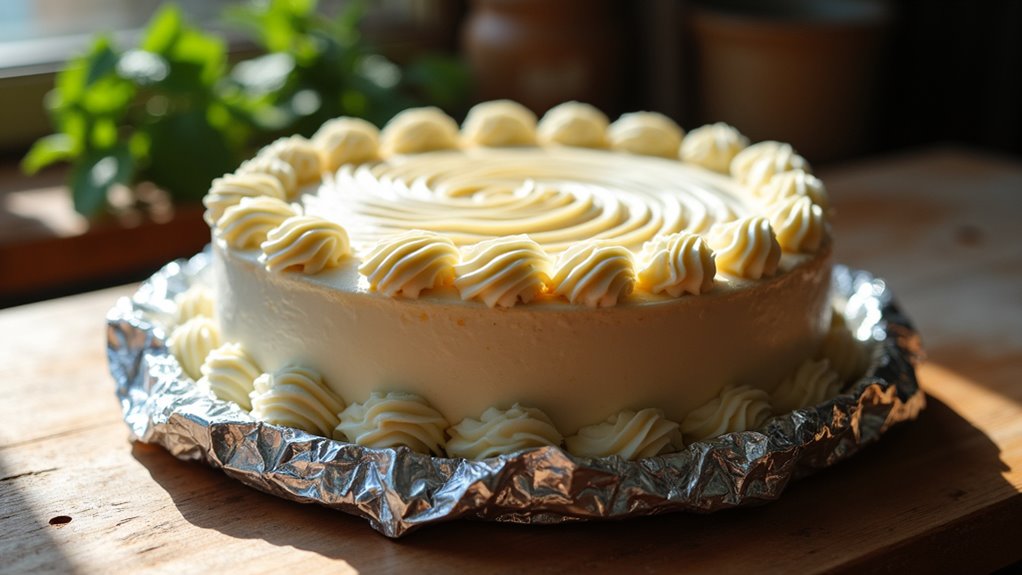
Tenting a cake with foil helps in many ways during baking. It stops the cake from getting too dark or burnt on top. The foil acts like a shield against direct heat. This lets the cake brown slowly and look nice.
Foil also spreads heat evenly. This is very important for big or heavy cakes to cook well inside.
The foil keeps moisture inside the cake. It traps steam that the cake makes while baking. This keeps the cake soft and stops it from becoming dry or hard. The cake tastes better because it keeps its natural juices and texture.
Use a thermometer to check if the cake is ready. The foil hides the cake, so looking at it isn’t enough. The right temperature inside the cake should be about 210°F.
Tenting with foil helps the cake cook fully without burning the crust. This simple trick makes your cake turn out better every time.
Materials and Preparation for Foil Tenting
Gather the right materials to tent your cake with foil properly. Use heavy-duty aluminum foil for strength and durability. Standard foil can work but handle it carefully to avoid tears.
Cut the foil at least 10 cm (4 inches) larger than your baking dish on all sides. This size gives enough room to cover the cake well.
Prepare an oven-safe dish that fits your cake comfortably. The dish mustn’t press against the foil to keep the tent shape.
Here is what you need:
- Heavy-duty aluminum foil.
- Scissors to make clean, straight cuts.
- An oven-safe baking dish that holds your cake securely.
These materials help you build a strong foil tent. The tent protects your cake while baking and stops it from burning.
Steps to Make and Apply a Foil Tent
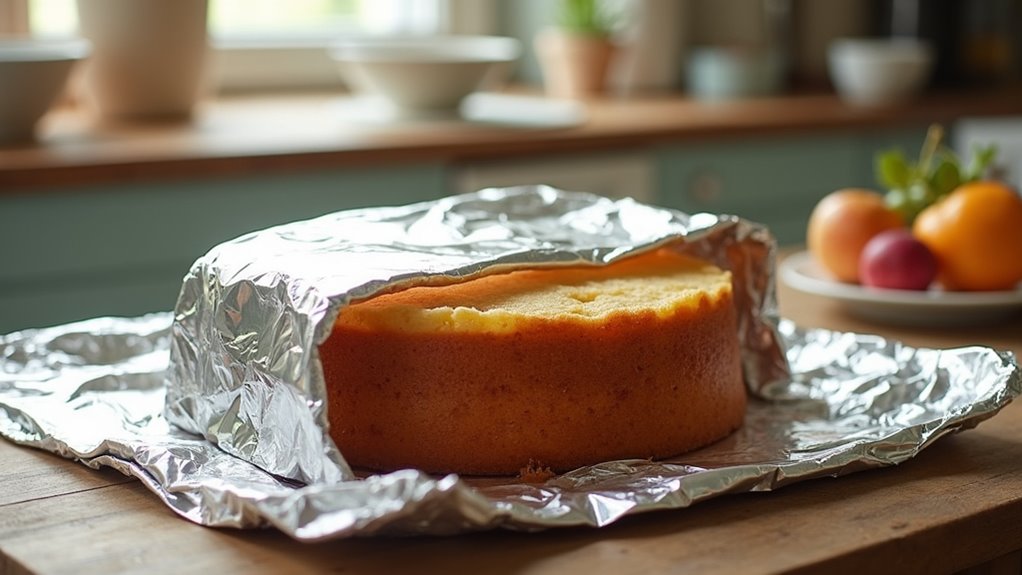
A foil tent helps your cake bake evenly and stops it from getting too brown. Tear a large piece of heavy-duty aluminum foil. Make sure it is big enough for your cake. Fold the foil in half to make it thicker. This makes the tent stronger and reflects heat better. Shape the foil into a tent. Place it over the cake without touching the batter or sides of the pan.
| Step | Action | Tip |
|---|---|---|
| Create Tent | Fold foil for a double layer | Reflects heat better |
| Position Tent | Place tent over cake pan center | Keep away from batter |
| Secure Tent | Tuck edges gently around pan | Keep tent loose |
Baking Adjustments and Monitoring With Foil Tent
Using a foil tent changes how heat moves around your cake. This can affect baking time and temperature. Lower the oven temperature by about 25°F (14°C) for soft cakes. This stops moisture from escaping too fast.
Check the cake often. Foil hides the usual browning signs. Use a quick-read thermometer. Aim for an inside temperature near 210°F (99°C).
Foil slows down browning. The cake may need more time to cook well. Take off the foil near the end. This helps the cake get a nice crust. Remember, the cake keeps cooking a little after you take it out. Pull it from the oven a few degrees before 210°F to avoid overbaking.
Watch the cake closely. Adjust time and temperature if needed. This way, you get a moist and perfect cake every time.
Tips for Using Foil Tents Effectively
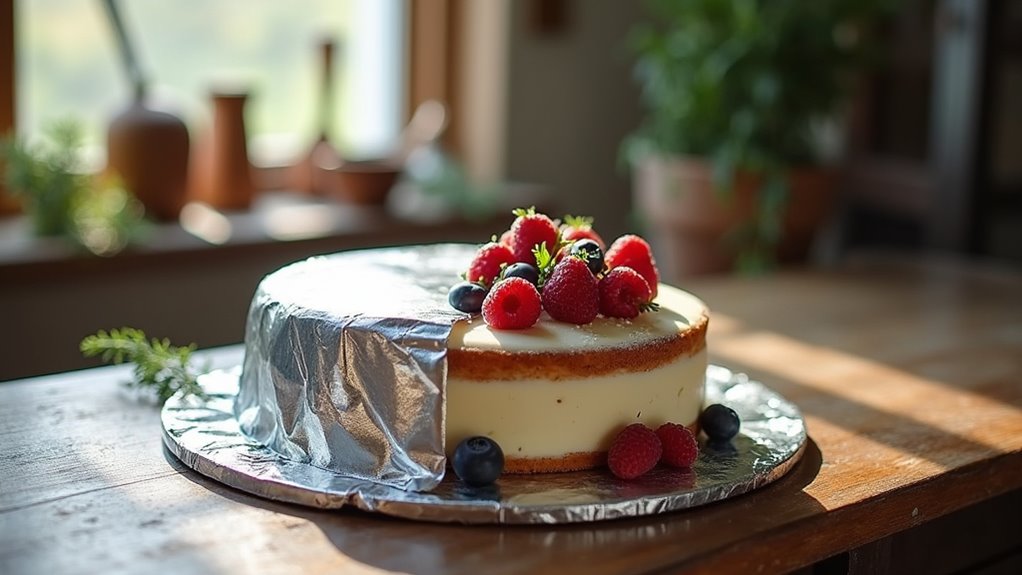
Using a foil tent helps your cake bake better. It keeps moisture in and spreads heat evenly. Follow these simple tips for best results:
| Tip | Details |
|---|---|
| Use Heavy-Duty Foil | Choose thick foil. It lasts longer and holds shape well. |
| Make a Stable Tent | Cut foil bigger than the pan. Fold edges to keep it steady. |
| Let Steam Escape | Leave small gaps so steam can get out. Avoid foil touching cake. |
Place the foil tent so it floats just above the cake. Tuck edges around the pan without pressing down hard. Watch the tent while baking. Fix any sagging quickly. This helps the cake bake evenly and stay moist. Simple steps, great results!
Frequently Asked Questions
Can I Use Parchment Paper Instead of Foil for Tenting?
Parchment paper works well instead of foil for tenting. It gently keeps heat and moisture in without trapping too much steam. This helps delicate cakes stay soft and prevents burning. Use parchment paper for baking at medium temperatures. Watch your food carefully to avoid overcooking. Parchment paper is safe and easy to handle. It also lets air escape, so food does not get soggy. Many bakers trust parchment paper for tender results. Give it a try next time you need to tent your baked goods.
How Do I Clean the Foil After Use?
About 75% of aluminum foil can go to recycling. Clean the foil by rinsing it with water. Use mild soap to remove grease. Avoid scrubbing hard to keep the foil whole. Only recycle foil that looks clean and is not torn. This helps save energy and resources. Keep recycling simple and smart!
Is There a Specific Foil Thickness Recommended?
Use aluminum foil at least 0.024 mm thick for tenting. This thickness holds heat well and lasts longer. It keeps your cake moist and stops the foil from falling onto the cake while baking. Thicker foil resists tears and folds better. Thin foil might burn or break easily. Choose foil with good strength to protect your food during cooking.
Can I Tent a Cake in a Microwave?
You can tent a cake in a microwave. Use small, smooth pieces of foil only. Keep foil away from microwave walls. This stops sparks and fire risks. Tenting helps keep the cake moist. Always watch the microwave while cooking. Safety first to protect your cake and kitchen.
What Types of Cakes Benefit Most From Foil Tenting?
Dense cakes like pound cake and moist cakes like carrot cake keep their moisture well with foil tenting. Foil helps spread heat evenly. This stops the top from getting too dark. It also helps the cake bake all the way through. Foil tenting works best for cakes that take longer to bake. It protects them from burning on the outside while the inside cooks fully. Simple but very effective.
Conclusion
Tenting your cake with foil acts like a warm blanket. It helps the cake bake evenly and keeps it moist. Cover the cake loosely with foil to stop the top from burning. Watch the cake often to see how it bakes. Change the foil position if the cake browns too fast. This simple trick makes your cake look great and taste better. Practice tenting foil, and you will get better each time. Enjoy baking and sharing your delicious cake!
