
How To Tent A Prime Rib
This post contains affiliate links. As an Amazon Associate, we earn from qualifying purchases.
To tent a prime rib, cook it initially at 500°F for 15 minutes to achieve a flavorful sear, then lower the temperature to between 225°F and 325°F for even cooking. After removing the roast, cover it loosely with heavy-duty aluminum foil to retain heat and moisture without softening the crust, and let it rest for 20-30 minutes while monitoring the temperature rise. This technique enhances flavor and texture while preventing the roast from drying out. Further explanation and tips will be provided later in the article for those interested in a deeper understanding.
Essential Facts in 30 Seconds
- Use heavy-duty aluminum foil to loosely tent the prime rib after cooking for air circulation.
- Sear the prime rib at 500°F for 15 minutes, then reduce oven temperature for slow cooking.
- Remove roast from oven at 115–120°F for rare or 125–130°F for medium rare.
- Cover roast with foil immediately after cooking and let rest for 20–30 minutes.
- Remove foil before serving to preserve the crispy crust and retain juiciness.
The Importance of Tenting Prime Rib
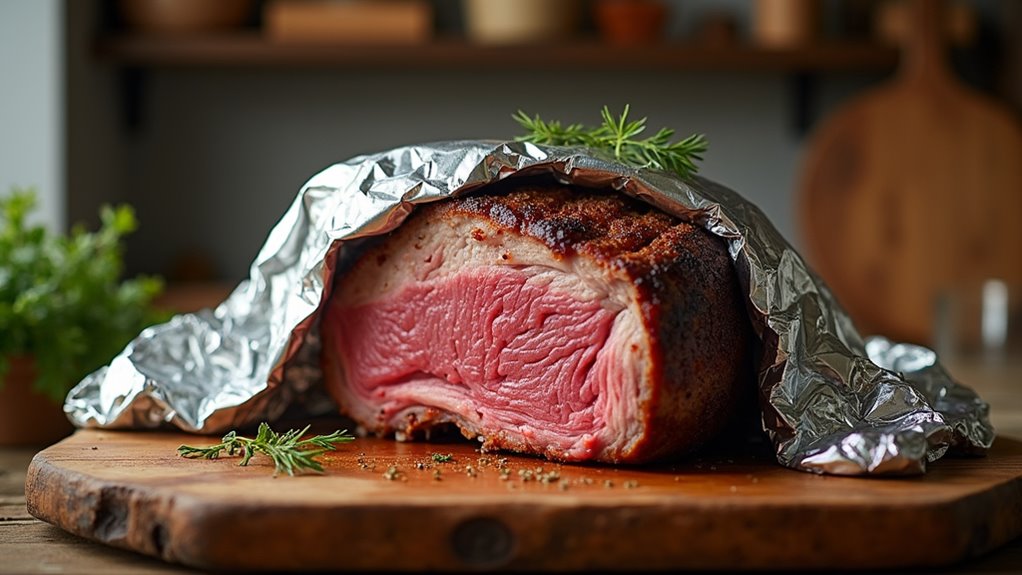
Tenting prime rib is a key step in cooking perfect meat. It keeps heat inside and stops the temperature from rising too fast. This helps the meat cook evenly from edge to center.
Foil tent holds moisture, so juices stay in the meat. Juices spread inside as muscle fibers relax, making the prime rib tender and juicy.
Tenting also keeps the crust crispy. It lets warm air move around the meat, keeping the texture just right. This step gives you more time before serving without drying out the meat.
Tenting prime rib means warm, juicy meat and a better meal.
Materials and Methods for Tenting
Use heavy-duty aluminum foil to tent your prime rib.
It’s strong and reflects heat well.
Butcher’s twine keeps the roast’s shape even.
Make a loose tent with foil.
This lets air flow and keeps the meat juicy.
It also helps keep the crust crispy.
These simple steps give the best cooking results.
Tenting Techniques Explained
Use aluminum foil for tenting your prime rib. It’s strong and resists heat well.
Make a loose cover to let air flow. This stops moisture from softening the crust.
Fold a big foil sheet into a triangle shape. Air can move under it easily. Avoid wrapping the meat tightly. Tight wrap traps steam and ruins the crust.
Perforated parchment paper works too. Take off the tent just before slicing. This helps the crust stay crispy.
These simple steps improve your roast’s taste and look.
Foil Usage Tips
Use heavy-duty aluminum foil for better strength. It won’t tear easily.
Stay away from waxed or parchment-lined foil. These types can melt and spoil your food.
Cover the prime rib loosely to stop moisture build-up. This keeps the crust crispy.
Never reuse foil after it touches raw meat. This practice avoids germs and keeps food safe.
Following these tips ensures a tasty and safe prime rib.
Timing and Temperature Guidelines for Tenting
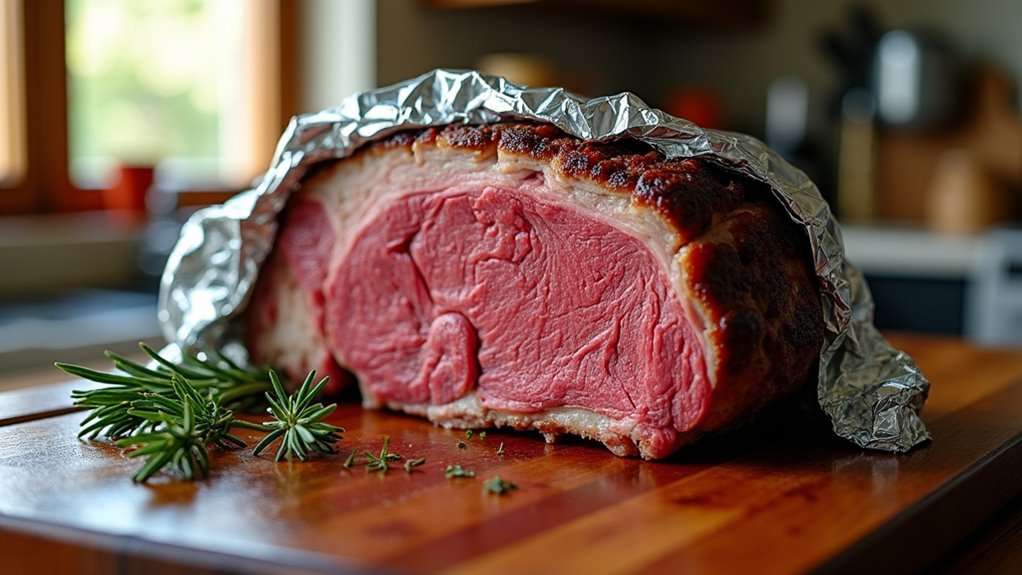
Searing a prime rib at 500°F for 15 minutes locks in flavor.
Then, lower the oven to 225°F–325°F to cook slowly. Watch the internal temperature closely. Pull the roast at 115–120°F for rare, 125–130°F for medium rare, and 135–140°F for medium.
Right after taking it out, cover the roast with foil. This step, called tenting, starts the resting process. Resting lets juices spread evenly inside the meat. Expect the temperature to rise 5–10°F during rest.
Rest the meat for 20–30 minutes to keep it warm and juicy. Don’t tent for too long or the meat cools down. Wait too long to tent, and the doneness may change.
Use a probe thermometer to track temperatures well. This method gives juicy, perfectly cooked prime rib every time.
Effects on Flavor and Texture
Tenting a prime rib changes its flavor and texture a lot. It traps steam inside. This keeps the meat moist and tender. The inside stays juicy and doesn’t dry out.
Here are four main effects of tenting:
- Stronger flavor: Tenting holds in flavor smells and tastes. This makes the meat taste richer.
- Even texture: It cools the meat slower. This helps the crust and center have similar texture.
- Juiciness stays: Steam moves juices inside the meat. This keeps every bite juicy.
- Crust changes: Tenting can make the crust soft. Take off the tent before eating to make crust crisp again.
Differences Between Wrapping and Tenting
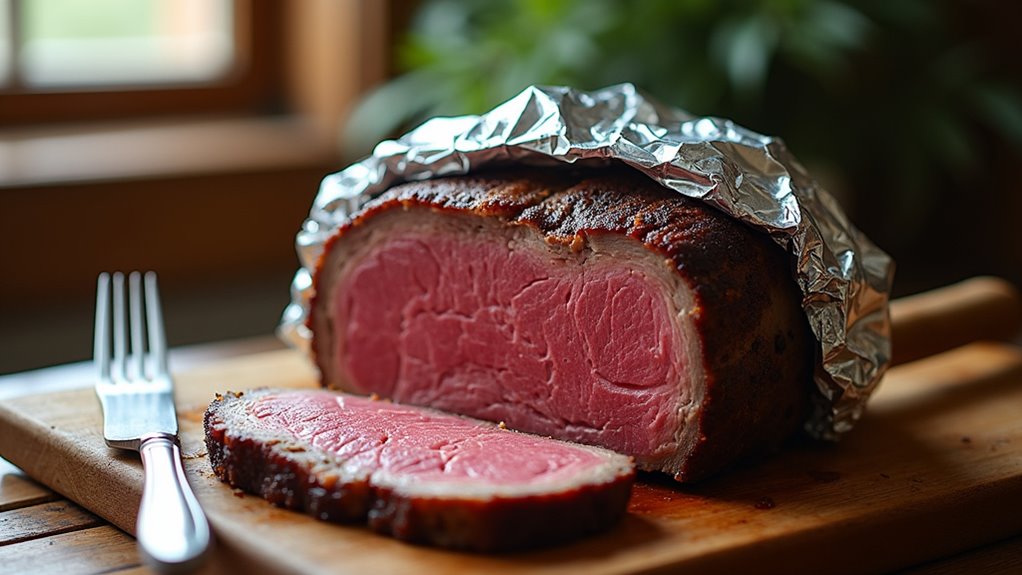
Wrapping a prime rib means covering it tightly with foil or butcher paper. This traps heat and moisture close to the meat. It raises the internal temperature by several degrees through carryover cooking. This method cooks the meat more after removing it from heat.
Tenting covers the prime rib loosely with foil. It lets air flow around the meat. This slows down cooling and keeps the crust crispy. The bark stays firm and doesn’t get soft.
Tenting works best during resting time. It keeps the outside nice and the inside juicy. Wrapping suits the cooking phase or thick roasts. Wrapping can soften the crust, so avoid it if you want a crispy bark.
For the best prime rib, wrap while cooking and tent during rest. This way, the meat stays tender and the crust stays crunchy.
Tools and Best Practices for Tenting Prime Rib
Tenting prime rib needs the right tools and steps to get it just right. Here’s what you should have:
- Meat thermometer: Use an instant-read or leave-in probe for exact temperature.
- Roasting pan with rack: This helps heat flow evenly for better cooking.
- Aluminum foil: Heavy-duty foil holds heat but lets steam escape.
- Butcher twine: Use this to tie the roast, so it cooks evenly and keeps shape.
After taking the roast out, cover it loosely with foil.
Rest it for at least 30 minutes. Check the temperature without lifting the foil.
Don’t wrap it tight; that keeps the crust crispy.
These steps make the prime rib juicy and full of flavor.
Frequently Asked Questions
Can I Tent Prime Rib With Parchment Paper Instead of Foil?
Tent prime rib with parchment paper instead of foil for better crust texture. Parchment paper lets steam escape, keeping the crust crisp. Foil traps moisture, which can soften the crust. Cooking time may increase slightly with parchment paper. Watch the roast closely to avoid drying out. Use parchment for a tasty, well-cooked prime rib with a nice crust.
How Long Can I Keep the Tented Prime Rib Before Serving?
Keep your tented prime rib warm for up to two hours before serving. This time frame keeps the meat juicy and safe to eat. Use foil loosely over the roast to trap heat without steaming it. Avoid wrapping it too tight, or the crust will lose its crispness. Let the meat rest first; this helps the juices settle inside. Serve within two hours to enjoy the best flavor and texture.
Can I Tent Prime Rib in a Cooler Instead of on the Counter?
Tent the prime rib inside a cooler instead of on the counter. This keeps the meat warm longer and safer. Coolers hold heat better than open air. The prime rib stays juicy and tasty. It also reduces the risk of bacteria growth. Use a clean towel or foil to cover the meat before placing it in the cooler. Keep the cooler closed while resting the meat. This simple trick helps your prime rib stay perfect until serving.
What Is the Best Way to Reheat Tented Prime Rib?
Reheat prime rib slowly in a 250°F oven. This keeps the meat juicy and tender. The USDA says meat should reach 140°F inside for safety. Use a meat thermometer to check the temperature. Add a little butter on top before reheating. It makes the meat taste richer and moist. Avoid high heat; it dries out the prime rib. Slow and steady wins the flavor race.
Is It Necessary to Use a Thermometer When Tenting Prime Rib?
Using a thermometer while tenting prime rib ensures perfect cooking. It shows the exact temperature inside the meat. This stops overcooking and keeps the roast juicy and tender. Every slice tastes better with the right doneness. A thermometer gives confidence and great results every time.
Conclusion
Tenting prime rib improves your meal greatly. Wrap the meat with aluminum foil. This traps heat and keeps the juices inside. Air can still flow, helping the crust stay crispy. Foil also protects the meat from too much heat. This keeps the prime rib tender and flavorful. Watch the roast closely to get the timing right. Practice makes perfect with this simple technique. Your prime rib will shine at every dinner. Friends and family will be impressed every time.
