
How to Fold a Kids Pop-Up Tent Without the Fight
This post contains affiliate links. As an Amazon Associate, we earn from qualifying purchases.
To fold a kids pop-up tent, compress the top two-thirds of the way down, guide the sides into a stable figure-eight shape, then press the two loops together into a flat circle for the storage bag. Fighting the spring steel frame is how fingers get pinched and frames get bent.
I learned this the hard way last summer. Rushing to pack up after a beach day, I skipped the two-thirds step and shoved straight down on my niece’s tent. The frame twisted and snapped shut on my ring finger with a force that left a purple bruise for a week, and nearly put a permanent kink in the steel. That pain taught me that folding these tents isn’t about strength; it’s about listening to the frame’s memory.
This guide is the one I wish I’d had. I’ll walk you through the safe, methodical process that actually works, straight from the OEM manuals, and what to do when things go sideways (because they will).
Key Takeaways
- Adults only for folding. The Playlearn assembly instructions explicitly warn the structure “POP OPEN QUICK” and “MUST ONLY be setup by a responsible and competent adult.” This isn’t a task for little hands.
- Master the two-thirds collapse. Pushing the top down two-thirds of the way first lets the frame’s energy create a stable figure-eight. This is the core secret most people miss.
- A wet tent never goes in the bag. The Battat Happy Camper (BT1820) guide says to leave a wet tent “open in an airy space to dry.” Storing it damp guarantees mold in under 48 hours.
- Discard a tent with a broken loop. If the main spring steel frame is kinked or the loop is broken, the tent is unsafe. The Playlearn manual’s instruction is clear: discard the product.
- The travel bag is your quality check. If the folded circle doesn’t slide in smoothly, your fold is malformed. Forcing it stresses and can twist the frame over time.
The structure uses a spring steel loop that will POP OPEN QUICK. Caution must be used when handling this product. Small children should never be allowed to fold or unfold the structure.
Playlearn Pop Up Tent – Assembly Instructions
Why Is Folding a Pop-Up Tent So Tricky?
A kids’ pop-up tent isn’t a mini camping tent. Its entire structure is a single, high-tension loop of spring steel sewn into the seams. That loop is always trying to return to its perfect circle. When you fight that natural path, like pushing straight down from the center, you concentrate all that pent-up energy. The result is a violent, unpredictable snap that can pinch skin or bend the frame permanently.
Your job isn’t to overpower it. It’s to guide that coiled energy through a predictable collapse pattern. Get it right, and you’ll feel a satisfying click as the frame settles into place. Get it wrong, and you’ll create a twisted “tent taco” that’s impossible to store.
TL;DR: The steel has a memory. Follow its preferred path, and it folds neatly. Fight it, and you lose.
What Are the Critical Safety Rules Before You Start?
Before you start: The spring steel frame releases with enough force to bruise a finger or hit a child’s face. Always clear the area of kids and pets before folding. Never place heavy objects on the tent to flatten it, this can permanently deform the frame.
Let’s get the non-negotiables out of the way. Every manual I’ve pored over states an adult must handle folding. The bblüv Sunkitö manual opens with, “This product opens very quickly… This product must be handled by an adult.” This is your first and most important rule.
Second, inspect the ground. That same manual specifies using the tent on “leveled ground… clear of stones or sharp objects.” A stray toy or rock underneath can press against the frame during the collapse, creating a weak point.
Finally, know when to call it. If the steel loop is broken or visibly kinked, the tent is no longer safe. The instruction is clear: discard it. Don’t try to be a hero with duct tape.
How Do You Fold a Pop-Up Tent Step-by-Step?
This “two-thirds method” works for most dome-style play tents, from the Battat Happy Camper (BT1820) to generic brands. I now prefer the Battat for daily use because its 8mm powder-coated steel wire has a more predictable “memory” than the thinner, uncoated wire I’ve seen kink in cheaper models.
Step 1: Clear the Deck
Empty the tent completely, every stuffed animal, plastic teacup, and loose pillow. Place it on a flat, soft surface like carpet or grass. A hard floor is fine, but the cushion helps. Position yourself at the tent’s side, not looming over it.
Step 2: The Two-Thirds Collapse
Reach across and place a hand on the top ring on either side. Push down firmly and evenly until the top is about two-thirds of the way to the floor. The sides will buckle inward. This isn’t the full fold; it’s the crucial setup.
Common mistake: Skipping the two-thirds compression and pushing straight down, this causes the frame to collapse unevenly into a tangled, un-baggable mess.
Step 3: Create the Figure-Eight
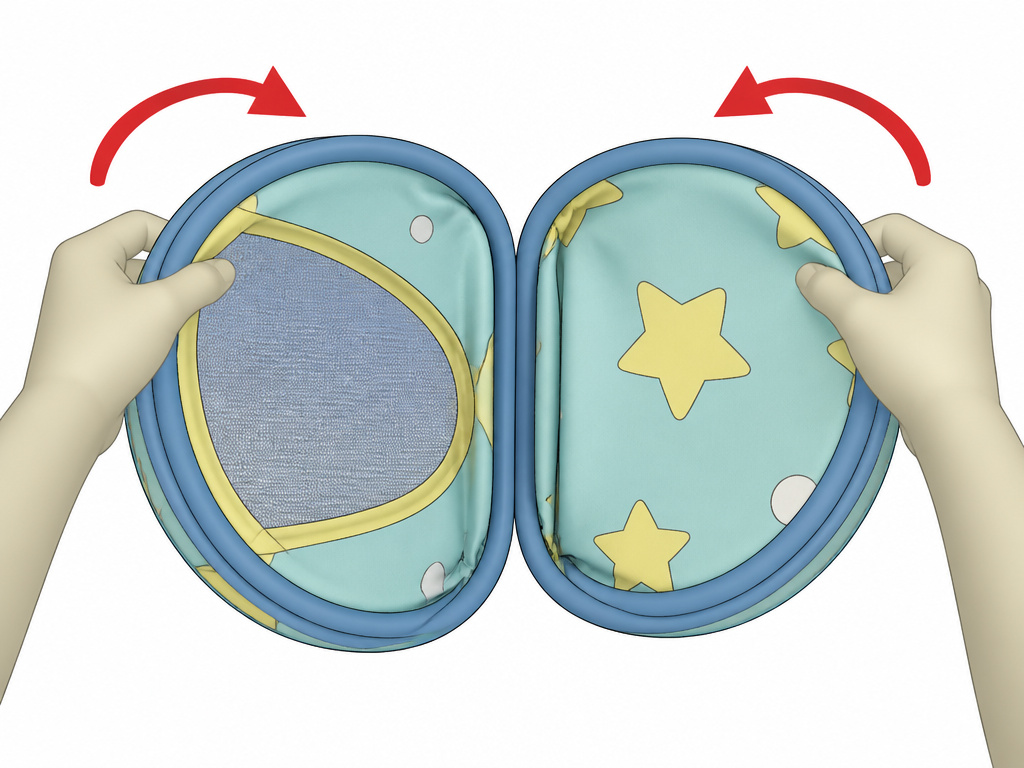
Now, guide one of the bowed sides over the top of the tent. Immediately fold the opposite side over the first. You should see two overlapping circles, a figure-eight. Listen and feel for a soft click as the frame settles.
Step 4: Close the Circle
Grab both loops of the figure-eight. Bring them together, stacking one on top of the other, then press down firmly in the center. They’ll collapse into a single, flat circle.
Step 5: Bag It (The Final Test)
Hold the circle vertically and slide it into the travel bag. It should go in smoothly. If you have to cram it, the circle isn’t fully flat. Pull it out, press the center again, and retry. Forcing it is a sure way to damage your tent’s frame over time, whether it’s a simple play tent or one of the more sophisticated pop-up beach tents designed for wind.
| Step | Action | The Consequence of Skipping It |
|---|---|---|
| Clear & Position | Remove all objects; place on flat ground. | A hidden block creates a permanent bend or tear in the fabric. |
| Two-Thirds Collapse | Compress the top dome 2/3 of the way down. | Frame energy has no guide, leading to a violent, uneven snap. |
| Form Figure-Eight | Fold one side over, then the opposite. | Loops won’t align, making the final circle lopsided. |
| Close the Circle | Press the two loops together firmly. | Tent remains a bulky figure-eight that won’t fit in any bag. |
| Use the Travel Bag | Slide the flat circle in smoothly. | Unprotected storage leads to dust, moisture, and frame distortion. |
What If the Tent Is Damaged or Won’t Cooperate?
You followed the steps, but the tent is fighting back. Here are the fixes, pulled straight from the source.
The Frame Is Bent or Twisted
Trying to muscle a kinked frame back by hand can weaken the steel. For the Battat Happy Camper, the official manual prescribes this: “If the tent’s wire frame is bent, lift the top of the tent, bring both sides together, and then release to correct the shape. Repeat these steps if needed.”
Open the tent fully, then gently lift the top and push opposite sides together as if starting a fold, then release. Repeat. You’re helping the wire find its memory, not forcing it past its limit.
The Tent Got Wet
Maybe it was doubling as a sun shelter and a rain shower rolled in. The worst thing you can do is fold it damp. The Battat manual is explicit: leave it “open in an airy space to dry.” Sunlight fades fabric fast, so choose a shaded, breezy spot. A fan indoors works wonders. Every seam must be bone-dry before you even think about folding, a rule that applies to everything from play tents to durable canvas tents.
It Won’t Fold Flat Into a Circle
If the final circle is bulky, the issue is in the figure-eight step. The loops aren’t stacked evenly.
1. Unfold back to the figure-eight.
2. Lay it flat and check the overlap. Re-fold it, ensuring the sides cross dead-center.
3. When bringing the loops together, rotate them slightly so the edges align before pressing.
This precision is key for smaller tents for two kids where the margin for error is tiny.
Which Tent Features Make Folding Easier?
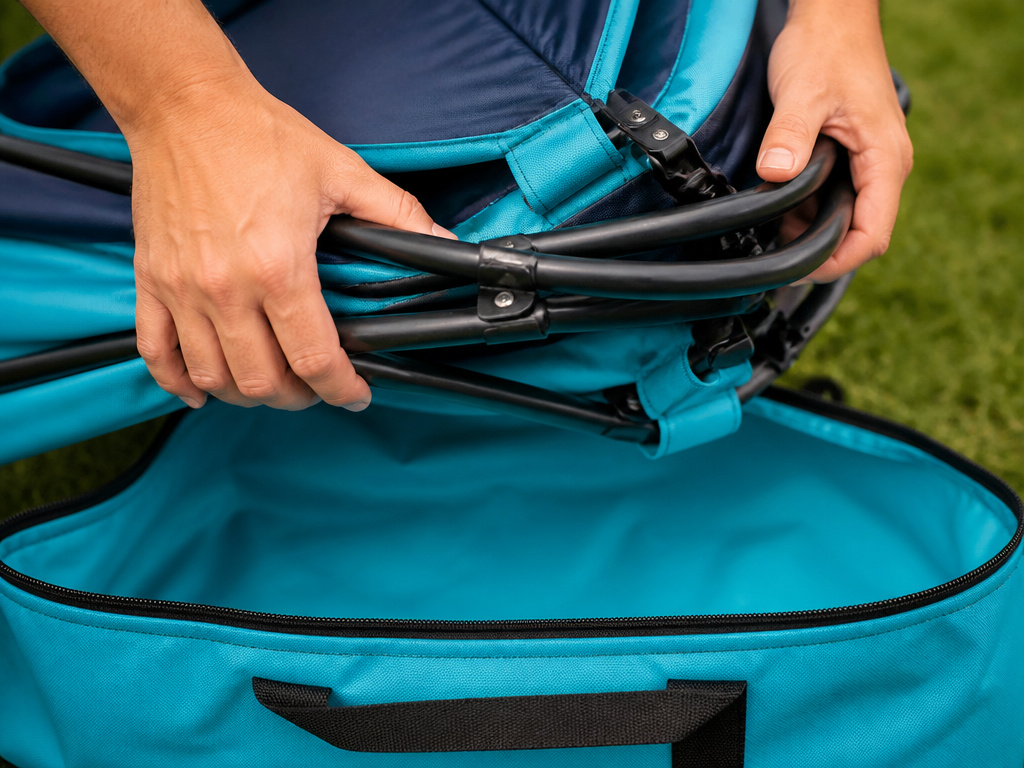
If you’re still shopping, a few design choices can save you endless frustration. Heavier fabrics fight the spring steel, so most play tents use lightweight polyester. The real differentiator is the frame.
- Coated Spring Steel: Thicker, powder-coated wire (like on the Battat BT1820) resists bending and retains its shape. You can feel the difference, a cheap frame feels wiry and weak.
- A Generous Travel Bag: A bag with a wide opening and a little extra space shows the manufacturer gets it. A too-tight bag encourages force-fitting.
- Clear Interior: Avoid tents with internal poles or dividers. The frame needs a clean path to collapse. This is a hallmark of good kid-friendly tent designs.
| Tent Feature | Why It Helps | Ideal For |
|---|---|---|
| Reinforced Seam Points | Prevents the fabric from tearing where the frame sits during repeated folding. | Active play with multiple kids inside. |
| Wide-Mouth Storage Bag | Allows the folded circle to slide in without scrunching or force. | Easy storage in closets or car trunks for car camping tents. |
| Robust Frame Gauge | Thicker steel resists kinking and provides a predictable, springy collapse. | Daily use in the playroom or frequent trips to the park. |
For cleaning, I keep it simple: a spray bottle with a 10:1 water-to-unscented castile soap mix. It cuts through sticky fingerprints without residue. If the storage bag is lost, a sturdy oversized tote like an IKEA FRAKTA can work temporarily, just ensure the circle slides in without scrunching.
TL;DR: Look for a thick, coated frame and a bag with breathing room. A quick wipe-down with mild soap preserves the fabric, whether it’s a budget-friendly tent or a premium model.
Frequently Asked Questions
Are these tents safe for kids to sleep in overnight?
No. Manuals for the Battat and bblüv tents explicitly state they are for “pretend play use only” and are not for camping or storm shelter. They lack fire resistance, waterproof ratings, and structural stability for sleep. They are playhouses, not spacious family tents.
Can my child learn to fold it themselves?
Absolutely not. The manufacturer warnings are unanimous: an adult must handle folding due to the sudden, unpredictable release of the spring steel. Supervise their play, but you handle the takedown.
How do I clean the fabric?
The universal instruction is “surface clean only.” Do not submerge or machine wash. Use a damp cloth with a mild detergent (like diluted castile soap), then air dry completely. For crumbs, a handheld vacuum or lint roller works perfectly.
What if the tent has a sun protection rating?
Models like the bblüv Sunkitö feature SPF 50+ fabric and mosquito nets for outdoor use. This protects against UV rays, not heat, the manual warns to keep vents open in extreme heat and never leave a child unattended inside.
My tent won’t pop open fully anymore. What’s wrong?
The frame is likely fatigued or has a minor twist. Try the manufacturer’s correction method for a bent frame. If it persists, the steel loop may be failing. Continued force can break it, so consider replacement if it no longer springs to its full shape.
The Bottom Line
Folding a kids pop-up tent is a lesson in physics, not force. Let the steel frame’s memory guide you through the two-thirds collapse and into the figure-eight. Rush it or muscle it, and you’re inviting a pinched finger or a broken toy. Always dry it thoroughly, store it in its bag in a cool, dry place, and remember, this is one piece of gear where the adult is firmly in charge of the takedown. Do it right, and that tent will be ready for countless backyard adventures and living room fort nights.
