
How To Roll Up A Tent Correctly To Protect Poles & Fabric
This post contains affiliate links. As an Amazon Associate, we earn from qualifying purchases.
To roll up a tent, you must match three things: a completely dry tent, a folding width no greater than your pole bag, and a tight roll that starts at the sealed end and pushes air out the door. The carry sack is for transport only; long-term storage requires a loose, breathable container.
Most people get this wrong by jamming a damp tent into its sack as fast as possible. That mildew smell next season isn’t bad luck. It’s a chemistry experiment you started by sealing in moisture. The tight roll everyone pushes also strains shock cords and can crack pole ends if you’re not careful.
This guide walks through the exact steps from manufacturer manuals, explains the physical reasons they work, and shows you how to store your tent so it’s ready for the next trip, not the landfill.
Key Takeaways
- A tent must be bone-dry before any storage, even overnight. Mold spores germinate in 24-48 hours on damp nylon or polyester.
- Use the tent’s pole bag as a physical width guide when folding. A roll wider than the bag will not fit without a fight that strains seams.
- Roll from the tent’s foot toward the door to push trapped air out the opening, not trap it inside the bundle.
- Store poles fully assembled to maintain shock-cord tension. Disassembling them for months lets the elastic relax and fail.
- The manufacturer’s stuff sack is a transport bag, not a storage container. Long-term compression weakens fabric coatings and waterproof seals.
Why the “Jam and Stuff” Method Fails
Forcing a tent into its bag seems efficient. It is also destructive. The problem isn’t just wrinkles. It’s constant pressure on specific points.
Common mistake: Storing a tent tightly rolled in its stuff sack for months, the permanent compression creases become weak points where the waterproof polyurethane (PU) coating will crack first, usually within two seasons of storage.
Fabric coatings need to flex. Keeping them in a tight cylinder for months on end creates permanent fold lines. Those lines become the failure point when the tent is pitched in a downpour. The coating flakes off, and water wicks right through. The Eureka Sunrise manual states it directly: “The tent bag should be used only as a carry sack and not for storage.”
The second failure is on the poles. Everyone collapses them and stuffs them in the bag. That’s fine for a weekend. For winter storage, it’s a pole killer. The shock cord inside is under constant tension when the poles are assembled. Collapsing them for months lets that elastic relax. It loses its snap. Next season, your poles are a spaghetti pile.
TL;DR: The stuff sack is for getting to the campsite. Your closet shelf is for keeping the tent alive.
The Non-Negotiable First Step: Dry It Out
You cannot skip this. If you pack moisture, you pack mold.
“CAUTION VERY IMPORTANT. Your tent must be completely dry, inside and out, before storage… Storing a wet or damp tent, even for a short time, can ruin it and void the warranty.”
Canvas Camping Tents Manual
This isn’t about a little dew. Condensation from a cool night counts. So does ground moisture. The timeline is short. Mold spores are everywhere, waiting for 24-48 hours of dampness on organic material (like dirt stains) or fabric coatings. The result is a foul, sour smell that won’t wash out and black or green speckling that degrades the fabric’s strength.
If you must break camp in the rain, you have a contingency. The same manual advises a “loosely rolled” transport. Get home, unroll the tent immediately in a garage or over chairs, and run a fan on it. Do not leave it in the car trunk. That dark, hot space accelerates mold growth exponentially.
The 7-Step Fold and Roll (And Why Order Matters)
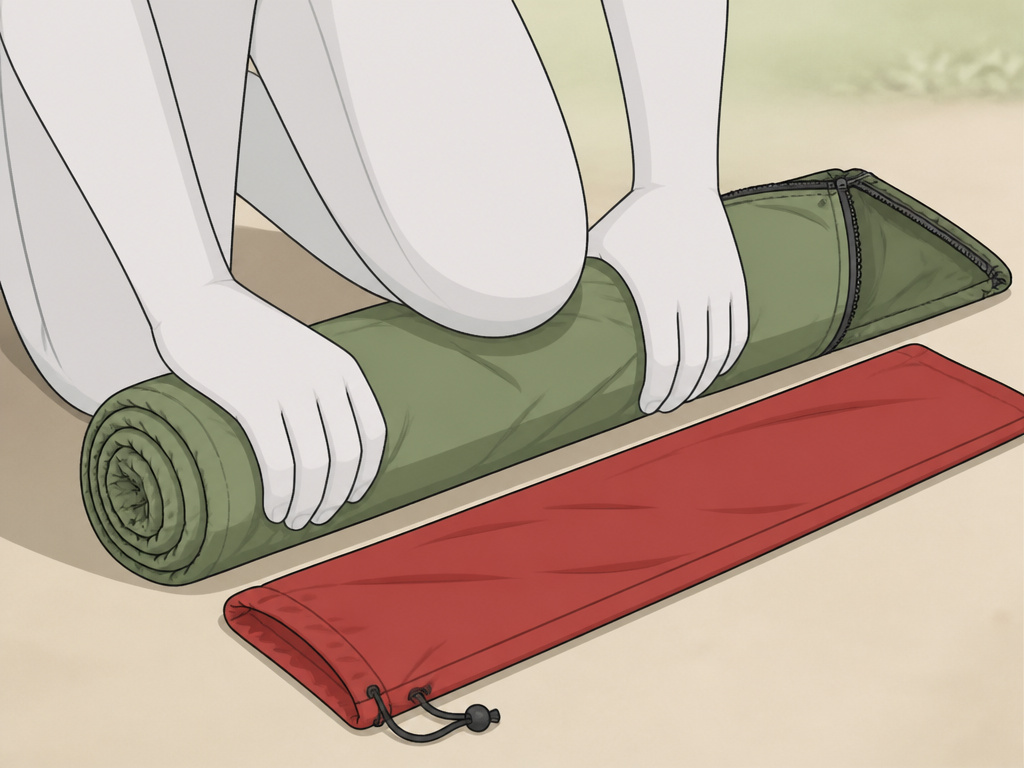
This is the core physical skill. Rushing creates an air-filled burrito that won’t fit. The goal is a compact, dense cylinder.
Before you start: Clear the area of sharp sticks or rocks. Shake out all leaves, pine needles, and dirt. Unclip the rain fly and set it aside. Collapse the poles by gently pushing sections together, never pull them apart by the shock cord, as the MSR manual warns this can damage the pole ends.
- Lay the tent body flat. Smooth it out, aligning the floor and walls. The door should be fully unzipped.
- Place the pole bag as a width guide. Lay the empty pole bag along one long edge of the tent. This bag is your perfect width template.
- Fold one side to the center. Fold the tent fabric over so its edge meets or just crosses the centerline. The width of this fold should match the pole bag’s length.
- Fold the other side over. Bring the opposite side over on top of the first fold. You now have a long, multi-layered strip roughly the width of the pole bag.
- Start rolling at the sealed end. Identify the foot of the tent, the end opposite the door. Start rolling from there, toward the door. This pushes any trapped air out the opening as you go.
- Kneel on the roll for compression. After each full rotation, kneel on the rolled portion. Your body weight pushes out air pockets and creates a tighter pack.
- Secure the bundle. Use the tent’s attached straps or a separate piece of cord to tie the roll. Do not use the stuff sack’s compression straps for this; they’re too tight.
Skipping step five is the usual culprit for a bag that won’t close. Rolling from the door toward the foot traps air inside the bundle. That air has nowhere to go, creating a bulky, springy roll.
| Step | Right Way | If You Skip It |
|---|---|---|
| Use pole bag as guide | Ensures roll fits sack | Roll is too wide, forces seams |
| Roll from foot to door | Pushes air out | Traps air, creates bulky bundle |
| Kneel for compression | Creates dense cylinder | Loose roll, takes 2x the space |
TL;DR: Fold to the pole bag’s width, roll from the foot, compress with your knee. The door is an air vent.
Handling the Rain Fly and Poles
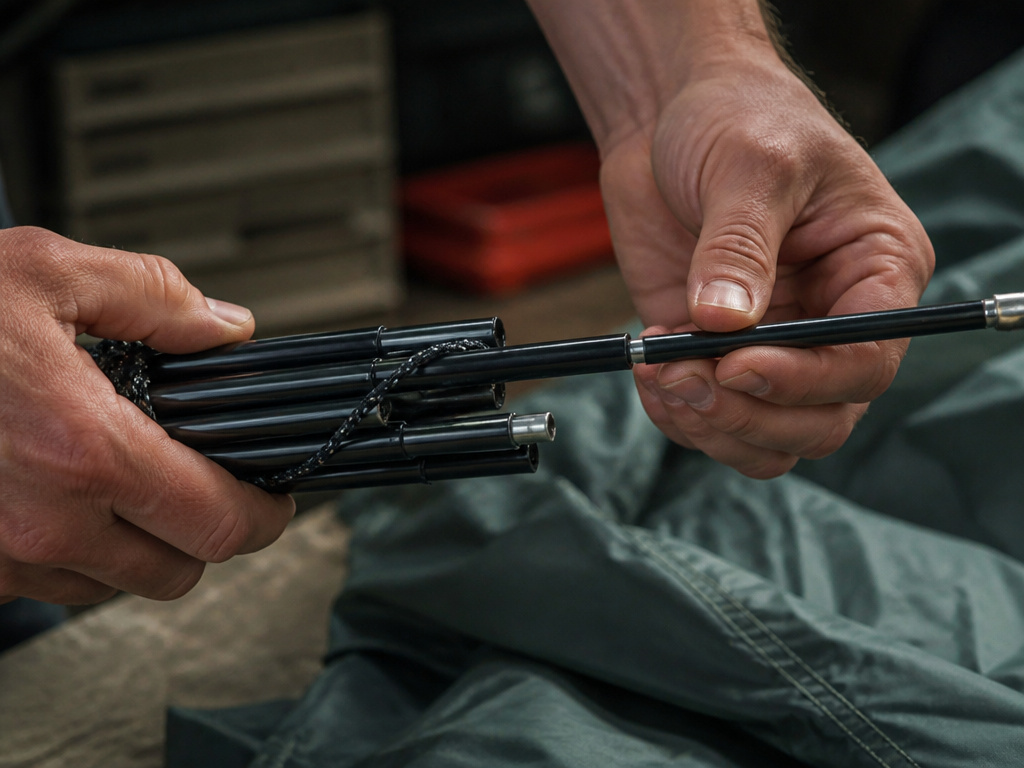
The rain fly and poles need separate treatment. They have different failure modes.
The fly is often the wettest part. If it’s damp, pack it separately from the tent body. A wet fly pressed against a dry tent for a four-hour drive can transfer enough moisture to start mold. Many backpackers strap the damp fly to the outside of their pack to dry while hiking. At home, dry it completely before combining it with the tent for storage.
Poles are more fragile than they look. The MSR Tents Owner’s Manual is explicit: “When unfolding and folding, do not allow the shock cord to pull and snap the ends together. This can damage the pole ends and result in breakage when the pole is tensioned.” You should push sections together, not pull them apart and let them snap closed.
For storage, keep them assembled. The constant, mild tension on the shock cord is what keeps it elastic. Store them in their bag, but lay them flat on a shelf or hang them. Do not drop the pole bag on its end, the Eureka manual warns this can cut the internal shock cord.
I learned this after a season of storing my Eureka Sunrise poles collapsed. The next spring, setting up in a wind gust, one section refused to extend fully. The shock cord had relaxed. I had to manually feed it through, a frustrating ten-minute fix in the rain. Now they stay assembled year-round.
Storing Your Tent (Not in the Bag)
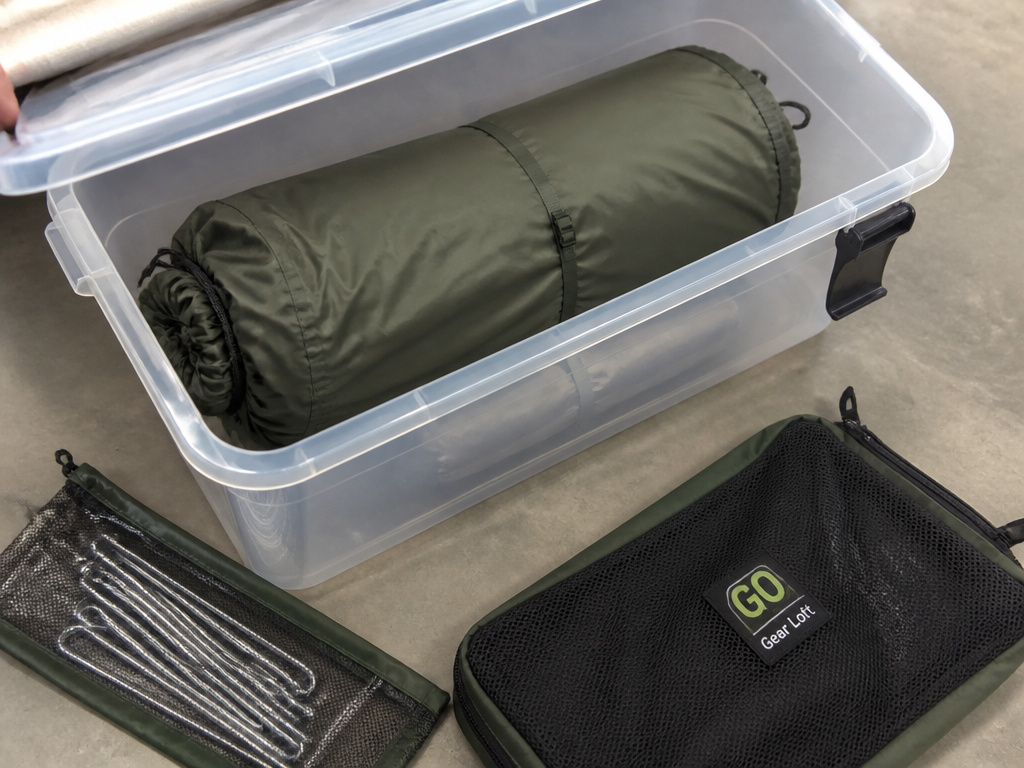
This is the final, critical shift. The stuff sack’s job is done.
Long-term storage requires a loose, breathable environment. A large plastic storage tote, a cotton pillowcase, or an old mesh laundry bag are all perfect. The goal is to protect from dust and pests while letting air circulate and avoiding pressure points.
Place your rolled tent loosely inside. Do not cram it. Store this container in a cool, dry place, not a hot attic or damp basement. Heat degrades fabric and coatings over time.
| Storage Method | Best For | Risk |
|---|---|---|
| Original Stuff Sack | Transport to/from site | Fabric coating cracks at fold lines |
| Large Plastic Tote | Home storage, pest protection | Condensation if sealed; leave lid cracked |
| Mesh Laundry Bag | Breathable closet storage | No dust protection |
| Under Bed (in bag) | Space saving | Compression from weight above |
Separate your components. Keep stakes in their own small bag. This prevents them from rubbing and cutting the tent fabric. If you have steel stakes, store them completely separate to avoid rust stains. The gear loft and any other accessories go in with the stakes.
TL;DR: The closet is for a loose tent in a breathable bin. The stuff sack stays in your gear pile, ready for the next trip.
Frequently Asked Questions
Can I vacuum-seal my tent for storage?
Do not vacuum-seal your tent. The extreme compression is far worse than a stuff sack. It will permanently crush the fabric’s insulating loft (if applicable) and almost guarantee coating delamination. Use breathable storage only.
My tent bag is lost. What should I use?
Any durable, slightly oversized bag works for transport. A reusable grocery bag or a large stuff sack from an old sleeping bag is fine. For home storage, you don’t need a bag at all, a shelf or tote is better.
How do I roll up a tent by myself?
Use your body weight as a tool. After the initial folds, sit on the tent to hold it flat while you start the roll. Then use the knee-compression method described above. It’s a one-person job with a little technique.
Is it okay to fold a tent the same way every time?
Yes, but it’s not the major concern some claim. The “always fold differently” advice is more critical for down sleeping bags. For tents, avoiding permanent compression is more important than varying fold lines. Just don’t store it tightly compressed.
What about tents with sewn-in mattress pads?
The Canvas Camping Tents manual has specific advice: “For long term storage, don’t leave the cinch straps too tight or you may get some permanent compression on the mattress pad.” Store these tents fully unrolled if possible, or rolled very loosely to protect the pad’s integrity.
Before You Go
Rolling a tent correctly isn’t about neatness. It’s about preventing three specific failures: mold from moisture, broken poles from shock-cord fatigue, and leaky seams from cracked coatings. The method is simple, dry it completely, fold to the pole bag’s width, roll from the foot, and store it loose.
The stuff sack is a travel case. Your storage solution should be generous and breathable. Treat the poles with care, pushing them together gently and storing them assembled. Do these things, and your tent will be a reliable shelter for years, not a disappointing, musty bundle next season. Now go put it away right.
