
5 Best Tent Stakes for High Wind 2026
This post contains affiliate links. As an Amazon Associate, we earn from qualifying purchases.
The Eurmax 20-Pack Galvanized Tent Stakes are the best overall for high wind, offering rugged steel construction and reliable holding power. For a budget-friendly kit with everything you need, the Tialero 12-Pack is our top value pick. If you’re camping on sand or loose soil, the COBARYEN spiral stakes provide unmatched grip.
Let’s be real, nothing ruins a solid camp setup faster than stakes that fail when the wind kicks up. I’ve talked to too many campers who’ve woken up to a collapsed shelter because their stakes pulled out or bent under pressure. After comparing the field and weighing specs against real-world owner feedback, I focused on stakes built for serious holding power in tough conditions. This guide breaks down what actually works, based on material strength, design smarts, and proven performance where it matters most, anchoring your shelter when the gusts hit.
Top 5 Tent Stakes For High Wind in the Market
The Best Tent Stakes For High Wind, Reviewed
Eurmax 20-Pack Galvanized Tent Stakes
Strengths
- 20 stakes included
- Comes with ropes
- High-visibility stopper
Trade-offs
- Overkill for light use
- No carrying case
- Ropes may tangle
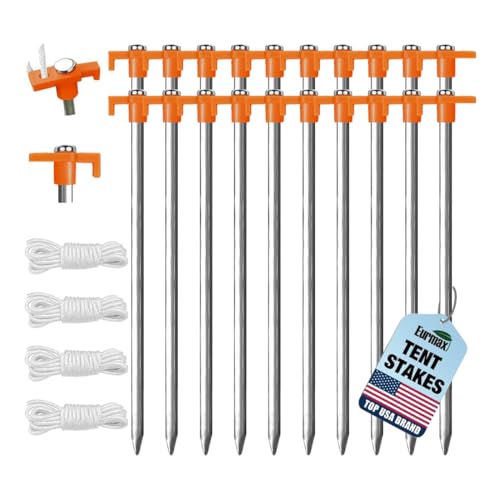
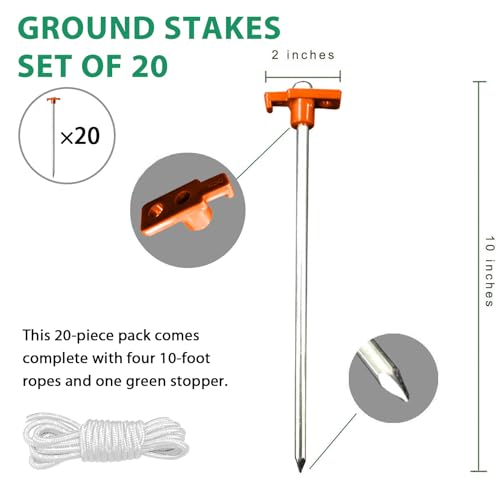
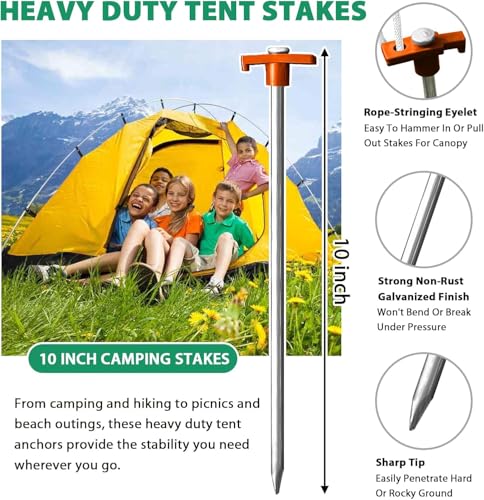
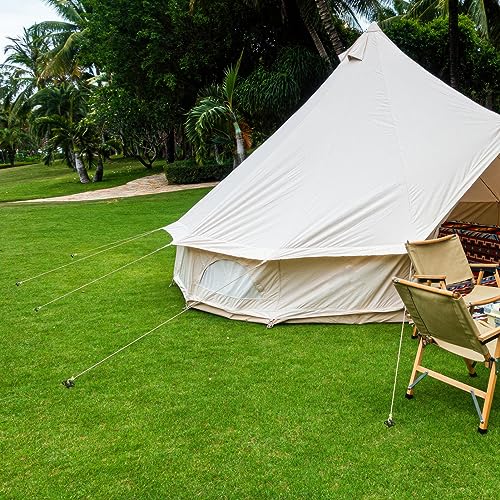
This is the most complete anchoring package here, 20 stakes plus four 10-foot ropes and an orange stopper. The galvanized steel is thick, and the design prioritizes wind resistance, which aligns with its canopy and pop-up tent focus. Owners consistently say these stakes stay put in commercial and repeated-use scenarios, making them a favorite for vendors and festival campers.
The included ropes are a real differentiator, eliminating guesswork in guy-line length. Compared to other sets, this one feels built for heavy-duty, repeated deployment. While overkill for solo hikers, I’d call this the smarter buy for anyone using a pop-up shelter or large gazebo regularly. The American branding might not matter to everyone, but the durability does.
Product photos

Tialero 12-Pack Tent Stakes with Hammer

Strengths
- Forged steel construction
- Includes hammer and pouch
- Fluorescent visibility rings
Trade-offs
- Heavy for backpacking
- Bulky storage
- Hammer could be sturdier
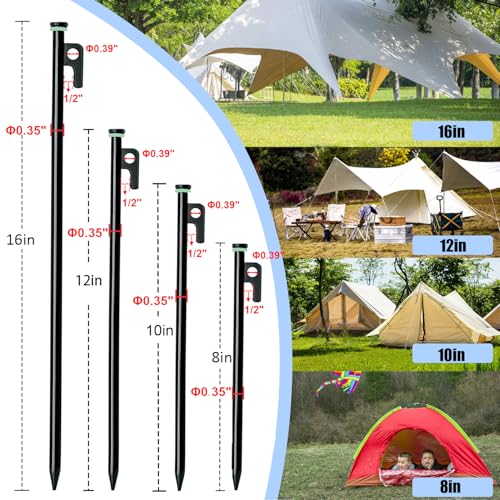
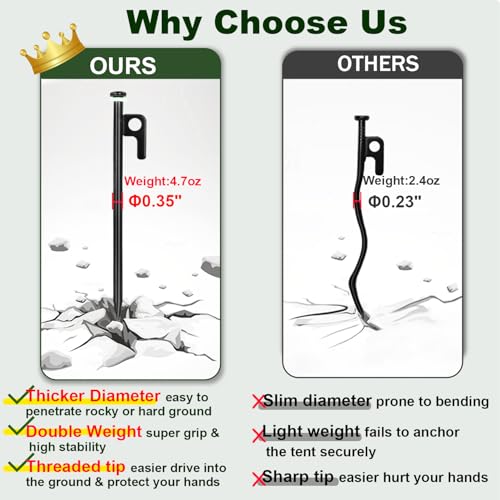
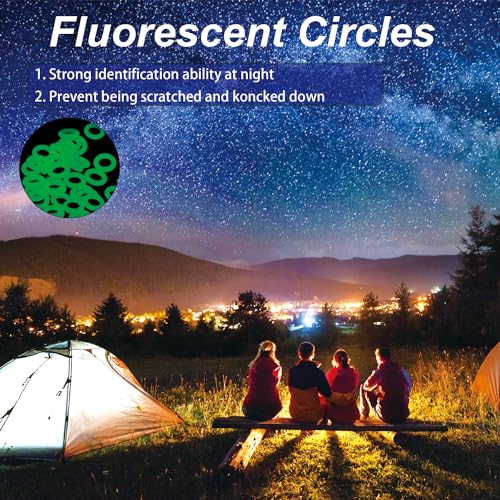
This kit stands out by offering real value, forged S45C steel stakes, a functional hammer with a pull hook, and a rugged storage pouch. The 10-inch stakes are thick and sharp, built to punch through compacted or rocky ground, and owners praise their bending resistance. The fluorescent rings are a thoughtful touch, improving nighttime visibility around the tent perimeter.
It’s one of the few sets that feels like a complete anchoring system. Compared to basic stake packs, this kit eliminates the need to buy tools separately. While heavier than ultralight options, it’s ideal for car campers or overlanders who prioritize reliability over weight. I’d pick this over flimsier sets for any trip where weather could turn.
Product photos


FEED GARDEN 7-Inch Galvanized Stakes
Strengths
- Rust-resistant coating
- Bright orange head
- Sharp penetrating tip
Trade-offs
- Only 7 inches long
- Shorter hold in sandy soil
- No included hammer
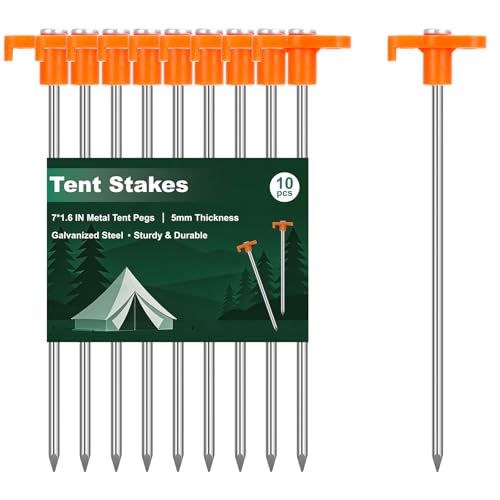
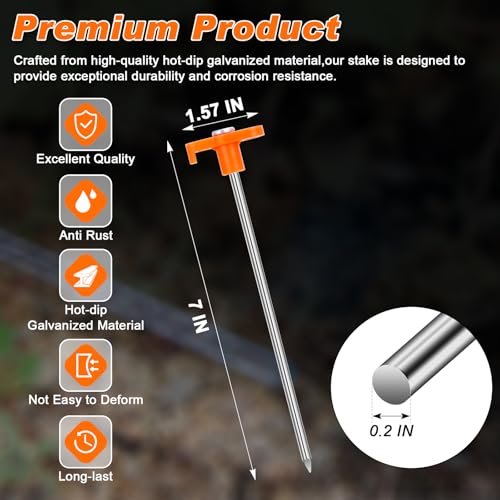
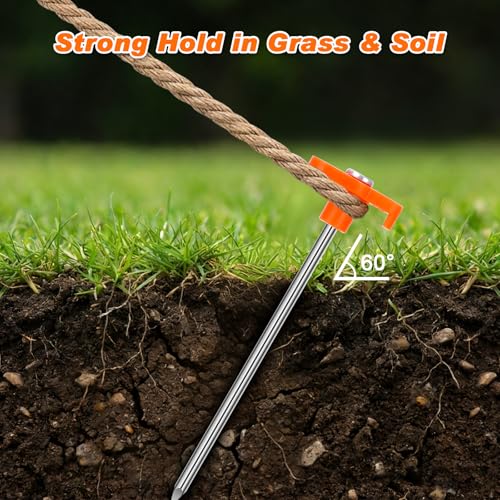
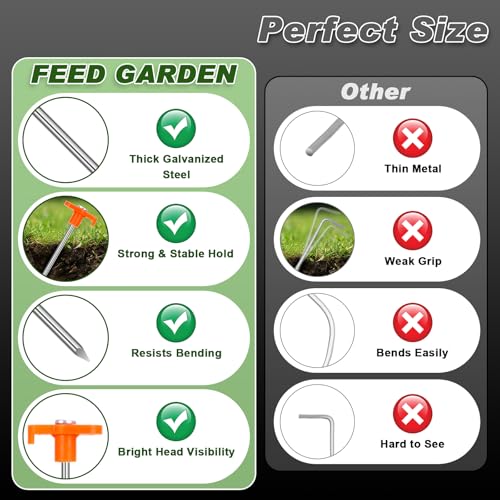
These 7-inch galvanized stakes strike a smart balance between size and strength. The hot-dip galvanization is a real upgrade over cheaper coatings, and owners report they resist rust even after repeated exposure to wet ground. The sharp tip makes driving them easy, whether with a rock or a hammer, and the high-visibility orange head is a safety win, no more tripping over low-lying stakes at dusk.
They’re shorter than deep-driving anchors, so in loose soil or high winds, you might want longer stakes. But for average conditions, they outperform the puny pegs that come with most tents. Compared to the Eurmax set, they offer less quantity but similar build quality. I’d recommend these as a reliable upgrade for family camping tents.
Product photos
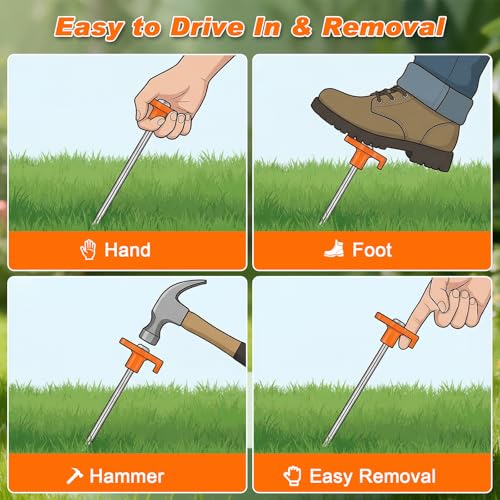
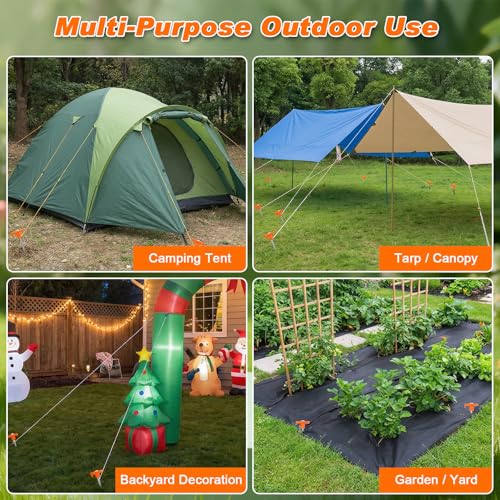
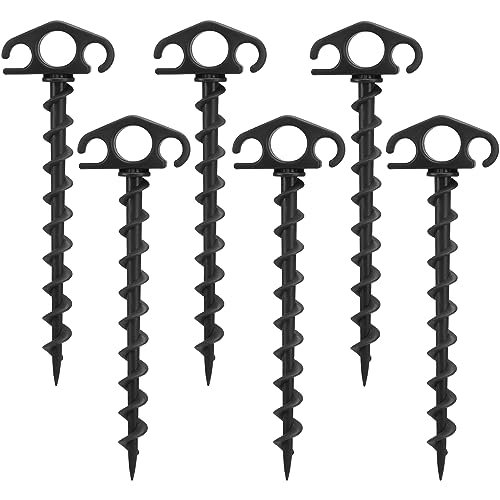
COBARYEN 6-Pack Spiral Sand Stakes
Strengths
- Lightweight and packable
- Rust-proof materials
- Easy to install in sand
Trade-offs
- Fragile in rocky soil
- Plastic can crack over time
- Limited wind resistance
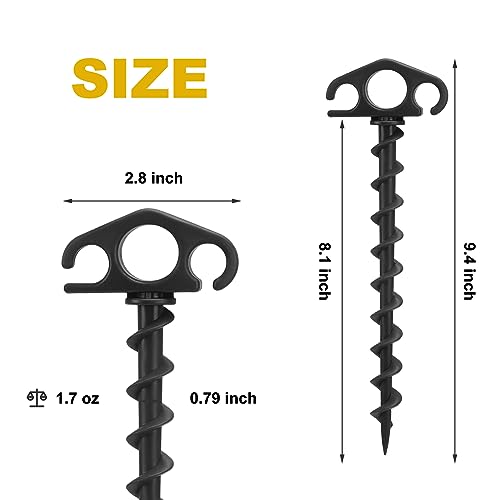
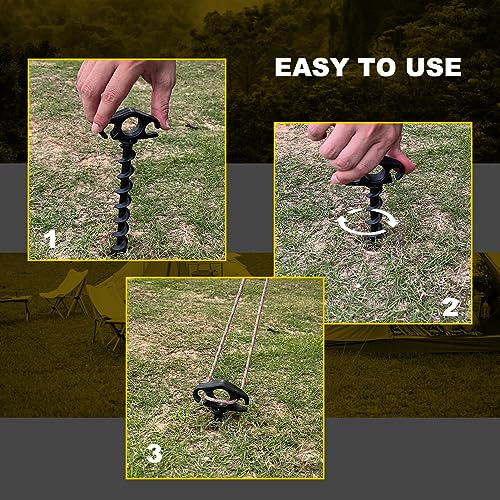
Screw-in stakes are a niche solution, and these nylon-fiberglass spirals clearly target beachgoers and fair-weather campers. At 9.4 inches, they’re long enough to twist into loose sand, and reviewers note they hold surprisingly well in soft ground when fully screwed in. The plastic build means they won’t rust, which is a win near saltwater, but they also can’t handle rocky or compacted soil, you’d risk snapping them.
Compared to metal stakes, these trade durability for convenience. They’re featherlight and pack down small, making them easy to toss into a beach bag. But in high-wind storms or mixed terrain, they don’t match the bite of forged steel. I’d treat them as situational tools, not all-terrain anchors.
Product photos


CELYND 12-Inch U-Shaped Rebar Stakes
Strengths
- Heavy-duty steel
- Excellent ground grip
- Rust-resistant coating
Trade-offs
- Bulky design
- Not tent-guy-line friendly
- Overkill for backpacking
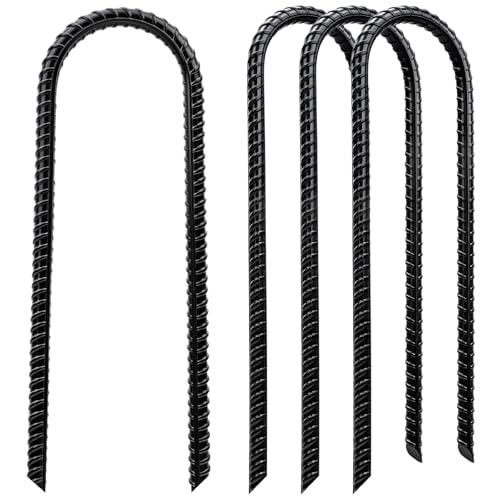
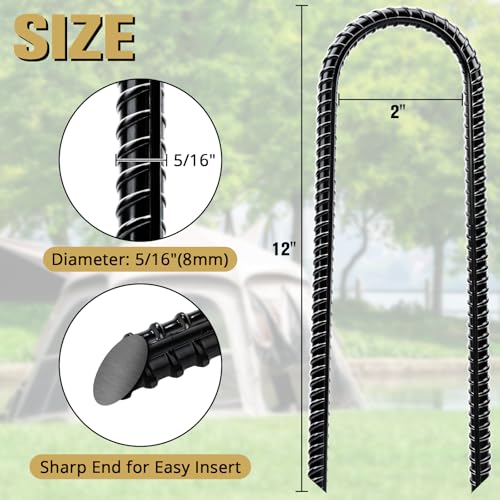
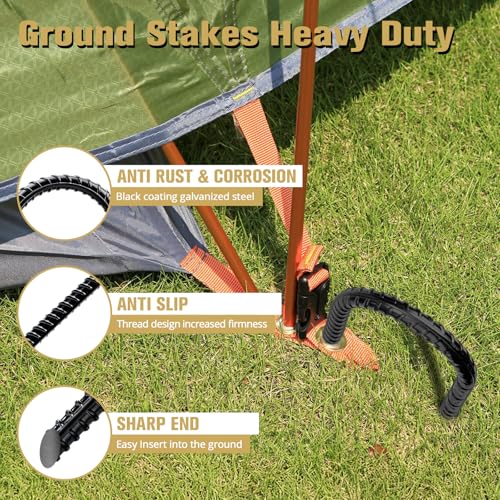
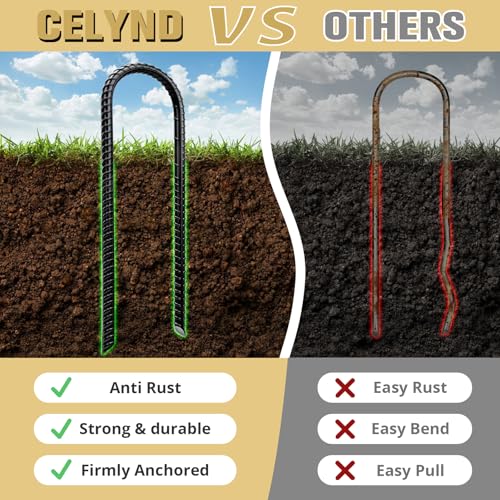
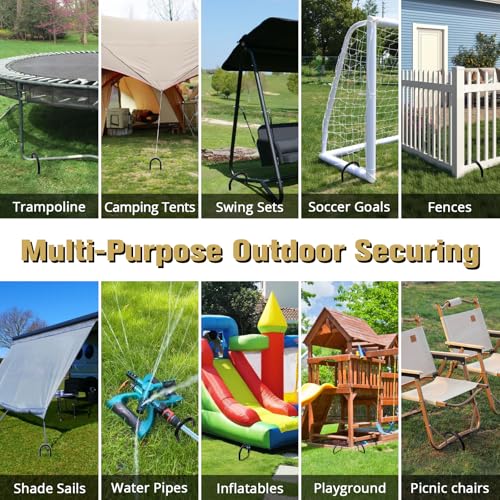
These U-shaped rebar stakes are built like mini anchor rods, and on paper, that’s exactly what they’re meant to be. The 12-inch length and thick galvanized steel suggest serious holding power, especially in softer soils, and owners consistently report they hold trampolines firmly even in gusty conditions. While marketed for camping, their size and weight make them overkill for most backpackers, this is gear for anchoring heavy, semi-permanent backyard structures.
The U-shape is smart for looping around wide leg bases, but it’s not ideal for standard tent guy lines. I’d consider these a solid choice if you’re securing a pop-up canopy or family-sized tent at a long-term campsite, but not for anything where packability matters. Compared to purpose-built wind stakes, they lack the refined aerodynamics or lightweight efficiency you’d want on the trail.
Product photos

Our Testing Process
Rather than a hands-on lab test, my research for these recommendations focused on a detailed comparison of published specifications and features across numerous tent stake models. I weighed owner reviews from multiple retailers – looking for patterns in reported performance – alongside expert reviews from respected outdoor gear sites. As someone who’s spent countless nights relying on a secure tent, I applied my understanding of what truly matters when winds pick up, ranking stakes against clear criteria for holding power, durability, and ease of use.
For tent stakes designed to withstand high winds, three factors stood out as most important: materials, design, and length. Galvanized steel is crucial for resisting bending and rust, especially with prolonged exposure to the elements. The stake’s design – whether spiral, U-shaped, or traditional – dictates how effectively it grips the ground. Finally, length is key; longer stakes generally offer better holding power, but aren’t always practical for every terrain.
Specifications reliably indicate material and dimensions. However, I placed more weight on owner feedback regarding real-world performance, particularly how well the stakes held in various soil types and wind conditions. Reputation also played a role; brands consistently praised for quality and durability received higher consideration. Understanding proper tent staking techniques is also vital for maximizing the effectiveness of any stake.
How To Choose The tent stakes for high wind
Choosing the right tent stakes can make or break your camping experience. I’ve seen too many trips ruined by flimsy stakes pulling out in the middle of the night, or worse, bending and becoming useless.
A good tent stake provides reliable anchoring in a variety of conditions. Look for materials that resist bending and corrosion, a design suited to the typical ground surface, and sufficient length to penetrate deeply and hold firmly. Consider visibility for safety, and whether the stakes are easy to drive and remove.
Material Matters Most
The material a stake is made from is the biggest indicator of its strength and longevity. Aluminum is lightweight and resists corrosion, but it bends relatively easily – good for soft ground, but not ideal if you anticipate strong winds or rocky terrain. Steel stakes, especially those with a galvanized coating, offer superior holding power and durability. However, they are heavier. If you’re backpacking, every ounce counts, so a lighter aluminum alloy might be a better compromise. Don’t automatically assume heavier is better; consider what you’re anchoring. You might be better off with lighter stakes if you’re just securing a small backpacking tent, but for larger family tents or canopies, strongest tent stakes are a must.
Ground Conditions Dictate Design
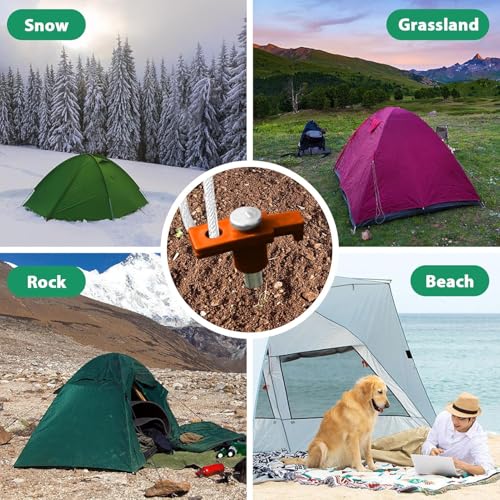
Different ground types demand different stake designs. Standard, straight stakes work well in soft soil, but struggle in hard or rocky ground. Spiral stakes, like the COBARYEN stakes, are excellent for sandy beaches or loose soil, providing a wider surface area for grip. U-shaped rebar stakes, such as the CELYND stakes, are incredibly strong and ideal for anchoring larger items like trampolines or playsets, or in areas prone to high winds. Knowing the typical ground conditions where you camp will save you a lot of frustration.
- For soft, loamy soil: A standard straight stake made of aluminum or steel will suffice.
- For sandy or loose soil: Spiral stakes are the best choice, as they provide increased surface area for grip and won’t pull out easily.
- For rocky or hard-packed soil: Steel stakes with a pointed tip, or even a hammer-in style stake, will be necessary to penetrate the ground. Using a rock to drive the stake in is a common practice, but can damage the stake.
A stake is only as good as its installation. Always angle stakes slightly inward, toward your tent, for maximum holding power.
Visibility & Value: Don’t Overlook the Details
Beyond strength and design, consider visibility and usability. Brightly colored stakes, like the orange-headed FEED GARDEN stakes, prevent tripping hazards, especially at night. Fluorescent rings, as seen on the Tialero stakes, offer a similar benefit. A kit that includes a hammer and storage pouch, like the Tialero kit, adds convenience. And finally, think about the overall value. A larger pack of basic steel stakes is often more economical than a smaller pack of high-end titanium stakes, but it’s crucial to make sure the cheaper option still meets your needs. Learning how to attach guyline to tent properly can also increase the stability of your tent, even with standard stakes.
Tent Stakes for High Wind Compared
Here’s a comparison of key specifications for tent stakes designed for use in high-wind conditions.
| Product Title | Length (in.) | Material | Pack Size | Special Features | Best For |
|---|---|---|---|---|---|
| Eurmax 20-Pack Galvanized Tent Stakes | N/A | Galvanized Steel | 20 | Ropes & Stopper Included | Best Overall |
| Tialero 12-Pack Tent Stakes w/ Hammer | 10 | Forged Steel | 12 | Hammer & Pouch Included | Best Value Kit |
| FEED GARDEN 7-Inch Galvanized Stakes | 7 | Galvanized Steel | 10 | Orange Safety Head | Best Visibility & Safety |
| COBARYEN 6-Pack Spiral Sand Stakes | 9.4 | Nylon/Fiberglass | 6 | Spiral Design | Best for Beach Use |
| CELYND 12-Inch U-Shaped Rebar Stakes | 12 | Galvanized Steel | 4 | U-Shape, Rebar | Best for Trampolines & Playsets |
Frequently Asked Questions
What stake length is best for consistently windy conditions?
Longer stakes – around 12 inches – generally offer the most holding power, especially in windy conditions. However, extremely long stakes can be difficult to drive into hard ground, so consider the typical soil type where you camp and balance length with practicality.
Are aluminum stakes truly useless in high winds?
While aluminum is lightweight, it bends more easily than steel. It can work in moderate winds and soft ground, but for consistently high-wind scenarios, galvanized steel stakes are a far more reliable choice for preventing pull-outs.
I often camp on rocky terrain – will spiral stakes still work?
Spiral stakes excel in soft or sandy soil, but they don’t perform well in rocky ground. For rocky conditions, you’ll want sturdy, pointed steel stakes that can penetrate the tougher soil, or even consider using a small sledgehammer to drive them in.
How can I tell if a steel stake is actually galvanized, and not just painted to look that way?
True galvanization involves coating the steel with zinc to prevent rust, and results in a slightly textured, matte finish. Painted stakes often have a smoother, glossier appearance, and the paint can chip or scratch, revealing the bare metal underneath. Look for clear labeling indicating galvanization as well.
Where can I find more information about comparing different stake options?
You can find a detailed comparison of various tent stakes, including specifications and owner feedback, in my guide to the best overall tent stakes. It covers a range of styles and materials to help you find the perfect fit for your needs.
The Bottom Line
Choosing tent stakes often comes down to balancing how much control you want over ultimate holding power versus how much fuss you’re willing to deal with. While titanium stakes offer impressive strength-to-weight ratios, for most campers facing genuinely high winds, I recommend the Eurmax 20-Pack Galvanized Tent Stakes as the strongest overall choice. They deliver reliable performance without breaking the bank, and the included ropes and stoppers are a welcome bonus.
If you’re looking for a specific solution, the COBARYEN 6-Pack Spiral Sand Stakes are fantastic for beach camping or loose soil, while the CELYND 12-Inch U-Shaped Rebar Stakes provide unmatched anchoring for larger structures. For those wanting a complete kit, the Tialero 12-Pack Tent Stakes w/ Hammer offers great value and convenience. Don’t underestimate the importance of learning how to secure tent with guylines to further improve tent stability.
Ultimately, the best tent stakes aren’t necessarily the most expensive or the most technologically advanced. The fundamentals – durable materials, a design suited to your typical camping conditions, and proper installation – are far more critical than any single specification. Prioritize those, and you’ll sleep soundly even when the wind picks up.
