
Tent Camping Must Haves: The 5 Systems That Stop a Bad Trip
This post contains affiliate links. As an Amazon Associate, we earn from qualifying purchases.
Your must haves for tent camping are the five systems that keep you safe, dry, and fed: a first-aid system, a shelter system, a water system, a food system, and a light system. Packing by system instead of a flat checklist stops you from forgetting the polycord for the rainfly or the fuel for the stove. Missing one piece from a system breaks the whole chain.
Most packing lists are just a jumble of items. You end up with a great sleeping bag but no pad, or a full cook kit with nothing to light the stove. The problem isn’t forgetting a single item. It’s forgetting the item that makes the other ten things work.
This guide walks through the five non-negotiable systems. We’ll cover why the National Park Service prioritizes them, what specific gear you need in each, and the exact mistakes that turn a weekend trip into a miserable slog.
Key Takeaways
- Pack by the five systems (first-aid, shelter, water, food, light) instead of a single long list. A system fails if any part is missing.
- A “two-person tent” fits two sleeping bodies and nothing else. For two people plus gear, buy a three-person tent.
- In bear country, store all food, trash, and scented items like toothpaste in a bear-resistant container placed on flat ground at least 100 feet from your tent and any water source.
- Replace the thin, bendy tent stakes that come with your tent immediately. Heavy-duty steel or aluminum stakes are the first upgrade for any shelter.
- Drink at least 2 liters of water per person per day, and double that in hot climates or at altitude. Dehydration headaches start subtle and ruin a trip by day two.
The 5-System Camping Method
Forget the 50-item checklist. A functional camp runs on five interdependent systems. If your shelter system lacks stakes, your tent flies away. If your food system lacks a way to cook it, you’re eating cold beans.
The official National Park Service Ten Essentials list groups survival items into ten categories, but its core philosophy is system-based thinking: navigation, sun protection, insulation, illumination, first-aid, fire, repair kit, nutrition, hydration, and emergency shelter.
I learned this the hard way on a trip to the Adirondacks. My list was perfect. My systems were not. I had a tent, a sleeping bag rated to 20°F, and a thick inflatable pad. What I forgot was the pump for the pad. By midnight, the pad was half-deflated, and I was shivering on the cold ground despite the “warm” bag. The shelter system failed because one link broke.
TL;DR: Organize your gear into first-aid, shelter, water, food, and light systems. Check that each system is complete and functional before you zip the bag.
First-Aid System: Your Non-Negotiable Kit
This isn’t just a box of bandages you hope to never open. It’s the gear that stops a small problem from becoming a trip-ender. Your first-aid system must address cuts, pain, allergic reactions, and the reality of being hours from a store.
Start with a pre-made kit from a reputable outdoor brand. Then, add these specifics:
* A tick remover or fine-point tweezers. Standard first-aid kit tweezers are often too blunt. A proper tick remover gets the head out cleanly.
* Benadryl (diphenhydramine) for allergic reactions to insect stings or plants.
* Ibuprofen and an anti-diarrheal. Altitude, strange water, and camp food are a potent mix.
* An emergency mylar blanket. It weighs nothing, packs tiny, and reflects 90% of your body heat if someone gets chilled.
Common mistake: Packing a first-aid kit but not knowing how to use the tourniquet or splint inside it — practice with the items in your kit at home before you need them under stress.
Your medications go here too. Prescriptions, daily vitamins, even melatonin if it helps you sleep. This kit stays in your pack or car at all times. It never gets raided for a band-aid at home.
Shelter System: More Than Just a Tent
Your shelter is your house. It needs a roof, walls, a floor, and a way to stay upright. A tent is the centerpiece, but the system includes everything that makes it work.
The tent itself is the easy part. The hard part is sizing it. Manufacturers lie.
| Tent “Person” Rating | What It Really Fits | What You Actually Need |
|---|---|---|
| 2-Person | Two sleeping pads side-by-side, zero gear. | Solo camper with gear, or a very cozy couple. |
| 3-Person | Two pads with a narrow aisle for gear. | Two campers with minimal packs. |
| 4-Person | Three pads comfortably, or two with lots of gear space. | Two campers who want to keep packs inside. |
A two-person tent means room for two sleeping bodies. Not two people and their backpacks. Not a dog. For car camping with a partner, a four-person tent is the realistic minimum for comfort.
The rest of the system is what most lists forget:
1. A ground tarp or footprint. This goes under your tent to protect the floor from abrasion and moisture. It should be slightly smaller than the tent’s footprint so it doesn’t channel water underneath.
2. Heavy-duty tent stakes. The thin, wire stakes included with most tents are garbage. They bend in hard soil and pull out in wind. Buy a set of 10-inch steel or thick aluminum stakes as your first upgrade.
3. 50 feet of polycord (paracord). You need this to string up a rainfly awning, replace a broken guyline, or hang a wet towel. It’s the duct tape of the campsite.
4. A sleeping pad with an R-value. The pad isn’t for comfort first; it’s for insulation. An R-value of 2 or 3 is good for summer. For spring or fall, look for R-4 or higher. That thick air mattress? It often has an R-value below 1. You’ll freeze.
5. A sleeping bag rated for the expected low. The temperature rating is the survival limit, not the comfort limit. If the forecast low is 40°F, get a bag rated for 20-30°F.
Breathing inside your sleeping bag on a cold night introduces moisture into the insulation. By morning, that moisture has chilled, and you’ll feel colder than if you’d slept with the bag slightly open around your face. Vent it.
TL;DR: Your shelter is a tent, a ground protector, real stakes, cordage, a sleeping pad for insulation, and a bag rated 10-15 degrees below the forecast. Miss one, and the whole thing fails.
Water System: Plan for Thirst and Hygiene
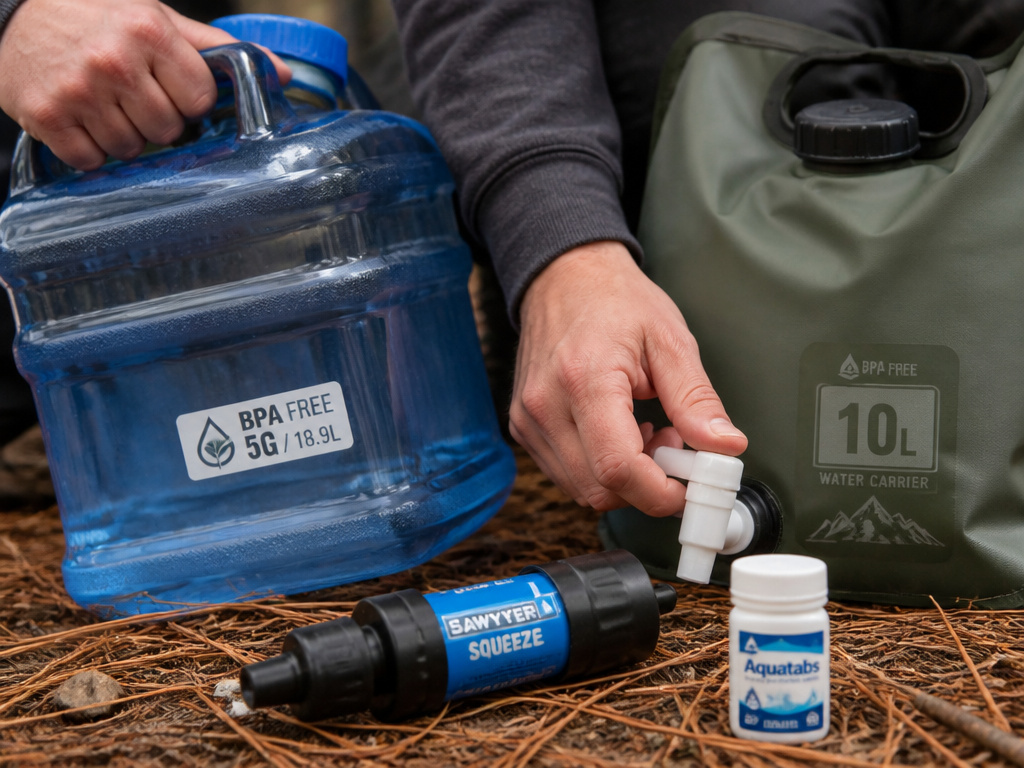
The NPS camping packing list recommends drinking at least 2 liters of water per person per day. In the desert or at altitude, double it. Your water system covers drinking, cooking, cleaning, and putting out your campfire.
You have three choices for sourcing water, each with its own gear needs.
| Water Source | Required Gear | Biggest Risk |
|---|---|---|
| Carry It In | Large containers (5-gal jugs, multiple 1L bottles). | Running out. Miscalculating usage is easy. |
| Filter It | Pump filter, gravity filter, or squeeze filter + dirty water bags. | Filter clogging or breaking without a backup. |
| Treat It | Chemical tablets (iodine/chlorine dioxide) or a UV purifier. | Waiting time (30 mins to 4 hours). Bad taste with some chemicals. |
For most car camping, carrying it in is simplest. Use dedicated BPA-free jugs, not old milk gallons. For backpacking or long stays, a Sawyer Squeeze filter paired with chemical tablets as a backup is the standard. Never rely on a single method.
Your system also needs a way to use the water. That means a collapsible sink or basin for washing dishes, biodegradable soap, and quick-dry towels. A 10-liter collapsible water carrier with a spigot is a game-changer for camp hygiene.
Food System: Storage Is More Important Than the Recipe
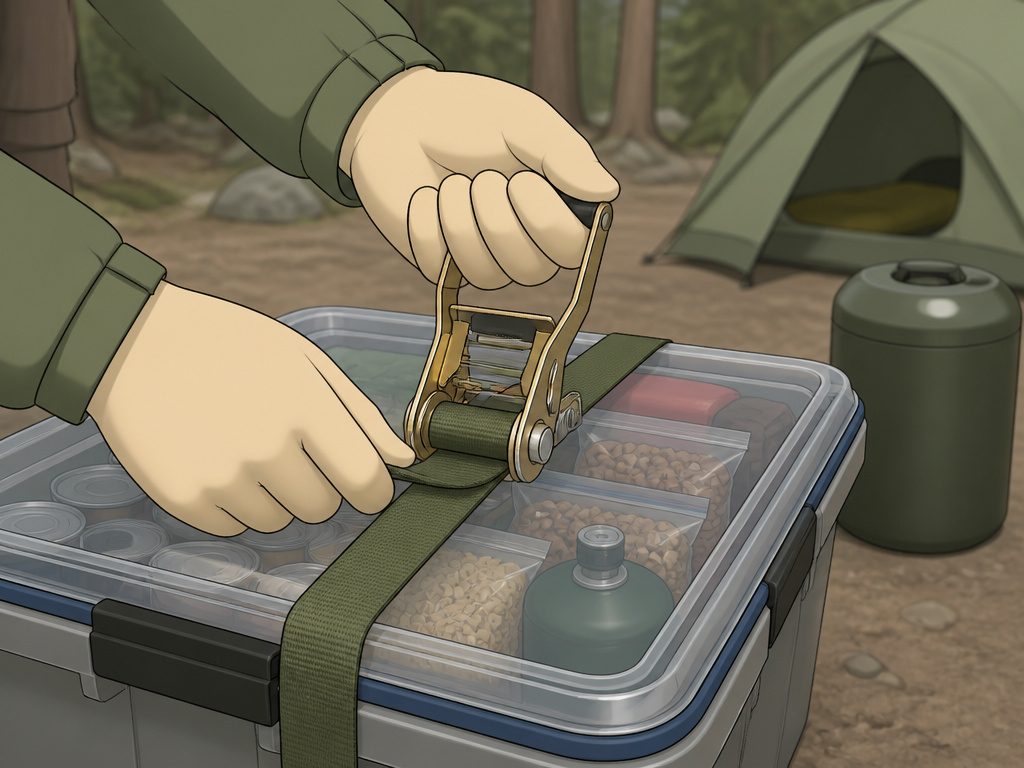
You can eat cold snacks for days. The real challenge is keeping your food safe from animals and your cooking gear organized. This system breaks into three parts: storage, cooking, and cleaning.
Storage is law in bear country. It’s not a suggestion.
Place bear-resistant food containers on flat, level ground at least 100 feet from your tent and away from water sources. This applies to all food, trash, and scented items like toothpaste, sunscreen, and even lip balm.
If bears aren’t a concern, raccoons and mice are. A simple ratchet-strapped plastic bin works. The goal is to make it impossible for an animal to smell or access your food. A single wrapper in your tent pocket is an invitation.
Your cook kit is a choose-your-own-adventure. Match it to your style:
* Car camping feast: A two-burner propane stove, a cast-iron skillet, a medium pot, and a basic utensil set.
* Fast and light: A compact canister stove like the MSR PocketRocket 2, a single 1-liter pot, and a long-handled spork.
* Fire-only: A sturdy grill grate, campfire tripod, or Dutch oven. Remember, many parks have fire bans in summer.
The one tool everyone forgets? A small metal coffee can or dedicated container for used cooking water. You never dump food-scraps water on the ground. You strain it into a bag for trash and disperse the grey water far from camp.
Light and Repair System: See and Fix What Breaks
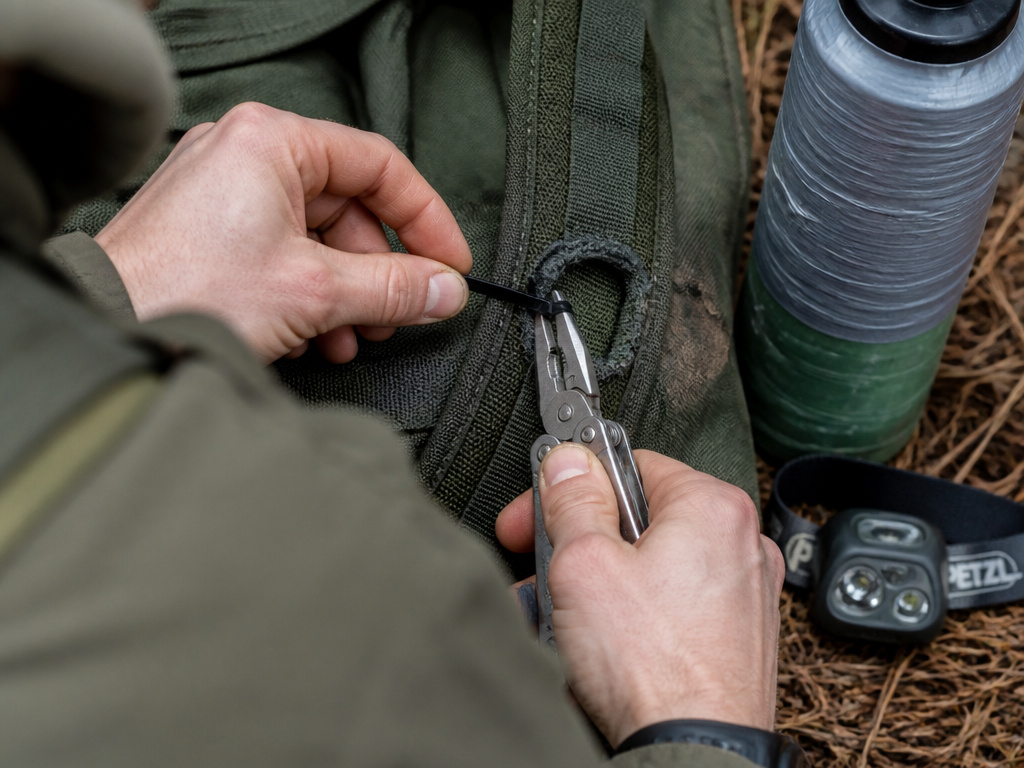
Darkness in the woods is absolute. Your light system is a safety item, not a convenience. Your repair system is what keeps the other four systems running when something snaps.
Your lighting needs layers:
* A headlamp (with fresh batteries) for hands-free tasks like cooking or setting up a tent after sunset.
* A lantern for ambient light inside the tent or on the picnic table. Battery-powered LED lanterns are safer than gas.
* A backup flashlight in a separate bag. One light always fails.
Test every light the night before you leave. Check the battery compartments for corrosion. I’ve opened a “ready” headlamp to find leaked alkaline batteries twice. It ruins the trip.
For repairs, a small kit fixes 90% of problems:
* Ten feet of duct tape wrapped around a water bottle or trekking pole.
* A multi-tool with pliers, a knife, and a screwdriver.
* Ten feet of paracord (you already have this in your shelter system).
* A few zip ties in various sizes.
* A tent pole repair sleeve. This little aluminum tube slides over a broken pole section and can save your shelter.
This kit lives with your first-aid supplies. It’s not for crafting. It’s for the moment a pack strap tears, a tent zipper jumps the track, or a stove fuel line leaks.
Frequently Asked Questions
What is the most forgotten camping essential?
roll of duct tape or a few heavy-duty zip ties. People remember the tent and the sleeping bag, but they never plan for the strap that snaps or the pole that cracks. A multi-tool is a close second.
How do I keep my phone charged while camping?
Use a high-capacity power bank (20,000mAh or more) and put your phone on airplane mode. Screen brightness and cellular searching drain batteries fastest. A small solar panel can extend a power bank’s life on long trips, but it’s slow.
Are air mattresses good for camping?
For car camping in mild weather, they’re fine for comfort. For insulation, they are terrible. Most have an R-value below 1.5. If the nighttime temperature drops below 50°F, you’ll feel the cold ground through the mattress. Use an insulated sleeping pad instead.
What should I not bring camping?
Cotton clothing (it stays wet), scented lotions or perfumes (attracts bugs and bears), glass containers (they break), and electronic entertainment that needs constant charging. The goal is to simplify.
How do I choose a campsite?
Look for flat, high ground free of dead trees or branches overhead (widowmakers). Have your back to the prevailing wind if possible. Be at least 200 feet from any water source to protect the ecosystem and avoid morning condensation.
Before You Go
Packing for camping isn’t about checking boxes on a list. It’s about building five small, reliable machines: one for safety, one for sleep, one for water, one for food, and one for seeing and fixing things. When each system is complete, you stop worrying about gear and start enjoying the fire. Skip the giant air mattress and the cotton sweatshirt. Pack the real stakes, the extra water, and the duct tape. That’s what turns a list of stuff into a good trip.
