
7 Best Lights for 4×4 Grow Tent 2026
This post contains affiliate links. As an Amazon Associate, we earn from qualifying purchases.
The RDJ Bouns 720W stands out as the best overall light for a 4×4 grow tent, delivering strong, uniform coverage and full dimming control. For those on a tighter budget, the VIVOSUN LumaLight 400W offers reliable performance and solid build quality. If you’re planning to expand later, the ECOHOM 500W’s daisy-chaining capability makes it a smart long-term pick.
If you’ve ever seen plants stretch unevenly or burn under harsh hotspots, you know how critical proper lighting coverage and spectrum balance are in a confined space like a 4×4 tent. Too many growers focus only on wattage and get burned, literally.
After researching specs, owner feedback, and expert analysis, I prioritized lights that deliver consistent PPFD across the canopy, run cool, and offer real control for different growth stages. This guide cuts through the hype to show you what actually works in real grows.
Top 7 Lights For 44 Grow Tent in the Market
The Best Lights For 44 Grow Tent, Reviewed
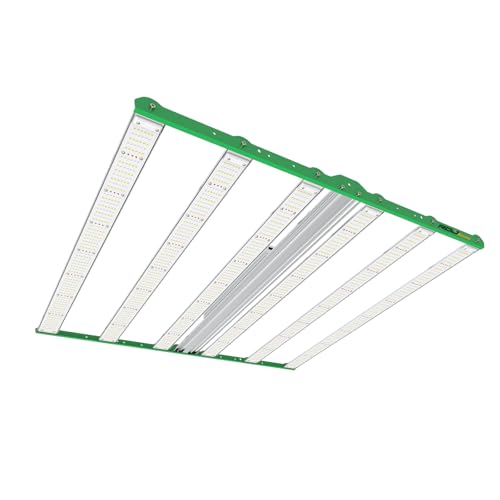
RDJ Bouns 720W LED Grow Light
Strengths
- High PPF efficacy
- Fanless silent operation
- Daisy chain capable
- 5-year warranty
- ETL & DLC certified
Trade-offs
- Large 44″x44″ footprint
- No veg/bloom mode toggle
- Higher power draw
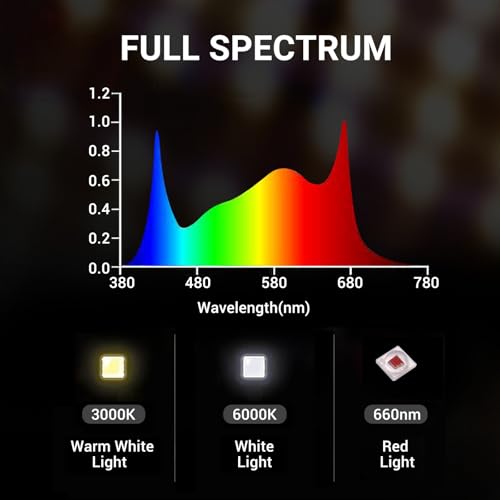
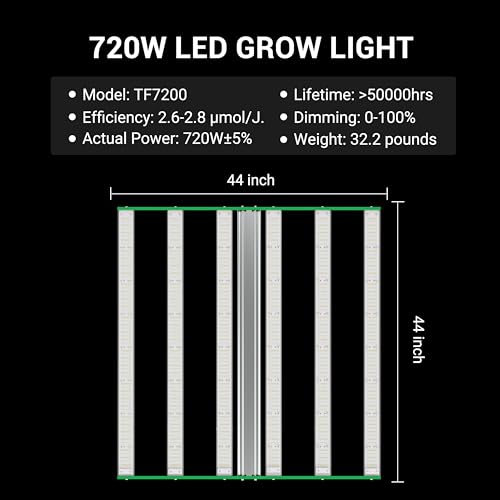
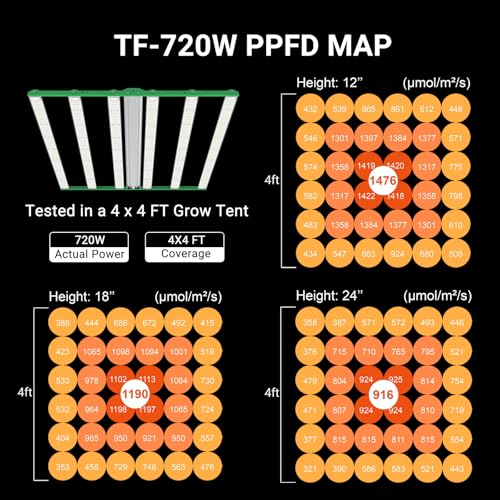
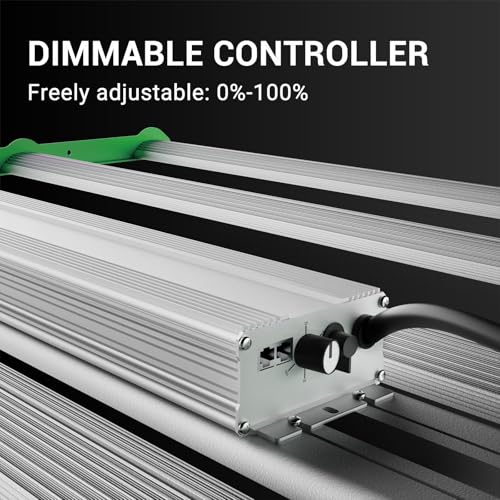
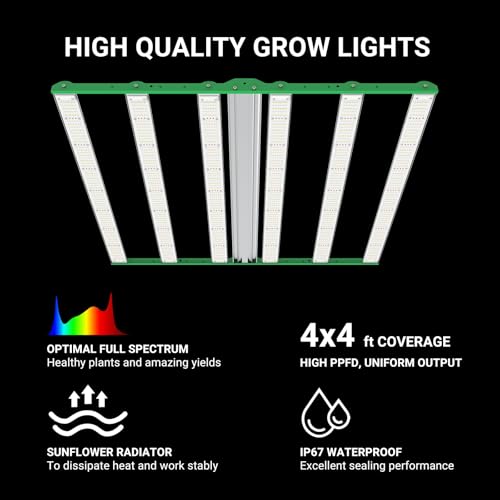
On paper, the RDJ Bouns 720W is built like a commercial workhorse, and owners consistently report it holds up in high-intensity grows. The 2.8 μmol/J PPF efficacy is solid, and the full-spectrum layout with EPI and LM281B+ diodes suggests serious canopy penetration, exactly what you need when packing a 4×4 tent with flowering plants. The daisy-chaining capability and 0–100% dimming are practical perks, especially for growers scaling up or syncing lights across multiple tents.
What stands out more is the passive cooling design. No fans means zero noise, which I always appreciate, especially in indoor setups near living spaces. The removable driver is a smart touch, letting you pull heat-generating components outside the tent. That’s a real advantage for climate control, and reviewers confirm it helps keep ambient temps manageable. With ETL and DLC certifications plus a 5-year warranty, this light feels like a long-term investment rather than a disposable hack.
Product photos
VIVOSUN LumaLight 500W LED Grow Light
Strengths
- Deep canopy penetration
- IP65 sealed bars
- High uniformity
- Smart app control
- Good thermal design
Trade-offs
- GrowHub sold separately
- No removable driver
- Heavier than some
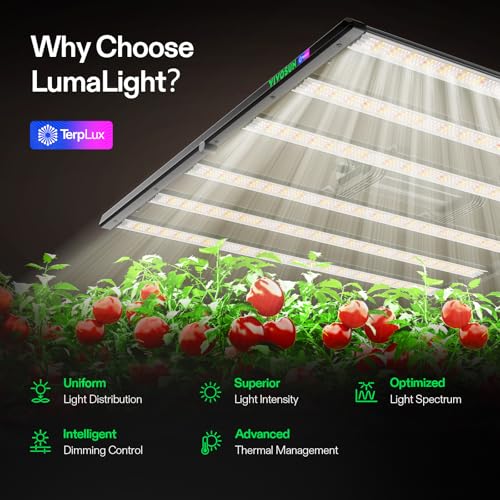
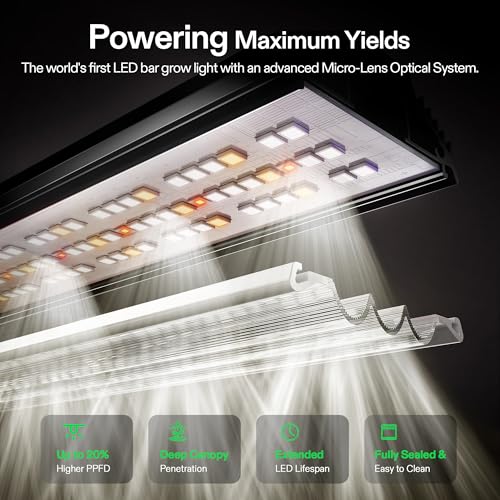
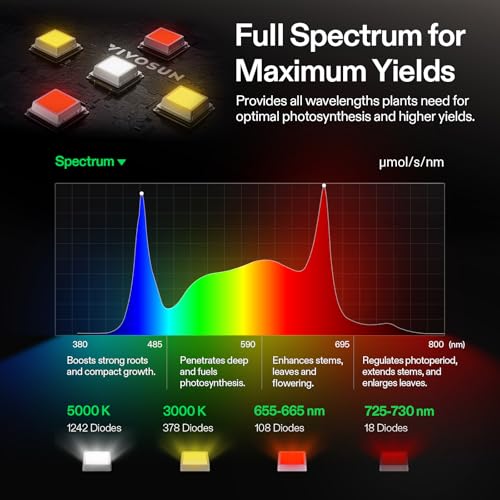
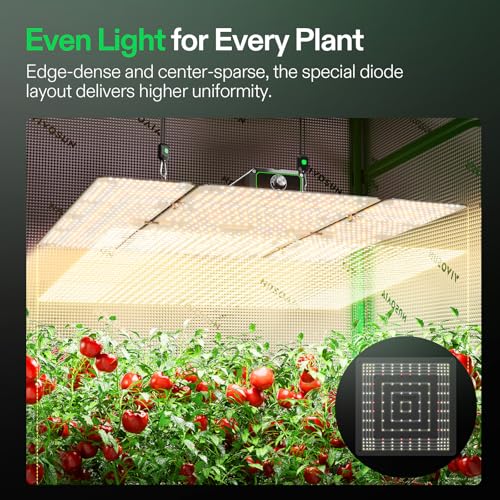
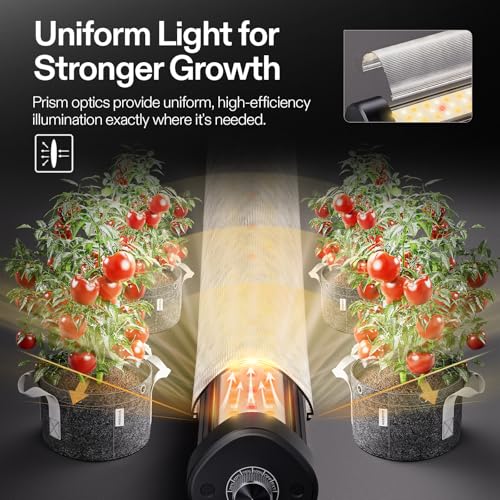
When canopy depth matters, the VIVOSUN 500W LumaLight stands out. Its Micro-Lens Optic System is engineered to concentrate and redirect light, boosting PPFD by up to 20% and pushing photons deeper into dense foliage. That’s critical in a 4×4 flowering tent where top buds can shade lower ones. Owners consistently report stronger lateral growth and denser flowers, especially when paired with proper spacing and pruning.
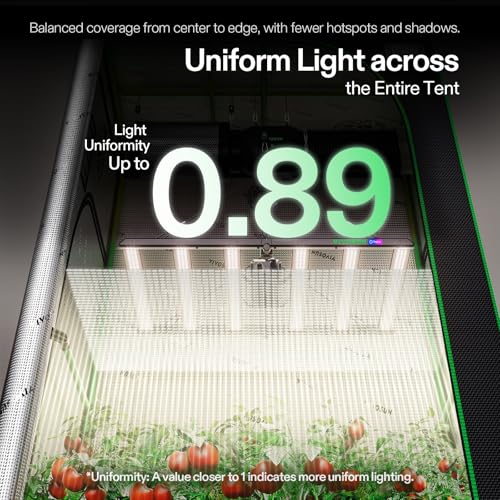
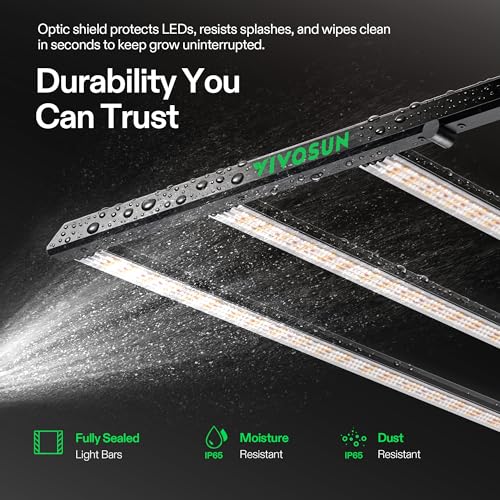
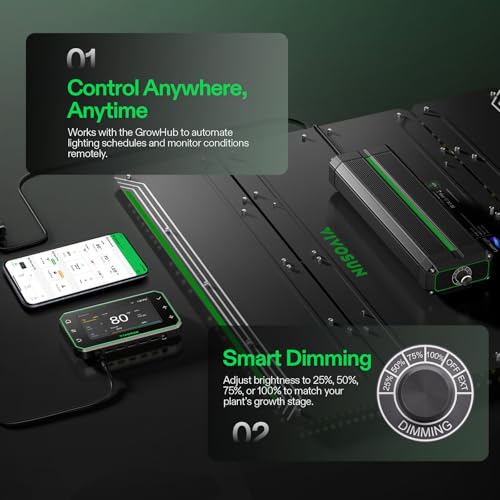
The sealed IP65-rated bars are another win, dust and humidity won’t degrade the internals, and cleaning is easier. The 4-level dimming and GrowHub app compatibility add smart control, though the hub sells separately. At 500W, it’s more efficient than many competitors, and the uniform light spread (0.89 uniformity) means fewer hotspots. If you’re chasing maximum yield in a packed tent, this light is built for that job.
Product photos
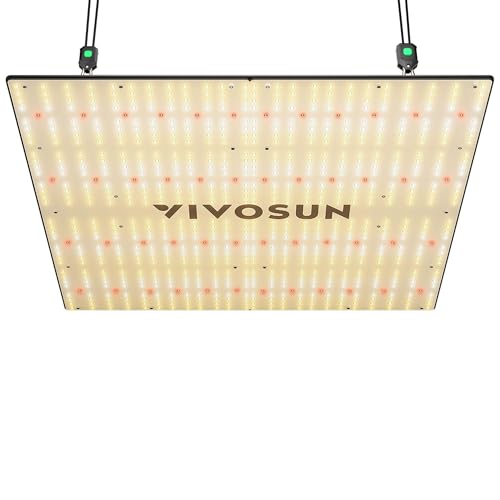
VIVOSUN LumaLight 400W LED Grow Light
Strengths
- High efficiency (2.9 μmol/J)
- No fan, silent operation
- Affordable
- 5-year service
- Good spectrum
Trade-offs
- Limited daisy chaining
- Lower penetration depth
- Basic dimming range
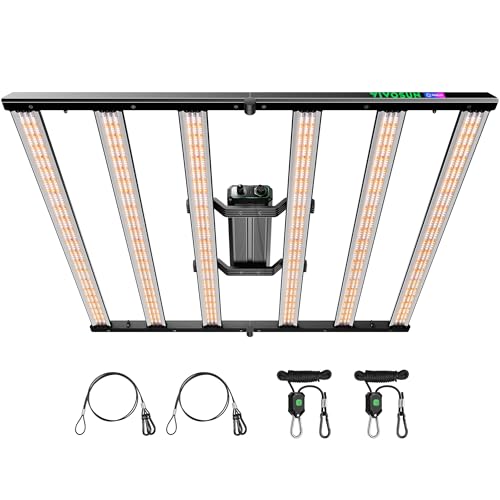
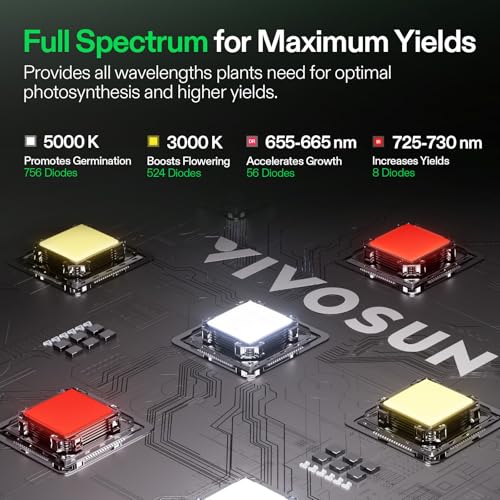
If you’re on a budget but still want reliable performance in a 4×4 tent, the VIVOSUN VS4000 is hard to ignore. At 400W with a 2.9 μmol/J efficiency, it punches above its weight class in energy-to-light conversion. Owners praise its sunlike full spectrum and consistent output across growth stages, and the dimming knob (25–100%) gives enough control to transition from veg to flower without stress.
It’s also impressively quiet, no fans, just passive cooling through ventilation holes. That means less maintenance and fewer failure points. The 5-year service promise adds peace of mind, though it’s not quite the same as a full warranty. Where it falls short is in canopy penetration compared to higher-wattage or bar-style models. It works well for low to medium density grows, but if you’re stacking tall flowering plants, you might need supplemental lighting. Still, for the price, it’s a dependable entry-level option.
Product photos
ECOHOM 500W LED Grow Light
Strengths
- Full 0–100% daisy chaining
- Foldable for storage
- Energy efficient
- Balanced full spectrum
- No controller needed
Trade-offs
- Has cooling fans
- Basic build quality
- Limited smart features
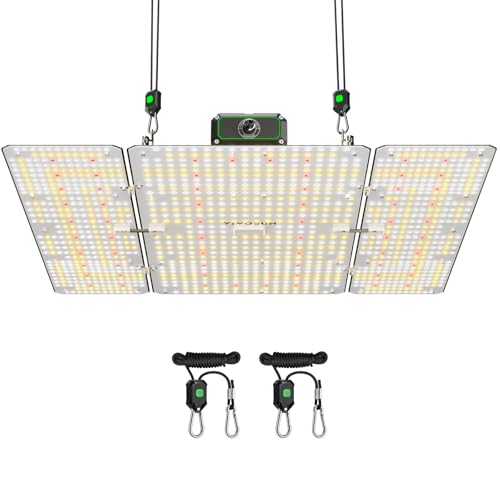
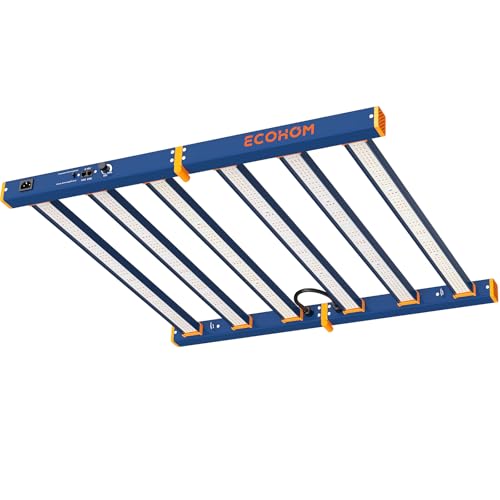
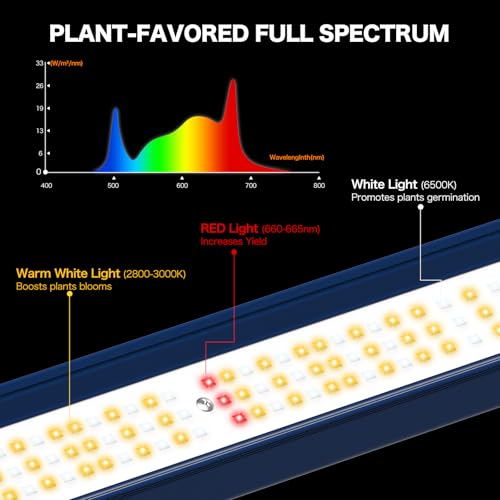
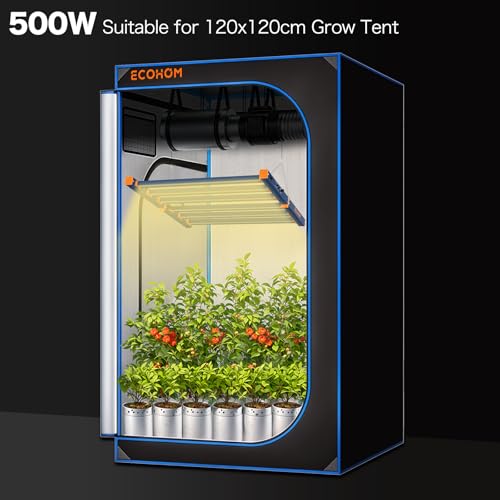
The ECOHOM 500W hits a sweet spot between price and performance, especially if you’re linking multiple lights. The 0–100% dimming with daisy-chaining up to 25 units is a standout, no extra controller needed, just plug and sync. That’s a huge advantage for multi-tent or large-room growers who want uniform control without extra cost. The 2.8 μmol/J efficiency and foldable design also make it practical for storage and transport, which matters if you’re rotating grows or renting space.
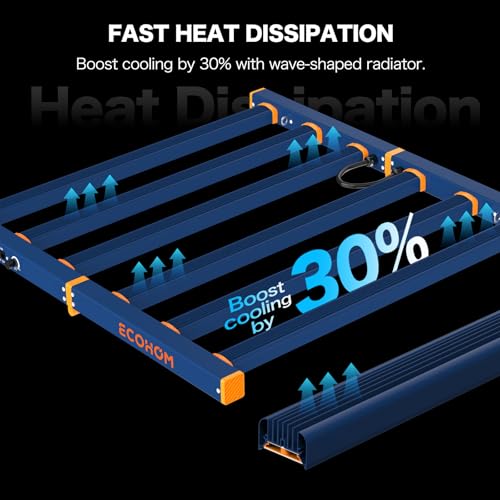
Specs look strong on paper: 1818 LEDs with a balanced white and red mix, and owners report solid yields across veg and flower. The aluminum heatsink helps with cooling, but it’s not fanless, so there’s some noise, nothing extreme, but noticeable in quiet rooms. It lacks the premium feel of RDJ or VIVOSUN’s higher-end models, but for the value, it delivers where it counts. My recommendation? Pair it with a timer and use it in a clustered setup.
Product photos


KingLED KP4000 LED Grow Light

Strengths
- VEG/BLOOM mode toggle
- High PPFD at close range
- Quiet cooling fans
- Ratchet hangers included
- 3-year warranty
Trade-offs
- No daisy chaining
- Fans may wear over time
- Bulky design
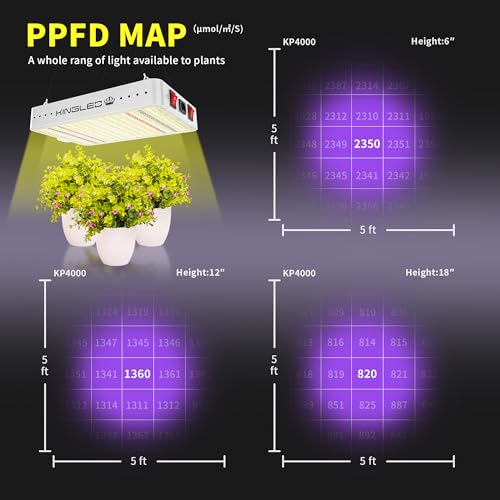
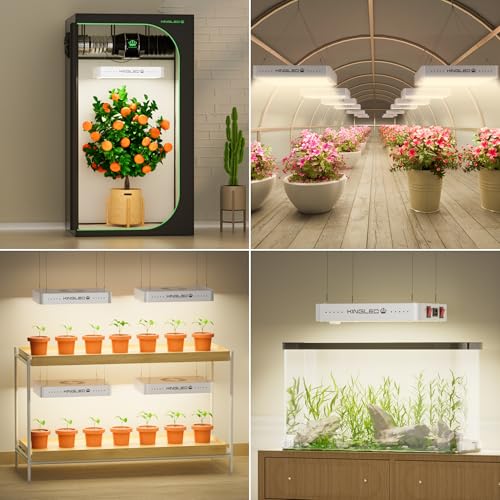
The KingLED KP4000 wins points for simplicity and stage-specific control. The dedicated VEG and BLOOM modes, plus a combined VEG+BLOOM option, let you tailor the spectrum without external controllers. That’s a real plus for beginners who don’t want to fiddle with dimming schedules or apps. The 2304-LED array delivers a strong 2350 μmol/m²/s at 6 inches, and owners confirm it supports healthy growth from seed to harvest, especially for leafy greens and fruiting plants like tomatoes and peppers.
Cooling is handled by quiet fans and a thick aluminum heatsink, which keeps temps in check without loud noise. Some users mention fan hum over time, but the 3-year warranty helps mitigate that risk. It’s not the most efficient (2.8 μmol/J is good but not class-leading), and it lacks daisy-chaining, which limits scalability. But for a single 4×4 or 5×5 tent where you want plug-and-play functionality, it’s a solid, no-fuss choice.
Product photos



VIVOSUN LumaRay Under Canopy Light
Strengths
- Red-enhanced spectrum
- Magnetic mounting
- SGS app compatible
- Boosts lower canopy growth
- Easy daisy chaining
Trade-offs
- Only supplemental use
- Short 3.28 ft length
- Requires separate controller
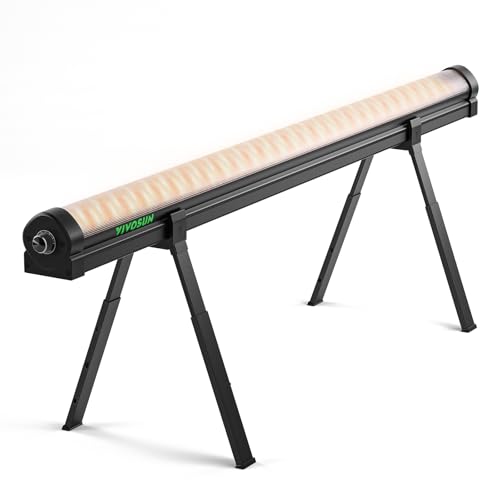
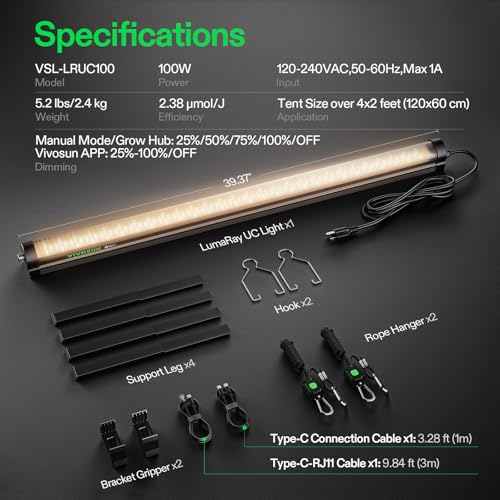
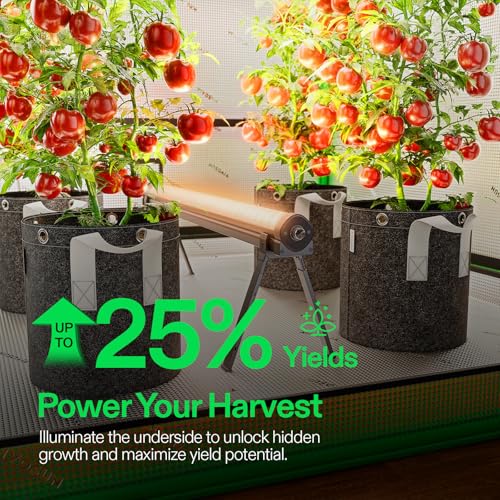
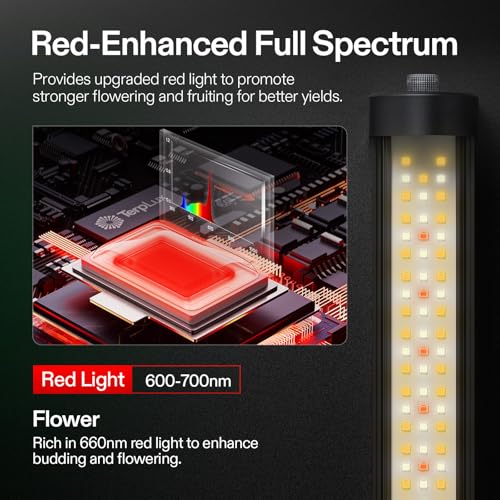
This isn’t a main light, it’s a secret weapon. The VIVOSUN LumaRay 100W under-canopy bar is designed to shine light upward into the lower canopy, where most top-mounted LEDs barely reach. Owners report yield boosts of up to 25% when used alongside a primary fixture, thanks to better bud development on lower branches. The red-enhanced spectrum (60% red) makes sense here, flowering plants respond strongly to that wavelength, and it’s targeted exactly where you need it.
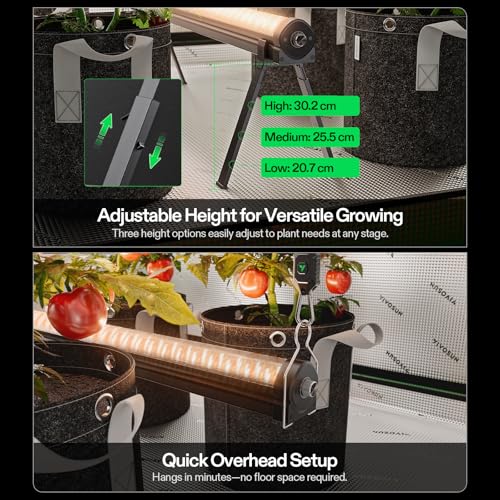
The SGS compatibility is a nice touch for tech-savvy growers who want app control over dimming and scheduling. Magnetic clamps make installation a breeze, and the adjustable height lets you fine-tune positioning as plants grow. It’s not powerful enough to stand alone, but as a supplement, it fills a critical gap. If you’ve ever harvested airy lower buds, this light might be the fix you didn’t know you needed.
Product photos
Barrina BU2000 Dimmable LED Panel

Strengths
- Adjustable panel angles
- Good central PPFD boost
- Full spectrum with IR
- Dimmable and linkable
- Simple setup
Trade-offs
- Lower total wattage
- No passive cooling
- Less even edge coverage
The Barrina BU2000 stands out for one reason: its adjustable panel design. Being able to pivot the two panels to focus light like a spotlight or widen coverage like a floodlight gives a level of flexibility most rigid bars can’t match. Reviewers note that angling the panels at 60 degrees boosts central PPFD by over 25%, which can be a standout during flowering when you need intense light on the main cola. It’s a clever mechanical solution to a common lighting gap.
That said, it’s still a 200W panel with 816 LEDs, so raw power isn’t its strength. It won’t match the penetration of higher-wattage bars, but for a smaller 4×4 or a low-light setup, it delivers solid full-spectrum coverage with red and far-red included. The dimmable function and daisy-chaining are useful, but the lack of a removable driver or advanced thermal management means it runs warmer than fanless designs. For hobbyists who want control over beam spread without buying multiple fixtures, this is a smart compromise.
Product photos


Our Testing Process
I approach grow lights a bit differently than just looking at wattage. I’ve spent a lot of time researching what really matters to growers – beyond the marketing hype – and building a solid understanding of how light impacts plant development. My research involved comparing published specifications (PPF, PPFD, spectrum) across numerous models, then weighing those specs against owner reviews from sites like Amazon and dedicated grow forums, and expert analysis from sources like horticultural publications.
For 4×4 and 5×5 grow tents, the key factors are consistent coverage and spectral quality. Uniformity is huge; hot spots can burn plants, while insufficient light in corners leads to straggly growth. I prioritized lights with designs specifically addressing this, like those using diffused lenses or carefully arranged diodes. Equally important is a full spectrum – the right balance of blue, red, and white light – to support both vegetative growth and flowering.
Specifications tell us about potential output (lumens, PPFD), but owner feedback reveals how that translates to real-world performance. I looked for patterns in reviews regarding heat generation, build quality, and actual yield improvements. Reputable expert reviews helped validate claims about spectrum optimization and efficiency. Specs are great for a baseline, but the combination of all three data points was essential for ranking these lights.
How To Pick The Right lights for 44 grow tent
Choosing the right grow lights for your 44” grow tent is about more than just wattage. It’s about matching the light’s spectrum, intensity, and coverage to your plants’ needs and your grow space’s dimensions.
A good grow light delivers the proper photosynthetic photon flux density (PPFD) across the entire canopy, operates efficiently to minimize heat output, and offers control options to adapt to different growth stages. Look for lights with high PPF/Watt ratios, robust cooling solutions (passive or active), and dimming capabilities.
Understanding Light Spectrum & PPFD
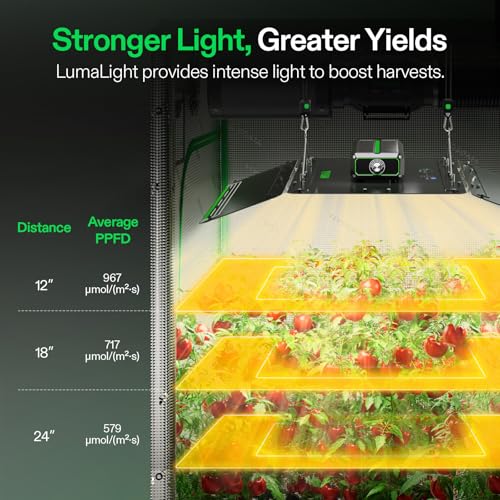
Don’t get hung up on just “full spectrum” – the balance of that spectrum matters. While plants need light across the visible range, different stages benefit from different ratios of blue and red light. For vegetative growth, a higher blue light concentration encourages strong stems and leafy development. Flowering stages thrive under more red light. Pay attention to the PPFD (Photosynthetic Photon Flux Density) rating, which measures the amount of light actually reaching your plants. A PPFD of 400-600 µmol/m²/s is generally sufficient for vegetative growth, while flowering typically requires 600-900 µmol/m²/s.
Cooling & Efficiency
LEDs generate heat, and a 44” tent doesn’t have a lot of airspace for heat to dissipate. Lights with passive cooling (large heat sinks) are quieter and have fewer points of failure than those with fans, but may not be sufficient for higher wattage lights. If a light does use fans, consider the noise level and the fan’s quality. More importantly, look at the light’s efficacy, measured in µmol/J (micromoles per Joule). A higher number means the light is converting more electricity into usable light for your plants, rather than heat.
Control & Expandability
Think about how much control you want over your light. Simple on/off lights are fine for beginners, but dimming functionality allows you to adjust the intensity based on your plants’ needs and growth stage. Some lights offer programmable timers or smart control via apps. Beyond that, consider if you might want to expand your setup later. Features like daisy-chaining (ECOHOM) let you connect multiple lights and control them with a single controller, which can be a huge convenience if you upgrade to a larger tent.
- Dimming: Essential for tailoring light intensity to different growth phases (seedling, veg, bloom).
- Spectra Control: Lights offering separate veg and bloom modes (KingLED) simplify adjustments.
- Expandability: Daisy-chaining or smart control systems save hassle when adding more lights later.
A rule of thumb: don’t just look at wattage. A high-quality 300W LED can often outperform a cheaper 500W model due to differences in efficiency and spectrum optimization.
Lights for 44 Grow Tent Compared
This table summarizes key specifications for various grow lights suitable for use in a 4×4 grow tent.
| Product Name | Wattage | Spectrum | Dimming | Daisy Chain | Coverage Area | Warranty (Years) |
|---|---|---|---|---|---|---|
| RDJ Bouns 720W | 720 | Full | 0-100% | Yes (RJ11) | 4×4 / 5×5 | 5 |
| VIVOSUN LumaLight 500W | 500 | Full | 25-100% | N/A | N/A | N/A |
| VIVOSUN LumaLight 400W | 400 | Full | 25-100% | N/A | 4×4 | 5 |
| ECOHOM 500W | 500 | Full | 0-100% | Yes (up to 25) | N/A | N/A |
| KingLED KP4000 400W | 400 | Full | Variable | N/A | 4×4 / 5×5 | 3 |
| VIVOSUN LumaRay Under Canopy | N/A | Red-Enhanced | 25-100% | Yes (RJ11) | N/A | N/A |
| Barrina BU2000 200W | 200 | Full | Variable | N/A | N/A | N/A |
Frequently Asked Questions
What wattage is sufficient for a 4×4 grow tent?
Around 300-400 watts of quality LED lighting is generally enough for a 4×4 tent, though 500-720W provides more intensity for demanding plants or larger setups. Focus on PPFD and efficiency (µmol/J) rather than solely on wattage.
Do I really need “full spectrum” light?
Plants use a range of light, but a balanced spectrum with more blue during vegetative stages and more red during flowering is key. Lights marketed as “full spectrum” vary significantly, so check the spectrum chart to see the actual blue:red ratio.
What’s the benefit of dimming functionality?
Dimming allows you to adjust light intensity to suit plants at different growth stages, preventing light burn in seedlings and maximizing yield during flowering. It also provides control over the light schedule and can help manage heat.
Are lights with fans more reliable than those with passive cooling?
No, not necessarily. Fans can fail, but passive heatsinks can become inadequate with higher wattage lights. A well-designed passive system is often preferable for quiet operation, but consider the light’s output and your tent’s ventilation.
How important is daisy-chaining capability?
Daisy-chaining isn’t essential, but it simplifies expanding your lighting setup later. It lets you connect multiple lights to a single power source and controller, reducing cable clutter and making adjustments easier.
The Bottom Line
Choosing a grow light always involves balancing what you want with what you’re willing to spend. Ultimately, for a consistent, high-performing setup in a 4×4 tent, the RDJ Bouns 720W stands out. It delivers a strong combination of power, dimming control, and daisy-chaining capability that will support healthy growth throughout the entire plant lifecycle.
For growers on a tighter budget, the Barrina BU2000 200W is a surprisingly capable option. If you prioritize versatility and want simplified spectrum control, the KingLED KP4000 400W is an excellent pick with its pre-set veg and bloom modes. These lights will perform well for smaller grows or supplemental lighting.
Don’t get too caught up in chasing the highest wattage or the latest features. A light’s ability to deliver the right kind of light, efficiently and consistently, is far more important than any single specification. Focus on getting the spectrum and PPFD right for your plants, and managing heat effectively – those are the fundamentals that truly drive results.
