
How to Clean a Musty Tent and Eliminate Mildew Smell
This post contains affiliate links. As an Amazon Associate, we earn from qualifying purchases.
To clean a musty tent, you need an enzyme-based cleaner like Gear Aid Revivex, a bathtub of lukewarm water, and a full day of drying time. The mildew smell comes from spores embedded in the fabric that soap alone won’t remove. An enzyme cleaner breaks them down. Skip machine washing unless your tent’s label allows it, as agitation can ruin waterproof coatings.
That sour, basement smell wafting from your gear bag is a red flag. It’s not just “camping smell”, it’s active mildew, and it can start colonizing your tent’s fabric in as few as 24 hours after a wet trip. I learned this the hard way with a tent I loved.
I’m Chloé, a tent-obsessed hiker who’s pitched shelters from Scottish glens to Utah canyonlands. My first real tent was a Big Agnes Copper Spur HV UL2. After a soggy weekend on the Oregon coast, I packed it away almost dry, thinking my garage was fine. Two months later, the musty odor was permanent, and the polyurethane coating on the floor had begun to peel and flake. That was a $450 lesson in why “mostly dry” isn’t dry enough.
This guide is the process I follow now to rescue gear and keep my current shelter fresh. We’ll cover the only reliable way to kill mildew odor, a professional’s controversial take on machine washing, and the storage swap that can add years to your tent’s life.
Key Takeaways
- Musty smell equals active mildew. You need an enzyme cleaner, not soap or detergent, to break down the organic matter causing the odor.
- Hand-wash in a bathtub using 2 ounces of a cleaner like Revivex per 20 gallons of lukewarm water. A standard tub holds 40-60 gallons.
- Complete drying is non-negotiable. A tent that feels dry can still have damp seam tape. Pitch it in a breeze for at least 24 hours.
- Store your tent loosely in a large, breathable bag (like a cotton pillowcase), not the original compression sack. Tight storage traps moisture.
- Mildew and moisture damage are not covered under most manufacturer warranties, including MSR’s limited warranty.
What Causes That Musty Smell in Tents?
That unmistakable odor is the calling card of mold and mildew. These fungi thrive in the perfect storm your tent provides after a trip: organic food sources (dirt, skin cells, pollen), trapped moisture, and residual warmth.
Mildew can start forming on a wet, crumpled tent in as few as 24 hours. This rapid colonization is why packing a tent damp, even just overnight, is the most common mistake.
The smell itself is a metabolic byproduct. More critically, prolonged moisture can lead to hydrolysis, the premature breakdown of the polyurethane waterproof coating on your tent’s floor and rainfly. Once that coating fails, your tent starts wicking water instead of shedding it. This damage, along with mildew stains, is explicitly excluded from coverage under warranties like MSR’s.
TL;DR: The smell is active mildew feeding on damp fabric. Ignoring it risks permanent odor and can destroy your tent’s waterproofing through hydrolysis.
What’s the Best Cleaner for a Musty Tent?
You need a cleaner that attacks the root cause, not the symptom. Mild soap just moves dirt and mildew around. An enzyme-based cleaner, however, uses proteins to actually break down and digest the organic matter that causes the smell.
A musty tent is a sign of embedded mildew spores. Standard soap and water will mask the odor temporarily, but it returns stronger. An enzyme cleaner like Gear Aid Revivex is formulated to break down the organic source without harming technical fabric coatings.
For reliability, Gear Aid Revivex is the industry standard. The dilution is specific: 2 ounces of cleaner for every 20 gallons of water. Since a standard bathtub holds 40 to 60 gallons, you’ll need 4 to 6 ounces for a full soak. This precise mix ensures effectiveness without leaving a residue that can attract more grime.
| Cleaning Agent | Primary Use Case | Key Risk to Tent |
|---|---|---|
| Enzyme Cleaner (e.g., Revivex) | Eliminating active mildew, body oils, and food stains. | Minimal when correctly diluted. The safest effective option. |
| Mild, Non-Detergent Soap | Removing fresh surface mud, dust, or sand. | Can leave film that degrades PU coatings and attracts dirt over time. |
| Vinegar Solution (1:3 ratio) | Addressing mild odors or water mineral deposits. | Acidity can degrade silicone coatings and seam tape with repeated use. |
| Baking Soda Paste | Scrubbing ground-in dirt on tent floors only. | Abrasive; will damage and dull the finer fabric of rainflies. |
The Safe Hand-Wash Method, Step-by-Step
This is the method I use and the one tent makers like MSR recommend. It’s gentle, controlled, and preserves your investment. Before starting, gather your cleaner, a soft sponge or microfiber cloth, and access to a bathtub or a very large basin.
- Shake and Vacuum. Set up your tent loosely in a shaded area. Shake it vigorously, then use a vacuum hose attachment to remove dirt, leaves, and pine needles from corners and seams. This prevents grinding debris into the fabric during washing.
- Pre-treat Stains. For stubborn mud, sap, or bird droppings, dab gently with a sponge dampened in lukewarm water and a drop of mild soap. Don’t scrub. For most storm-resistant tents that see heavy use, the floor often needs this extra attention.
- The Enzyme Soak. Fill your tub with lukewarm water. Add the measured amount of enzyme cleaner. Submerge the tent body and fly, gently agitating to ensure the solution penetrates. Soak for 10-15 minutes, no longer, as prolonged soaking offers no extra benefit.
- Rinse Thoroughly. Drain the tub. Use a hose or showerhead on a gentle setting to rinse every part of the tent until the water runs completely clear. Any cleaner residue left behind will feel sticky and attract dirt.
- Dry Completely. This is the critical step. Re-pitch the tent in a shaded, breezy spot. Open all doors and vents. Wipe the interior with a dry towel, especially along seams. Let it air dry for a full 24 hours, flipping it halfway through.
Honestly, just walk away after you pitch it. I’ve been there, staring at a tent that feels dry, fighting the urge to stuff it and be done. Walk away. Come back after dinner. Flip it. Then walk away again. That extra patience is cheaper than a new tent.
Can You Put a Tent in the Washing Machine?
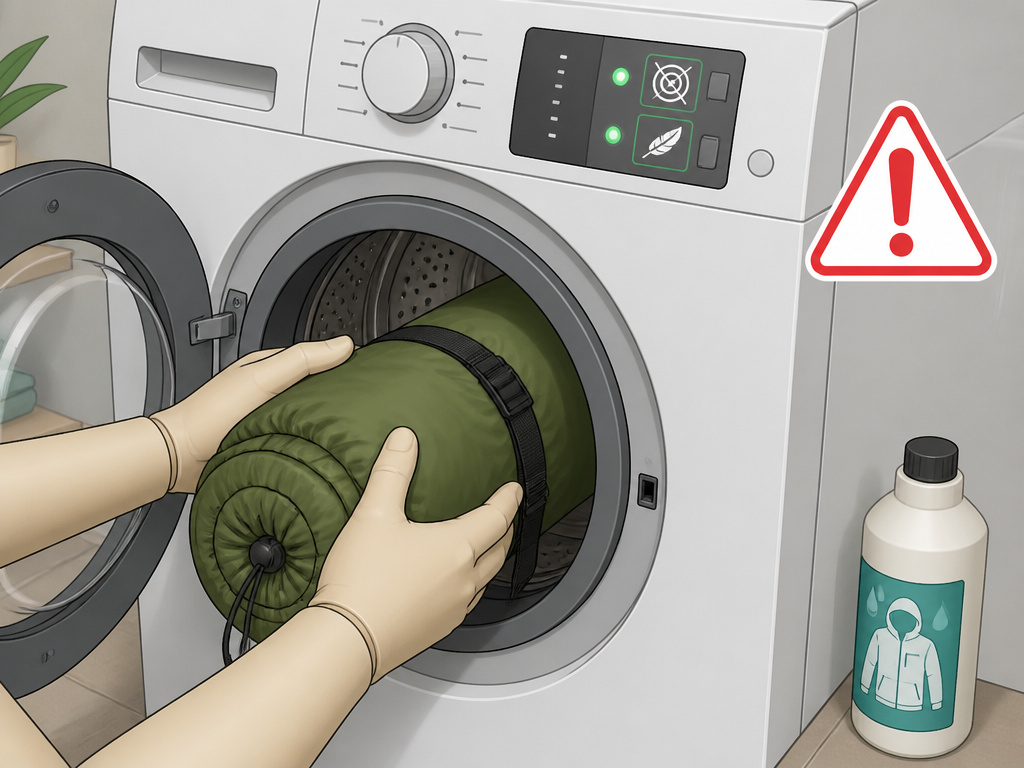
The universal manufacturer advice is a hard “no.” The agitator in a top-loading machine will shred seams and delaminate coatings. However, there is one noted professional dissent that’s worth understanding.
Chris Pottinger, an outdoor equipment designer with experience at REI, The North Face, and Big Agnes, has stated a front-loader might be used on its most gentle, no-spin cycle due to the lack of a central agitator.
Before you start: Machine washing typically voids tent warranties. The risk of irreversible delamination is high. A broken tent is a costly mistake, so this is a true last resort.
If you proceed, use only a front-loader, remove all poles and stakes, and run the tent alone with a technical cleaner. Select the gentlest cycle with cold water and disable the spin function entirely. The centrifugal force of spinning can stress seams and coatings. For comprehensive, safe steps, the Wirecutter tent cleaning guide presents this as a final option for large, heavily soiled family tents. For a standard musty smell, the bathtub method is safer and just as effective.
How Do You Dry a Tent So It Doesn’t Stay Damp?
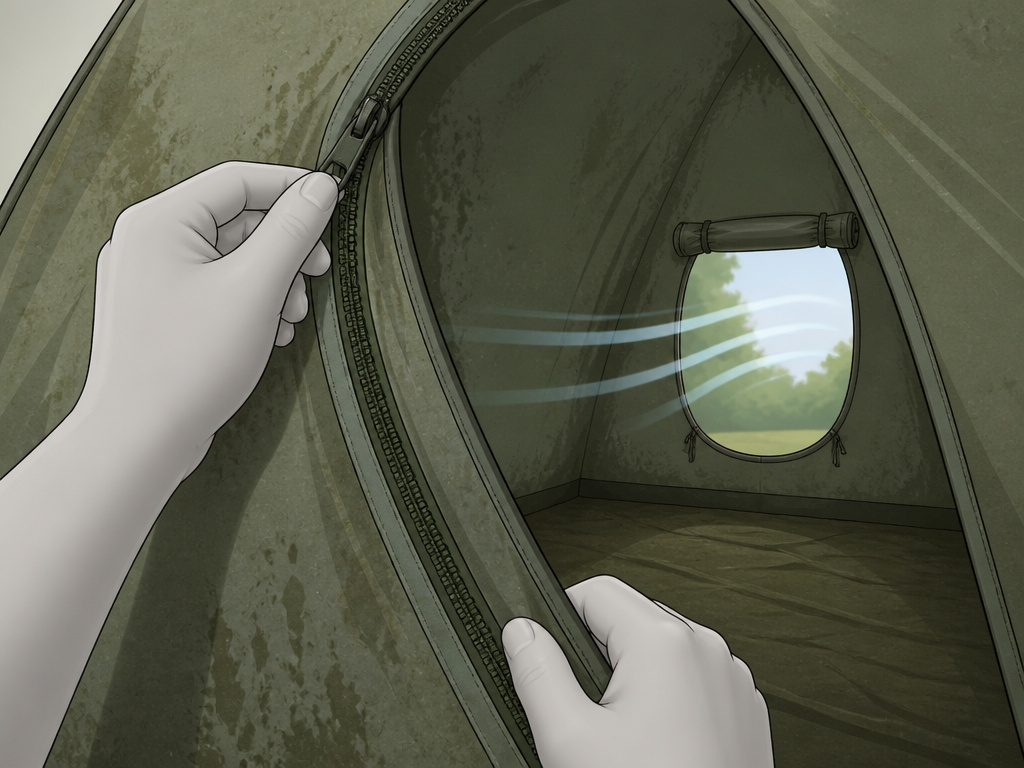
Drying is where the rescue mission succeeds or fails. Mildew cannot grow on dry fabric. Your goal is maximum airflow, not heat.
- Always re-pitch the tent loosely. A crumpled heap creates damp pockets that take days to dry.
- Open every zipper, door, window, and vent to create a through-breeze.
- If possible, separate the inner mesh body from the rainfly and dry them individually.
- Pay special attention to seams and pole sleeves, where moisture loves to hide.
- Allow a full 24 hours in a breezy, shaded area. Direct sun can degrade fabrics over time.
A fan pointed at the tent can cut drying time in half. Never use a hair dryer, heat gun, or place it near a heater. Concentrated heat can melt seam tape and warp fabric coatings. For those camping in humid climates or without a yard, hanging the tent over multiple shower curtain rods in a bathroom with the fan running is a decent indoor alternative.
How Should You Store a Tent to Prevent Mustiness?
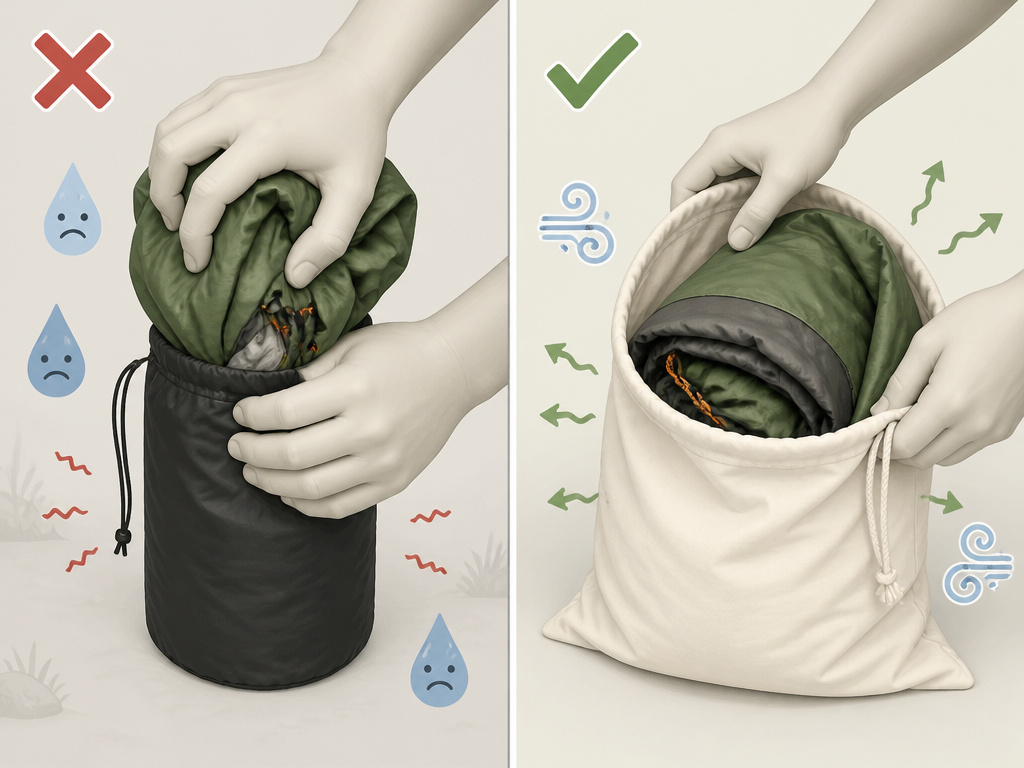
You’ve washed it, you’ve dried it, now comes the part where most tents meet their doom: the closet. That original stuff sack is a mildew incubator, I swear. It’s for transport, not storage.
Common mistake: Storing a tent in its original stuff sack, this compresses the fabric, traps any residual moisture, and can cause the waterproof coating to stick to itself and break down (hydrolysis) within a single off-season.
Chris Pottinger recommends storing a tent in a larger, breathable bag like an old pillowcase or cotton sack. This allows air circulation. Keep it in a cool, dry, indoor closet, never in a damp basement, hot attic, or fluctuating garage temperature. MSR explicitly advises against storage in direct sunlight or damp areas.
This is crucial for all tents, but especially for breathable canvas tent models, which are particularly susceptible to moisture damage and rot.
| Storage Factor | Ideal Condition | High-Risk Condition |
|---|---|---|
| Bag Type | Large, breathable cotton sack or pillowcase. | Original, tight compression stuff sack. |
| Location | Cool, dry, dark interior closet. | Garage, attic, basement, or car trunk. |
| Fabric State | Completely dry, loosely folded. | Even slightly damp, tightly compressed. |
| Result | Fabric and coatings remain intact for years. | High risk of mildew and coating hydrolysis within months. |
After a deep clean, your tent’s factory-applied DWR (Durable Water Repellent) coating on the rainfly may be weakened. Once the fly is bone dry, a spray-on DWR treatment like Nikwax TX.Direct can restore its water-beading ability. Apply a light, even coat and let it cure for 24 hours before packing away.
Frequently Asked Questions
Can I use vinegar or baking soda to clean my tent?
diluted white vinegar solution can help with mild odors, but its acidity can degrade silicone coatings and seam tape over time. Baking soda is abrasive and can damage fabric. For a one-time mild odor, vinegar is okay. For confirmed mildew, an enzyme cleaner is the correct, safe tool.
What if the musty smell won’t come out after cleaning?
Persistent smell often means mildew is deep in the seam tape or foam pole sleeves. A last resort is a soak in a commercial mildew remover like MiraZyme, following label directions exactly. Be aware this may affect waterproofing. If the smell remains, the tent’s integrity for backpacking is likely compromised.
Is mildew in a tent dangerous to my health?
For most people, it’s just unpleasant. However, for individuals with mold allergies, asthma, or respiratory sensitivities, the spores released from a mildewed tent can trigger reactions. If you’re sensitive, wear a mask while cleaning and consider replacing a heavily affected tent.
How can I prevent my tent from getting musty in the first place?
Always dry your tent completely before packing it, even after morning dew. Shake it out, and if possible, give it a few minutes of sun and breeze. Never store it damp. Using a footprint protects the floor from ground moisture. Proper campsite selection and good ventilation are your best preventative tools.
Does machine washing ruin a tent permanently?
It often does. The highest risk is delaminating the waterproof coating, which is irreversible and causes the fabric to wet through. Seams can also be stressed and leak. If you must attempt it, follow the strict front-loader, no-spin guidelines and understand you’re taking a significant risk with your gear.
Before You Go
A musty tent isn’t a death sentence for your gear, but it is a urgent warning. Acting quickly with the right enzyme cleaner and committing to a full, proper dry can almost always bring your shelter back from the brink. The core tenets are simple: gentle hand-washing beats harsh scrubbing, complete airflow beats hurried packing, and loose, breathable storage beats the original stuff sack every time.
Your tent is a faithful adventure partner. Treat it to a proper clean and dry, and it will reward you with many more seasons of reliable shelter. For your next outing, explore our guides on the best tents for heavy rain for stormy weather or essential tent camping accessories to elevate your comfort. Here’s to many more dry, smell-free nights under the stars.
