
9 Best Tents with Stove Jacks 2026
This post contains affiliate links. As an Amazon Associate, we earn from qualifying purchases.
The best tent with a stove jack is the KingCamp Cabin Tent 6-8 Person, it’s spacious, well-built, and designed for serious four-season use. For a lighter, backpacking-friendly option, the Dandelion Shell Hot Tent X3 stands out. If you’re on a budget but still want a roomy shelter, the Bell Tent with Stove Jack 16.4ft offers solid value.
Most people looking for a tent with a stove jack aren’t just planning a weekend car camp, they’re prepping for cold-weather trips, off-grid stays, or true winter camping where heat retention and safety matter. The wrong tent can mean poor airflow, risky carbon monoxide buildup, or fabric damage from heat.
This guide cuts through the hype. I looked at specs, owner feedback, and real-world performance to find models that balance fire safety, ventilation, and durability. These picks reflect what actually works when you’re relying on a wood stove to keep you warm.
Top 9 Tents With Stove Jacks in the Market
The Best Tents With Stove Jacks, Reviewed
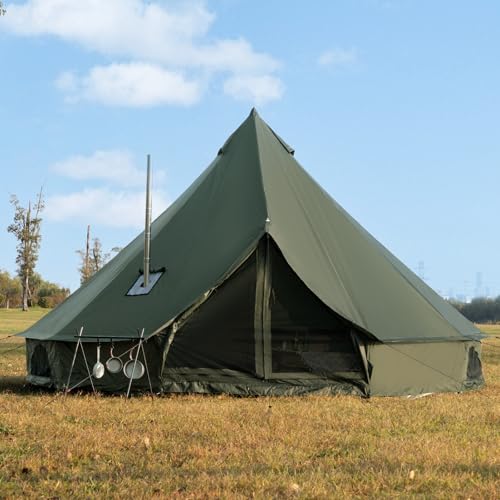
Bell Tent with Stove Jack 16.4ft
Strengths
- Spacious 6–8 person layout
- Stable 4-season design
- Good airflow and bug protection
Trade-offs
- Heavy and bulky
- Needs rainfly in heavy rain
- Oxford less breathable than cotton
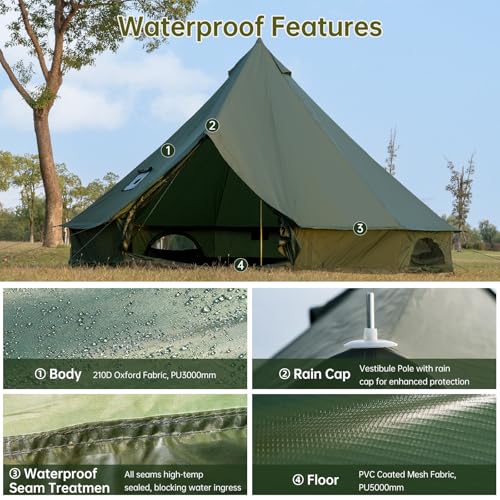
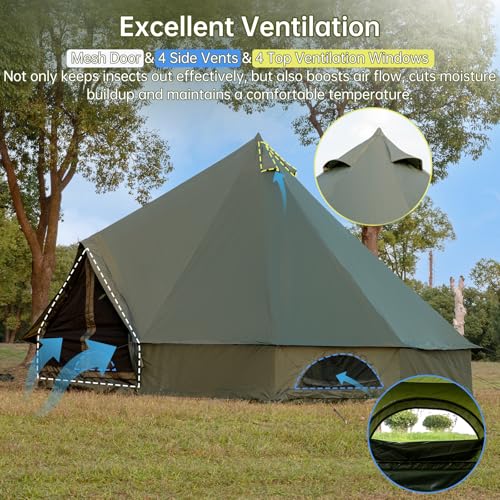
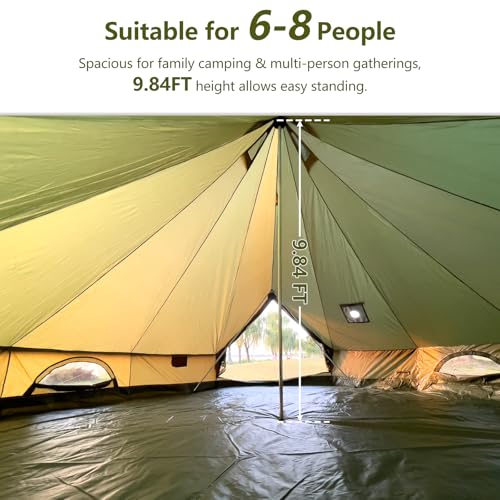
If you’re looking for the most balanced, well-rounded stove jack tent for family or group use, this 16.4ft bell tent is my top pick. It’s not the lightest or fastest to set up, but it delivers where it counts: space, stability, and year-round usability. The tall center height lets adults walk around freely, and the 6–8 person layout easily fits cots, a stove, and gear. The Oxford fabric is 3000mm waterproof and holds up well in rain, though some owners note it benefits from a seam seal and a rainfly in prolonged storms. The built-in stove jack is well-placed and reinforced, and ventilation is solid with multiple mesh windows and doors.
What sets this apart is its versatility. In summer, it breathes well; in winter, it holds heat when paired with a stove. It’s not as breathable as TC cotton, but it’s more durable and easier to maintain. Compared to pricier canvas models, it’s a smarter buy for occasional winter campers who still want glamping comfort. I wouldn’t take it on a backpacking trip, but for car camping, base camps, or family stays, it’s hard to beat.
Product photos

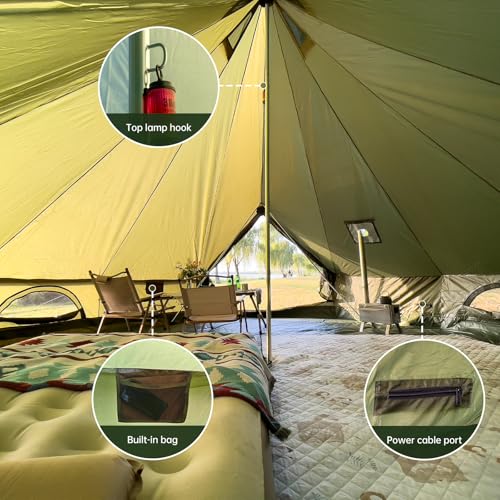
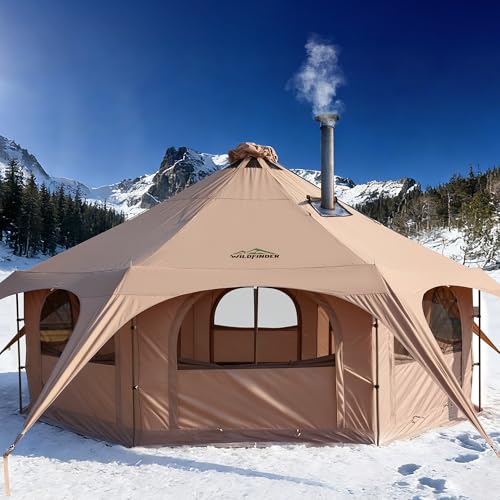
WildFinder Canvas Bell Tent 16.5ft
Strengths
- Superior condensation control
- 8 large mesh windows
- Removable floor
Trade-offs
- Heavy and bulky
- Slow to dry after rain
- Requires seam sealing
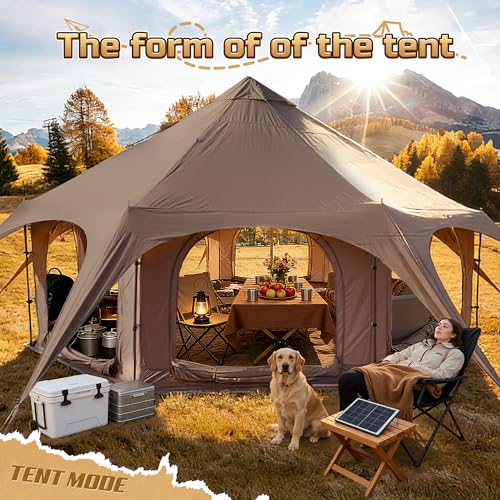
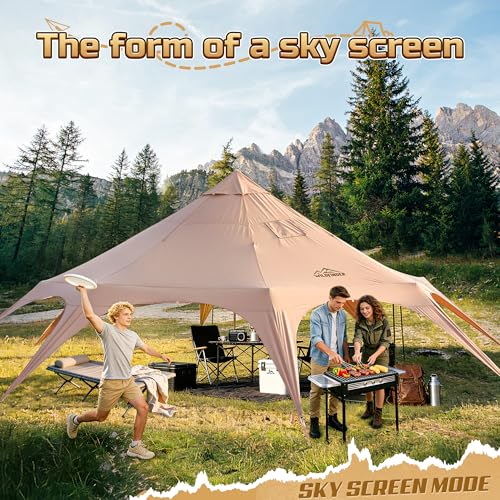
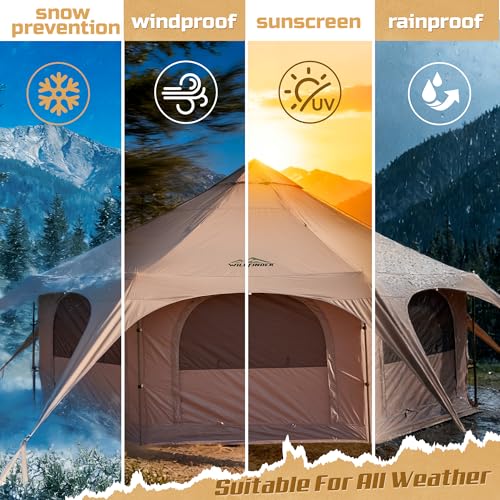
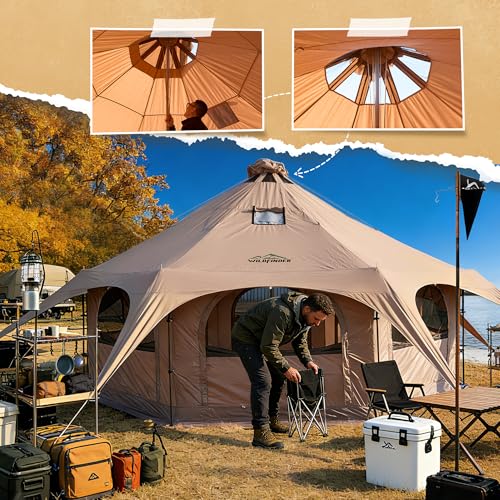
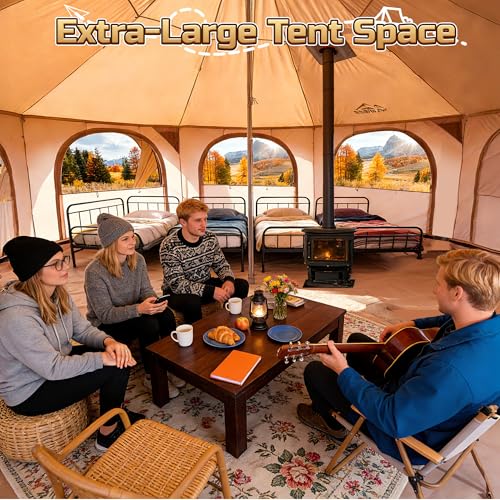
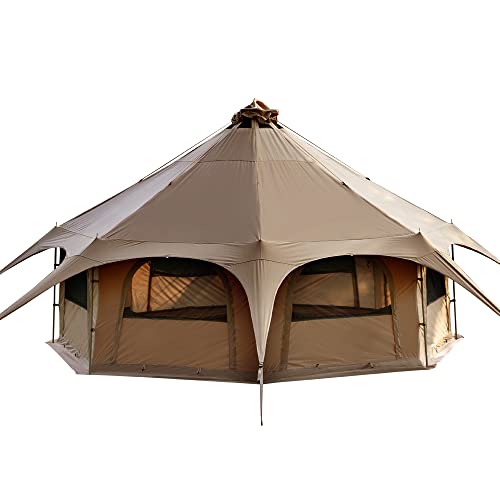
If condensation is your nemesis in winter camping, the WildFinder bell tent should be on your shortlist. Its 210G breathable TC cotton roof is the key, it allows moisture to escape while still shedding rain, a rare combo. Owners consistently report less fog and dampness inside, even with a stove running overnight. The 55-inch high sidewalls match the MC TOMOUNT in usable space, and the 8 mesh windows provide unmatched 360° airflow. The removable floor and roll-up walls let you convert it into a canopy, which is perfect for summer festivals or shaded base camps.
It’s built tough, with double-stitched seams and iron poles that add stability in wind. The included positioning sheet is a small but smart touch, first-time setup is way easier than guessing stake placement. Compared to other canvas tents, it strikes a great balance between breathability, space, and durability. The stove jack is well-placed, and the 600D floor keeps things dry. My only hesitation? The weight, it’s not light, but if you’re car camping and want a dry, airy shelter, this is one of the best.
Product photos
MC TOMOUNT Canvas Bell Tent 16.4ft
Strengths
- High 55-inch vertical walls
- Breathable TC cotton roof
- Removable floor
Trade-offs
- Roof not fully waterproof
- Heavy and slow to dry
- Not for heavy rain
The MC TOMOUNT bell tent stands out for one reason: those 55-inch high sidewalls. Most bell tents slope inward sharply, but this one gives you vertical walls all around, creating far more usable floor space, perfect for placing cots, tables, or a stove without crowding. The TC cotton roof (65% polyester, 35% cotton) is a win for breathability, reducing condensation significantly compared to standard polyester. Owners love how cool it stays in summer and how well it retains heat in winter when used with a stove. The removable 600D Oxford floor adds flexibility, you can leave it off for grass or use it on rocky ground.
But there’s a catch: the roof isn’t PU-coated, so while it’s water-resistant, it’s not fully waterproof. Owners report it handles light rain fine but advise against overnight use in heavy storms. That makes it best for fair-weather glamping or base camps where you can monitor the forecast. Still, for summer festivals or fall cabin trips with a stove, it’s a joy to be in. Compared to fully waterproof models, it trades some weather protection for comfort and airflow. I’d pick it for comfort over hardcore weather defense.
Product photos


Inflatable Tent with Skylight
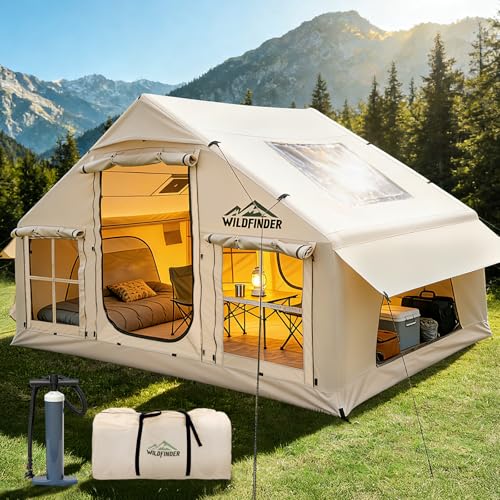
Strengths
- Quick 5-minute setup
- Spacious 4–6 person interior
- Built-in stove jack
Trade-offs
- Fire risk near air beams
- Limited cold-weather durability
- Condensation buildup
This inflatable hot tent promises a lot, quick setup, a panoramic skylight, and a stove jack for winter camping. On paper, it’s a glamping dream: 68 square feet of interior space, 5-minute inflation, and TPU air beams wrapped in 420D Oxford fabric for durability. The built-in stove jack is a real perk for cold-weather campers, and owners consistently report that it holds up well when paired with small portable stoves. But I have reservations. Inflatable tents with stove jacks are still rare for good reason, fire risk near pressurized air beams is a real concern, even with proper clearance. While the manufacturer includes a fireproof mat and recommends safe stove placement, I’d want to see more long-term owner feedback on heat exposure and material integrity.
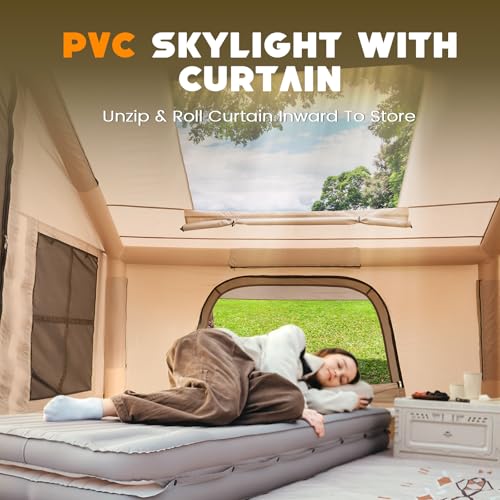
The skylight is a standout feature, letting in serious light and making the space feel open and airy. Dual mesh doors and windows help with airflow, but condensation can build up in colder weather, especially with a stove running. Still, for car campers or festival-goers who want warmth and ease of setup without wrestling poles, this tent delivers. It’s not for alpine winters or remote backcountry trips, but for fair-weather fall camping or backyard stays with a stove, it has appeal.
Product photos
CHERIMOR Inflatable Tent with Skylight
Strengths
- One-click auto inflation
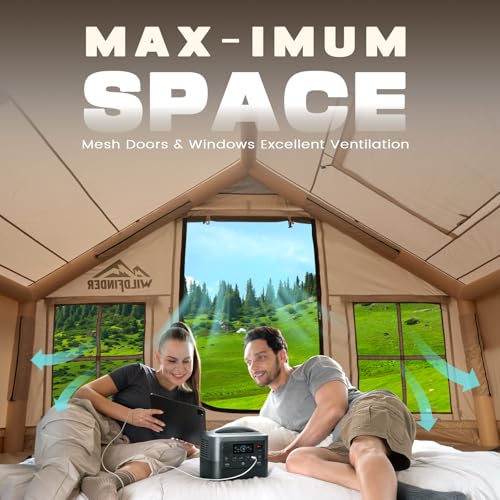
- Excellent 360° ventilation
- Custom-fit stove jack
Trade-offs
- Fire risk near air beams
- Heavy and bulky
- Not for backcountry
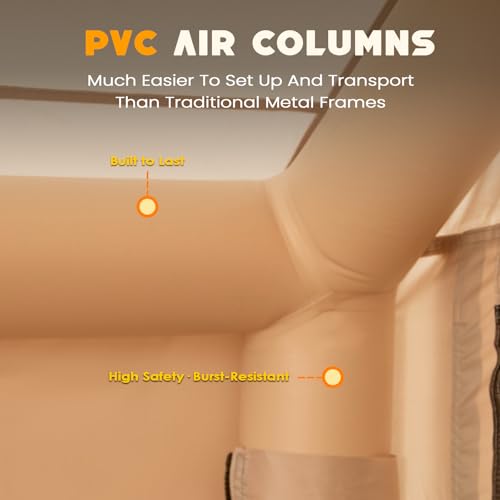
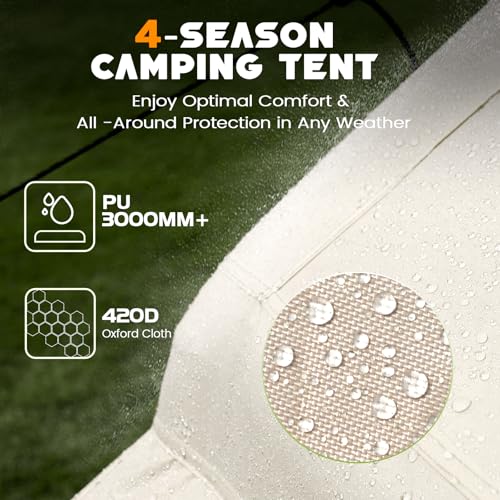
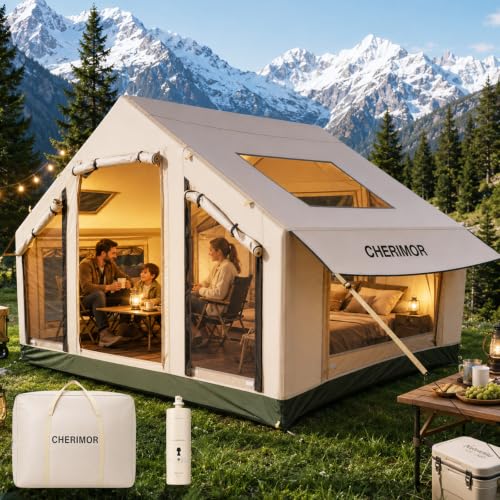
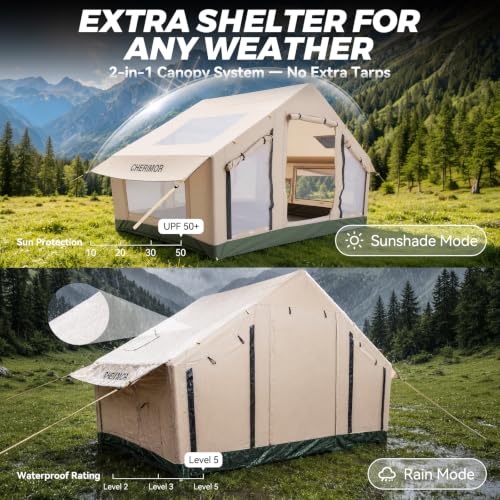
The CHERIMOR inflatable tent takes the quick-setup concept further with a one-click auto-inflation system, something most competitors don’t offer. At 445 ft³, it’s roomy, and the 6.6 ft peak height lets most people stand comfortably. The skylight isn’t just for show; owners say it floods the tent with light and, when paired with six mesh windows and dual-layer doors, creates excellent airflow. That’s rare for inflatable tents, which often feel sealed off. The stove jack is custom-fit, meaning you cut the opening to match your pipe, which reduces smoke leaks and improves safety.
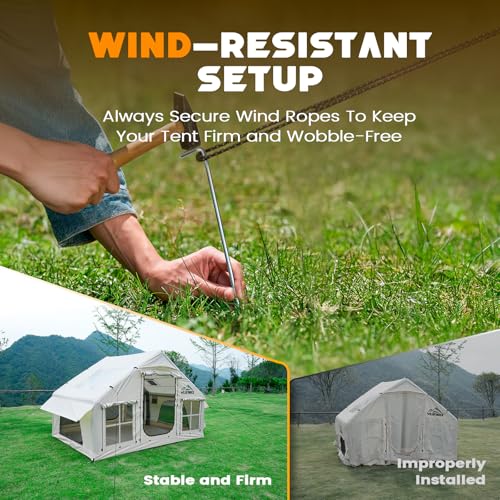
But again, I’m cautious about fire near air beams. While the 4.8-inch PVC beams are reinforced and rated for 19–24 mph winds, heat exposure near the stove jack is a real concern. Owners report success with careful stove placement, but I’d want more long-term data. Still, for car-based campers who prioritize ventilation and fast setup, this tent stands out. It’s more breathable than other inflatables and feels more like a traditional shelter thanks to the vent layout. Compared to the B0FC1P3F7P model, it’s better ventilated and slightly more structured.
Product photos

KingCamp Cabin Tent 6-8 Person
Strengths
- Cabin-style upright walls
- AC port for fans
- Good interior organization
Trade-offs
- Limited sidewall height
- Oxford walls less breathable
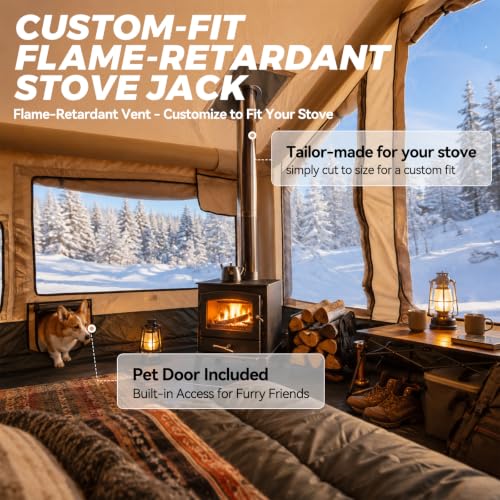
- Basic stove jack setup
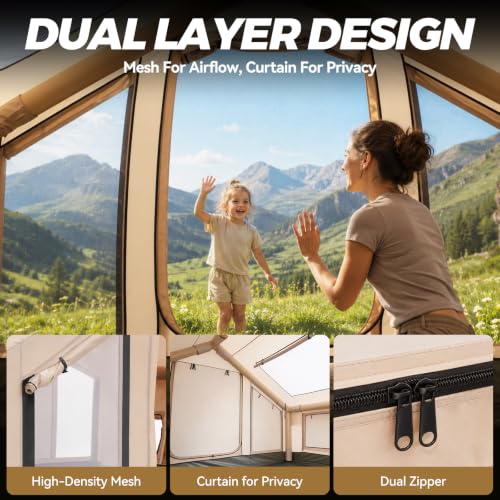
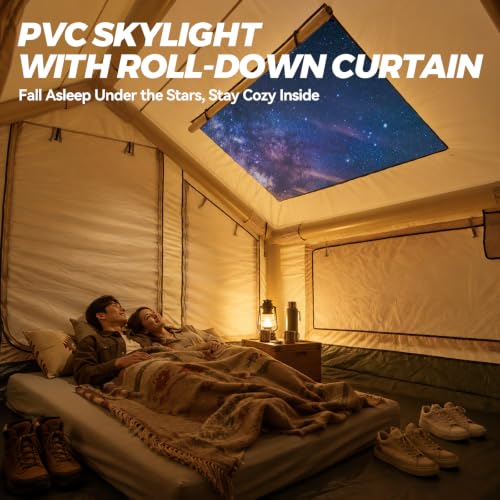
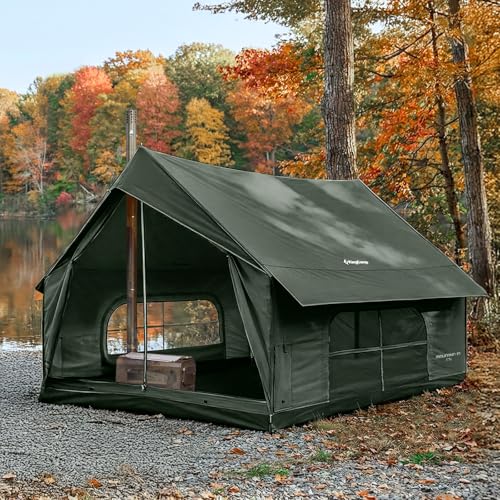
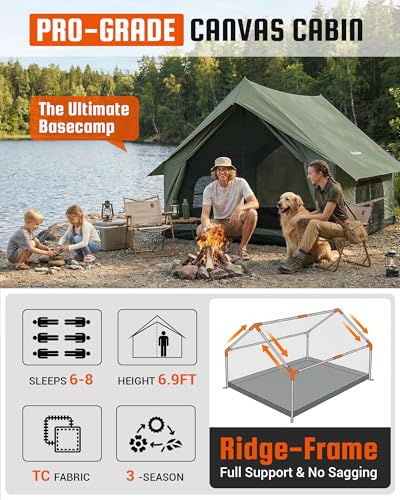
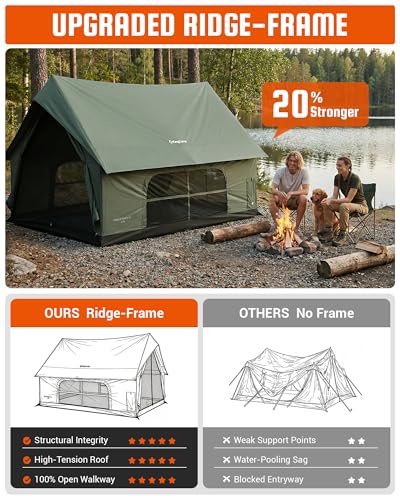
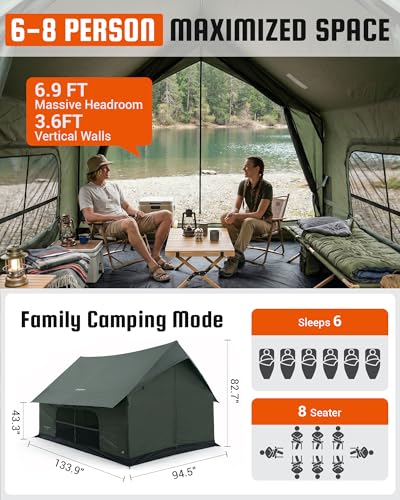
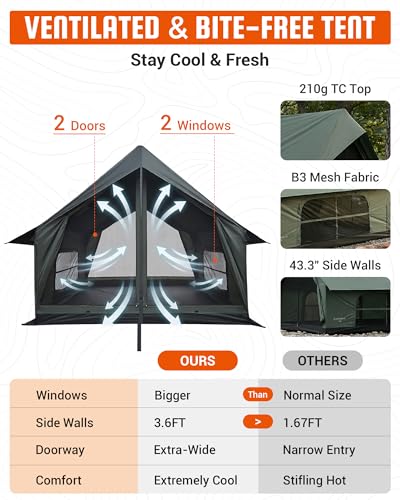
KingCamp’s cabin-style hot tent is a practical, no-frills choice for families who want a roomy, stove-heated shelter without the price tag of a premium bell tent. The 11.2 x 7.9 ft layout and 6.9 ft center height make it easy to stand and move around, rare in this price range. The TC poly-cotton roof helps with heat retention and reduces condensation, while the 210D Oxford floor keeps things dry. I like the thoughtful details: interior pockets, hanging loops, and even an AC port for fans or heaters, which is a nice touch for summer use.
It’s not as stylish or durable as a full canvas bell tent, but for weekend family trips or outdoor gatherings, it works. The stove jack is functional, and owners report it safely handles small stoves. Ventilation is decent, though not exceptional, two doors and two windows help, but it can get stuffy with a stove running. Compared to the 16.4ft bell tents, it’s smaller but easier to set up and more affordable. If you want a warm, organized space for family camping without overpaying, this is a solid middle ground.
Product photos

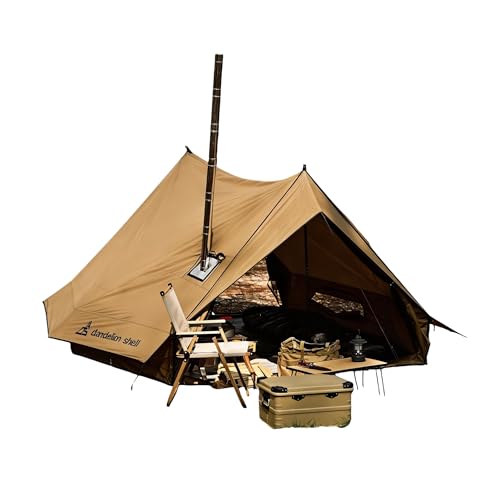
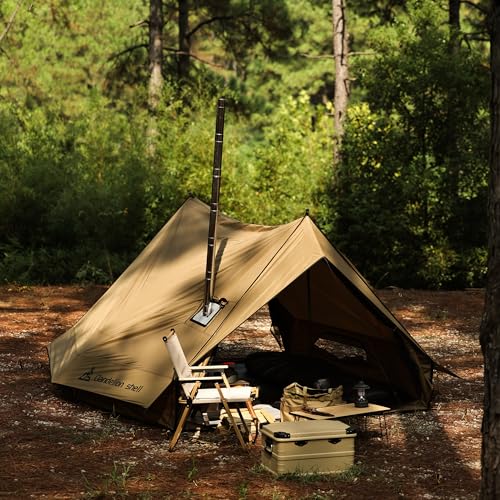
Dandelion Shell Hot Tent X3
Strengths
- True 4-season build
- Fireproof ground mat included
- Stable in wind
Trade-offs
- Tight for three adults
- Setup needs precision
- Limited headroom
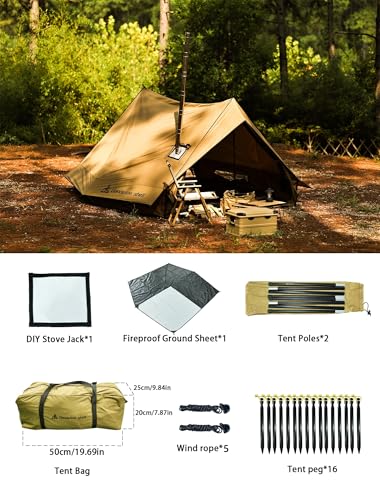
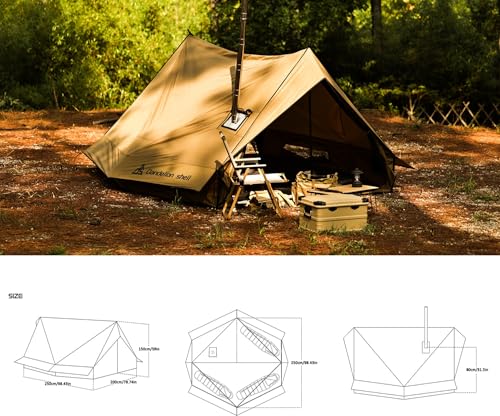
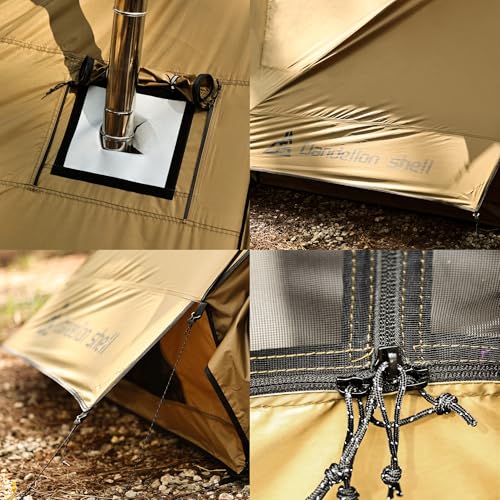
Dandelion Shell’s Cabin Plus X3 is one of the few true all-season, stove-compatible tents built with backpackers in mind. At 11.24 lbs, it’s not featherlight, but for a 3000mm waterproof, fire-resistant shelter with a stove jack and aluminum poles, it’s competitive. The 70D silicone-coated polyester keeps weight down while offering solid weather resistance, and owners praise its wind stability, rated for up to level 6 winds, which tracks with real-world feedback from hunters and winter campers. The interior isn’t huge, but it’s efficient: enough for two campers and a compact stove, with a fireproof ground mat included.
What I like most is the balance it strikes. It’s simpler than a bell tent but far more capable than a standard backpacking shelter. The double-zipper design and included guy lines make setup reliable, and the mesh panels offer decent airflow. Still, it’s not a palace, three people would be tight, and extended winter use demands careful stove management. Compared to the OneTigris, it’s slightly heavier but feels more rugged. For anyone planning cold-weather solo or duo trips where weight and durability both matter, this is a strong contender.
Product photos

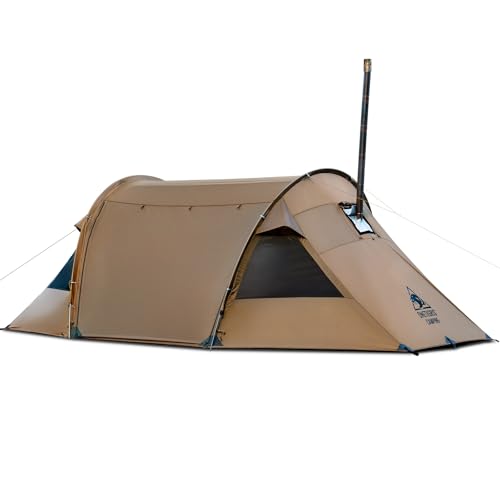
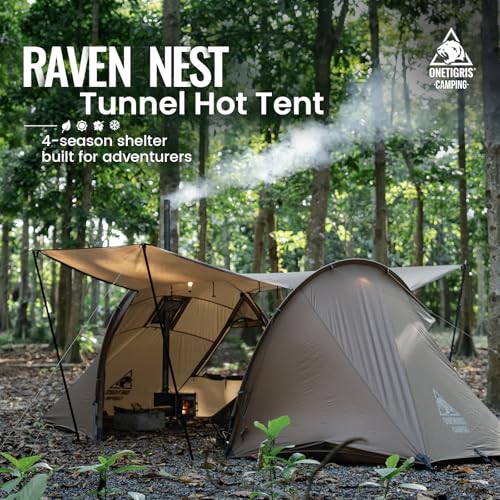
OneTigris Raven NEST Hot Tent
Strengths
- Lightweight for stove jack tent
- Durable 70D sil-nylon
- Smart room layout
Trade-offs
- Limited airflow with stove
- Not for extreme winter
- Small for gear storage
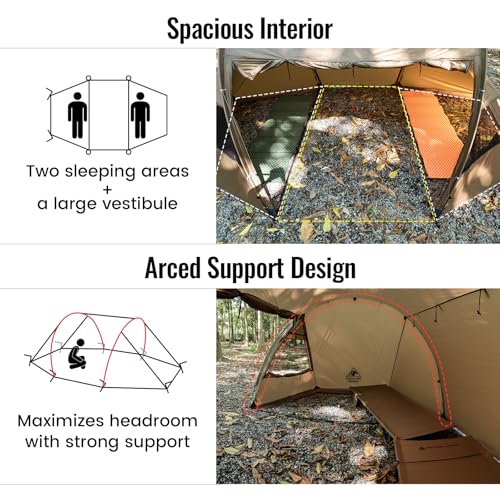
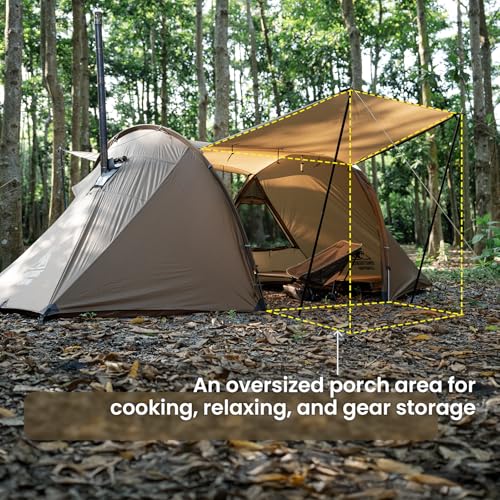
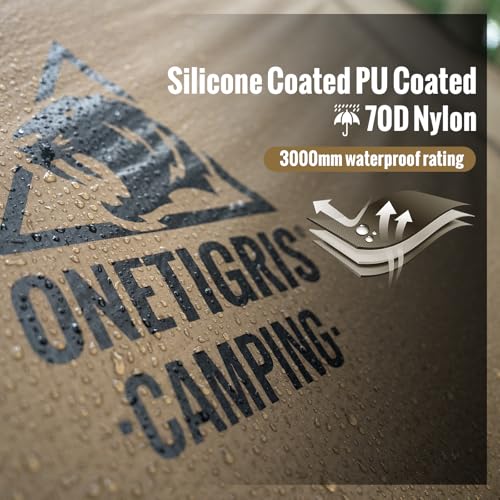
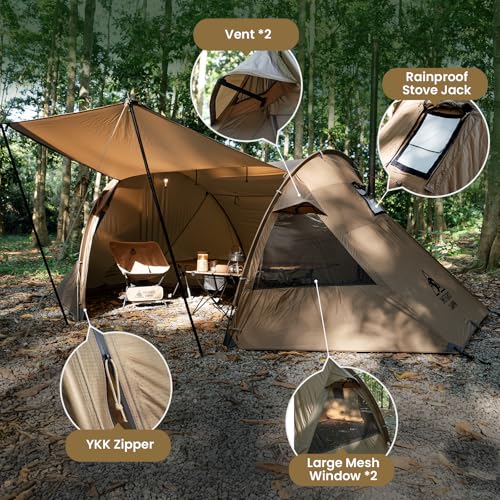
The OneTigris Raven NEST stands out in a category dominated by bulky canvas, here’s a lightweight, 2-person tunnel tent with a stove jack, built for backpackers who refuse to sacrifice warmth for weight. At around 7–8 lbs (estimating from similar models), it’s not ultralight, but for a stove-compatible shelter, it’s impressively portable. The 70D sil-coated nylon is tough for its weight, with YKK zippers and taped seams that owners say hold up in spring snow and wind. The arched pole design adds stability, and the separate sleeping and living zones make it feel larger than it is, ideal for two people who want to cook and sleep without crawling over each other.
I appreciate that it doesn’t pretend to be a four-season fortress. It’s rated for 3000mm waterproofing and handles light snow and wind, but it’s not a canvas bell tent. Still, for shoulder-season treks or bushcraft trips where you’re setting up base camp, this tent hits a sweet spot. Compared to heavier canvas options, it’s far more packable; against other backpacking tents, the stove jack is a rare and valuable upgrade. My only gripe? Limited ventilation when the stove is running, owners note the need to crack a window to avoid fogging, which defeats the warmth a bit.
Product photos
REDCAMP Large Hammock Hot Tent

Strengths
- Ultralight at 7.9 lbs
- Snow skirt for winter
- Hammock-compatible design
Trade-offs
- Requires trees and tarp poles
- Limited ground use
- Fire risk in suspended setup
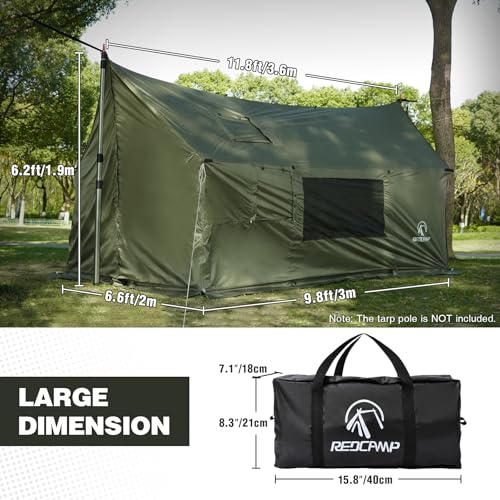
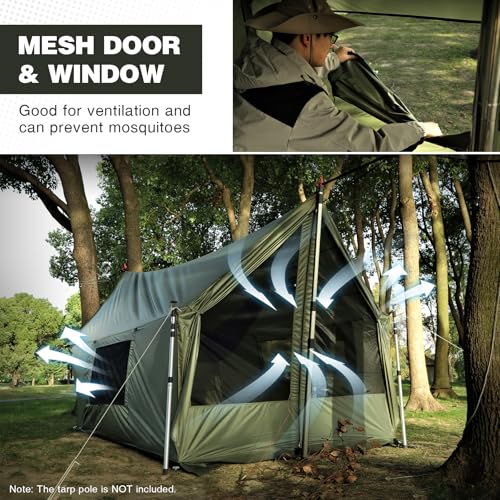
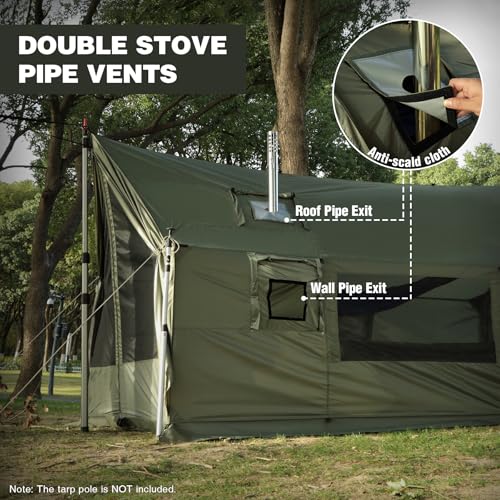
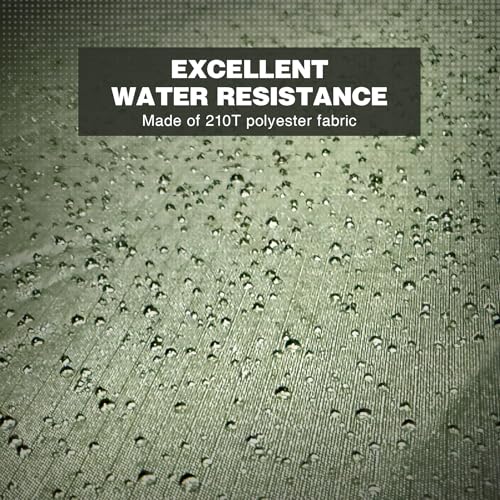
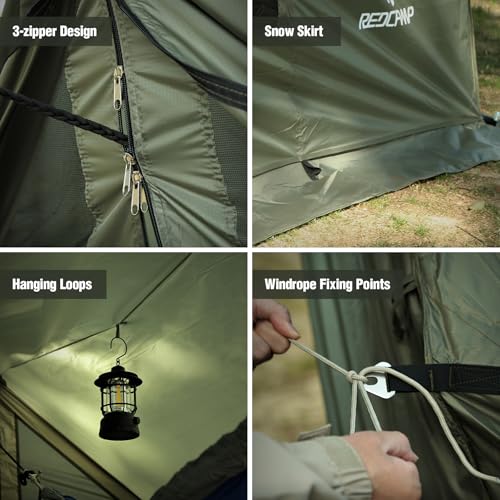
The REDCAMP hammock hot tent is a niche but brilliant design for treetop campers who still want stove heat. At just 7.9 lbs, it’s one of the lightest 4-season stove jack tents available, and the 3-zipper door system makes entry and exit smooth, even when paired with a hammock. The 210T grid fabric is surprisingly tough, and the snow skirt adds real winter credibility, owners report using it in sub-freezing temps with a small stove. The two stove pipe vents suggest flexibility in setup, though exact placement depends on your hammock configuration.
But it’s not for everyone. You need trees, proper insulation under your hammock, and skill in tarp pitching (since poles aren’t included). Ventilation is good, but running a stove in a suspended tent requires serious fire safety discipline. Compared to ground-based bell tents, it’s far more specialized. I’d recommend it only to experienced hammock campers expanding into cold-weather use. For them, it’s a standout, light, warm, and surprisingly roomy.
Product photos
How We Chose These tents with stove jacks
I approached researching tents with stove jacks by first compiling specifications and features from numerous online retailers and manufacturers. We then layered this technical data with extensive analysis of owner reviews from sites like Amazon and REI, as well as expert opinions from outdoor gear publications. This research-led comparison wasn’t a hands-on lab test, but rather a detailed evaluation of reported performance and design elements against criteria important to campers seeking four-season usability.
For tents with stove jacks, the most significant factors were the quality of materials – especially the fabric’s waterproof rating and fire resistance – and the design of the stove jack itself. A well-designed stove jack is crucial for safety and efficient venting, preventing carbon monoxide buildup. We also heavily weighted the overall tent footprint and usable space, recognizing that these tents are often used for extended stays and group camping. Understanding the features of hot tents was vital to the assessment process.
Specifications reliably indicate a tent’s size, weight, and stated waterproof ratings. However, we found owner feedback to be more insightful regarding real-world performance, particularly regarding condensation control, durability, and ease of setup. Reputation also played a role; brands with a consistent track record of quality received more consideration. We also paid close attention to whether the tent was specifically designed as a what is a stove jack tent or if the stove jack was an add-on feature.
How To Pick The Right tents with stove jacks
Choosing a tent with a stove jack opens up a world of four-season camping, but it’s not as simple as just finding one with a hole in the roof. We need to think about materials, construction, and how the whole system will work to keep us safe and comfortable.
A good tent with a stove jack balances durability with weight, offering a waterproof and breathable shelter capable of withstanding the elements. Key considerations include the quality of the stove jack itself (material, reinforcement), the tent’s fabric (canvas or synthetic), and ventilation to manage smoke and condensation. Prioritize safety features and a well-constructed design for reliable performance in all conditions.
Fabric & Construction Matter Most
The material a tent is made from is a huge factor. While you’ll find options in both polyester and nylon, canvas remains a popular choice for tents intended for use with wood stoves. Canvas is naturally more resistant to sparks and embers, and heavier fabrics generally hold up better to the heat. However, canvas is heavier and takes longer to dry. Look for thicker canvas weights (around 10oz or higher) and treatments for water resistance. Synthetic fabrics can be lighter and faster-drying, but ensure they have a high melting point and a fire-retardant coating near the stove jack.
Ventilation is Critical for Safety
Using a wood stove inside a tent creates a real need for good airflow. Inadequate ventilation leads to carbon monoxide buildup – a serious hazard. A tent with a stove jack must also have multiple adjustable vents to control the draft and exhaust smoke. Don’t assume a single stove jack is enough; you need cross-ventilation.
- A small vent near the ground pulls in fresh air for combustion.
- Larger, adjustable vents higher up (windows or roof vents) allow smoke to escape.
- Proper ventilation also minimizes condensation buildup inside the tent, which can be a significant problem in colder weather.
The best tents will have thoughtfully placed and easily adjustable vents. You’ll want to be able to fine-tune airflow depending on the weather and how hot the stove is running.
Size, Layout, and Usability
Beyond the technical aspects, consider how you’ll actually use the tent. A spacious cabin-style tent, like many canvas tents with stove jacks, provides more room to move around and set up a comfortable living space. If you’re a hammock camper, a hot tent designed specifically for hammock setups offers a unique and lightweight option.
A well-designed stove jack isn’t just a hole in the tent; it’s reinforced with heat-resistant materials, often featuring multiple layers and a snug fit to prevent sparks from escaping.
Don’t overlook the little things, either. Look for features like multiple doors, interior pockets, and a durable floor. If you plan on using the tent in very cold conditions, research safe ways to heat a tent and consider a tent with a snow skirt to block drafts.
Tents with Stove Jacks Compared
Here’s a comparison of key specifications for tents featuring stove jacks to help you choose the right one for your needs.
| Product Title | Capacity | Waterproofing (mm) | Material (Roof) | Stove Jack | Weight (lbs) |
|---|---|---|---|---|---|
| Bell Tent with Stove Jack 16.4ft | 6-8 | N/A | Oxford | Yes | N/A |
| WildFinder Canvas Bell Tent 16.5ft | N/A | 3000 | TC Cotton | Yes | N/A |
| MC TOMOUNT Canvas Bell Tent 16.4ft | N/A | N/A | TC Cotton | Yes | N/A |
| Inflatable Tent with Skylight | 4-6 | 3000 | 420D Oxford | Yes | N/A |
| CHERIMOR Inflatable Tent w/ Skylight | 4-6 | 3000 | 420D Oxford | Yes | N/A |
| KingCamp Cabin Tent 6-8 Person | 6-8 | 3000 | TC Poly-Cotton | Yes | N/A |
| Dandelion Shell Hot Tent X3 | 2-3 | 3000 | 70D Polyester | Yes | 11.24 |
| OneTigris Raven NEST Hot Tent | N/A | 3000 | 70D Nylon | Yes | N/A |
| REDCAMP Large Hammock Hot Tent | N/A | N/A | 210T Polyester | Yes | 7.9 |
Frequently Asked Questions
What’s the best fabric for a tent with a stove jack?
Canvas is generally considered the safest option, as it’s naturally more resistant to sparks and embers, but it’s also heavier and slower to dry. High-quality polyester or nylon with a high melting point and fire-retardant coating near the stove jack can also work well, offering a lighter-weight alternative.
How important is ventilation in a hot tent?
Ventilation is absolutely critical for safety. Without adequate airflow, carbon monoxide can build up to dangerous levels, and you’ll also struggle with condensation and smoke buildup within the tent.
Are inflatable tents with stove jacks as durable as traditional framed tents?
Inflatable tents have improved significantly in durability, but they can be more susceptible to punctures than traditional pole-supported tents. Look for models made with robust materials and multiple air chambers for added security, and understand that repair kits are essential for four-season winter tents.
What should I look for in a stove jack’s design?
A good stove jack will be made of heat-resistant material (like silicone or stainless steel) and will have a snug fit around the stovepipe to prevent sparks from escaping. Reinforcements around the jack are also important to prevent the fabric from burning through with prolonged use.
Can I add a stove jack to any tent?
While some DIY options exist, attempting to add a stove jack to a tent not specifically designed for one is generally not recommended. It compromises the tent’s structural integrity and, more importantly, creates a significant fire hazard; it’s best to invest in one of the many tents for wood stoves available.
The Bottom Line
Choosing a tent with a stove jack always involves balancing convenience with a bit of complexity. Ultimately, for a solid all-around performer that doesn’t compromise on space or durability, I recommend the Bell Tent with Stove Jack 16.4ft. It offers a generous footprint and a well-regarded stove jack design, making it ideal for extended stays and group camping.
However, if you’re on a tighter budget, the Dandelion Shell Hot Tent X3 is a fantastic option. And for those prioritizing versatility – perhaps you’re a hammock camper – the REDCAMP Large Hammock Hot Tent provides a lightweight and specialized shelter. Remember, a stove jack isn’t a magic bullet; it requires understanding the principles of safe tent heating with Buddy and diligent attention to ventilation.
More than any specific fabric weight or waterproofing rating, the most crucial elements are a well-designed stove jack, robust ventilation, and a commitment to safe operating practices. Don’t get lost in the details; focus on building a shelter that’s both comfortable and secure, allowing you to enjoy the benefits of four-season camping responsibly.
