
8 Best 2 Man 4 Season Tents of 2026
This post contains affiliate links. As an Amazon Associate, we earn from qualifying purchases.
The OutdoorMaster 2 Person stands out as the overall best 2-man 4-season tent for its strong weather resistance and durable build, while the CANTUO Ultralight is a top budget-friendly pick that doesn’t sacrifice weight or ventilation. If you need extra space and stability in snow, the Clostnature Large offers solid versatility.
Most people shopping for a 2-man 4-season tent aren’t just looking for shelter, they need a reliable fortress against wind, snow, and freezing rain. Too many tents claim to be “4-season” but fall apart when conditions turn harsh.
This guide cuts through the marketing by focusing on what actually matters: real-world feedback, waterproof ratings, pole strength, and ventilation design. I researched each tent based on specs, owner experiences, and how well it balances weight, durability, and performance in tough environments.
Top 8 2 Man 4 Season Tents in the Market
The Best 2 Man 4 Season Tents, Reviewed
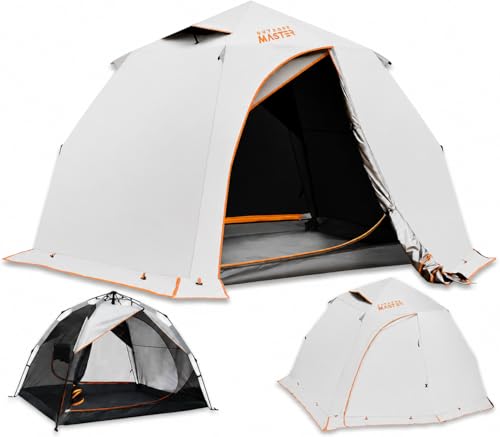
OutdoorMaster 2 Person 4 Season Tent
Strengths
- High waterproof rating
- Durable floor material
- Good insulation features
Trade-offs
- Heavy for backpacking
- Condensation in humid conditions
- Bulky packed size
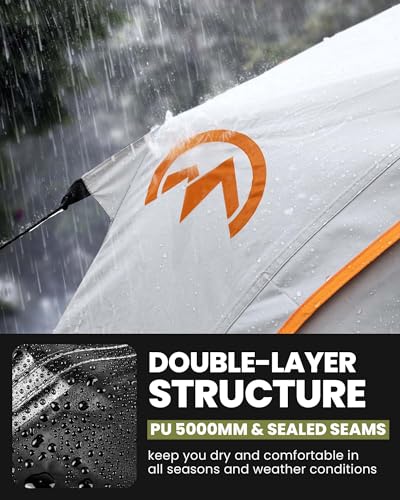
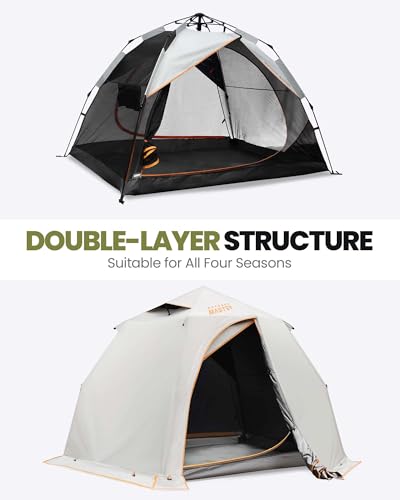
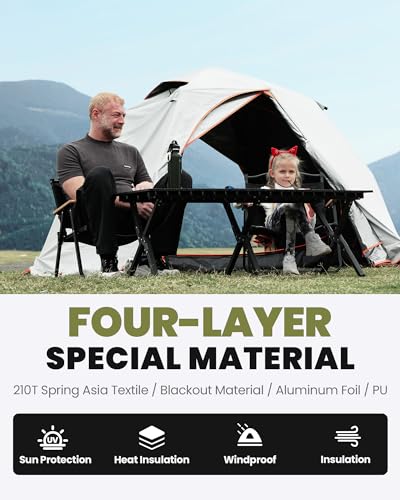
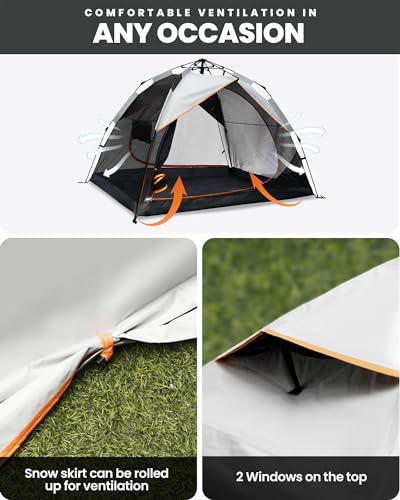
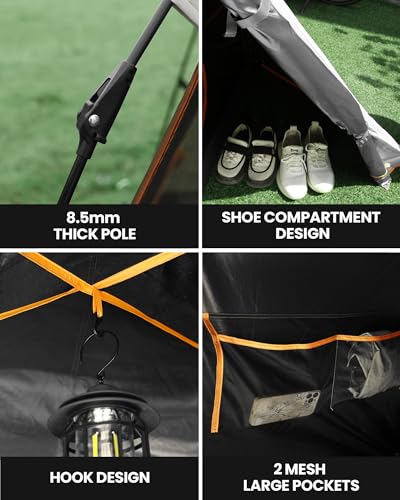
On paper, the OutdoorMaster 2 Person Tent looks like a serious contender for all-season use, especially if you’re bracing for snow or long winter trips. The 5000mm waterproof rating and 210D Oxford floor stand out, that’s legit durability for harsh conditions. Owners consistently report it holding up well in wind and sustained rain, which tells me it’s built for more than fair-weather camping. The four-layer rainfly with aluminum foil insulation is a smart touch, offering real thermal benefits when the mercury drops.
But it’s not all rosy. That rugged build comes with a weight penalty, it’s not a packable tent by any stretch. And while the ventilation system is well thought out, some reviewers note condensation issues in high-humidity environments, especially when the snow skirt is fully sealed. It’s a solid shelter, but better suited for car campers or basecampers than backpackers trying to shave ounces.
Product photos
OneTigris Stella Lightweight Backpacking Tent
Strengths
- Extremely lightweight
- Simple, fast setup
- Removable blackout fly
Trade-offs
- Low waterproof rating
- Cramped for two
- Minimal vestibule space
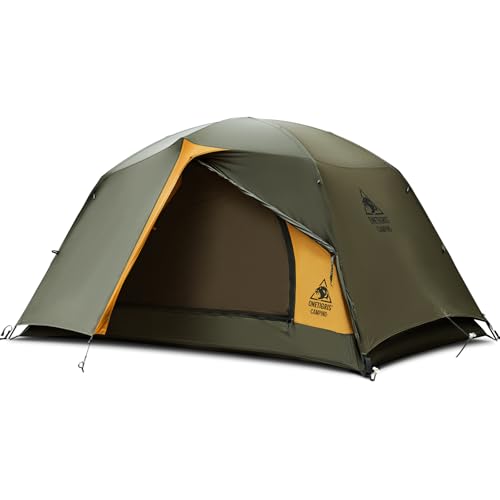
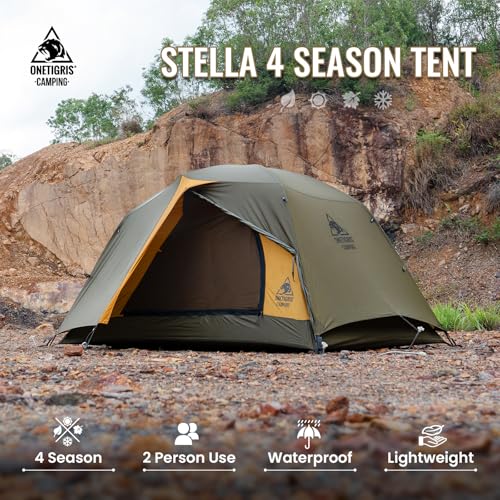
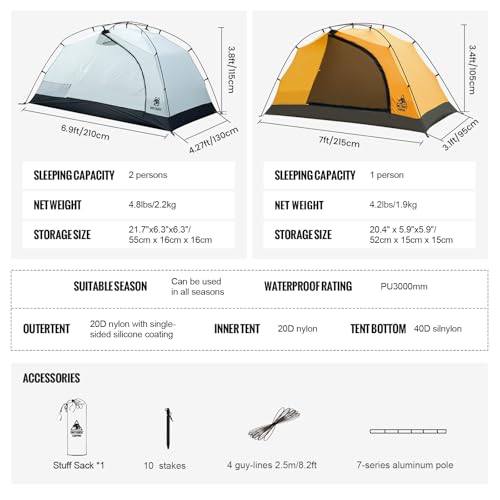
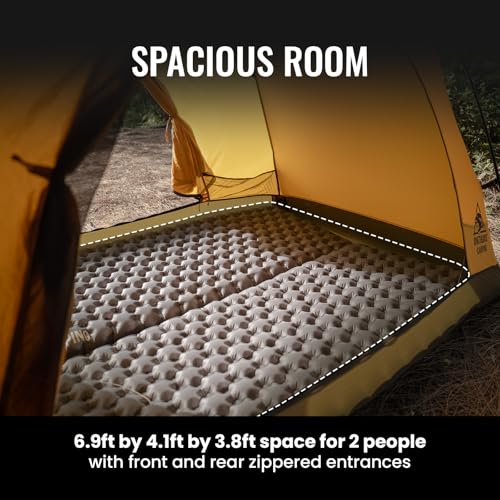
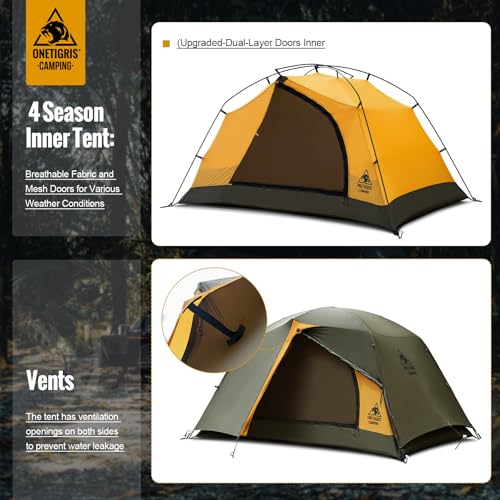
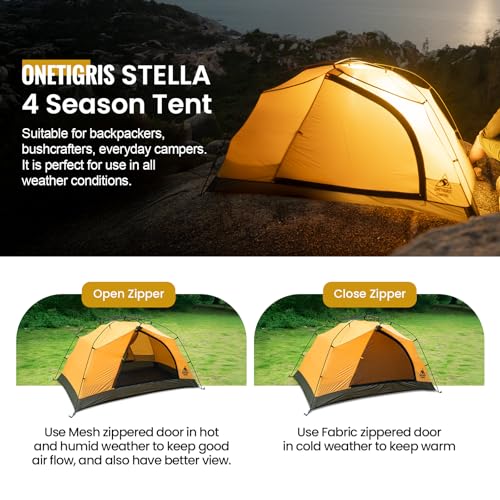
The OneTigris Stella is one of the lightest true 4-season tents here at just 4.8 lbs, a big win for weight-conscious backpackers. The 20D silicone-coated nylon is tough for its weight, and the single-pole dome design makes it stable in moderate wind. Setup is fast and intuitive, which matters when you’re tired at dusk. Owners like its simplicity, and the removable blackout fly adds versatility, you can ditch it for stargazing on clear nights.
But the 3000mm waterproof rating is the lowest in this group, and there are reports of wet spots during extended downpours, especially if the seams aren’t perfectly tensioned. It’s also narrower than others, so two adults will feel snug. I’d call this a 3.5-season tent, great for shoulder seasons and light winter trips, but not my first pick for a full-on snow expedition. Still, for the weight, it’s hard to beat.
Product photos
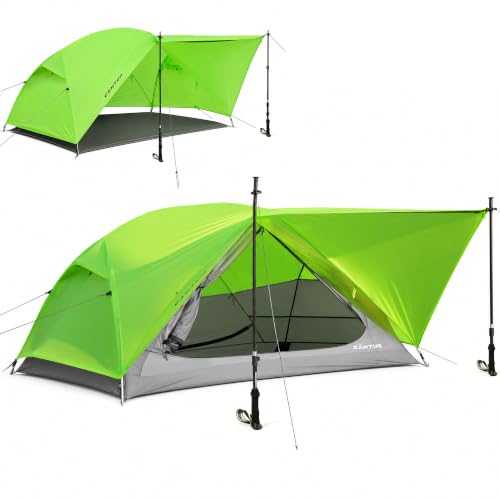
CANTUO Ultralight 4 Season Tent
Strengths
- Lightweight for 4-season
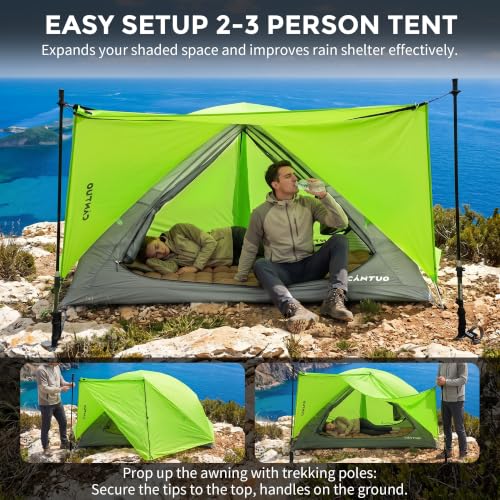
- Expandable vestibule
- Excellent airflow
Trade-offs
- Awning needs trekking poles
- Footprint not full coverage
- Slight learning curve on pitch
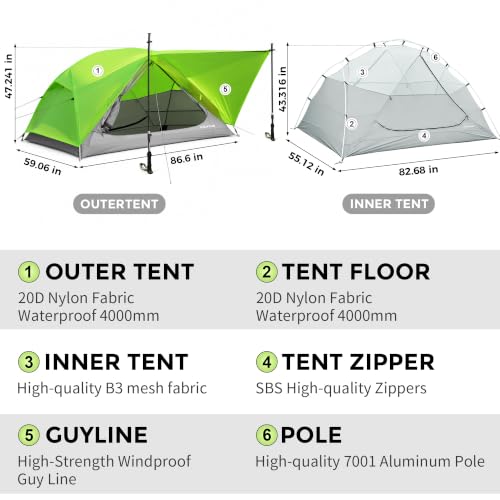
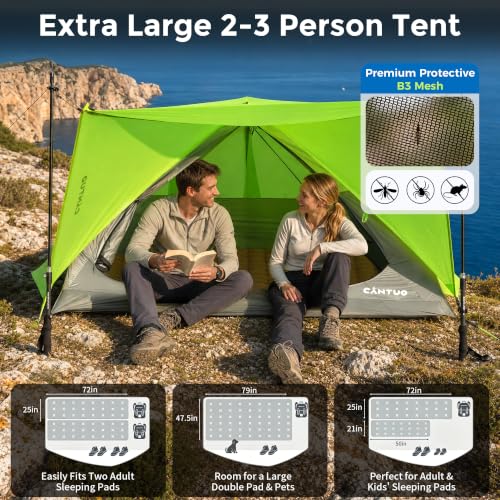
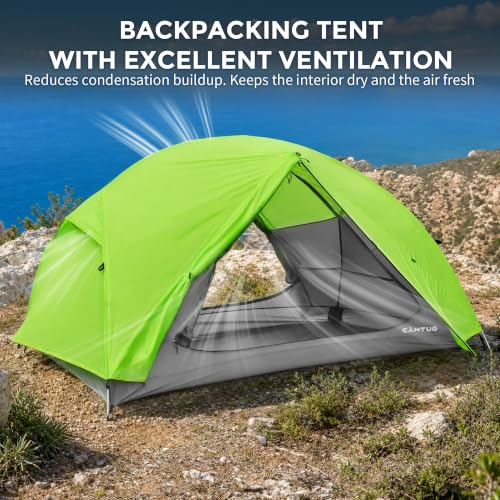
At 4.34 lbs, the CANTUO tent hits a sweet spot between durability and weight, rare for a true 4-season shelter. The 20D nylon with 4000mm waterproofing is impressive, and owners praise how well it handles alpine gusts and snow loading. The expandable vestibule is a standout: it gives you real usable space for gear or shelter from sideways rain, which is a standout on long trips. I’d pick this over heavier models if I were doing high-elevation backpacking or shoulder-season mountaineering.
Ventilation is strong here too, thanks to dual doors and four vents. Reviewers note noticeably less condensation than in single-door dome tents, which is huge when you’re stuck inside for hours. The trekking pole requirement for the awning is a minor hassle, but it keeps weight down. My only real gripe? The footprint is included, but it doesn’t cover the entire floor, a missed opportunity.
Product photos
Clostnature Large 4 Season Backpacking Tent
Strengths
- Spacious interior
- Large vestibules
- Strong waterproofing
Trade-offs
- Bulky when packed
- Poles lack rigidity
- Heavier than ultralight options
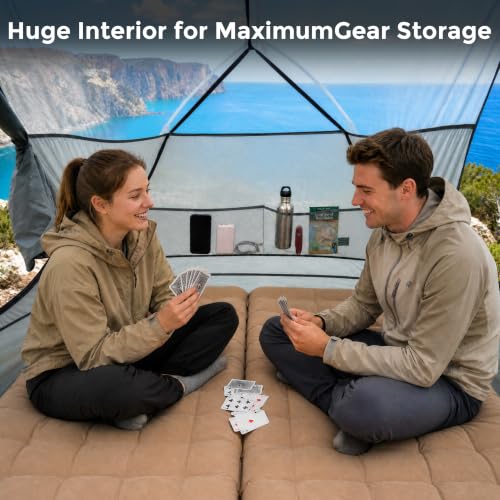
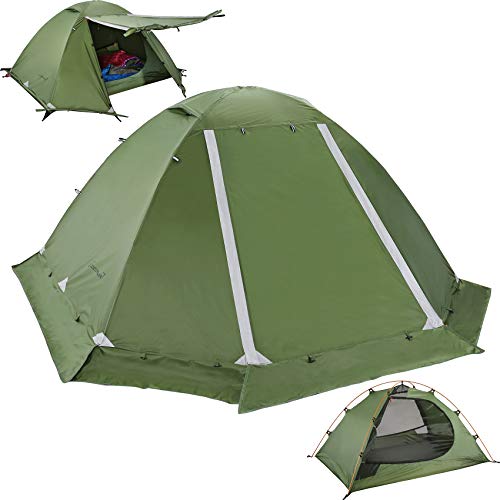
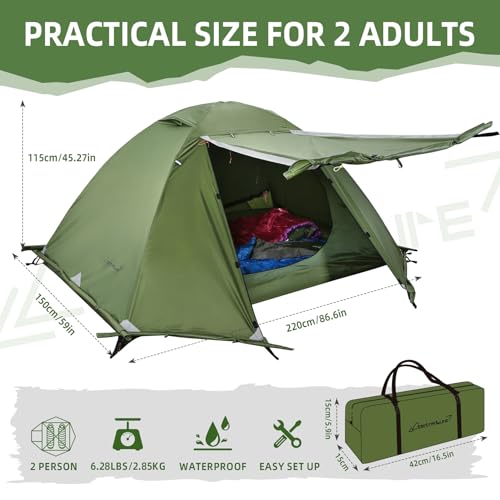
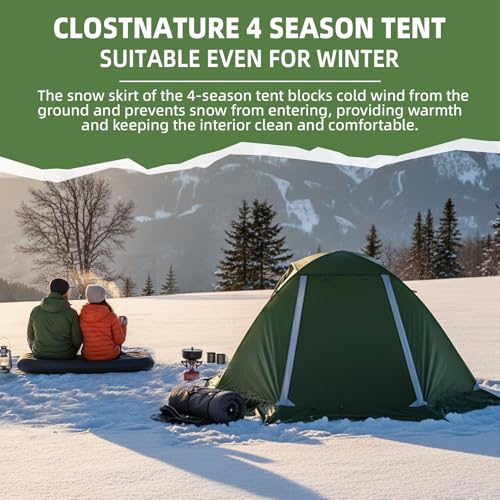
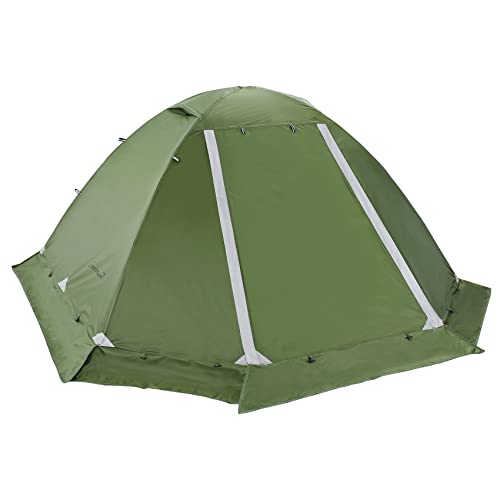
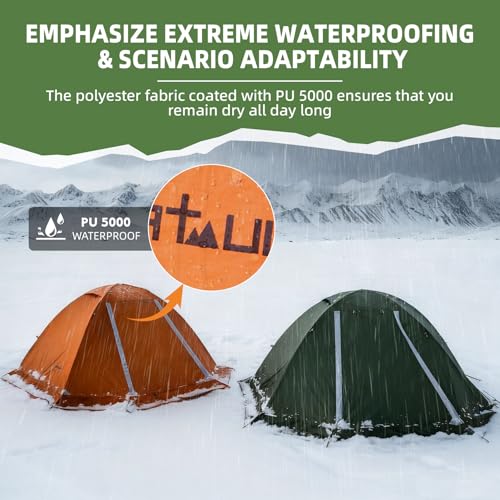
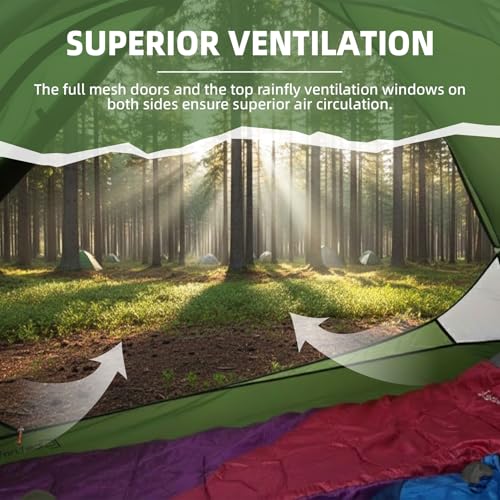
If space is your priority, the Clostnature tent is a standout. At 7’3″ long and nearly 5′ wide, it gives two adults actual room to stretch out, a rarity in this class. The 5.33 lb trail weight is respectable for the size, and owners report it handles snow well thanks to the 5000mm PU coating and snow flaps. The dual vestibules are deep enough to stash boots and packs, which keeps the interior clean and dry.
That said, the packed size is larger than most, and the weight creeps up if you’re carrying all components. Some users mention the poles feel a bit thin for the tent’s footprint, especially in strong gusts. Still, for family trips, pet owners, or anyone who hates feeling boxed in, this is a smart pick. I’d recommend it for car-to-trail hikes or basecamp setups where space trumps portability.
Product photos
BISINNA Winter 4 Season Tent
Strengths
- Affordable price
- Decent weather protection
- Good ventilation design
Trade-offs
- Heavy for its class
- Fabric less durable
- Average pole strength
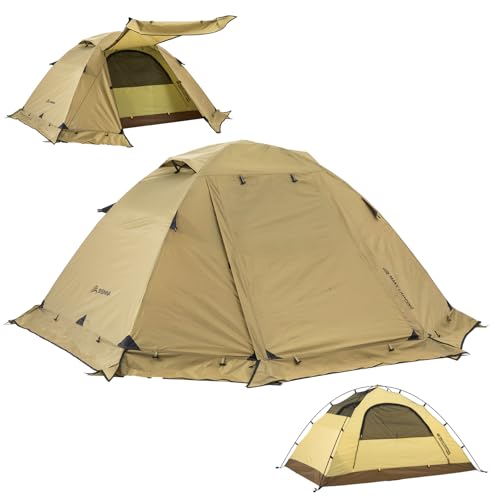
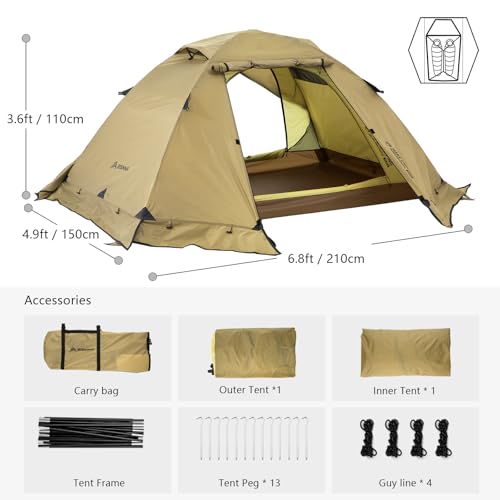
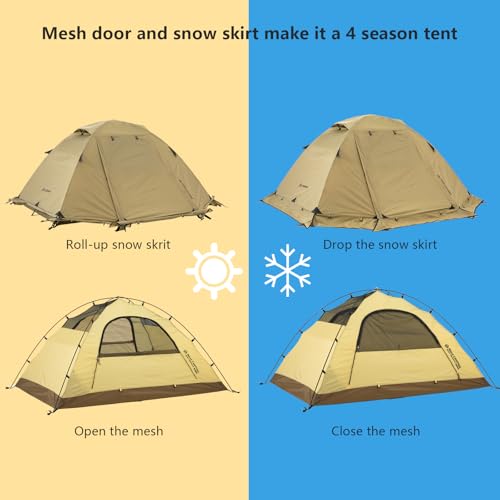
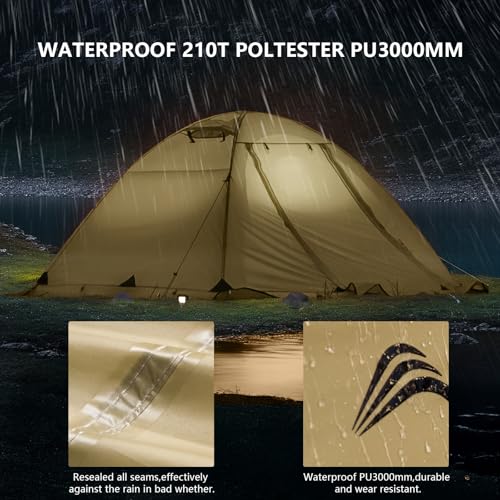
The BISINNA tent is clearly built for budget-conscious buyers who still want 4-season capability. At 6.4 lbs, it’s not light, but the price-to-performance ratio makes sense for occasional winter campers. The 3000mm waterproofing and snow skirt offer real protection, and owners say it handles light snowpack fine. The rollable snow skirt is a nice touch, letting you adapt to conditions.
But compromises show up in materials, the 210T polyester isn’t as durable as higher-denier fabrics, and some reviewers report seam issues after repeated use. Ventilation is decent with dual doors and windows, but condensation can build up if you’re not careful with airflow. It’s not a tent I’d trust on a multi-week alpine trek, but for weekend warriors or beginners dipping into winter camping, it’s a solid entry point.
Product photos
Forceatt 2 Person Quick Setup Tent

Strengths
- Blazing-fast setup
- Smooth zippers
- Good vestibule space
Trade-offs
- No snow skirt
- Average cold-weather performance
- Minimal insulation
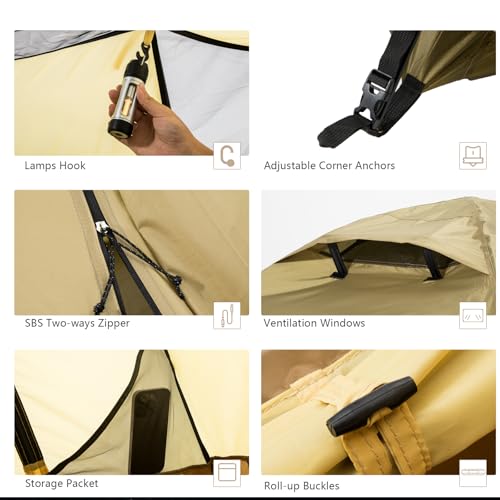
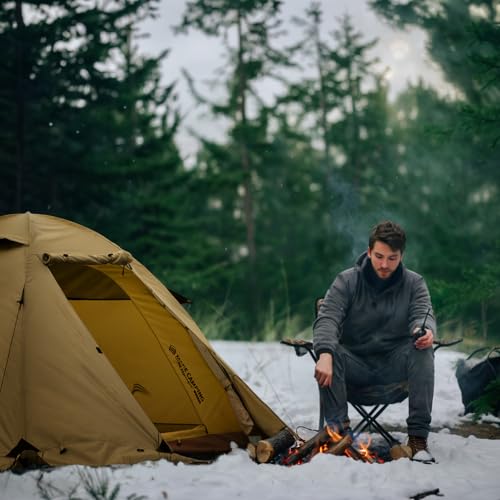
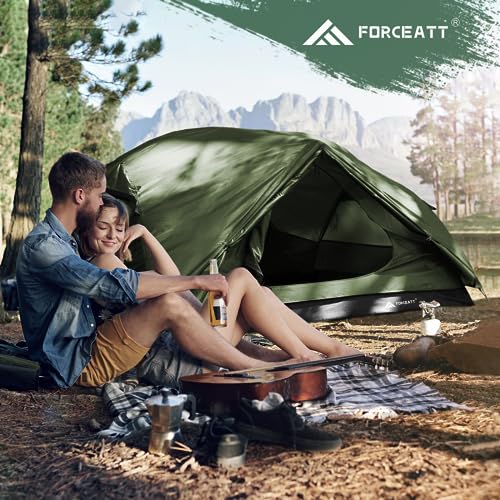
The Forceatt tent earns its “Best Easy Setup” tag, owners consistently report getting it up in under three minutes, even in wind. The freestanding design with color-coded clips and smooth #8 zippers makes it idiot-proof, which is a huge plus when you’re tired or it’s raining. The 3000mm waterproofing and welded floor are solid, and the dual vestibules add storage without adding weight.
But like the Bessport, it’s more of a 3+ season tent. The aluminum poles are reliable but not overbuilt, and there’s no snow flap or insulation layer, so it’s best avoided in heavy winter conditions. Still, for spring through fall backpacking, it’s a dependable, no-fuss shelter. I’d recommend it to anyone who values speed and simplicity over extreme weather performance.
Product photos


GEERTOP 2 Person All Weather Tent
Strengths
- Beginner-friendly design
- Stable freestanding frame
- Good ventilation
Trade-offs
- Heavy for backpacking
- Durability concerns
- Not for extreme weather
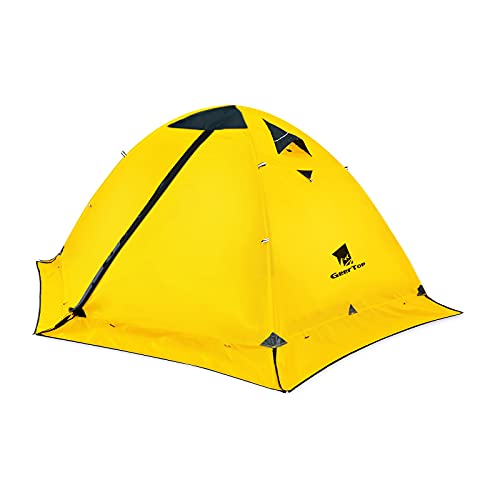
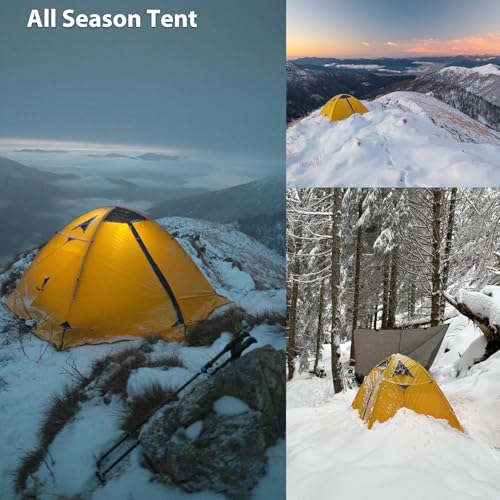
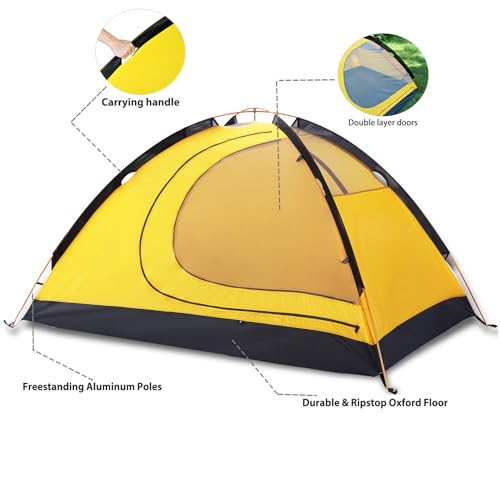
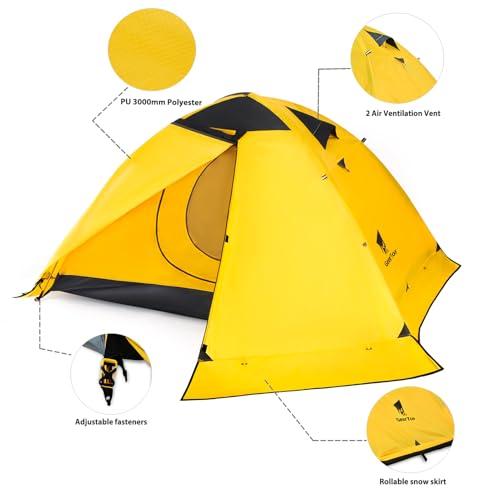
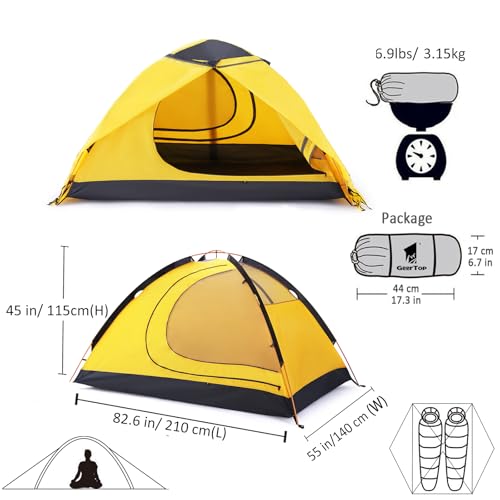
The GEERTOP tent is a textbook beginner-friendly shelter. It’s freestanding, easy to pitch in under 8 minutes, and stable enough for most conditions a new camper will face. The dual doors and mesh panels offer decent airflow, and the 3000mm waterproofing holds up in light storms. Owners love how intuitive it is, some even say their kids can set it up solo.
But it’s on the heavier side, and the materials feel a bit thin compared to others in this list. It’s not built for snow loading or hurricane winds, and long-term durability has mixed feedback. Still, for someone just getting into backpacking or doing backyard practice runs, it’s a forgiving, no-pressure entry point. I’d buy this for a first-timer, not for a serious backcountry trip.
Product photos
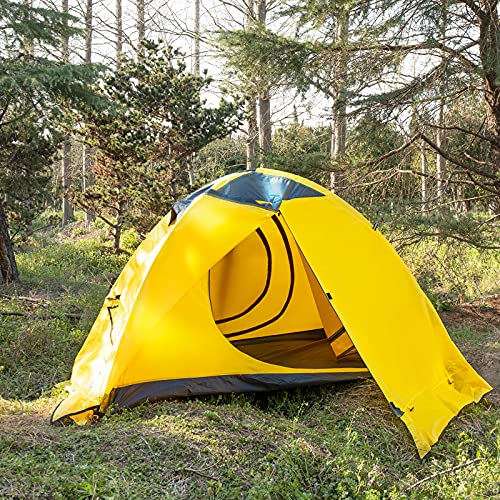
Bessport 2 Person Windproof Tent

Strengths
- Superior airflow
- Smooth zippers
- Easy one-person setup
Trade-offs
- Not ideal for heavy snow
- Pole strength average
- Waterproofing just adequate
The Bessport tent doesn’t scream “extreme 4-season,” but it delivers where it counts for most hikers: ventilation and usability. Dual mesh doors and ceiling vents make this one of the best in the lineup for reducing condensation, reviewers consistently highlight how breathable it feels, even in damp spring or fall conditions. The 3000mm waterproofing is standard, but fully taped seams and sturdy 8.5mm poles give it solid storm credentials.
Where it falters is in true winter performance. The single pole design is easy to pitch, but it lacks the structural rigidity needed for heavy snow loads. Owners report flexing in high winds, and while it’s marketed as 4-season, most agree it’s really a strong 3-season plus tent. That said, for late fall hikes or cool-weather backpacking, it’s a great value. I’d trust it most outside of serious winter conditions.
Product photos


How We Evaluated 2 man 4 season tents
My approach to evaluating 2-man 4-season tents focused on a research-led comparison of published specifications and owner feedback. Rather than a hands-on lab test, I compiled data from manufacturer details, expert reviews from sites dedicated to outdoor gear, and a deep explore what current owners are saying about real-world performance. I then ranked these tents based on a set of criteria important for reliable use in varied conditions.
For this category, weight, waterproof ratings, and overall durability were the most heavily weighted factors. A 4-season tent must hold up to wind and potential snow loads, so robust pole construction and a high waterproof rating are critical. Light weight is also key, as these tents are often carried long distances. A tent’s ability to balance these factors ultimately decided its place on the list, with ventilation being a significant secondary consideration.
Published specifications reliably indicate a tent’s potential for weather resistance and physical dimensions. However, I placed significant weight on owner feedback regarding long-term durability and how well the tent performs in adverse conditions. Reports of condensation buildup, pole failures, or seam leaks were carefully considered, as were comments about ease of setup and overall value. Understanding weatherproof tent materials is essential when evaluating these types of tents.
How To Choose The 2 man 4 season tents
Picking the right shelter for shoulder-season adventures, or even winter camping, requires a bit more thought than a fair-weather option. I’ve seen too many trips ruined by tents that simply weren’t up to the task.
A quality 2-man 4-season tent prioritizes durable, waterproof construction with a robust frame to withstand wind and snow loads. Look for a full-coverage rainfly, taped seams, and a floor with a high hydrostatic head rating (at least 3000mm). Consider the tent’s weight, ventilation options, and ease of setup, balancing these factors against the expected conditions and your backpacking style.
Pole Material and Structure
The backbone of any 4-season tent is its pole system. Aluminum poles are the standard, but the alloy matters. 7001-T6 aluminum is a good benchmark for strength and weight. Don’t skimp here; a broken pole in a storm is a disaster. More importantly, look at the pole configuration. Geodesic or semi-geodesic designs (where poles intersect multiple times) provide far superior stability in high winds and under snow accumulation compared to simple dome tents.
Waterproofing and Fabric Denier
Waterproof ratings are important, but understand what they mean. A 3000mm rating on the rainfly is a good starting point, but the floor should be higher (5000mm or more) since it endures more pressure. Beyond the rating, pay attention to fabric denier (D). Higher denier generally means more durable fabric, but also more weight. For instance, the OneTigris Stella uses a 20D Nylon, prioritizing lightweight performance, while others like the Clostnature use polyester, offering a balance of durability and cost. If you’re planning trips in consistently harsh conditions, leaning towards higher denier fabrics is wise.
- A higher waterproof rating doesn’t always equal better performance; consider the fabric’s breathability as well.
- Fully taped seams are absolutely crucial. Even a small gap can negate a high waterproof rating.
- Look for a bathtub floor design, where the fabric extends up the sides, providing extra protection against ground water and snow.
Ventilation and Condensation Management
Condensation is a notorious problem in 4-season tents. When you’re sealed inside with warm breath and cooking steam, moisture will build up. Good ventilation is key to mitigating this. Many tents, like the Bessport 2 Person, incorporate large mesh panels and adjustable vents. More sophisticated designs feature snow skirts that can be rolled up to increase airflow in warmer conditions. A well-designed ventilation system doesn’t just improve comfort; it also protects your gear from getting wet. Don’t underestimate the importance of a breathable inner tent fabric, like the mesh and nylon blends found in the CANTUO Ultralight. If you’re serious about winter camping, researching top tent manufacturers and their ventilation technologies is a smart move.
A tent’s ability to handle wind and snow isn’t just about its waterproof rating. Proper ventilation is just as crucial for staying dry and comfortable.
I always recommend considering how often and where you plan to use the tent when making your decision. For occasional winter backpacking, a lightweight option might be sufficient. But if you’re planning frequent trips into challenging environments, investing in a more robust, fully-featured tent is worth the cost. Finally, don’t forget to check out thorough reviews of two-person 4-season tents before you buy.
2 Man 4 Season Tents Compared
Here’s a comparison of key specifications for popular 2-person, 4-season tents to help you find the right fit for your needs.
| Product Name | Capacity | Weight (lbs) | Waterproof Rating (Rainfly) | Season Rating | Packed Size (in) |
|---|---|---|---|---|---|
| OutdoorMaster 2 Person | 2 | N/A | 5000mm | 4 | N/A |
| OneTigris Stella Lightweight | 2 | 4.8 | 3000mm | 4 | 21.7×6.3 |
| CANTUO Ultralight | 2 | 4.34 | 4000mm | 4 | 15.7×5.5×5.5 |
| Clostnature Large | 2 | 6.28 | 5000mm | 4 | 16.5×5.9×5.9 |
| BISINNA Winter | 2 | 6.4 | 3000mm | 4 | 18x7x7 |
| Forceatt 2 Person | 2 | 5.5 | 3000mm | 4 | N/A |
| GEERTOP 2 Person | 2 | <7 | 3000mm | 4 | 17x7x7 |
| Bessport 2 Person | 2 | 5.5 | >3000mm | 4 | N/A |
Frequently Asked Questions
What hydrostatic head rating should I look for in a 4-season tent?
A rating of at least 3000mm for the rainfly is a good starting point, but the floor should be higher, ideally 5000mm or more, to withstand ground water pressure. Higher numbers indicate greater waterproofness, though breathability is also important.
Are dome tents suitable for 4-season use?
While some dome tents can be used in milder 4-season conditions, geodesic or semi-geodesic designs are far superior for stability in high winds and under snow loads. These designs distribute stress more evenly across the tent structure.
How important is the tent’s denier (D) rating?
Higher denier generally means a more durable fabric, but also adds weight. For consistently harsh conditions, opting for a higher denier is wise, but consider balancing durability with the need for a lighter backpacking tents for extreme weather.
What’s the best way to minimize condensation inside a 4-season tent?
Prioritize a tent with good ventilation, including large mesh panels and adjustable vents. Rolling up snow skirts can also increase airflow, and choosing a breathable inner tent fabric helps reduce moisture buildup.
Where can I find more information on different tent brands and their technologies?
You can find in-depth reviews and comparisons of durable backpacking shelters and their specific features on dedicated outdoor gear review sites, helping you narrow down your options based on your needs.
The Bottom Line
Choosing a four-season tent always comes down to balancing how much you’re willing to carry against how much protection you demand. For most adventurers, the OneTigris Stella Lightweight strikes the best overall balance – it’s light enough for backpacking, yet offers solid weather protection for three-season plus conditions. It won’t be the warmest option for deep winter, but for most of us, that’s a reasonable trade-off.
If budget is a primary concern, the OutdoorMaster 2 Person delivers a lot of tent for the money. For those prioritizing versatility and space, the Clostnature Large offers a comfortable interior and robust waterproofing. Ultimately, choosing the right tent depends on your specific needs and how you plan to use it.
Don’t get too hung up on chasing the highest waterproof rating or the lightest weight. What truly matters is a well-designed tent with a strong frame, durable fabrics, and reliable construction. A solid understanding of your typical conditions and a thoughtful tent selection guide will lead you to a shelter that keeps you safe and comfortable for years to come.
