
7 Best 4-Person Backpacking Tents of 2026
This post contains affiliate links. As an Amazon Associate, we earn from qualifying purchases.
The best overall 4-person backpacking tent is the Clostnature Lightweight 4 Person, thanks to its low weight, large floor space, and high waterproof rating. For a step-up in durability and headroom, the Forceatt 4 Person Backpacking Tent is a strong pick, while the Purebox 4 Person offers the most interior room if you prioritize comfort over pack size.
If you’ve ever crammed four people and their gear into a tent that promised “4-person” capacity only to spend the night elbow-to-elbow, you know how disappointing that can be. Real backpacking conditions demand a shelter that’s light enough to carry but tough enough to handle wind, rain, and rough use.
As Chloé Bourgeois, I’ve spent years analyzing what makes a tent work on the trail, balancing owner feedback, spec sheets, and design details to find the ones that deliver. This guide cuts through the marketing and focuses on what actually matters: space, weather protection, and weight, all based on real-world performance and honest reviews from backpackers who’ve used these tents where it counts.
Top 7 4 Person Tents For Backpacking in the Market
The Best 4 Person Tents For Backpacking, Reviewed
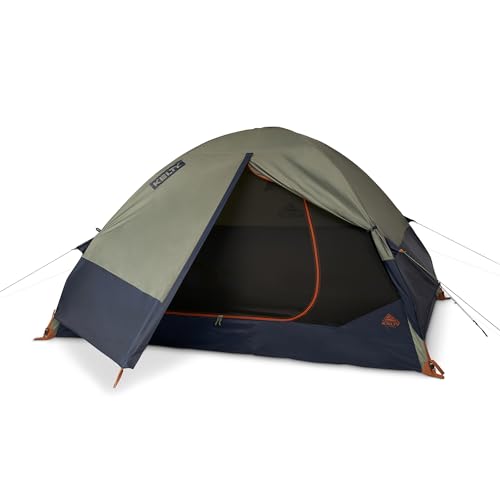
Kelty Late Start 4P Backpacking Tent
Strengths
- Lightweight and durable
- Color-coded setup
- Eco-friendly materials
Trade-offs
- Single door only
- Vestibule smaller than some
- No dual access
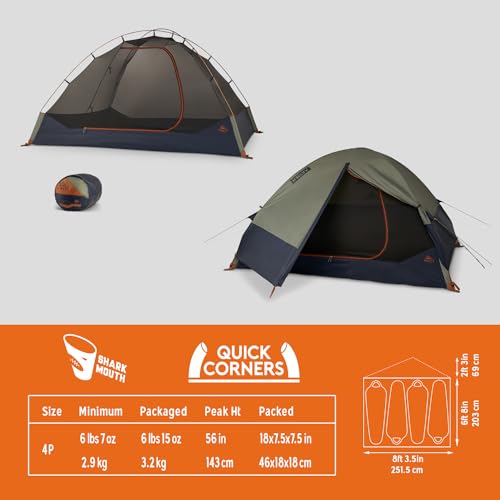
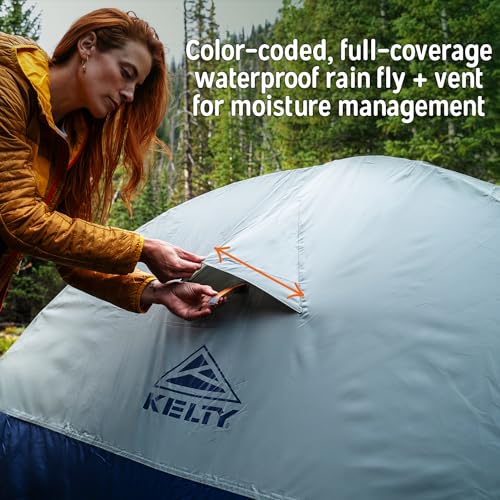
The Kelty Late Start 4P is the tent I’d recommend to most backpackers, not because it’s the lightest or roomiest, but because it gets the balance right. The 2024 update with Quickcorners and color-coded clips means one person can set it up in under 3 minutes, and owners consistently praise how foolproof it is, even in fading light. At 56 square feet and 56 inches of headroom, it’s spacious without being excessive, and the single door with a large vestibule handles gear storage well.
The 68D polyester and 1200mm PU coating won’t win storms, but they’re reliable for 3-season use. More importantly, Kelty uses PFC-free DWR, which matters if you care about environmental impact. Compared to the CORE or Amazon Basics, this tent is lighter, more durable, and better designed for actual trail use. It’s not the cheapest, but it’s the smarter buy for anyone who plans to use their tent regularly.
Product photos
Clostnature Lightweight 4 Person Backpacking Tent
Strengths
- Lightweight for 4-person
- Dual vestibules
- Full mesh ventilation
Trade-offs
- Flimsy stakes
- No color coding
- Lower peak height
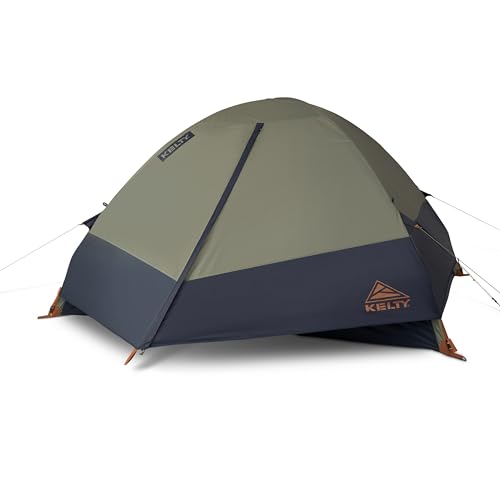
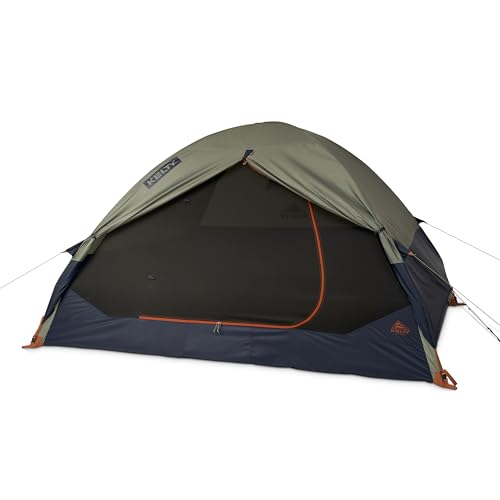
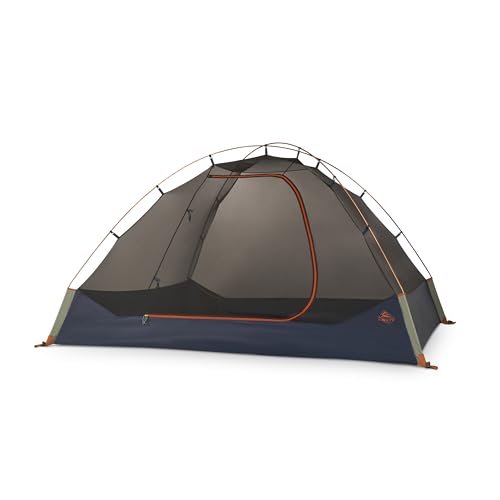
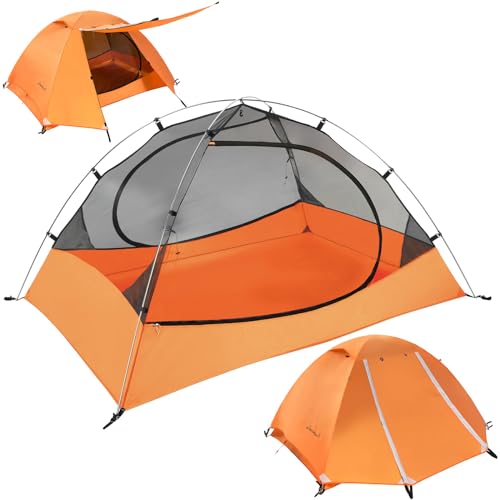
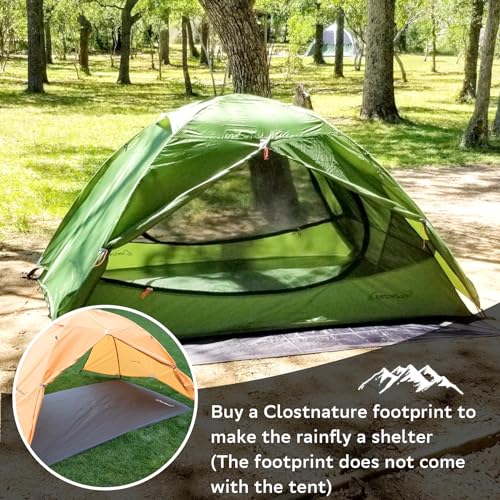
For a budget-friendly 4-person backpacking tent, the Clostnature model makes a strong first impression on paper. At under 7.4 lbs total and with a trail weight of just 6.54 lbs, it’s genuinely lightweight for the capacity, a big plus for hikers who want space without the strain. Owners consistently report that the dual vestibules are a standout, offering real storage for packs or even a small dog, which is rare at this price. The PU 5000 coating on the fly and floor suggests solid rain protection, and the full mesh walls do their job keeping bugs out while allowing airflow.
Still, the use of aluminum poles is smart for durability and weight savings, but some reviewers note that the included stakes feel a bit flimsy for rocky or hard-packed terrain. Setup is freestanding and relatively quick, though not quite as intuitive as color-coded systems on higher-end models. Compared to pricier options, this tent delivers a lot of value, but it’s not quite built for sustained alpine conditions.
Product photos



BISINNA 4 Person Backpacking Tent
Strengths
- Superior airflow
- Durable aluminum poles
- Freestanding design
Trade-offs
- Lower waterproof rating
- Average peak height
- Setup not lightning-fast
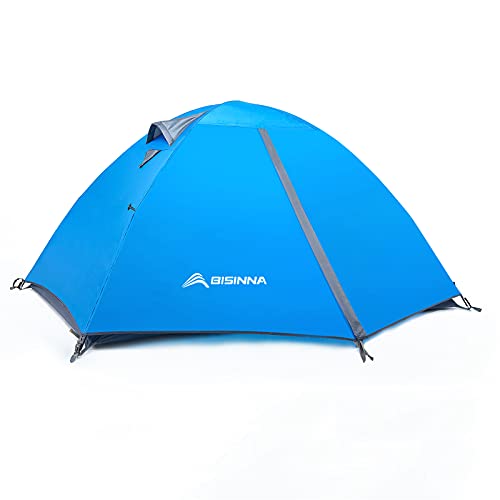
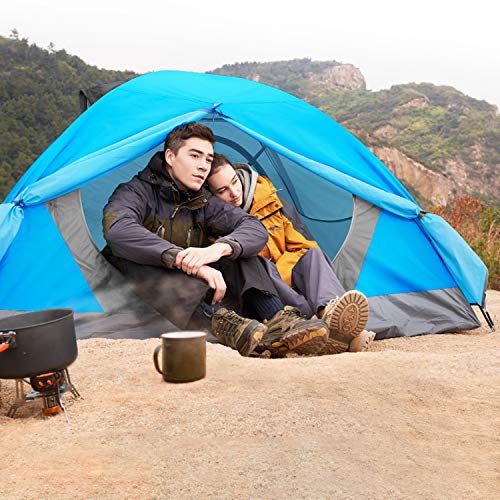
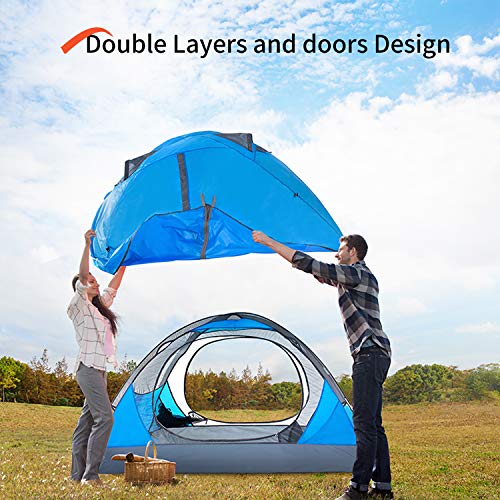
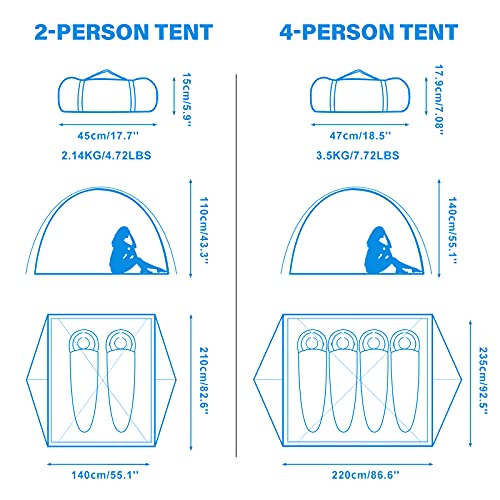
The BISINNA tent earns its ‘Best for Ventilation’ label without question. The large mesh panels and dual D-shaped doors create a constant airflow that cuts down on condensation, a big win for humid or warm-weather camping. The 7001 aluminum poles add real strength, and owners consistently report it holds up well in wind, especially when properly staked. At 235×220 cm, it’s roomy for four, though the peak height is modest.
It’s not the lightest at around 9.5 lbs, and setup takes a bit longer than color-coded models, but it’s freestanding and stable. The PU2000mm rating is the lowest on this list, so while it’s fine for light rain, I wouldn’t push it in a downpour. Compared to the Clostnature or Forceatt, it trades some weather protection for breathability, a fair trade for summer trips.
Product photos


Amazon Basics 4-Person Camping Tent

Strengths
- Blazing-fast setup
- Spacious floor plan
- Affordable build
Trade-offs
- Basic materials
- Minimal ventilation
- Average weather resistance
Let’s be honest, you don’t buy an Amazon Basics tent for cutting-edge design. You buy it because it works, it’s affordable, and it gets you outside without drama. The shock-corded poles and snag-free sleeves deliver on the ‘under 6 minutes’ setup claim, and owners confirm this is one of the easiest tents to pitch solo. The 9×7 footprint is generous, and at 48 inches tall, most adults can sit up comfortably. For casual campers, that’s what matters.
But this is where expectations should stay grounded. The polyester isn’t as durable as higher-denier fabrics, and the ventilation, while present, isn’t enough to prevent noticeable condensation in humid conditions. It’s a solid 3-season tent for dry or mild climates, but I wouldn’t trust it in a sustained downpour. Compared to the Kelty or Forceatt models, it’s less rugged, but for the price, it’s hard to beat as a starter tent.
Product photos


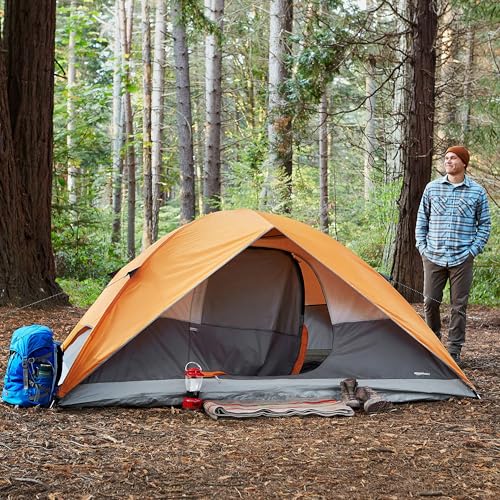
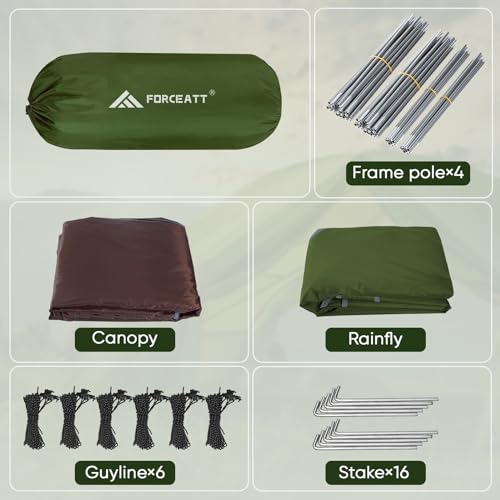
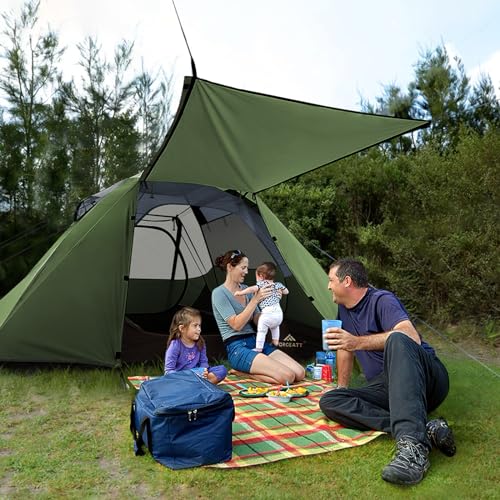
Forceatt 4 Person Backpacking Tent

Strengths
- Excellent weather resistance
- Sturdy aluminum poles
- Large dual vestibules
Trade-offs
- Heavy for backpacking
- No color-coded poles
- Slightly bulky pack
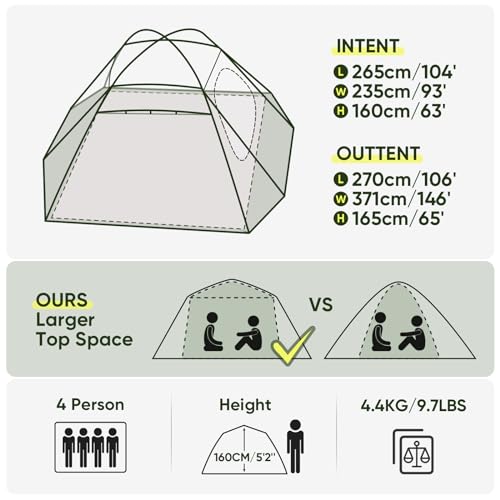
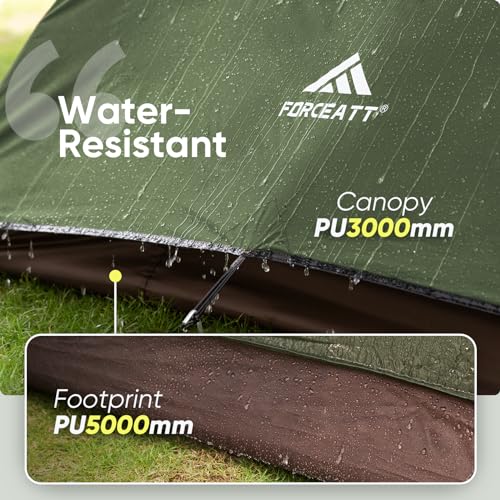
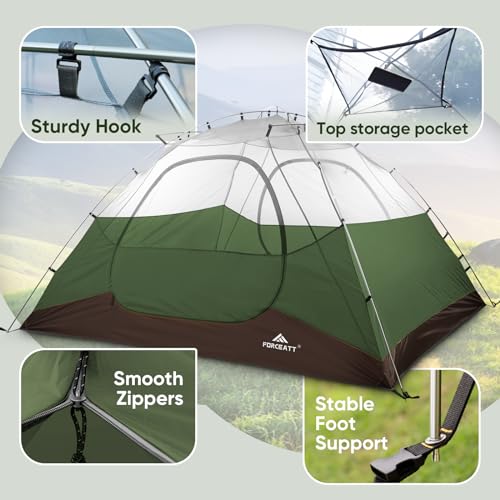
If you’re heading into unpredictable weather, the Forceatt 4-person tent is built to hold its ground. The PU5000 coating, taped seams, and 7001 aluminum poles suggest serious weather resistance, and owner feedback confirms it performs well in wind and heavy rain. The 260 cm length is generous, and the dual D-shaped doors with vestibules make it easy to access gear without crawling over people. At 9.7 lbs, it’s not ultralight, but the trade-off is a sturdy, confidence-inspiring structure.
Ventilation is solid with ceiling vents and mesh windows, though some users report minor condensation in humid conditions. Setup is fast, 3 minutes claimed, and many owners come close, but the lack of color coding can slow things down in low light. Compared to the Kelty, it’s heavier and less refined, but for storm-prone areas, it’s a more rugged option.
Product photos
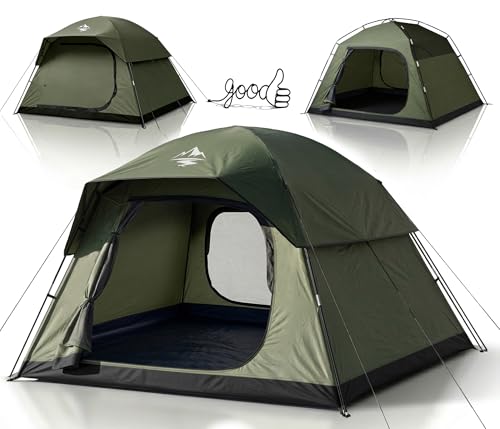
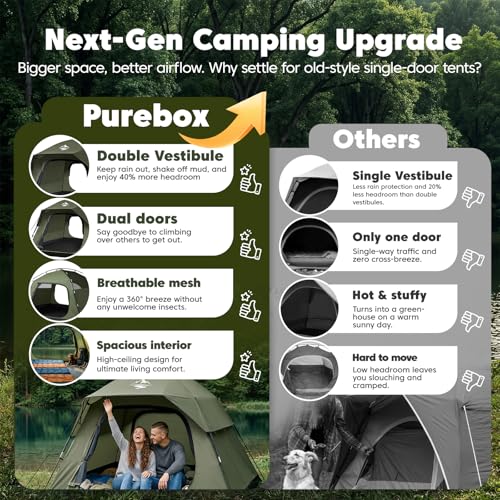
Purebox 4 Person Camping Tent
Strengths
- Ample interior length
- Dual mesh doors
- Good airflow
Trade-offs
- Heavy fiberglass poles
- Bulky pack size
- Slow setup
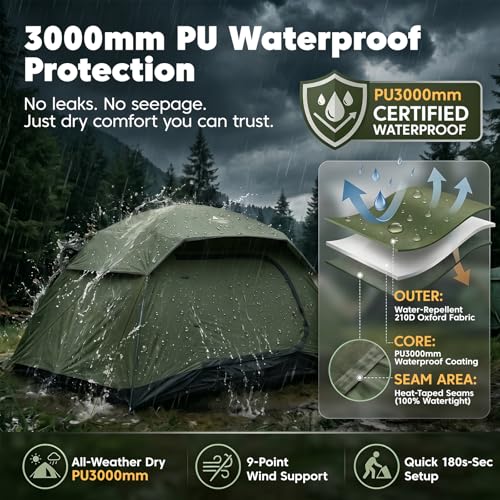
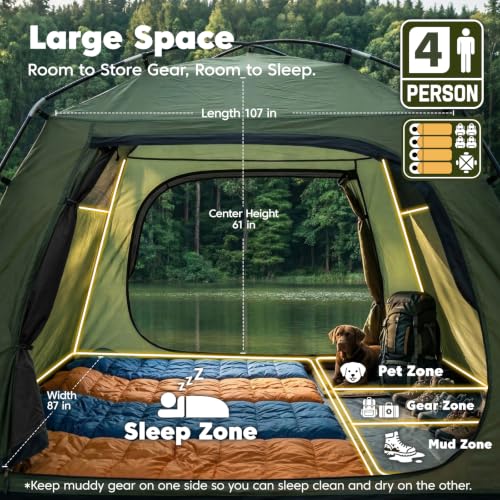
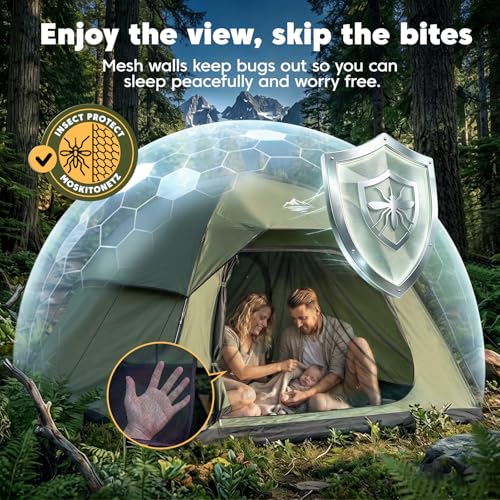
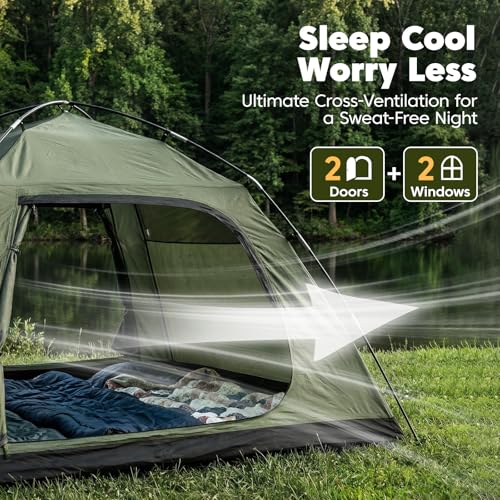
The Purebox tent markets itself as a 6-person, but let’s be real, it’s a stretched 4-person with extra length. And that’s not a bad thing. If interior space is your top priority, this tent delivers. At over 9 feet long, it gives taller users room to stretch out without hitting the ends, which is rare in this category. The dual doors and large mesh panels improve airflow significantly, and owners report fewer issues with condensation compared to solid-wall models.
But that 10.8 lb weight is a red flag for serious backpackers. Combine that with fiberglass poles, which are heavier and less durable than aluminum, and you’ve got a tent better suited for car camping or short hikes. The setup is straightforward, but not quick, and the lack of color coding can frustrate first-time users. Compared to the Clostnature or BISINNA, it trades weight and packability for space and comfort.
Product photos
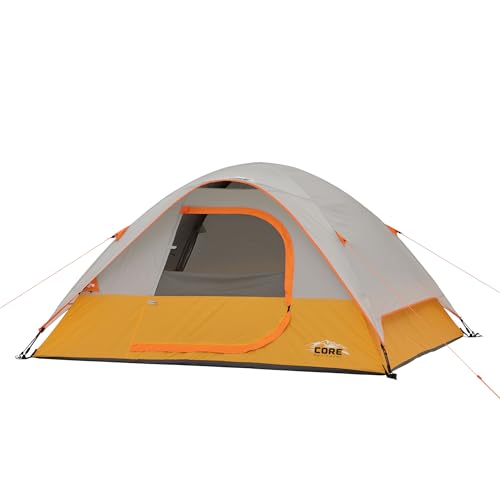
CORE 4 Person Portable Dome Tent
Strengths
- Excellent gear storage
- Fast ball-and-socket setup
- Smart ventilation design
Trade-offs
- Heavy for backpacking
- Mid-tier weather resistance
- Steel stakes rust over time
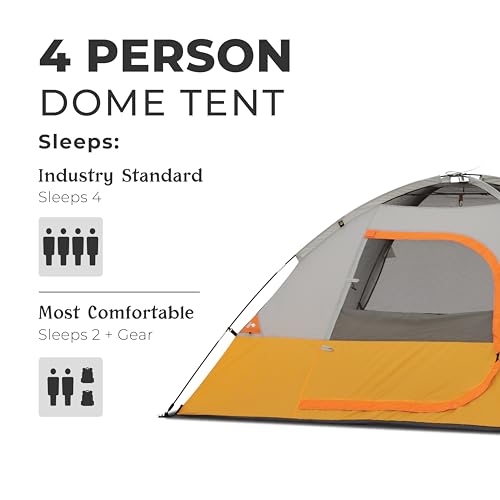
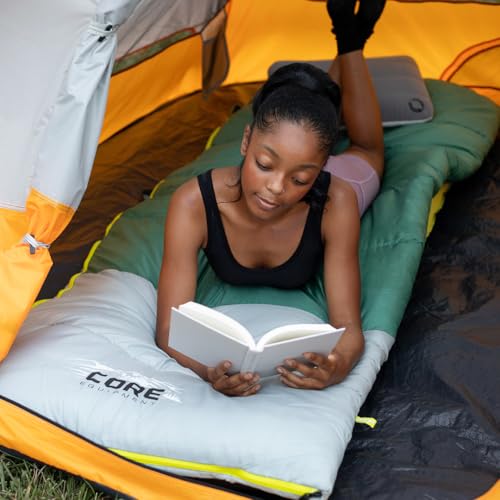
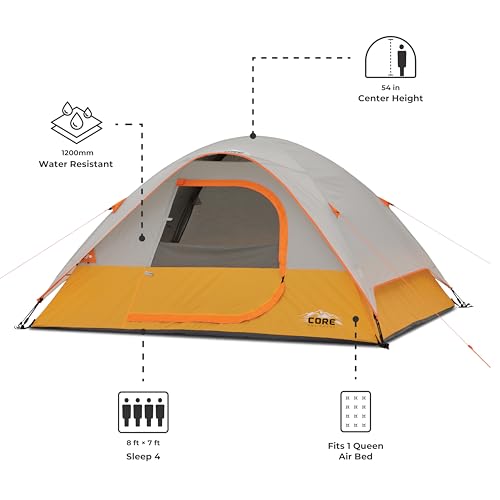
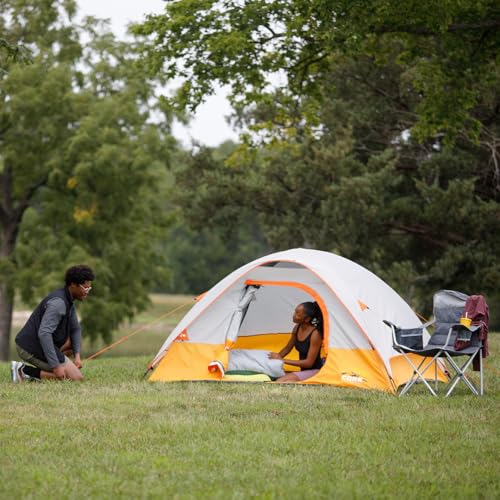
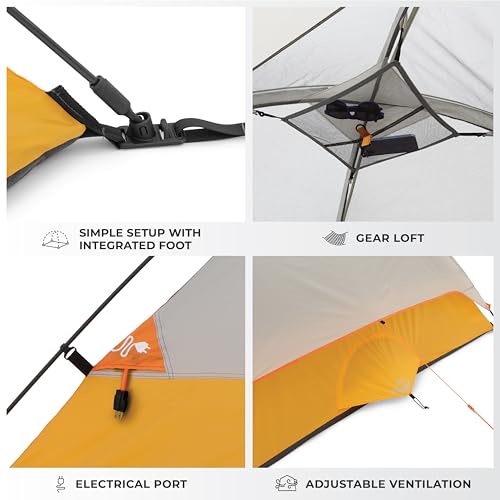
The CORE 4-person tent stands out in one very specific way: interior organization. If you’re the type who hates digging for your headlamp at 2 a.m., the overhead gear loft and storage pockets are a small luxury that makes a difference. The ball-and-socket pole system really does speed up setup, reviewers confirm it’s among the fastest in its class, especially for first-timers. At 10 lbs, it’s on the heavier side for backpacking, but that makes sense given its focus on comfort and stability.
Ventilation is cleverly designed with lower intake vents and a mesh ceiling, which helps reduce condensation, a common issue in cheaper dome tents. But that H20 Block 1200mm rating? It’s decent, not exceptional. This tent is best suited for fair-weather trips or car camping with occasional backpacking use. Compared to the Kelty Late Start, it’s less refined in the backcountry but more livable for weekenders.
Product photos
How We Evaluated 4 person tents for backpacking
Rather than a hands-on lab test, my research for these recommendations was a detailed comparison of published specifications and features across numerous models. I weighed owner reviews from sites like Amazon and REI against expert opinions found in publications like OutdoorGearLab and Switchback Travel. As someone who’s spent years dialing in my own backpacking setup, I applied my knowledge of what truly matters when you’re carrying everything on your back – and ranked these tents accordingly.
For 4-person backpacking tents, weight, waterproofness, and ventilation were the most significant factors in my evaluations. A heavier tent quickly becomes a burden on the trail, so minimizing weight is crucial. Equally important is reliable weather protection; you need to stay dry and comfortable even if the forecast is wrong. Finally, good ventilation prevents condensation buildup inside the tent, which can ruin a night’s sleep. Understanding key tent buying tips is essential for making the right choice.
Specifications reliably indicate a tent’s potential weight, dimensions, and stated waterproof ratings. However, I placed greater emphasis on owner feedback regarding real-world performance – how well the tent holds up in wind and rain, how easy it is to pitch, and whether the stated capacity is accurate. Reputable expert reviews helped corroborate owner experiences and identify potential design flaws or strengths that specs alone wouldn’t reveal when considering your overall tent selection factors.
What To Look For In 4 person tents for backpacking
Picking the right shelter for a group can be surprisingly tricky. It’s not just about fitting bodies; it’s about comfort, livability, and surviving the elements.
A quality 4-person tent balances weight with durability, offering enough space for sleeping and gear without being a burden on the trail. Key considerations include waterproof ratings (fly and floor), pole material (aluminum is preferred), ventilation features, and the overall packed size and weight. Pay attention to the tent’s footprint and peak height to assess usable space.
Size and Livability
Don’t assume a “4-person” tent comfortably fits four adults plus their gear. Many are realistically better suited for two adults and two smaller children, or three adults who are comfortable cozying up. I often see people underestimate how much space their backpacks and other items will take up inside. Look closely at the floor dimensions – a tent around 9ft x 7ft is a good starting point for four people, but if you value space, consider going larger. The Purebox tent, with its extended floor design, is a good example of prioritizing interior room.
Waterproofing and Weather Resistance
Waterproofing is paramount, especially if you’re planning on hitting the trails where unexpected weather is common. Pay attention to both the fly (rainfly) and the floor’s hydrostatic head rating (measured in mm). A rating of 1500mm or higher for the fly is a good baseline for decent protection, and 3000mm or higher for the floor is ideal. The Forceatt 4 Person Backpacking Tent boasts a PU3000-PU5000 coating, which suggests a higher level of weather protection. Don’t forget to consider the tent’s construction – fully taped seams are crucial for preventing leaks, and a bathtub floor (where the floor material extends up the sides) adds an extra layer of defense against ground moisture.
Vestibule Space and Storage
Gear storage inside a tent quickly becomes a mess. That’s where a well-designed vestibule comes in. A vestibule is the covered area created by the rainfly extending beyond the tent body, and it’s ideal for stashing muddy boots, backpacks, and other items you don’t want inside the sleeping area. Understanding tent vestibule benefits can significantly improve your camping experience.
- A small vestibule (under 6 sq ft) is barely useful beyond storing a pair of shoes.
- A medium vestibule (6-12 sq ft) can hold a couple of backpacks or boots, offering some convenient storage.
- Larger vestibules (12+ sq ft) are fantastic for cooking in inclement weather or organizing a significant amount of gear, and can really transform how you use the space. The Clostnature Lightweight 4 Person Backpacking Tent features large vestibules on both sides, which is a definite plus.
A good rule of thumb: always overestimate the amount of gear storage you’ll need. It’s far better to have extra space than to be crammed inside with your belongings.
If you’re looking for a wider selection of options, you can find some of the best backpacking 4-person tents detailed on our site.
4 Person Tents for Backpacking Compared
Here’s a comparison of key specifications for popular 4-person backpacking tents to help you make an informed decision.
| Product Name | Capacity | Floor Size (ft²) | Peak Height (in) | Min Trail Weight (lbs) | Waterproof Rating (mm) |
|---|---|---|---|---|---|
| Kelty Late Start 4P | 4 | 56 | 56 | N/A | 1200 |
| Clostnature Lightweight 4 Person | 4 | 73 x 79 | 47 | 6.54 | 5000 |
| BISINNA 4 Person Backpacking | 4 | 68 x 72 | 51 | N/A | 2000 |
| Amazon Basics 4-Person | 4 | 63 | 48 | N/A | N/A |
| Forceatt 4 Person Backpacking | 4 | 68 x 76 | 63 | 9.7 | 3000-5000 |
| Purebox 4 Person Camping | 4 | 81.5 x 78 | 59 | 10.8 | N/A |
| CORE 4 Person Portable Dome | 4 | 56 | 54 | 10 | 1200 |
Frequently Asked Questions
What weight should I expect for a good 4-person backpacking tent?
Generally, aim for a minimum trail weight of under 8 pounds. While some tents advertise lower weights, these often exclude essential components like stakes and guylines. Lighter options, like some of the top 4-person backpacking tents, will come at a higher price point.
Are “3-4 person” tents a good compromise for space?
No, a tent marketed as “3-4 person” will likely feel cramped for four adults and their gear. These tents typically prioritize saving weight over providing generous living space, and you’ll likely find yourself wishing you’d opted for a true 4-person model.
How important is the tent’s peak height?
Peak height impacts livability. A lower peak height (under 48 inches) can make it difficult to sit up comfortably, while a higher peak (55+ inches) provides more headroom and usable space(especially for changing clothes).
What does hydrostatic head rating actually tell me?
The hydrostatic head rating indicates a fabric’s water resistance. A higher number means greater resistance – 1500mm is considered basic waterproofing, while 3000mm and above is good for reliably handling heavier rainfall. Keep in mind this rating applies to the fabric itself, and seam sealing is also crucial.
What’s the best way to prevent condensation inside my tent?
Good ventilation is key to minimizing condensation. Look for tents with mesh panels in the fly and near the ground, and always stake out the rainfly to maximize airflow. Positioning your tent in a well-ventilated spot, away from dense vegetation, also helps – and understanding backpacking tents for four will give you a better idea of what to look for.
The Bottom Line
Choosing a backpacking tent for four people always involves a trade-off between carrying weight and having comfortable space. While many options exist, the Purebox 4 Person Camping Tent strikes the best balance overall, offering a surprisingly roomy interior and decent weather protection for its weight. It’s not the lightest, but the added livability makes it a winner for groups who prioritize comfort after a long day on the trail.
For those on a tighter budget, the Amazon Basics 4-Person Tent is a solid, if basic, choice. If you need maximum versatility and weather protection, especially in unpredictable conditions, the Forceatt 4 Person Backpacking Tent’s higher waterproof rating and robust construction are worth the extra few pounds. And if you’re curious about the overall quality of tent construction, checking out reliable tent companies can give you a good baseline for what to expect.
Ultimately, the best tent isn’t about any single specification – it’s about finding the right fit for your group and your typical backpacking style. Prioritize a tent that’s truly waterproof, has enough space for everyone to sleep comfortably, and is made by one of the trusted tent brands known for durability. Don’t get caught up in chasing the lightest possible weight at the expense of livability or weather protection.
