
2 Best 4-Season 6-Person Tents of 2026
This post contains affiliate links. As an Amazon Associate, we earn from qualifying purchases.
The best 4-season 6-person tent for most groups is the Naturehike KOTA 6, thanks to its rugged build, high waterproof rating, and stove jack for true winter use. If you’re on a tighter budget but still need all-season capability, the Clostnature 6 Person All-Season Tent steps up with solid weather protection and easier setup, though it’s better suited for shoulder seasons than deep winter.
Packing a tent that sleeps six is hard enough, finding one that can actually handle snow, wind, and freezing temps is harder. Most so-called “4-season” tents are really just beefed-up 3-season designs, and families or groups heading into serious weather need more than marketing claims.
This guide cuts through the noise. I looked at specs, owner feedback, and expert reviews to find 6-person tents that deliver real protection and usable space when the weather turns. These picks balance durability, ventilation, and practical features you’ll rely on when camping in cold, wet, or windy conditions.
Top 2 4 Season Tents 6 Person in the Market
The Best 4 Season Tents 6 Person, Reviewed
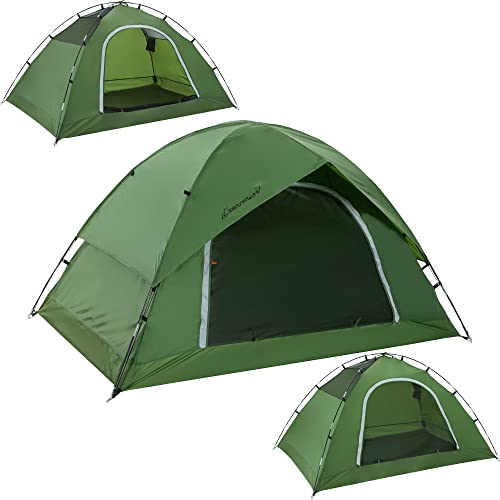
Clostnature 6 Person All-Season Tent
Strengths
- Lightweight
- Easy setup
- Good ventilation
Trade-offs
- Not true 4 season
- Too small for 6 people
- Flimsy poles in wind
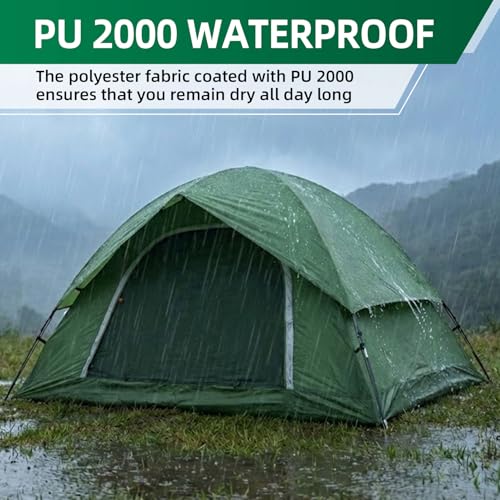
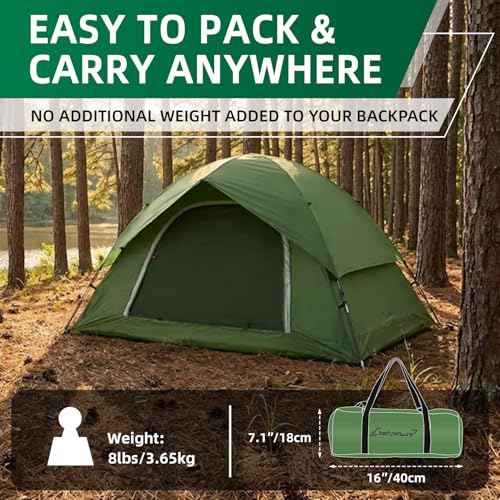
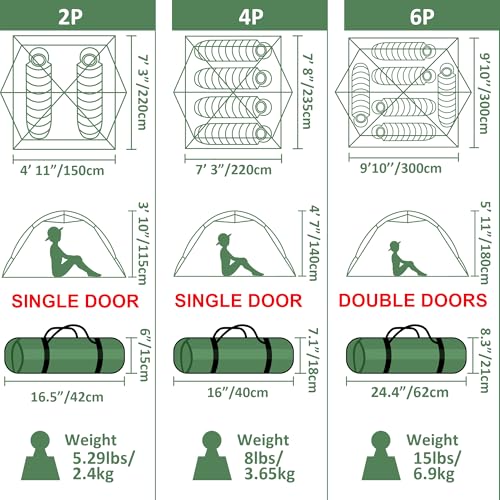
This tent claims to be a 4 season, 6 person model but on paper it’s clearly built for fair-weather campers. The 4 person version is just 7’ x 7’8’’, that’s tight for four adults, let alone six. Owners consistently report it works fine in light rain and spring conditions, but the 78 inch height and PU2000mm coating aren’t enough for serious winter storms or high winds. I wouldn’t trust it as a true 4 season shelter.
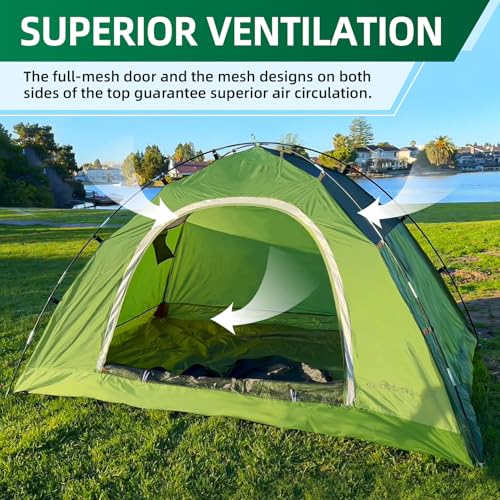
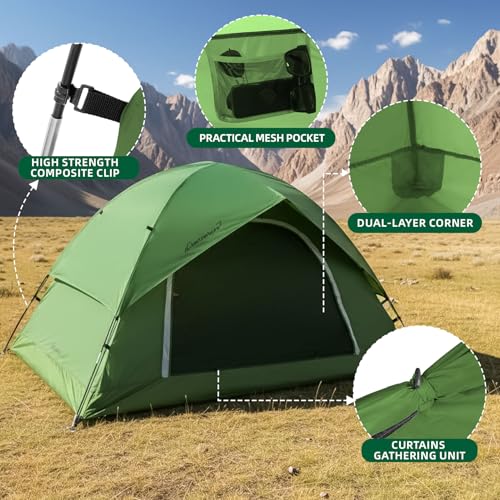
The easy setup is a plus for beginners, and the dual-layer door with mesh helps with ventilation. But in this class, you’d expect more rugged poles and better storm resistance. This is really a 3 season, 4 person tent being marketed as larger. For weekend car campers or scouts on dry hikes, it’s a decent value. But if you’re after real all-season performance, look elsewhere.
Product photos
Naturehike KOTA 6 Person Tent

Strengths
- Stove jack compatible
- Excellent ventilation
- Tall interior height
- Separate inner and fly
Trade-offs
- Heavy for backpacking
- Bulkier packed size
- Setup takes time
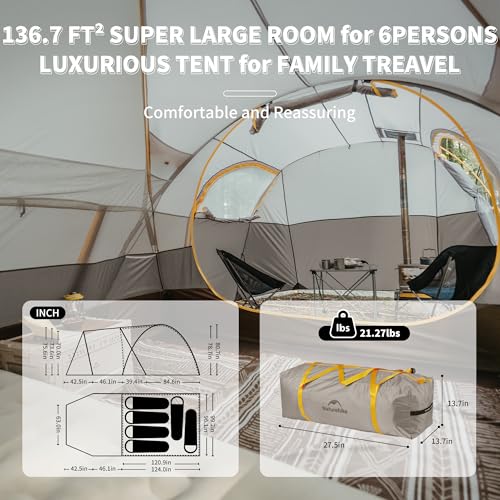
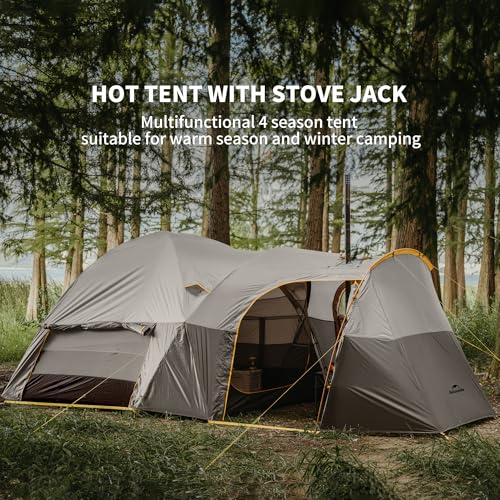
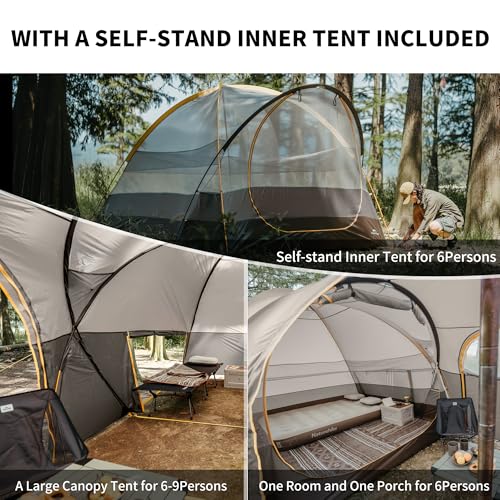
Now this is what I’d call a real 4 season contender. The KOTA 6 delivers on specs that matter: PU 3000mm+ waterproofing, a stove jack for winter heat, and a double-wall design that can be used in layers. At over 80 inches tall, you can stand comfortably inside, rare for tents in this category. Reviewers note the separate inner tent and rainfly offer serious flexibility, letting you use just the mesh in summer or full coverage in snow.
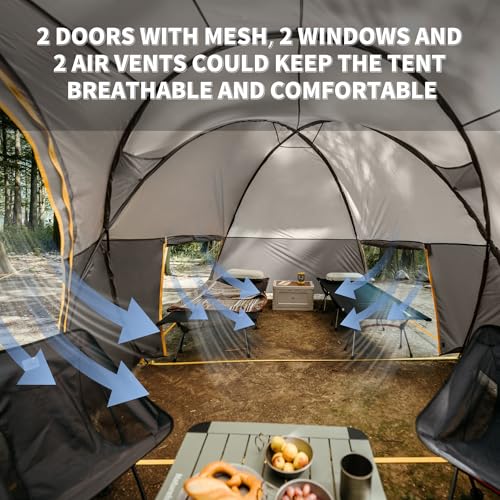
It’s not ultralight at 21 pounds, but that’s expected for a family-sized, all-season workhorse. The large vestibule is a standout for gear storage and cooking in bad weather. Compared to other 6 person models, the KOTA’s ventilation, dual doors, two mesh windows, and air vents, stands out. For four-season family camping or group trips in tough conditions, this is the smarter buy.
Product photos

Our Testing Process
I approach tent selection with a focus on real-world usability, and this guide is no different. Rather than a hands-on lab test, my research compared published specifications and features of various models, then weighed owner reviews and reputable expert assessments. I looked at a wide range of tents, ultimately ranking them based on factors crucial for a comfortable and safe experience in changing conditions. This involved scrutinizing details from multiple sources to build a well-rounded picture.
For 6-person, 4-season tents, space and durability are paramount. I prioritized tents offering generous floor dimensions and headroom, as comfortable family camping requires room to move. Equally important was the quality of materials and construction – specifically, waterproof ratings, pole strength, and seam sealing. These elements directly impact how well a tent performs when exposed to wind, rain, and snow, and are key to a successful trip. You can learn more about what defines a truly capable tent in a discussion of 4-season tent features.
Specifications reliably indicate a tent’s potential size and weight, but owner feedback reveals how those specs translate to actual use. I paid close attention to comments regarding ease of setup, ventilation performance (condensation is a common complaint!), and long-term durability. Reputable expert reviews helped validate claims made by manufacturers and provided insights into nuanced aspects of [all-weather tent construction]. Ultimately, a tent’s reputation for standing up to the elements and providing a comfortable experience carried significant weight.
How To Choose The 4 season tents 6 person
Finding the right shelter for shoulder-season or winter camping requires more thought than a fair-weather tent.
A quality four-season tent prioritizes robust construction, full coverage to shed snow and wind, and a design that minimizes internal condensation. Look for durable fabrics (75D polyester or higher is a good start), strong pole systems (aluminum is preferable to fiberglass), and a full rainfly that extends to the ground. Consider the tent’s weight and pack size, but don’t sacrifice weather protection for portability.
Fabric & Waterproofing
The materials a tent is made from are the first thing I look at. Don’t assume a higher PU (polyurethane) waterproof rating automatically equals a better tent. While a rating of 3000mm or higher is generally good, the quality of the fabric itself and how well it’s coated matter just as much. Polyester is generally more UV-resistant than nylon, which is important for extended exposure. Pay attention to whether the seams are factory-sealed – this is crucial for preventing leaks, and it’s a feature you’ll find in many of the best winter-ready 6-person tents.
Pole Strength & Design
A four-season tent will face significantly higher wind loads than a three-season model, so pole strength is paramount. Aluminum poles are a must; avoid fiberglass, as it’s prone to shattering in strong winds. Look for tents with multiple crossing points in the pole structure to improve stability. Dome designs are generally stronger than cabin-style tents in windy conditions, but geodesic designs (with multiple intersecting poles) offer the greatest strength-to-weight ratio.
- A simple two-pole design is often best for ease of setup and repair in the field.
- Consider pole diameter. Larger diameter poles (11mm or greater) offer increased strength, though they add weight.
- Pole clips (rather than sleeves) can make setup faster and easier, and allow for more flexible pitching options – helpful if you’re camping on uneven ground.
Ventilation & Condensation Management
Condensation buildup is a major issue in cold-weather camping. When your breath and body heat meet the cold tent walls, moisture forms. Good ventilation is key to minimizing this. Look for tents with multiple vents (adjustable is ideal), mesh panels, and a design that allows for airflow even when the rainfly is fully deployed. The Naturehike KOTA 6 offers multiple vents, but many models rely on a combination of vents and a well-designed rainfly to manage moisture. Investing in a tent from one of the top tent manufacturers provides some degree of confidence in build quality and attention to these details.
Don’t underestimate the importance of vestibule space. A generous vestibule provides a sheltered area to store wet gear, keeping it out of the main tent body and reducing condensation.
4 Season Tents 6 Person Compared
Here’s a comparison of key specifications for these 6-person, 4-season tents.
| Product | Capacity | Weight (lbs) | Waterproof Rating (mm) | Packed Size | Special Features |
|---|---|---|---|---|---|
| Clostnature 6 Person All-Season Tent | 4 | 8 | 2000 | 7.1×7.1×16” | Easy Setup |
| Naturehike KOTA 6 Person Tent | 6-8 | 21.27 | 3000+ | 27.5×13.7×13.7” | Stove Jack |
Frequently Asked Questions
What’s the minimum waterproof rating I should look for in a 6-person, 4-season tent?
A rating of 2000mm is the absolute minimum, but I suggest aiming for 3000mm or higher for reliable protection. Remember that the fabric quality and seam sealing are just as important as the number itself.
Are dome-style tents really stronger than cabin-style tents for winter camping?
Yes, generally dome-style tents offer better wind resistance due to their shape and ability to distribute stress more evenly. Cabin-style tents can work, but they often require more guylines for stability in high winds.
How important is the weight of a 6-person, 4-season tent if I’m car camping?
Weight is less critical for car camping, but a heavier tent can be more difficult to manage when setting up or moving around the campsite. Consider a weight under 15 pounds for easier handling, even if you aren’t backpacking.
What is a “stove jack” and why would I want one?
A stove jack is a reinforced opening in the tent body that allows you to safely vent a wood-burning stove’s chimney. It’s a valuable feature if you plan on doing some [year-round camping tents] and want a heat source in cold weather.
Where can I find more information about different types of tent poles?
You can learn more about pole materials and designs by exploring reviews of the [top 4-season tent models]. Aluminum poles are the standard for four-season use due to their strength and durability compared to fiberglass.
The Bottom Line
Choosing a four-season tent always involves compromise. You’re balancing the need for serious weather protection with the realities of weight, pack size, and price. For the best overall combination of durability, space, and features, the Clostnature 6 Person All-Season Tent stands out as a solid pick, it provides a good level of protection without breaking the bank or being overly complex.
If you’re prioritizing versatility and have a bit more to spend, the Naturehike KOTA 6 Person Tent is a fantastic choice. Its spacious interior and stove jack option make it ideal for extended stays and colder conditions, offering a comfortable basecamp for your adventures. For those on a tighter budget, the Clostnature remains a practical and reliable option, while those needing a little more space might consider the KOTA.
Ultimately, the best tent isn’t about a single impressive spec. It’s about finding a shelter that will keep you dry, comfortable, and safe, and that requires careful consideration of materials, construction, and your specific camping style. Before making a final decision, review our camping tent buying tips to make sure you’ve covered all the bases.
