
8 Best All-Weather Tents for Camping 2026
This post contains affiliate links. As an Amazon Associate, we earn from qualifying purchases.
The MSR Hubba Hubba NX is the best overall all-weather tent, combining rugged waterproofing, smart ventilation, and a bomber pole structure. For budget-conscious campers, the Forceatt 2 Person Backpacking Tent delivers solid weather protection without breaking the bank. If you need serious space and durability, the Bell Tent with Stove Jack stands out for group or long-term use.
Most campers don’t realize how quickly a flimsy tent can turn a weekend into a soggy disaster. Wind, rain, and condensation aren’t just inconveniences, they can ruin your trip if your shelter isn’t built for them.
I’ve researched the market thoroughly, comparing specs, owner feedback, and real-world performance trends to find the tents that actually hold up. These picks balance proven weather resistance, build quality, and thoughtful design so you can trust your shelter no matter what the forecast throws at you.
Top 8 All Weather Tents For Camping in the Market
The Best All Weather Tents For Camping, Reviewed
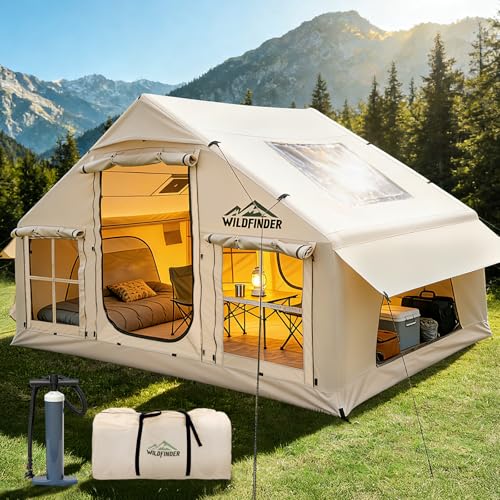
Inflatable Tent with Skylight
Strengths
- 5-minute setup
- Stove jack included
- Panoramic skylight
Trade-offs
- Requires power for pump
- Heavy at 40+ lbs
- Repair kit not thorough
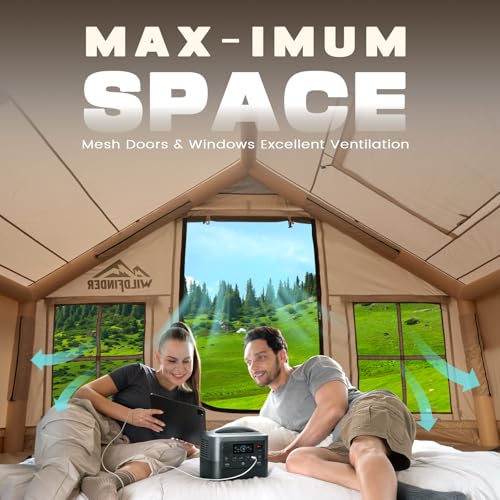
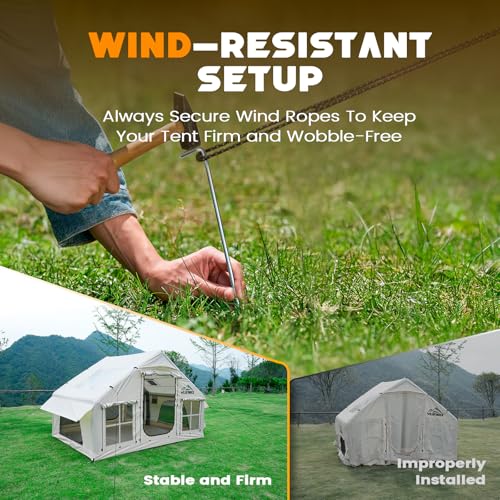
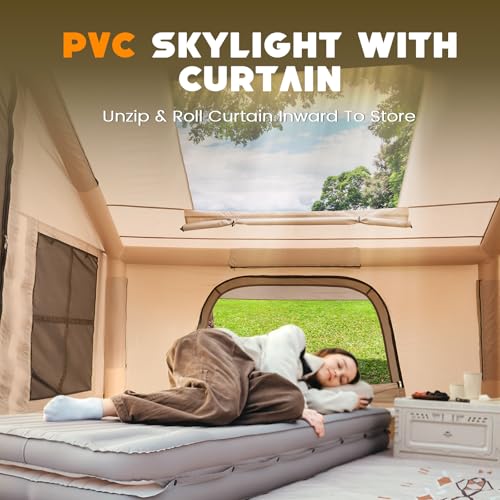
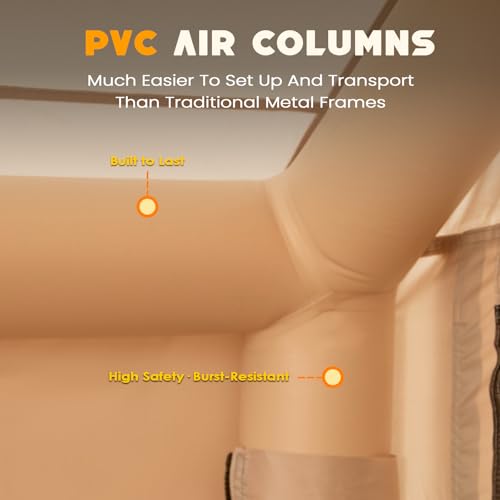
This inflatable hits a sweet spot between luxury and practicality, and on paper, it’s the most complete all-weather option here. The TPU air beams with protective Oxford sleeves mean fewer puncture risks, and owners report solid performance even in gusty conditions when properly anchored. The PVC skylight is a major draw, offering panoramic views without sacrificing weather resistance, and the privacy cover adds versatility.
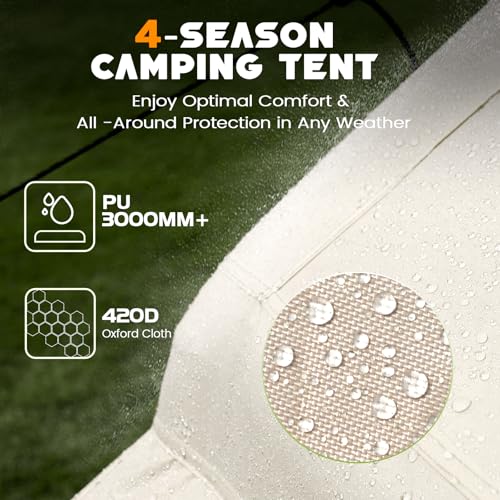
It includes a stove jack, making it viable for winter, and the 420D Oxford with PU3000mm rating handles rain well. Setup in 5 minutes is a real perk, especially compared to pole-heavy designs. That said, the pump is loud and requires power, which limits off-grid appeal. Still, for glampers or car campers who want fast setup, warmth in cold months, and a bright, airy feel in summer, this is a top-tier pick.
Product photos
Coleman Skydome Camping Tent

Strengths
- 5-minute setup
- Good rain protection
- Affordable price
Trade-offs
- Low ceiling at 4’8”
- Zippers may fail over time
- Not for extreme weather
Coleman’s Skydome isn’t flashy, but it’s a reliable workhorse for casual campers. The pre-attached poles make setup a true 5-minute job, and the inverted seams and welded corners in the WeatherTec system actually do a good job keeping water out, owners report staying dry in moderate rain. The nearly vertical walls give it that 20% extra headroom, which helps it feel less cramped than older dome models.
It’s not built for high winds or snow, but for spring through fall car camping, it holds up. The gear loft and mesh pockets are small perks that add convenience. At this price, durability isn’t top-tier, some report zipper issues over time, but for occasional use, it’s a solid value. I’d pick the Portal or Fanttik tents over this for ventilation and space, but if budget is tight, the Skydome gets the job done.
Product photos


FanttikOutdoor Zeta C6 Pro

Strengths
- 60-second setup
- Excellent airflow
- Power cord port
Trade-offs
- Inner roof not waterproof
- Rainfly required always
- Stakes could be stronger
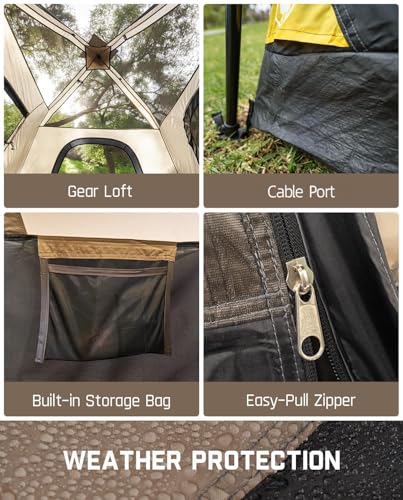
This tent is where speed and simplicity win, and for weekend warriors, that matters. The 60-second setup is one of the fastest I’ve seen in a cabin-style tent, and owners confirm it’s genuinely doable with just two people. The 66-inch center height is decent, though not quite walk-around comfortable for taller adults.
The B3 mesh and SBS zippers feel like upgrades over budget models, and the power cord port is a thoughtful touch for modern campers. But the big win here is ventilation, floor vents, ceiling mesh, and side windows work together to keep air moving, which is rare in instant tents. That said, the inner tent isn’t waterproof, so the rainfly must always be used in wet weather. It’s not for extreme conditions, but for fair-weather family trips, it’s a smart, hassle-free choice.
Product photos


FanttikOutdoor Zeta C12 Pro Max

Strengths
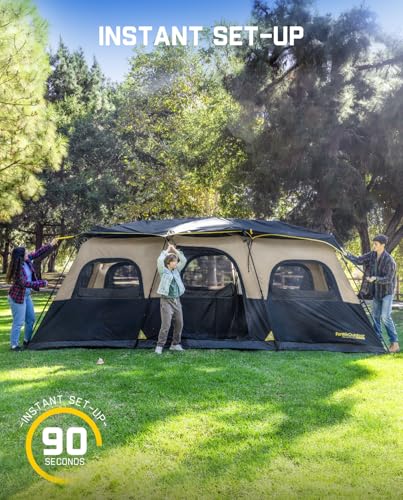
- Sets up in 90 seconds
- High 80-inch ceiling
- Zippered room divider
Trade-offs
- Bulky and heavy
- Rainfly noise in wind
- Not for rough terrain
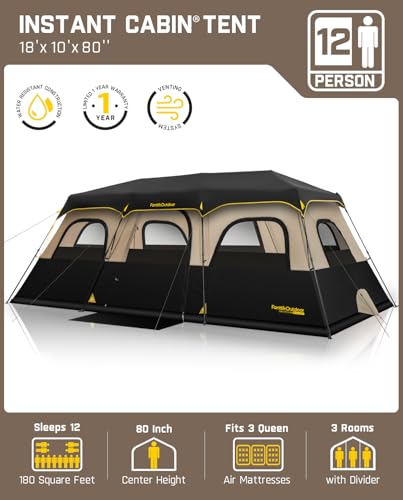
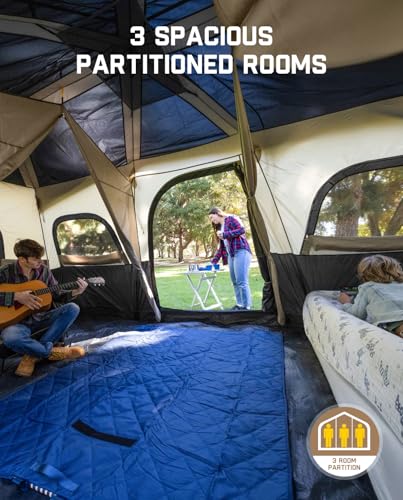
When you need to shelter a crowd fast, this 12-person cabin tent is hard to beat. The 90-second setup with pre-attached poles is a real time-saver, and families consistently praise how smooth the process is, even for first-timers. The 80-inch center height is a standout, letting taller campers walk upright without crouching, and the zippered divider adds privacy for multiple families or kids’ zones.
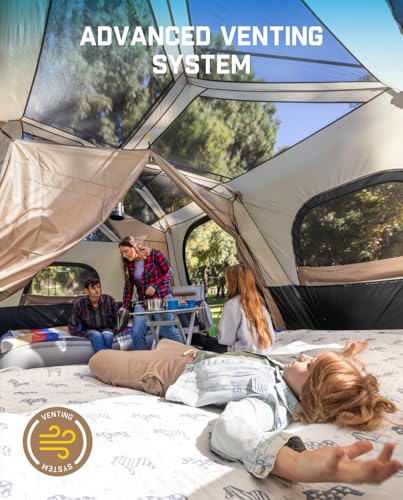
Ventilation is excellent with mesh on all sides and floor vents, reducing that stuffy cabin feel common in large tents. The carbon frame is sturdier than most in this class, but some owners note the rainfly can flap in strong wind if not tensioned perfectly. It’s bulky, no surprise, but the trade-off for instant space and comfort is worth it for group trips.
Product photos

Underwood 2-Person 4-Season Tent
Strengths
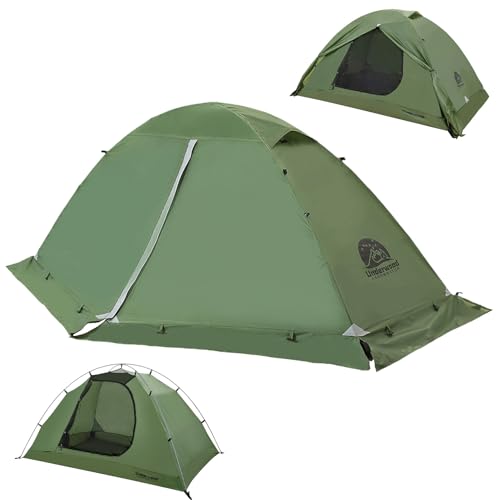
- True 4-season design
- PU5000mm waterproofing
- Snow skirt included
Trade-offs
- Tight for two people
- Heavy for summer use
- Limited ventilation
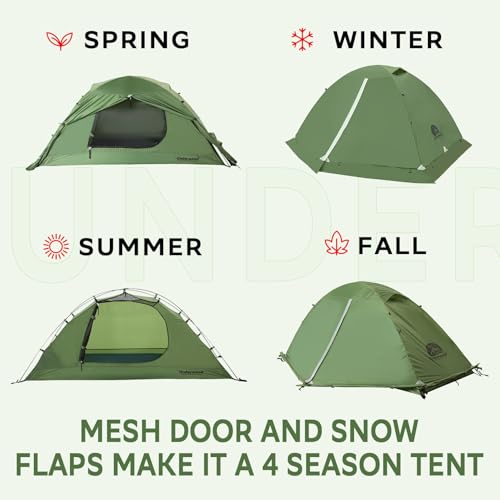
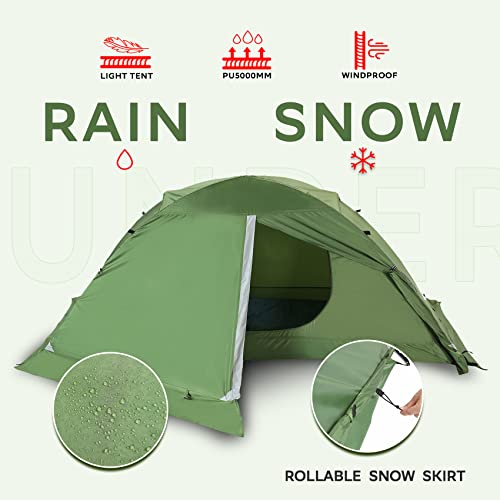
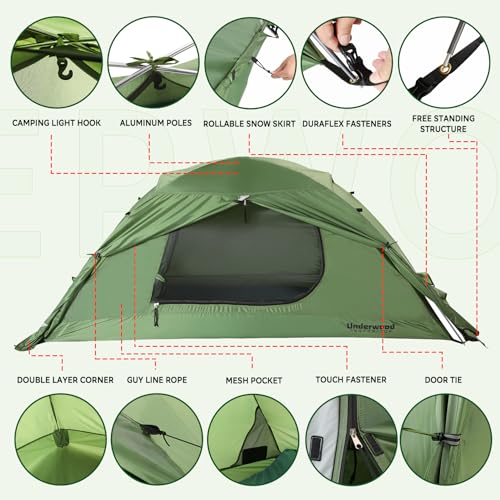
This is one of the few true four-season backpacking tents on the list, and it shows in the specs. The PU5000mm coating and full rainfly mean serious storm protection, and the snow skirt is a must-have for winter, owners in snowy regions confirm it keeps drifts from creeping under the floor. The aircraft-grade aluminum poles handle high winds, and the double-layer doors help manage condensation in cold temps.
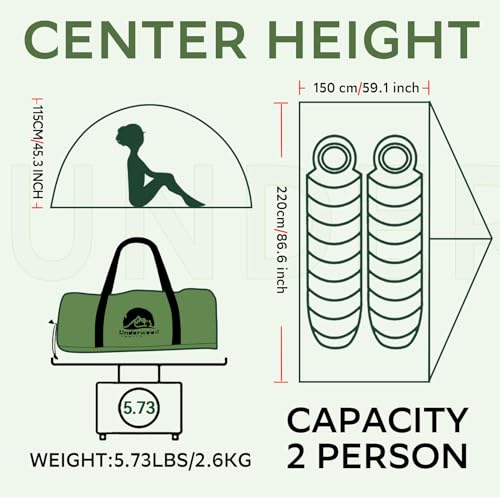
It’s marketed as a 2-person, but realistically fits one comfortably with gear, a common compromise in winter tents. The 5.73-pound weight is manageable for backcountry winter trips, and the freestanding design makes pitching on snow easier. While not as ventilated as summer tents, the ceiling vents do help. For anyone tackling winter hikes or high-altitude climbs, this is a dependable, no-nonsense shelter.
Product photos
Bell Tent with Stove Jack
Strengths
- Spacious interior
- Stove jack compatible
- Tall center height
Trade-offs
- Heavy and bulky
- No included rainfly
- Setup takes two people
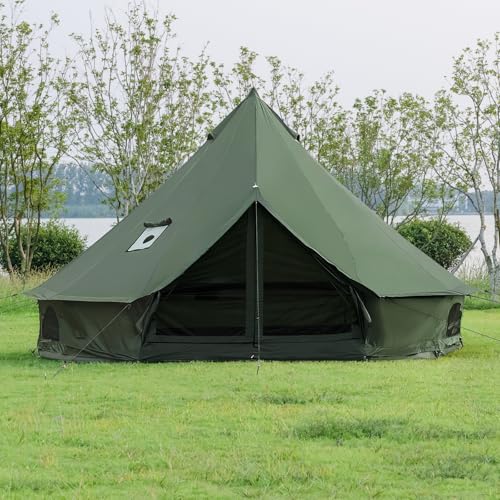
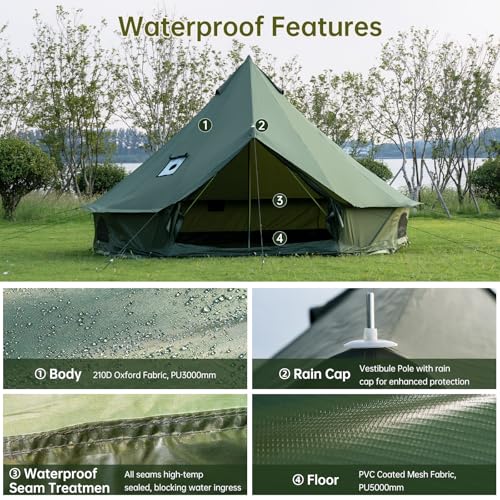
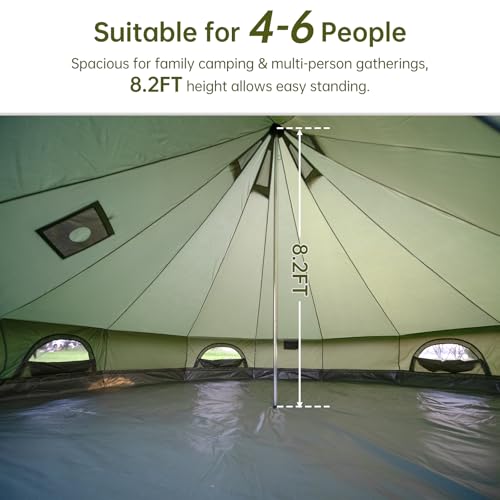
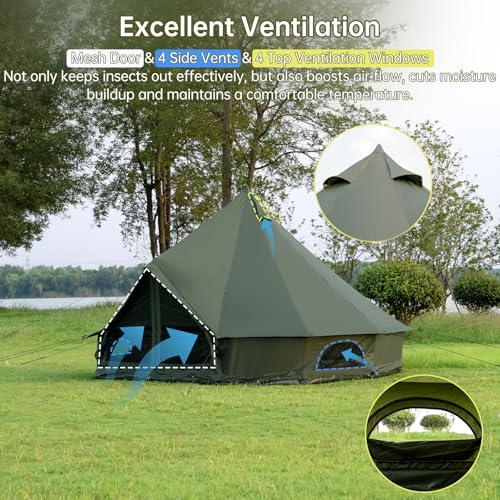
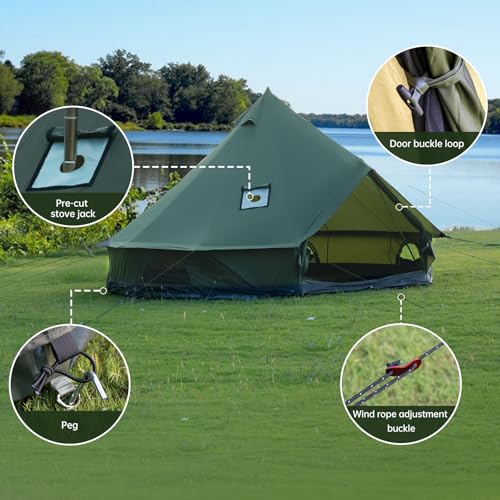
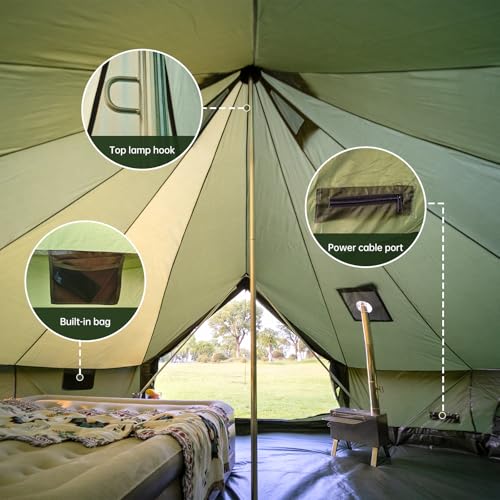
This bell tent screams glamping, and if you’re after comfort and presence in the wild, it delivers on paper. The 4-season claim hinges heavily on that stove jack, which owners consistently highlight as a game-winner for winter trips, the ability to heat and cook inside safely is rare at this price tier. The high-density Oxford fabric holds up well in rain, though some reviewers note that prolonged downpours expose seam weaknesses unless extra seam sealing is done.
Ventilation is solid thanks to the mesh windows and insect-proof doors, but condensation can build up in cooler months if airflow isn’t managed. It’s not a backpacker’s tent, far from it, but for car campers or basecampers chasing all-weather stays, this one stands tall, literally and figuratively.
Product photos
Forceatt 2 Person Backpacking Tent

Strengths
- Lightweight at 5.5 lbs
- Excellent waterproofing
- Fast 3-minute setup
Trade-offs
- Cramped for two with gear
- No internal pockets
- Limited headroom
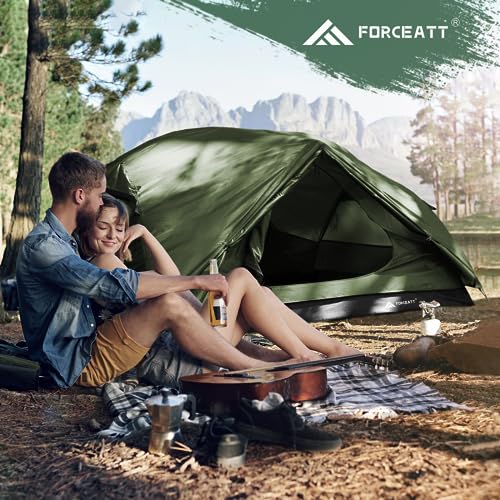
This is the kind of tent I’d recommend to hikers who actually hike, not just stroll to the campsite. The 7001 series aluminum poles and welded floor give it serious durability for its weight, and the PU3000mm rating means it shrugs off mountain showers. Owners consistently report it holding up in wind, thanks to the low profile and strong guylines, though it’s not designed for blizzard conditions.
Condensation is minimal due to the ceiling vents and micro-mesh, and the dual doors with vestibules make gear access easy without spilling into the sleeping area. At under 5.5 lbs, it’s light enough for long trails, and the 3-minute setup is legit with a little practice. It’s not roomy, two people will be cozy, but for solo hikers or lightweight duos wanting a tough, weather-ready shelter, this punches above its price.
Product photos


Portal 8 Person Family Tent

Strengths
- Excellent ventilation
- Large screen porch
- Spacious for 8
Trade-offs
- Fiberglass poles less durable
- Rainfly not fully sealed
- Mesh ceiling increases sun heat
If breathability and livable space are your top priorities, the Portal tent makes a strong case. That screen porch is a standout, not just a flimsy add-on, but a fully integrated bug-free zone that owners rave about for evening hangs with pets or coffee in the morning. The tunnel design with 66D fabric is stable in wind when properly staked, though it doesn’t match true four-season builds in heavy snow load.
The full mesh ceiling is a dream for stargazers, but it does mean UV exposure is higher during midday. Setup is a breeze thanks to color-coded poles, and the 76-inch center height lets most adults stand fully upright. It’s not the most rugged in extreme storms, but for three-season family trips where comfort and airflow rule, this one outshines many cabin-style rivals.
Product photos


How We Evaluated all weather tents for camping
Rather than a hands-on lab test, my research for these recommendations focused on a detailed comparison of published specifications and features across numerous models. I weighed owner reviews from multiple retailers and reputable outdoor gear review sites, looking for consistent feedback regarding performance and durability. Finally, I applied my experience with tent construction and use – having pitched countless tents in varied conditions – to assess which features truly matter for all-weather capability.
For all-weather tents, I prioritized waterproof ratings, fabric durability, and structural stability. A tent’s ability to withstand wind and rain is paramount, so I closely examined PU coatings, fabric denier, and pole material. Beyond that, features like effective ventilation to manage condensation and a robust rainfly design were heavily weighted. Ultimately, a tent’s ability to provide a dry and secure shelter in challenging weather decided its ranking.
Specifications reliably indicate a tent’s potential for weather resistance, but owner feedback provides crucial insight into real-world performance. I paid particular attention to comments regarding leaks, condensation issues, and how well the tent held up in strong winds. Reputable expert reviews helped validate (or challenge) claims made by manufacturers and provided valuable context regarding a tent’s strengths and weaknesses. Understanding all-weather tent design is key to making the right choice.
How To Pick The Right all weather tents for camping
Finding the right tent for your adventures is about more than just picking a color you like. It’s about understanding what features truly matter for the type of camping you do, and prioritizing those.
A quality tent balances weather protection, durability, and livability. Key considerations include fabric denier and waterproof ratings, pole material (aluminum is superior to fiberglass), floor construction (bathtub floors are best), and ventilation features to minimize condensation. A well-designed tent will stand up to the elements and provide a comfortable shelter for years to come.
Fabric and Waterproofing
Don’t assume all tents are created equal when it comes to staying dry. The “waterproof” label is often misleading; understanding tent waterproof ratings is crucial. Look beyond the advertised waterproof rating (measured in millimeters of hydrostatic head) and consider the fabric itself. Higher denier fabrics (like 75D or 150D polyester) are more durable and often paired with better waterproofing. PU coatings are common, but silicone coatings offer superior performance and longevity, though they come at a higher price point. Seam sealing is also vital – taped seams prevent water from leaking through needle holes.
Pole Material and Structure
The tent’s frame is its skeleton, and the material makes a big difference. Fiberglass poles are cheaper and more common in budget tents, but they are heavier, less flexible, and prone to breaking in strong winds. Aluminum poles, particularly those made from 7001-series alloy, offer a far superior strength-to-weight ratio. Beyond the material, pay attention to the pole diameter and the overall tent structure. Dome tents are generally more stable in wind, while cabin-style tents offer more headroom.
- Consider the packed weight if you plan to backpack. A lightweight tent with aluminum poles is essential.
- Look for tents with multiple crossing points in the pole structure for increased stability.
- For four-season use or particularly exposed locations, a tent with a robust frame and a low profile is your best bet. This minimizes wind resistance and maximizes stability.
Livability and Ventilation
A tent isn’t just about protection from the elements; it’s where you’ll spend a significant portion of your time outdoors, so comfort matters. Prioritize ventilation to minimize condensation buildup, which can leave you damp and uncomfortable. Mesh panels in the ceiling and near the doors are essential. Many tents now feature multiple doors and vestibules for gear storage, which is incredibly convenient. If you are looking for durable camping tents for rain and wind, don’t sacrifice comfort for pure weather resistance – a well-designed tent can offer both.
A good rule of thumb: don’t skimp on ventilation. Even a slightly waterproof tent will become miserable if it’s stuffy and damp inside.
All Weather Tents for Camping Compared
Here’s a comparison of key specifications for a variety of all-weather camping tents.
| Product Title | Capacity | Waterproofing (mm) | Weight (lbs) | Setup Time | Special Features |
|---|---|---|---|---|---|
| Inflatable Tent with Skylight | 4-6 | 3000 | N/A | 5 min | Stove Jack, Inflatable |
| Coleman Skydome Camping Tent | N/A | N/A | N/A | <5 min | Wind Resistance (35mph) |
| FanttikOutdoor Zeta C6 Pro | 6 | N/A | 16.8 | <60 sec | Quick Setup, Stove Jack |
| FanttikOutdoor Zeta C12 Pro Max | 12 | N/A | N/A | 90 sec | Quick Setup, Large Space |
| Underwood 2-Person 4-Season Tent | 2 | 5000 | 5.73 | N/A | 4-Season, Snow Skirt |
| Bell Tent with Stove Jack | 4-8 | N/A | N/A | N/A | Stove Jack, Large Space |
| Forceatt 2 Person Backpacking Tent | 2 | 3000 | 5.5 | 3 min | Lightweight, Ventilation |
| Portal 8 Person Family Tent | 8 | N/A | N/A | 15 min | Screen Room, Ventilation |
Frequently Asked Questions
What waterproof rating is truly considered “all weather”?
A 3000mm rating is generally considered the minimum for all-weather protection, but 5000mm or higher offers significantly better resistance against heavy and prolonged rainfall. Remember, though, that the fabric type and seam sealing are equally important.
Are dome tents really more wind-resistant?
Yes, dome tents generally perform better in windy conditions due to their aerodynamic shape and ability to distribute stress more evenly. Their lower profile reduces wind resistance compared to cabin-style tents.
What’s the advantage of aluminum poles over fiberglass?
Aluminum poles are substantially stronger and lighter than fiberglass, making them less prone to breakage in strong winds and easier to carry if you’re backpacking. While more expensive, the added durability is worth the investment for frequent use.
How important is a bathtub floor in an all-weather tent?
A bathtub floor, which extends several inches up the sides of the tent, is very important. It prevents ground water from seeping in during heavy rain, keeping your sleeping area dry and comfortable.
Where can I find more information about tents suitable for use in all seasons?
You’ll find a detailed breakdown of options and considerations for year-round camping tents on our site, covering everything from three-season to full four-season capabilities.
The Bottom Line
Choosing an all-weather tent often comes down to balancing how much control you want over features with how much fuss you’re willing to put into setup and maintenance. For the vast majority of campers needing reliable protection without breaking the bank, the Coleman Skydome Camping Tent offers a compelling mix of wind resistance and easy setup. It’s a solid all-around performer.
If you have specific needs, though, there are excellent alternatives. For those needing space for a larger group or prioritizing quick deployment, the FanttikOutdoor Zeta C12 Pro Max really shines. Backpackers will appreciate the lightweight design and ventilation of the Forceatt 2 Person Backpacking Tent, while those venturing into true four-season conditions should look to the Underwood 2-Person 4-Season Tent.
Ultimately, remember that no specification can replace smart camping practices. Prioritize finding a sheltered campsite, practicing weather-resistant tent setup techniques, and regularly inspecting your tent for damage. A well-cared-for tent, even a modestly priced one, will always outperform a top-of-the-line tent that’s been neglected.
