
7 Best Backcountry Hunting Tents for 2026
This post contains affiliate links. As an Amazon Associate, we earn from qualifying purchases.
The best backcountry hunting tent overall is the Camppal 2 Person Backpacking Tent, it hits the sweet spot of lightweight design, reliable weather protection, and durable aluminum poles. For a budget-friendly option that still performs well in rough conditions, the GEERTOP 2 Person Backpacking Tent is a solid pick. If maximum concealment matters most, the 270° Camouflage Hunting Blind offers unmatched coverage for stationary setups.
Hunters know that a bad shelter can ruin a hard-earned stalk. You need something that won’t buckle in wind, won’t leak in a downpour, and won’t weigh you down on the hike in. Too many tents claim to be “built for the backcountry” but fall apart when it counts.
This guide cuts through the hype. Based on specs, owner feedback, and years of evaluating outdoor shelters, I focused on what actually matters: weight, weather resistance, durability, and concealment. These picks are built to keep you dry, hidden, and comfortable deep in the wild.
Top 7 Backcountry Hunting Tents in the Market
The Best Backcountry Hunting Tents, Reviewed
Camppal 2 Person Backpacking Tent

Strengths
- 4-season ready
- Freestanding design
- Excellent weather protection
Trade-offs
- Heavier than ultralight options
- Bulkier packed size
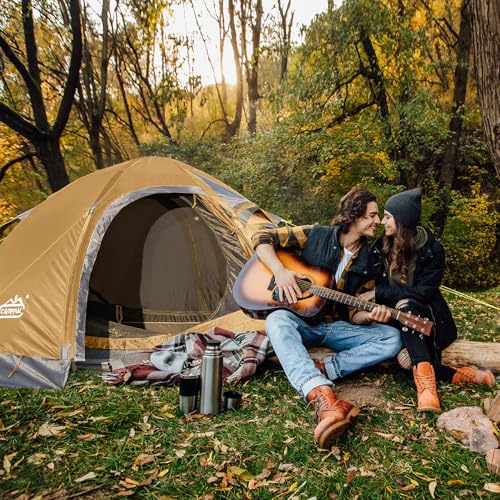
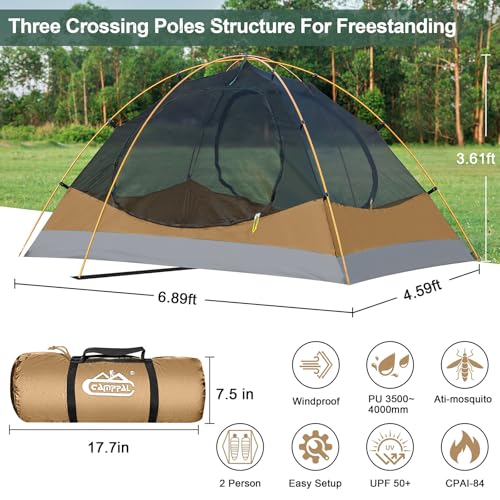
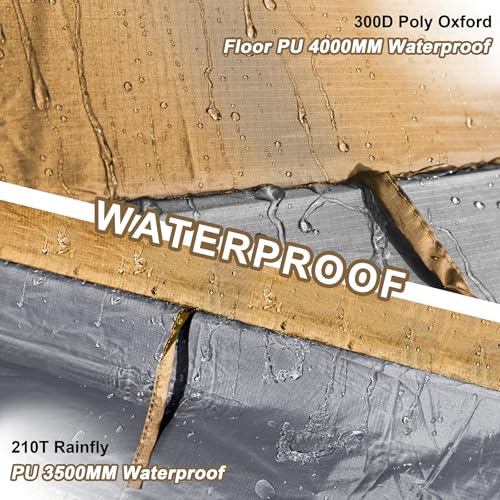
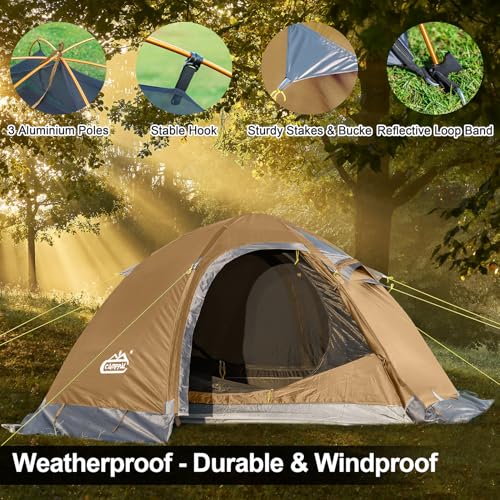
This tent is built like a winter bunker, and that’s exactly what it’s meant to be. With a PU 4000mm floor and a 3500mm rainfly, plus a full snow skirt, it’s one of the few backpacking tents that genuinely earns its 4-season claim. The 3-crossing pole design is rare at this price and gives it serious wind resistance, owners in exposed alpine zones say it held firm in gusts that flattened other tents. It’s not ultralight, but at 6.95 lbs, it’s reasonable for what you’re getting: a freestanding, storm-ready shelter that doesn’t skimp on space.
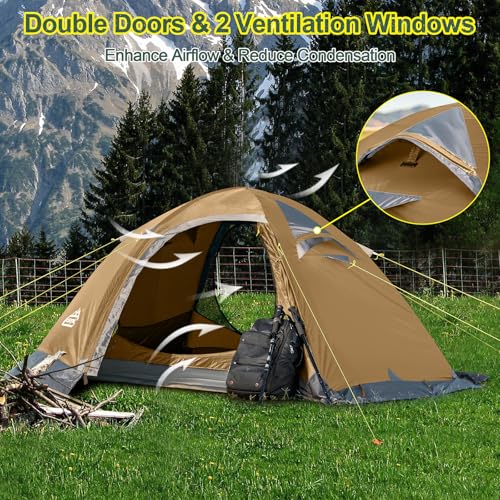
The dual doors and dual vestibules are a real quality-of-life win, especially when sharing with a partner or storing hunting gear out of the rain. Ventilation is solid thanks to mesh panels and two roof vents, though in humid, still conditions some condensation creeps in, nothing extreme, but worth managing with the vents open. Compared to the BISINNA or GEERTOP models, this one stands out for serious weather defense, not minimal weight.
Product photos
OneTigris Rock Fortress Hot Tent
Strengths
- Stove jack compatible
- Spacious interior
- Good heat retention
Trade-offs
- Heavy and bulky
- Overkill for warm seasons
- Requires separate stove
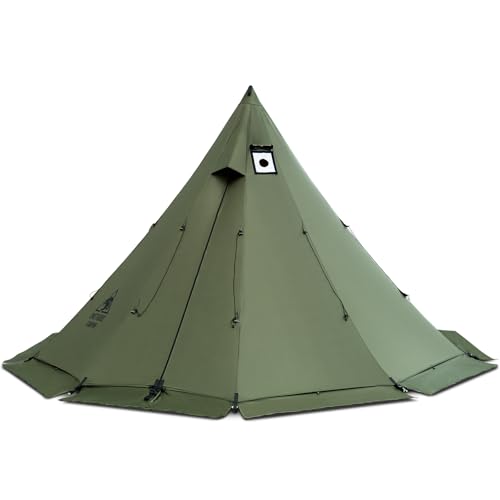
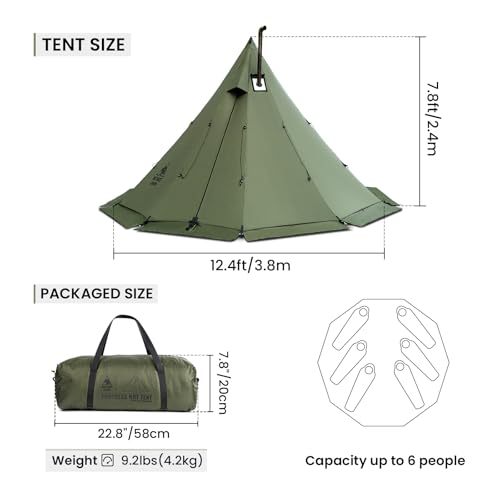
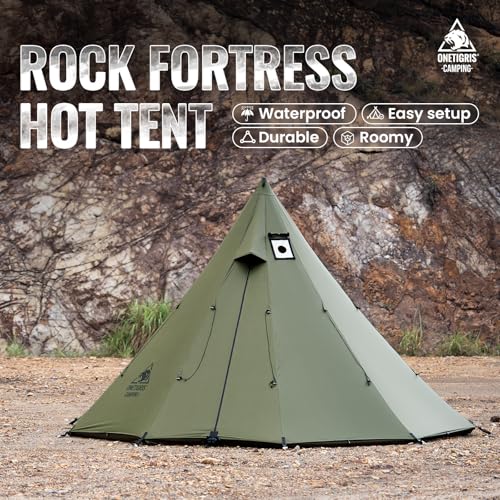
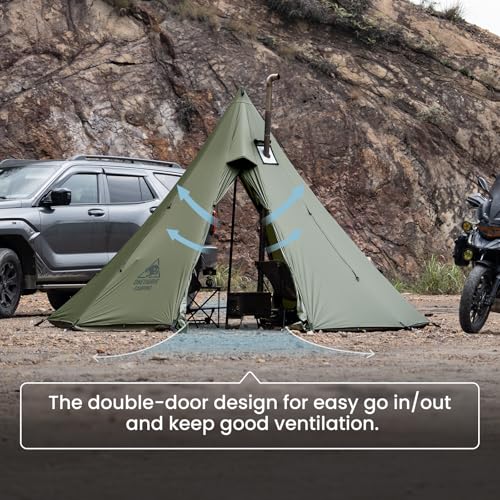
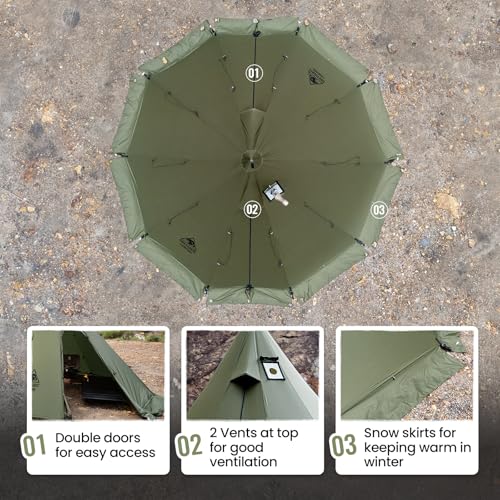
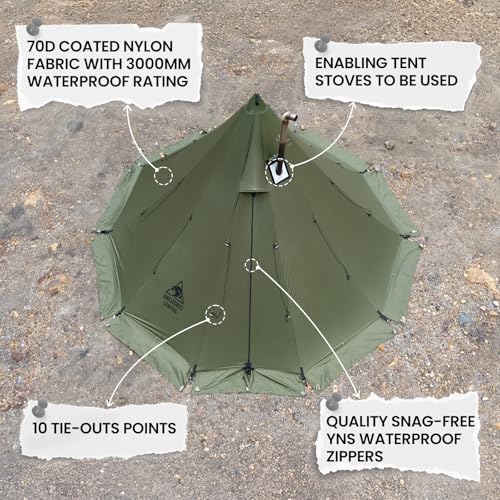
When the thermometer plummets, this is the tent that answers the call. The stove jack changes everything, add a small tent stove and you’ve got a mobile winter bunker. At 9.2 lbs and 12.4 feet in diameter, it’s heavy and bulky, but you’re not backpacking with this; you’re surviving. The 70D nylon with 3000mm waterproofing isn’t the highest spec, but with the snow skirt sealed and the stove running, it’s designed to retain heat, not just repel rain. Owners in northern climates say they’ve stayed warm in single-digit temps, which is no small feat.
It’s not stealthy, not fast to set up, and overkill for mild seasons, but for winter hunting, ice fishing, or off-grid winter camping, it’s unmatched in this list. Compared to the Camppal, it’s less about storm resistance and more about sustained heat and space. The double doors and YKK zippers add to the premium feel. Just remember: you’ll need to pack the stove separately.
Product photos
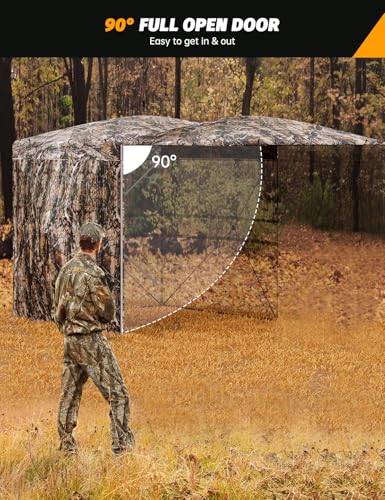
270° Camouflage Hunting Blind
Strengths
- Spacious for 3-4 hunters
- Quick pop-up setup
- Effective camouflage
Trade-offs
- Not for overnight use
- Minimal ventilation
- Bulky when packed
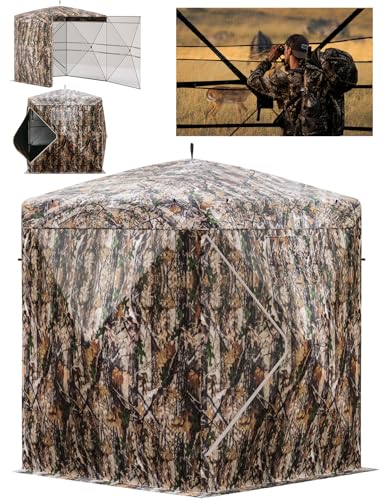
This is the bigger brother of the 2-3 person blind, and it’s built for team hunts. The 270° shoot-through mesh and 3D camo are identical in quality, but the extra space lets three or four hunters set up without elbowing each other, a real advantage during group deer sits. The pop-up steel frame is slightly reinforced, and owners report it holds up better in wind than the smaller version, though guylines are still essential.
Like its sibling, it’s not a sleeping tent, headroom is still low, and airflow is poor, but as a field blind, it’s one of the most practical on the market. The compact fold and carry bag make it easy to stash in a truck or haul into a stand. If you’re hunting with a partner or small group and need concealment without the bulk of a permanent blind, this is the smarter buy over the smaller model.
Product photos

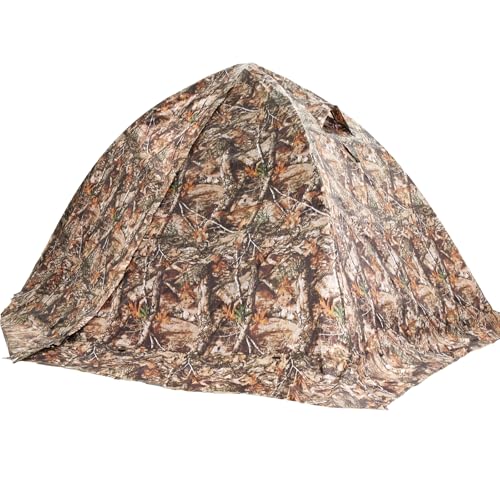
270° Camouflage Pop-Up Blind
Strengths
- Instant pop-up setup
- Effective camouflage
- Shoot-through mesh
Trade-offs
- Not for sleeping
- Poor ventilation
- Limited interior space
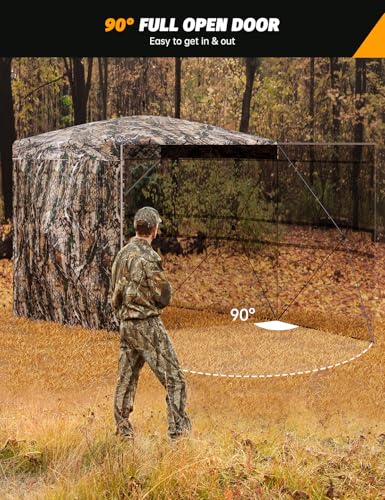
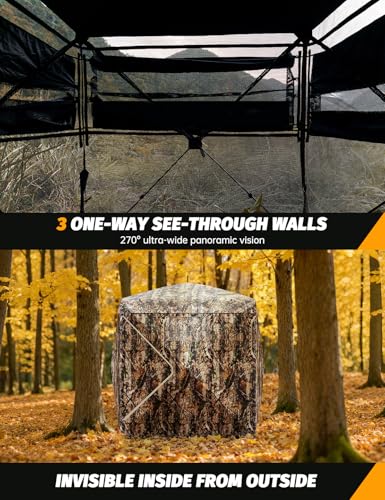
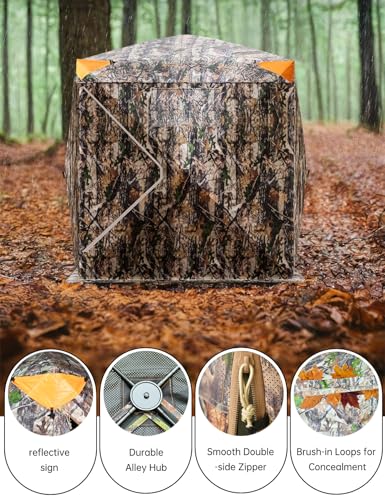
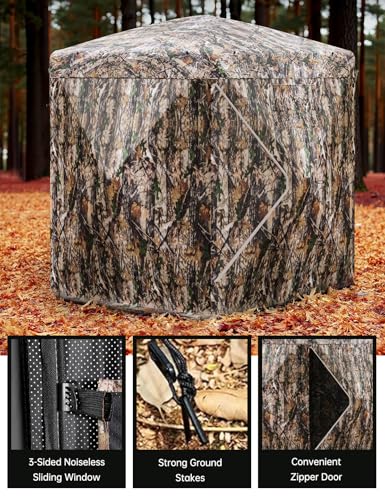
This isn’t a tent, it’s a stealth tool, and it does its job well. The 270° shoot-through mesh gives hunters a wide, silent field of fire without blowing their cover, and the 3D leaf-pattern camo blends surprisingly well in brush and timber. Owners love how fast it pops up, literally one minute, no poles to assemble, and the steel frame holds shape even in moderate wind. The 300D Oxford floor keeps you dry on damp ground, and the included stakes and guylines add stability.
It’s not for sleeping in, headroom is low, and ventilation is minimal, but that’s not the point. Compared to traditional canvas blinds, this one is far more portable and easier to deploy mid-hunt. It’s best paired with a proper backpacking tent for overnight stays. For spot-and-stalk hunters or those setting ambushes near food sources, this blind is a smart, compact edge.
Product photos
GEERTOP 2 Person Backpacking Tent
Strengths
- Lightweight and packable
- Affordable
- Easy setup
Trade-offs
- Zippers feel cheap
- Not for severe weather
- Durability concerns long-term
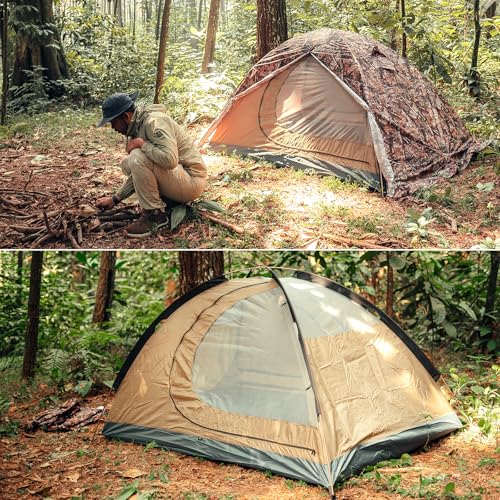
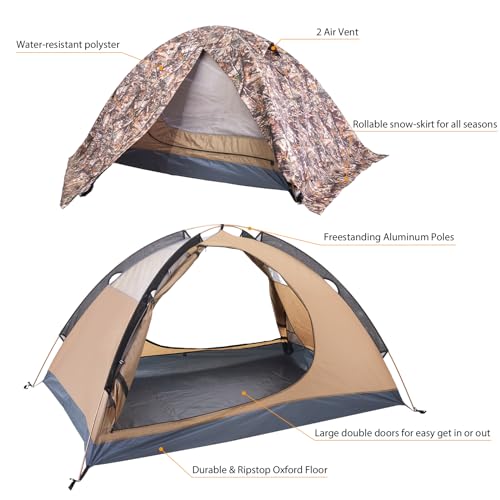
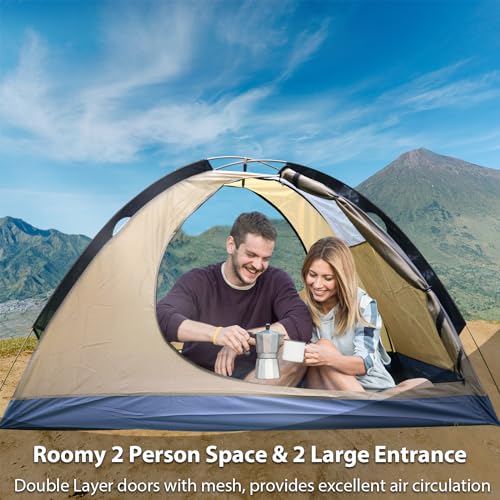
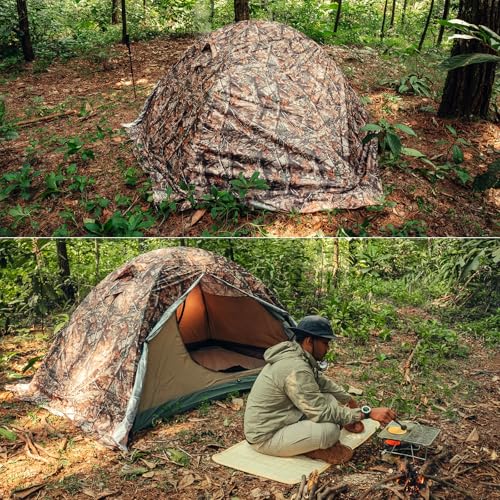
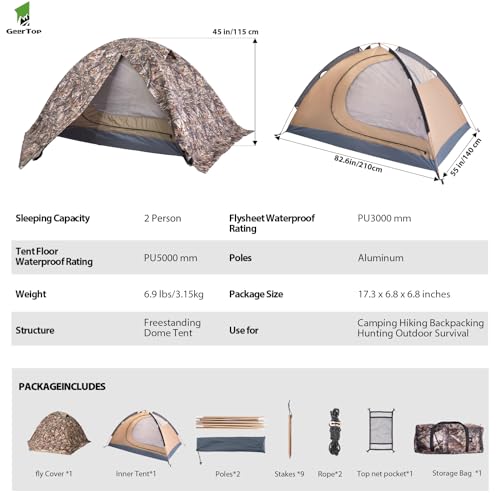
This is the budget king of basic backcountry function. At under 7 lbs and packing down small, it’s clearly aimed at solo hikers or couples doing short trips where weight matters but the wallet matters more. The PU3000mm rating and 210T fabric are decent on paper, and most owners report staying dry in typical rain, though a few mention seam leaks after repeated use, suggesting the taping isn’t as robust as pricier models.
It’s a simple two-pole freestanding design, so setup is quick and foolproof, which makes it a solid starter tent. The 24-inch vestibules are a nice bonus for stashing boots or gear. But compared to the Marmot or Camppal, it feels more utilitarian, thinner poles, flimsier zippers, and less attention to airflow details. Still, for hunters who want a functional, lightweight shelter without overspending, it delivers. Just don’t push it in extreme weather.
Product photos
BISINNA 2/4 Person Camping Tent
Strengths
- Easy one-person setup
- Good ventilation
- Budget-friendly
Trade-offs
- Not true 4-season
- Mid-tier waterproofing
- Poles lack storm strength
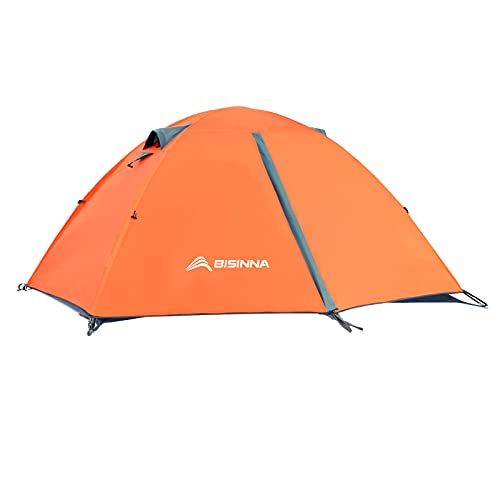
This tent tries to do too much, it’s labeled 2/4 person, but in reality, it’s a roomy 2-person or a tight squeeze for 4. For hunting or solo backpacking, it’s overkill. But as a value pick for family car camping or weekend overlanders, it makes sense. The 190T fabric and PU2000mm coating are decent for 3-season use, but I wouldn’t trust it in a sustained downpour or heavy wind. Owners say it performs fine in light spring rain or dry mountain nights, but the aluminum poles, while lightweight, don’t inspire confidence in storms.
Where it wins is ease of setup, freestanding, two-pole design, and color-coded clips make it a true one-person job in under 10 minutes. The dual D-shaped doors and mesh panels offer great airflow, which matters when you’re stuck inside during a drizzle. It’s not built for serious backcountry hunting, but if you’re driving to a base camp and need a dry, breathable tent that won’t break the bank, this hits the mark. It’s no match for the Camppal in durability, but it’s lighter and cheaper.
Product photos

Marmot Limelight Backpacking Tent

Strengths
- High-quality materials
- Includes footprint
- Excellent ventilation
Trade-offs
- Higher price point
- Slightly heavier than ultralight rivals
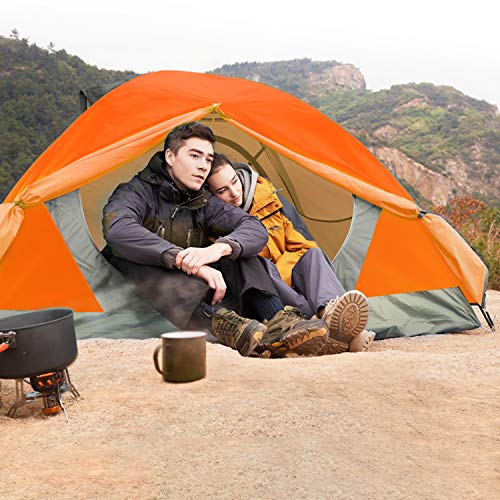
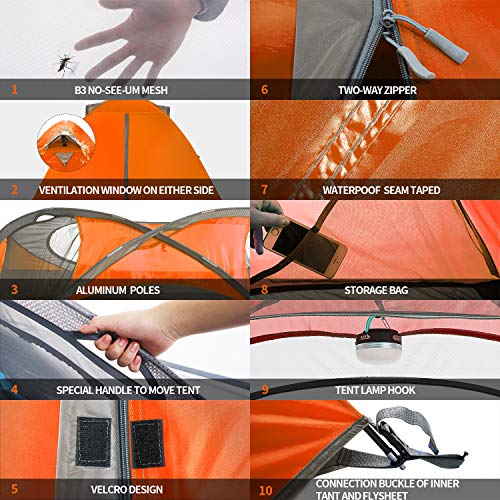
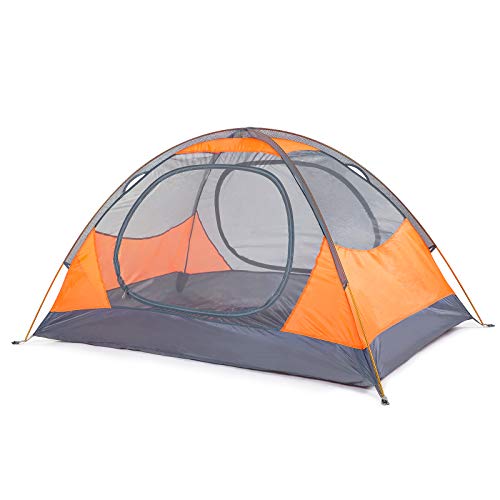
Marmot doesn’t cut corners, and the Limelight shows it. This is a premium backcountry tent that balances weight, durability, and livability better than most in its class. The ripstop fabric and full seam taping mean it laughs off light abrasion and rain, and the included footprint is a thoughtful touch many brands charge extra for. It’s not the lightest on the list, but it’s built with long treks in mind, the freestanding design and catenary cut floor mean it holds shape and sheds water efficiently, even on uneven ground.
Owners consistently praise the interior volume and smart clip layout, which maximizes usable space without needing a massive footprint. It’s not marketed as 4-season, but with proper pegging and guylines, it handles late-season hunts just fine. Compared to the GEERTOP or BISINNA, this one feels more refined, better zippers, tighter stitching, and ventilation that actually works without compromising warmth. It’s the kind of tent you buy once and keep for years.
Product photos


How We Chose These backcountry hunting tents
Rather than a hands-on lab test, my research focused on a detailed comparison of published specifications and features across several models. I weighed owner reviews – looking for recurring praise and complaints – alongside assessments from reputable outdoor gear reviewers. My analysis applied years of experience with tent design and materials to determine how well each tent would likely perform in realistic backcountry hunting scenarios.
For backcountry hunting tents, weight and weather protection were the biggest deciding factors. A heavier tent quickly becomes a burden on a multi-day hunt, so I prioritized those with a lower packed weight without sacrificing durability. Equally vital is reliable waterproofing and wind resistance; hunters often face unpredictable conditions, and staying dry and sheltered is critical for safety and success.
Specifications reliably indicate a tent’s potential for weather resistance (PU coatings, denier ratings) and size/weight. However, owner feedback proved essential for gauging real-world performance. Reports on condensation build-up, zipper quality, and long-term durability heavily influenced my rankings. Understanding these practical insights, alongside a solid tent selection guide, helped me identify the tents most likely to meet the demands of a backcountry hunt.
Choosing The Right backcountry hunting tents
Finding the right shelter is critical when you’re miles from civilization, and the ideal hunting tent balances portability, weather protection, and camouflage.
A quality hunting tent prioritizes durable, waterproof construction with a low profile. Look for robust rainfly materials (210T polyester or higher with a 3000mm+ rating), sturdy pole systems (aluminum is preferable to fiberglass), and effective camouflage patterns suited to your hunting environment. Weight is also a key consideration, especially if you’re covering a lot of ground.
Size and Capacity
Don’t assume a “2-person” tent comfortably fits two adults with gear. Hunting often means extra clothing, boots, packs, and potentially harvested game. I always recommend sizing up. If you’re primarily a solo hunter, a 2-person tent provides valuable space for storage and staying organized. For two hunters, seriously consider a 3-person model, and for family hunts, a 4-person or larger tent is a must. Think about how you’ll be using the tent – is it purely for sleeping, or do you need room to sit out bad weather and strategize?
Camouflage and Concealment
Effective camouflage isn’t just about color; it’s about breaking up your silhouette. While many tents offer generic camo patterns, matching the pattern to your hunting terrain is crucial. For example, a leafy pattern works well in forested areas, while a more open, mottled pattern is better suited for grasslands or agricultural fields. Beyond the tent fabric itself, consider models like the 270° Camouflage Hunting Blind that offer a full 270-degree wrap-around camouflage for maximum concealment. This is especially important if you’re pursuing wary game like deer.
- A basic camo pattern is fine for general use.
- Terrain-specific camo (e.g., western multi-cam, eastern leafy) significantly improves concealment where it matters most.
- A full 270-degree or 360-degree blind style provides the highest level of concealment, but usually adds weight and setup complexity.
Weather Protection and Durability
Hunting seasons often bring unpredictable weather, so a tent’s ability to withstand the elements is paramount. Look beyond the advertised waterproof rating of the rainfly. Seam sealing is essential; unsealed seams are a common point of failure. A bathtub floor (where the floor fabric extends several inches up the sides) prevents water from seeping in. Investing in a quality tent pole material, like aluminum, will vastly improve durability, and can save you a frustrating repair in the field. Don’t underestimate the benefits of using a tent footprint to add an extra layer of protection to the tent floor, boosting backcountry tent durability and extending its lifespan. You can learn more about using a tent footprint on our site.
A good rule of thumb: don’t skimp on the rainfly. A higher denier (D) rating indicates a more durable and waterproof fabric.
If you are looking for something that is lightweight and durable, check out our review of lightweight hunting tents.
Backcountry Hunting Tents Compared
Here is a comparison of specifications for several backcountry hunting tents to help you make an informed decision.
| Product Name | Capacity | Waterproof Rating (Fly) | Weight (lbs) | Packed Size | Pole Material |
|---|---|---|---|---|---|
| Camppal 2 Person Backpacking Tent | 2 | PU 3500MM | 6.95 | 17.7 x 7.5 inches | Aluminum |
| OneTigris Rock Fortress Hot Tent | 6 | 3000mm | 9.2 | 22.8”x7.8”x7.8”inch | Aluminum Alloy |
| 270° Camouflage Hunting Blind | N/A | PU Coating | N/A | 24″x8″x8″ | Steel |
| 270° Camouflage Pop-Up Blind | N/A | PU Coating | N/A | 24″x8″x8″ | Steel |
| GEERTOP 2 Person Backpacking Tent | 2 | PU3000mm | <7 | 17 x 7 x 7 inches | Aluminum |
| BISINNA 2/4 Person Camping Tent | 2/4 | PU2000mm | N/A | 16.9”x5.9”x5.9” | Aluminum |
| Marmot Limelight Backpacking Tent | N/A | N/A | N/A | N/A | N/A |
Frequently Asked Questions
What floor waterproof rating is sufficient for a hunting tent?
A 3000mm waterproof rating is generally adequate for a tent floor, though higher is better, especially if you frequently hunt in very wet conditions. Many quality hunting tents now feature floors rated at 5000mm or higher, providing an extra margin of protection against ground moisture.
Are steel tent poles acceptable for backcountry hunting?
While steel poles are less expensive, aluminum poles are strongly recommended for backcountry hunting due to their significantly lighter weight and superior strength-to-weight ratio. A broken steel pole in a remote location can end a hunt quickly, whereas aluminum is more durable and easier to repair in the field.
What’s the advantage of a “hot tent” for hunting?
“Hot tent” designs, like the OneTigris Rock Fortress, allow for the safe use of a wood-burning stove inside the tent, providing a heat source for extreme cold weather hunts. They typically have a stove jack and multiple ventilation points, but add weight and complexity to the setup, and should only be used with careful attention to safety.
How does camouflage pattern affect hunting success?
Terrain-specific camouflage patterns considerably improve concealment, increasing your chances of remaining undetected by game. Choosing a pattern that blends with the dominant vegetation and landscape of your hunting area is far more effective than a generic camo design; you can find more information on backcountry hunting tent reviews to help you decide.
What’s the benefit of a tent footprint, and are they essential?
A tent footprint is a ground cloth designed to protect the tent floor from abrasion and punctures, extending its lifespan. While not always essential, using a footprint is highly recommended, particularly when hunting on rocky or abrasive terrain, and can prevent costly damage to your investment in durable hunting expedition tents.
The Bottom Line
Choosing a backcountry hunting tent always comes down to balancing how much you’re willing to carry against how much shelter you require. While a lighter weight is appealing for long stalks, the Camppal 2 Person Backpacking Tent strikes a fantastic balance – offering a good weatherproof build and respectable space at a reasonable weight. It’s a solid all-around pick for most hunters who don’t want to sacrifice too much comfort for portability.
For those prioritizing concealment above all else, or who need a more communal space, the 270° Camouflage Hunting Blind is the clear choice. It’s heavier and less mobile, but the full camouflage wrap and ample interior room make it ideal for extended sits or group hunts. If you’re on a tighter budget, the GEERTOP 2 Person Backpacking Tent delivers a surprising amount of value, though you may want to supplement it with a heavier-duty footprint for added durability.
Ultimately, the specs are just a starting point. Focus on a tent with a proven waterproof rating, robust pole construction, and a camouflage pattern suited to your terrain. A durable backcountry tent with a well-sealed rainfly and a reliable design will always be more valuable than chasing the lightest weight or the newest features.
