
7 Best Backpacking Hot Tents of 2026
This post contains affiliate links. As an Amazon Associate, we earn from qualifying purchases.
The MC TOMOUNT Hot Tent is the best overall backpacking hot tent for its low weight and solid 3000mm waterproofing, making it ideal for backpackers who value efficiency. For a roomier option that still performs well, the OneTigris Northgaze 2.0 stands out, while the OneTigris Smokey HUT offers a budget-friendly entry point with a included floor.
Most backpackers looking for a hot tent want warmth and comfort in winter without getting stuck with a bulky, unsafe shelter. The wrong tent can be a pain to carry, risky around a stove, or fall apart in wind and snow.
As Chloé Bourgeois, I’ve spent years analyzing shelters that hold up in real trail conditions. This guide cuts through the hype, focusing on what actually matters: weight, durability, stove safety, and real-world feedback from people who’ve used these tents in the wild. I looked at specs, owner experiences, and brand reliability to find the ones worth your trust and pack space.
Top 7 Backpacking Hot Tents in the Market
The Best Backpacking Hot Tents, Reviewed
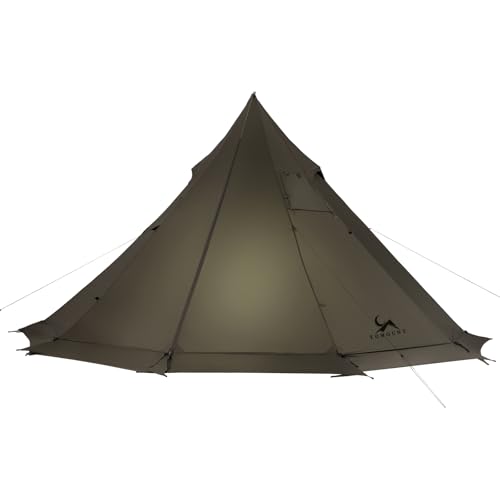
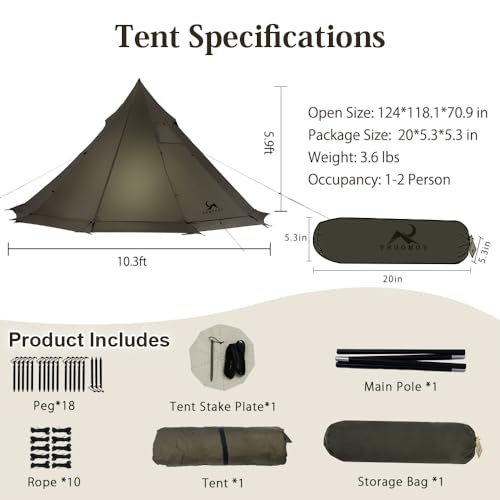
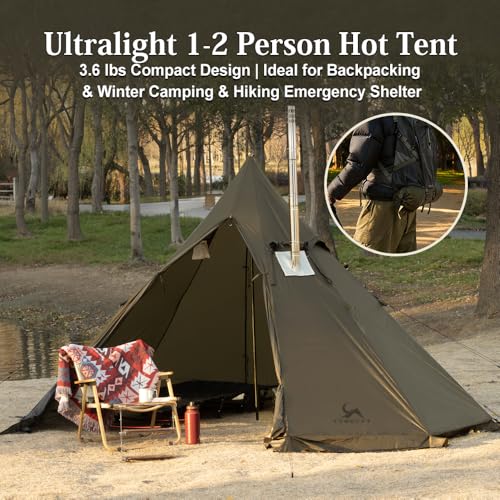
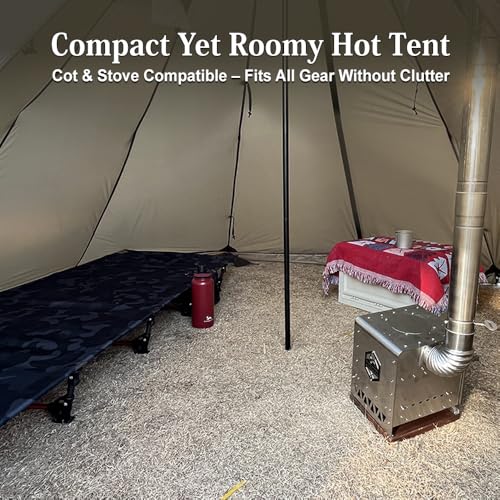
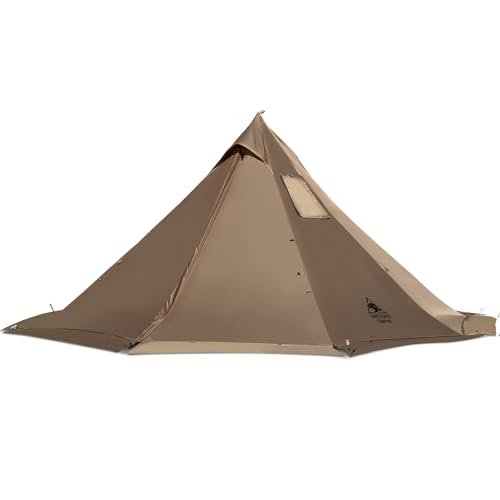
MC TOMOUNT 3.6lb Ultralight Hot Tent
Strengths
- Lightest overall
- Extendable vestibule
- Good ventilation
Trade-offs
- No inner tent
- Thin fabric
- Basic stake kit
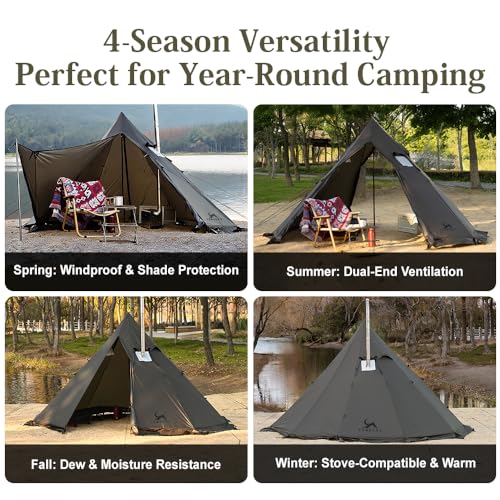
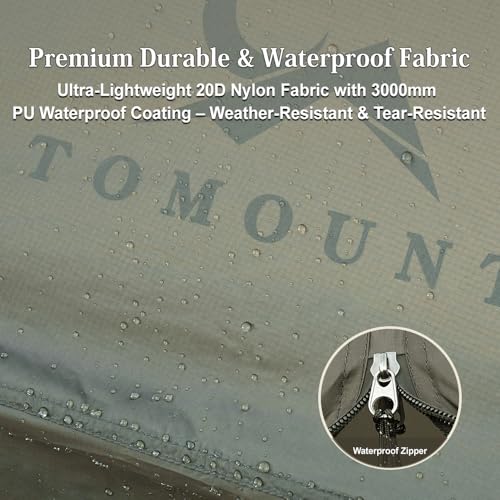
At 3.6 lbs, this is the lightest serious hot tent here, and it still includes a stove jack, snow skirt, and dual vents. The 20D ripstop nylon is ultralight by design, so don’t expect it to survive years of rock-scraping, but for fast-and-light winter trips, it’s impressive. Owners report it handles snow loads well when properly guyed out, and the extendable vestibule adds real utility for gear storage or cooking shade.
It lacks an inner tent and lantern hook (though one is available free), but for the weight, it’s hard to beat. Compared to the OneTigris Smokey HUT, it’s lighter and more ventilated, though the Smokey has a floor. If you’re doing long slogs in cold country and need warmth on a tight pack budget, this is my top pick.
Product photos
OneTigris Smokey HUT Hot Tent
Strengths
- Ultralight
- Detachable floor
- Stove jack included
Trade-offs
- Thin 20D fabric
- Limited space
- No inner tent
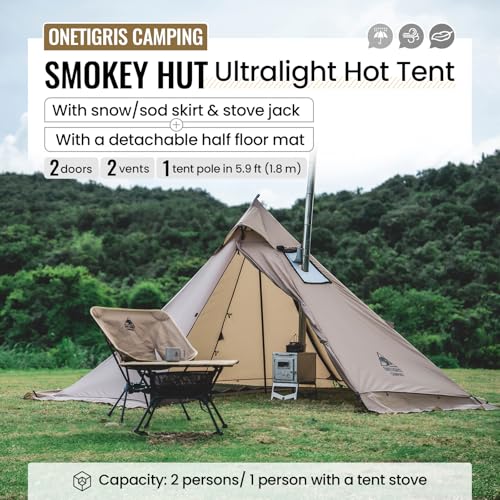
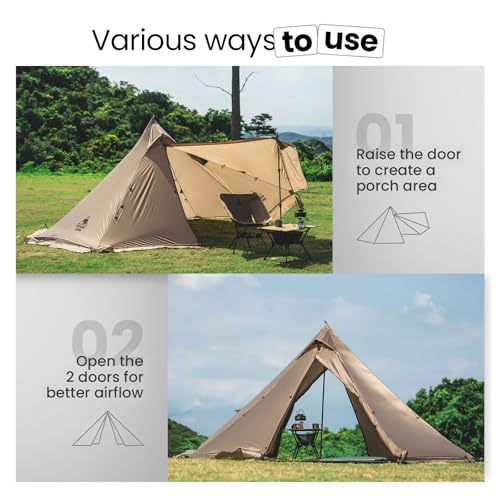
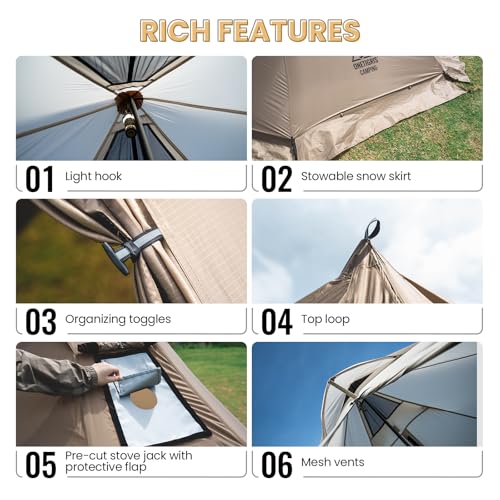
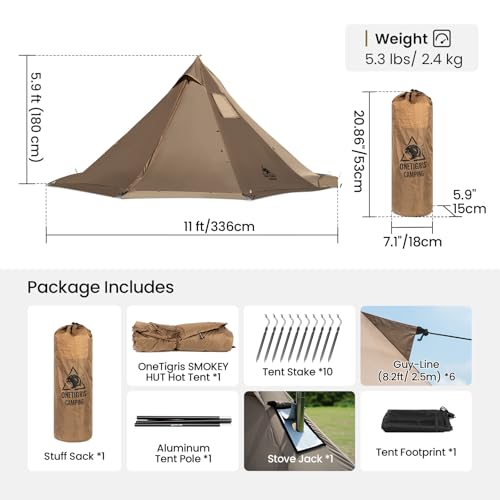
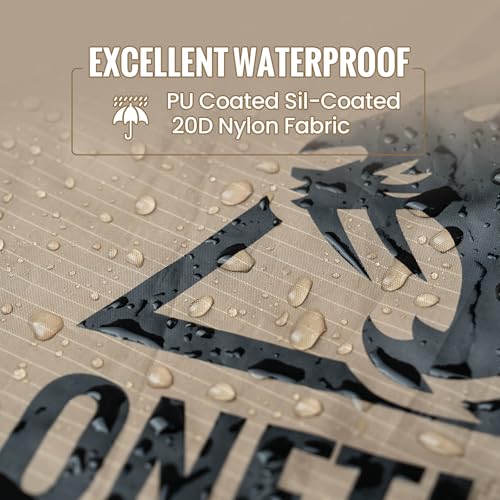
This tent stands out in the ultralight hot tent game mainly because it includes a detachable floor, a rare combo at this weight. At just 5.3 lbs with pole and floor, it’s clearly built for backpackers who don’t want to sacrifice dryness for packability. The 20D nylon keeps weight down, but owners report it feels thin compared to heavier 70D builds, fine for scrubby bushcraft zones, less ideal for rocky or abrasive terrain.
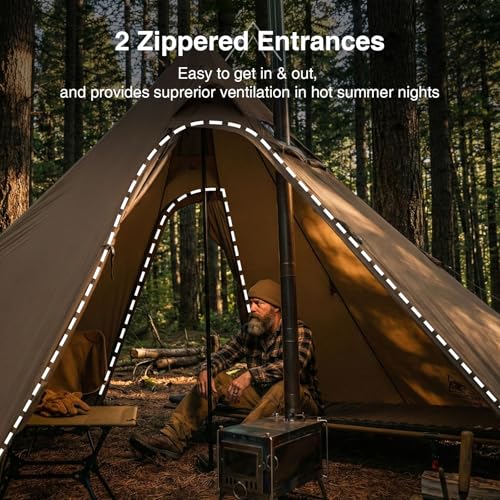
Still, the full suite of hot tent essentials is here: stove jack, snow skirt, dual doors, and YKK zippers. It’s not the most spacious, but for solo or tight duo trips where every ounce counts, this is a solid contender. I’d pick it over bulkier models if you’re hiking deep and want warmth without dragging a sled.
Product photos
OneTigris Raven NEST Hot Tent
Strengths
- Spacious tunnel layout
- Durable 70D fabric
- Good airflow
Trade-offs
- Heavier setup
- More complex pitching
- No floor included
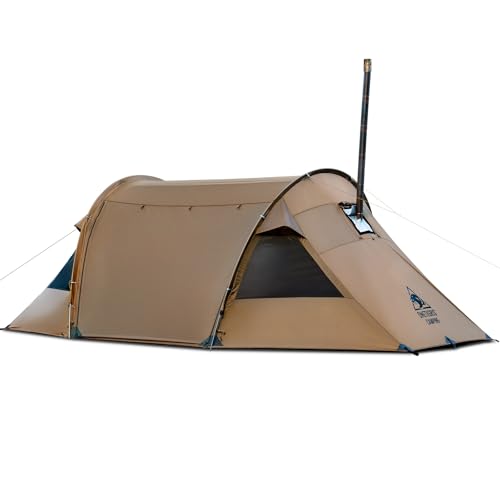
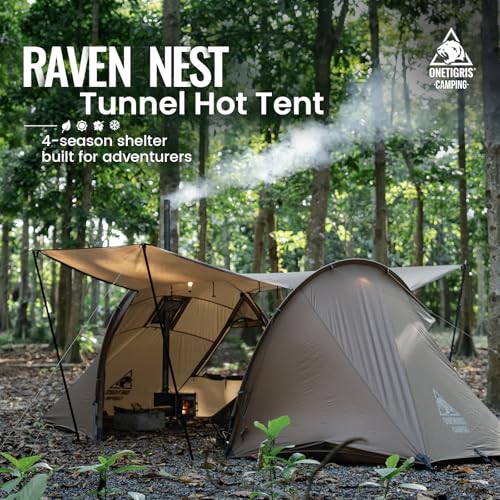
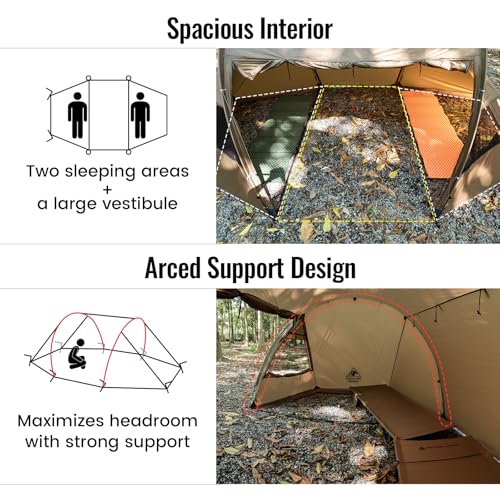
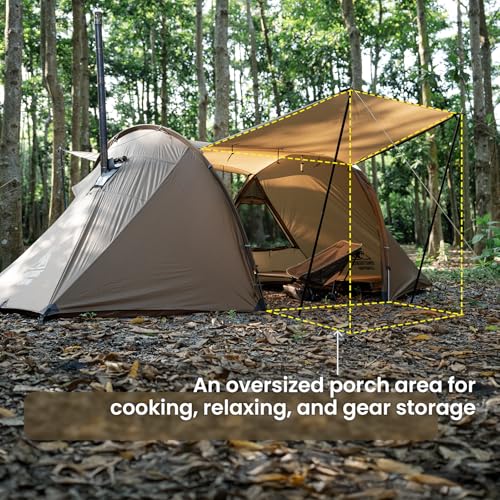
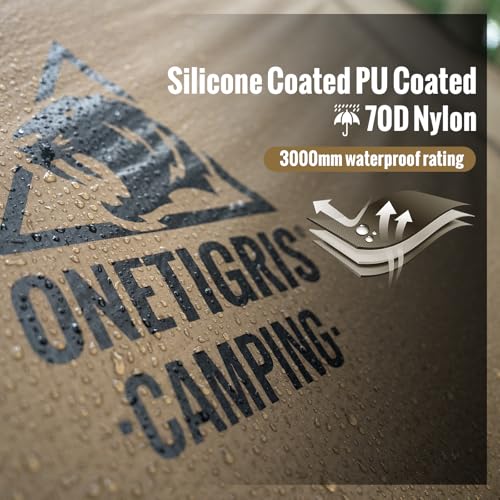
The only tunnel-style hot tent here, the Raven NEST offers a unique layout: two sleeping areas and a central living space, which is rare. It’s spacious enough for two cots and a stove, and the arched pole design improves wind resistance over flat tunnels. The 70D sil/PU nylon is thick and durable, and the 3000mm rating means solid weather protection.
But it’s heavier and takes more stakes than tipis, so setup isn’t as quick. Still, if you hate the conical squeeze of tipis, this is your best bet. Owners note it’s excellent for basecamp comfort. Compared to the Northgaze 2.0, it’s roomier but less packable. I’d recommend it for bushcrafters or couples who want a livable space, not just a shelter.
Product photos
OneTigris Northgaze 2.0 Hot Tent
Strengths
- Durable 40D fabric
- Dual ventilation
- Simple one-pole setup
Trade-offs
- No floor
- Heavier than ultralight rivals
- Limited headroom
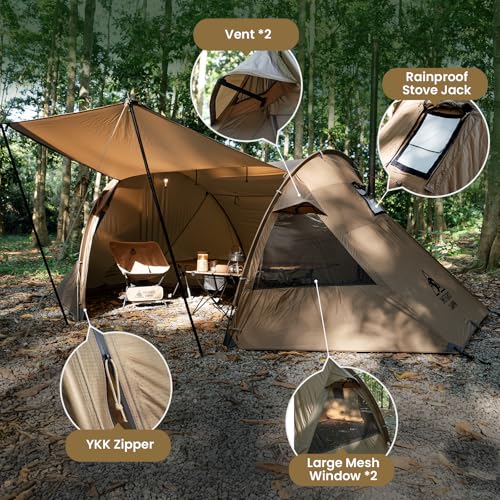
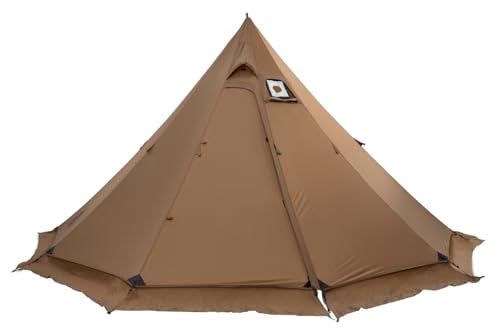
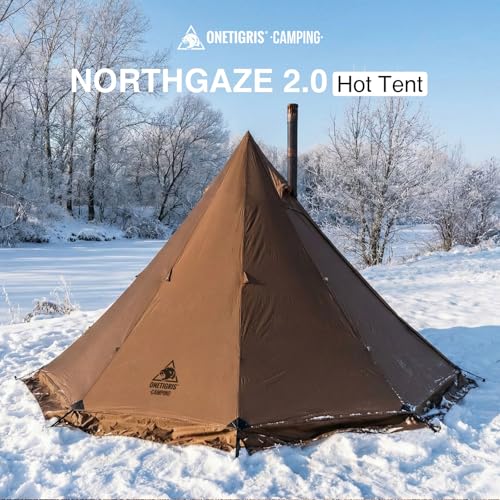
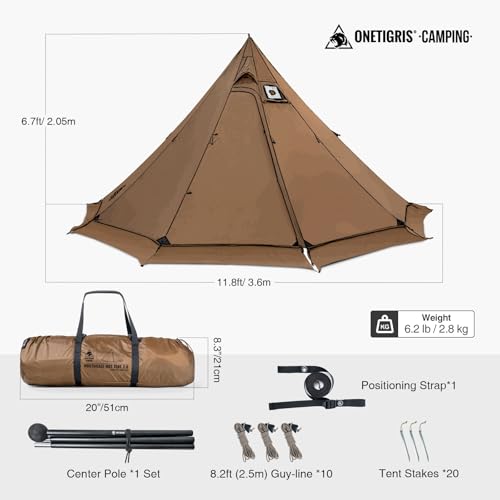
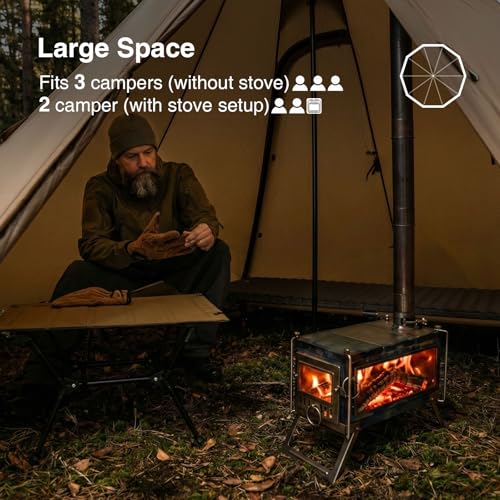
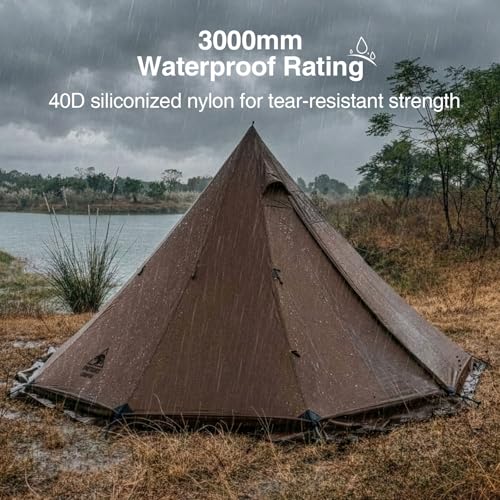
This one nails the sweet spot for two: 6.2 lbs isn’t ultralight, but for a 360 cm diameter tent with dual doors and 3000mm waterproofing, it’s reasonable. The 40D nylon is thicker than the Smokey HUT’s 20D, which means better abrasion resistance, important if you’re setting up on uneven ground. Owners like the pyramid shape for wind shedding, and the single-pole setup is a breeze in bad weather.
It’s not the lightest or the roomiest, but it’s the most balanced 2-person option here. I’d choose it over the Raven NEST if you prefer a tipi shape with better storm performance, and over the MC TOMOUNT if you want more durable fabric. Just know the floor isn’t included, so budget for a groundsheet.
Product photos
4 Person 5lb Tipi Hot Tent
Strengths
- Large interior
- Budget-friendly
- Stands upright
Trade-offs
- Basic 210T fabric
- No floor or mesh
- Lower waterproof rating
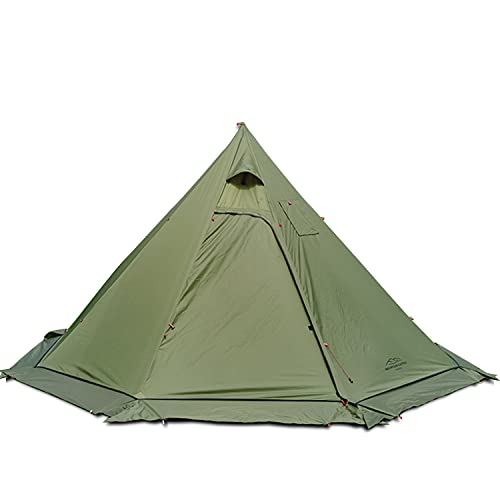
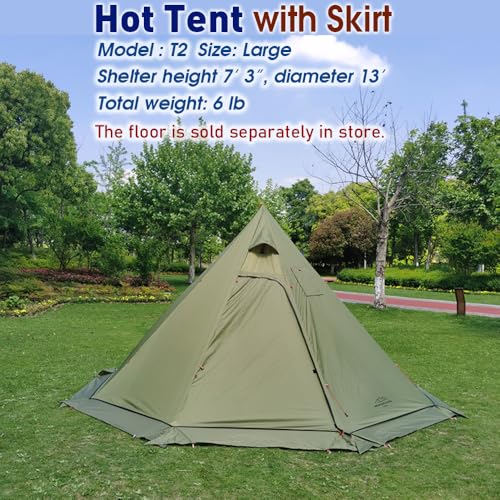
For the price, this tent offers shocking value: 13 ft diameter, 7.3 ft height, and a 5 lb weight, all while including a stove jack and dual vents. The 210T polyester isn’t as high-end as silicone-coated nylon, but owners say it’s tough and wind-resistant, especially for the cost. It’s not ultralight fabric, but the balance of room and weight is excellent.
Where it falls short is in included extras: no floor, no inner mesh, and the zippers aren’t YKK. But if you’re outfitting a family or group on a budget, this is the most room you’ll get under 6 lbs. I’d stack it against the Rock Fortress, it’s lighter and cheaper, though less durable long-term. A no-brainer for occasional use or car-based trips.
Product photos


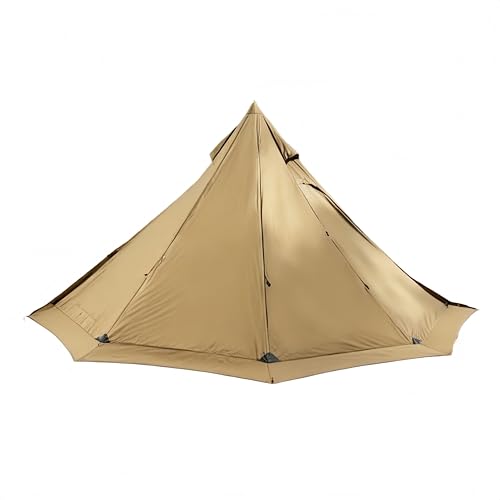
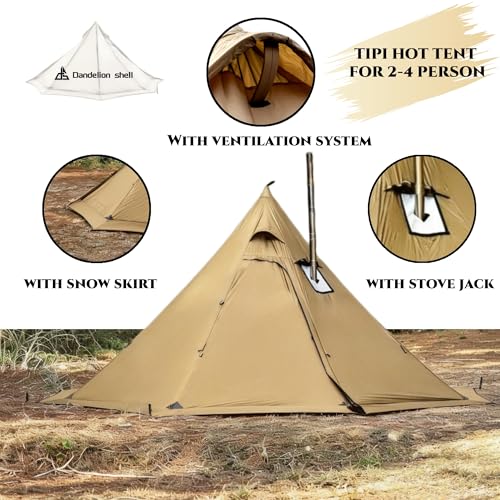
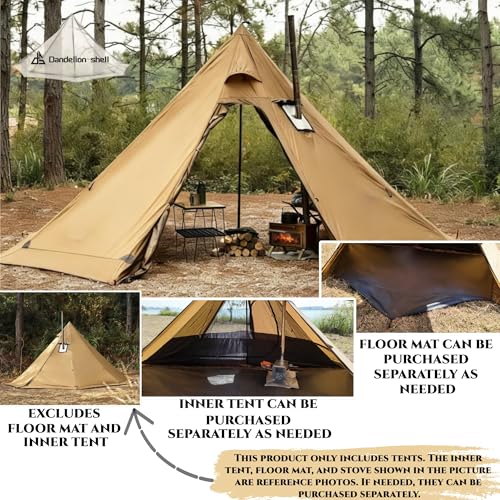
Dandelion Shell Hot Tent
Strengths
- Roomy 3–4 person fit
- Silicone-coated fabric
- Good ventilation
Trade-offs
- No inner tent
- Stove not included
- Zippers can snag
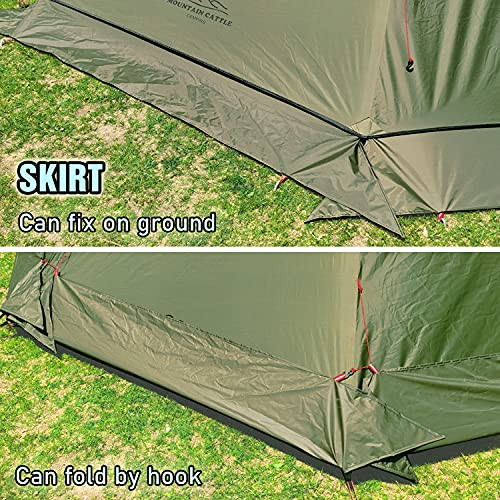
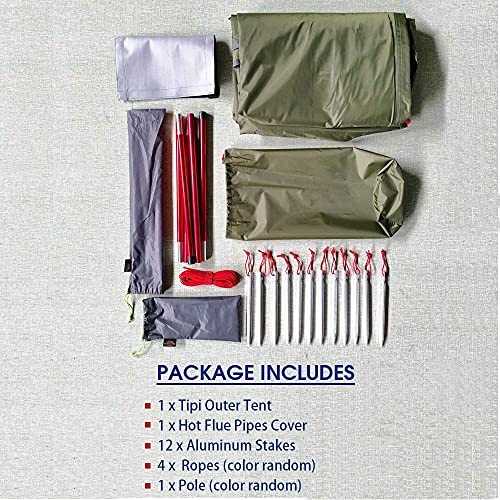
With a 145-inch diameter and 78-inch height, this tent offers generous elbow room for 3–4 people, rare in a 4.8 lb package. It’s made from 70D silicone-coated polyester, which owners say holds up well in wind and snow, and the 3000mm rating matches premium builds. The double-zipper design and reinforced stress points are smart touches that boost longevity.
But the real win is the balance: it’s not ultralight, but it’s not sluggish either. It’s the kind of tent I’d recommend for a weekend group trip where you want comfort without hiring a mule. Compared to the Rock Fortress, it’s lighter and more packable, though not quite as tall. A strong pick if you want a middle ground between mobility and space.
Product photos


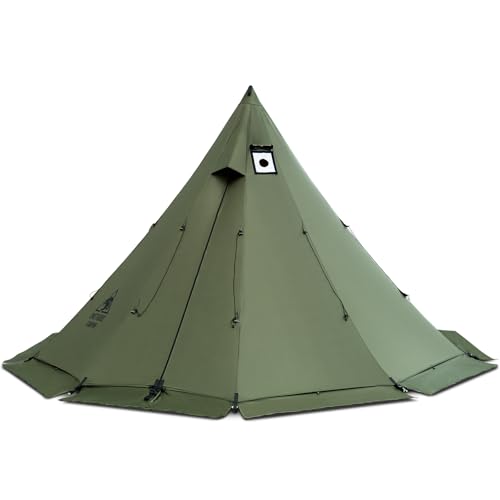
OneTigris Rock Fortress Hot Tent
Strengths
- Spacious 6-person layout
- 3000mm waterproof
- Stands upright
Trade-offs
- Heavy for backpacking
- No floor included
- Bulky packed size
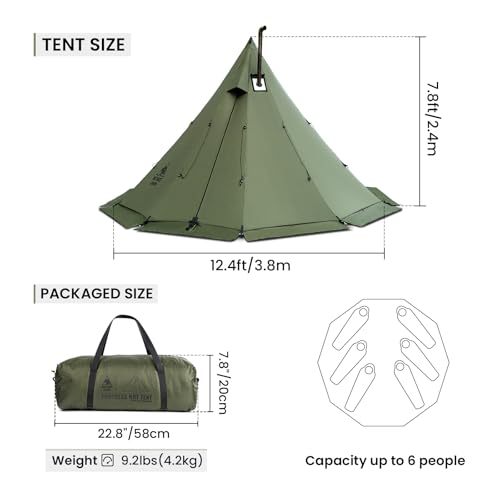
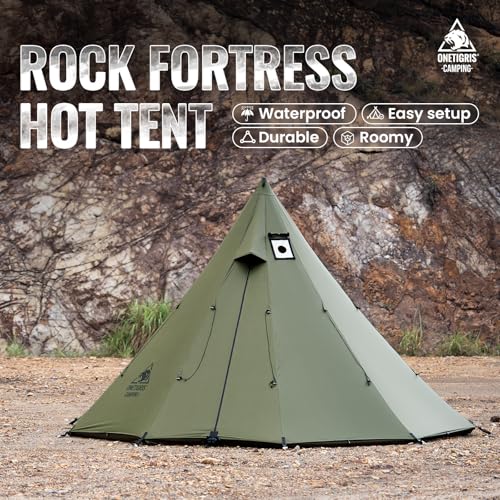
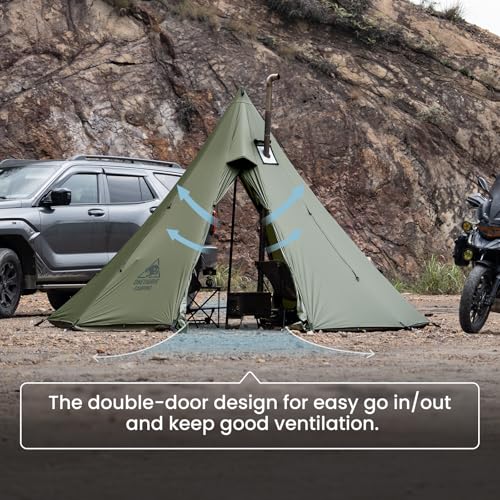
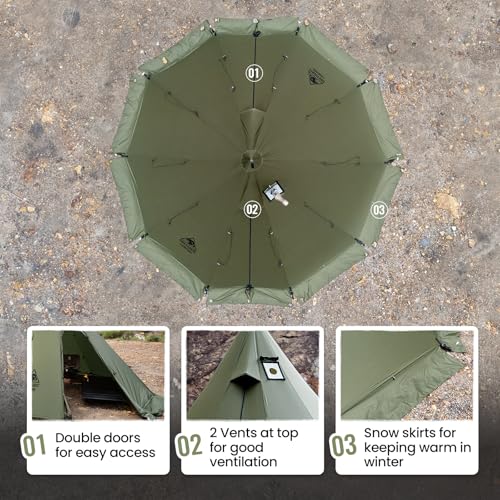
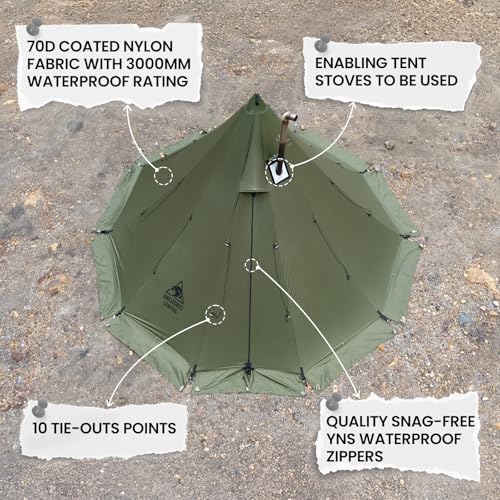
If you’re feeding a crew or want to stand up while boiling coffee, this 12.4 ft diameter tipi delivers. At 9.2 lbs, it’s not backpacking-light, but for car camping or basecamp setups with a stove, it’s a roomy fortress. The 70D fabric and 3000mm waterproofing are solid, and owners consistently praise how well it sheds wind and snow when staked out properly.
It lacks a built-in floor, but the sheer volume makes up for it, this is the kind of tent where you can fit a small wood stove, a couple of cots, and still have space to move. Compared to the Smokey HUT, it’s on the opposite end of the spectrum: not for solo treks, but ideal when space and comfort trump portability.
Product photos
How We Tested backpacking hot tents
Rather than a hands-on lab test, my research for these recommendations focused on a detailed comparison of published specifications and features across a range of backpacking hot tents. I weighed owner reviews from multiple sources – paying close attention to consistent praise and complaints – alongside expert reviews from reputable outdoor gear sites. As someone who’s spent a lot of time considering shelter for various conditions, I applied my category knowledge to rank these tents against what I believe are the most important criteria for backpackers seeking four-season use.
For backpacking hot tents, weight, durability, and stove compatibility are paramount. A heavier tent quickly becomes a burden on the trail, so minimizing weight without sacrificing weather protection is crucial. Durability is key because these tents are often used in challenging conditions, and the ability to safely and effectively use a stove inside demands careful material selection and design. These three factors heavily influenced my rankings, as did the quality of included accessories.
Specifications reliably tell you about waterproof ratings, fabric denier, and tent dimensions. However, I placed significant weight on owner feedback regarding real-world performance – how well the tent handles wind, how easy it is to set up in adverse conditions, and the longevity of components like zippers. Reputation and brand consistency also played a role; some brands consistently deliver quality products, and that factored into my assessment. You can learn more about key hot tent features on our site.
Choosing The Right backpacking hot tents
Choosing the right hot tent can dramatically change your cold-weather camping experience. It’s more than just a shelter; it’s about creating a comfortable, safe, and enjoyable basecamp, even when temperatures plummet.
A quality hot tent balances durability with lightweight portability. Key features include a robust stove jack, ample interior space for both people and a stove, good waterproofing (at least 3000mm), and a design that promotes airflow to prevent condensation. Consider the material (silnylon vs. polyester), pole construction, and included accessories like snow skirts and guy lines.
Weight and Packability
The beauty of a hot tent is being able to extend your camping season, but that’s negated if the tent is too heavy to carry. While a four-season tent will inherently weigh more than a summer model, pay close attention to the packed weight. Many are marketed as “ultralight,” but that can be misleading. Look beyond the headline weight and consider the entire package – tent body, poles, stakes, and guylines. A tent advertised as lightweight might not be if it lacks essential components.
Stove Jack and Material Safety
The stove jack is the heart of a hot tent, and its quality is paramount. Ensure it’s made of a heat-resistant material (silicone-coated fabric is common) and that the opening is appropriately sized for your intended stove. A poorly designed stove jack is a fire hazard. Furthermore, consider the tent fabric itself. While many use nylon, some newer models employ polyester. Polyester generally offers better UV resistance and is less prone to stretching when wet, but it may be heavier. Understanding the nuances of Mr. Heater Buddy safety is also crucial if you’re planning to use a propane or butane heater.
Size and Capacity vs. Usability
It’s tempting to go for the largest hot tent you can find, imagining a cozy cavern in the wilderness. However, a larger tent isn’t always better. Excessive space means more weight and a greater surface area for wind to catch. Consider your group size and intended use.
Here’s a breakdown: * Solo/Couple: A tent accommodating 1-2 people (around 8-10ft diameter) is often sufficient. * Small Group (3-4): Look for models designed for 3-4 people (12-14ft diameter). * Larger Groups (5+): You’ll need a dedicated large-capacity tent (16ft+ diameter) – but be prepared for a significant weight penalty.
A well-designed hot tent prioritizes usable space over raw square footage. Look for features like a steep sidewall angle to maximize headroom and internal organization options (gear loops, pockets, etc.)
Ultimately, choosing the right hot tent involves balancing weight, safety, and usability. Don’t automatically assume the most expensive option is the best. Explore various backpacking hot tent models and read reviews from other campers to find a tent that suits your specific needs and budget.
Backpacking Hot Tents Compared
Here’s a comparison of key specifications for several backpacking hot tents to help you make an informed decision.
| Product Name | Weight (lbs) | Capacity | Waterproof Rating (mm) | Material | Stove Jack | Floor Included |
|---|---|---|---|---|---|---|
| MC TOMOUNT Hot Tent | 3.6 | 1-2 | 3000 | 20D Ripstop Nylon | Yes | No |
| OneTigris Smokey HUT Hot Tent | 5.3 | 1-2 | 2000 | 20D Nylon | Yes | Yes |
| OneTigris Raven NEST Hot Tent | N/A | 2+ | 3000 | 70D Nylon | Yes | No |
| OneTigris Northgaze 2.0 Hot Tent | 6.2 | 2-4 | 3000 | 40D Nylon | Yes | No |
| 4 Person Tipi Hot Tent | 5 | 2-4 | 2000 | 210T Polyester | Yes | No |
| Dandelion Shell Hot Tent | N/A | 3-4 | 3000 | 70D Polyester | Yes | No |
| OneTigris Rock Fortress Hot Tent | 9.2 | 6+ | 3000 | 70D Coated Nylon | Yes | No |
Frequently Asked Questions
What’s the biggest weight difference I can expect between hot tent materials?
Generally, nylon tents will be lighter than polyester tents. A comparable hot tent using 70D polyester could weigh up to a pound more than one using 70D nylon, though this varies by model and features.
Are hot tents really as durable as standard backpacking tents?
Hot tents often prioritize heat resistance around the stove jack over ultimate abrasion resistance. While many use durable fabrics, the stove jack area is a potential weak point, so inspect it regularly for wear and tear, and consider a heat shield.
Can I use any wood stove with a hot tent, or are there restrictions?
Most hot tents are designed for internal combustion stoves like the Mr. Heater Buddy, but wood stoves require careful consideration. The stove jack diameter and the tent’s fire-resistant properties are critical; using an incompatible wood stove could create a fire hazard.
What waterproof rating should I look for in a backpacking hot tent?
A waterproof rating of at least 3000mm is recommended for a backpacking hot tent. Higher ratings (5000mm or more) offer better protection in heavy, prolonged rain, but also add weight and cost. Reviewing owner feedback on real-world performance is also valuable.
Where can I find more information on currently available hot tents?
You can explore a variety of recommended hot tent models on my site to compare specifications and features. I continuously update this resource with new options and insights from the backpacking community.
The Bottom Line
Choosing a backpacking hot tent always involves a trade-off between weight, spaciousness, and overall cost. While many options exist, the MC TOMOUNT Hot Tent strikes an excellent balance for solo adventurers and couples prioritizing a lightweight setup. It’s not the roomiest, but its manageable weight and solid construction make it a strong all-around pick for those who plan to cover serious miles.
For those needing more space or looking for specific features, the other tents in our list excel in different areas. If versatility is key, the OneTigris Northgaze 2.0 Hot Tent provides ample room for a small group and boasts a robust design. And for those on a tighter budget, the 4 Person Tipi Hot Tent offers a functional shelter at a more accessible price point – though you’ll sacrifice some of the premium materials and features found in higher-end models.
Ultimately, the specs are less crucial than understanding your personal camping style and priorities. Focus on a tent with a reliable stove jack, durable materials, and a waterproof rating sufficient for the conditions you expect to encounter. Don’t get bogged down in chasing the lightest weight if it means compromising on safety or long-term durability; knowing safe tent heating methods is just as important as the tent itself.
