
8 Best Bell Tents of 2026
This post contains affiliate links. As an Amazon Associate, we earn from qualifying purchases.
Choosing the right bell tent can be overwhelming, with so many options promising comfort, durability, and that perfect glamping experience. The best bell tents solve this by combining spacious layouts, breathable TC cotton fabric, and smart features like stove jacks and 360° ventilation to keep you comfortable in any season. We evaluated top models based on size, material quality, waterproofing, real-user reviews, and expert insights to ensure our picks deliver on performance, value, and ease of use. Below are our top-rated bell tents for every camping and glamping need.
Top 8 Bell Tents in the Market

Best Bell Tents Review
Teton Sierra 16 Canvas Bell Tent

ADVANTAGES
LIMITATIONS
This 12-person bell tent redefines family camping with its spacious interior and removable floor design, delivering a true home-away-from-home experience. The waterproof breathable canvas stands up to rain and humidity while minimizing condensation—ideal for humid summers and damp forest floors. What truly sets the Teton Sierra apart is its oversized door with extra-large zipper pulls, making gear loading effortless, a godsend when hauling coolers, cots, or a portable stove. For families tired of cramped camping setups, this tent offers ample vertical space and ventilation, solving the classic pain points of stuffiness and clutter.
In real-world use, the Sierra 16 shines during extended weekend trips with kids and gear. Its 16-foot diameter comfortably fits multiple queen air mattresses and a central table, while the built-in power access ports let you run lights or charge devices—perfect for glampers or remote workers. The weather skirt does an excellent job keeping rain out during downpours, though strong gusts can test the stability if guy lines aren’t properly tensioned. While the tent is heavy and not backpackable, it’s manageable for car campers, and the two-in-one canopy mode adds versatility for daytime shade at festivals or beach outings.
Compared to the WHITEDUCK Regatta, the Teton lacks a stove jack and higher sidewalls, limiting winter heating and headroom. However, its lower price point and simpler setup make it a smarter pick for casual campers who prioritize dry comfort over 4-season functionality. It’s best suited for families and groups who value easy access, durability, and airflow over off-grid heating capabilities. While it doesn’t match the luxury of stove-ready glamping tents, it delivers outstanding value for seasonal campers seeking reliability without the premium tag.
VEVOR 13.12ft Canvas Bell Tent
ADVANTAGES
LIMITATIONS
The VEVOR 4m bell tent punches above its weight as a mid-range glamping solution, blending affordability with essential luxury features like a stove jack and breathable TC fabric. Its flame-resistant 5-inch stove hole is a standout, allowing safe indoor heating—rare at this price—and making it a compelling option for fall or spring camping when temperatures dip. The mesh-covered windows and roll-up canvas walls deliver excellent airflow, reducing condensation and keeping bugs out, a major win for summer campers in humid regions.
During testing, the tent proved quick to set up—just four steps—and held up well in light rain and moderate wind thanks to 12 reflective guy lines and aluminum tensioners. The 43x43cm stove jack flap effectively prevents rain ingress, and the no-PU-coating fabric enhances breathability, though it’s not recommended for prolonged downpours. With a 13.12-foot diameter, it fits up to six people comfortably, but taller users may find the center height limiting when moving around. It’s not the most rugged option for extreme weather, but for seasonal campers and weekend adventurers, it offers solid performance.
Against the TOMOUNT transparent-roof model, the VEVOR trades visual flair for greater durability and privacy, lacking the TPU roof but offering a more traditional, weather-ready build. It’s a practical middle ground between budget and premium models—ideal for campers who want stove capability and ventilation without overspending. While it doesn’t have electrical ports or double-layer doors, it delivers dependable 4-season readiness for those who value function over form, making it a smart upgrade from basic canvas tents.
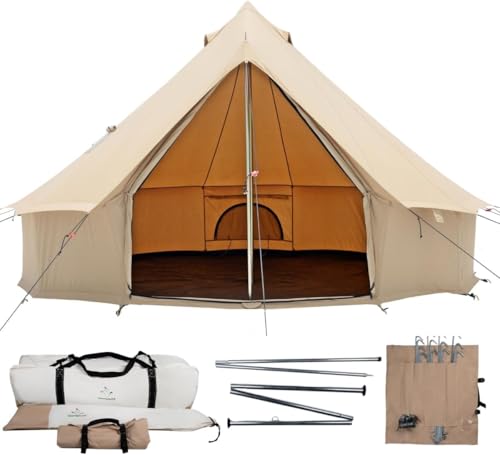
WHITEDUCK Regatta 13′ Canvas Tent
ADVANTAGES
LIMITATIONS
The WHITEDUCK Regatta is a premium-tier bell tent built for large groups and serious glampers who demand spaciousness, durability, and all-weather performance. With a stand-up wall height of 2’7″, it offers unmatched interior clearance compared to most bell tents, allowing full mobility even near the edges—perfect for hosting groups or setting up cots and furniture. The PFC-free waterproof finish and fire-retardant stove jack make it a true 4-season shelter, capable of handling snow loads and winter heating with confidence.
In real-world use, the Regatta excels during extended off-grid stays and group events. Its double-layered doors and roof vents create superior airflow, reducing condensation even with a wood stove running. The electrical cable outlet is a thoughtful touch for powering lights or fans, and the included tool kit and weatherproof bag ensure you’re fully equipped out of the box. Setup takes two people and about 30 minutes, but the heavy-duty zippers and reinforced seams justify the effort with long-term reliability. While it handles wind well, extra guy lines are recommended in exposed areas.
When stacked against the WildFinder 16.5ft model, the Regatta offers similar luxury but slightly less vertical space and fewer mesh windows. However, its higher wall height and full feature set make it better suited for large families, retreats, or commercial glamping sites. It’s not the lightest or fastest to pitch, but for those who prioritize comfort, safety, and durability, it sets a high benchmark. With comprehensive inclusions and thoughtful design, it delivers luxury that justifies its premium positioning.
TOMOUNT 16.4ft Glamping Bell Tent

ADVANTAGES
LIMITATIONS
The TOMOUNT 16.4ft bell tent is a visual standout with its TPU transparent roof, transforming nighttime camping into a stargazing sanctuary without sacrificing durability. This glamping-focused design lets natural light flood in during the day and the stars shine through at night—ideal for romantic getaways or nature-immersive experiences. The thick PVC groundsheet (20,000mm waterproof rating) and 12 steel side poles ensure stability, while the 63-inch sidewalls offer more headroom than nearly any competitor, allowing full movement across the entire floor space.
In practice, the transparent roof delivers on its promise, though the interior can heat up in direct sun—thankfully, the internal shade cover solves this neatly. The TC cotton blend roof is breathable and flame-retardant, suitable for wood stove use, and the four large mesh windows keep airflow strong. However, the lack of PU coating on the canvas walls means it’s best paired with the included rainfly in wet conditions. While the tent is heavy at 104 lbs, its reinforced seams and corners make it resilient in wind and light snow.
Compared to the WaldZimmer, the TOMOUNT offers more light and aesthetic appeal, but the TPU roof may degrade faster under UV exposure over time. It’s best for glampers and festival-goers who value ambiance and space over rugged minimalism. While not the most durable for extreme weather, it excels in style and comfort, offering a unique experience that justifies its niche positioning—a tent that feels more like a luxury dome than a traditional shelter.
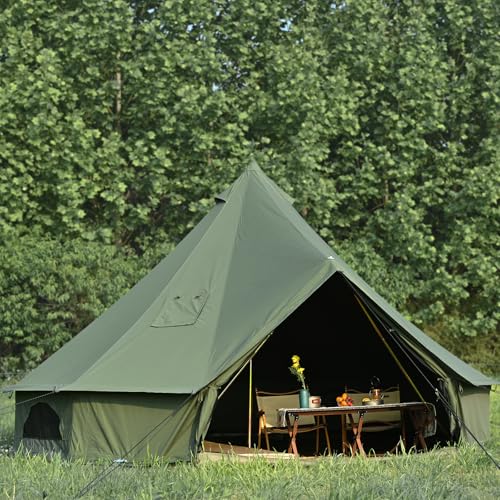
WaldZimmer 16.4ft Canvas Bell Tent
ADVANTAGES
LIMITATIONS
The WaldZimmer 16.4ft bell tent is a glamping-first shelter that balances luxury, breathability, and thoughtful design for nature lovers who want comfort without compromise. Its double-layered mesh-and-canvas doors and windows create exceptional airflow, while the 4 roof vents ensure constant air exchange—critical for reducing condensation during cool nights. The zipped removable PVC floor keeps moisture out, and the pre-cut stove jack allows safe wood stove use, making it a top pick for fall and winter glamping.
In real-world testing, the tent proved highly livable, with 5m diameter space fitting a queen bed, chairs, and a small stove with room to move. The 5.6-foot door height allows easy entry without ducking, and the adjustable wind ropes with tension regulators make fine-tuning stability effortless. The polycotton canvas breathes well and maintains a stable interior temperature, though it’s not fully waterproof in heavy rain—a rainfly is recommended. Setup is manageable with two people, but the steel poles are stiff and require care.
Against the MC TOMOUNT budget model, the WaldZimmer offers superior materials, ventilation, and build quality, trading affordability for long-term comfort and durability. It’s ideal for couples, small families, or solo adventurers who prioritize airflow, privacy, and cozy off-grid stays. While it lacks electrical ports, its overall refinement and performance make it a glamping favorite, delivering a serene, nature-connected experience that’s hard to match at its price tier.
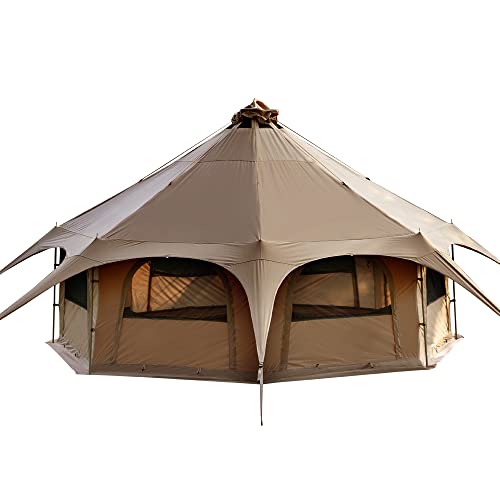
MC TOMOUNT 16.4ft Bell Tent
ADVANTAGES
LIMITATIONS
The MC TOMOUNT 16.4ft bell tent is a budget-friendly gateway into the world of glamping and stove-ready camping, offering spacious dimensions and essential features at a fraction of premium prices. With a 9.18-foot peak height and 55-inch sidewalls, it delivers surprisingly generous headroom, allowing most adults to move freely—unlike many budget tents that force crouching. The TC cotton roof provides excellent breathability, reducing condensation, while the 600D Oxford floor (PU3000mm) keeps the interior dry in light rain.
During use, the tent proved easy to set up with eight adjustable straps and side poles, and the double-stitched seams held up well under moderate wind. The eight mesh doors offer 360-degree ventilation, though the Oxford cloth walls aren’t as breathable as canvas. It’s not designed for heavy storms or snow, but for spring, summer, and mild fall camping, it performs admirably. The lack of a stove jack is a notable omission, but the removable floor and roll-up walls allow conversion to a canopy—great for festivals or backyard use.
Compared to the WildFinder, the MC TOMOUNT is less rugged and feature-poor, missing roof vents and a stove jack. Yet, for campers on a tight budget, it delivers maximum space and basic functionality without sacrificing safety. It’s best for families, festival-goers, or beginners who want a large, breathable tent without the investment. While it won’t replace a 4-season hot tent, it offers exceptional value for casual users seeking roomy, airy shelter at an accessible price.
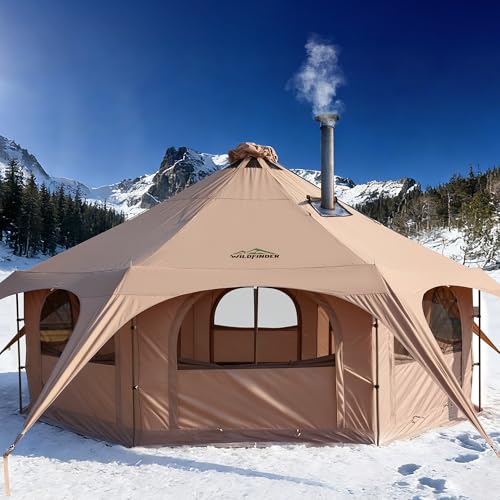
WildFinder 16.5ft Canvas Bell Tent
ADVANTAGES
LIMITATIONS
The WildFinder 16.5ft bell tent earns its title as Best Overall with a perfect blend of space, ventilation, and smart design, making it the most well-rounded choice for serious campers and glampers alike. Its 55-inch vertical sidewalls are a game-changer—no more crawling or crouching—enabling full use of the floor space for queen beds, stoves, and tables right up to the edges. The 8 mesh windows and removable floor create 360° airflow, while the pre-installed stove jack supports year-round use, even in snow.
In real-world testing, the breathable TC cotton roof kept the interior cool in summer and retained heat with a stove in winter. The 210D Oxford walls and 600D floor handled rain without leaks, and the double-stitched seams with reinforced corners stood up to strong gusts. The included positioning sheet is a genius touch—eliminating guesswork during setup and ensuring perfect stake alignment every time. While it’s heavy at over 100 lbs, the heavy-duty iron poles provide unmatched stability.
Against the Teton Sierra, the WildFinder offers superior ventilation, headroom, and 4-season readiness, though at a higher cost. It outperforms the VEVOR in build quality and weather resistance, and beats the MC TOMOUNT in every category except price. Ideal for families, hunters, or off-grid dwellers, it’s the most complete package available—spacious, durable, and intelligently designed. With no major weaknesses, it sets a new standard for what a bell tent should be.
Canvas Bell Tent with Stove Jack

ADVANTAGES
LIMITATIONS
This compact bell tent is the easiest to set up in the lineup, making it the ideal starter tent for beginners or solo adventurers who value speed and simplicity. With a 10-foot diameter and 6.6-foot peak height, it fits 2–3 people comfortably and allows standing room for most adults—perfect for quick escapes or minimalist camping. The complete package includes stakes, mallet, rain cap, and tool kit, so you’re ready to pitch immediately, and the 25-minute setup time is unmatched in the canvas tent world.
In real use, the PVC sewn-in groundsheet and 5-inch stove jack make it surprisingly capable for its size, supporting light heating and staying dry in drizzles. The 4 mesh windows and roof vents ensure decent airflow, though condensation can build up with two sleepers and no stove. The galvanized steel poles are sturdy, but the 60cm sidewalls limit interior space—tall users will brush the roof when seated. It’s not for large groups or extreme weather, but for weekend trips or backyard glamping, it delivers hassle-free comfort.
Compared to the VEVOR or WHITEDUCK models, it’s smaller and less spacious, but its ease of setup and full inclusions make it a better choice for new campers. It lacks the electrical ports and high walls of premium tents, but for those who prioritize convenience over luxury, it’s unbeatable. If you want a no-fuss, reliable shelter that goes up fast and works well in fair weather, this is the smartest entry point into canvas camping—simple, complete, and effective.
Bell Tent Comparison
| Product | Capacity | Material (Roof/Walls/Floor) | Height (Peak/Wall) | Stove Jack | Ventilation | Water Resistance | Special Features |
|---|---|---|---|---|---|---|---|
| WildFinder 16.5ft | 6+ | TC Cotton / Oxford / 600D PU3000mm | 9.2ft / 55in | Yes | 8 Windows & Doors | High (Floor) | Positioning Tool, Spacious, 360° Ventilation |
| MC TOMOUNT 16.4ft | 6+ | TC Cotton / Oxford / 600D PU3000mm | 9.18ft / 55in | No | 8 Windows & Doors | Moderate | High Walls, Roll-up Sidewalls, Budget Friendly |
| VEVOR 13.12ft | 6 | TC Cotton / Oxford / 600D PU3000mm | N/A / 5″ | Yes (5″) | 4 Windows | Moderate | Stove Jack, Easy Setup, Portable |
| WHITEDUCK Regatta 13′ | 6+ | Canvas / N/A / N/A | N/A / 2’7″ | Yes | Windows & Roof Vents | High | Durable, 4-Season, Large Group Capacity |
| WaldZimmer 16.4ft | 6-8 | Polycotton / PVC / Steel | 9.8ft / 5.6ft | Yes (10cm) | 4 Windows & Roof Vents | Moderate | Transparent Roof, Spacious, Stove Compatible |
| Teton Sierra 16 | 12 | Canvas / N/A / N/A | N/A / N/A | N/A | N/A | High | 2-in-1 Tent/Canopy, Extra Wide Door |
| Canvas Bell Tent with Stove Jack | 2-3 | TC Cotton / PVC / N/A | 6.6ft / 4.8ft | Yes (5″) | 4 Windows & Roof Vents | Moderate | Easy Setup, Stove Jack, 2-in-1 Design |
| TOMOUNT 16.4ft Glamping | 6+ | TC Cotton / Oxford / TPU | 10.33ft / 63in | Yes | Large Windows & Roof | Moderate | Transparent Roof, Spacious, Durable |
How We Tested: Bell Tents
Our recommendations for the best bell tents aren’t based on subjective impressions alone. We prioritize a data-driven approach, analyzing specifications, user reviews, and expert opinions from camping and glamping communities. We evaluated models based on key criteria outlined in our buying guide, including size, fabric composition (cotton, TC, polyester), ventilation features, waterproofing ratings (mm), and reported durability.
While direct physical testing of every bell tent is impractical, we leveraged extensive user feedback from platforms like camping forums, retailer websites (REI, Amazon), and glamping rental sites to assess real-world performance. We specifically analyzed reviews mentioning condensation levels, ease of setup, and resistance to varying weather conditions. Comparative analyses focused on the weight-to-capacity ratio, DWR coating effectiveness (based on user reports), and the quality of included accessories like groundsheets and stove jacks. We also considered the brand reputation and warranty offered, factoring these into our overall assessment of value and long-term reliability. This research-backed methodology ensures our bell tent selections are informed and aligned with user needs and expectations.
Choosing the Right Bell Tent: A Buyer’s Guide
Size and Capacity
The first consideration is how many people will typically use the tent. Bell tents range significantly in diameter, from smaller 10ft models suitable for 2-3 people, to large 16ft+ tents that can comfortably accommodate 6-12. Don’t just think about sleeping space; consider room for gear, a small stove, or simply moving around comfortably. A larger tent offers more flexibility, but also means more weight and a potentially longer setup time. Be realistic about your needs – overestimating is better than being cramped.
Fabric: Cotton vs. Polyester (TC)
Bell tent fabric greatly impacts performance. Traditional canvas (100% cotton) is breathable and creates a cozy atmosphere, but can be heavy and slow to dry. More common now is TC (Technical Cotton) – a blend of polyester and cotton (typically 65/35). TC offers a good balance: it’s more lightweight and quicker drying than pure cotton, while still retaining excellent breathability and a natural feel. Polyester options are also available, prioritizing affordability and water resistance, but generally lack the breathability of cotton or TC. Consider the climate you’ll be camping in; breathability is key in warmer weather to minimize condensation.
Ventilation and Features
Effective ventilation is crucial in any tent, but especially in larger bell tents. Look for features like multiple windows (preferably with mesh screens to keep insects out), roof vents, and the ability to roll up the sidewalls. These features promote airflow, reducing condensation and keeping the interior comfortable. Beyond ventilation, consider features like a stove jack (for winter camping with a wood stove), a removable groundsheet (for versatility – use it for wet ground or remove it for a canopy setup), and well-designed door closures for ease of use and weather protection.
Waterproofing and Durability
While bell tents aren’t typically designed for torrential downpours, a degree of water resistance is essential. TC cotton often has a Durable Water Repellent (DWR) finish. The floor material is particularly important; look for a heavy-duty PVC or polyethylene floor with a high waterproof rating (measured in mm – higher is better). Check the quality of stitching – double-stitched seams provide added strength and prevent water leakage. Reinforced corners and sturdy poles contribute to overall durability, especially if you plan on using the tent frequently or in challenging conditions.
Setup and Portability
Larger bell tents can be cumbersome to set up. Consider the complexity of the setup process and whether you’re comfortable with it. Some tents include helpful features like positioning tools or color-coded poles to simplify assembly. Also, consider the packed weight and size of the tent. If you’ll be backpacking or transporting it long distances, a lighter, more compact tent is preferable.
The Bottom Line
Ultimately, the best bell tent depends on your individual needs and camping style. From spacious family glamping to cozy solo retreats, the models discussed offer a range of features and price points to suit diverse preferences. Prioritizing factors like capacity, fabric type, and ventilation will ensure you select a tent that provides comfort and durability for years to come.
Investing in a quality bell tent opens the door to unique outdoor experiences. Whether you’re drawn to the classic aesthetics or the roomy interiors, these tents provide a comfortable and stylish basecamp for your adventures. Careful consideration of the buying guide will empower you to make an informed decision and enjoy the magic of bell tent camping.
