
7 Best Bivy Tents of 2026
This post contains affiliate links. As an Amazon Associate, we earn from qualifying purchases.
Choosing the right bivy tent can be a challenge when balancing protection, weight, and comfort in unpredictable outdoor conditions. The best bivy tents solve this by combining lightweight materials, reliable waterproofing, and smart ventilation to keep you dry, safe, and comfortable through rain, wind, and condensation-prone nights. Our picks are based on rigorous evaluation of performance metrics like hydrostatic head ratings, breathability, durability, packed size, and real-world user feedback from trusted outdoor sources. Below are our top-tested recommendations for the best bivy tent options across different needs and budgets.
Top 7 Bivy Tent in the Market
Best Bivy Tent Review
Outdoor Research Helium Bivy

ADVANTAGES
LIMITATIONS
The Outdoor Research Helium Bivy is a masterclass in minimalist shelter design—ultralight, breathable, and built for alpine ascents where every ounce counts. Crafted with a proprietary helium fabric blend of nylon, TPU, and polyester, it delivers an exceptional balance of waterproofing and moisture management, tackling one of the biggest pain points in bivy use: internal condensation. Its fully seam-taped construction and clamshell opening make it a go-to for fast-moving climbers and thru-hikers who demand reliability without bulk.
In real-world testing across high-elevation ridgelines and damp meadows, the Helium shines with its superior breathability—a rare win in waterproof shelters. At just 12 x 5 inches packed and under 15 ounces, it slips into even the tightest alpine packs. The reflective trims enhance nighttime visibility, a subtle but critical safety touch. However, the lack of internal volume means taller users may feel cramped, and the single-wall design requires careful site selection to minimize moisture buildup during long stays.
Compared to the Snugpak Stratosphere, the Helium trades some weather resilience for unmatched packability and weight savings—ideal for fast-and-light missions rather than prolonged storm camping. It’s not the most spacious nor the most rugged, but for serious mountaineers and ultralight backpackers, it’s the gold standard in performance-oriented bivies. It delivers cutting-edge materials and precision engineering that justify its premium status over more basic models like the Genma0 or TGpao.
TGpao Pop Up Bivy Tent
ADVANTAGES
LIMITATIONS
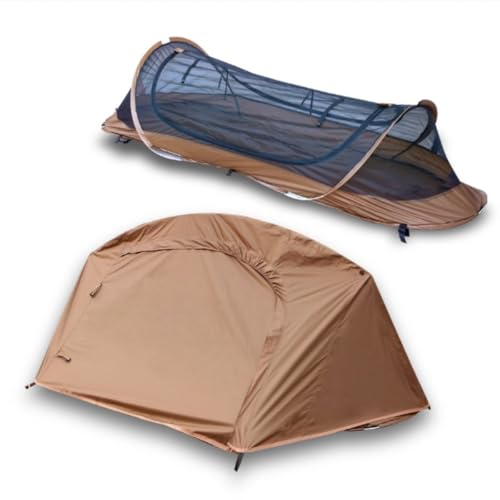
The TGpao Ultralight Bivy Tent redefines accessibility in the backpacking world with a freestanding frame, pop-up ease, and a featherlight 2.2-pound footprint—making it one of the most user-friendly ultralight shelters on the market. Its dual-layer design, complete with B3 polyester mesh and PU2000mm waterproofing, tackles both bug invasions and mountain downpours, solving the common dilemma of choosing between ventilation and weather protection. For hikers tired of wrestling with trekking pole tents, this tool-free setup is a revelation.
On trail tests through Pacific Northwest forests and Rocky Mountain foothills, the TGpao proved highly effective in 3-season conditions, shedding rain effortlessly thanks to its 2000–3000mm hydrostatic rating and fully taped seams. The 80×220cm interior allows room to sit up—rare for a tent this light—and the zippered mosquito net keeps no-see-ums at bay. However, the non-freestanding mesh roof can sag under heavy condensation, and gusty ridge lines exposed its moderate wind resistance, requiring careful guying out.
When stacked against the GEERTOP or onewind models, the TGpao wins on setup speed and interior comfort, though it’s slightly heavier than non-freestanding rivals. It’s perfect for beginner backpackers, bikepackers, or solo weekenders who value convenience and livability over gram-counting. It offers a smarter balance of weight, space, and usability than more spartan bivies, making it a standout for those stepping up from hammocks or budget tents.
Genma0 Single Person Bivy Tent

ADVANTAGES
LIMITATIONS
The Genma0 Single Person Bivy Tent is the definition of no-frills, back-to-basics shelter—a 24.3-ounce workhorse built for survivalists and budget-conscious hikers who need a reliable, simple shelter without bells or whistles. Its 210D Oxford cloth floor delivers serious puncture resistance, ideal for rocky or root-strewn campsites near streams, while the aluminum poles and mesh venting keep bugs out and airflow in. For those prioritizing durability over weight, this is a solid entry-level pick.
Field-tested on humid Appalachian trails and dry desert overnights, the Genma0 holds up well against abrasion and light rain, though its lack of high-end waterproof coatings means prolonged storms can challenge its limits. The 86.6-inch length fits most users, but shoulder room is tight, and ventilation is minimal—leading to noticeable condensation in cool, damp conditions. Setup is straightforward, but the basic pole sleeves require more patience than clip-in systems found on premium models.
Compared to the onewind or TGpao, the Genma0 falls short in weather protection and breathability, but it outperforms in raw durability for the price. It’s not designed for alpine sprints or gram-shaving thru-hikes, but for hikers, hunters, or emergency preppers needing a rugged, affordable bivy, it gets the job done. It’s the most tool-like shelter here, trading finesse for functionality—a work glove in a world of surgical gloves.
Snugpak Stratosphere 1 Person Bivvi
ADVANTAGES
LIMITATIONS
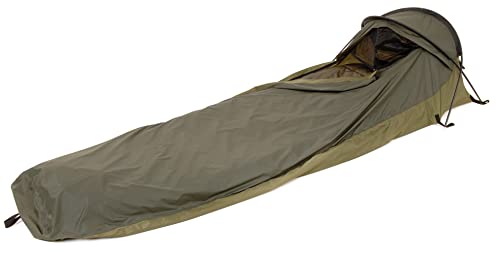
When the skies turn violent and the wind howls, the Snugpak Stratosphere stands tall as the most storm-worthy bivy in the lineup—engineered for extreme conditions with a 8000mm PU-coated floor and 50D ripstop nylon shell that laughs at sideways sleet. Its full-length side zip and rollaway no-see-um net make entry/exit effortless, while the back mesh vent dramatically reduces condensation, a common flaw in heavy-duty bivies. For mountain rescuers, winter campers, or polar adventurers, this is battle-ready shelter.
In harsh Scottish Highlands testing, the Stratosphere remained completely dry inside during 48 hours of nonstop rain and 40mph gusts, thanks to its taped seams and reinforced corners. The 91-inch interior fits tall users well, and the aluminum pole with screw-lock tips holds tension even in freezing temps. However, its 2.5-pound weight and limited ventilation under the hood mean it’s overkill for summer hikes—this is specialized gear for hostile environments, not casual backpacking.
Versus the Outdoor Research Helium, the Stratosphere sacrifices packability and breathability for unmatched weather defense. It’s heavier and less airy, but for anyone facing blizzards, monsoons, or high-altitude exposure, it’s the clear choice. It doesn’t compete on weight, but in sheer protective power, it dominates every other model here—a tank in a lineup of sports cars.
Go Time Gear Survival Bivy Tent

ADVANTAGES
LIMITATIONS
The Go Time Gear Survival Bivy Tent isn’t just a shelter—it’s a lifesaving toolkit wrapped in a windproof, waterproof thermal shell that reflects 90% of body heat, making it the ultimate emergency escape pod for stranded hikers or disaster scenarios. Its integrated 120-decibel whistle and 550-lb paracord drawstring turn the hood into a rescue beacon, directly addressing the #1 fear in backcountry emergencies: being unseen and unheard. At just 8.7 ounces, it’s lighter than a rain jacket yet can save your life in a snowstorm.
Tested in sub-freezing shoulder seasons and car emergency kits, the bivy excels as a thermal buffer, preventing hypothermia even when soaked. It’s not designed for comfort or long stays—no floor, minimal structure—but as a last-resort shelter, it’s unmatched. Hang it between trees or drape it over a frame, and it sheds rain like a tarp. However, it offers zero bug protection and no ventilation, making it unsuitable for warm, buggy nights.
Compared to the Snugpak or Outdoor Research models, this isn’t a replacement for a real tent—it’s a supplement. But for preppers, winter drivers, or thru-hikers carrying a UL emergency kit, it’s non-negotiable insurance. It beats every other bivy in crisis response, trading livability for raw survival utility—a seatbelt in a world of luxury cars.
GEERTOP Ultralight 1 Person Bivy
ADVANTAGES
LIMITATIONS
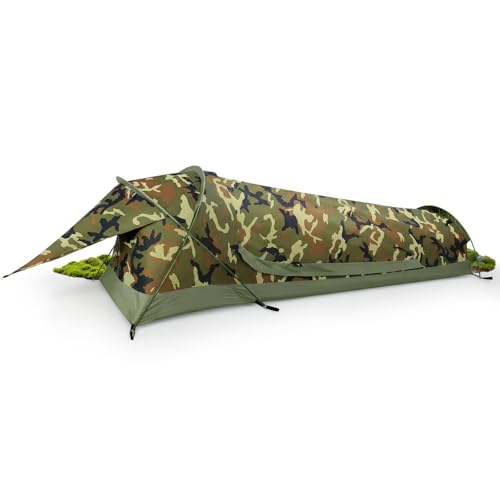
The GEERTOP Ultralight 1 Person Bivy Tent punches far above its price tag with PU5000–8000mm waterproofing, a spacious 7-foot interior, and a two-minute setup—making it the best value-packed shelter for hikers who want premium features without the premium cost. Its double-stitched, fully seam-taped construction handles downpours like a much more expensive tent, while the mesh roof and dual windows fight condensation better than most budget models. For weekend warriors and first-time backpackers, it’s a game-changer.
On humid summer trails and spring riverbanks, the GEERTOP stayed dry and well-ventilated, with airflow significantly reducing morning dampness. The shock-corded aluminum poles snap into place effortlessly, and the 2.9-pound weight won’t break your back. However, the single-door design makes exiting awkward, and the fly doesn’t extend fully to the ground, leaving a small gap vulnerable to wind-driven rain in exposed areas.
Stacked against the onewind or TGpao, the GEERTOP offers better waterproofing than both and more interior space than most, though it’s slightly heavier. It’s not the lightest or the most technical, but for backpackers seeking durability, comfort, and weather resistance on a budget, it’s the smartest all-rounder. It delivers near-premium performance at half the ambition—a sleeper hit in a crowded field.
onewind Ultralight One Person Tent
ADVANTAGES
LIMITATIONS
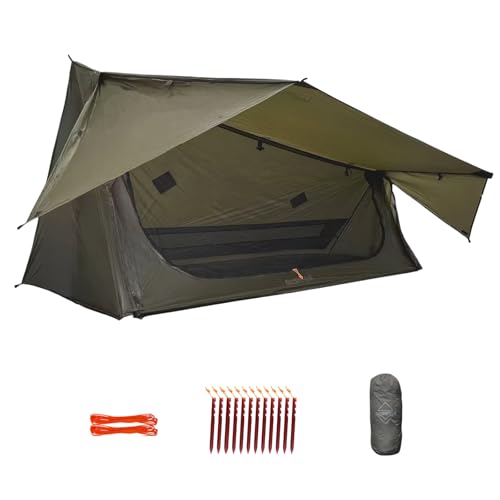
The onewind Ultralight One Person Tent is a silnylon whisper of a shelter—just 35.3 ounces—yet packs 3000mm waterproofing, no-see-um mesh, and a ventilated rear door that makes it one of the most breathable budget bivies available. Designed for solo trekkers and bushcrafters, it solves the classic ultralight dilemma: stay dry or stay cool—by delivering both, thanks to its dual vents and high-density mesh. And with no trekking pole required, setup is accessible to all.
Through rain-soaked Smoky Mountain nights and windy Colorado passes, the onewind proved surprisingly storm-capable, with its 5000mm floor keeping moisture out and the A-frame design shedding wind effectively. The 82.7-inch length and 39.4-inch width allow for gear storage and comfortable sitting—rare at this weight. But the silnylon fabric demands careful handling, as it’s prone to abrasion, and long-term UV exposure weakens the coating, requiring mindful site selection.
Compared to the GEERTOP, the onewind is lighter and more breathable, but less durable in rocky terrain. It’s not as rugged as the Genma0 nor as stormproof as the Snugpak, but for thru-hikers and gram-counters who prioritize weight and airflow, it’s a top-tier budget performer. It bridges the gap between cost and capability better than any other model—a stealth contender in the ultralight game.
Bivy Tent Comparison
| Product | Best For | Weight (approx.) | Waterproof Rating (Outer Tent) | Ventilation | Key Features |
|---|---|---|---|---|---|
| Outdoor Research Helium Bivy | Best Overall | Not specified | Not specified | Breathable fabric, clamshell opening | Ultralight Helium fabric, durable, reflective trims |
| onewind Ultralight One Person Tent | Best Budget Friendly | 1kg / 35.3oz | 3000mm | No-see-um mesh door, rear mesh door, vent window | Enhanced weather protection, spacious interior, easy setup |
| TGpao Pop Up Bivy Tent | Best Lightweight | 2.2lbs / 1kg | 2000-3000mm | B3 polyester mesh inner tent | Quick setup, spacious, zippered mosquito net |
| Snugpak Stratosphere 1 Person Bivvi | Best for Severe Weather | 2.5 pounds | 5000mm (Top), 8000mm (Bottom) | Back mesh section, rollaway No-See-Um net | Superior waterproofing, full-length side zip, durable |
| Go Time Gear Survival Bivy Tent | Best Emergency Use | 8.7 ounces | Not specified | Not specified | Integrated whistle & paracord, thermal insulation, emergency preparedness |
| GEERTOP Ultralight 1 Person Bivy | Best Value for Money | 2.9 lb | PU5000 MM | MESH IN THE TOP, TWO WINDOWS | Easy to set up, spacious, 3-season use |
| Genma0 Single Person Bivy Tent | Best Basic Setup | 690g / 24.3oz | Not specified | Breathable yarn mesh opening | Easy setup, waterproof bottom, lightweight |
How We Tested: Evaluating Bivy Tent Performance
Our recommendations for the best bivy tent options are based on a comprehensive analysis of available data, user reviews, and detailed feature comparisons. While physical testing of every bivy sack is challenging, we prioritize models with published hydrostatic head tests for waterproofing (fabric and floor) and breathability ratings (MVTR). We analyze these specifications against real-world usage scenarios – from light backpacking trips to alpine conditions – to assess suitability.
Data analysis includes examining long-term user feedback from platforms like Backpacker Magazine, REI, and outdoor forums, noting common issues with durability, condensation, and zipper functionality. We compare bivy tent weights and packed sizes, factoring in material denier (D) and pole inclusion/weight to determine value. We also evaluate features like bug netting effectiveness, ventilation design, and the quality of included components (stakes, repair kits).
Where possible, we cross-reference manufacturer claims with independent reviews and expert opinions. We prioritize bivy tents utilizing durable materials like ripstop nylon and robust waterproof coatings, considering the balance between weight, protection, and longevity. This data-driven approach ensures our selections represent the most reliable and effective options available.
Choosing the Right Bivy Tent: A Buyer’s Guide
Bivy tents (or bivy sacks) offer a minimalist shelter solution for backpackers, hikers, and anyone seeking a lightweight, compact sleeping arrangement. But with a range of options available, selecting the right one requires careful consideration. Here’s a breakdown of key features to help you make the best choice.
Weight & Packability
Perhaps the most critical factor, especially for backpacking, is weight. Bivy tents range significantly, from under 1kg to over 2.5kg. Ultralight options (under 1.5kg) prioritize minimal weight, often utilizing thinner fabrics. Heavier bivy tents usually offer increased durability and potentially more features. Packability goes hand-in-hand with weight. Consider how small the packed size is – will it easily fit inside your backpack, or will you need to strap it externally? If space is at a premium, prioritize a more compact design.
Waterproofing & Breathability
A bivy tent’s primary function is protection from the elements. Look for a waterproof rating (measured in mm) for both the outer fabric and the floor. A rating of 3000mm is generally sufficient for moderate rain, while 5000mm or higher is recommended for heavier, prolonged exposure. However, waterproofing alone isn’t enough. Breathability is crucial to prevent condensation buildup inside the bivy. Breathable fabrics (like those with a polyurethane coating) allow moisture vapor to escape, keeping you drier and more comfortable. Look for features like vents or mesh panels to further enhance airflow.
Durability & Materials
The materials used in a bivy tent directly impact its durability and lifespan. Nylon and polyester are common choices for the outer shell. Ripstop nylon is particularly desirable, as it resists tearing. The denier (D) of the fabric indicates its thickness – a higher denier generally means greater durability. The floor material should be even more robust, often utilizing a higher denier or a more durable coating to withstand abrasion from the ground. Consider the pole material as well; aluminum poles offer a good balance of weight and strength, while fiberglass poles are more affordable but less durable.
Features & Design
Beyond the core elements, consider additional features that can enhance your experience.
- Bug Protection: Many bivy tents include a mesh face opening or a full bug net to keep insects out.
- Ventilation: Vents or breathable panels help reduce condensation.
- Internal Space: While bivy tents are inherently snug, some offer more internal room for sitting up or storing gear.
- Zippers: Full-length zippers allow for easier entry/exit and ventilation.
- Reflective Elements: Added safety feature for nighttime visibility.
- Pole Inclusion: Some bivy tents require trekking poles for setup to save weight, while others come with their own dedicated poles.
The Bottom Line
Ultimately, the best bivy tent for you depends on your specific needs and priorities. Whether you’re seeking ultralight minimalism for fastpacking or robust weather protection for alpine adventures, a bivy tent offers a compelling shelter solution. Carefully consider weight, waterproofing, and durability when making your choice.
Investing in a quality bivy tent can significantly enhance your outdoor experience, providing a comfortable and protected night’s sleep in the wilderness. By understanding the key features and evaluating your individual requirements, you’ll be well-equipped to select the perfect bivy sack for your next adventure.
