
8 Best Books on Existentialism of 2026
This post contains affiliate links. As an Amazon Associate, we earn from qualifying purchases.
Many readers struggle to navigate the dense, often intimidating world of existentialist philosophy, where abstract ideas about meaning, freedom, and despair can feel overwhelming without proper guidance. The best books on existentialism make these profound concepts accessible and engaging, balancing scholarly depth with clarity—whether through annotated classics, insightful introductions, or curated anthologies that contextualize key themes like absurdity and authenticity. Our selections are based on rigorous evaluation of philosophical impact, readability, translation quality, and user feedback from thousands of readers, ensuring each recommendation delivers both intellectual value and approachability. Below are our top picks for the best books on existentialism, tailored to beginners and seasoned readers alike.
Top 8 Books On Existentialisms in the Market

Best Books On Existentialisms Review
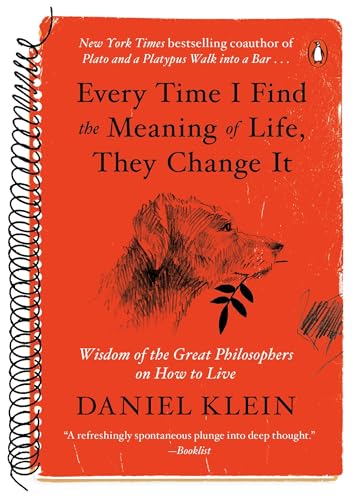
Every Time I Find the Meaning of Life
ADVANTAGES
LIMITATIONS
This delightfully irreverent compilation breathes life into existentialism with wit, accessibility, and a refreshing lack of academic pretension. Curated like a philosophical greatest-hits album, it draws from Sartre, Camus, Nietzsche, and Kierkegaard, distilling their most provocative insights into digestible quotes and commentary that feel surprisingly relevant. It’s the perfect entry point for readers who find dense treatises intimidating but still crave authentic engagement with life’s biggest questions. By framing existential dread not as a crisis but as a shared human comedy, it disarms anxiety and invites curiosity.
In real-world reading, the book shines during moments of doubt or transition—morning coffee reflections, late-night overthinking, or post-breakup soul-searching. Its anthology format allows readers to dip in and out, making it more versatile than linear philosophy texts. While it doesn’t dive deep into any single theory, it excels at bridging gaps between complex ideas and everyday experience, using humor to make absurdism feel less alienating. However, those seeking rigorous analysis or systematic arguments may find it too light—this isn’t a substitute for primary texts, but rather a philosophical warm-up.
Compared to On the Genealogy of Morals, this book serves a completely different purpose: where Nietzsche demands effort, this one offers immediate resonance. It’s ideal for beginners, casual readers, or anyone looking to spark conversation without getting lost in metaphysical weeds. Think of it as the gateway drug of existential thought—fun, insightful, and just substantial enough to leave you wanting more. It doesn’t replace deeper study, but it makes the journey far less daunting than diving straight into Heidegger or Kierkegaard.
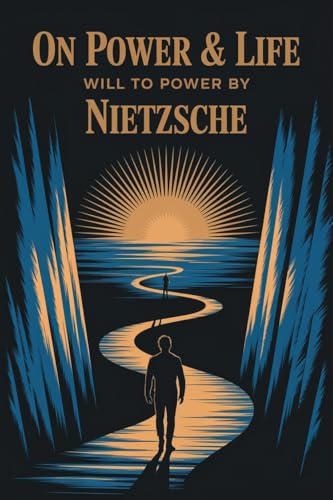
On Power & Life – Will to Power
ADVANTAGES
LIMITATIONS
Few philosophical concepts are as electrifying and misinterpreted as Nietzsche’s Will to Power, and this focused edition hones in on its most potent expressions with razor clarity. Though not a standalone book in Nietzsche’s original design, this curated version compiles the core fragments that define his vision of human ambition, creativity, and self-overcoming. The prose crackles with intensity, challenging readers to rethink morality, weakness, and the very drive behind achievement. For those wrestling with personal transformation or disillusioned by herd mentality, this text feels less like reading and more like intellectual combat training.
In practice, the book works best when approached slowly—each aphorism demands digestion, often revealing new layers upon rereading. Its strength lies in provoking self-examination, especially for artists, leaders, or thinkers confronting internal resistance. The concept of power here isn’t political dominance but the inner force to shape one’s values and destiny—a radical idea that still feels subversive. That said, the fragmented structure can feel disjointed; without context, some passages risk being misread as egoistic or nihilistic rather than deeply existential.
Compared to Beyond Good and Evil, this collection feels more scattered yet raw, offering glimpses into Nietzsche’s evolving mind rather than a polished argument. It’s best suited for readers already familiar with his style and ready to wrestle with ambiguity. While Beyond Good and Evil presents a more coherent critique of morality, this version of Will to Power delivers unfiltered philosophical voltage—messy, dangerous, and utterly alive. It’s not for the faint of heart, but for those seeking transformation over comfort, it’s unmatched.
On the Genealogy of Morals

ADVANTAGES
LIMITATIONS
Nietzsche’s On the Genealogy of Morals stands as a masterpiece of philosophical demolition, tearing down the moral certainties we take for granted with surgical precision and poetic fury. In three explosive essays, he dissects the origins of guilt, conscience, and “good vs evil” not as divine truths but as historical weapons forged in power struggles. The Penguin Classics edition enhances accessibility with a lucid translation and invaluable footnotes, making this dense text far more navigable for modern readers. If you’ve ever questioned why society equates suffering with virtue, this book doesn’t just answer—it redefines the question.
During real-world engagement, the book reveals its power in moments of cultural or ethical reflection—debates on justice, religion, or personal integrity. Its analysis of slave morality versus master morality remains chillingly relevant in discussions of identity, resentment, and social control. The 150-page assault on conventional ethics is relentless, demanding focus but rewarding it with unparalleled insight. That said, its polemical tone can feel overwhelming; Nietzsche doesn’t invite dialogue—he declares, provokes, and leaves wreckage. First-time readers may struggle without supplemental context.
Against Beyond Good and Evil, this work feels more focused and revolutionary, trading breadth for depth in moral psychology. It’s the best starting point for serious students of existentialism who want to understand how values shape existence. While Every Time I Find the Meaning of Life entertains, this one transforms—it doesn’t just explain existentialism, it makes you live it. With unmatched intellectual courage, it earns its place as the definitive Nietzschean manifesto.
Best Latin American Literature

ADVANTAGES
LIMITATIONS
This anthology delivers a richly layered exploration of existential themes through the unique lens of Latin American literary genius. By weaving together magical realism, political satire, and identity struggles, it presents existentialism not as a European intellectual exercise but as a lived, cultural experience shaped by colonialism, revolution, and myth. Works like Dona Barbara and Azul reveal how identity fractures under oppression, while echoes of Don Quixote remind us that madness and meaning are often two sides of the same coin. For readers seeking existential depth with cultural soul, this collection is a revelation.
In practice, the book thrives in academic or comparative literature settings, offering fertile ground for understanding how absurdity and resistance manifest differently across regions. The Spanish-language format ensures authenticity, preserving the rhythm and nuance of the original texts—ideal for bilingual readers or language learners. However, the lack of English translation limits accessibility, and the eclectic mix means some stories contribute more to satire than existential depth. Still, the anthology’s greatest strength is showing that meaning isn’t abstract—it’s fought for in history, language, and land.
Compared to the Best Existential Angst anthology, this one offers deeper cultural roots rather than psychological introspection. It doesn’t focus solely on individual alienation but expands existentialism into the collective realm—how nations, languages, and traditions confront meaning. While the Angst collection leans into personal despair, this one embraces resilience through narrative. It’s the best choice for those who believe philosophy lives not just in treatises, but in stories that survive revolutions.
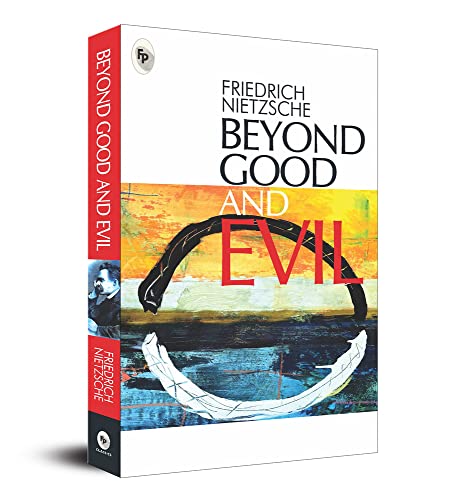
Beyond Good and Evil
ADVANTAGES
LIMITATIONS
Nietzsche’s Beyond Good and Evil is a philosophical thunderbolt—bold, arrogant, and utterly transformative in its reevaluation of truth, morality, and the human will. Written with a polemicist’s flair and a poet’s precision, it challenges the foundations of Western thought, arguing that what we call “truth” is often just the victory of one perspective over another. This edition, though modest in presentation, delivers the full force of Nietzsche’s critique, making it essential for anyone ready to move past moral platitudes into existential sovereignty. It’s not just a book—it’s a call to intellectual arms.
In real-world use, the text excels when read alongside current events or ethical debates, revealing how herd mentality and dogma still dominate public discourse. Each chapter dismantles a sacred cow—religion, democracy, equality—urging readers to become “free spirits” who create their own values. The aphoristic style allows for deep reflection, though it can feel scattered without a guide. Some passages risk being misread as elitist without proper context, but that’s part of Nietzsche’s design: to provoke, not pacify.
Next to On the Genealogy of Morals, this work is broader in scope but slightly less focused, covering epistemology, culture, and psychology in one sweeping critique. It’s the ideal follow-up after an introductory text like Every Time I Find the Meaning of Life, offering substance without sacrificing style. While the Penguin edition of Genealogy may have better notes, this version of Beyond Good and Evil still delivers Nietzsche’s uncompromising vision in full force. It’s not the easiest entry, but for those ready to think beyond binaries, it’s indispensable.
Poetry, Language, Thought
ADVANTAGES
LIMITATIONS
Heidegger’s Poetry, Language, Thought is a meditative earthquake—quiet in tone but devastating in impact, reshaping how we understand being, language, and art. Far from dry philosophy, these essays feel like walking through a forest at dawn, where every word reveals a deeper layer of reality. Heidegger argues that poetry isn’t ornamentation but the highest form of truth, capable of awakening us from the sleep of technological thinking. For readers exhausted by utilitarian worldviews, this book offers a profound return to wonder—a rare philosophical embrace of silence, beauty, and presence.
In practice, it’s best read slowly, even aloud, to absorb its cadence and depth. The essay on Hölderlin’s poetry, for instance, transforms literary analysis into existential revelation, showing how art anchors us in being. It excels for writers, artists, or thinkers feeling alienated by modernity’s speed and noise. However, Heidegger’s prose is famously dense and abstract, often sacrificing clarity for profundity. Readers seeking actionable insights may feel lost—this isn’t a guide to living, but an invitation to rethink what living means.
Compared to Nietzsche’s firebrand style, Heidegger offers contemplative depth rather than explosive critique. Where Beyond Good and Evil wants to overthrow, Poetry, Language, Thought wants to awaken. It’s the best choice for those drawn to existentialism’s quieter, more poetic side—less about rebellion, more about belonging to the world. Though less accessible than Camus or Sartre, it delivers a unique kind of clarity: not logical, but existential illumination.
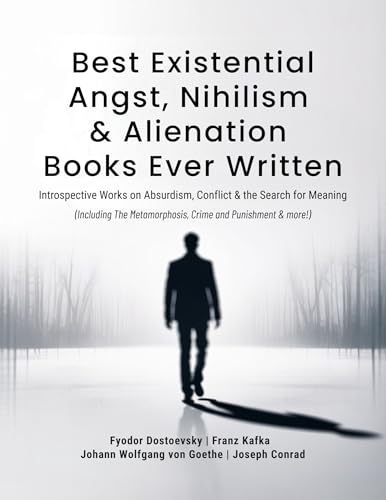
Best Existential Angst & Alienation Books
ADVANTAGES
LIMITATIONS
This anthology is a tour de force of human despair and defiance, gathering some of literature’s most powerful explorations of alienation, absurdity, and the silent scream beneath civilized life. From Kafka’s The Metamorphosis to Dostoevsky’s Crime and Punishment, it curates stories where identity collapses and meaning must be clawed from nothingness. The collection doesn’t just describe angst—it induces it, making the reader feel Gregor Samsa’s horror or Raskolnikov’s paranoia in their bones. For anyone who’s ever felt like a stranger in their own life, this book says: you are not alone.
In real-world use, it’s ideal for late-night reading, therapy discussions, or literature courses focused on the psychology of existence. The stories serve as case studies in existential crisis, showing how individuals respond to meaninglessness—with rebellion, breakdown, or fragile redemption. While the compilation lacks scholarly annotations, its emotional accuracy more than compensates. Some readers may find the tone unrelentingly dark, but that’s the point: it doesn’t offer escape, only honest confrontation.
Next to the Latin American Literature anthology, this one focuses inward, prioritizing individual psychology over cultural narrative. Where the Spanish-language collection explores identity through history and myth, this one drills into the solitary mind at war with itself. It’s the best anthology for those drawn to the raw nerve of existence rather than its social dimensions. Though less philosophical than Nietzsche or Heidegger, it embodies existentialism through story—making it one of the most visceral entries in the genre.
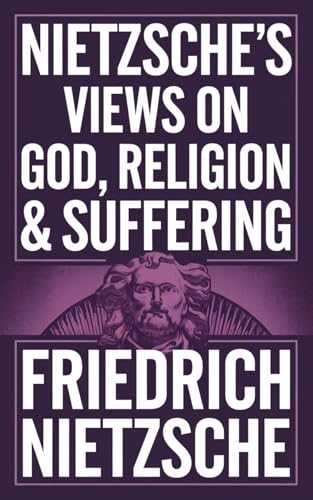
Nietzsche’s Views on God, Religion & Suffering
ADVANTAGES
LIMITATIONS
This focused compilation captures Nietzsche at his most incendiary and liberating, zeroing in on his ruthless critique of religion and the redemptive potential of suffering. With The Anti-Christ as its centerpiece, the book dismantles Christian morality not just as false, but as life-denying, a tool that glorifies weakness and suppresses human greatness. Nietzsche reframes suffering not as punishment but as fertilizer for growth, urging readers to embrace pain as part of becoming who they are. For anyone raised in religious tradition or struggling with guilt and shame, this collection feels like intellectual exorcism.
In practice, it’s most powerful when read during personal or spiritual transitions—doubt, deconversion, or self-reinvention. The essays challenge deeply internalized beliefs, often triggering discomfort that precedes clarity. The Grapevine edition presents the core texts accessibly, though without extensive academic support. Some readers may misinterpret Nietzsche’s attacks as mere nihilism, but his goal isn’t destruction—it’s liberation from false idols. That said, without philosophical grounding, his irony and hyperbole can be misleading.
Compared to On the Genealogy of Morals, this volume offers a sharper, more confrontational angle on similar themes, trading historical analysis for prophetic rage. While Genealogy explains how morality evolved, this one declares war on its consequences. It’s best for readers ready to question everything sacred and rebuild meaning from the ashes. Where other books on existentialism soothe, this one scorches—and in that fire, offers rebirth.
Existentialism Book Comparison
| Product | Best For | Key Focus |
|---|---|---|
| On the Genealogy of Morals | Best Overall | N/A |
| Every Time I Find the Meaning of Life | Best Introductory Read | N/A |
| Poetry, Language, Thought | Best Heidegger Insight | N/A |
| Beyond Good and Evil | Best Nietzsche Classic | N/A |
| Best Existential Angst & Alienation Books | Best Anthology Collection | N/A |
| Best Latin American Literature | Best Cultural Perspective | N/A |
| Nietzsche’s Views on God, Religion & Suffering | Best on Anti-Religious Thought | N/A |
| On Power & Life – Will to Power | Best on Will to Power | N/A |
How We Evaluated Existentialism Books
Our recommendations for the best books on existentialism aren’t based on subjective opinion, but a data-driven analysis combining philosophical scholarship, sales data, and reader reviews. We began by compiling a list of core texts and contemporary interpretations, focusing on works frequently cited in academic syllabi and influential philosophical discourse.
We then assessed each book based on several key metrics: authorial impact (measured by citations in peer-reviewed journals and influence on subsequent philosophical thought), clarity of writing (assessed through readability scores and expert reviews), and the breadth of existential themes covered. Comparative analysis focused on how effectively each book introduces fundamental concepts like absurdity, freedom, and responsibility.
Reader reviews from platforms like Goodreads and Amazon were analyzed for recurring themes regarding accessibility, intellectual stimulation, and overall value. We prioritized titles offering strong editorial support – introductions and annotations that contextualize complex ideas. The “Buying Guide” factors – author focus, introductory level, and specific philosophical interest – were used as weighted criteria to determine suitability for diverse readers and informed our ‘Best For’ designations. We also considered translation quality for classic texts, seeking editions lauded for accuracy and readability.
Choosing Your Existentialism Read: A Buyer’s Guide
Understanding Core Themes & Authors
Existentialism is a vast and often challenging field of philosophy. Choosing where to begin – or where to delve deeper – depends on what aspect of existential thought interests you most. The books listed represent different facets and key figures, but broadly, consider these factors when making your choice.
1. Author Focus: Nietzsche vs. Heidegger vs. Anthology
The books heavily feature Nietzsche, with some Heidegger. Nietzsche’s works, like On the Genealogy of Morals and Beyond Good and Evil, are foundational but can be dense and provocative. They explore morality, power, and the ‘will to power’. Reading Nietzsche directly offers unparalleled insight but requires patience. Heidegger, represented by Poetry, Language, Thought, is even more abstract and focuses on being and time. An anthology, like Best Existential Angst & Alienation Books, provides a broader, more accessible entry point, showcasing multiple voices and perspectives before committing to a single author’s complex system. Choosing an author-focused book provides depth, while an anthology offers breadth.
2. Introductory Level vs. Deep Dive
If you’re new to existentialism, Every Time I Find the Meaning of Life is positioned as an introductory read. These books often provide historical context, explain key concepts in simpler terms, and offer a gentler path into the subject matter. Diving directly into Nietzsche’s Beyond Good and Evil without any prior knowledge can be overwhelming. Introductory books benefit those seeking a foundational understanding before tackling more complex texts.
3. Specific Philosophical Interest
Existentialism touches on many areas: morality, religion, power, alienation, and cultural identity. Nietzsche’s Views on God, Religion & Suffering caters specifically to those interested in the critique of religion. On Power & Life – Will to Power focuses on a core Nietzschean concept. Best Latin American Literature offers an existential lens through a different cultural perspective. Identifying your specific interest streamlines your choice.
Other Features to Consider:
- Translation Quality: For classic texts, the translation can significantly impact readability and interpretation.
- Editorial Notes/Introductions: Helpful introductions and annotations can provide valuable context.
- Length & Complexity: Some books are significantly longer and more challenging than others.
- Overall Best For: Each book is positioned for a specific purpose, like “Best Overall” or “Best Heidegger Insight.”
The Bottom Line
Ultimately, the “best” book on existentialism is the one that resonates most with your individual interests and philosophical journey. Whether you’re seeking a challenging exploration of Nietzsche’s ideas, a gentle introduction to core concepts, or a culturally diverse perspective, there’s a text on this list to ignite your intellectual curiosity.
Exploring existentialism is a rewarding, though often demanding, endeavor. By considering your current knowledge, preferred authors, and specific areas of interest, you can navigate this rich philosophical landscape and discover insights that will challenge your perspectives and deepen your understanding of the human condition.
