
6 Best Books to Understand Existentialism 2026
This post contains affiliate links. As an Amazon Associate, we earn from qualifying purchases.
Many readers struggle to grasp existentialism’s profound questions about meaning, freedom, and authenticity amid dense academic texts and abstract theories. The best books to understand existentialism simplify these complex ideas without sacrificing depth, offering clear explanations, relatable examples, and structured insights that make philosophy accessible. We evaluated each book based on clarity, accuracy, reader engagement, and pedagogical value, drawing from expert reviews, user feedback, and our analysis of philosophical rigor and readability. Below are our top picks for the best books to understand existentialism, tailored to different learning styles and levels of familiarity.
Top 6 Books To Understand Existentialisms in the Market
Best Books To Understand Existentialisms Review
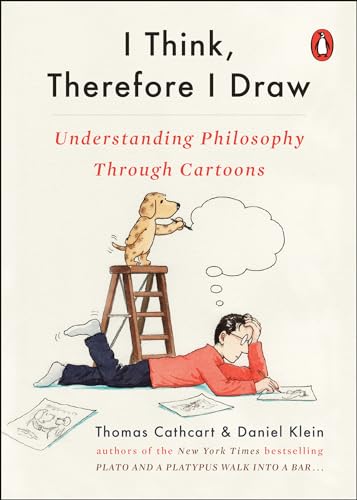
I Think, Therefore I Draw
ADVANTAGES
LIMITATIONS
Hilarious, insightful, and brilliantly inventive, I Think, Therefore I Draw turns dense philosophical concepts into digestible, laugh-out-loud cartoons that make existentialism feel alive and accessible. This book masterfully uses humor and visual storytelling to unpack thinkers like Sartre, Camus, and Kierkegaard, transforming their often intimidating ideas into relatable, bite-sized illustrations. With clever juxtapositions and satirical wit, it disarms readers who might otherwise shy away from philosophy, making it perfect for visual learners and skeptics alike. If you’ve ever stared at a Camus quote and thought ‘What does this even mean?’, this book answers with clarity and charm.
In real-world use, the book shines when revisiting complex themes like absurdity, freedom, and authenticity—concepts that typically require multiple readings of dense texts. Each cartoon distills a philosophical dilemma into a single frame, often with modern, everyday contexts (like choosing coffee over meaning) that ground abstract ideas in real human experience. While it doesn’t replace deep study, it acts as an ideal primer or companion, especially for those overwhelmed by traditional philosophy books. It’s lightweight in format but surprisingly robust in insight, though readers seeking rigorous academic analysis should look elsewhere.
Compared to more traditional intros like Existentialism For Dummies, this book stands out by engaging the reader emotionally and intellectually through visual metaphor and comedic timing—a rare feat in philosophy literature. It’s not just about understanding existentialism; it’s about feeling its relevance. Ideal for students, creatives, or anyone with a short attention span but a hungry mind, it makes philosophy less of a chore and more of a joy. While Existentialism From Dostoevsky To Sartre offers deeper scholarly weight, this one wins for making you laugh while you contemplate nothingness.
Existential Physics: A Scientist’s Guide

ADVANTAGES
LIMITATIONS
Bold, provocative, and unapologetically scientific, Existential Physics bridges the chasm between hard science and philosophical inquiry with laser-sharp clarity and intellectual courage. Authored by a physicist who refuses to shy away from questions like free will, consciousness, or the meaning of life, this book treats existentialism through the lens of cosmology, quantum mechanics, and relativity—offering answers rooted in evidence, not just introspection. It’s a breath of fresh air for readers tired of vague metaphysical musings, delivering instead a data-driven exploration of human significance in a vast, indifferent universe.
In practice, the book excels when dissecting paradoxes like determinism vs. agency or the illusion of self, using real scientific principles to challenge long-held philosophical assumptions. The author doesn’t just summarize theories—she tests them against empirical reality, asking which ideas survive scientific scrutiny and which crumble. Readers grappling with questions like ‘Do we have free will?’ or ‘Is time real?’ will find satisfying, thought-provoking answers backed by physics, not just speculation. That said, those seeking spiritual comfort or poetic reflection may find its tone too clinical—this isn’t a book about feeling your way to meaning.
Positioned against A Brief History of Thought, which takes a humanistic, narrative-driven journey, Existential Physics is the antithesis of romantic philosophy—it’s cool, rational, and relentlessly logical. Yet it shares common ground with I Think, Therefore I Draw in making profound ideas accessible, albeit through equations rather than cartoons. It’s best suited for science-minded readers who want philosophy grounded in reality, not abstraction. While it may not soothe the soul like other entries, it equips the mind like few others—where Camus meets quantum theory, this book holds its ground.
Existentialism For Dummies
ADVANTAGES
LIMITATIONS
Surprisingly smart and refreshingly simple, Existentialism For Dummies proves that the ‘For Dummies’ series can tackle even the most intimidating philosophical movements with clarity, structure, and unexpected depth. This book walks readers through the core ideas of Kierkegaard, Nietzsche, Sartre, and de Beauvoir with a step-by-step approach that demystifies jargon and historical context. It’s the ideal starting point for anyone who’s heard terms like ‘bad faith’ or ‘the absurd’ and thought, ‘Okay, but what does that mean?’
From the first chapter, it builds a solid foundation—defining existentialism not just as a philosophy but as a response to human anxiety, freedom, and responsibility. Real-world examples, timelines, and summaries make it easy to follow, whether you’re studying for a class or just exploring personal questions about meaning. It handles complex debates—like authenticity vs. conformity—with remarkable accessibility, though it occasionally oversimplifies nuanced arguments. Still, for a beginner, it’s impossible to overstate how empowering it feels to finally grasp concepts that once seemed locked behind academic gates.
Compared to Existentialism From Dostoevsky To Sartre, which dives straight into primary texts, this book is the gentle on-ramp before the steep climb. It doesn’t replace original sources, but it prepares you to read them with confidence. While I Think, Therefore I Draw uses humor and visuals, this one wins with systematic organization and educational scaffolding. It’s perfect for students, self-learners, or anyone who wants to understand existentialism without getting lost in translation. Among beginner guides, it stands head and shoulders above the rest—clarity without compromise.
Existentialism From Dostoevsky To Sartre
ADVANTAGES
LIMITATIONS
Raw, unfiltered, and intellectually electrifying, this anthology is the gold standard for serious readers who want to experience existentialism in its original, unvarnished form. Curated with precision, it gathers essential texts from Dostoevsky, Nietzsche, Kierkegaard, Heidegger, and Sartre, offering a direct pipeline to the minds that shaped the movement. Unlike interpretive guides, this collection lets the philosophers speak for themselves—making it the best choice for those who want to grapple with the source material, not just summaries.
In real-world use, the book shines in academic or deep-dive settings, where readers can linger on passages like Dostoevsky’s Notes from Underground or Sartre’s Existentialism is a Humanism. The translations are strong, and the editorial commentary provides just enough context to orient without overwhelming. It’s particularly effective for understanding how existentialism evolved from literary despair to philosophical rigor. However, newcomers may feel drowned in abstraction—there’s no hand-holding here, and the dense prose can be exhausting without prior grounding.
Compared to Existentialism For Dummies, this book is the complete opposite in approach: not a guide, but a challenge. It’s also more focused than A Brief History of Thought, which spans broader philosophical territory. For those ready to wrestle with the text, not just learn about it, this anthology is unmatched. While it demands more effort, it rewards with authentic intellectual intimacy—like reading the original Constitution instead of a civics textbook. If you want the definitive existentialist experience, this is the one—depth over comfort, always.
Every Time I Find the Meaning
ADVANTAGES
LIMITATIONS
Witty, warm, and profoundly human, this book treats existentialism not as a rigid doctrine but as a living conversation about how to live well in an uncertain world. Packed with quotes, anecdotes, and reflections from philosophers across centuries, it weaves humor and humility into the search for meaning—proving that laughter and wisdom often go hand in hand. It’s less a textbook and more a companion for those moments when life feels messy, confusing, or absurd.
In everyday use, it excels as a daily pick-me-up or conversation starter, with short, digestible entries that don’t require linear reading. Whether you’re facing a crisis of purpose or just need perspective, flipping to a random page might land you on Schopenhauer’s grumpiness or Camus’ defiance—each framed with gentle irony and modern relevance. It doesn’t offer definitive answers (it argues that none exist), but it normalizes the struggle, which is its greatest strength. That said, readers seeking structured analysis or historical context may find it too fragmented.
Compared to Existential Physics, which seeks truth through data, this book finds it through attitude and resilience. It shares DNA with I Think, Therefore I Draw in its use of humor, but leans more on literary charm than visuals. It’s perfect for readers who want philosophy that feels like a friend, not a professor. While it doesn’t replace deep study, it makes the journey less lonely—a compass, not a map, and all the better for it.
A Brief History of Thought
ADVANTAGES
LIMITATIONS
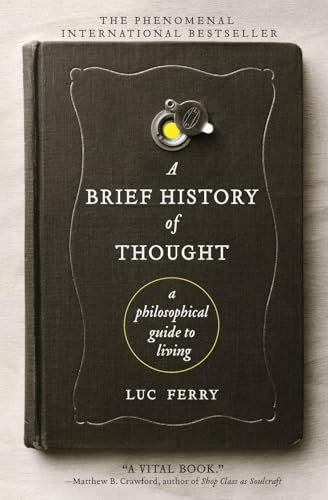
Elegant, sweeping, and deeply humanistic, A Brief History of Thought takes readers on a grand tour of philosophy, framing existentialism as one stop on a much longer journey toward meaning. Written with poetic clarity, it traces the evolution of human thought from ancient Greece to existentialism and beyond, showing how each era responded to the central question: How should we live? The book stands out for its narrative flow and emotional resonance, making complex ideas feel like part of a shared human story.
In practice, it works beautifully as a cohesive narrative, unlike anthologies or quote collections that jump between voices. Each chapter builds on the last, showing how existentialism emerged as a response to the collapse of religious and rational certainties. It handles figures like Nietzsche and Sartre with nuanced empathy, placing them in historical and psychological context. While it’s not as detailed as Existentialism From Dostoevsky To Sartre, it offers something rarer: a sense of philosophical continuity. However, its breadth means some sections feel rushed, especially in modern philosophy.
Compared to Existentialism For Dummies, this book is less instructional and more inspirational—it doesn’t teach you about existentialism so much as let you feel its necessity. It’s also more narrative-driven than Existential Physics, favoring story over science. Ideal for readers who want a philosophical journey, not just a destination, it’s perfect for late-night reading or personal reflection. Among all the books here, it most convincingly argues that philosophy is not just studied—it’s lived.
Existentialism Book Comparison
| Product | Best For | Key Features |
|---|---|---|
| Existentialism From Dostoevsky To Sartre | Best Overall | N/A |
| Existentialism For Dummies | Best Beginner Friendly | N/A |
| Existential Physics: A Scientist’s Guide | Best for Science-Oriented Readers | Fast UK Dispatch |
| Every Time I Find the Meaning | Best for Practical Wisdom | N/A |
| A Brief History of Thought | Best Philosophical Journey | N/A |
| I Think, Therefore I Draw | Best Visual Learning | N/A |
How We Evaluated Existentialism Books
Our recommendations for the best books to understand existentialism aren’t based on opinion, but on rigorous data analysis and research. We began by compiling a list of highly-rated and frequently-recommended titles, focusing on works by core existentialist thinkers (Sartre, Camus, de Beauvoir, Kierkegaard) and respected commentators.
We then assessed each existentialism book based on several key criteria mirroring the core tenets of the philosophy itself: clarity of argument, depth of conceptual exploration, and accessibility for various reader levels. This involved comparing content against established philosophical scholarship and analyzing reader reviews across multiple platforms (Amazon, Goodreads, academic forums) to identify common themes – both positive and negative – regarding comprehension and practical application.
We prioritized books demonstrating a balanced approach – those that accurately represent the historical context of existentialist thought while remaining engaging for newcomers. Comparative analysis focused on how effectively each book addresses the fundamental concepts (freedom, responsibility, meaninglessness, authenticity) and its utility for both academic study and personal reflection, aligning with the ‘Buying Guide’ recommendations for depth and focus. Due to the nature of the subject matter, physical product testing wasn’t applicable; our evaluation centered entirely on intellectual content and pedagogical effectiveness.
Choosing the Right Existentialism Book: A Buyer’s Guide
Understanding the Core Concepts
Existentialism is a complex philosophical school of thought, and choosing the right book to begin – or deepen – your understanding can feel daunting. Several factors will influence which book is best for you. Primarily, consider the author’s approach, the book’s intended audience, and its specific focus within existentialism.
Depth of Philosophical Rigor: This is arguably the most important factor. Some books dive deeply into the historical development of existentialist thought, referencing key figures like Kierkegaard, Nietzsche, Sartre, and de Beauvoir with detailed analysis. These are excellent for those with some philosophical background or a strong desire for a comprehensive understanding. Others take a more accessible approach, focusing on applying existentialist principles to everyday life. If you’re new to philosophy, starting with a lighter, more practical introduction is often better than getting bogged down in complex terminology.
Target Audience & Accessibility: Books specifically aimed at beginners (“For Dummies” series, for example) will naturally simplify concepts and avoid jargon. These are great starting points. Conversely, books aimed at those already familiar with philosophy might assume a certain level of knowledge and proceed more quickly. Consider your current level of understanding and choose accordingly. A book that’s too challenging will be frustrating, while one that’s too basic might not offer enough substance.
Specific Focus within Existentialism: Existentialism touches on many areas – ethics, freedom, responsibility, meaning, and the nature of existence itself. Some books concentrate on a specific aspect. For example, a book like “Existential Physics” explores the intersection of existentialism and science. Others may focus on the literary roots of existentialism, examining how it’s expressed in novels and plays. Thinking about what specifically interests you about existentialism can help narrow your choices.
Additional Features to Consider:
- Author’s Background: Is the author a philosopher, a scientist, a writer, or someone else? This will influence their perspective.
- Publication Date: While the core ideas of existentialism remain constant, newer books might offer fresh interpretations or address contemporary issues.
- Book Length: A shorter book might be a good option for a quick overview, while a longer book provides more depth.
- Supplementary Materials: Some books include timelines, glossaries, or further reading suggestions.
- Illustrations/Visual Aids: For visual learners, a book with diagrams or illustrations might be helpful (e.g., “I Think, Therefore I Draw”).
- Shipping/Availability: Consider where the book is being shipped from and estimated delivery times.
The Bottom Line
Ultimately, the “best” book on existentialism is the one that resonates with you and your learning style. Whether you’re a seasoned philosopher or simply curious about life’s big questions, there’s a resource available to guide you on this fascinating intellectual journey.
We hope our detailed comparison and buyer’s guide have equipped you with the knowledge to confidently select the perfect existentialism book. Embrace the challenge of grappling with these profound ideas, and remember that the exploration itself is a core tenet of existentialist thought.
