
8 Best Cabin Tents for Rain (2026 Guide)
This post contains affiliate links. As an Amazon Associate, we earn from qualifying purchases.
The Timber Ridge 4-6 Person Hub Tent stands out as the best overall cabin tent for rains, thanks to its 2000mm waterproof rating and quick setup, while the POMOLY CHALET 70 Max hot tent is a stronger choice for serious downpours with its 2500mm protection and rugged build. For large groups needing space and convenience, the CORE 12 Person LED Lighted Tent makes sense despite its lower waterproof rating.
Most cabin tents promise shelter, but few truly deliver when the rain won’t quit. Leaks, condensation, and flimsy poles turn a weekend trip into a soggy mess. I’ve seen it happen too many times with tents that look great online but fail in real storms.
This guide cuts through the hype. I compared specs, read through owner experiences, and focused on what actually matters when rain is in the forecast, waterproof ratings, seam sealing, frame strength, and ventilation. These picks reflect real performance, not just marketing claims.
Top 8 Cabin Tents For Rains in the Market
The Best Cabin Tents For Rains, Reviewed
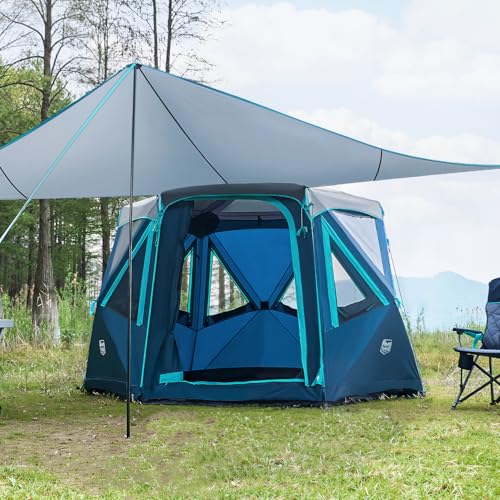
Timber Ridge 4-6 Person Hub Tent
Strengths
- Strong 2000mm waterproofing
- Wheeled carry bag
- Excellent airflow
Trade-offs
- Bulkier packed size
- Hub poles less repairable
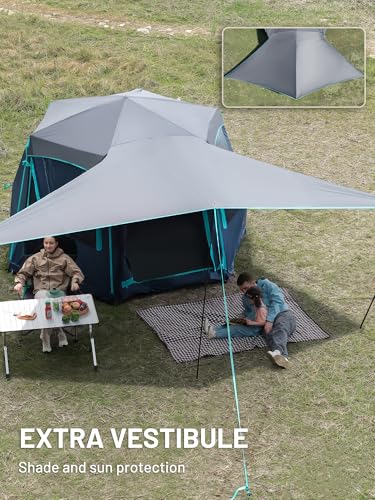
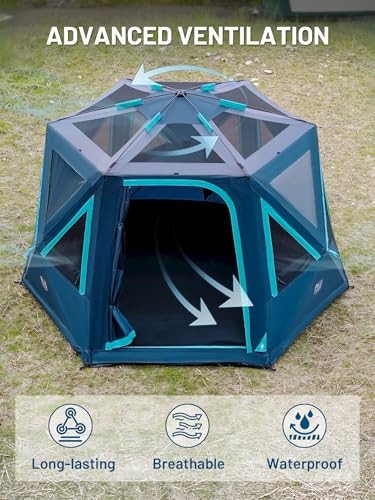
If I had to pick one tent for a weekend trip with unpredictable weather, this would be near the top of my list. The 2000mm waterproof rating is a real upgrade over many entry-level models, and factory-sealed seams mean fewer weak points for leaks, a detail owners confirm holds up in sustained rain. The oversized rainfly is a standout, creating a wide covered porch that’s perfect for gear storage or sitting out a drizzle.
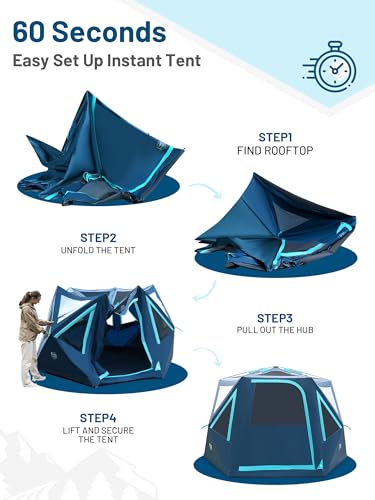
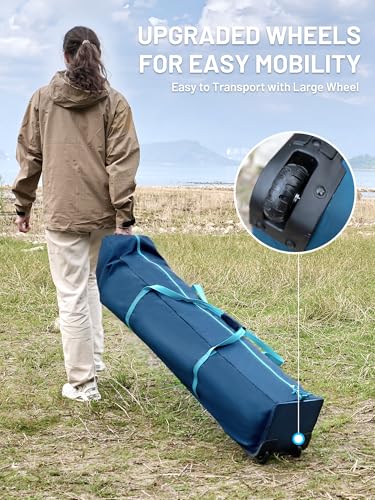
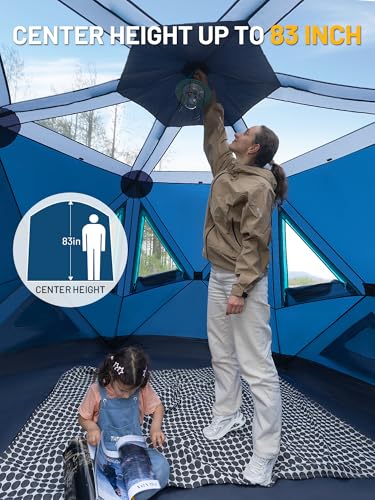
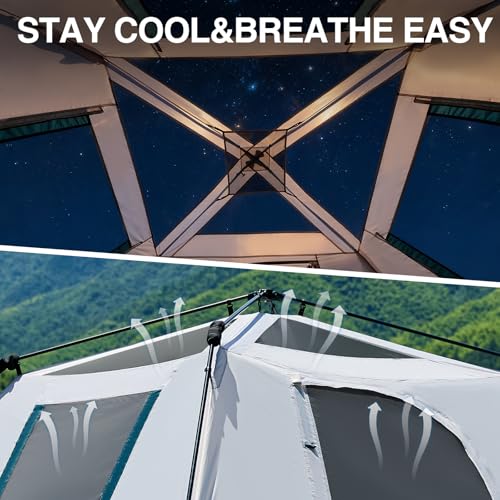
The hub design delivers true 60-second setup, and the 83-inch center height lets most adults stand comfortably. Ventilation is excellent thanks to eight mesh windows and a full mesh ceiling, though in cold or windy conditions, some users report needing to close everything up, which can trap moisture. The wheeled carry bag is a standout for long walks to the site. It’s heavier than ultralight options, but for car campers, that trade-off makes sense.
Product photos
CORE 12 Person Multi-Room Cabin Tent
Strengths
- Spacious near-vertical walls
- Gear-friendly rainfly
- Room divider included
Trade-offs
- Slower setup
- Heavy at 50+ lbs
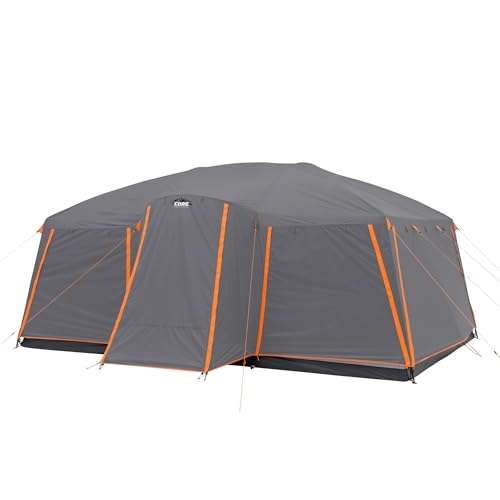
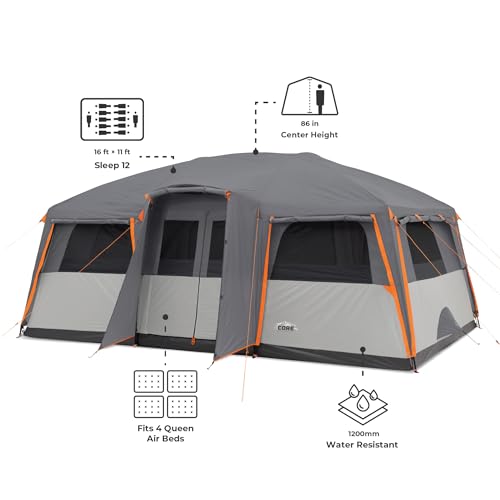
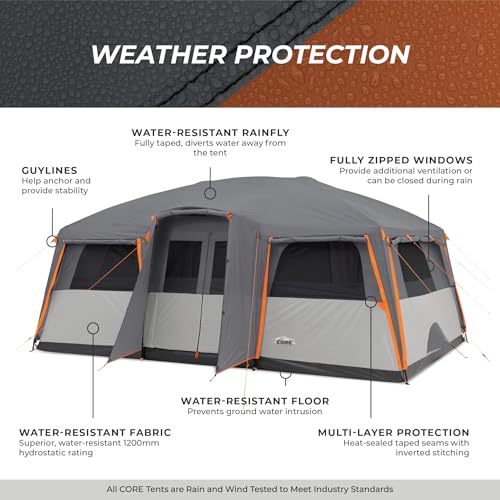
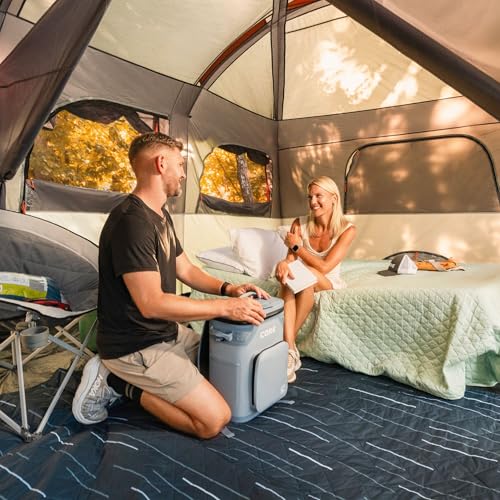
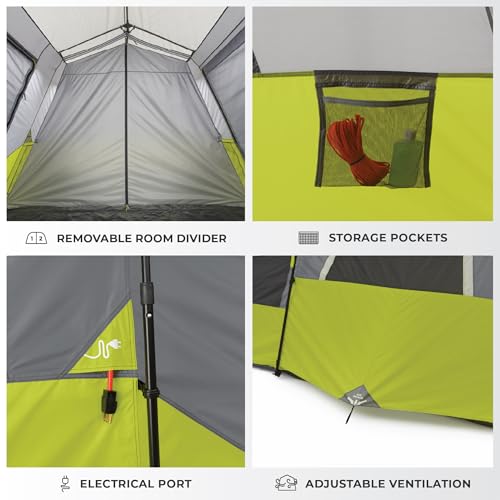
When you need space for a whole crew, this 12-person tent delivers without skimping on weather readiness. The 16×11-foot floor and 86-inch center height make moving around easy, and the nearly straight walls maximize usable space, a big deal when you’re stuck inside during rain. The H20 Block system with 1200mm fabric and fully taped seams has earned consistent praise for keeping interiors dry.
The full rainfly doubles as a gear vestibule, which owners love for storing muddy boots or camp chairs. The included room divider adds privacy, and storage pockets keep things tidy. It’s not the fastest to set up, no instant pop-up here, but the trade-off is sturdier, more repairable poles. Compared to the lighted 12-person model, this one is better for those who prioritize function over features.
Product photos
CORE 9 Person Instant Cabin Tent
Strengths
- Quick 2-minute setup
- Reliable rain protection
- Good interior organization
Trade-offs
- Heavier than average
- Vents could be larger
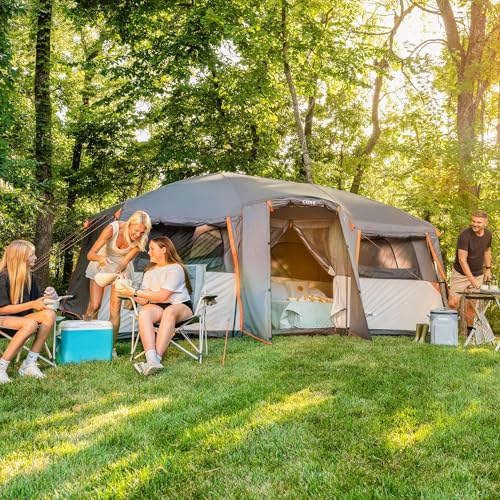
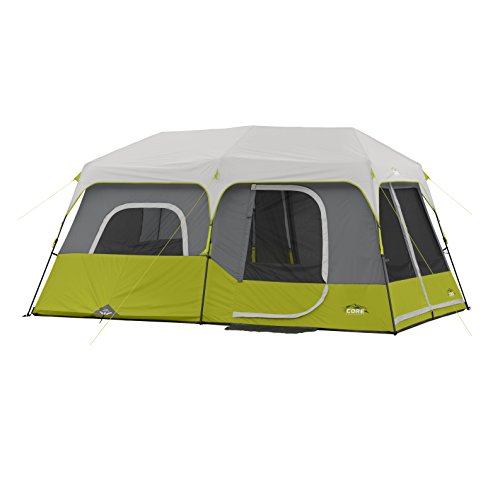
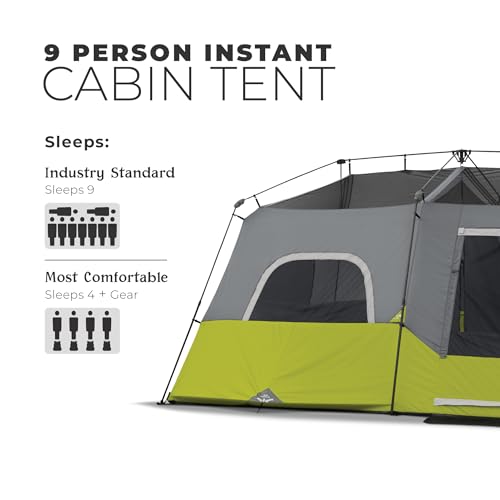
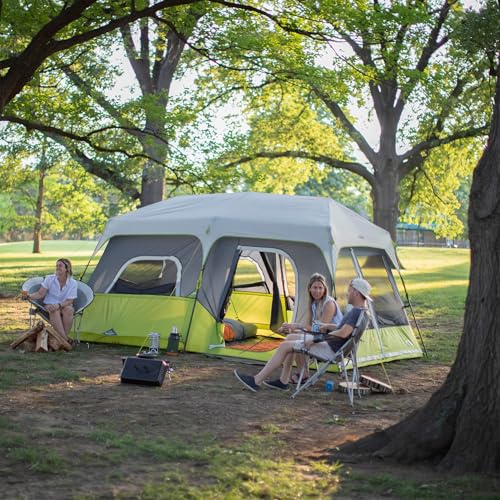
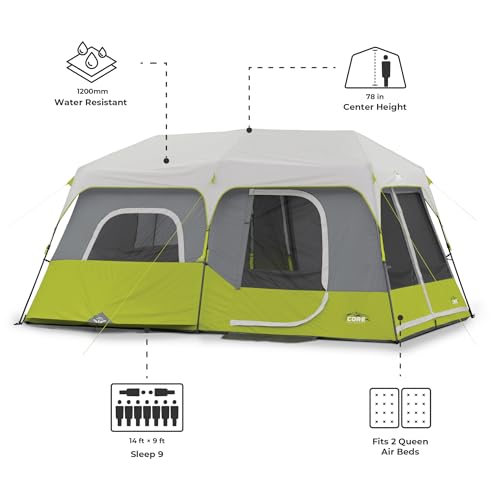
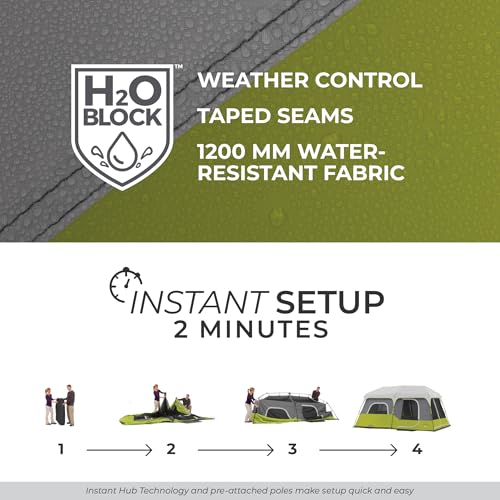
CORE’s reputation for value isn’t overstated, and this 9-person model proves it. The 14×9-foot footprint gives real room to move, and the 78-inch center height means no crouching, a big win for taller campers. The H20 Block system with 1200mm fabric and fully taped seams is on par with pricier tents, and owners consistently report staying dry even through overnight rain.
Setup in under two minutes is realistic, thanks to the pre-attached poles, and the adjustable lower vents paired with a mesh ceiling help manage airflow well. It’s not the most ventilated tent in the lineup, but it strikes a solid balance. Compared to the larger 12-person CORE models, this one feels more manageable without sacrificing much space. For groups of 4–6 who want room for gear, it’s the smarter buy.
Product photos
4 Person Instant Pop Up Tent
Strengths
- 2000mm waterproof rating
- Lightweight and compact
- Fast 50-second setup
Trade-offs
- Limited headroom
- Basic interior features
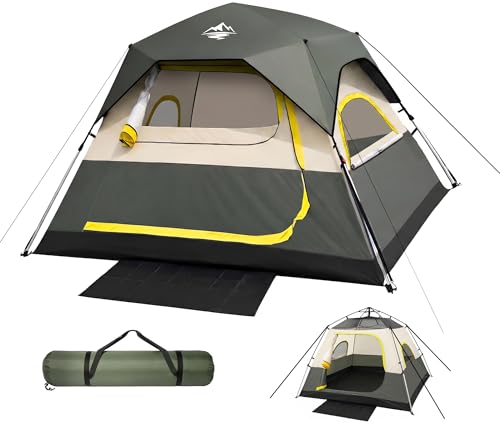
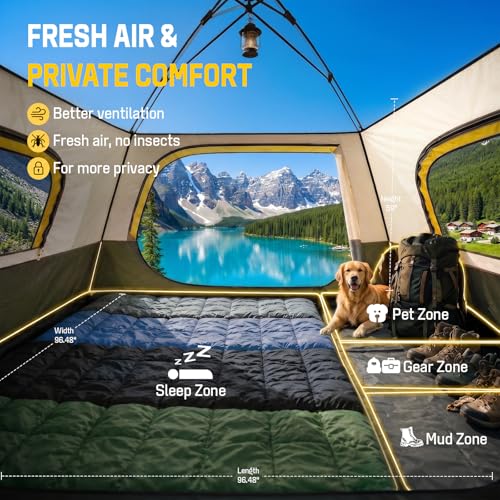
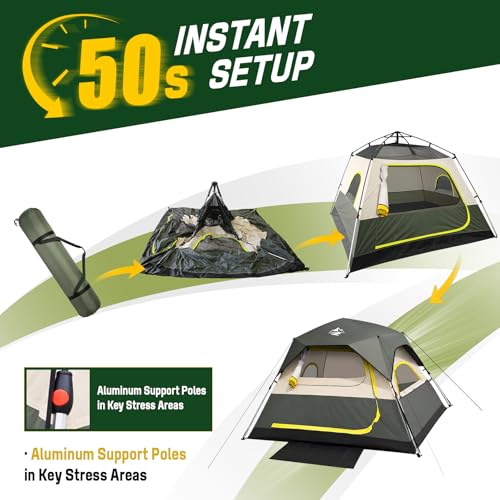
This is the rare budget tent that doesn’t cut corners on weather protection. With a 2000mm waterproof rating, taped seams, and a removable rainfly, it outperforms many pricier models in rain resistance, a fact confirmed by owners who’ve used it in unexpected downpours. The 50-second setup is legit, and the hybrid aluminum poles offer a good mix of strength and weight.
At just 13.4 pounds and a compact 39-inch carry bag, it’s one of the more portable cabin-style tents here. The nearly 60-inch peak height is modest but workable for sitting upright. Ventilation is solid with mesh windows and a ceiling panel, though condensation can build up if all vents are closed. For couples or small families on a tight budget, this delivers serious bang for the buck. I’d pick it over flashier models that don’t back up their claims in real conditions.
Product photos

FanttikOutdoor Zeta C2 Dome Tent
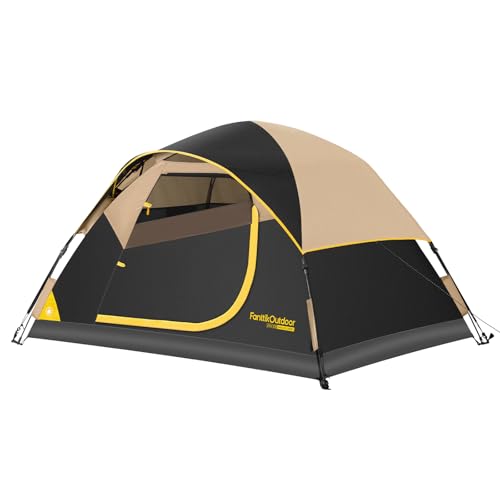
Strengths
- Eco-friendly PFAS-free fabric
- Good rain protection
- Ventilation control
Trade-offs
- Fiberglass poles less durable
- Tight space for two
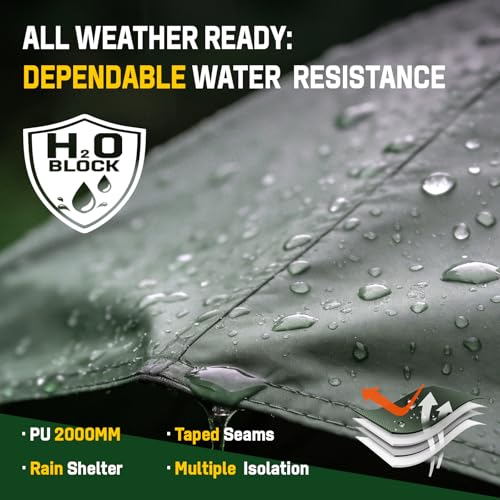
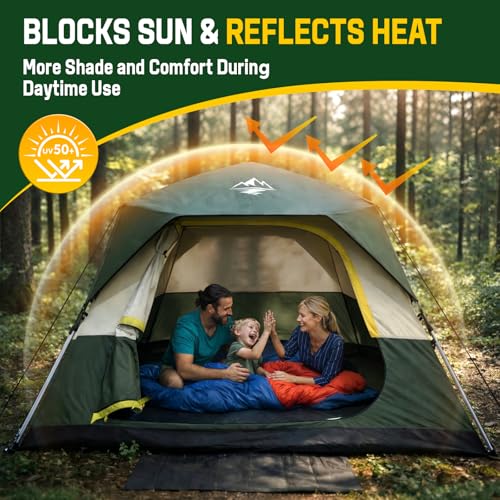
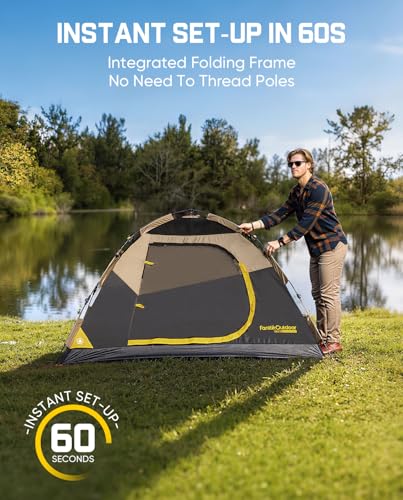
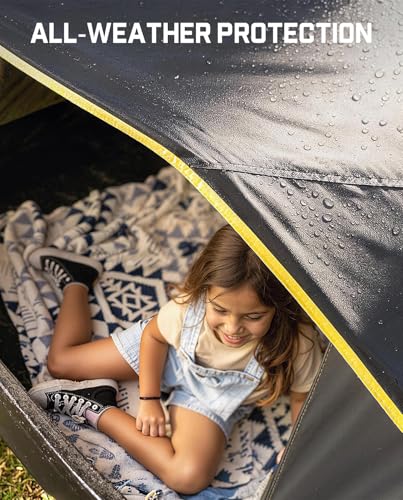
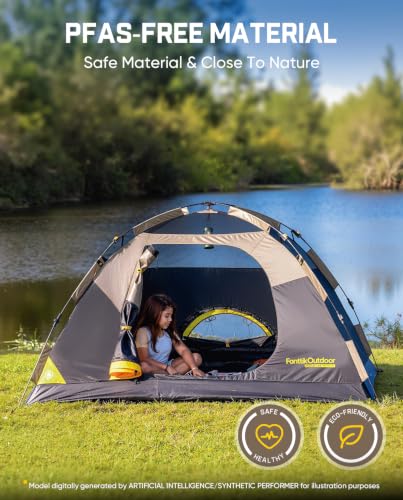
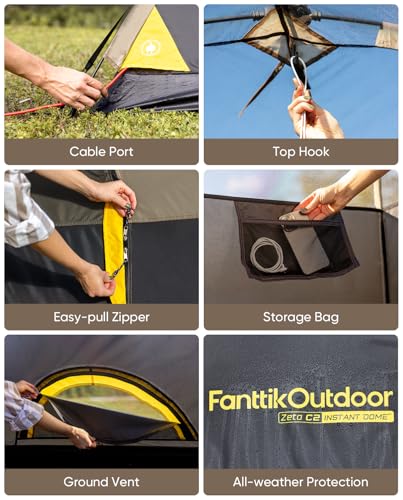
This 2-person dome tent is built for simplicity and reliability, not luxury. The 60-second setup works as advertised, thanks to the pre-attached fiberglass frame, ideal for hikers or beginners who dread pole threading. The 2000mm waterproof fabric and detachable rainfly handle rain well, and the sealed seams with added waterproof strips give extra peace of mind during storms.
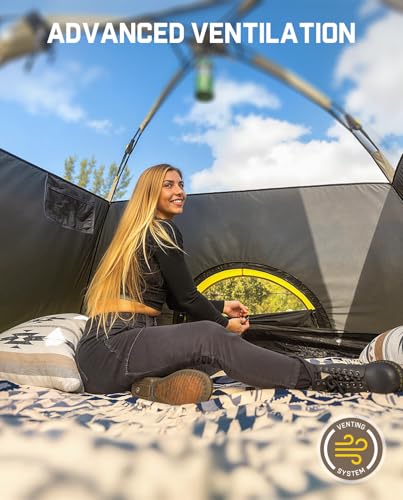
What I appreciate most is the vent design: ground-level intake and mesh ceiling exhaust create real airflow, and the ability to close the lower vent from inside is a small but smart detail. The PFAS-free fabric is a bonus for eco-conscious campers. It’s not the lightest or roomiest 2-person tent, but for weekenders and trailside stops where weather could turn, it’s a trustworthy shelter.
Product photos
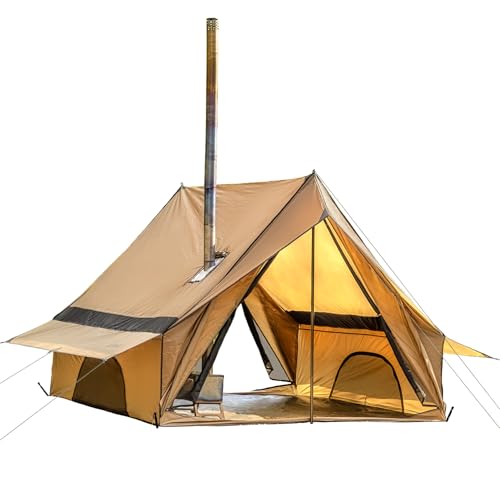
POMOLY CHALET 70 Max Hot Tent
Strengths
- 2500mm waterproof rating
- Sturdy aluminum poles
- Fire-resistant floor
Trade-offs
- No instant setup
- Heavier than standard tents
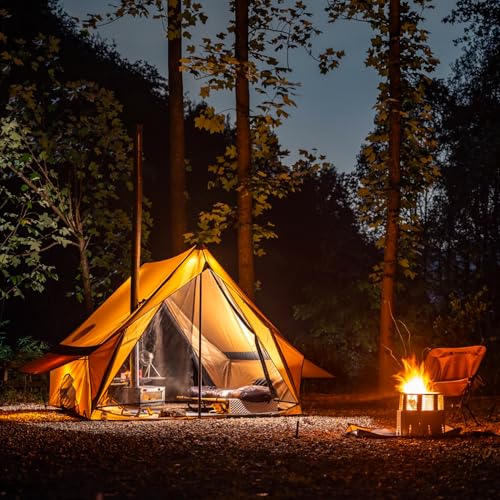
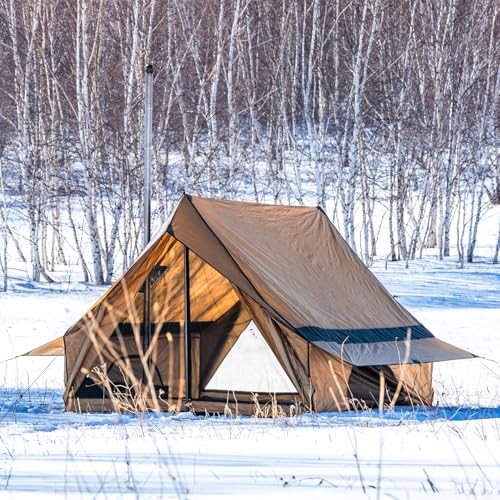
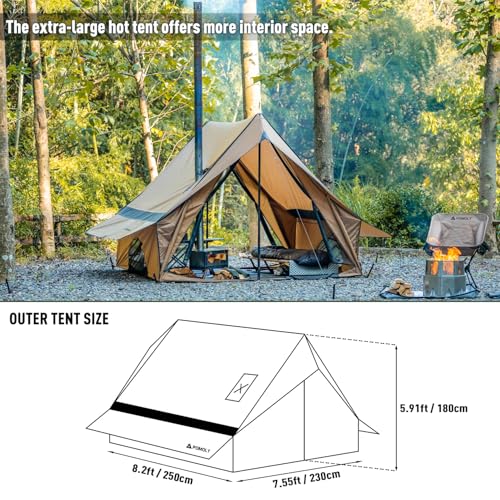
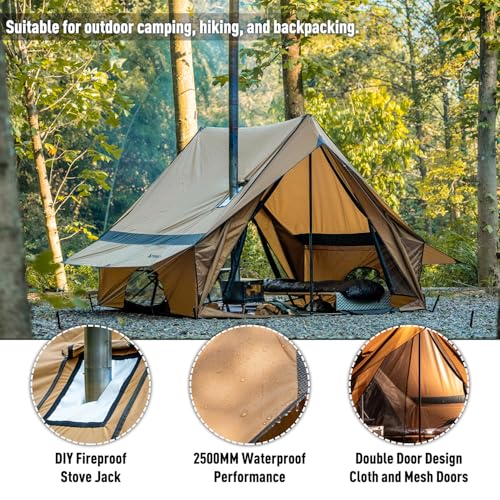
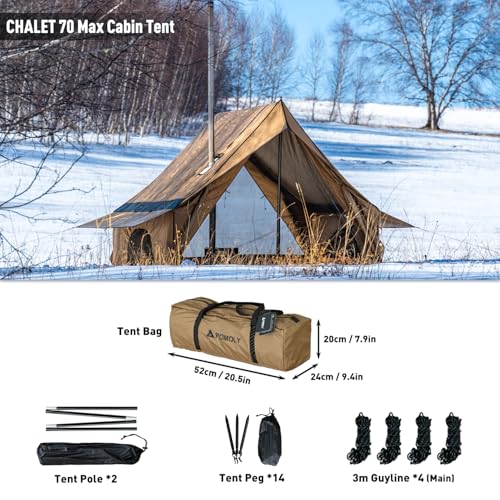
This isn’t your average cabin tent, it’s built for serious weather. The 2500mm waterproof rating is the highest in this lineup, and the 70D ripstop polyester with aluminum alloy poles gives it real backbone against wind and snow. Owners in mountain and shoulder-season conditions report it holding up well, even with a stove inside.
The dual doors with mesh and fabric layers offer great airflow control, and the rain curtains prevent splash-in when opening, a detail most tents ignore. The fire-resistant ground mat is a must for hot tent users, and the shoe storage area keeps mud out of the sleeping zone. It’s not instant setup, and it’s heavier, but for all-weather durability, it’s unmatched here. I’d trust this in conditions where other cabin tents would fail.
Product photos
CORE 12 Person LED Lighted Tent
Strengths
- Integrated LED lighting
- Fast setup
- Three-room layout
Trade-offs
- Heavy and bulky
- Mesh ceiling leaks in downpours
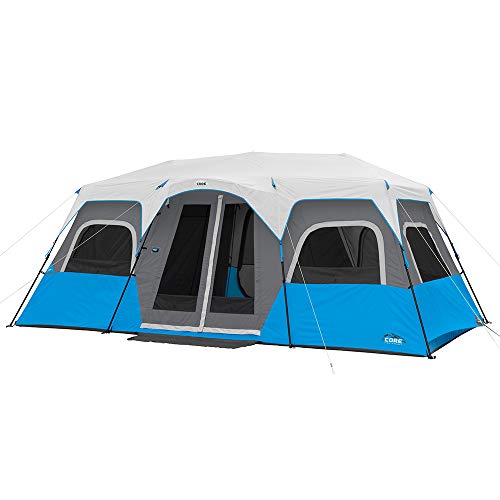
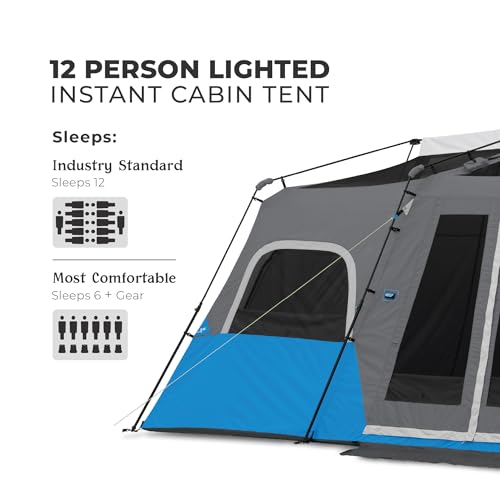
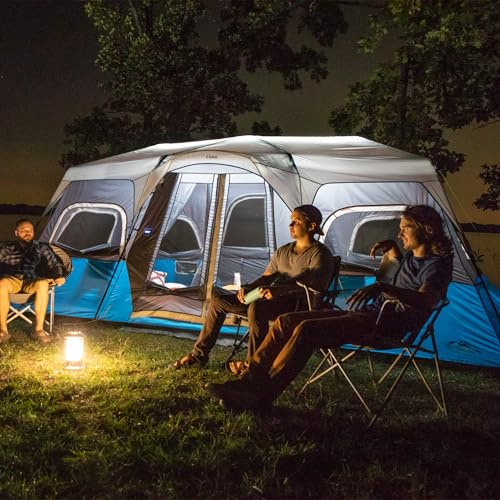
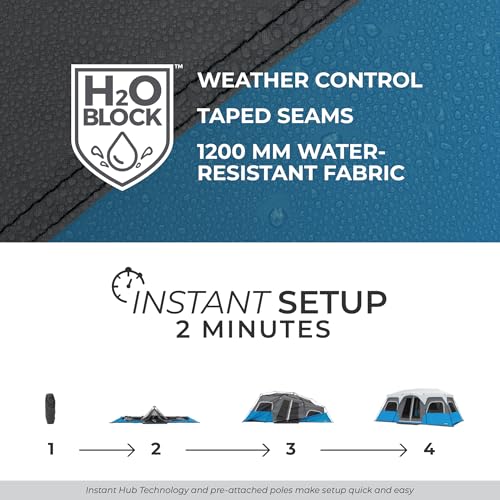
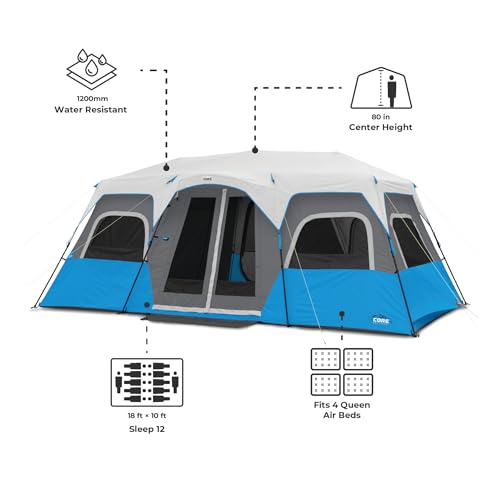
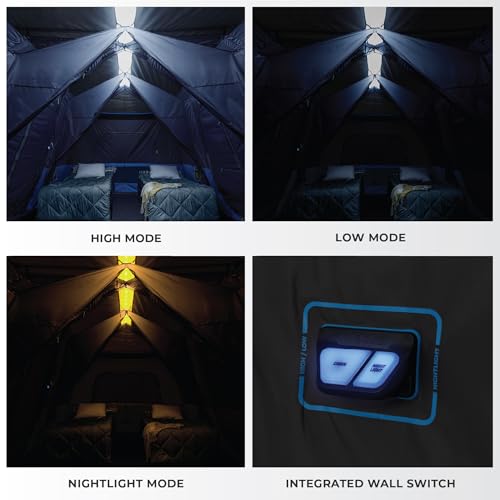
This tent takes the family cabin concept and adds a modern twist: built-in LED lighting. The three light modes, high, low, and night light, are controlled by a wall switch and make nighttime much easier, especially with kids. Setup in under two minutes is possible thanks to the pre-attached poles, and the 18×10-foot footprint gives even more space than the standard 12-person model.
Weather protection is on par with other CORE tents, 1200mm fabric, taped seams, and a full rainfly, but owners note the mesh ceiling can let in more moisture during heavy rain if not properly covered. The two room dividers offer great privacy, and the ventilation system works well in warm weather. It’s heavier than most, but if you’re car camping with kids, the lighting feature alone might justify the weight.
Product photos
LEISURE IMPACT 6 Person Instant Tent
Strengths
- Fast setup
- Excellent airflow
- Spacious layout
Trade-offs
- Moderate wind stability
- Rainfly coverage gaps
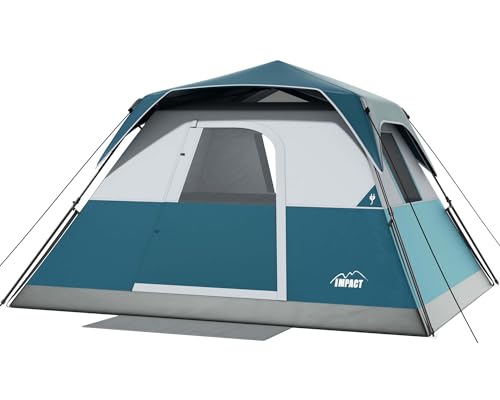
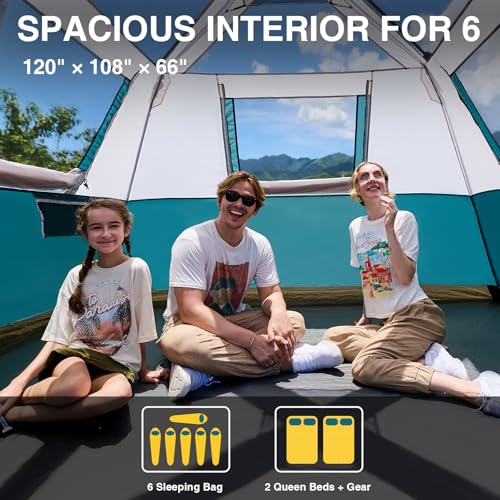
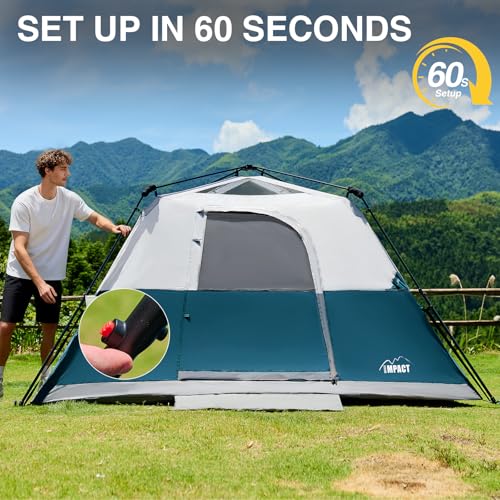
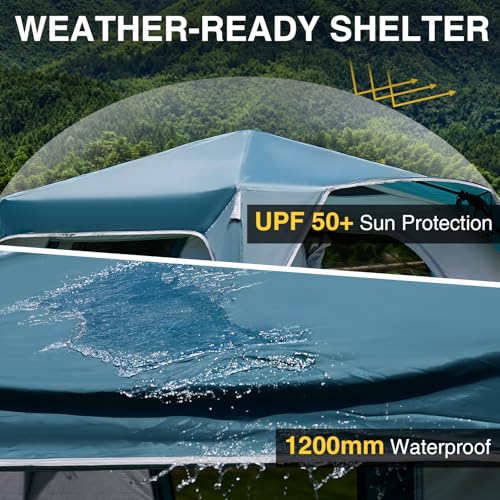
This tent makes a strong case for families who want speed and breathability without sacrificing rain readiness. The 1200mm waterproof rating is decent for light to moderate rain, and the tub-style floor with drainage channel is a thoughtful touch that owners say actually reduces seepage during wet weekends. The pre-attached frame delivering 60-second setup is a real time-saver, especially when clouds roll in fast.
Where it really stands out is ventilation, the mesh ceiling and four-side lower vents create a noticeable airflow, which reviewers consistently praise for cutting down on condensation. That sky-facing mesh also gives a nice open feel at night, though it’s not ideal for heavy downpours unless the rainfly is fully sealed. Compared to other 6-person models, it’s not the most rugged in wind, but for car campers prioritizing comfort over storm-proofing, it’s a smart pick.
Product photos

How We Picked These cabin tents for rains
Rather than a hands-on lab test, my research for these cabin tents focused on a detailed comparison of published specifications and features. I weighed owner reviews from multiple retailers alongside expert opinions found in outdoor publications, applying my experience with tent design and typical rainy-weather camping scenarios. I ranked these tents against clear criteria – prioritizing weather protection, space, ease of setup, and ventilation – to identify the best options for varying needs.
For cabin tents specifically intended for rainy conditions, I placed the most weight on waterproof ratings and overall construction. A robust waterproof rating is essential, of course, and understanding the difference between waterproof vs water-resistant tents is key. Beyond that, features like a full coverage rainfly, sealed seams, and a tub floor construction were heavily favored, as these directly impact how well a tent resists leaks and keeps occupants dry.
Specifications reliably show things like tent dimensions, weight, and quoted waterproof ratings (understanding the importance of a tent hydrostatic head rating). However, I relied on owner feedback to assess real-world performance – how well the tent holds up in sustained rain, how easy it is to set up in windy conditions, and the overall durability of the materials. Reputational factors, and consistent positive (or negative) feedback, heavily influenced my final recommendations, helping me filter out marketing claims from practical experience.
How To Choose The cabin tents for rains
Finding the right cabin tent for rainy conditions requires a bit more thought than simply picking the biggest one. We’ll get into the specifics to help you make the best choice.
A quality cabin tent for rainy weather prioritizes waterproof construction (rainfly material, seam sealing, and floor construction), a robust frame to withstand wind, and thoughtful ventilation to manage condensation. Look for features like a high waterproof rating (2000mm or greater), durable fabrics (ripstop polyester or nylon), and a well-designed ventilation system. Stable pole construction and included guylines are also essential for maintaining structural integrity.
Waterproofing is Paramount
Don’t be fooled by claims of “water resistance.” When it comes to cabin tents intended for use in wet weather, you need genuinely waterproof materials. The rainfly’s hydrostatic head rating (measured in millimeters) is a good place to start; aim for at least 2000mm, and 2500mm or higher if you anticipate consistently heavy rainfall. Beyond the fly, pay attention to the floor material and whether the seams are factory-sealed. Polyethylene (PE) floors are common, but thicker materials offer better protection. Remember that even with a high waterproof rating, water can still enter through doors and windows, so look for tents with effective rain flaps and bathtub floor designs.
Frame Strength & Stability
A flimsy frame is a recipe for disaster when the wind picks up. Cabin tents, by their very nature, have larger surface areas, making them more susceptible to gusts. Aluminum poles are generally stronger and lighter than fiberglass, but also pricier. Look for tents with multiple guylines and sturdy stakes to anchor the tent securely. The POMOLY CHALET 70 Max hot tent, for example, specifically highlights its reinforced stability features, a valuable asset in exposed locations.
- Consider the pole diameter: thicker poles generally mean greater strength.
- Check for extra guyline attachment points: more points offer better anchoring options.
- Read owner reviews regarding wind resistance: real-world experiences are invaluable. Customers often report how a tent handled specific weather conditions.
Usability & Ventilation
Even the most waterproof tent can become unpleasant if it’s a sauna inside. Proper ventilation is crucial for minimizing condensation and maintaining comfortable airflow. Mesh windows and a mesh ceiling are essential, but look for features like adjustable vents that allow you to control airflow based on the weather. Beyond comfort, consider features that make the tent easier to live in. The CORE 12 Person LED Lighted Tent offers built-in lighting, a feature that can be a real convenience during stormy nights. If you’re planning on pitching a tent in rain, a quick setup design is also a major plus.
A good rule of thumb is to always over-estimate the tent size you need. A little extra space makes a big difference when you’re stuck inside during a downpour.
Finding the right balance between waterproof protection, structural stability, and usability will ensure you’re prepared for whatever Mother Nature throws your way. Don’t forget to also explore best cabin tents for wet weather to see options with proven performance in challenging conditions.
Cabin Tents for Rains Compared
Here’s a comparison of key specifications for various cabin tents designed for rainy conditions.
| Product Title | Capacity | Waterproof Rating (mm) | Setup Time | Center Height (in) | Packed Weight (lbs) |
|---|---|---|---|---|---|
| Timber Ridge 4-6 Person Hub Tent | 4-6 | 2000 | 60 sec | 83 | N/A |
| CORE 12 Person Multi-Room Cabin Tent | 6-12 | 1200 | N/A | 86 | N/A |
| CORE 9 Person Instant Cabin Tent | 4-9 | 1200 | 2 min | 78 | N/A |
| 4 Person Instant Pop Up Tent | 4 | 2000 | 50 sec | 59 | 13.4 |
| FanttikOutdoor Zeta C2 Dome Tent | 1-2 | N/A | 60 sec | N/A | N/A |
| POMOLY CHALET 70 Max Hot Tent | 2-4 | 2500 | N/A | N/A | N/A |
| CORE 12 Person LED Lighted Tent | 6-12 | 1200 | 2 min | 80 | 54 |
| LEISURE IMPACT 6 Person Instant Tent | 6 | 1200 | 60 sec | 66 | N/A |
Frequently Asked Questions
What waterproof rating is truly sufficient for a cabin tent in heavy rain?
A hydrostatic head rating of at least 2000mm is a good starting point, but for consistently heavy rainfall, I recommend looking for 2500mm or higher. Remember that this rating applies to the rainfly material, and the floor and seams are equally important for complete protection.
Are pop-up cabin tents a good choice for rainy weather camping?
While convenient, pop-up cabin tents often compromise on waterproof ratings and frame strength. Many models have a 2000mm rating, which is adequate, but their simpler frame construction may struggle in strong winds compared to tents with more robust pole systems.
What does “sealed seams” actually mean, and why is it important?
Sealed seams refer to the process of treating the stitching points in the tent fabric with a waterproof coating. This prevents water from seeping through the needle holes, which is a common entry point for leaks, even with a high waterproof rating on the fabric itself.
How can I improve the weather protection of a cabin tent that has a lower waterproof rating?
Applying a seam sealer to the tent’s seams and the rainfly can significantly boost its water resistance. Additionally, using a footprint underneath the tent provides an extra layer of protection from ground moisture and abrasion. Consider investing in best camping tents for rainy conditions if upgrading is an option.
Beyond the rainfly, what other features indicate a cabin tent is well-suited for wet conditions?
A bathtub floor (where the floor material extends several inches up the sides) and effective rain flaps over doors and windows are key indicators. Also, look for multiple guylines and sturdy stakes to ensure the tent remains securely anchored in windy conditions – features that contribute to overall stability in challenging weather.
The Bottom Line
Choosing a cabin tent for rainy weather often comes down to balancing how much fuss you’re willing to put up with against how much protection you absolutely require. If you want reliable performance without breaking the bank, the CORE 9 Person Instant Cabin Tent strikes a fantastic balance, offering a roomy interior and decent waterproofing for most conditions.
For those prioritizing specific needs, we have several strong recommendations. The 4 Person Instant Pop Up Tent is a standout for solo adventurers or couples wanting quick setup and good water resistance, while the CORE 12 Person LED Lighted Tent excels at providing comfortable space and convenience for larger groups. And if you’re looking for something genuinely robust for harsh conditions, the POMOLY CHALET 70 Max Hot Tent’s reinforced stability and high waterproof rating make it a solid choice.
Ultimately, remember that no tent is completely impervious to bad weather. Focusing on proper site selection, practicing seam sealing a tent, and maintaining your tent’s waterproof coating will do more to keep you dry and comfortable than any single specification or feature ever could.
