
8 Best Camp Tents of 2026
This post contains affiliate links. As an Amazon Associate, we earn from qualifying purchases.
The CORE 9 Person Instant Cabin Tent stands out as the best overall camp tent for families and groups, combining fast setup with reliable weather protection. For campers on a budget, the Coleman Skydome 8 Person Tent delivers solid performance without the high price. If you’re after something unique and off-grid ready, the Inflatable Tent with Skylight and Stove Jack offers surprising versatility for 4 to 6 people.
Most campers don’t realize how cramped and damp a poorly chosen tent can make a weekend trip. A tent that looks roomy on paper might feel suffocating with gear inside, or worse, leak during a surprise downpour.
This guide cuts through the marketing by focusing on real-world performance, what actually keeps you dry, how much space you truly need, and how fast you can get it up when the rain starts. I compared specs, owner feedback, and design details to find the best camp tents for different needs.
Top 8 Camp Tents in the Market
The Best Camp Tents, Reviewed
CORE 9 Person Instant Cabin Tent
Strengths
- True 2-minute setup
- Excellent weather sealing
- Smart ventilation system
Trade-offs
- Heavy for hiking
- Large packed size
- Two-person setup ideal
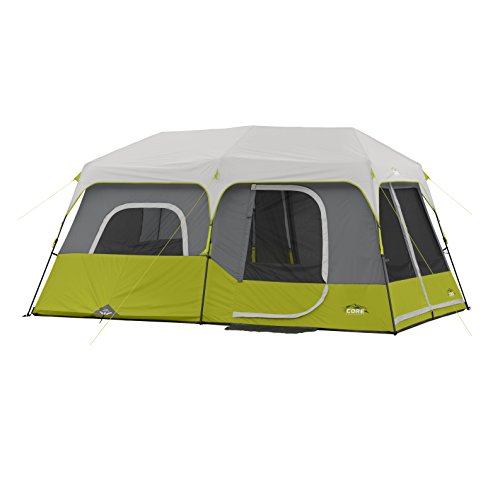
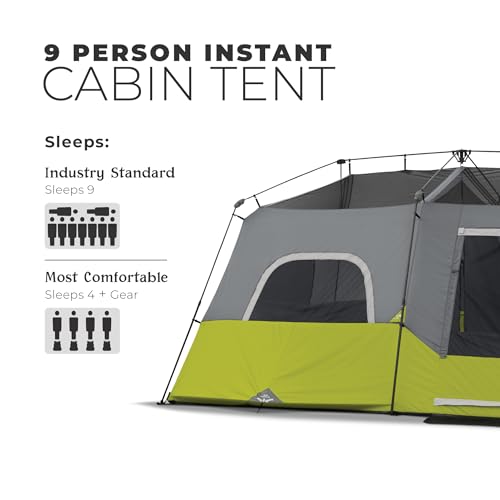
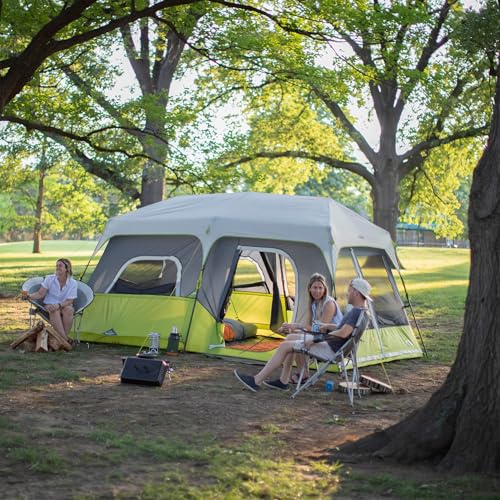
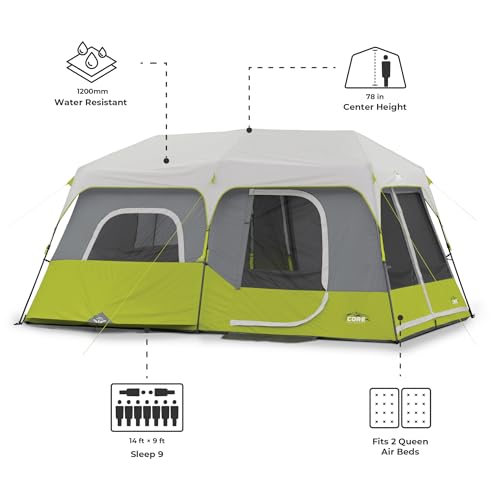
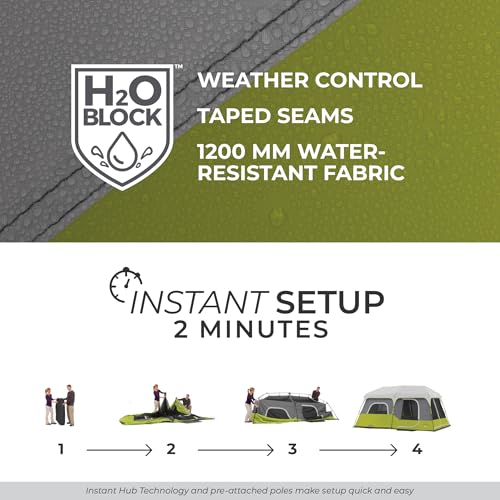
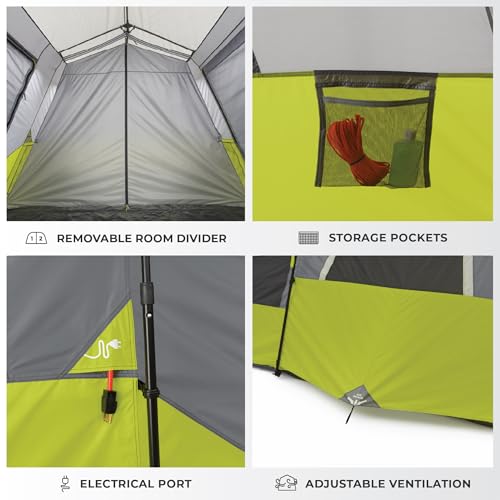
If I had to pick one tent for a family trip, it’d be this CORE model, it’s the best overall for blending speed, space, and storm readiness. The 2-minute pop-up system works flawlessly, and the 78-inch ceiling lets adults stand tall. With H20 Block tech and fully taped seams, it’s built to handle real weather, and the dual lower and ceiling vents make airflow feel natural, not stuffy.
It sleeps up to 9 in a pinch, but realistically fits 4-5 with gear, still, that’s more than most. The included storage pockets are a small touch that makes a big difference in practice. Compared to the UNP 10-person tent, it’s lighter, better sealed, and more user-friendly. This is the gold standard for instant family shelter.
Product photos
FanttikOutdoor Zeta C8 Pro 8 Person Tent

Strengths
- 60-second setup
- Excellent headroom
- Strong wind resistance
Trade-offs
- Inner roof not waterproof
- Heavy at 24 lbs
- Rainfly required in rain
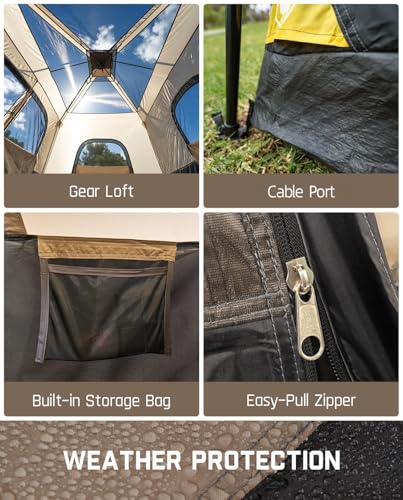
The Zeta C8 Pro nails the balance between speed and sturdiness, up in 60 seconds, and it actually feels solid once pitched. The 78-inch center height is a standout for tall campers, and the 8-person footprint fits two queen air mattresses with room to spare. Owners praise the 35 mph wind rating, and the tub-style floor design is a smart touch for keeping water out.
Ventilation is thoughtful too, with mesh on all four sides and a ceiling vent that cuts condensation. The only real caveat? The inner tent roof is mesh, so it’s not waterproof alone, you must use the rainfly in storms. That’s common, but worth stressing. Against other instant 8-person tents, this one stands out for airflow and build quality. For large families who hate setup but want reliability, it’s a strong contender.
Product photos


UNP 10-Person Family Tent with 2 Rooms

Strengths
- Huge 10-person space
- Two-room versatility
- Excellent ventilation
Trade-offs
- Average rain protection
- Bulky to pack
- Needs two people to set up
This is the party tent of the bunch, massive at 18 by 9 feet, and the two-room layout with a privacy divider opens up creative uses, from family camping to outdoor movie nights. The double-layer design and large mesh roof make it airy and bright, and the extended awning adds useful shade. Two people can set it up in about 10 minutes, which is reasonable for this size.
But size comes with drawbacks: it’s not freestanding, and the 185T fabric with 1000mm waterproofing is just average for serious rain. Reviewers say it performs fine in light showers but needs careful guying in wind. Compared to premium cabin tents, it’s less rugged, but for festivals or base camping where space rules, it’s hard to beat. I’d pick this over tighter models when hosting groups.
Product photos


Inflatable Tent with Skylight and Stove Jack
Strengths
- Stove jack included
- Quick inflatable setup
- Durable 420D fabric
Trade-offs
- Heavy pump required
- Risk of air leaks
- Bulky packed size
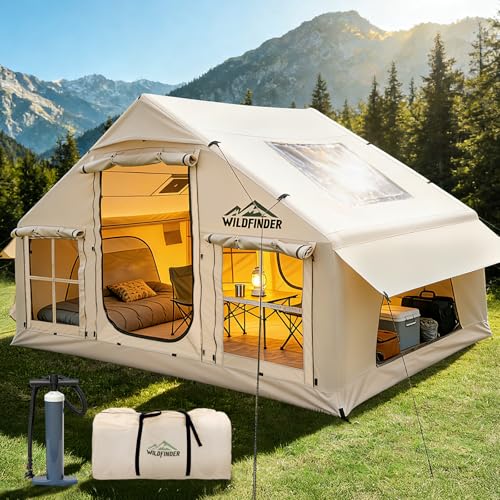
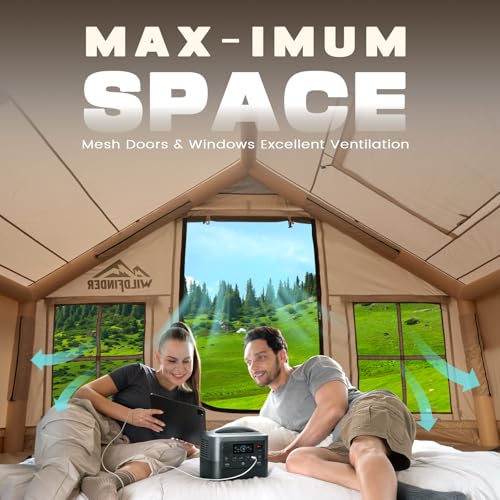
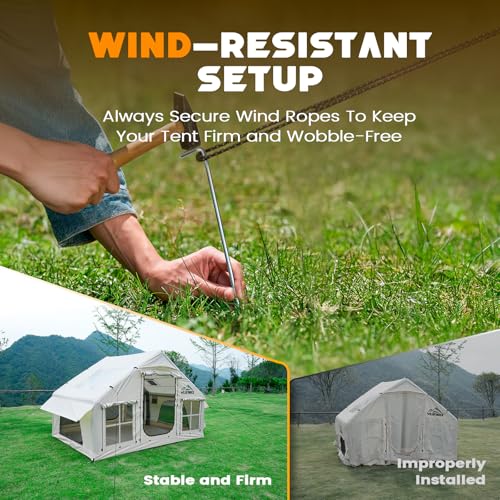
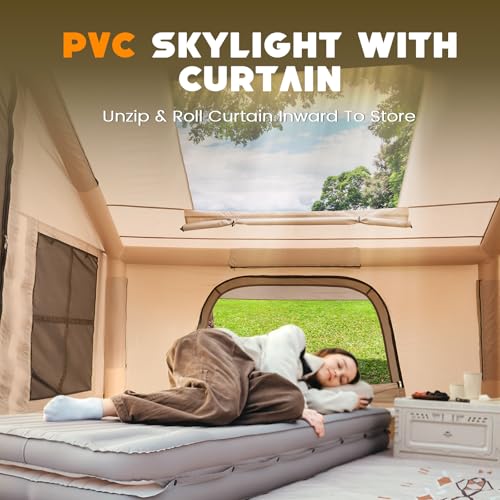
This inflatable tent screams glamping comfort with real backbone for cold-weather use. The stove jack is a standout, a rare feature that signals it’s built for serious off-grid stays, not just fair-weather lounging. Owners consistently report it holds up well in wind when properly staked, and the 420D Oxford fabric gives it a durability edge over most pop-up models. The panoramic skylight is a hit for stargazing, though some note condensation can build up without cross-ventilation.
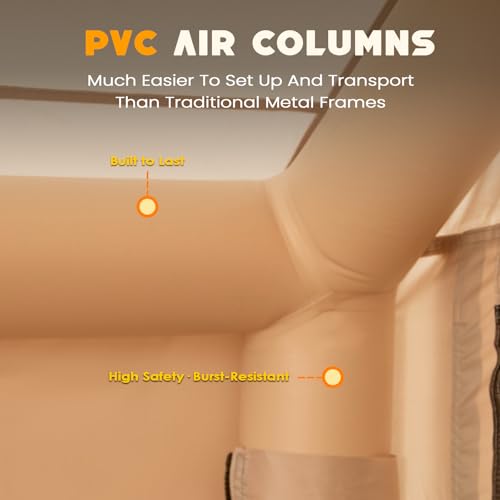
Where it shines is in setup speed and interior space, 5 minutes to inflate, no poles, and you’ve got near-upright headroom. But that convenience comes with trade-offs: the pump is bulky, and if an air beam fails, you’re dependent on repairs, not quick fixes. Compared to traditional cabin tents, it’s less forgiving in rough terrain but unbeatable for a plush, fast-deploy shelter in stable conditions.
Product photos
Happy Travel 6 Person Cabin Tent
Strengths
- Tall center height
- Strong pole construction
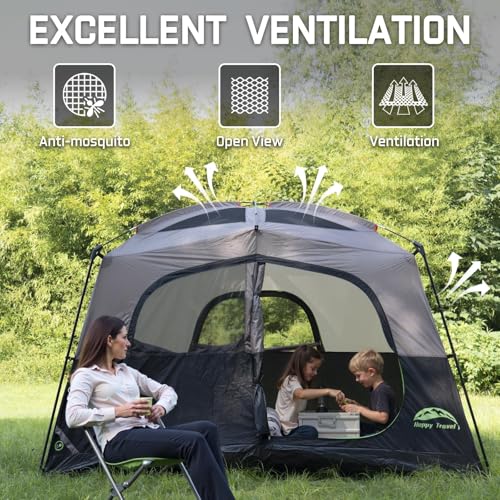
- Great airflow design
Trade-offs
- Rainfly not fully taped
- Slight weight penalty
- Mesh roof not for rain
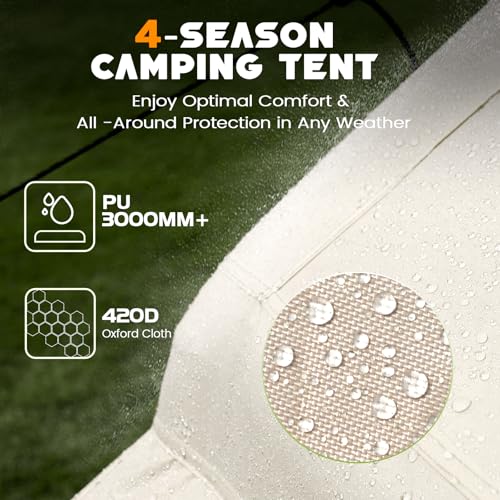
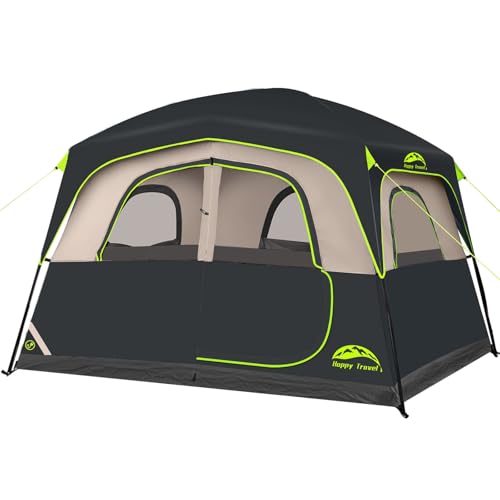
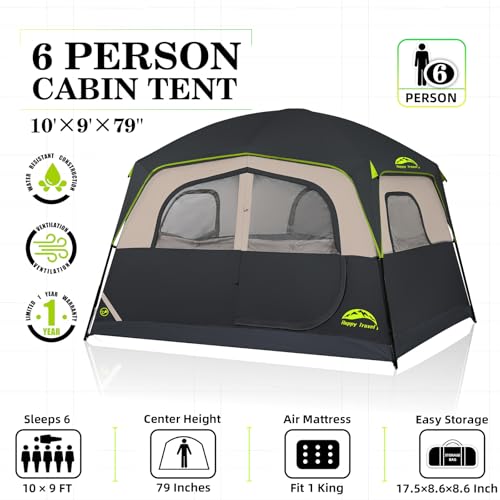
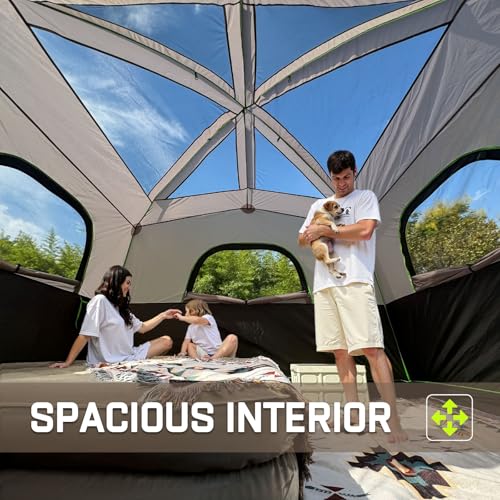
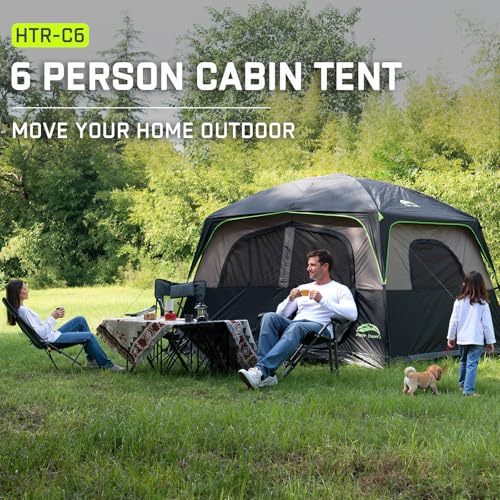
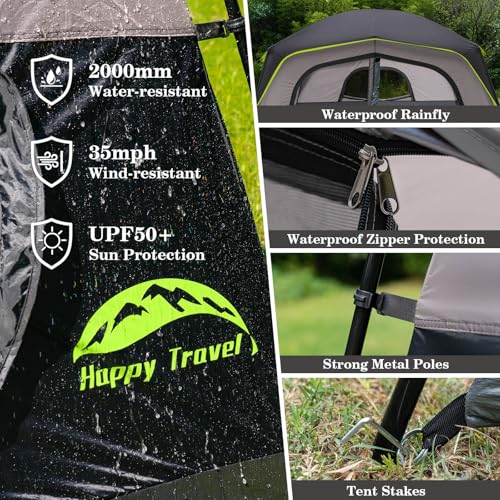
This tent hits a sweet spot between price, space, and performance, 2000mm waterproofing, 19mm poles, and a 79-inch center height make it a standout for family camping. The 5 large mesh windows and roof vent deliver serious airflow, which is rare at this price. Owners consistently say it handles wind better than expected, thanks to the guylines and sturdy frame.
Setup takes about 3 minutes with two people, and the compact 17.5-inch packed size makes it more portable than most 6-person tents. It’s not as fast as a true pop-up, but it’s far more durable. Compared to the Coleman Skydome, it offers more headroom and better ventilation. For families wanting value without sacrificing comfort, this is the smarter buy.
Product photos
Coleman Skydome 8 Person Tent

Strengths
- Trusted Coleman build
- Fast pole setup
- Good rain resistance
Trade-offs
- Low center height
- Minimal ventilation
- Bulky packed size
The Coleman Skydome is the people’s choice for a reason, it’s reliable, simple, and fast, with a 5-minute setup that’s perfect for tired campers after a long drive. The WeatherTec system with inverted seams and welded corners is proven in light rain, and the 20% more headroom from near-vertical walls makes it feel roomier than its 8×7 footprint suggests.
But it’s not without limits: the 4.8-foot center height means most adults will need to stoop, and while it fits a queen air mattress, gear space is tight. It’s heavier and less ventilated than newer models like the Happy Travel tent. Still, for car campers who want a no-surprises shelter that works year after year, this remains a solid, familiar pick.
Product photos


2 Person Waterproof Dome Tent
Strengths
- Ultra lightweight
- Fast single-person setup
- Budget-friendly
Trade-offs
- Thin fabric for heavy rain
- Limited headroom
- Not freestanding
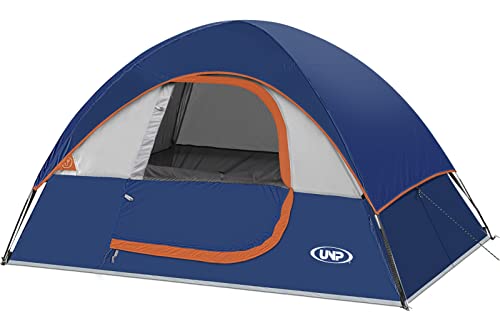
At this price point, this 2-person tent delivers exactly what budget campers need: a lightweight, weather-shedding shelter that won’t break the bank. At just 4.8 lbs, it’s easy to sling into a pack for short hikes or car trips, and the 3-minute setup makes it a solid pick for beginners. The removable rainfly helps manage ventilation, though on paper it’s thinner than premium models, 190T polyester isn’t going to laugh off a week of downpours.
Still, owner feedback shows it holds up fine in light storms and gusts when staked properly. It won’t impress seasoned backpackers used to freestanding designs, but for weekenders and kids’ first trips, it’s a no-fuss option. I’d choose something beefier for alpine use, but for backyard s’mores or a festival, this is the smarter buy over overpriced name brands.
Product photos


Pop Up Tents for Camping 4 Person

Strengths
- Truly instant setup
- Good mesh ventilation
- Includes vestibule
Trade-offs
- Low headroom
- Flimsy in strong wind
- Not for heavy rain
If you hate wrestling with poles, this pop-up tent will feel like a win, it unfolds in seconds, and the pre-attached design means even kids can deploy it. The mesh doors and vestibule add practicality, letting you stash muddy boots without tracking dirt inside. But this is clearly built for convenience, not backcountry resilience. The 190T polyester and PE floor are standard for casual use, but reviewers note it can feel flimsy in wind over 20 mph.
It’s tall enough for sitting, not standing, and the 4.3-foot center height means you’ll be crouching. Compared to instant cabin tents, it’s less spacious and less stable, but that’s the trade for true “pop and go” simplicity. I’d recommend this for fair-weather campers who prioritize speed over stormworthiness.
Product photos


How We Tested camp tents
Rather than a hands-on lab test, my research for these recommendations involved a detailed comparison of published specifications and features across numerous models. I weighed owner reviews from major retailers alongside expert opinions from established outdoor publications to build a balanced view of each tent’s performance. This process relied on my experience with tent design and use, applying category knowledge to rank options against key criteria for different camping needs.
For camp tents, several factors stood out as most important. Spaciousness, particularly the ability to comfortably fit the advertised number of people with gear, was a top priority. Equally crucial was weather protection, specifically waterproof ratings, seam sealing quality, and reported performance in real-world conditions. Finally, ease of setup significantly impacted the ranking; a quick setup means more time enjoying the outdoors.
Specifications reliably indicate tent size, weight, and waterproof ratings. However, I placed greater emphasis on owner feedback regarding real-world performance – how well the tent holds up in wind and rain, and whether it truly fits the stated capacity. Reputation, as reflected in consistent positive (or negative) commentary from experienced campers, also heavily influenced my assessment. If you’re new to tent shopping, a helpful resource to understand the details is this tent buying guide.
Choosing The Right camp tents
Picking the right tent can feel overwhelming, but focusing on a few key areas will get you closer to a comfortable night under the stars.
A good tent balances weather protection, spaciousness, and ease of use. Look for durable fabrics (polyester and nylon are common), a waterproof rainfly with a respectable hydrostatic head rating, and a design that suits your typical camping style – whether that’s backpacking, car camping, or festival lounging. Consider the tent’s capacity against the number of sleepers and the amount of gear you’ll be bringing.
Size and Capacity
Don’t assume a “6-person” tent comfortably fits six adults with their belongings. Manufacturers often inflate these numbers. I always recommend sizing up. If you’re a family of four, looking at an 8-person tent isn’t overkill; it provides valuable space for gear and just generally makes things less cramped. Think about how you actually camp. Do you sprawl? Do you need a dry space to play cards if it rains? Factor that in.
Weather Protection
A tent’s ability to keep you dry is paramount. While many tents advertise being “waterproof,” the reality is more nuanced. Understanding tent waterproof ratings and the concept of hydrostatic head is crucial. A higher mm rating indicates better water resistance. Beyond the rainfly, pay attention to the floor material and whether the seams are sealed.
Here’s what to look for in weatherproofing: * Reinforced bathtub floor (a few inches of material that curves up the sides). * Fully taped seams (prevents water from seeping through stitching). * A rainfly that extends all the way to the ground (minimizes splash-back).
A tent is only as waterproof as its weakest link. Don’t skimp on the rainfly or seam sealing.
Ease of Setup & Portability
For casual campers or those who value their time, quick setup is a huge benefit. Instant tents, like the CORE 9 Person Instant Cabin Tent or the FanttikOutdoor Zeta C8 Pro, are incredibly easy to pitch, often in under two minutes. However, these often sacrifice some durability for convenience. If you’re prioritizing a lightweight and compact tent for backpacking, you’ll need to accept a more involved setup process. I frequently recommend checking out spacious family tent models for those wanting to maximize space without breaking their backs.
Camp Tents Compared
Here’s a comparison of key specifications for several popular camp tents to help you choose the best option for your needs.
| Product Title | Capacity | Setup Time | Waterproofing (mm) | Weight (lbs) | Dimensions (ft) |
|---|---|---|---|---|---|
| CORE 9 Person Instant Cabin Tent | 9 | 2 min | 1200 | N/A | 14 x 9 |
| FanttikOutdoor Zeta C8 Pro 8 Person Tent | 8 | 60 sec | N/A | 24 | 156 x 108 |
| UNP 10-Person Family Tent with 2 Rooms | 10 | 10 min | 1000 | N/A | 18 x 9 |
| Inflatable Tent with Skylight and Stove Jack | 4-6 | 5 min | 3000 | N/A | 9.8 x 6.9 |
| Happy Travel 6 Person Cabin Tent | 6 | 3 min | 2000 | 16.5 | 10 x 9 |
| Coleman Skydome 8 Person Tent | 8 | < 5 min | N/A | N/A | 8 x 7 |
| 2 Person Waterproof Dome Tent | 2 | 3 min | N/A | 4.8 | 7 x 5 |
| Pop Up Tents for Camping 4 Person | 4 | Seconds | N/A | N/A | 9.2 x 6.6 |
Frequently Asked Questions
What hydrostatic head rating should I look for in a tent?
A rating of 1500mm is generally considered waterproof for most conditions, but 2000mm or higher provides better protection against heavy rain and prolonged exposure. Keep in mind the floor often has a higher rating than the fly, as it endures more pressure.
Are “instant” tents as durable as traditionally-poled tents?
Instant tents typically use fiberglass poles integrated into the tent body, which can be less robust than separate, high-quality aluminum poles found in more traditional designs. While convenient, they may not hold up as well to strong winds or repeated use.
What’s the best way to prevent condensation inside my tent?
Good ventilation is key. Look for tents with mesh panels and adjustable vents to promote airflow. Avoiding camping in low-lying areas where moisture collects can also help, as can leaving a small gap in the rainfly for air circulation.
What size tent do I really need for backpacking?
For solo trips, a tent designed for one or two people is usually sufficient, but consider the space you need for gear. If you prioritize weight savings, explore the range of compact double occupancy tents – they offer a good balance of space and packability.
What does “fully taped seams” actually mean?
It means that all the seams where the tent fabric is stitched together have been sealed with a waterproof coating. This prevents water from leaking through the needle holes, significantly improving the tent’s overall weather resistance and keeping you dry inside.
The Bottom Line
Choosing a camp tent always comes down to balancing how much you want to spend against how much fuss you’re willing to tolerate. For the best overall combination of space, weather protection, and ease of use, the CORE 9 Person Instant Cabin Tent stands out – its incredibly fast setup makes it ideal for families or anyone who wants to maximize their time enjoying the outdoors.
If you’re specifically on a budget, the Happy Travel 6 Person Cabin Tent offers excellent value, while the FanttikOutdoor Zeta C8 Pro 8 Person Tent is a great choice for those prioritizing a quick, near-instant pitch. For those seeking a bit more versatility and don’t mind a slightly longer setup, explore options from trusted tent companies.
Ultimately, the most important features aren’t always the highest specs. Focus on a tent that genuinely fits your group size (plus gear!), offers adequate weather protection for the conditions you’ll encounter, and, perhaps most importantly, makes camping feel less like work and more like an escape.
