
7 Best Camping Heaters for Tents 2026
This post contains affiliate links. As an Amazon Associate, we earn from qualifying purchases.
The Mr. Heater 9,000 BTU Buddy is the best overall camping heater for tents, reliable, safe, and powerful enough for most two- to four-person tents. For smaller shelters or tight budgets, the Mr. Heater 3,800 BTU Little Buddy is a solid, compact pick. If you’re backpacking and need something ultralight, the Naturehike 3750 BTU Butane Heater offers decent warmth with minimal bulk.
Most people shopping for a tent heater are trying to beat the cold without risking safety or hauling around something that’s more trouble than it’s worth. I’ve seen too many campers learn the hard way that not all heaters are built for enclosed spaces.
This guide cuts through the noise by focusing on real-world specs and owner experiences to find heaters that balance power, safety, and portability. I looked at BTU ratings, fuel types, and critical safety features to recommend only the ones that make sense for actual tent use.
Top 7 Camping Heaters For Tents in the Market
The Best Camping Heaters For Tents, Reviewed
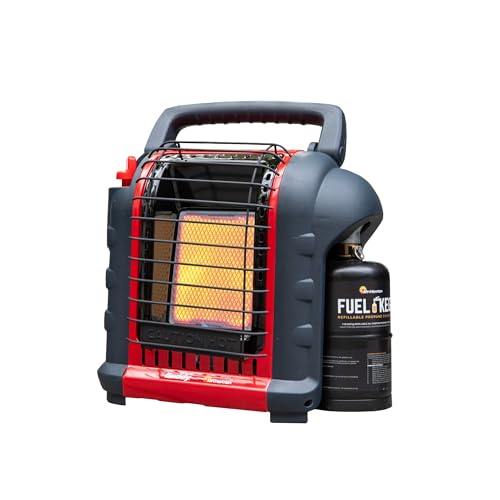
Mr. Heater 9,000 BTU Buddy
Strengths
- High heat output
- Proven reliability
- Indoor-safe design
Trade-offs
- No low setting
- No carrying case
- Same fuel dependency
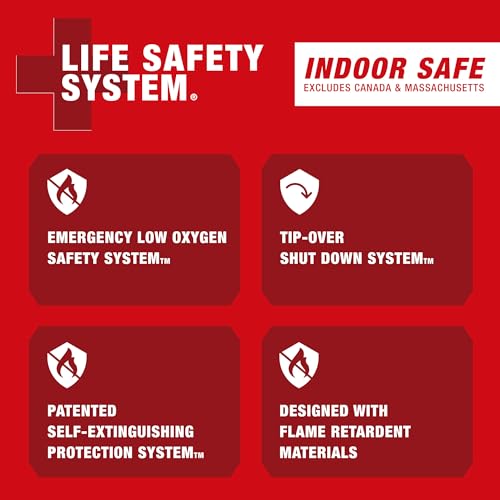
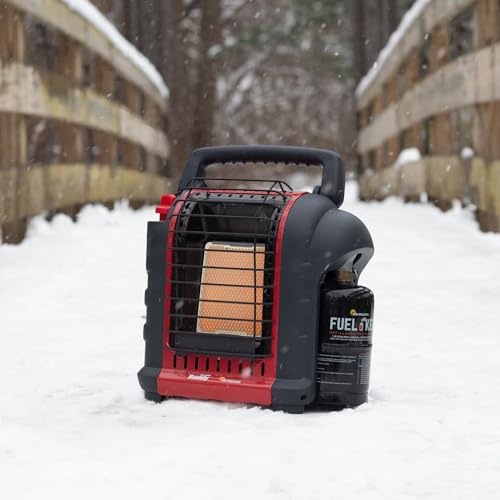
This is the original workhorse of tent heating, and for good reason. It hits 9,000 BTU with the same safety features as the newer model, low oxygen shutoff, tip-over protection, and radiant heat that doesn’t dry out the air. It’s been a staple in ice fishing and winter camping circles for years, and owner feedback confirms it starts reliably even in damp conditions.
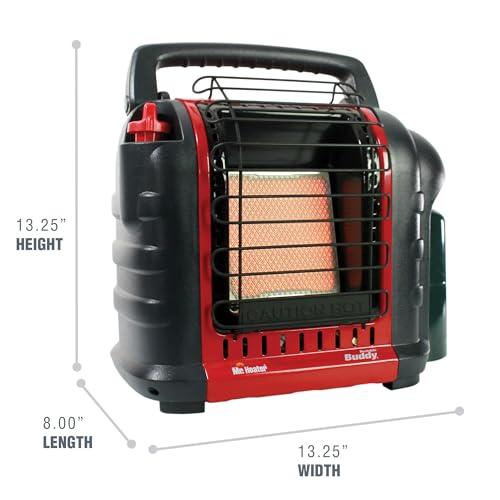
The build is simple and durable, and while it lacks a carrying case, it’s compact enough to stash in a corner of a gear bin. Compared to the 4,000-9,000 BTU dual-setting model, this one only runs at full power or off, less flexible, but still effective if you’re managing ventilation and fuel. I’d still recommend the dual-setting version for versatility, but this one’s a proven performer.
Product photos

Mr. Heater 3,800 BTU Little Buddy
Strengths
- Affordable price
- Safety shutoffs included
- Compact footprint
Trade-offs
- Lower heat output
- Short runtime
- No high setting
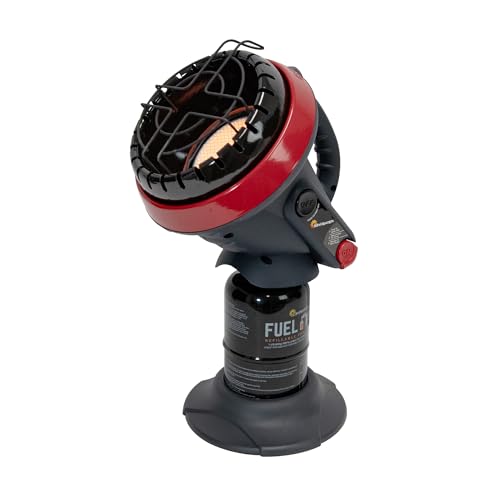
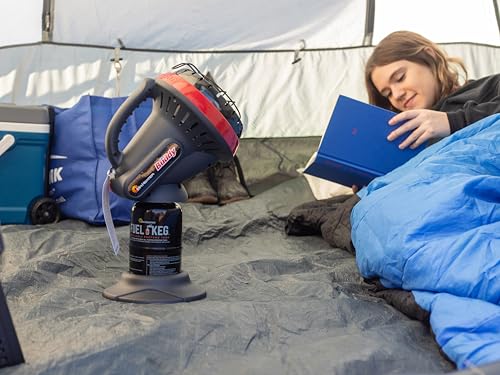
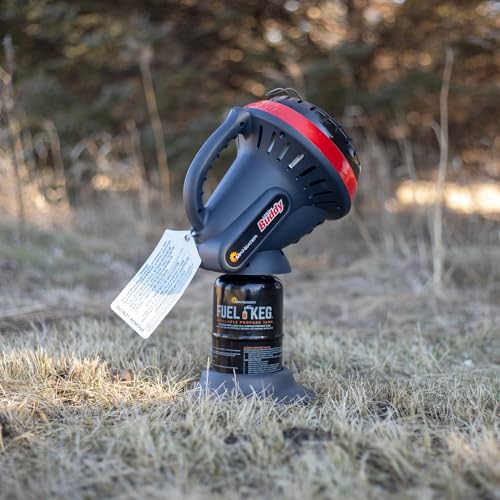
If you’re looking for a budget-friendly entry point into safe tent heating, this is it. The 3,800 BTU output is modest, but enough for a two-person tent in shoulder seasons. What matters most is that it still includes automatic low oxygen and tip-over shutoffs, safety features that some cheaper models skip entirely.
It’s compact and quiet, and owners love how little space it takes up on the tent floor. The one-button ignition is simple, even with gloves on. While it won’t heat a large shelter, it’s a smart pick for solo campers or as backup heat. Compared to the 9,000 BTU models, it’s less powerful but more fuel-efficient and easier to store.
Product photos

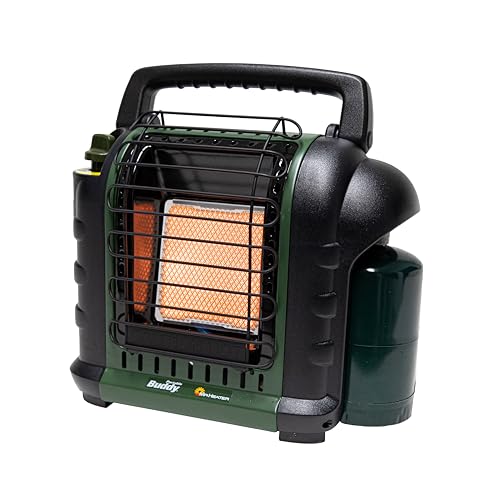
Mr. Heater Buddy 4,000-9,000 BTU
Strengths
- Indoor-safe certification
- Dual heat settings
- Low oxygen shutoff
Trade-offs
- Short runtime on high
- Uses 1 lb propane
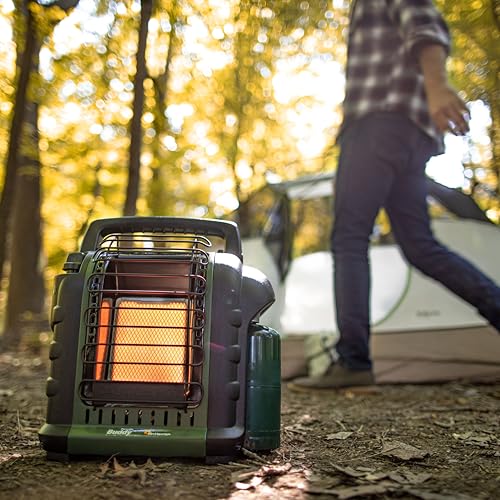
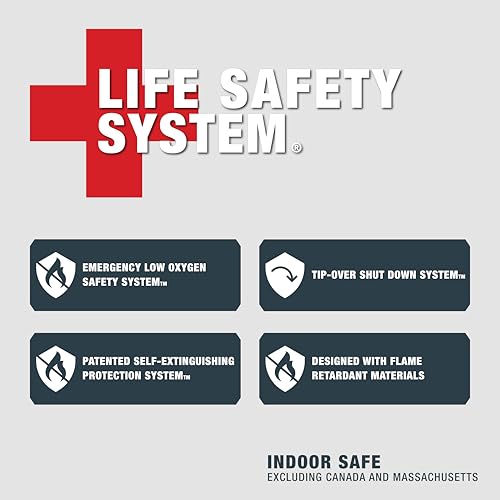
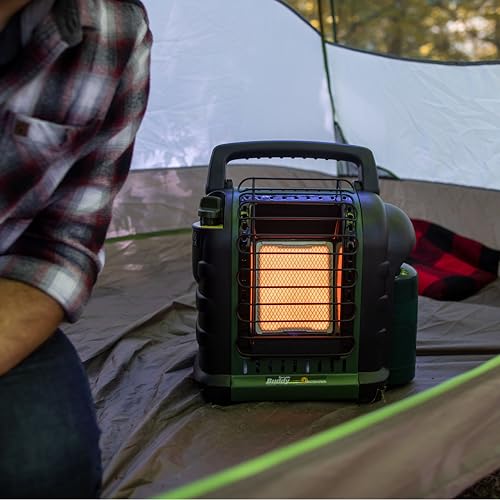
This heater stands out because it’s actually certified for indoor use, which is rare in this category. The dual heat settings give you real flexibility, 4,000 BTU for a smaller tent or milder nights, and 9,000 BTU when the temperature drops hard. The low oxygen shutoff is essential for tent safety, and owners consistently report it kicks in reliably, which gives peace of mind when sleeping in enclosed spaces.
It’s built with self-extinguishing materials, and the radiant heating design means it warms people and objects directly rather than wasting energy on the air. That’s a big win in a drafty tent. Compared to other models, this one feels like it’s designed with real campers in mind, not just backyard users.
Product photos
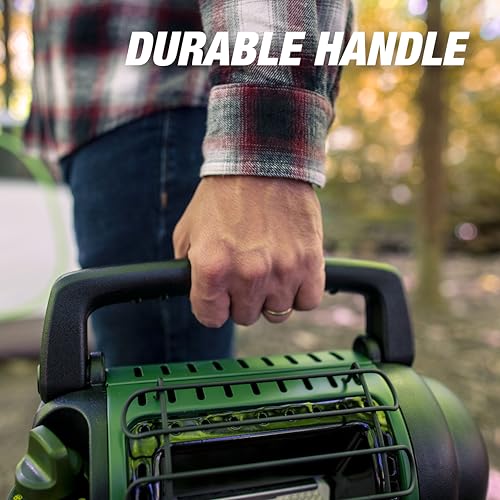
Portable Propane Heater with Storage Box
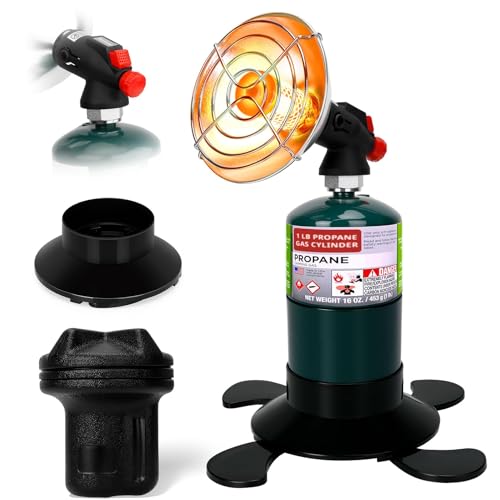
Strengths
- Foldable base
- Includes storage box
- Brass connector
Trade-offs
- No ODS sensor
- Outdoor-rated only
- No carry handle
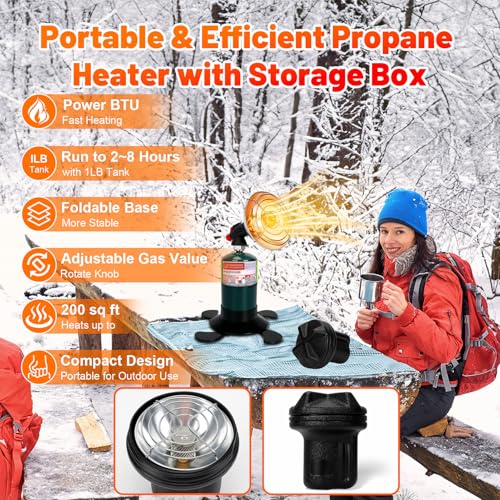
Portability is the name of the game here. The foldable base and included storage box make this one of the easiest to pack and protect during transport. It’s lightweight but doesn’t feel flimsy, the brass connector is a quality detail that reduces leak risk, and owners report solid durability over multiple seasons.
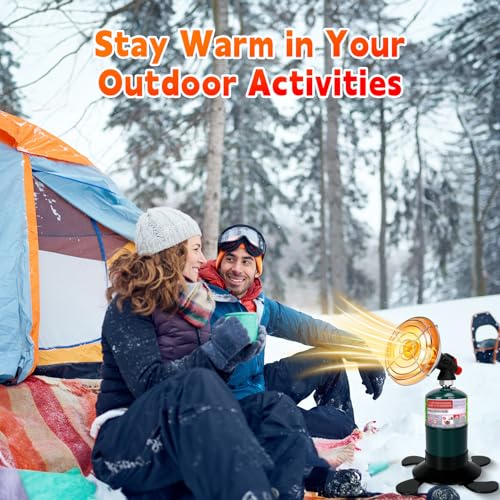
It delivers fast radiant heat and runs on standard 1 lb propane, so fuel is easy to find. But like others in this tier, it lacks indoor safety certifications. The ignition system works well in cold weather, and the control knob lets you dial in heat, though not as precisely as the Mr. Heater models. If you’re hiking in or need something compact for a roof-top tent, this is a strong contender.
Product photos
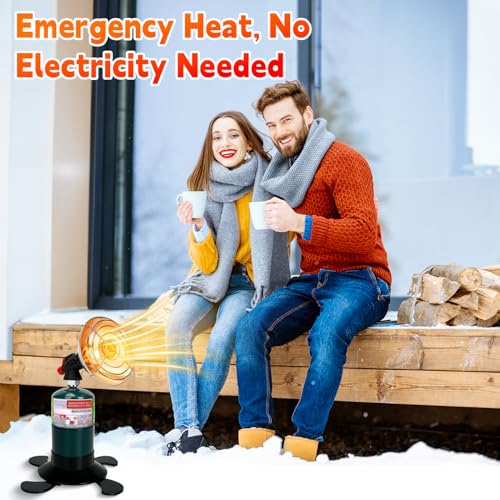
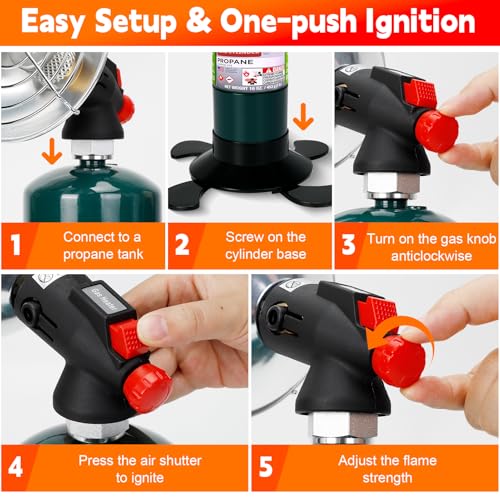
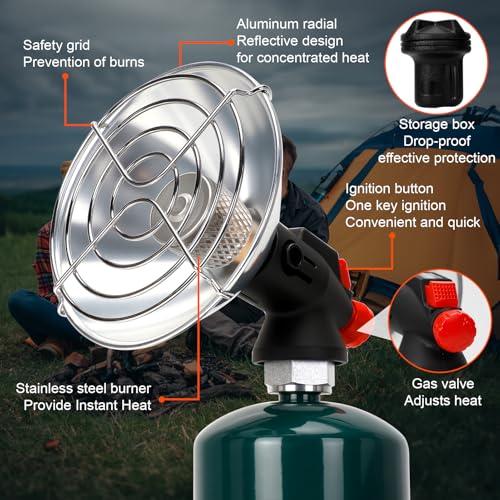
6200 BTU Propane Camping Heater
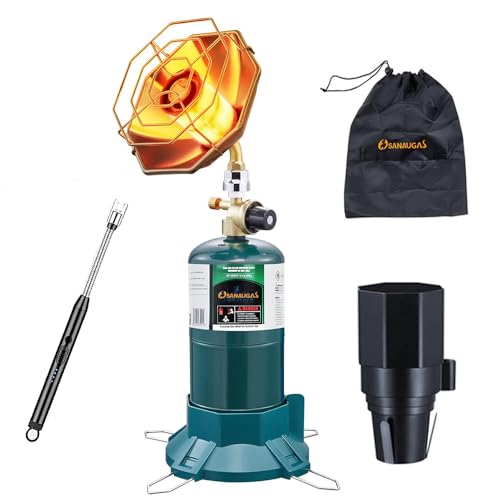
Strengths
- High BTU for size
- Stable wide base
- Durable metal build
Trade-offs
- Not indoor-safe
- No safety shutoff
- No low oxygen sensor
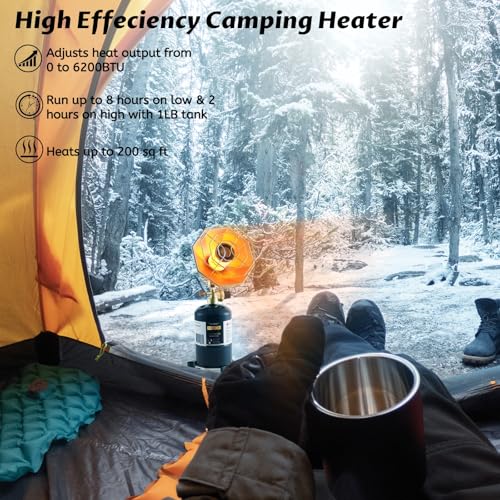
This heater packs 6,200 BTU into a surprisingly compact frame, making it one of the best heat-to-size ratios in the lineup. The adjustable flame gives you real control, turn it down for a slow simmer of warmth or crank it for fast heating in an ice shelter. The wide base is a smart touch; owners note it stays upright even on uneven ground, which is huge when you’re on a sloped campsite or in a lopsided tent.
It’s built entirely from metal, so it feels rugged enough for repeated winter use. But it’s not certified for indoor use, so I wouldn’t run it in a tightly sealed tent, better suited for open shelters, hunting blinds, or well-ventilated awnings. Compared to the Mr. Heater models, it’s less safe for sleep use but more durable for rough handling.
Product photos
Naturehike 3750 BTU Butane Heater
Strengths
- Warming shelf included
- Magnetic fuel connection
- Long runtime on low
Trade-offs
- Butane struggles in cold
- Lower heat output
- Not ideal for winter
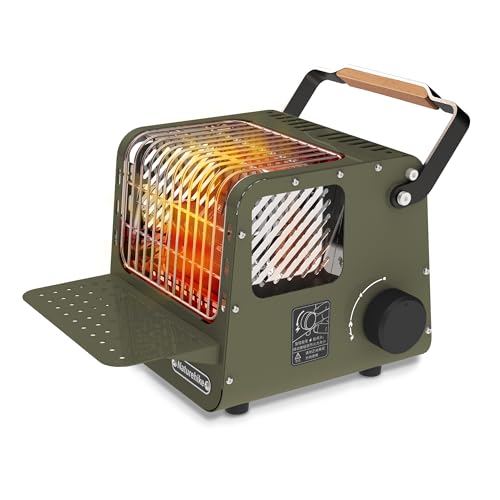
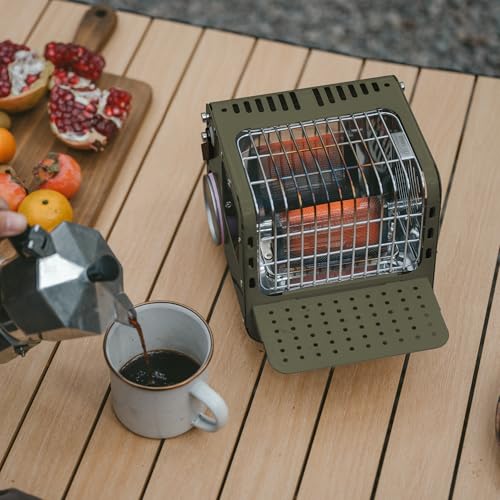
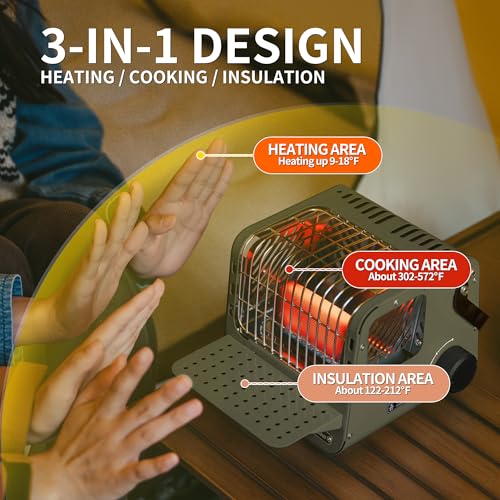
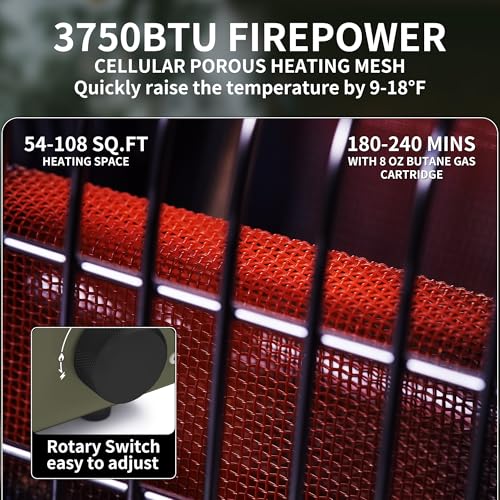
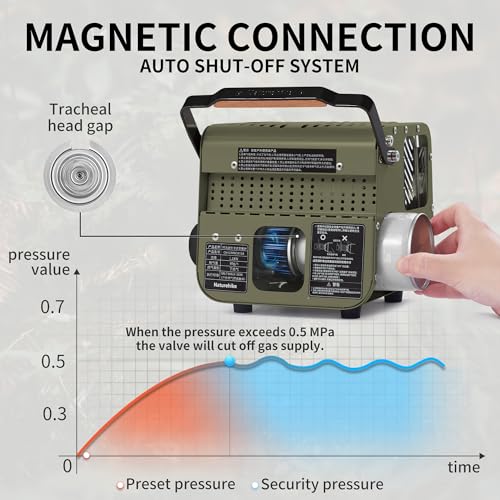
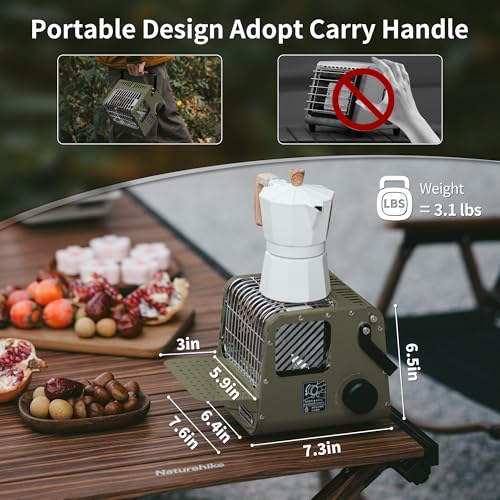
The multi-function design here is clever, this isn’t just a heater, it’s a mini camp kitchen upgrade. The warming shelf is a small luxury, but it works well for keeping drinks warm or preheating food, and the magnetic butane connection makes fuel swaps fast and secure. At 3,750 BTU, it won’t heat a large tent quickly, but it’s efficient for personal warmth in spaces up to 100 sq ft.
Butane can be a limitation in cold weather, owners report ignition issues below 40°F, which rules it out for winter camping. Still, for shoulder seasons or indoor use in a well-ventilated tent vestibule, it’s a solid pick. The 240-minute runtime on low is better than most propane models, and the carry handle makes it genuinely packable.
Product photos
Propane Heater 6200 BTU with Lighter

Strengths
- Includes USB lighter
- Cylinder stand included
- Smooth flame control
Trade-offs
- No safety sensors
- Outdoor use only
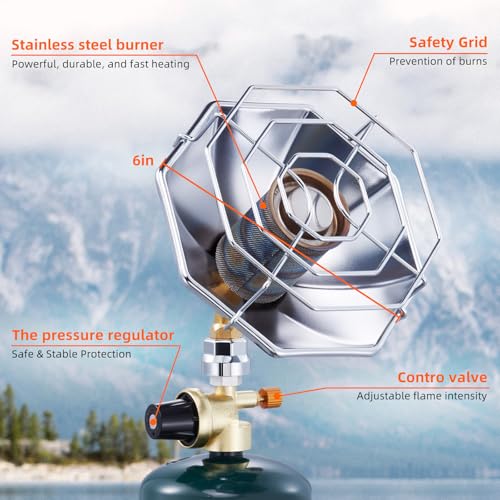
- Exposed burner
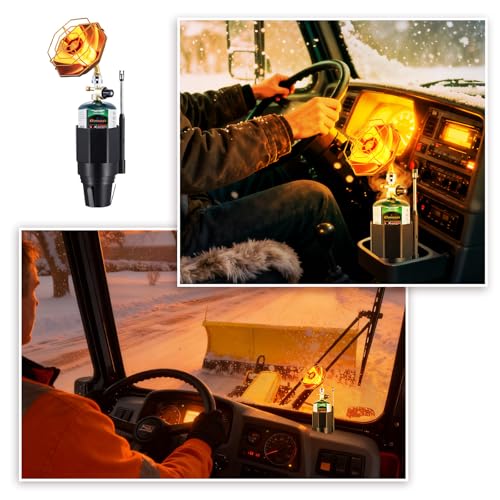
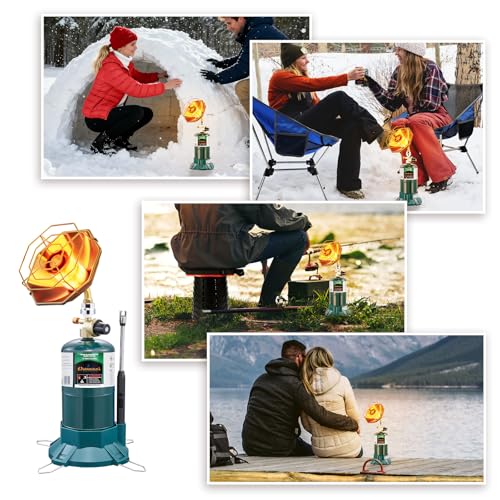
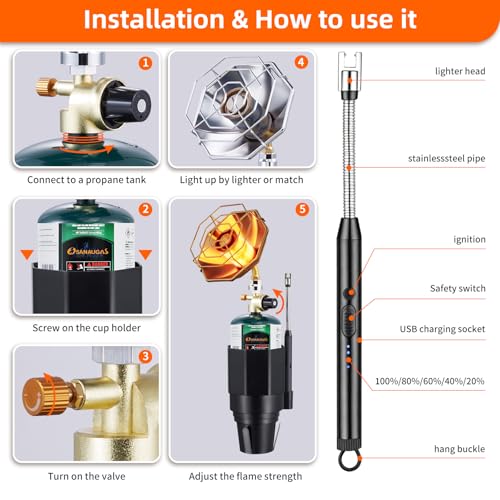
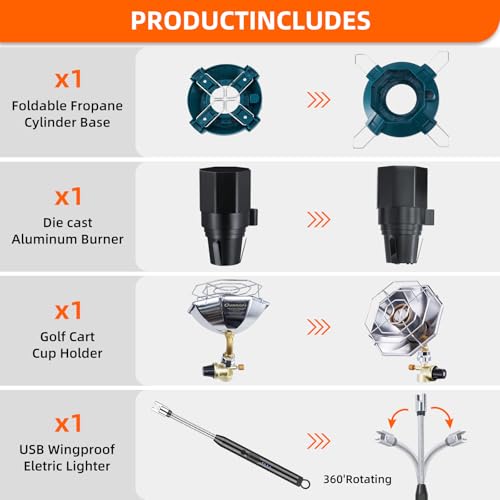
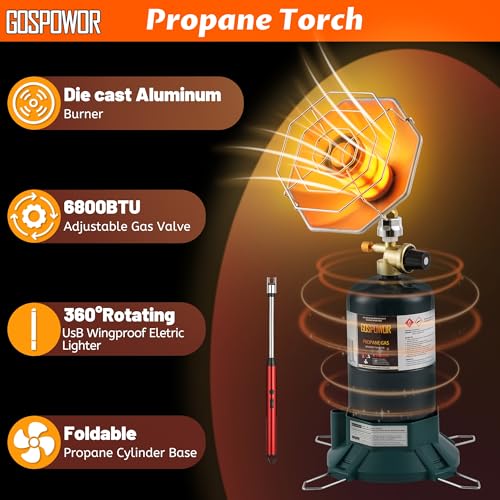
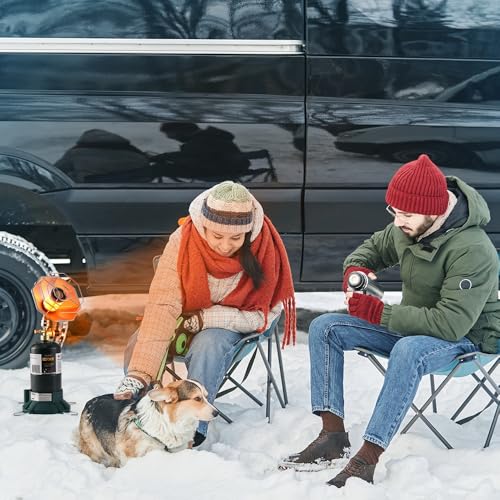
What makes this one stand out is the included USB rechargeable lighter and cylinder stand, small touches, but they add real convenience in the field. The 6,200 BTU output heats quickly, and the flame knob gives smooth control, though it lacks any automatic safety shutoffs. Owners appreciate the ease of ignition, especially in cold weather where piezo starters often fail.
It’s clearly designed for open-air use, no indoor certification, and no low oxygen sensor. The face guard helps prevent burns, but it’s still a radiant burner with exposed elements. Compared to the Mr. Heater line, it’s a budget-friendly alternative if you’re only heating a patio or open campsite. But for tent use? I’d pass.
Product photos


How We Chose These camping heaters for tents
Rather than a hands-on lab test, my research for these recommendations involved a detailed comparison of published specifications and features across numerous models. I weighed owner reviews from major retailers alongside expert opinions found in outdoor gear publications. As someone who spends a lot of time planning and enjoying outdoor adventures, I applied my knowledge of tent sizes, typical camping conditions, and safety considerations to assess each heater’s suitability. Ultimately, I ranked options based on a combination of heat output, safety features, and portability.
For camping heaters, heat output (BTU) and safety features were the most significant factors. A heater’s BTU rating determines how quickly and effectively it can warm a space – critical when tent walls offer minimal insulation. Equally important are safety mechanisms like low-oxygen shut-off systems and tip-over protection, given the enclosed environment of a tent. Portability also played a role, as campers need heaters that are easy to pack and transport.
Specifications provide reliable information on BTU output, fuel consumption, and physical dimensions. However, I heavily considered owner feedback regarding real-world performance, ease of use, and durability. Reports on ignition reliability, noise levels, and the effectiveness of safety features were particularly valuable. You can learn more about portable heater safety and the precautions you should take when using a heater inside a tent. Reputation and brand trust also influenced my assessment, especially when evaluating long-term reliability.
What To Look For In camping heaters for tents
Choosing the right camping heater can make the difference between a cozy night and a miserable one in the outdoors.
A quality camping heater prioritizes safety with features like tip-over shut-off and oxygen depletion sensors. It should offer adjustable heat settings to match conditions and tent size, while also being efficient with fuel consumption. Consider the heater’s BTU output relative to the square footage it’s designed to heat, and always verify it’s approved for the intended use (indoor vs. outdoor).
BTU Output and Tent Size
BTU (British Thermal Units) is the key measurement when it comes to heating power. Don’t fall for the trap of simply getting the highest BTU heater available. Overheating a small tent is a real risk, and can be dangerous. Instead, carefully match the heater’s output to your tent’s size. As a general rule, you’ll want around 30-50 BTU per square foot. A 225 square foot tent, like many family-sized models, would benefit from something in the 6,750-11,250 BTU range. Smaller backpacking tents (under 100 sq ft) need significantly less power, making options like the Mr. Heater Little Buddy a sensible choice.
Safety Features: A Must-Have
Camping heaters use propane or butane, both flammable gases. Safety features aren’t optional; they’re absolutely critical. Look for heaters with automatic shut-off valves that activate if the unit tips over, or if oxygen levels in the tent drop too low. These systems are standard on models like the Mr. Heater Buddy series, but it’s always worth double-checking the specs. Beyond the heater itself, remember that proper ventilation is paramount. Never operate a propane heater in a completely sealed tent, even with safety features. Understanding safe tent heating models is vital for a worry-free experience.
Fuel Type and Portability
Propane and butane are the most common fuel sources, each with pros and cons. Propane generally provides more consistent heat in colder temperatures, but canisters can be bulkier. Butane heaters are often lighter and more compact, like the Naturehike 3750 BTU, making them ideal for backpacking. Consider how you’ll transport the fuel – will you be carrying multiple 1lb propane cylinders, or a larger refillable tank? Also, think about the heater’s overall weight and footprint.
- A very lightweight heater (under 2lbs) is best for backpacking.
- A heater with integrated handles or a carry bag is easier to transport.
- Heaters with a stable base are less prone to tipping, which is crucial in a confined tent space – a tipped heater is a safety hazard and a waste of fuel.
Never leave a camping heater unattended while in operation. Regularly check the connection between the fuel source and the heater for leaks, and always follow the manufacturer’s instructions for safe use.
To maximize warmth inside your tent, don’t underestimate the importance of tent insulation for winter. A well-insulated tent will retain heat far more effectively, allowing you to use a smaller, more efficient heater.
Camping Heaters for Tents Compared
Here’s a comparison of key specifications for various camping heaters to help you choose the right one for your needs.
| Product Name | BTU Output | Area Heated (sq ft) | Fuel Type | Safety Features | Accessories |
|---|---|---|---|---|---|
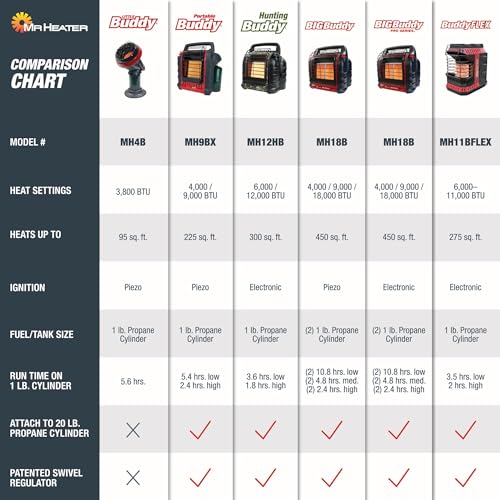
| Mr. Heater 9,000 BTU Buddy | 4,000/9,000 | 225 | Propane | Low O2 shut-off, Self-extinguishing | N/A |
| Mr. Heater 3,800 BTU Little Buddy | 3,800 | 95 | Propane | Tip-over shut-off, Low O2 shut-off | N/A |
| Mr. Heater Buddy 4,000-9,000 BTU | 4,000/9,000 | 225 | Propane | Low O2 shut-off, Self-extinguishing | N/A |
| Portable Propane Heater with Storage Box | N/A | N/A | Propane | Front grill, Foldable base | Storage Box |
| 6200 BTU Propane Camping Heater | 6,200 | N/A | Propane | Stable base | Carry Bag |
| Naturehike 3750 BTU Butane Heater | 3,750 | 54-108 | Butane | Overpressure shut-off | Shelf |
| Propane Heater 6200 BTU with Lighter | 6,200 | N/A | Propane | Cylinder stand | Lighter |
Frequently Asked Questions
What fuel type is generally safer for tent heaters?
Butane heaters often have a slightly better safety record due to their lower operating pressure, though both propane and butane heaters require diligent attention to safety protocols. Propane delivers more consistent heat in colder conditions, but requires extra caution due to its higher pressure.
Can I use a camping heater in a four-season tent?
Yes, you can, but a four-season tent doesn’t automatically mean it’s safe for a heater. Four-season tents are designed to withstand weather, not necessarily to contain heat or manage ventilation, so you still need to prioritize safety and ventilation as you would with any tent.
What BTU output is sufficient for a six-person tent?
A six-person tent typically falls in the 300-400 square foot range, meaning you’ll want a heater with approximately 9,000-12,000 BTU to provide adequate warmth. Remember to check the heater’s specifications and follow the manufacturer’s recommendations for tent size.
Are there heaters specifically designed for backpacking?
Yes, the Mr. Heater Little Buddy is a popular choice for backpacking due to its compact size and relatively low weight (around 1.5 pounds). Look for models prioritizing portability and low fuel consumption when selecting a heater for backpacking, and consider efficient portable tent heaters to maximize fuel efficiency.
What’s the most important safety precaution I should take when using a tent heater?
Proper ventilation is the most critical safety precaution. Never operate a propane or butane heater in a completely sealed tent, as this can lead to carbon monoxide poisoning. Always crack open a vent or door to allow for fresh air circulation, and consider investing in a carbon monoxide detector for added security, as discussed in camping-safe heater models.
The Bottom Line
Choosing a camping heater always comes down to balancing convenience with control. You can spend a lot for top-end features, but sometimes a simpler, more focused approach is best. For overall performance and peace of mind, I believe the Mr. Heater 9,000 BTU Buddy is the strongest choice – its adjustable settings and well-regarded safety features offer a great mix of warmth and reassurance.
If you’re on a tighter budget or need something ultra-portable, the Mr. Heater 3,800 BTU Little Buddy is a fantastic option. For those who prioritize versatility and a compact design, the Naturehike 3750 BTU Butane Heater is a solid pick, especially for smaller tents or backpacking trips. And if you’re considering whether a heater is right for your setup, remember to review heater safety in tents before you head out.
Ultimately, the BTU rating and safety features are important, but they aren’t everything. A comfortable camping experience hinges on preparedness, ventilation, and respecting the power of the elements. Focus on those fundamentals, and your heater will simply be a tool to enhance an already well-planned adventure.
