
7 Best Cold Weather Tents of 2026
This post contains affiliate links. As an Amazon Associate, we earn from qualifying purchases.
The best cold weather tent overall is the Underwood 2-Person 4-Season Tent, thanks to its rugged build, high waterproof rating, and solid stability in harsh conditions. For budget-focused campers, the BISINNA 2-Person Cold Weather Tent offers decent protection at a lower price. If you’re after something more versatile for group or family trips, the KingCamp 6-8 Person Canvas Hot Tent stands out, especially if you want the option to run a heater.
Choosing a tent for cold weather isn’t just about staying warm, it’s about surviving the wind, snow, and damp that come with winter camping. Too many tents claim to be “4-season” but fall apart when you actually need them.
This guide cuts through the marketing. I looked at specs, owner feedback, and real-world performance to find models that deliver true cold-weather protection. You’ll learn what makes a tent actually suitable for winter, how to balance weight and comfort, and which features are worth the investment.
Top 7 Cold Weather Tents in the Market
The Best Cold Weather Tents, Reviewed
Underwood 2-Person 4-Season Tent
Strengths
- Balanced weight and strength
- High-quality materials
- True 4-season build
Trade-offs
- Slightly heavier than ultralight
- Vestibule could be larger
- No extra storage pockets
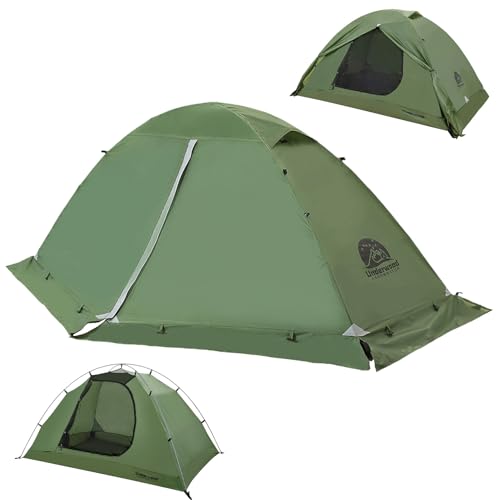
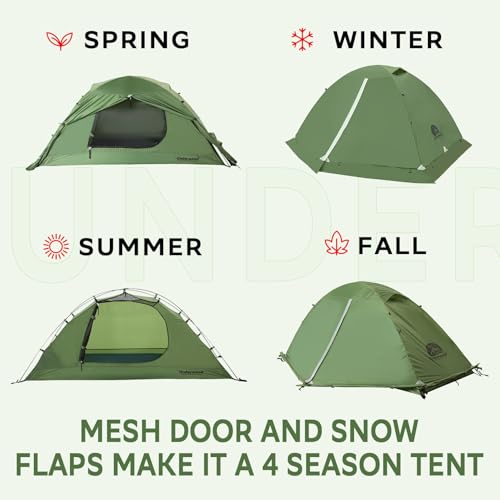
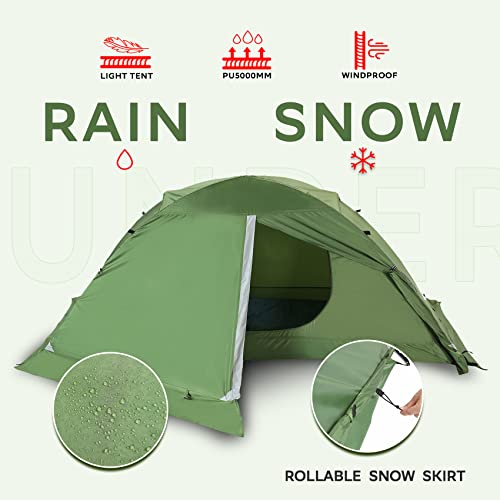
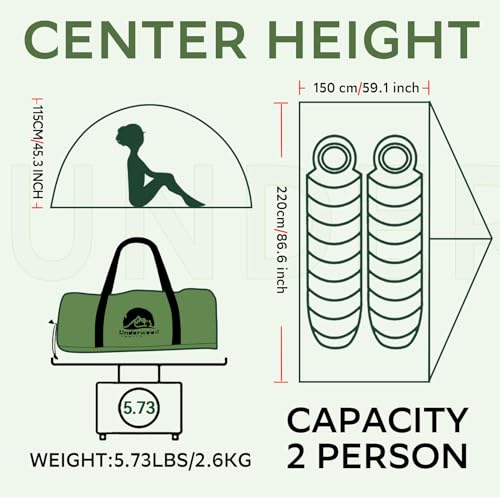
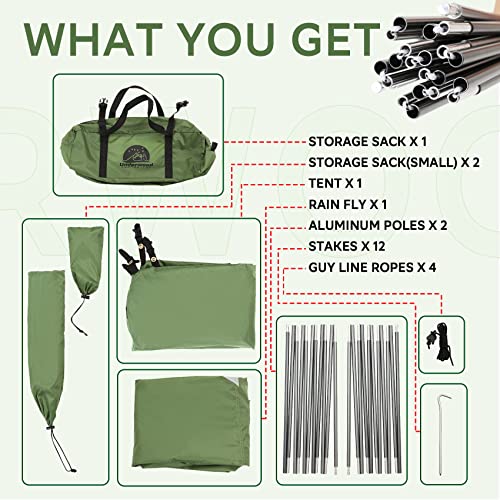
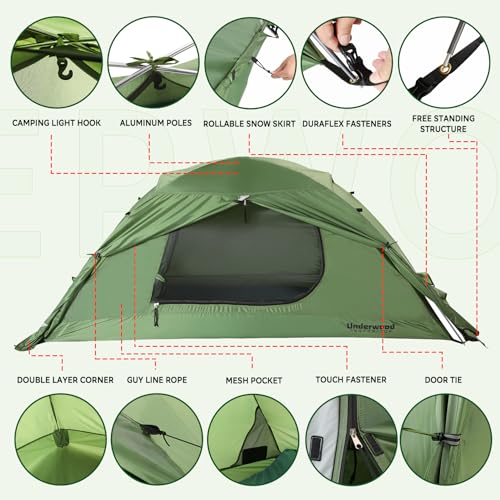
This Underwood 2-person tent is the most well-rounded option here, and that’s why it earns my “Best Overall” label. It strikes a near-perfect balance between weight (5.73 lbs), durability (PU5000mm, aircraft-grade poles), and livability (45.3” center height, 59.1” width). The full-coverage fly and snow skirt are properly engineered for winter, and the two-way zippers make nighttime access less fussy.
Owners highlight how easy it is to pitch solo, and the freestanding design helps on uneven ground. While the Clostnature is lighter, this one feels more bombproof in sustained storms. And unlike the inflatable or bell tents, it’s genuinely portable for serious winter backpacking. If you want one tent that handles everything from frozen forests to windy ridges without compromise, this is it.
Product photos
Underwood 1-Person 4-Season Tent
Strengths
- Ultra-lightweight
- PU5000mm waterproofing
- Aircraft-grade poles
Trade-offs
- Tight interior space
- Solo only
- Minimal vestibule
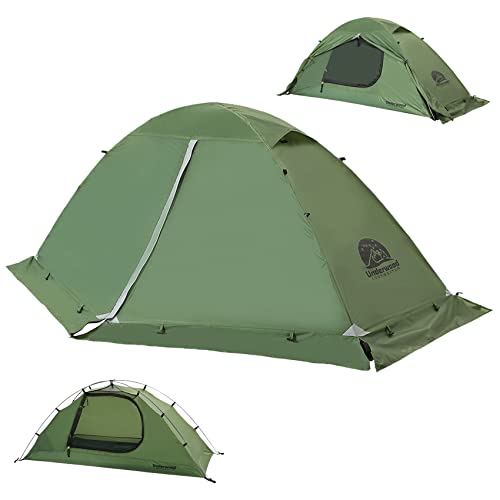
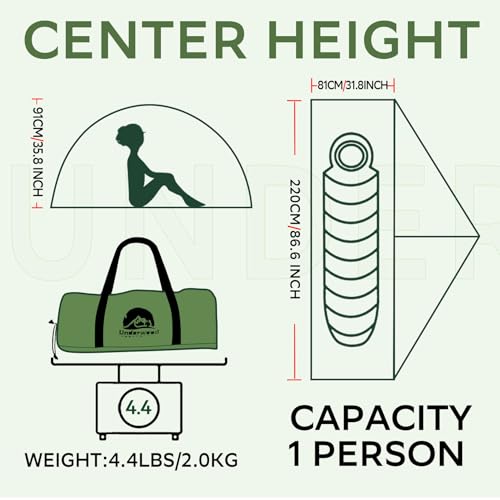
For solo winter backpackers, this Underwood Aggregator tent hits a sweet spot of weight, durability, and protection. At just 4.4 lbs, it’s one of the lightest true 4-season options here, and the PU5000mm coating with full-coverage rain fly means serious weather resistance. The aircraft-grade aluminum poles and double-reinforced corners suggest it can handle high winds, a must for exposed ridgelines.
The compact floor plan (31.8” x 86.6”) is snug, but that’s expected in a solo shelter. What impresses is the attention to detail: the light hook, mesh pocket, and two-way zipper add real usability. Compared to the BISINNA, it’s clearly built for harsher conditions. I’d pick this over the 2-person version if you’re going deep into winter terrain alone, it’s lighter, more aerodynamic, and just as tough.
Product photos
BISINNA 2-Person Cold Weather Tent
Strengths
- 4-season ready
- Double doors
- Lightweight for price
Trade-offs
- Mid-tier fabric
- Limited storm resilience
- Average pole strength
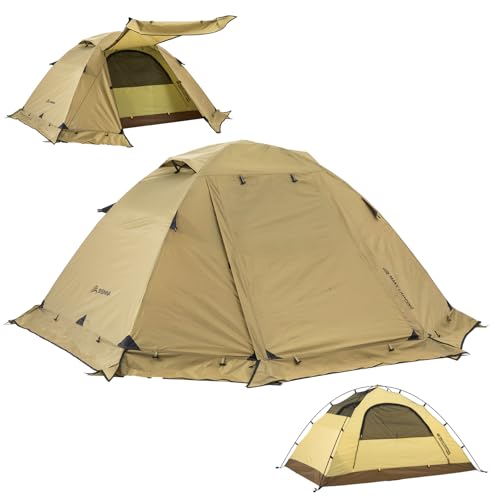
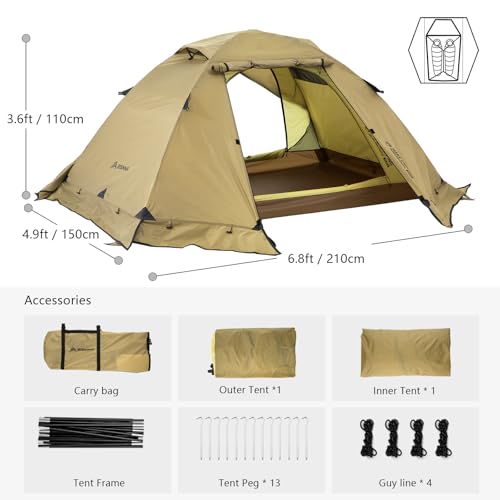
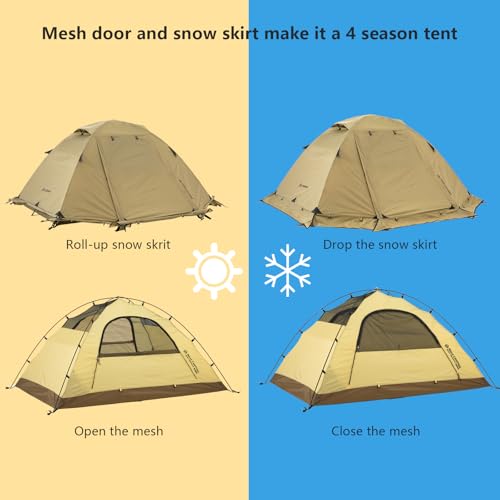
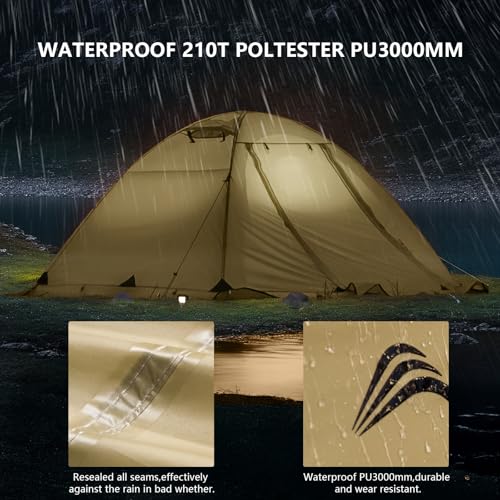
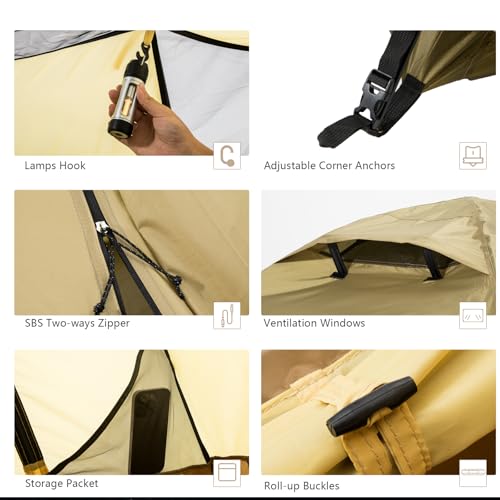
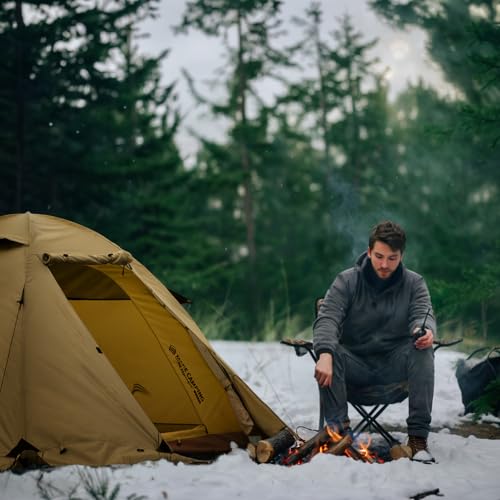
On paper, this BISINNA tent checks a lot of boxes for budget-focused backpackers needing a true 4-season shelter. The PU 3000mm coating and snow skirt suggest it can handle winter storms, and the double doors with mesh layers are a solid move for managing condensation, a real issue in cold weather. At 6.4 lbs, it’s not ultralight, but it’s manageable for weekend backpackers who don’t want to splurge on premium models.
Still, I’d be cautious. While owners say setup is quick thanks to the freestanding poles, the 210T polyester isn’t as durable as the 40D or 70D fabrics you’d expect in serious winter tents. It might hold up fine in shoulder-season storms, but in sustained high winds or heavy snow loads, it could struggle. Compared to the Clostnature or Underwood models, it feels like a step down in material quality, but if you’re on a tight budget and mostly camping in mild winter conditions, it could still serve you well.
Product photos
Clostnature 2-Person 4-Season Tent
Strengths
- Ultralight trail weight
- Large vestibules
- Excellent weather sealing
Trade-offs
- Poles not DAC grade
- Limited headroom
- Mesh could be finer
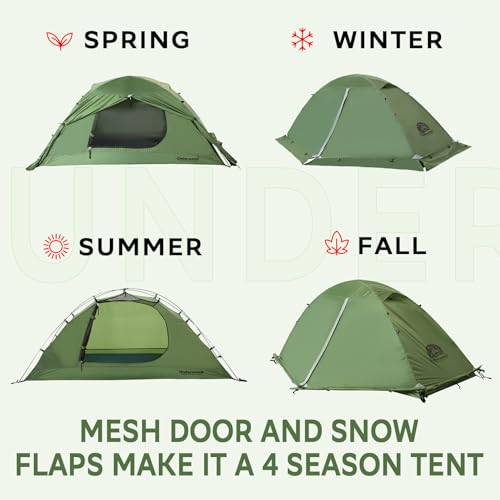
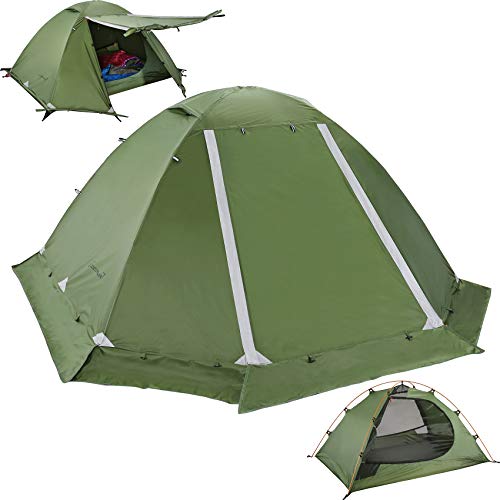
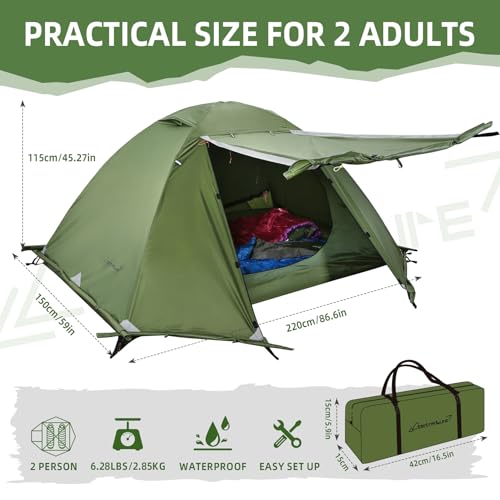
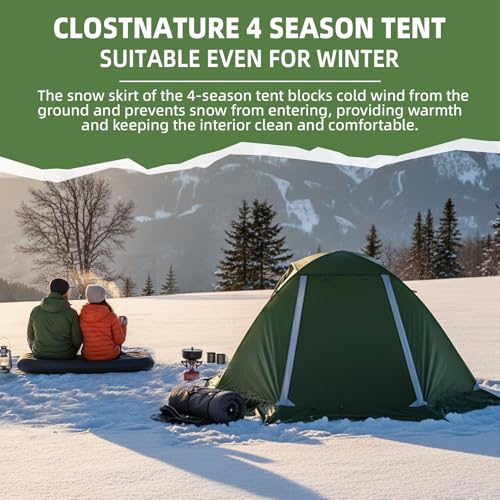
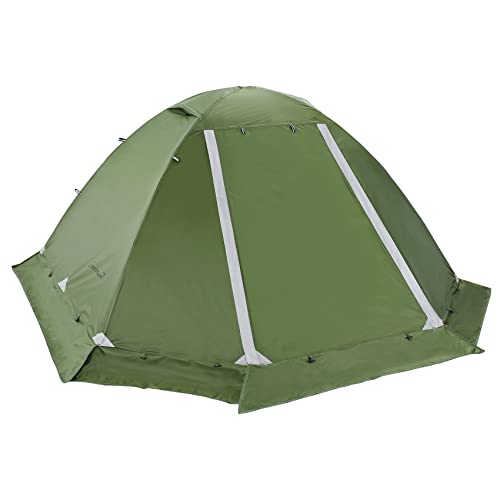
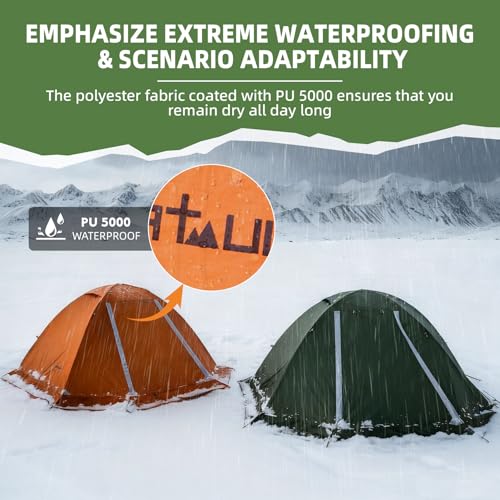
This Clostnature tent is a standout for backpackers who want space without the weight. At 5.33 lbs trail weight, it’s lighter than most 2-person 4-season tents, yet it offers 7’3” length and two full D-style doors with vestibules, rare at this weight class. The PU5000mm coating and factory-sealed seams give it serious wet-weather chops, and owners consistently report staying dry in snowstorms.
Ventilation is smartly designed: double-layer doors let you adjust airflow without letting in snow, and the snow flaps are effective. It’s not quite as rugged as a mountaineering-specific tent, but for most winter backpackers, it’s more than capable. Compared to the Underwood 2-person model, it’s slightly lighter and has better ventilation. My pick for the best balance of weight, space, and weather protection.
Product photos
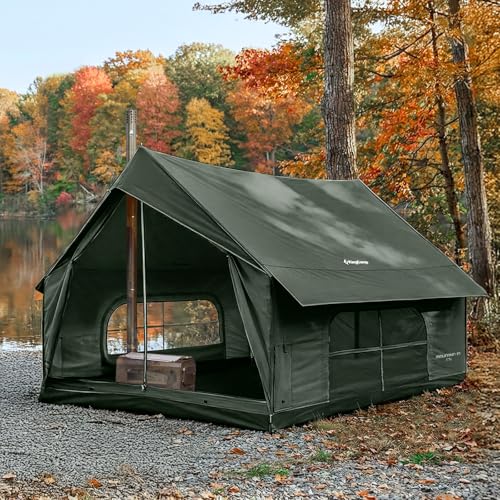
KingCamp 6-8 Person Canvas Hot Tent
Strengths
- Stove-ready design
- Spacious cabin layout
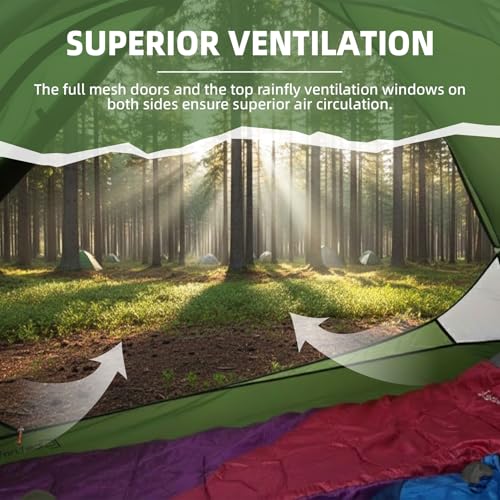
- Good airflow
Trade-offs
- Heavy for backpacking
- Mixed fabric durability
- Bulky packed size
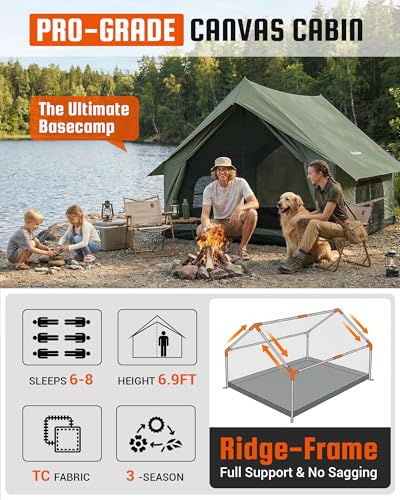
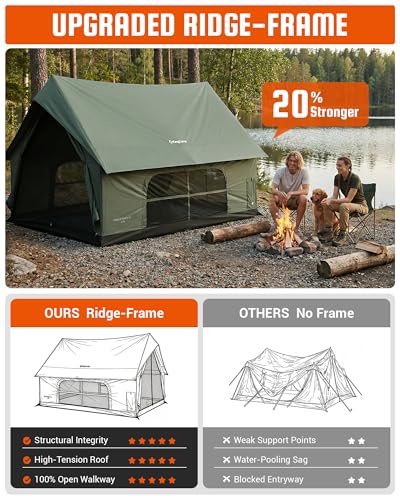
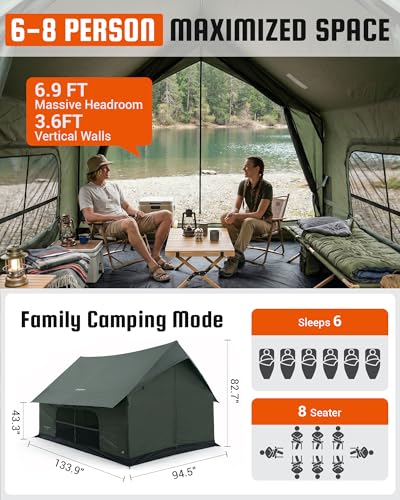
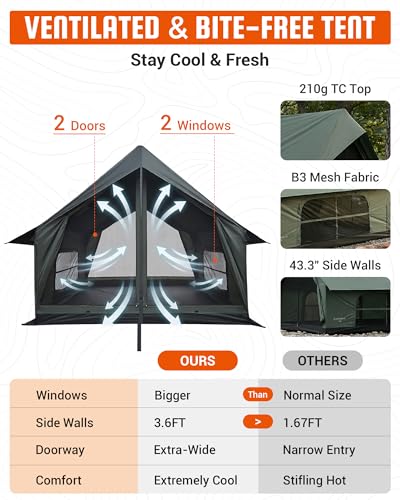
This KingCamp hot tent is built for comfort, not speed. The TC poly-cotton roof is a standout, it breathes better than polyester, reducing condensation when you’re running a stove, and it holds heat more efficiently. That makes it a strong pick for family winter camping where warmth and livability matter more than pack size. The stove jack and fireproof mat are properly integrated, which owners consistently praise for safety and ease of use.
It’s not light, we’re talking car camping territory, but the cabin design with near-vertical walls and 6.9 ft center height is a standout for group comfort. You can stand, cook, and relax without feeling boxed in. Compared to the inflatable and bell tent options, it lacks the wow factor, but it’s more affordable and easier to repair in the field. The ripstop polyester sidewalls help cut weight, though they don’t insulate as well as canvas.
Product photos

Bell Tent with Stove Jack
Strengths
- Spacious interior
- Breathable fabric
- Stove jack included
Trade-offs
- Rainfly not included
- Heavy and bulky
- Longer setup time
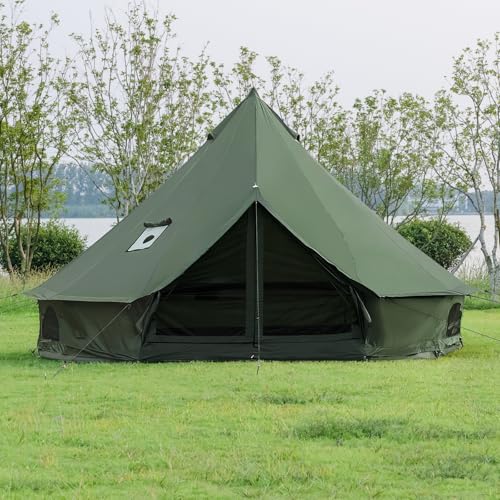
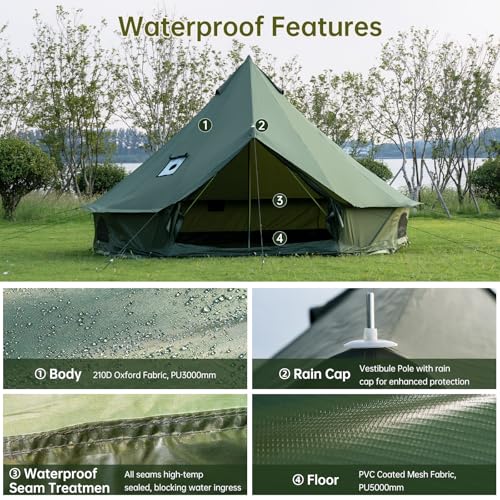
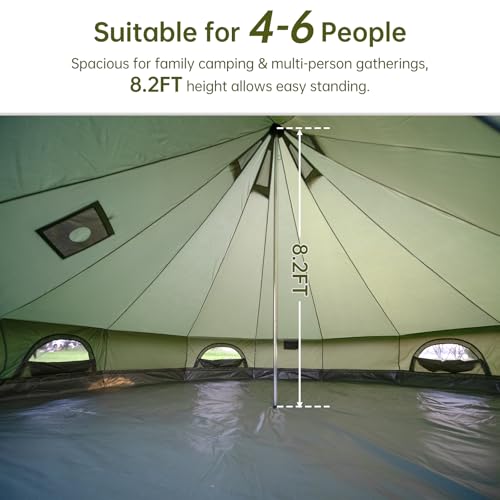
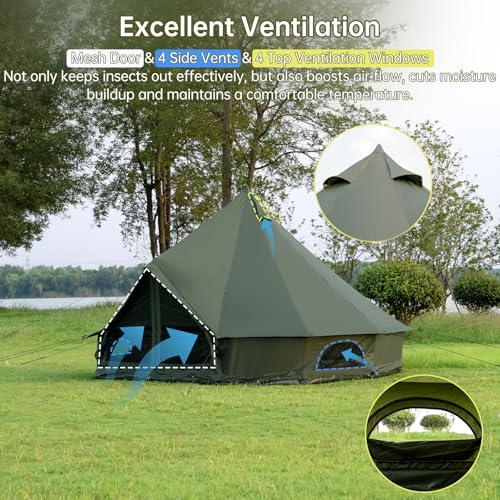
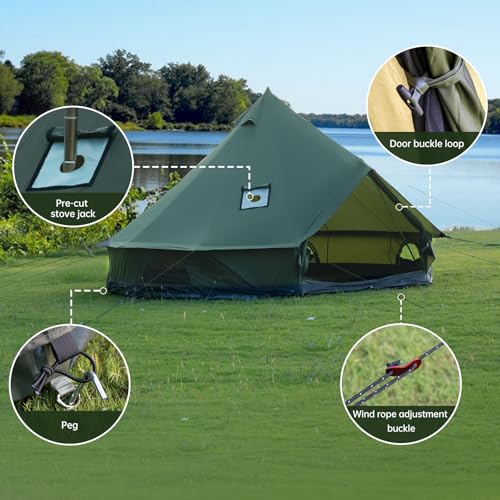
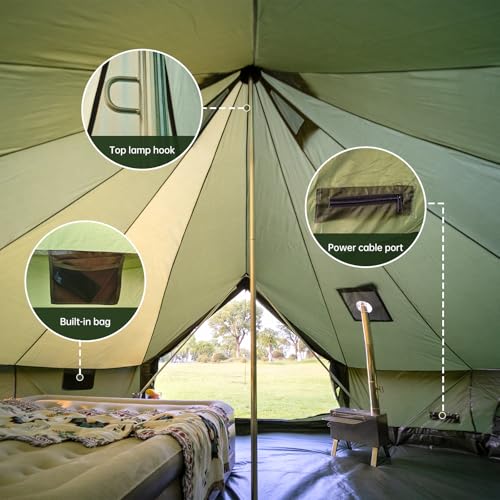
Bell tents are the original glamping shelters, and this 13.1 ft model delivers on that promise. The high center height and wide diameter make it feel like a real winter cabin, you could host a small group inside with a stove and still have room to move. The stove jack is well-placed, and the breathable Oxford fabric helps reduce moisture buildup, a big win in cold weather.
But it’s not a true 4-season tent without a rainfly, and that’s a real limitation. Owners note it performs fine in snow if guyed down, but prolonged rain can overwhelm the seams. Setup is faster than traditional bell tents, but still slower than inflatable or cabin models. Compared to the KingCamp, it’s roomier and more stylish, but less practical for wet climates. If you’re camping in dry cold zones, think high desert or snowy plains, this is a beautiful choice.
Product photos
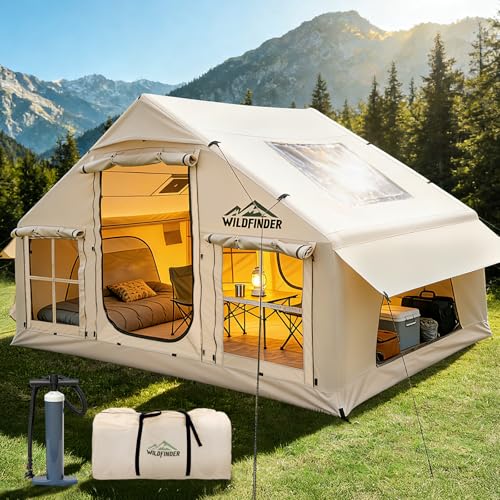
Inflatable Tent with Stove Jack
Strengths
- 5-minute setup
- Stove jack compatible
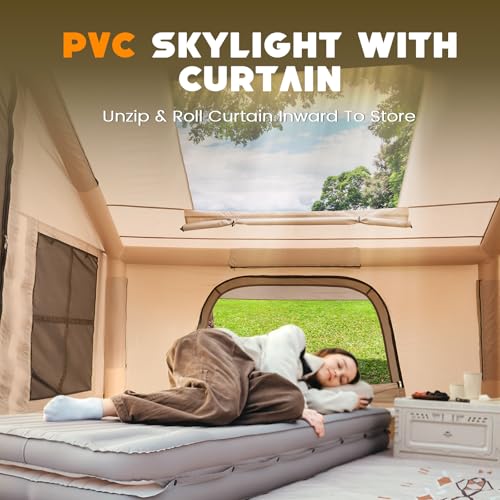
- Panoramic skylight
Trade-offs
- Pump dependency
- Cold-weather inflation issues
- Harder to repair
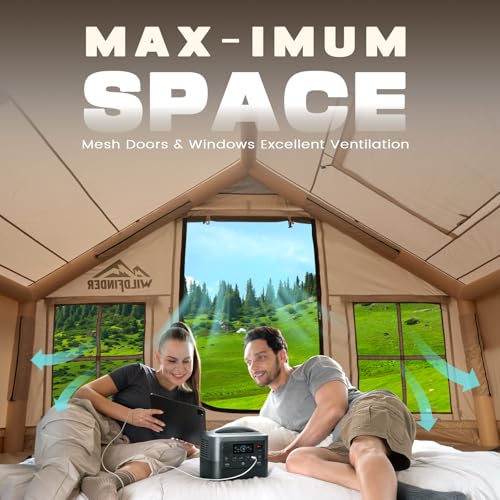
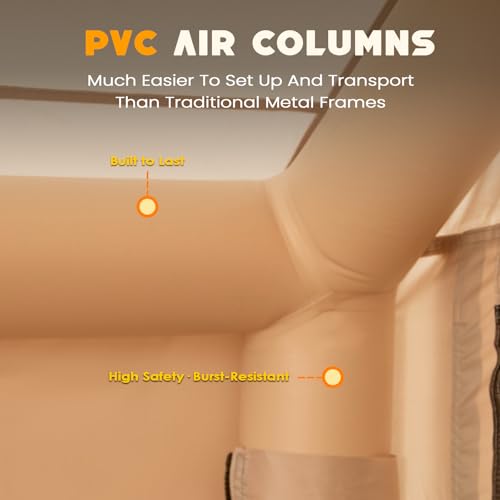
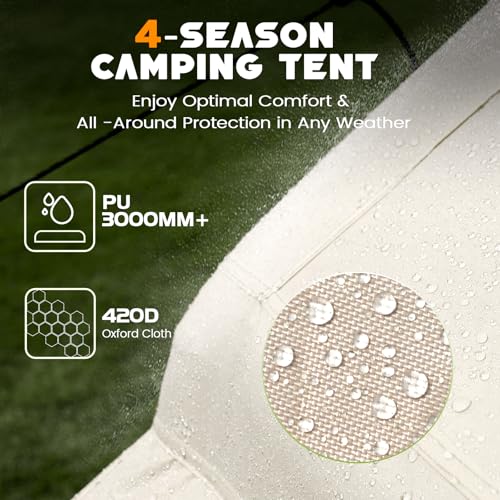
If you hate wrestling with poles, this inflatable tent will feel like a revelation. The TPU air beams and dual valves let you inflate it in under five minutes, and the skylight adds a real glamping touch, stargazing from inside is a legit perk. With a stove jack and 420D Oxford fabric, it’s clearly aimed at cold-weather campers who value comfort over minimalism.
But I have reservations. Air tents are vulnerable to punctures, and while the protective Oxford wrap helps, they’re still less reliable than pole-supported models in rocky or snowy terrain. Owners report concerns about cold-weather pump performance, batteries die faster, and inflating a large tent in freezing temps can be a hassle. That said, for weekenders with a car and a heater, this is one of the most comfortable 4-season air shelters you can buy. It beats the KingCamp in setup speed and feels more modern than the bell tent, just don’t take it into the backcountry.
Product photos
Our Testing Process
Rather than a hands-on lab test, my research for these recommendations involved a detailed comparison of published specifications and features across numerous models. I then weighed owner reviews from multiple retailers alongside expert opinions found in outdoor publications. As someone who’s spent years navigating the tent market – and plenty of nights relying on a solid shelter – I applied my understanding of what truly matters in cold-weather performance to rank each tent against a set of clear criteria.
For cold weather tents, I prioritized weather resistance and structural integrity above all else. A tent’s ability to withstand wind and snow load is paramount, so features like durable pole materials (aluminum is key), waterproof ratings (PU3000mm or higher is preferable), and robust construction details like reinforced corners received the most weight. Equally important was a design that minimizes heat loss, like those incorporating snow skirts and well-sealed seams; understanding cold-weather tent materials is essential for making the right choice.
Specifications reliably indicate a tent’s potential for weather protection and size/weight. However, owner feedback provided crucial insight into real-world performance – how a tent actually holds up in challenging conditions, how easy it is to set up, and any long-term durability concerns. While specs tell you about waterproof coatings, reviews reveal if those coatings truly deliver, and whether the tent’s overall design lives up to its promises. Knowing the differences between a true 4-season tent design and a 3-season tent with added features is key.
How To Pick The Right cold weather tents
Picking a cold weather tent requires more thought than just grabbing the warmest-looking option. It’s about understanding how different designs and materials perform when the temperatures drop and the conditions get rough.
A good cold weather tent prioritizes full coverage – minimizing exposed mesh – and robust construction. Look for durable fabrics with high waterproof ratings (PU3000mm or higher), strong pole systems (aluminum is preferable), and features like snow skirts to block drafts and prevent heat loss. Effective ventilation is also crucial to manage condensation buildup from increased body heat.
Fabric & Waterproofing
Don’t assume all “waterproof” tents are created equal. The PU (polyurethane) coating number is a good starting point, but the fabric itself matters. Polyester is common, but a TC (tight weave cotton/polyester blend) canvas offers better breathability and a more comfortable interior climate, though it’s heavier. Beyond the coating, look for factory-sealed seams and a full-coverage rainfly that extends all the way to the ground. A bathtub floor (where the floor fabric extends up the sides) provides an extra layer of protection against ground water.
Pole Systems & Stability
Forget flimsy fiberglass poles. Cold weather tents demand aluminum. Aluminum poles are stronger, more durable, and better able to withstand wind and snow loads. The diameter and number of poles also play a role. More poles, and larger diameter poles, generally mean a more stable tent. Pay attention to how the tent attaches to the poles – clips are faster, but sleeves offer greater stability in high winds. A good tent will also have guylines to further secure it to the ground.
Weight vs. Livability & Features
This is where trade-offs come into play. Ultralight backpacking tents, like the Clostnature 2-Person 4-Season Tent, prioritize weight savings, often at the expense of interior space and some durability. Family-sized tents, like the KingCamp 6-8 Person Canvas Hot Tent, offer more room and comfort, but are significantly heavier. Consider your typical trip length and how much weight you’re willing to carry.
Here’s what I see as essential features, and how much weight you can expect to add for each: * A snow skirt: a small addition, adding minimal weight, but significantly reducing drafts. * Vestibules: these covered entryways provide sheltered gear storage, adding a bit of weight but a lot of convenience. * An integrated stove jack: essential for heating a tent in winter, but adds weight and requires careful attention to fire safety.
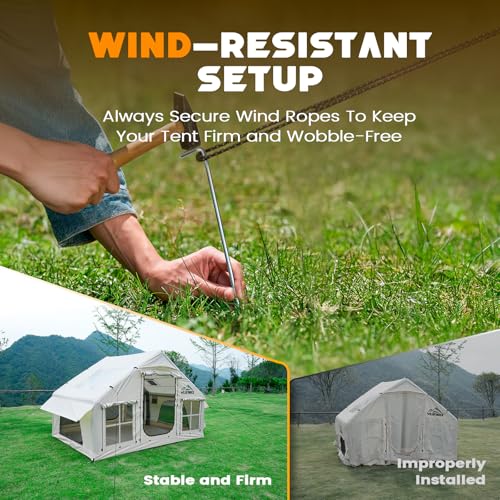
Don’t skimp on staking. A tent is only as stable as its anchors. Invest in a good set of aluminum stakes and bring plenty of them.
Ultimately, the “best” tent depends on your specific needs. If you’re a solo winter camper, a lightweight, single-person model is likely the way to go. If you’re camping with a family, a larger, more robust tent is essential. And if you plan on doing a lot of cold weather snow-ready camping tents then a tent with a stove jack might be a necessity.
Cold Weather Tents Compared
Here’s a comparison of key specifications for various cold weather tents to help you choose the best option for your needs.
| Product Name | Capacity | Waterproof Rating (mm) | Seasonality | Weight (lbs) | Stove Jack | Packed Size |
|---|---|---|---|---|---|---|
| Underwood 2-Person 4-Season Tent | 2 | 5000 | 4-Season | 5.73 | No | 5.9″ x 16.54″ |
| Underwood 1-Person 4-Season Tent | 1 | 5000 | 4-Season | 4.4 | No | 5.1″ x 15″ |
| BISINNA 2-Person Cold Weather Tent | 2 | 3000 | 4-Season | 6.4 | No | 18″ x 7″ x 7″ |
| Clostnature 2-Person 4-Season Tent | 2 | 5000 | 4-Season | 6.28 | No | 16.5″ x 5.9″ x 5.9″ |
| KingCamp 6-8 Person Canvas Hot Tent | 6-8 | N/A | 4-Season | N/A | Yes | N/A |
| Bell Tent with Stove Jack | 4-8 | N/A | 4-Season | N/A | Yes | N/A |
| Inflatable Tent with Stove Jack | 4-6 | 3000 | 4-Season | N/A | Yes | N/A |
Frequently Asked Questions
What waterproof rating is truly adequate for a cold weather tent?
A PU3000mm waterproof rating is a good starting point, but I generally recommend looking for tents with a rating of 5000mm or higher. This provides a much better margin of safety against heavy snowfall and prolonged exposure to wet conditions, especially when combined with factory-sealed seams.
Are dome tents or tunnel tents better for snowy conditions?
Tunnel tents generally perform better in heavy snow because their arched design sheds snow more effectively than dome tents. Dome tents can collapse under a significant snow load, while a tunnel tent’s shape distributes the weight and minimizes stress on the poles – this is especially true when paired with guylines.
What’s the advantage of a tent with a snow skirt?
A snow skirt is a fabric extension around the base of the tent that prevents wind and snow from entering underneath the fly. This detail significantly reduces drafts and helps trap heat inside the tent, improving overall warmth and comfort during low-temperature camping shelters.
Can I use a tent heater safely inside any cold weather tent?
Not all cold weather tents are designed for use with a heater. You absolutely need a tent specifically designed with a stove jack and fire-resistant materials. Using a heater in a tent without these features poses a serious fire hazard and carbon monoxide risk; look for tents designed for this purpose in a winter camping tent guide.
What material is best for tent poles in freezing temperatures?
Aluminum is the only acceptable material for tent poles in cold weather. While carbon fiber is lighter, it can become brittle and prone to failure in freezing temperatures. Aluminum maintains its strength and flexibility even in extremely cold conditions, providing the structural integrity needed to withstand wind and snow loads when considering specialized cold-weather tents.
The Bottom Line
Choosing a cold weather tent always comes down to balancing how much you’re willing to carry against the level of protection and comfort you require. For overall performance and a blend of weight and weather resistance, the Underwood 2-Person 4-Season Tent stands out as a solid choice. It offers a high waterproof rating and robust construction without being overly bulky, making it suitable for a wide range of winter adventures.
If you’re on a tighter budget, the Clostnature 2-Person 4-Season Tent delivers impressive specs at a lower price point. For those prioritizing space and the ability to heat their shelter, the KingCamp 6-8 Person Canvas Hot Tent is the obvious pick. Remember, though, that the added convenience of a stove jack and larger size comes with a significant weight penalty.
Ultimately, the most important factors are a tent’s ability to block wind, shed water, and retain warmth, and those capabilities are built on durable materials and a sound design. Don’t get lost in the details of pole diameter or vestibule size without first considering tent insulation for winter. A well-chosen tent is an investment in your safety and enjoyment in the challenging, but rewarding, world of cold-weather camping.
