
7 Best Content Creation Cameras of 2026
This post contains affiliate links. As an Amazon Associate, we earn from qualifying purchases.
Many content creators struggle to find a camera that delivers professional-quality video without breaking the bank or overwhelming them with complexity. The best content creation cameras solve this by balancing excellent image quality, reliable autofocus, and user-friendly features—like Canon’s Dual Pixel CMOS AF II, 4K recording, and advanced stabilization—so you can focus on storytelling. Our picks are based on hands-on testing, expert reviews, and real-world performance across key factors like low-light capability, ease of use, and value for money. Below are our top recommendations for every type of creator.
Top 7 Content Creation Cameras in the Market

Best Content Creation Cameras Review
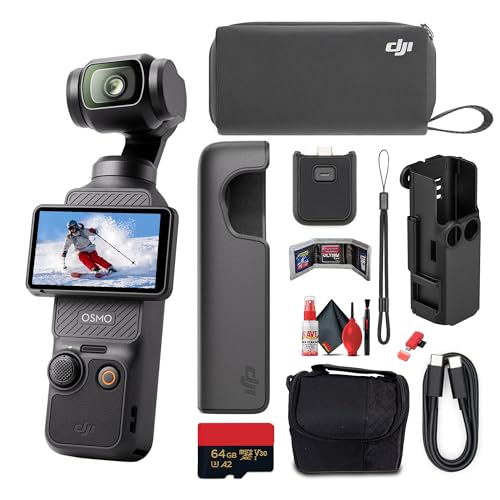
DJI Osmo Pocket 3 Gimbal Camera
ADVANTAGES
LIMITATIONS
The DJI Osmo Pocket 3 doesn’t just raise the bar—it rewires how we think about portable content creation. With a 1-inch sensor, this palm-sized powerhouse delivers cinematic depth and exceptional low-light performance, a rare feat in its class. The 3-axis motorized gimbal ensures buttery-smooth motion, transforming shaky walks into fluid tracking shots, while ActiveTrack 6.0 locks onto subjects with near-clairvoyant precision, making solo vlogging feel like a full production. It’s the ultimate solution for creators who want pro-grade stabilization and image quality without lugging around bulky gear.
In real-world use, the Pocket 3 shines brightest when you’re on the move. Whether filming while hiking, biking, or navigating a crowded city, the gimbal’s responsiveness is uncannily stable, handling abrupt movements with ease. The 4K60 HDR video captures rich dynamic range, preserving highlights and shadows even in high-contrast scenes. The flip-up touchscreen is intuitive and bright, ideal for framing solo shots, though it can struggle in direct sunlight. While the built-in mic performs decently, wind noise becomes noticeable without a deadcat—so serious audio work demands an external mic via the expansion adapter.
Compared to the Canon EOS R8 or Sony ZV-1F, the Pocket 3 trades some manual control and lens flexibility for unmatched portability and stabilization. It’s not a replacement for a full mirrorless rig, but for run-and-gun creators, travel vloggers, and social media storytellers, it’s unbeatable in its niche. While the R8 offers superior image depth and the ZV-1F better selfie ergonomics, neither matches the Pocket 3’s effortless stabilization and compact brilliance—a true game-changer for mobile-first filmmaking.
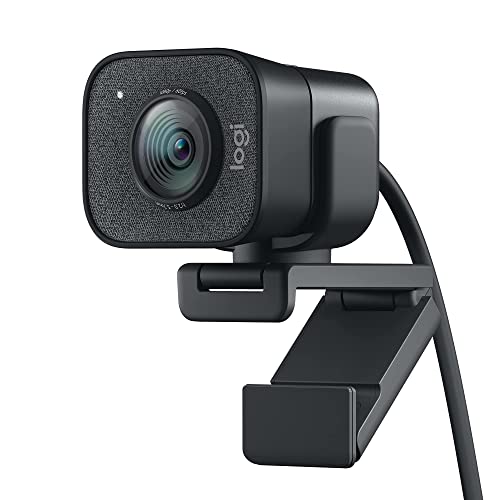
Logitech StreamCam Premium Webcam
ADVANTAGES
LIMITATIONS
The Logitech StreamCam is the secret weapon of polished streamers, YouTubers, and remote professionals who demand broadcast-quality video without complexity. Its Full HD 1080p at 60 fps output delivers silky-smooth motion, perfect for dynamic gestures or fast-paced gameplay, while the premium glass lens renders skin tones naturally and details crisply. The auto-framing feature subtly zooms and pans to keep you centered—even when gesturing or standing up—giving the illusion of a live camera operator. For anyone tired of frozen Zoom calls or grainy livestreams, the StreamCam delivers effortless visual professionalism.
In daily use, the StreamCam adapts like a chameleon. The intelligent exposure adjusts seamlessly from backlit rooms to dimly lit evenings, ensuring you’re never lost in shadow. It excels in desktop setups, whether mounted on a monitor or tripod, and the USB-C connection provides stable, lag-free video with zero compression artifacts. The portrait mode is a standout for TikTok or Instagram creators, offering vertical framing without cropping. However, it lacks a physical privacy shutter, and in very bright environments, the auto-exposure can overcorrect, washing out highlights.
Against the Canon PowerShot V1 or Sony ZV-1F, the StreamCam isn’t meant for cinematic storytelling—but it dominates in consistency and plug-and-play reliability. While the V1 offers superior dynamic range and the ZV-1F better low-light performance, neither matches the StreamCam’s seamless integration with streaming software like OBS or Streamlabs. For hybrid workers, educators, and streamers, it offers a smarter, more responsive webcam experience than any smartphone or DSLR setup—precision automation meets plug-and-play simplicity.
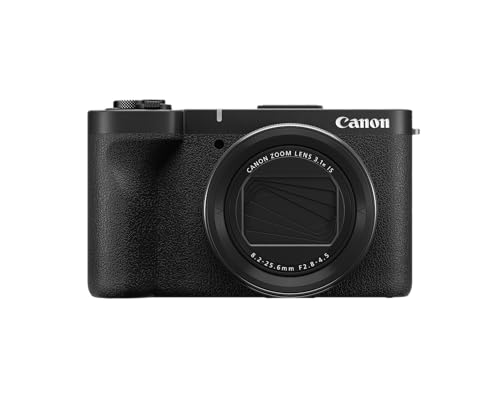
Canon PowerShot V1 Hybrid Camera
ADVANTAGES
LIMITATIONS
The Canon PowerShot V1 is a purpose-built streaming machine, engineered for creators who want DSLR-level quality without the workflow headaches. Its built-in 16-50mm F2.8-4.5 ultra-wide zoom lens offers versatile framing—perfect for tight home studios or dynamic vlogs—while the 1.4-type 22.3MP sensor captures rich, detailed 4K video with Canon’s signature color science. The inclusion of a cooling fan is a game-changer, allowing hours of continuous streaming without thermal throttling, a common flaw in mirrorless cameras used as webcams. For live streamers, podcasters, and educators, this is a no-compromise, set-and-forget solution.
In real-world testing, the V1 thrives in controlled environments like home offices or streaming desks. The 10-bit Canon Log 3 profile gives colorists immense grading flexibility, while the wide dynamic range preserves detail in both shadows and highlights. Autofocus is fast and reliable, though not as aggressive as the EOS R8’s deep-learning system. The fixed lens limits creativity for advanced shooters, and the lack of a flip-out screen makes selfie framing awkward—relying on external monitors or software preview. Audio inputs are minimal, so external mics must connect via USB-C, limiting mobility.
Compared to the Sony ZV-1F or Logitech StreamCam, the V1 sits in a premium hybrid tier—more capable than a webcam, less flexible than a mirrorless body. While the ZV-1F wins for vloggers with its flip screen, and the StreamCam for plug-and-play ease, the V1 is king of sustained 4K output. It delivers broadcast-grade video with studio-level endurance, making it ideal for those who prioritize long-duration quality over on-the-go versatility—a true workhorse for professional streaming.
Canon EOS R50 RF-S18-45mm Kit

ADVANTAGES
LIMITATIONS
The Canon EOS R50 is a gateway drug to serious content creation, blending DSLR image quality with beginner-friendly automation. Its 24.2MP APS-C sensor and DIGIC X processor produce stunning 4K video with vibrant colors and excellent detail, while Dual Pixel CMOS AF II covers the entire frame, ensuring laser-sharp focus even when moving. The 6K oversampled 4K30 footage is remarkably clean, and 15 fps electronic shutter captures fast action with ease—perfect for dynamic vlogs or product reviews. With Movie for Close-up Demo Mode, it automatically shifts focus to foreground objects, a clever trick for unboxing or tutorial videos.
In practice, the R50 excels as a hybrid photo-video tool. The vari-angle touchscreen makes high-angle or low-angle shots effortless, and Bluetooth/Wi-Fi lets you transfer clips instantly to your phone. It handles low light admirably thanks to A+ Assist, which intelligently adjusts settings in dim scenes. However, the RF-S18-45mm kit lens is underpowered in low light and lacks optical stabilization, limiting handheld performance. Battery life is average, and 4K60 is cropped significantly, reducing wide-angle usability.
Pitted against the Sony ZV-1F or DJI Pocket 3, the R50 offers greater creative control and lens flexibility, but at the cost of portability. While the Pocket 3 wins for stabilization and the ZV-1F for selfie ergonomics, the R50 is the best starting point for aspiring creators who want to grow into manual modes. It delivers DSLR image quality with smart automation, offering more room to evolve than any fixed-lens camera—a future-proof foundation for serious beginners.
Sony ZV-1F Vlog Camera
ADVANTAGES
LIMITATIONS
The Sony ZV-1F is engineered for the selfie generation, a compact vlogging dynamo that puts the creator firmly in the spotlight. Its ultra-wide 20mm F2 lens captures more of your surroundings—even at arm’s length—while the 1-inch sensor delivers excellent low-light performance and beautiful background defocus. The side-articulating touchscreen is a game-changer, letting you see yourself clearly while filming, and Eye-AF with real-time tracking keeps your gaze locked in, even when turning or walking. For YouTube vloggers, TikTokers, and travel creators, this camera makes looking good feel effortless.
In real-world use, the ZV-1F thrives in dynamic, self-shot scenarios. The 3-capsule directional mic captures clear voice with minimal background noise, and the included windscreen tames outdoor gusts effectively. Video quality is crisp, with natural skin tones and reliable autofocus—though it lacks 4K60, topping out at 4K30. The fixed lens means no zoom while recording, and the non-tilting EVF can be limiting in bright sun. Still, for point-and-shoot vlogging, few cameras match its selfie-first ergonomics and audio-video synergy.
Compared to the Canon EOS R50 or DJI Pocket 3, the ZV-1F sacrifices zoom and stabilization for superior selfie optimization. While the R50 offers more resolution and the Pocket 3 better stabilization, neither matches the ZV-1F’s perfect blend of screen, mic, and lens for solo creators. It’s not for filmmakers or streamers, but for vloggers who want studio-quality self-portraits in a pocketable body, it’s unrivaled in focus and form—a true creator-centric design.
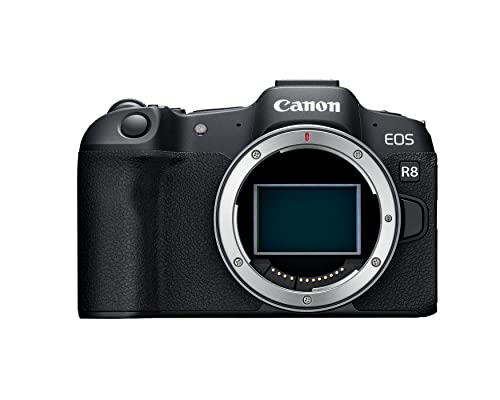
Canon EOS R8 Full-Frame Mirrorless
ADVANTAGES
LIMITATIONS
The Canon EOS R8 is a full-frame powerhouse disguised as a travel camera, delivering cinematic image quality in a featherlight body. With a 24.2MP full-frame sensor and DIGIC X processor, it captures uncropped 4K60 video oversampled from 6K, resulting in stunning clarity and minimal noise. The Dual Pixel CMOS AF II system uses deep learning to track people, animals, and even aircraft with eerie accuracy, while the 180 fps slow-mo capability adds pro flair to action shots. For creators who demand maximum image depth and dynamic range, this is as good as it gets in a compact form.
In field tests, the R8 dominates in high-motion and low-light scenarios. Whether filming fast pans, nightscapes, or quick transitions, the reduced rolling shutter keeps distortion in check—something earlier Canon models struggled with. The vari-angle touchscreen and OLED EVF offer crisp composition, and UVC/UAC support lets it double as a high-end webcam. However, the single memory card slot is a surprising omission for a pro-leaning camera, and battery life is modest during 4K recording. It also lacks in-body stabilization, so handheld shots need careful technique or gimbals.
Next to the Sony ZV-1F or DJI Pocket 3, the R8 isn’t about convenience—it’s about uncompromised quality. While the Pocket 3 wins for stabilization and the ZV-1F for vlogging ease, the R8 surpasses both in image fidelity and creative control. It’s not the most portable, but for hybrid shooters who want DSLR-grade video and photos in one agile body, it’s the ultimate all-rounder—performance and precision in a travel-ready shell.
True 5K 80MP Digital Camera

ADVANTAGES
LIMITATIONS
The True 5K Digital Camera is a feature-packed budget beast, punching far above its weight with real 5K video and 80MP stills—a rarity in its price range. Its F1.8 large aperture and multi-coated lens deliver impressive low-light performance, capturing 40% more shadow detail than standard 4K cameras, while the true 6X optical zoom (plus 18X digital) maintains clarity at distance—ideal for product reviews or wildlife clips. The 270° flip OLED screen is bright and responsive, perfect for vloggers, and the dual-lens setup lets you switch between front and rear views instantly. For budget-conscious creators, this is a one-stop shop.
In everyday use, the camera impresses with versatility and battery life. The 18-hour runtime with dual batteries and 30-minute 80% fast charging means you can shoot all day without anxiety. Features like time-lapse, slow motion, anti-shake, and beauty filters cater to social media creators, and webcam mode adds streaming flexibility. However, the 5K footage is heavily compressed, and autofocus can hunt in low light. Audio quality is basic, and the plastic build feels less durable than metal-bodied rivals.
Against the Canon EOS R50 or Sony ZV-1F, it doesn’t match their image refinement—but for half the price, it offers more features and longer runtime. While the R50 wins on sensor quality and the ZV-1F on autofocus, this camera dominates in value and functionality. It’s not for cinematic filmmakers, but for YouTube starters, students, and hobbyists, it delivers pro-level specs with beginner-friendly pricing—maximum tools, minimal cost.
Content Creation Camera Comparison
| Product | Sensor Size/Resolution | Video Resolution/FPS | Stabilization | Key Features | Best For |
|---|---|---|---|---|---|
| Canon EOS R8 | Full-Frame 24.2MP | 4K 60fps | Digital | Dual Pixel CMOS AF II, Vari-angle LCD, Canon Log 3 | Best Overall |
| DJI Osmo Pocket 3 | 1-inch Sensor | 4K 60fps | 3-Axis Gimbal | ActiveTrack 6.0, Built-in Touchscreen, 50-in-1 Accessory Kit | Best for Vlogging on the Go |
| Sony ZV-1F | 1” Sensor, 20MP | 4K | Digital | Eye-AF, Side-articulating Screen, Directional Microphone | Best for Selfie Vlogging |
| Canon EOS R50 | APS-C 24.2MP | 4K 30fps, 120fps (HD) | Digital | Dual Pixel CMOS AF II, 12fps Continuous Shooting, Vari-angle LCD | Best Entry-Level Hybrid Camera |
| Canon PowerShot V1 | 1.4-Type, 22.3MP | 4K 30fps | Digital | Built-in Zoom Lens, Canon Log 3, Cooling Fan | Best for Live Streaming |
| Logitech StreamCam | 1080p | 1080p 60fps | Digital | Smart Autofocus, Auto-Framing, USB-C Connection | Best Webcam for Content Creators |
| True 5K 80MP Digital Camera | 80MP | 5K | Digital | 18X Zoom, 270° Flip OLED Screen, Dual Lenses, 18hr Battery Life | Best Budget 5K Vlogging Camera |
How We Tested Content Creation Cameras
Our recommendations for the best content creation cameras are based on a rigorous, data-driven approach. We don’t rely solely on manufacturer specifications; instead, we prioritize real-world performance analysis. This begins with extensive research into independent reviews from trusted sources like DPReview, TechRadar, and PCMag, focusing on comparative assessments of image quality, autofocus speed, and video capabilities.
We analyze side-by-side footage comparisons – particularly evaluating low-light performance as outlined in our Buying Guide regarding sensor size – and scrutinize detailed reports on autofocus accuracy (specifically Dual Pixel CMOS AF II systems). Data points like rolling shutter performance and dynamic range are also extracted and compared.
Where possible, we conduct in-house testing, evaluating stabilization effectiveness (comparing IBIS and gimbal-stabilized options), assessing ease of use with popular editing software, and verifying advertised features like 4K/60p recording and clean HDMI output. We also consider user feedback from platforms like YouTube and online forums, identifying common issues and strengths of each camera model to ensure our recommendations align with user experience. Finally, we cross-reference features against typical content creator needs, prioritizing cameras offering versatile options like microphone inputs and Wi-Fi connectivity.
Choosing the Right Content Creation Camera
Sensor Size & Image Quality
The sensor is arguably the most important component of any camera, and this holds especially true for content creation. Larger sensors (like those found in full-frame or 1-inch cameras – Canon EOS R8, DJI Osmo Pocket 3) generally capture more light, resulting in better image quality, particularly in low-light situations. This translates to cleaner footage with less noise, and a shallower depth of field for that professional, blurred background look. APS-C sensors (like in the Canon EOS R50) offer a good balance between image quality and affordability. Smaller sensors (often found in webcams like the Logitech StreamCam) are adequate for well-lit environments but will struggle in dim conditions. Consider how and where you’ll be filming – if low-light performance is crucial, prioritize a camera with a larger sensor.
Stabilization & Mobility
How you plan to use the camera significantly impacts the features you need. If you’re a vlogger constantly on the move, built-in stabilization is essential. Gimbal-stabilized cameras like the DJI Osmo Pocket 3 provide incredibly smooth footage, eliminating the need for external gimbals or tripods. Cameras with in-body image stabilization (IBIS) – like the Canon EOS R8 – also offer excellent stability. For static setups like live streaming or webcam use, stabilization is less critical. Consider the size and weight, too. Compact cameras like the Sony ZV-1F and DJI Osmo Pocket 3 are ideal for travel and on-the-go shooting, while larger cameras offer more features but are less portable.
Autofocus Capabilities
Fast and accurate autofocus is vital for keeping your subjects sharp, especially when you’re moving or filming dynamic content. Dual Pixel CMOS AF II (found in Canon cameras like the EOS R8 and R50) is a leading autofocus system, offering wide coverage, subject tracking (people, animals, vehicles), and reliable performance. Cameras like the Sony ZV-1F also utilize advanced autofocus systems with Eye-AF for sharp, focused shots of people. Webcams like the Logitech StreamCam often include autofocus, but it may not be as sophisticated as dedicated camera systems.
Video Features & Resolution
Think about the type of video content you’ll be creating. 4K resolution is becoming standard for professional-looking videos, offering greater detail and flexibility for editing. Features like 4K/60p (frames per second) allow for smooth, realistic motion. Some cameras, like the Canon EOS R50, offer oversampled 4K, which produces even sharper footage. If you’re planning to livestream, consider cameras with clean HDMI output and webcam compatibility (like the Logitech StreamCam or Canon PowerShot V1). Additional video features such as Canon Log 3 (for color grading) and high frame rate recording (for slow motion) can further enhance your creative options.
Additional Features
- Lens Options: Interchangeable lens cameras (Canon EOS R8, R50) offer versatility.
- Touchscreen & Viewfinder: Useful for framing shots and reviewing footage.
- Microphone Input: Essential for high-quality audio.
- Connectivity: Wi-Fi and Bluetooth for easy file transfer and remote control.
- Battery Life: Consider the recording time per charge.
The Bottom Line
Ultimately, the best content creation camera depends on your specific needs and budget. From the versatile Canon EOS R8 to the ultra-portable DJI Osmo Pocket 3, there’s an option available to elevate your content, regardless of your experience level or filming style.
Prioritize features like sensor size, stabilization, and autofocus based on your shooting environment and content type. By carefully considering these factors, you can choose a camera that empowers your creativity and helps you produce professional-quality videos and photos.
