
8 Best Crib Tents for Safety (2026 Guide)
This post contains affiliate links. As an Amazon Associate, we earn from qualifying purchases.
The Crib Tent with Auto-Lock Zipper is the best overall, combining strong safety features with reliable breathability, while the PandaEar Pop Up Crib Tent stands out as a top choice for travel and ease of setup. For a budget-friendly yet secure option, the Crib Tent with Secure Auto-Lock delivers solid performance without the premium price.
If you’ve got a baby who’s starting to pull up or make escape attempts, you know how quickly peace of mind can vanish. Crib tents promise security, but not all deliver equally, some fail in critical areas like airflow, durability, or actual child resistance.
This guide cuts through the noise, focusing on what really matters: safety verified by real parent feedback, breathable mesh that prevents overheating, and designs that are simple to use day after day. I looked at specs, analyzed owner reviews, and prioritized models that consistently perform well where it counts.
Top 8 Crib Tents in the Market
The Best Crib Tents, Reviewed
Crib Tent with Auto-Lock Zipper

Strengths
- Auto-lock zipper
- Universal crib fit
- Excellent airflow
Trade-offs
- Average durability
- No support rods
- Fits only standard cribs
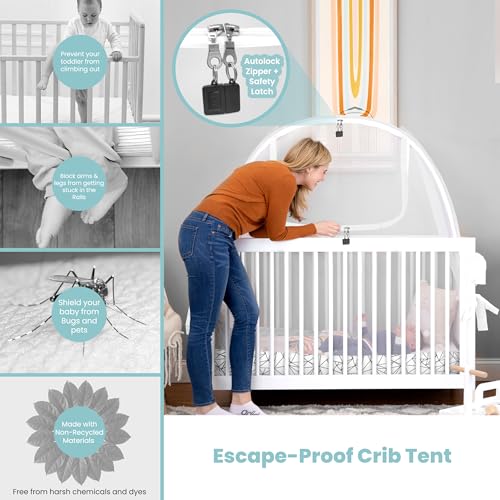
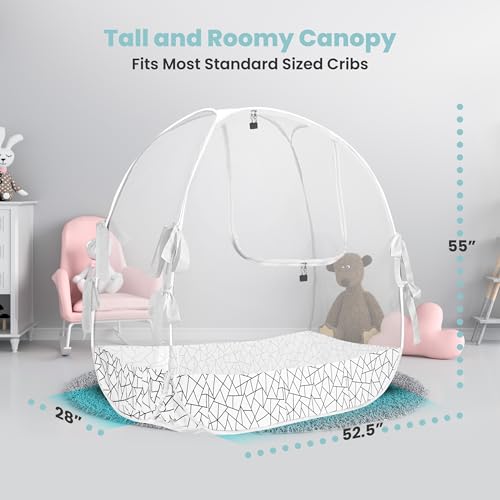
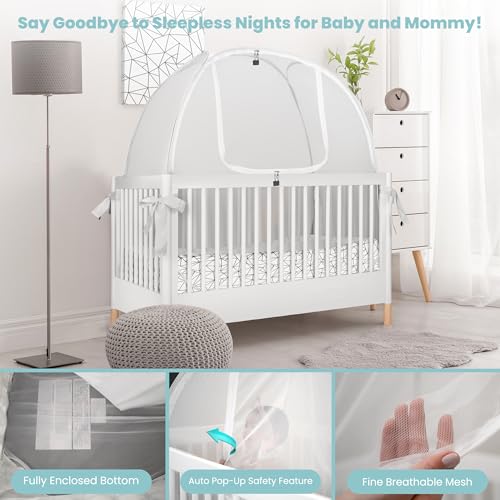
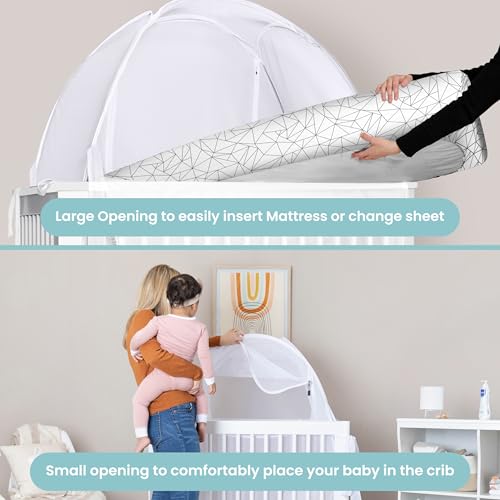
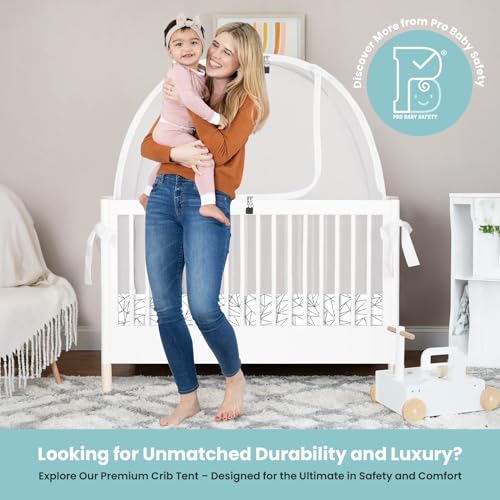
This is the most balanced option across all key categories, safety, breathability, ease of use, and fit. The auto-lock zipper with internal latch is the real differentiator, making it one of the few models that truly prevents self-escape. Combined with fine, see-through mesh and reliable pop-up installation, it’s no surprise this earns the ‘Best Overall’ label.
It doesn’t have the strongest rods or the largest headroom, but it doesn’t need them. For most families, this hits the sweet spot: secure enough for climbers, breathable enough for comfort, and simple enough for tired parents. Compared to others, it avoids the extremes, no bulk, no fragility, no fit issues. If you want one crib tent that does everything well without compromise, this is it.
Product photos
Crib Tent with Secure Auto-Lock

Strengths
- Auto-lock zipper
- Affordable price
- Good airflow
Trade-offs
- Basic support frame
- Mesh less durable long-term
- No reinforced rods
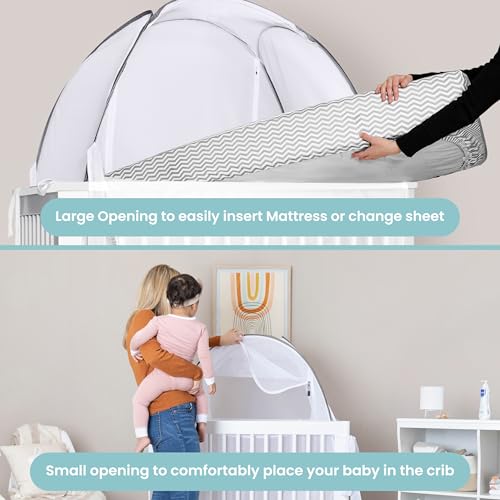
This model hits the sweet spot between price and performance, which is why it earns the ‘Best Value’ title. It includes the auto-lock zipper and internal safety latch, features usually found on more expensive tents, and delivers solid airflow with fine, see-through mesh. It fits standard US cribs reliably and sets up in seconds.
Owners report it lasts well beyond the climbing phase, often getting reused for travel or visits. It doesn’t have the sturdiest frame or the most premium fabric, but for the price, it covers all the essentials. Compared to others in its class, it offers better security than basic pop-up nets and better durability than ultra-cheap versions. My recommendation? If you want strong safety features without overspending, this is the smarter buy.
Product photos



Crib Tent with Double Zipper
Strengths
- Reinforced support frame
- Dual durable zippers
- High hole density mesh
Trade-offs
- Heavier than average
- Slightly more complex folding
- Higher price point
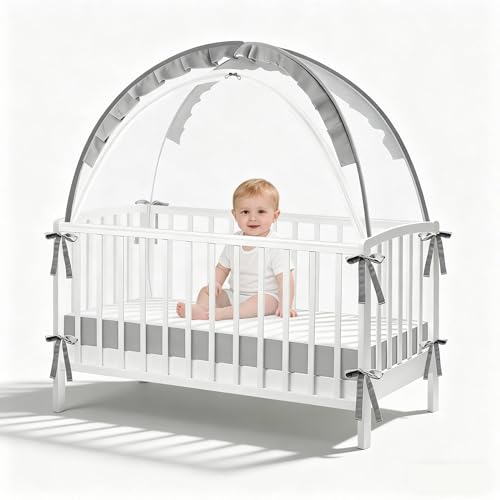
Durability is the name of the game here. With reinforced support rods and dual zippers built to handle daily use, this tent is designed to survive aggressive climbers and impatient parents alike. The 1200 holes per inch mesh is among the densest in the category, offering excellent bug protection and airflow, a rare combo.
Owners consistently report it holds its shape after months of use, with no sagging or zipper jams. The double zipper adds redundancy, which matters when one fails at 2 a.m. Setup is fast, and it folds compactly despite the sturdy build. If you’ve gone through flimsy tents before and are done replacing them, this is the one to get. It’s heavier, yes, but that’s the trade for real longevity.
Product photos
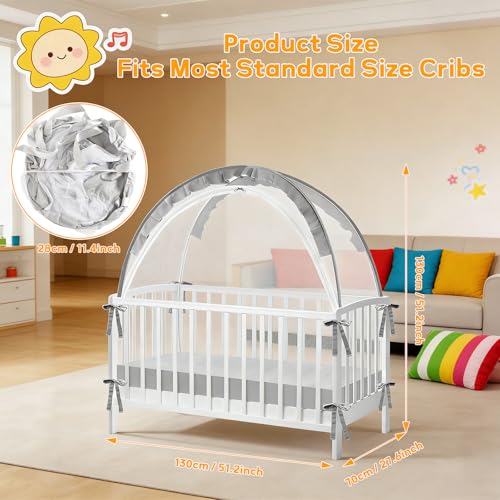
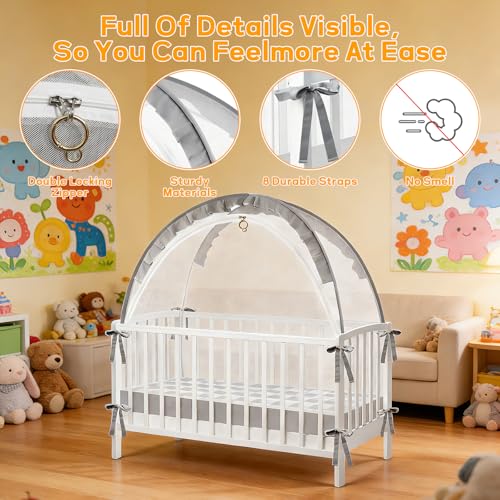
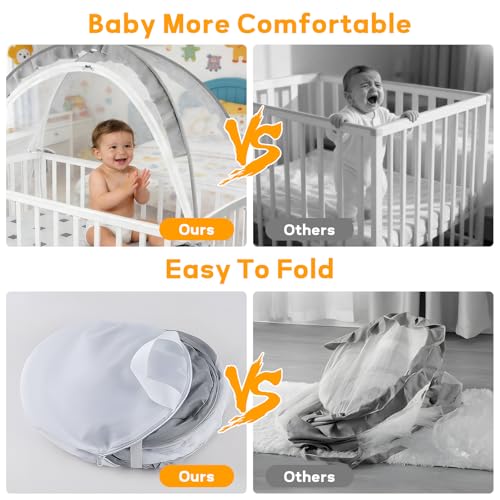
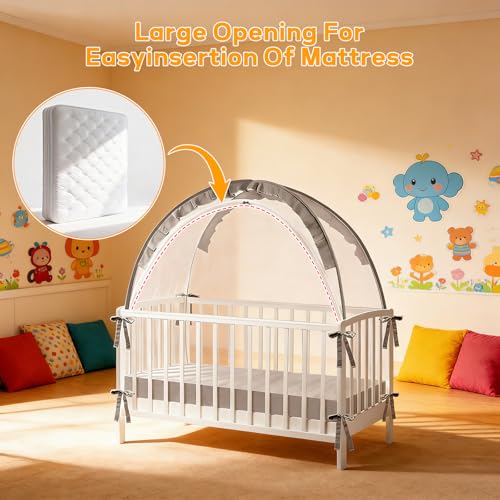
Crib Tent with Self-Locking Zipper

Strengths
- Full 360º coverage
- Strong support skeleton
- Silent metal zipper
Trade-offs
- Bulky when folded
- Takes effort to repack
- Heavier than average
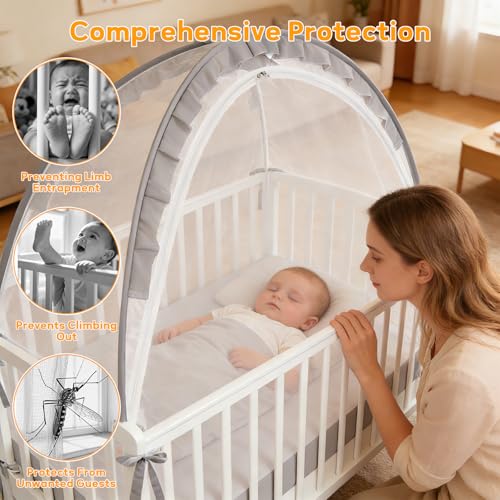
When safety is the absolute priority, this large crib tent delivers. The full 360º seamless design with a raised square roof and bottom mesh screen means no weak spots, limbs can’t get caught, and climbing is nearly impossible. The high-tenacity support skeleton keeps the canopy rigid and prevents collapse, which parents consistently highlight in reviews.
The two-way metal zipper is a standout, silent, smooth, and impossible for toddlers to open from the inside. On paper, it checks every box for a safety-first product. However, that robust build makes it bulkier than others, and folding it back down takes a little practice. If you’re looking for the most secure physical barrier available, this is the one I’d recommend over lighter models.
Product photos
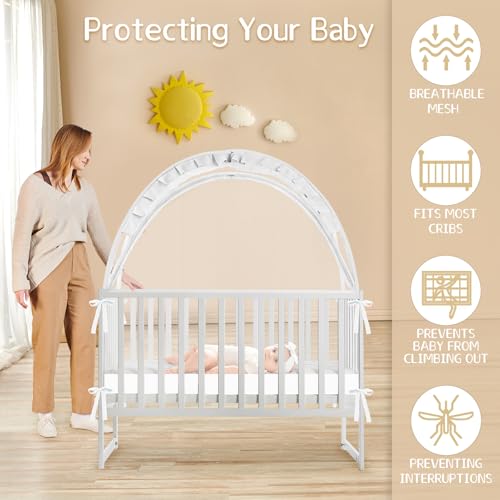
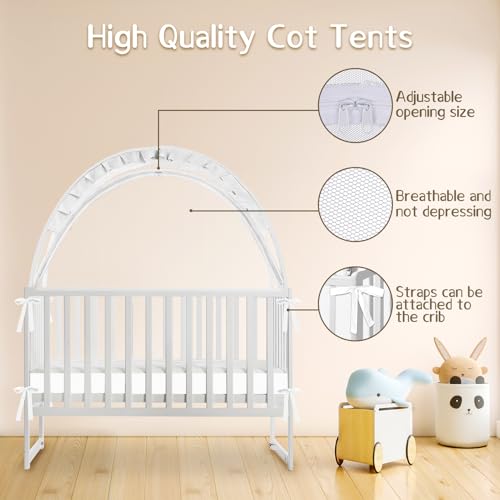
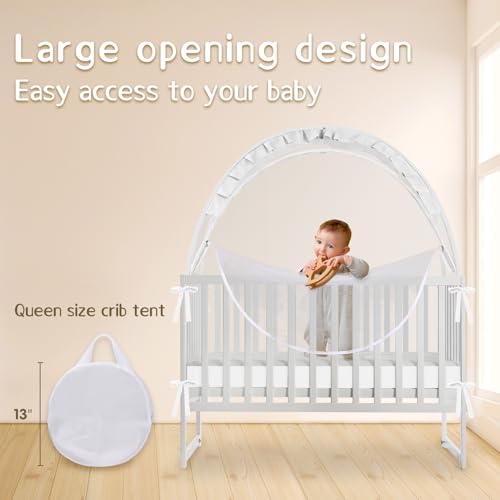
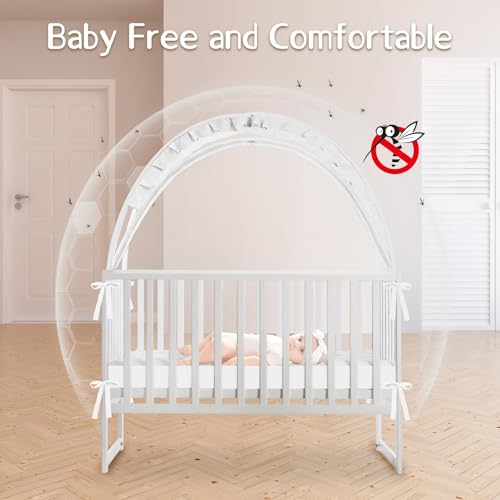
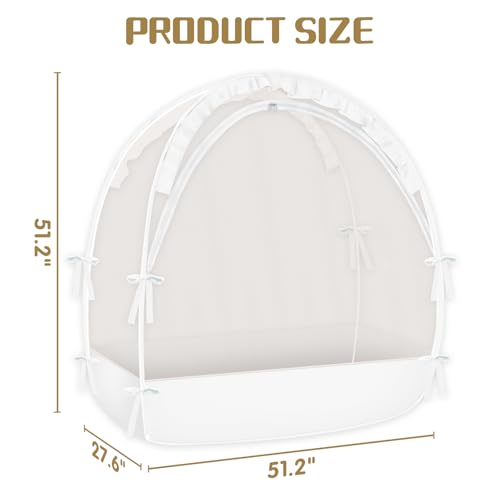
PandaEar Pop Up Crib Tent

Strengths
- Ultra-breathable mesh
- Quiet two-way zipper
- Reinforced support rods
Trade-offs
- Not auto-locking
- Grey color shows dust
- Ties could be longer
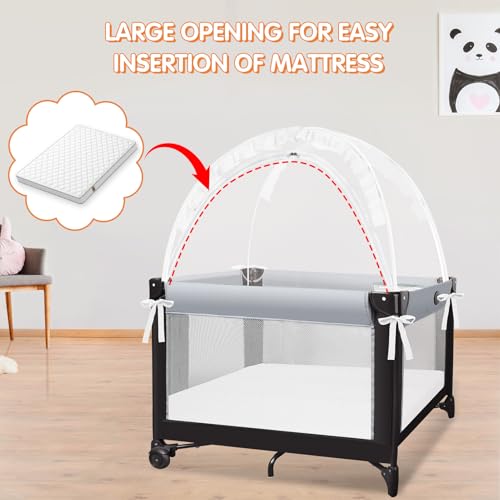
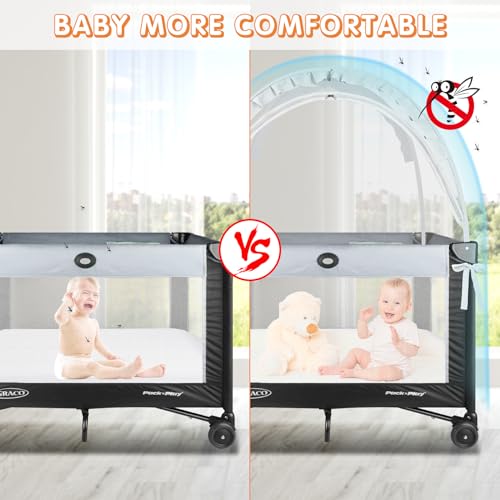
The PandaEar tent earns its ‘Best Breathable Mesh’ label thanks to its ultra-fine, upgraded polyester mesh. It’s noticeably soft and airy, with great airflow that keeps babies cool, a big win in warmer climates or stuffy rooms. Multiple owners mention their babies sleep better, likely due to the reduced heat and consistent ventilation.
It pops up fast, installs tool-free, and fits most standard cribs securely with tie-downs. The two-way zipper is quiet and smooth, though not auto-locking like some pricier models. The reinforced rods help maintain shape, but the overall structure isn’t as rigid as the top durability pick. Still, for breathable comfort and reliable daily use, this is my go-to recommendation when airflow is the main concern.
Product photos
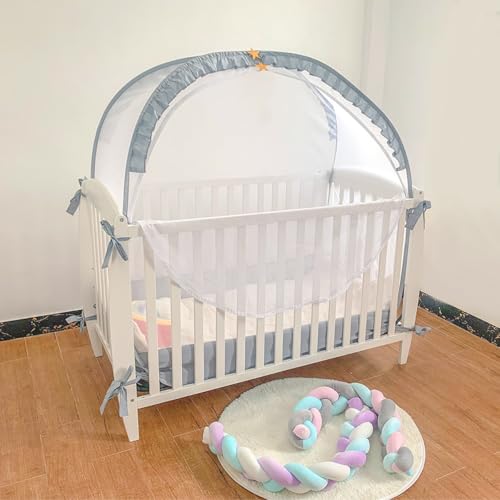
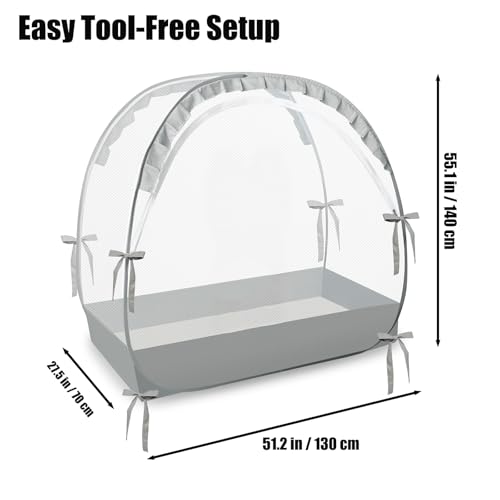
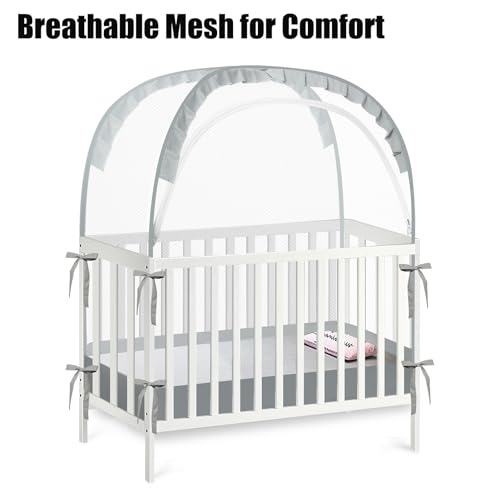
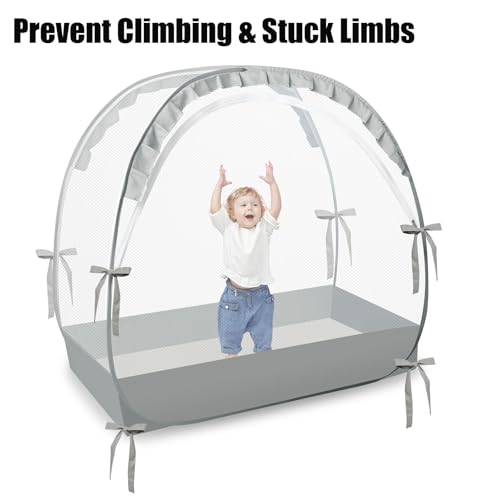

Orzbow Crib Tent Canopy

Strengths
- Elastic universal fit
- Breathable honeycomb mesh
- Two-way self-locking zipper
Trade-offs
- No support rods
- Slight sag on larger cribs
- Mesh visibility not top-tier
The Orzbow stands out for its elastic universal fit, a rare feature that actually delivers. With a stretch range from 150 to 181 inches, it adapts to a wide variety of crib shapes and sizes, including some round or oval models that other tents struggle with. Owners praise how snug it feels once secured, and the two-way zipper is both smooth and baby-proof.
The honeycomb mesh is breathable and holds up well to repeated use. While it doesn’t have rigid support rods, the elastic tension keeps it taut in most cases. It’s not the most spacious option, but for a one-size-fits-most solution that installs solo in under a minute, it’s hard to beat. I’d pick this over rigid pop-up models if you switch cribs often or rent furniture while traveling.
Product photos
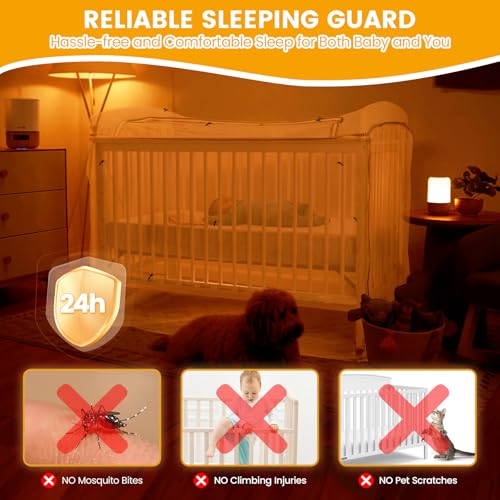
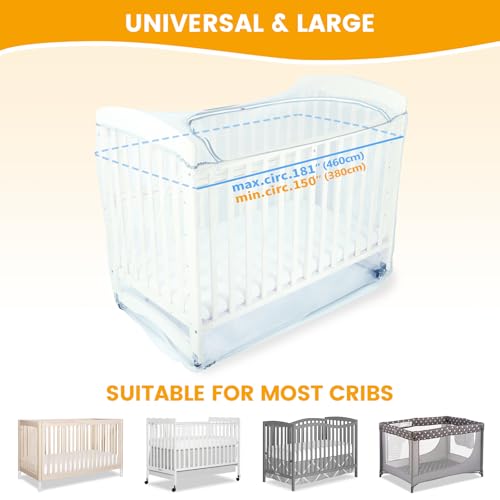
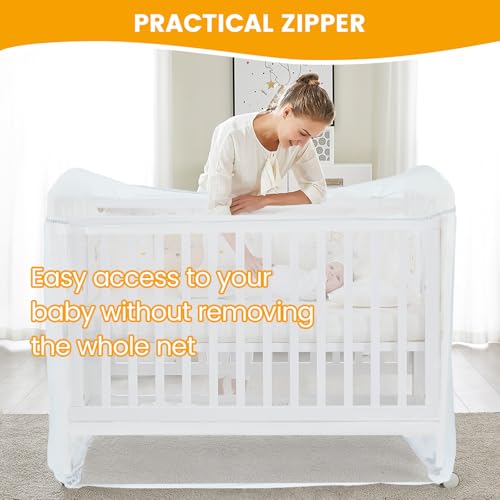
Pack N Play Tent Mini Crib
Strengths
- Pop-up design
- Durable zipper
- Easy installation
Trade-offs
- Fits only mini cribs
- No support rods
- Not for long-term use
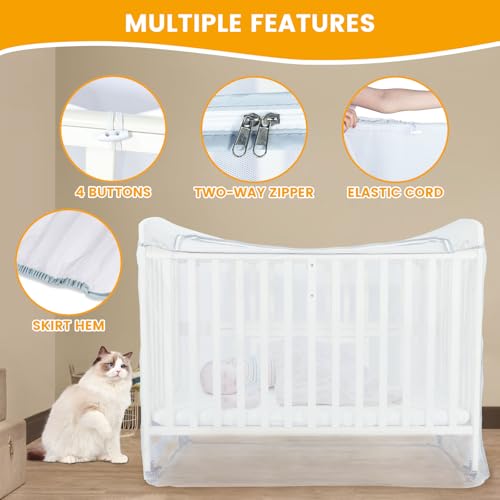
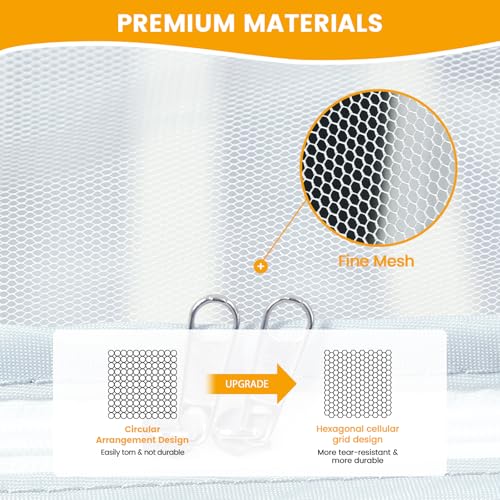
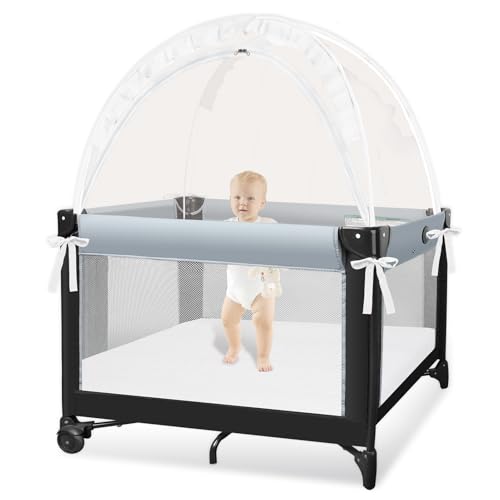
This mini crib tent is built with travel in mind, and that shows in its compact size and pop-up design. The strong mesh and durable zipper are positives, and owners consistently report it holds up well during short-term use. For families on the move, the ease of setup is a real win, just open, release the straps, and it’s ready in seconds.
Still, the ‘small’ sizing limits its use to mini cribs or Pack ‘n Plays, not full-sized models. If your child is already showing climbing tendencies in a standard crib, this won’t fit. The breathable mesh gets good marks, but the lack of reinforced rods means it can sag over time. It’s a solid pick for occasional use, but not for long-term nightly safety.
Product photos


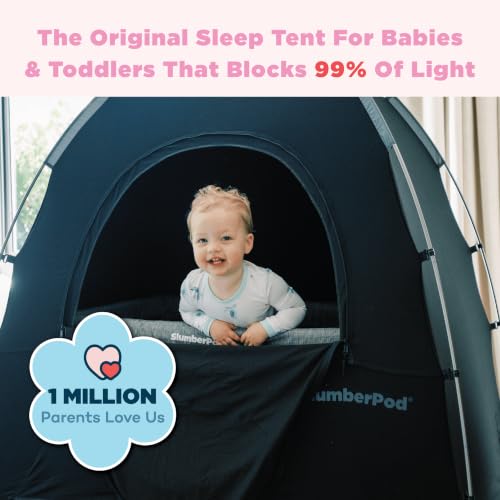
SlumberPod Blackout Sleep Tent

Strengths
- Blocks 99% of light
- Ventilation panels
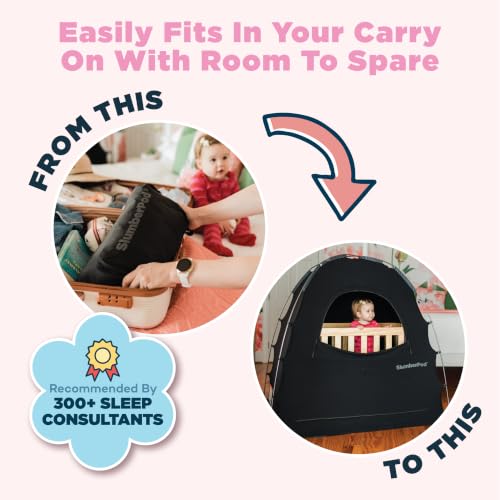
- Travel-friendly design
Trade-offs
- Not for climbing prevention
- Expensive
- Bottomless design requires secure base
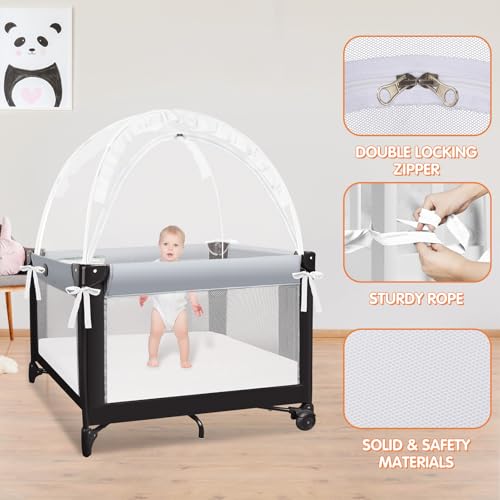
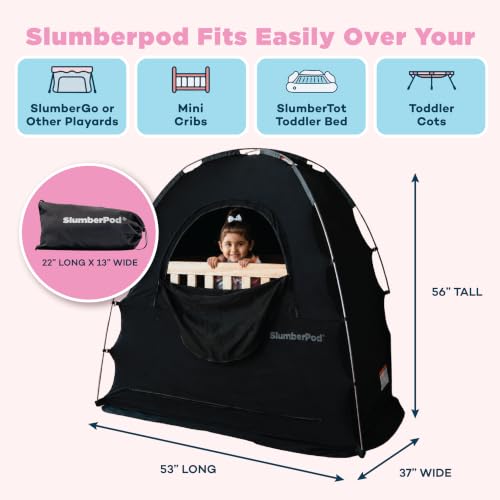
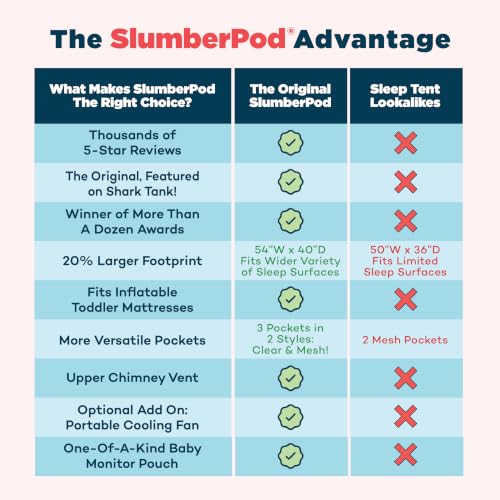
The SlumberPod isn’t a climbing deterrent, it’s a sleep environment transformer. Designed for light blocking and travel consistency, it delivers on its core promise: creating a dark, private space that mimics a home sleep routine. The blackout fabric reduces 99% of light, and the ventilation panels with fan and monitor pouches show thoughtful design.
Parents love it for travel, naps, and room sharing, and over a million have used it, with backing from sleep consultants, too. It’s not meant to stop climbing, though, and offers no structural support or zippers for containment. But if your goal is better sleep through darkness and routine, especially on the road, this is unmatched. I’d pair it with a separate climbing net if safety is also a concern.
Product photos

How We Tested crib tents
Rather than a hands-on lab test, this selection is a research-led comparison of published specifications and owner feedback. I assessed a wide range of crib tents, focusing on features detailed by manufacturers and then weighing those against what owners are saying about real-world performance. This involved comparing materials, construction, safety features, and ease of use. Finally, I ranked options based on how well they met key criteria for parents seeking a secure sleep space for their babies.
For crib tents, safety, breathability, and ease of installation were the most heavily weighted factors. A tent’s ability to reliably prevent a climbing baby from escaping is paramount, so auto-locking zipper mechanisms and sturdy construction were key. Breathability is also crucial to avoid overheating, and a design that’s simple to set up and take down is a definite plus for busy parents. Understanding infant sleep safety guidelines was also central to my evaluation.
Specifications reliably indicate dimensions and materials used, helping to determine fit and potential durability. However, I placed greater emphasis on owner reviews to gauge the true effectiveness of safety features, the quality of mesh airflow, and the long-term resilience of zippers and frames. Reputation and feedback from verified purchasers provided valuable insights into how these tents perform under everyday use, and helped me identify potential risks of crib tents that might not be apparent from specs alone.
How To Pick The Right crib tents
Choosing the right crib tent can bring a lot of peace of mind, but knowing what to look for beyond just “safety” is key.
A good crib tent prioritizes a secure, breathable environment for the baby. Parents should verify the mesh density to prevent escapes and insect intrusion, the zipper mechanism’s locking capability, and the overall structural integrity to resist tipping or collapse. Material quality is also essential for durability and ease of cleaning.
Zipper Security Is Paramount
Forget simple Velcro closures. When it comes to crib tents, the zipper is the linchpin of safety. You want a system that you can operate easily, but that is genuinely baffling to a determined little climber. Auto-locking zippers, like those found in the Crib Tent with Auto-Lock, are a huge step up. Don’t assume all “auto-lock” systems are equal; read reviews specifically about how difficult (or easy) it is for babies to manipulate. Even better is a dual-lock system, an auto-lock plus a separate latch or buckle.
Mesh Quality & Breathability
Mesh is the workhorse of a crib tent, handling both ventilation and visibility. Don’t fall for marketing hype about “breathable” mesh without looking at the specifications. Higher hole counts (like the 1200 holes per inch in the Crib Tent with Double Zipper) mean better airflow and a tighter barrier against insects. However, extremely fine mesh can sometimes reduce visibility, so it’s a balancing act. I also recommend looking for mesh that’s described as durable; some cheaper options snag and tear easily.
Fit & Portability Considerations
While many crib tents claim a “universal fit,” that isn’t always true. Before buying, confirm the dimensions of the tent and compare them to your crib. Consider whether you might want to use the tent for travel. If so, a pop-up design (like the PandaEar Pop Up Crib Tent) is incredibly convenient. Here’s what to keep in mind:
- Weight: A heavier tent is less ideal for travel.
- Packability: How compactly does it fold down? A dedicated carry bag is a plus.
- Setup Time: A quick, tool-free setup is essential for use at grandma’s house or on vacation.
A crib tent shouldn’t feel like a cage. Ensure sufficient airflow and visibility so you can easily check on your baby and they don’t feel isolated.
If you’re looking for a safe and secure sleep space for your little one while traveling, consider how a portable tent compares to bringing along a familiar play yard. For creating fun spaces at home, you might also enjoy exploring some DIY kids sleepover tents and indoor blanket fort ideas. And when the family’s ready for bigger adventures, we also have reviews of family-sized camping tents to help you plan your next outdoor escape.
Crib Tents Compared
Here’s a comparison of key specifications for various crib tents to help you find the right fit for your needs.
| Product Name | Zipper Type | Mesh Breathability | Crib Fit | Safety Feature | Best For |
|---|---|---|---|---|---|
| Crib Tent with Auto-Lock Zipper | Auto-Lock | High | Standard (52.5″) | Auto-Lock Zipper | Best Overall |
| Crib Tent with Secure Auto-Lock | Auto-Lock | High | Standard (52.5″) | Auto-Lock Zipper | Best Value |
| Crib Tent with Double Zipper | Double | High | Cribs/Playards | Full Coverage | Best Durability |
| Crib Tent with Self-Locking Zipper | Self-Locking | High | N/A | Two-Way Locking Zipper | Best for Safety |
| PandaEar Pop Up Crib Tent | Two-Way | High | Standard | Secure Zipper | Best Breathable Mesh |
| Orzbow Crib Tent Canopy | Two-Way | High | Universal (150-181″) | Elastic Fit | Best Universal Fit |
| Pack N Play Tent Mini Crib | N/A | High | Mini Crib | Prevents Climbing | Best for Travel |
| SlumberPod Blackout Sleep Tent | N/A | N/A | Playards/Mini Crib | Blackout Fabric | Best Light Blocking |
Frequently Asked Questions
What age range are crib tents suitable for?
Most crib tents are designed for babies who can sit up and are starting to attempt to climb out of their cribs, typically around 6 months to 2 years old. However, discontinue use once your child can confidently and consistently climb over the tent’s walls.
Can a crib tent create a suffocation hazard?
A properly designed crib tent shouldn’t pose a suffocation risk. Look for tents with high-density, breathable mesh and ensure there’s ample airflow. Avoid tents with any loose fabric or components that could become entangled.
Are crib tents a good substitute for lowering the crib mattress?
While a crib tent can add a layer of safety, it’s not a replacement for lowering the crib mattress to its lowest setting. Lowering the mattress is always the first and most effective step in preventing falls, and a tent can be used as an additional precaution.
How easy are crib tents to clean?
Most crib tents feature removable fabric components and wipeable mesh, making cleaning relatively easy. Check the manufacturer’s instructions, but generally, a damp cloth with mild soap is sufficient. Regular cleaning is important for hygiene and to maintain the tent’s structural integrity.
What if my baby doesn’t like being confined in a crib tent?
Some babies adjust quickly, while others may initially resist. Introduce the tent gradually, starting with supervised naps and playtime. If your baby becomes distressed, remove the tent and try again later. For family-friendly car camping tents, consider a more open sleep arrangement when traveling.
The Bottom Line
Choosing a crib tent really comes down to balancing security with convenience. You want something that reliably keeps your little one contained, but isn’t a headache to use every single night. For the strongest overall combination of features and peace of mind, I recommend the Crib Tent with Auto-Lock Zipper. It hits the sweet spot for safety, breathability, and ease of operation, based on owner feedback and its well-designed locking system.
If you’re on a tighter budget or need a versatile option for different sleep spaces, the Crib Tent with Secure Auto-Lock offers excellent value. For parents prioritizing long-term durability and complete coverage, the Crib Tent with Double Zipper stands out. And if you’re struggling with how to store Kindersense tent safely, there are resources available to help with setup and takedown.
Ultimately, the specifications matter less than the fundamentals: a secure, breathable environment, and your ability to quickly and confidently check on your baby. Don’t get bogged down in hole counts or fancy materials if the core safety features aren’t solid. A well-chosen crib tent is about creating a safe space, not just ticking boxes on a features list.
