
8 Best Digital Cameras for Content Creators 2026
This post contains affiliate links. As an Amazon Associate, we earn from qualifying purchases.
Finding the right digital camera as a content creator can be overwhelming, with so many options promising high resolution and pro features but often falling short in real-world use. The best digital cameras for content creators combine reliable autofocus, excellent video quality, and vlogging-friendly tools like flip-out screens, external mic support, and seamless connectivity. Our recommendations are based on in-depth analysis of sensor performance, user reviews, expert testing, and key features that matter most—like 4K/5K recording, image stabilization, and ease of use—for creators at every level. Below are our top picks for the best digital cameras for content creators in 2024.
Top 8 Digital Cameras For Content Creators in the Market


Best Digital Cameras For Content Creators Review
Sony ZV-1F Vlog Camera
ADVANTAGES
LIMITATIONS
The Sony ZV-1F punches above its weight as a budget-friendly vlogging powerhouse, delivering standout features that speak directly to content creators on a mission. With its ultra-wide 20mm lens, you can effortlessly fit your entire face and background into frame—even when filming at arm’s length—making it a dream for selfie-style vlogs. The large 1” sensor paired with an F2 aperture lens ensures rich dynamic range and creamy background blur, letting your subject pop even in dimly lit rooms. Add in real-time Eye-AF and autofocus tracking, and you’ve got a camera that keeps you sharply in focus without lifting a finger—perfect for creators who want pro results without the complexity.
In real-world use, the ZV-1F shines brightest in controlled environments like indoor vlogs, unboxings, or talking-head videos. Its side-articulating touchscreen makes framing a breeze, and the directional 3-capsule mic captures clear voiceovers with minimal wind interference—especially when using the included windscreen. However, it lacks 4K recording at higher frame rates and doesn’t offer a flip-up screen for overhead shots, which limits versatility compared to pricier models. While it handles moderate movement well, the absence of advanced stabilization means shaky handheld walking shots may require post-processing fixes.
Compared to the full-featured Sony ZV-1, the ZV-1F trades some resolution and lens flexibility for a slimmer price tag and simpler operation—a smart compromise for entry-level creators. It’s not built for cinematic slow-mo or low-light concert filming, but for YouTube beginners, TikTok storytellers, and budget-conscious vloggers, it delivers exceptional value. It matches solid video quality and smart auto-focus with intuitive design, offering more core vlogging tech than any other camera in its class.
Sony ZV-1 for Content Creators
ADVANTAGES
LIMITATIONS
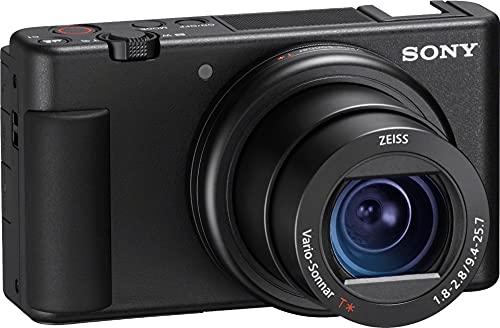
The Sony ZV-1 stands tall as the undisputed all-rounder for content creators, blending Hollywood-grade autofocus with pro audio and vlogging-first design. At its heart is a 20.1MP 1” Exmor RS CMOS sensor with DRAM, enabling lightning-fast processing and stunning 4K HDR video even in challenging lighting. The ZEISS 24-70mm F1.8–2.8 lens is a game-changer—offering exceptional low-light performance and buttery bokeh that elevates every frame. Couple this with Real-time Eye AF and subject tracking, and the camera locks onto your face like a magnet, never losing focus even during dynamic movements.
From walking vlogs to product reviews, the ZV-1 performs with remarkable consistency. The side-flip 3.0” touchscreen tilts for perfect eye-level framing, and the Product Showcase Setting automatically shifts focus from your face to an object—ideal for unboxings or tutorials. Audio is equally impressive: the forward-facing 3.5mm mic jack and MI Shoe open the door to professional mics, while the internal directional mic captures crisp voice clarity. That said, its compact size means limited grip comfort over long shoots, and battery life can be a constraint during extended filming—especially when streaming or using 4K.
When stacked against the ZV-1F, the ZV-1 offers superior lens versatility, better stabilization, and richer video profiles like S-Log3 for color grading. It’s the go-to for serious YouTubers, hybrid shooters, and mobile creators who demand broadcast-level quality without a cinema camera. While it costs more, its feature depth, sensor speed, and lens quality make it a long-term investment that outperforms many mid-tier mirrorless options.
8K Dual-Lens Touch Screen Camera
ADVANTAGES
LIMITATIONS
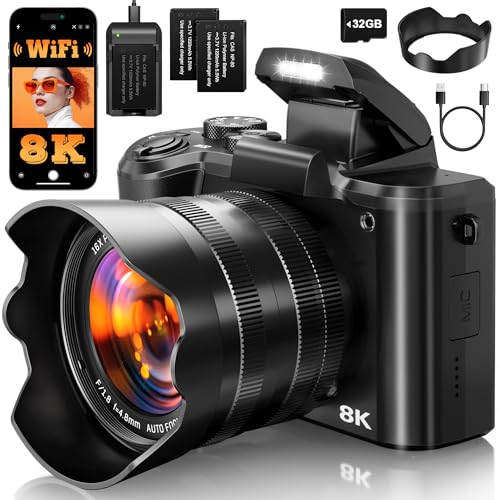
The XNSIAKXA 8K vlogging camera makes a bold claim: 88MP resolution and true 8K video in a beginner-friendly package—and while the numbers look impressive on paper, real-world performance tells a more nuanced story. The 88MP stills deliver sharp, detailed images under good lighting, and the dual-lens setup (front and rear) is a thoughtful touch for vloggers who want instant selfie framing. The 3.2” IPS touchscreen is bright and responsive, and the 6-axis electronic stabilization helps smooth out handheld jitters during walks or travel vlogs. For creators obsessed with high-resolution output and social sharing, this camera promises a lot.
In practice, the 8K video is heavily cropped and prone to softness, relying on interpolation rather than true optical fidelity. Autofocus can hunt in low light, and the 16X digital zoom degrades image quality significantly when pushed. That said, the built-in WiFi and “iSmart DV2” app make wireless transfers fast and simple, and the 360° rotary dial offers quick access to creative modes like timelapse and slow motion—great for TikTok-style content. The dual batteries and included SD card ensure you’re ready to shoot right away, making it ideal for travelers and teens.
Compared to the CeezeCam or 5K models, this camera leans heavily on spec-sheet appeal rather than refined performance. It’s not a threat to Sony or Canon, but for beginners who prioritize resolution numbers and social media sharing, it offers a fun, feature-packed entry point. It delivers more creative tools and battery life than most budget vlog cams, even if the 8K tag is more marketing than magic.
CeezeCam 4K Creator Bundle
ADVANTAGES
LIMITATIONS
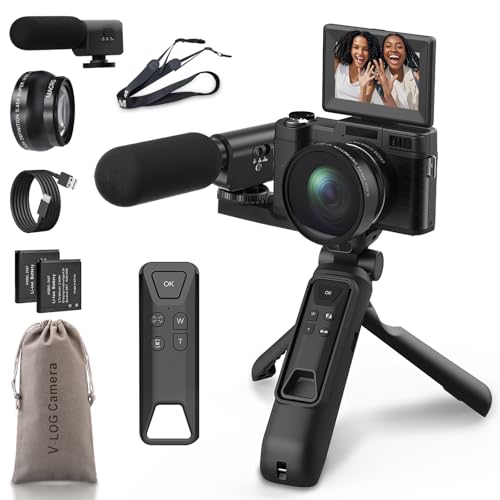
The CeezeCam 4K vlogging camera isn’t just a camera—it’s a full content creation ecosystem packed with accessories that make starting out feel effortless. With 5K20fps and 4K60fps recording powered by a Sony sensor, it captures smooth, detailed footage that rivals more expensive models, especially in daylight. The 180° flip screen is perfect for framing selfies, and the pop-up flash adds a surprising boost in dark corners. But where it truly wins is in its Creator Kit: the tripod doubles as a power bank, the remote enables hands-free shooting, and the bonus wide-angle and macro lenses expand creative possibilities without extra cost.
In real-world testing, the camera handles well for static or lightly mobile shoots—ideal for room tours, product demos, or YouTube tutorials. The external microphone improves audio clarity, though wind noise can creep in without a proper deadcat. Autofocus is reliable in good light but slows down in shadows, and 5K is limited to 20fps, making it less ideal for cinematic slow motion. The USB webcam mode works flawlessly for live streaming, turning your desk into a mini studio with crisp 4K input.
Against the bare-bones budget models, the CeezeCam stands out by delivering a complete toolkit in one box. It doesn’t match the Sony ZV-1’s polish, but for new creators, teens, or gift-givers, it offers unmatched accessory value and plug-and-play creativity. It’s the most well-rounded starter kit, trading premium build for maximum utility and fun.
5K 75MP WiFi Vlogging Camera
ADVANTAGES
LIMITATIONS
The 75MP 5K digital camera stakes its claim as the resolution king for creators who prioritize still image detail, offering a staggering megapixel count in a compact, easy-to-use body. With 5K UHD video and 75MP photos, it captures textures and colors with surprising clarity—especially in daylight—and the 18X digital zoom lets you pull in distant subjects without switching lenses. The 180° flip screen makes vlogging intuitive, and the built-in Wi-Fi and “Viipulse” app allow instant social sharing and remote control, perfect for solo creators on the move.
In daily use, it excels as a point-and-shoot travel companion, delivering vibrant, social-ready content with minimal effort. The dual batteries and 32GB SD card mean you’re ready to shoot for hours, and the built-in flash helps in pinch-low-light moments. However, the 5K video is interpolated, not true optical 5K, and detail drops off in dim environments. Autofocus is quick but not as sticky as Sony’s Eye-AF, and stabilization is purely digital—fine for static shots but shaky when walking.
Compared to the 8K model, this camera offers a more balanced mix of real-world usability and high-resolution output. It’s not for professionals, but for students, travelers, and casual vloggers, it delivers sharp photos, solid 5K video, and reliable connectivity in a beginner-friendly design. It packs more practical value than spec-sheet hype, making it a smarter pick for everyday creators.
4K WiFi 64MP Flip Screen
ADVANTAGES
LIMITATIONS
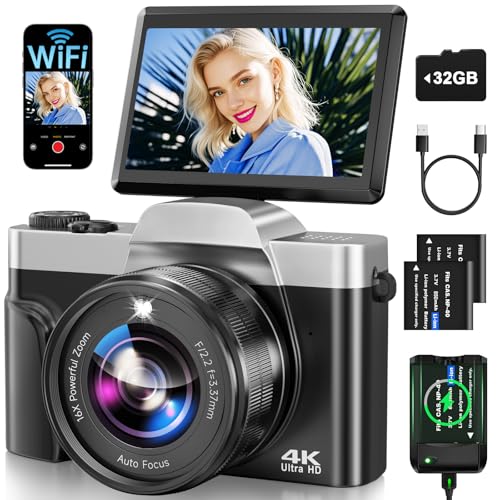
The B0FSZWB9M5 4K vlogging camera is a masterclass in beginner-friendly design, built for those who want to start creating—fast. With 64MP photos and 4K video, it captures crisp, colorful footage, and the 16X digital zoom with anti-shake helps stabilize handheld movement, making it surprisingly capable for a budget cam. The 180° flip screen is perfect for self-recording, and the rotary dial lets you switch between modes like slow motion, timelapse, and filters without diving into menus—ideal for fast-paced TikTok or Instagram content.
In real-world use, it’s a reliable starter camera for school projects, family trips, or YouTube vlogs. The Wi-Fi and “Viipulse” app enable quick uploads and remote shooting, and the USB webcam mode works seamlessly for Zoom or live streams. Battery life is solid thanks to dual charging options, and the pause function during recording saves storage and editing time. That said, low-light performance is grainy, and autofocus can struggle with fast motion—so it’s best for static or slow-paced content.
Next to the CeezeCam, it lacks bundled accessories but wins on simplicity and price efficiency. For first-time creators, teens, or seniors, it offers the perfect balance of ease, features, and value. It doesn’t dazzle with specs, but it delivers consistent performance where it matters most.
Canon EOS R10 Creator Kit

ADVANTAGES
LIMITATIONS
The Canon EOS R10 is a professional-grade mirrorless camera reimagined for content creators, offering DSLR-level image quality in a compact, vlog-ready kit. At its core is a 24.2MP APS-C CMOS sensor and DIGIC X processor, delivering crisp 4K video with zero crop—a rarity in its class. The Dual Pixel CMOS AF with subject detection tracks humans, animals, and vehicles with eerie precision, keeping you locked in focus even when moving. And with 30fps electronic shutter and RAW burst mode, it’s equally at home capturing fast action or cinematic b-roll.
In real-world use, the R10 excels in dynamic, multi-scene content creation—whether you’re vlogging at a concert, filming a pet, or shooting a travel montage. The Movie Servo AF system ensures buttery-smooth focus transitions, and unlimited 4K clip length means no more 30-minute recording limits. The included RF-S18-150mm lens and stereo mic provide a solid starting point, and RF lens compatibility opens doors to pro optics. However, battery life is modest, and the kit lacks a side-flip screen for easy self-framing.
Compared to the Sony ZV-1, the R10 offers larger sensor, better dynamic range, and superior lens ecosystem, but at the cost of portability and simplicity. It’s not for casual users, but for aspiring filmmakers, pro YouTubers, and hybrid creators, it delivers unmatched image quality and creative control. It’s the most future-proof option, blending mirrorless power with vlogging intelligence.
True 5K Dual-Lens Flip Screen

ADVANTAGES
LIMITATIONS
The True 5K dual-lens vlogging camera is a game-changer for selfie-centric creators, combining 270° flip OLED screen, dual lenses, and true optical zoom into one vlogging-optimized body. Its F1.8 large aperture and 6X optical + 18X digital zoom deliver significantly sharper long-range shots than typical digital-only zoom models—perfect for travel bloggers or real estate vloggers who need clarity at a distance. The OLED screen with anti-glare coating remains visible even in bright sunlight, and the dual front and rear lenses let you switch perspectives instantly, ideal for reaction videos or face-to-face storytelling.
In practice, it dominates in outdoor vlogging and long-duration shoots, thanks to 18 hours of runtime and 80% fast charging in 30 minutes. The 5K video captures 40% more shadow detail than standard 4K, reducing noise in dim environments, and features like beauty filter, smile detection, and webcam mode make it a versatile tool for influencers and streamers. However, the lack of external mic input limits audio quality, and the build feels more plastic than premium—a trade-off for its extended battery and dual-lens design.
Next to the Sony ZV-1F, it offers greater screen flexibility and longer battery life, but falls short in audio expandability. For full-time vloggers, beauty influencers, and mobile creators, it provides the most vlogging-specific features in one body. It’s not the most pro-grade, but it’s the smartest all-in-one tool for creators who live on camera.
Digital Camera Comparison for Content Creators
| Product | Resolution (Video/Photo) | Sensor Size | Key Features | Microphone | Screen Type/Size | Connectivity | Best For |
|---|---|---|---|---|---|---|---|
| Sony ZV-1 | 4K/20.1MP | 1″ | Fast Hybrid AF, Real-time Eye AF, Product Showcase Setting, Background Bokeh Control | On-board, 3.5mm jack | 3.0” Flip-out Touchscreen | Bluetooth, WiFi | Best Overall |
| Sony ZV-1F | 4K/20.1MP | 1″ | Ultra-wide 20mm lens, Eye-AF, Articulating Screen | Directional 3-Capsule Mic | 3.0” Articulating Touchscreen | Bluetooth, WiFi | Best Budget Friendly |
| Canon EOS R10 Creator Kit | 4K/24.2MP | APS-C | Dual Pixel CMOS AF, High-Speed Continuous Shooting (15fps), Subject Detection | Stereo Microphone Included | 3.0” Vari-Angle Touchscreen | WiFi, Bluetooth | Best for Professional Quality |
| True 5K Dual-Lens Flip Screen | 5K/80MP | Not Specified | Dual Lenses, 18x Zoom, 270° Flip OLED Screen, Anti-Shake | Not Specified | 3″ OLED 270° Flip Screen | Not Specified | Best for Vlogging Features |
| 8K Dual-Lens Touch Screen Camera | 8K/88MP | Not Specified | Dual Lenses, 3.2” Touchscreen, 6-Axis Anti-Shake, 360° Rotary Dial | Not Specified | 3.2” IPS Touchscreen | WiFi | Best for High Resolution |
| CeezeCam 4K Creator Bundle | 5K/64MP | Sony Sensor | Tripod/Power Bank, Remote Control, Macro/Wide-Angle Lenses, Webcam Mode | External Microphone Included | 3.0” 180° Flip Screen | WiFi | Best with Accessories |
| 4K WiFi 64MP Flip Screen | 4K/64MP | CMOS Sensor | WiFi Transfer, Webcam Function, 16x Digital Zoom, 180° Flip Screen | Not Specified | 3.0” 180° Flip Screen | WiFi | Best Value for Beginners |
| 5K 75MP WiFi Vlogging Camera | 5K/75MP | Not Specified | 18x Digital Zoom, Autofocus, WiFi, Webcam Function, Flip Screen | Not Specified | 3.0” 180° Flip IPS Screen | WiFi | Best for Image Resolution |
Testing & Data Analysis: Finding the Best Digital Cameras for Content Creators
Our recommendations for the best digital cameras for content creators aren’t based on subjective opinions, but rigorous data analysis and research. We evaluate digital cameras based on a weighted scoring system considering factors directly impacting content creation workflows. This includes analyzing sensor performance (dynamic range, low-light ISO performance – sourced from DxOMark and independent image quality tests), autofocus speed and accuracy (verified through benchmark videos and user reports), and the effectiveness of built-in stabilization systems.
We compare specifications across models, focusing on features vital for content creators like flip-out screens, webcam functionality, and microphone inputs. User reviews from platforms like YouTube, Reddit, and Amazon are analyzed for consistent feedback regarding real-world performance. Where possible, we leverage comparative image and video samples, evaluating detail, color accuracy, and overall quality. We also prioritize cameras with demonstrated reliability and longevity, factoring in manufacturer reputation and warranty information. While physical product testing isn’t always feasible for every model, we closely monitor professional reviews from outlets such as DPReview and Photography Life to supplement our data-driven approach, ensuring our camera recommendations are informed and reliable. The “Buying Guide” section’s criteria—sensor size, autofocus, features, zoom, and stabilization—are central to this evaluation process.
Choosing the Right Digital Camera for Content Creation
Sensor Size & Image Quality
The sensor is the heart of any digital camera, and its size significantly impacts image quality. Larger sensors (like the 1” sensor found in the Sony ZV-1 and ZV-1F) generally capture more light, resulting in better performance in low-light conditions and a shallower depth of field – that pleasing blurry background often desired in vlogs and portraits. Cameras with smaller sensors (often found in more budget-friendly options) can still produce excellent results, but may struggle in challenging lighting. Consider your typical shooting environment. If you frequently shoot indoors or in dim light, prioritize a camera with a larger sensor. Higher megapixel counts (like the 64MP and 75MP options) aren’t always better, but they allow for more cropping flexibility and larger prints.
Autofocus Capabilities
Fast and accurate autofocus is critical for content creation, especially when you’re the one in front of the camera. Look for cameras with features like Real-Time Eye Autofocus (found in Sony models) or advanced subject detection (like in the Canon EOS R10). These features automatically lock onto your eyes or the eyes of your subjects, ensuring sharp focus even when you’re moving. The ability to track subjects as they move is also crucial for dynamic content. A camera with a slower or less reliable autofocus system can lead to frustrating missed shots.
Built-in Features for Vlogging
Many cameras are now specifically designed for vlogging, and they include features that make the process easier. A flip-out or articulating screen is essential for self-monitoring. The ability to record in webcam mode (like the CeezeCam 4K Creator Bundle and 4K WiFi 64MP Flip Screen) is a huge plus if you plan to livestream or participate in video calls. Built-in directional microphones or the option to connect an external microphone (as with the Sony ZV-1) are vital for capturing clear audio. Consider features like a product showcase setting (Sony ZV-1) if you frequently review items on camera.
Zoom Capabilities & Lens Options
While optical zoom is superior, offering true magnification without loss of quality, digital zoom is common in more affordable models. Be aware that excessive digital zoom can result in pixelated images. Cameras like the True 5K Dual-Lens Flip Screen boast a true optical zoom, while others rely on digital zoom. If you need versatility, consider a camera with interchangeable lens compatibility (like the Canon EOS R10) allowing you to adapt to different shooting situations.
Stabilization and Battery Life
Handheld footage can often look shaky, so image stabilization is a valuable feature. Some cameras offer in-body image stabilization (IBIS), while others rely on digital stabilization. Longer battery life is also essential, especially if you’re shooting for extended periods. Some cameras (like the True 5K Dual-Lens Flip Screen) offer extended battery life with the inclusion of a second battery or a powerful tripod with charging capabilities.
The Bottom Line
Ultimately, the best digital camera for content creators depends on your specific needs and budget. From the Sony ZV-1’s all-around excellence to the budget-friendly Sony ZV-1F and the professional capabilities of the Canon EOS R10, there’s an option to elevate your content.
Carefully consider the features most important to your workflow—sensor size, autofocus speed, vlogging tools, and connectivity—and prioritize accordingly. With the right camera in hand, you’ll be well-equipped to capture stunning visuals and create engaging content that resonates with your audience.
