
7 Best Dome Tents of 2026
This post contains affiliate links. As an Amazon Associate, we earn from qualifying purchases.
The Coleman Skydome 8-Person stands out as the best overall dome tent for groups and families, offering reliable weather protection and easy setup. For budget-focused campers, the Amazon Basics 2-Person delivers solid performance without breaking the bank. If you want more light and visibility, the Happy Travel 4-Person brings strong waterproofing and spacious design to the mix.
Most campers don’t realize how much a flimsy dome tent can ruin a trip, from leaking floors to suffocating condensation. I’ve seen too many people buy based on price or capacity alone, only to struggle with sagging rainflies or collapsed poles in the wind.
This guide cuts through the noise. I compared specs and real-world owner feedback to find dome tents that actually hold up. You’ll learn what details matter most, from frame strength to ventilation, so you can pick one that fits your needs and stays dry when it counts.
Top 7 Dome Tents in the Market
The Best Dome Tents, Reviewed
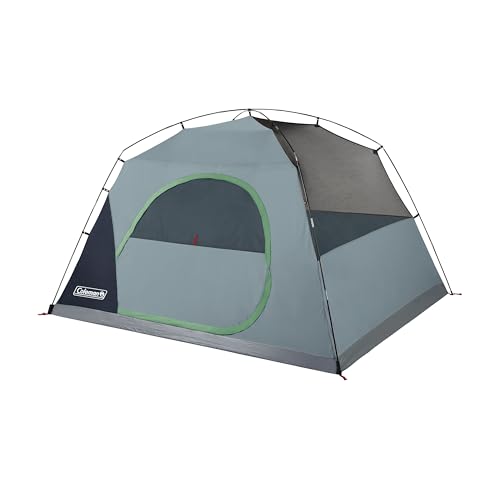
Coleman Skydome 8-Person Tent

Strengths
- Fast, tool-free setup
- Excellent weather resistance
- More headroom than average
Trade-offs
- Heavier than backpacking tents
- Rainfly blocks some light
- Bulkier packed size
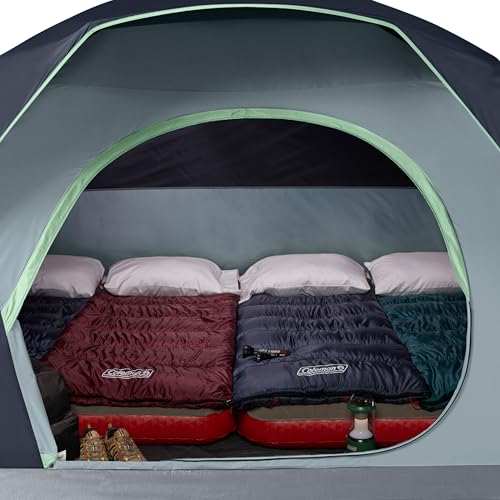
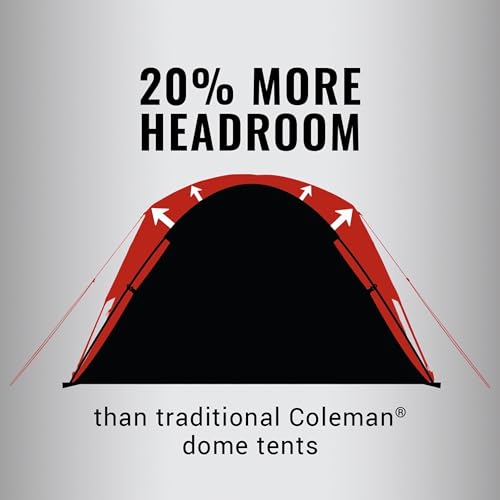
The Coleman Skydome feels like the gold standard for family dome tents, not flashy, but built with the kind of proven reliability that keeps it on best-seller lists. The 5-minute setup with pre-attached poles is a real time-saver, and owners consistently praise how straightforward it is, even for first-timers. With nearly vertical walls and 20% more headroom than older dome styles, it actually feels roomy, not claustrophobic, which makes a big difference when you’re stuck inside during a drizzle.
Its WeatherTec system, welded seams, inverted stitching, and a full rainfly, has held up well in real-world conditions according to long-term reviews. It’s been tested to handle 35 mph winds, and while no dome tent loves a storm, this one has a better track record than most in moderate weather. Compared to budget models, it’s heavier, but that’s the trade-off for durability and dryness.
Product photos

Amazon Basics 2-Person Dome Tent

Strengths
- Affordable price
- Lightweight and compact
- Simple, fast setup
Trade-offs
- Low headroom
- Basic waterproofing
- Not for harsh weather
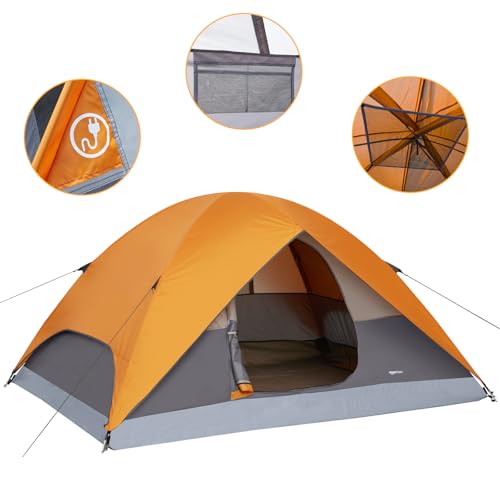
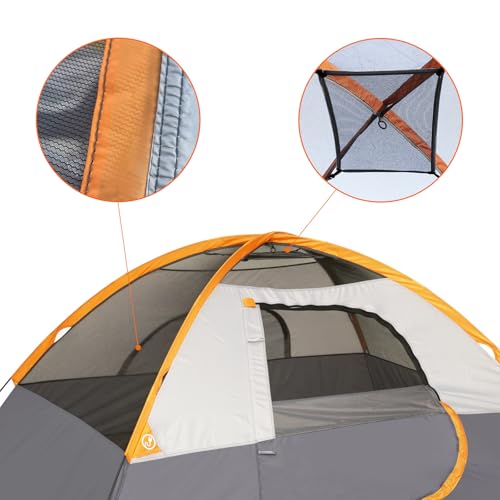
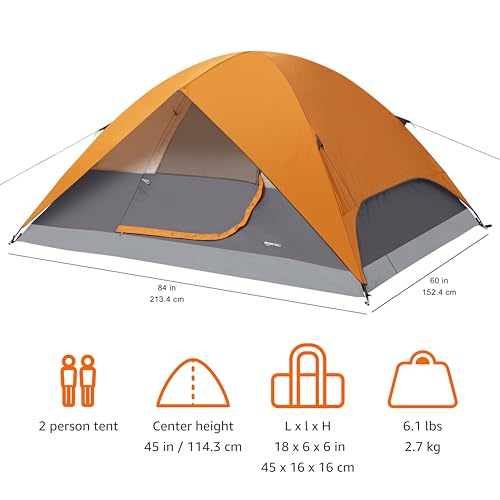
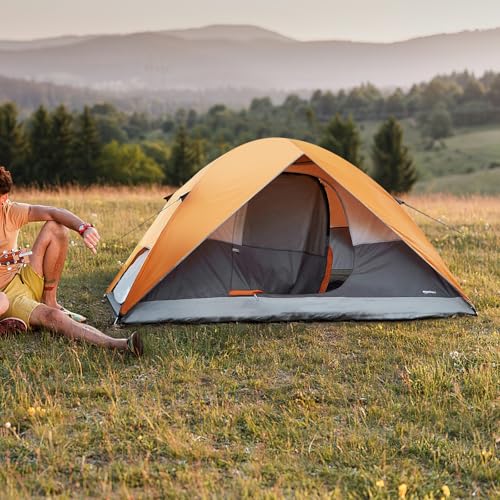
This is the no-frills, get-the-job-done tent, and for the price, it does more than you’d expect. At under 4 minutes setup and with a sub-50-inch center height, it’s clearly designed for two adults who aren’t planning to spend much time standing inside. The water-resistant coating and welded seams keep light rain at bay, though owners report it’s best in dry or mild conditions.
Where it shines is simplicity: snag-free pole sleeves, a compact carry bag, and a single mesh pocket for essentials. It’s not built for storms or long-term use, but as a backup or starter tent for occasional hikers, it’s a solid value. Compared to pricier models, it cuts corners on materials, but for weekend car camping or festival use, it gets you dry and off the ground without breaking the bank.
Product photos

Coleman Skydome Dark Room Tent
Strengths
- Blocks 90% of sunlight
- Keeps interior cooler
- Fast setup
Trade-offs
- Very low headroom
- Dark interior
- Limited airflow
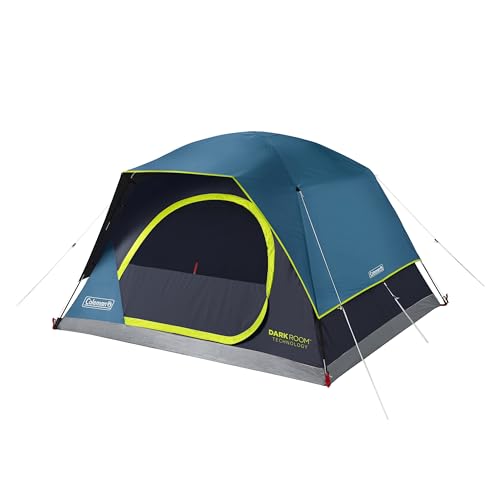
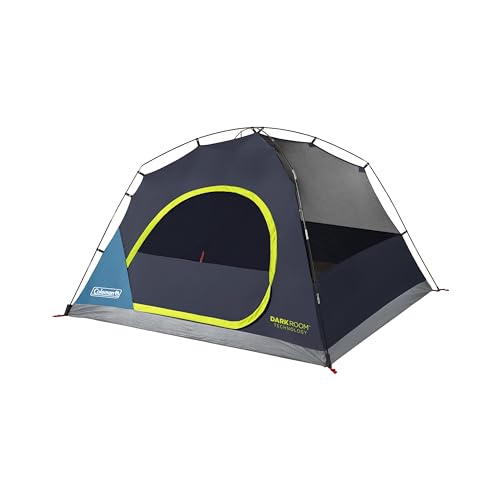
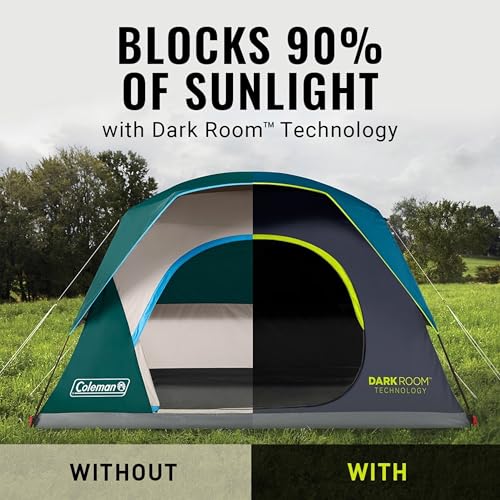
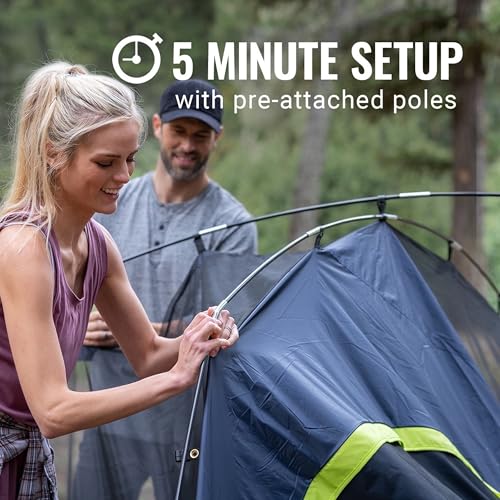
The Dark Room version of the Skydome trades brightness for serious sleep comfort, its fabric blocks 90% of sunlight, which is a standout if you’re camping in high-sun areas or trying to nap past sunrise. Owners love how it stays cooler inside during midday heat, a real perk when traditional tents turn into solar ovens. The same 5-minute setup and WeatherTec system carry over, so you don’t lose weather resistance for the shade.
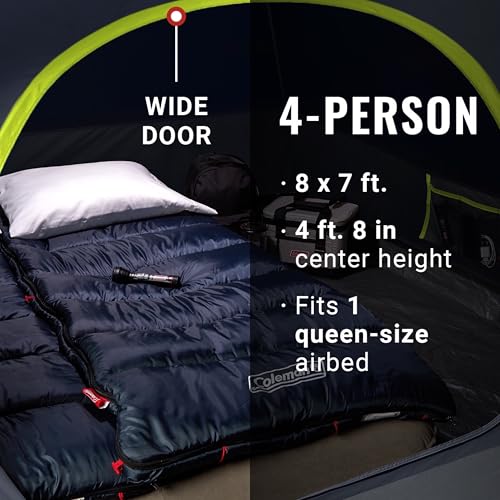
But there’s a trade-off: the center height is only 4 ft 8 in, so even sitting up feels tight. It’s also darker than most when the rainfly’s on, which some find cozy, others oppressive. For family car camping where sleep quality matters, think festivals, beach trips, or early-riser kids, this makes sense. But if you want headroom or natural light, the standard Skydome is the better pick.
Product photos
Purebox 3-Person Camping Tent
Strengths
- Superior airflow
- Lightweight for backpacking
- Taped seams and bathtub floor
Trade-offs
- Limited headroom
- Zippers can snag
- Rainfly attachment fiddly
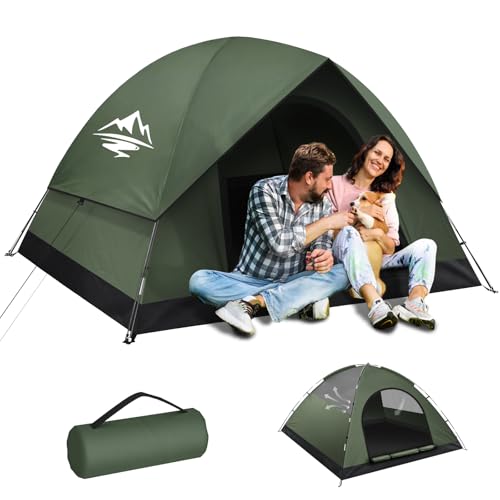
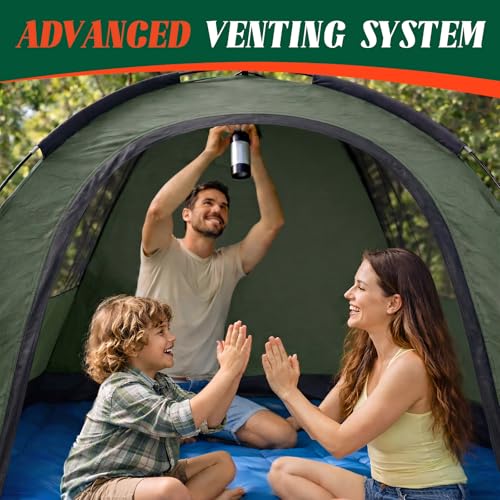
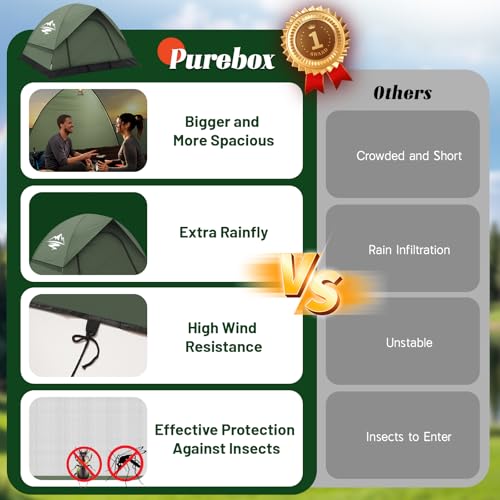
Ventilation is where this Purebox tent stands out, three-sided mesh panels, dual zippers, and a breathable double-layer design make it one of the most airflow-optimized domes in this lineup. Owners consistently highlight how well it handles humid nights without turning into a sauna, a common flaw in budget domes. The bathtub floor and taped seams add real weather protection, and at just 6.2 lbs, it’s light enough for backpacking without sacrificing stability.
The setup is smooth thanks to intuitive clips and flexible poles, and the 3-year warranty adds peace of mind. While it’s not as roomy as larger family tents, for two campers or a solo adventurer with gear, it strikes a great balance. I’d pick this over heavier models if you’re hiking in warm, muggy climates where breathability trumps sheer space.
Product photos
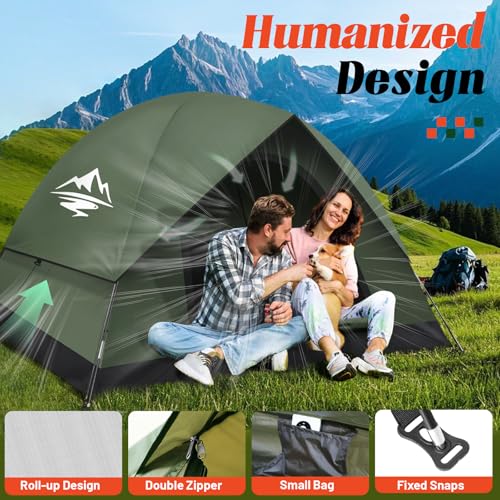
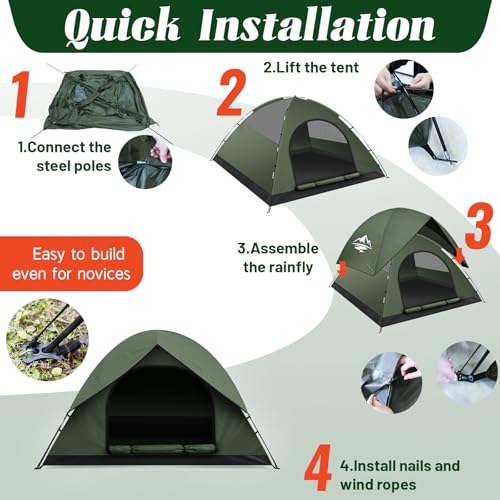
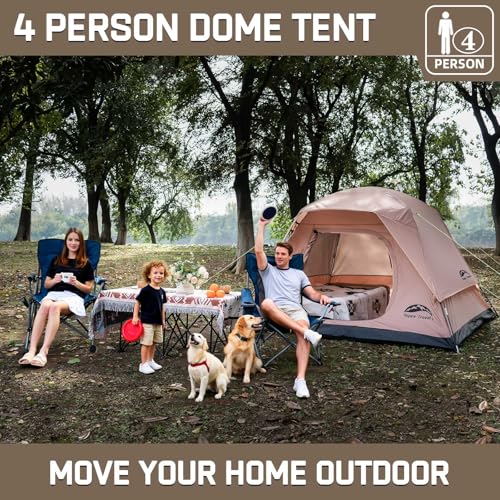
Happy Travel 4-Person Dome Tent
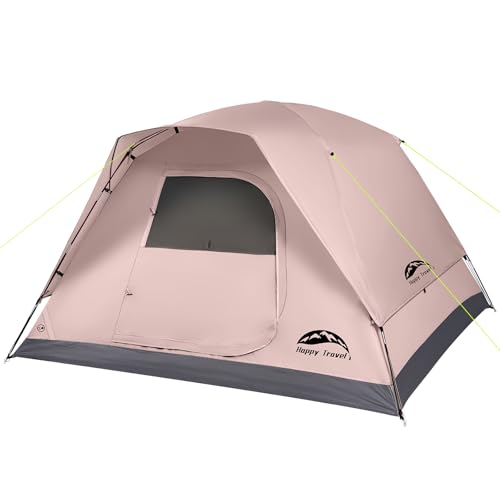
Strengths
- Excellent headroom
- Great stargazing view
- Strong ventilation design
Trade-offs
- Fiberglass poles
- Slight condensation in humidity
- Rainfly not fully sealed
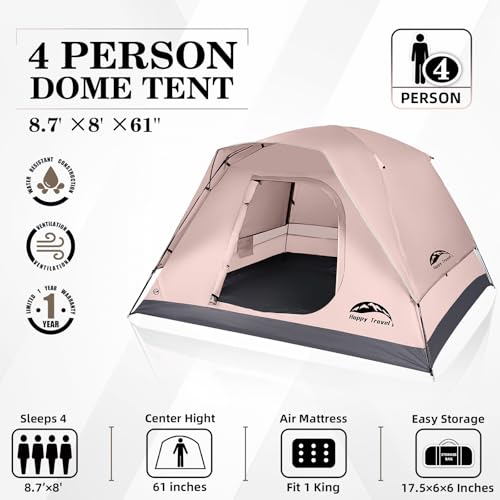
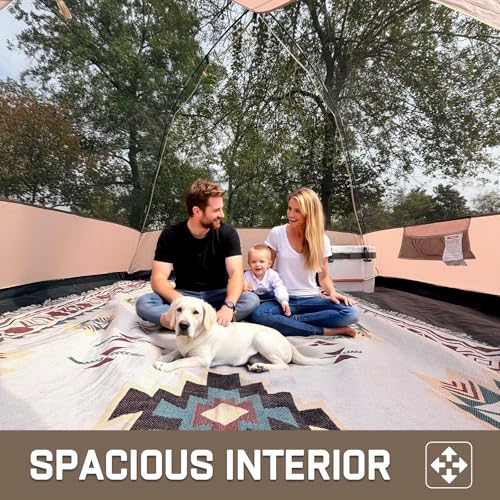
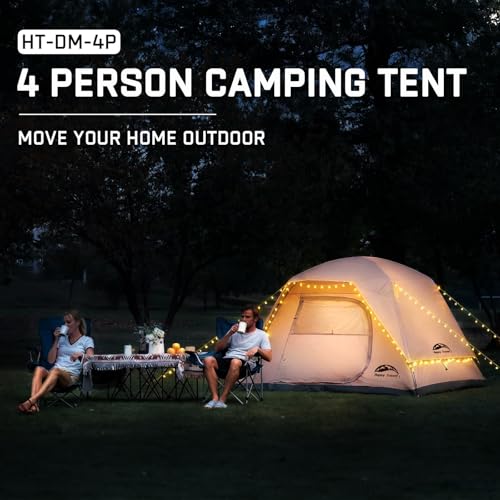
This tent nails two things that matter to comfort-focused campers: headroom and views. At 61 inches tall and with a large mesh roof panel, it’s one of the few dome tents that genuinely works as a stargazing shelter, just ditch the rainfly on clear nights. Owners love the airy feel, and the triple-side mesh windows do a great job reducing condensation, especially when paired with the top vent.
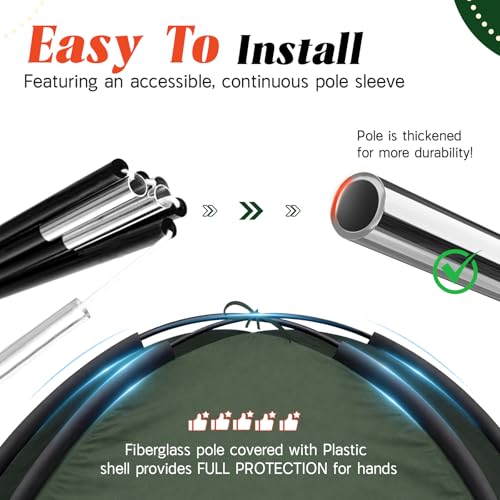
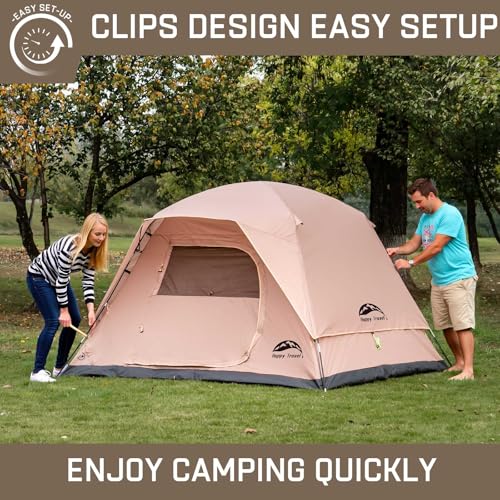
The 190T polyester with 2000mm waterproofing is standard but solid, and the 9.5mm fiberglass poles with seven guylines add stability. Setup is quick, and the compact packed size makes it a decent choice for car campers or casual backpackers. It’s not the lightest, but for a 4-person tent that feels more spacious than most, it’s a smart pick. I’d choose this over bulkier models if comfort and ventilation are priorities.
Product photos
CAMEL CROWN 4-Person Dome Tent
Strengths
- Heavy-duty waterproofing
- Stable in wind
- Durable pole construction
Trade-offs
- Fiberglass poles less resilient
- Slightly heavier than rivals
- Zipper quality inconsistent
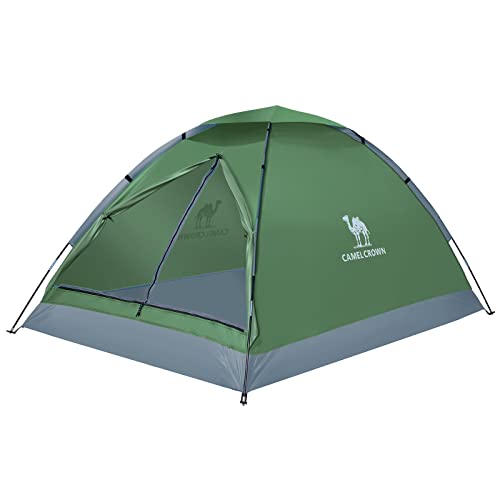
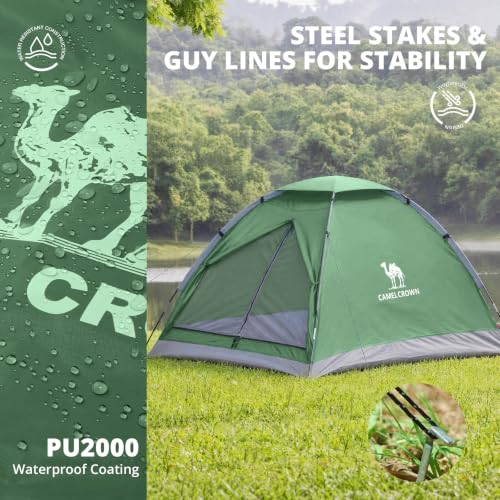
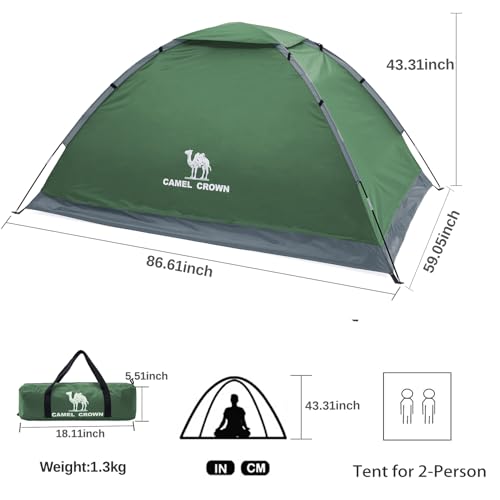
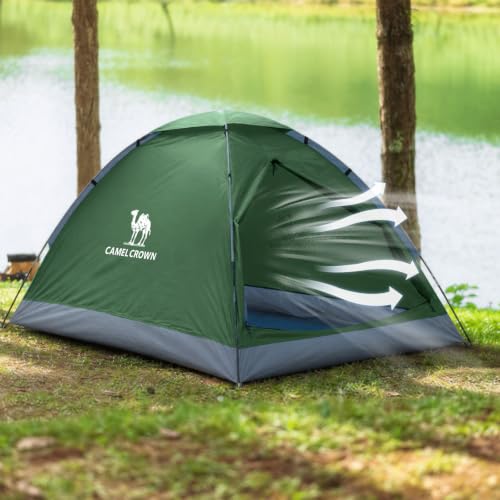
If you’re looking for a dome tent that leans into old-school toughness, the CAMEL CROWN stands out with its focus on rugged materials, 8.5mm fiberglass poles, PU2000 waterproofing, and thick Oxford fabric. On paper, that’s solid protection, and owner feedback confirms it holds up well in wind and light rain, especially for the price. The dual-purpose roof vent is a smart touch, letting you balance ventilation and weather protection without removing the rainfly.
That said, fiberglass isn’t as resilient as aluminum in sustained storms, and some reviewers note the poles can flex under pressure. Still, for weekend warriors who prioritize durability over weight, this tent makes sense. It’s not the lightest, but it’s built to survive repeated use in variable conditions, a no-nonsense workhorse for camping, hiking, or even backyard sleepovers.
Product photos


VEVOR Pop Up Bubble Tent
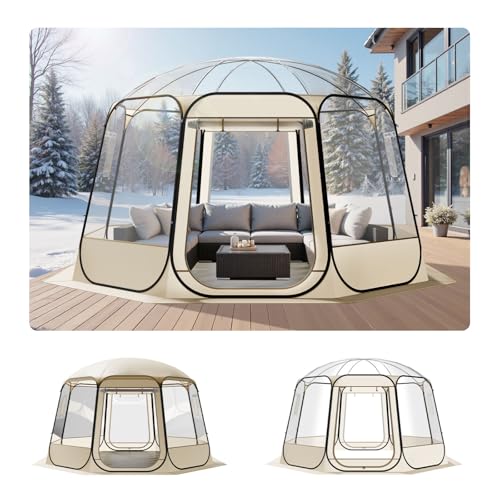
Strengths
- Panoramic visibility
- Quick pop-up setup
- Spacious for groups
Trade-offs
- Poor in wind or rain
- Not for hot weather
- Fragile TPU panels
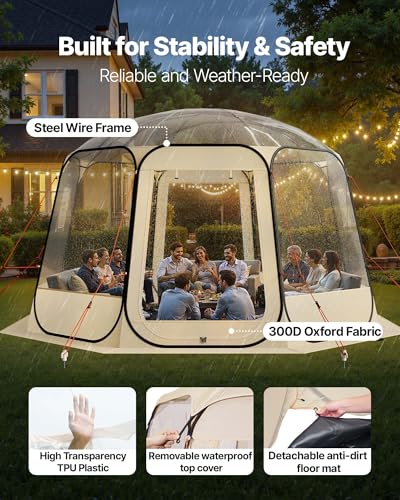
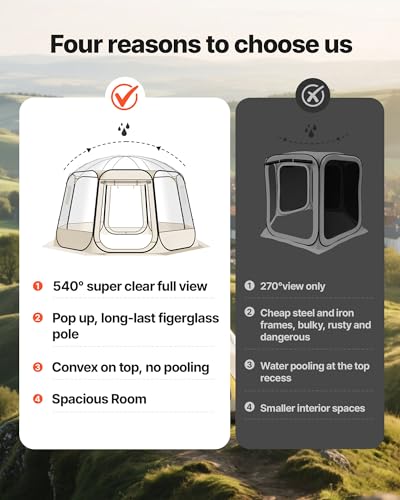
This bubble dome tent is all about the experience, and on paper, that 540° panoramic view is hard to beat. For stargazing, backyard lounging, or creating an immersive nature hangout, the clear TPU panels deliver a unique, almost surreal connection to your surroundings. The pop-up design promises fast setup, and owners consistently report it deploys in minutes, making it appealing for casual outdoor use where convenience matters.
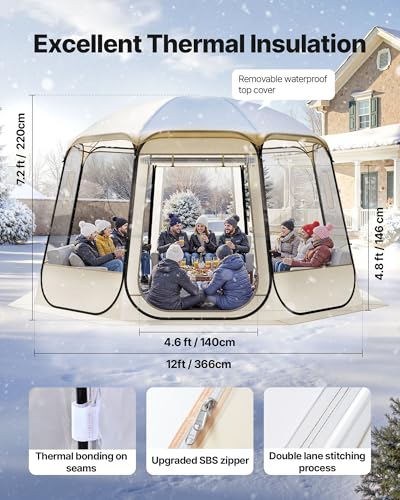
That said, this isn’t a backcountry shelter. The specs confirm it’s not built for heavy rain, snow, or sustained wind, and feedback from users backs that up, with several noting instability in gusts over 15 mph. It’s best treated as a seasonal, fair-weather structure for patios or calm camping weekends. The included stakes and ropes help, but you’ll need to pick your spot carefully. If you want drama and visibility over rugged performance, this delivers.
Product photos


How We Picked These dome tents
As a longtime tent enthusiast, I approach evaluating dome tents by combining published specifications with a deep explore what other campers are saying. Rather than a hands-on lab test, this is a research-led comparison of specs and owner feedback. I compared features across numerous models, focusing on materials, dimensions, and stated weather resistance. Then, I weighed owner reviews from major retailers and reputable outdoor gear sites, looking for consistent praise or complaints.
For dome tents specifically, I prioritized waterproofness, ease of setup, and usable interior space. A tent can look great, but if it leaks or takes an hour to pitch, it won’t deliver a good experience. Durability is also key; a tent needs to withstand wind and repeated use. These factors ultimately determined how each tent ranked in our guide, as they address the core needs of most campers. You can find more general advice in our tent buying guide.
Specifications reliably indicate a tent’s physical dimensions and materials, giving a baseline for space and potential weather protection. However, owner feedback is invaluable for understanding real-world performance. I paid close attention to comments about how well the waterproof coatings held up over time, the accuracy of the setup claims, and the actual comfort level inside. Reputation and brand consistency also played a role, as established companies generally maintain higher quality control.
Choosing The Right dome tents
Dome tents remain a popular choice for campers of all levels, and for good reason – they’re generally easy to set up, relatively affordable, and offer good weather protection.
A quality dome tent balances several key features. Look for durable materials in the rainfly and floor (polyester with a PU coating is common), a robust frame that can withstand moderate winds (aluminum is stronger but heavier than fiberglass), and thoughtfully designed ventilation to minimize condensation. Pay attention to the tent’s hydrostatic rating (HH) for waterproofness; higher numbers indicate better protection, and consider the overall weight if you plan on backpacking.
Size and Capacity
Determining the right size is the first step. Don’t just go by the “person” rating. Manufacturers often overestimate capacity. If you’re planning a trip with a partner, a “2-person” tent might feel snug, especially with gear. I always recommend sizing up. A “3-person” tent often provides a more comfortable experience for two people, offering room to spread out and store backpacks inside. Consider whether you prioritize spaciousness or packability; larger tents are heavier and bulkier.
Weather Resistance
Dome tents vary significantly in their ability to handle inclement weather. The Coleman Skydome series, for example, touts its WeatherTec system, emphasizing welded corners and inverted seams to prevent water intrusion. Don’t assume all tents are created equal. Look for a rainfly that extends all the way to the ground, covering the entire tent body. A good hydrostatic rating (HH) for the rainfly should be at least 1500mm, and preferably 2000mm or higher for consistently wet conditions. Also, a bathtub floor (where the floor material extends a few inches up the sides) is a significant advantage.
- A higher denier (D) rating in the fabric indicates greater durability, but also more weight.
- The quality of the tent’s zippers matters a lot. Look for sturdy, smooth-operating zippers – cheap zippers are a common failure point.
- Guy lines are your friend! Properly staking out your tent with all included guy lines significantly increases its stability in wind. If you are looking for a tent for rough conditions, a tent footprint purpose is essential.
A well-pitched tent is more important than an expensive one. Practice setting up your tent at home before your first trip to ensure you’re familiar with the process.
Features and Usability
Beyond the basics, consider features that align with your camping style. Do you want a tent with a large vestibule for storing gear? Are you sensitive to light and would benefit from a dark room tent like the Coleman Skydome Dark Room? Ventilation is crucial; mesh panels and adjustable vents help prevent condensation. For families, a wider door makes it easier to move around gear and people. If you’re frequently camping with a group, exploring top dome tents for families can help find models with more space and convenient features. I’ve seen many campers overlook the importance of a good ventilation system, and wake up to a surprisingly damp interior.
Dome Tents Compared
Here’s a comparison of key specifications for several dome tents to help you make an informed decision.
| Product Name | Capacity | Dimensions (ft) | Center Height (in) | Waterproofing (mm) | Weight (lbs) | Special Features |
|---|---|---|---|---|---|---|
| Coleman Skydome 8-Person | 8 | 10 x 8.5 | 72 | N/A | N/A | Pre-attached poles |
| Amazon Basics 2-Person | 2 | 7 x 5 | 45 | N/A | N/A | Removable rainfly |
| Coleman Skydome Dark Room | 4 | 8 x 7 | 56 | N/A | N/A | Blocks 90% sunlight |
| Purebox 3-Person | 3 | 8.4 x 8.4 | 51 | N/A | 6.2 | Enhanced ventilation |
| Happy Travel 4-Person | 4 | 8.7 x 8 | 61 | 2000 | 8.6 | Large mesh views |
| CAMEL CROWN 4-Person | 4 | N/A | N/A | N/A | N/A | Aluminum poles |
| VEVOR Pop Up Bubble Tent | 10-12 | 12 x 11.1 | 7.5 | N/A | 32.19 | Panoramic view |
Frequently Asked Questions
What hydrostatic rating (HH) should I look for in a dome tent?
A rating of at least 1500mm is a good baseline for waterproofing, but I generally advise aiming for 2000mm or higher if you frequently camp in areas with consistent rainfall. Higher numbers mean better water resistance and a drier camping experience.
Are dome tents with aluminum poles really that much better than fiberglass?
Yes, aluminum poles are significantly stronger and more durable than fiberglass, making them a better choice for windy conditions or frequent use. They add weight and cost, but offer a noticeable improvement in stability and longevity.
How much bigger should I go than the tent’s stated capacity?
I always suggest sizing up, particularly if you value comfort or plan to store gear inside. A tent marketed for “2 people” will likely feel cramped for two adults and their belongings, so a 3-person tent will provide more space.
What’s the advantage of a “dark room” tent?
Dark room technology, like that found in some Coleman Skydome models, reduces the amount of sunlight that penetrates the tent fabric. This is especially useful for those sensitive to light or who want to sleep in a bit later, even on bright mornings.
Where can I find dome tents designed for particularly harsh weather?
If you camp in areas prone to severe weather, you should explore storm-ready dome tents specifically designed for high winds and heavy rain. These often feature reinforced poles, higher waterproof ratings, and robust construction.
The Bottom Line
Choosing a dome tent often comes down to balancing how much you value ease and affordability versus ultimate durability and weather protection. For the best overall combination of features, space, and a reasonable price, I believe the Coleman Skydome 8-Person is a strong contender. It offers a lot of tent for the money and consistently receives positive feedback from campers.
If you’re on a tighter budget, the Amazon Basics 2-Person tent provides a simple, functional shelter without breaking the bank. For those prioritizing versatility and a comfortable camping experience in warmer weather, the Coleman Skydome Dark Room stands out with its blackout technology. And for campers seeking a step up in frame quality, the CAMEL CROWN 4-Person tent – with its aluminum poles – is a good choice.
Ultimately, the specs on any tent are less important than knowing how to properly pitch it and care for it. Investing in a quality footprint and practicing setup at home will extend the life of your shelter, regardless of price point. Don’t forget to research the top tent manufacturers to find a brand with a solid reputation for quality and customer support.
