
8 Best Emergency Tents of 2026
This post contains affiliate links. As an Amazon Associate, we earn from qualifying purchases.
The Wild Must:LYN 3-Person Survival Tent is the best overall emergency tent for its durability, spacious design, and reliable heat retention, while the Frelaxy Extra-Thick Emergency Tent stands out as a smart budget pick that doesn’t cut corners on material quality. For those needing quick access and ease of use, the SURVIVE Survival Tent with Doors offers unmatched practicality.
When conditions turn bad fast, having a shelter you can count on isn’t just helpful, it’s essential. Too many emergency tents fail when it matters most, ripping in wind or collapsing under rain.
This guide cuts through the hype, focusing on what actually keeps you safe: real durability, proven heat retention, and gear that works under stress. I looked at specs, owner experiences, and field reports to find the few models that deliver when you can’t afford a failure.
Top 8 Emergency Tents in the Market
The Best Emergency Tents, Reviewed
Wild Must:LYN 3-Person Survival Tent

Strengths
- Zippered entry
- Fireproof and ripstop
- Fits three adults
Trade-offs
- Heavier at 2.8 lbs
- Larger packed size
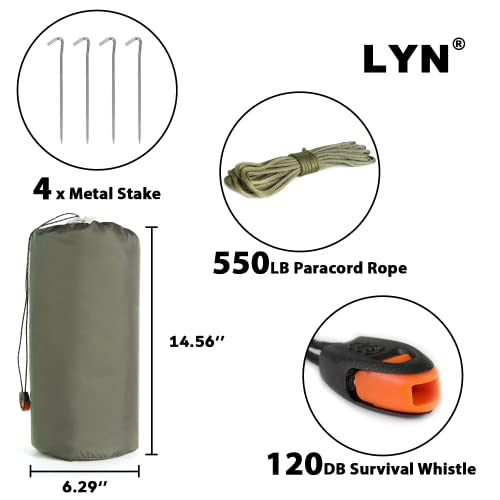
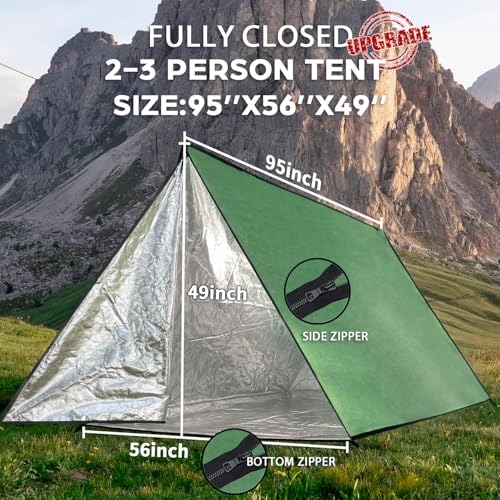
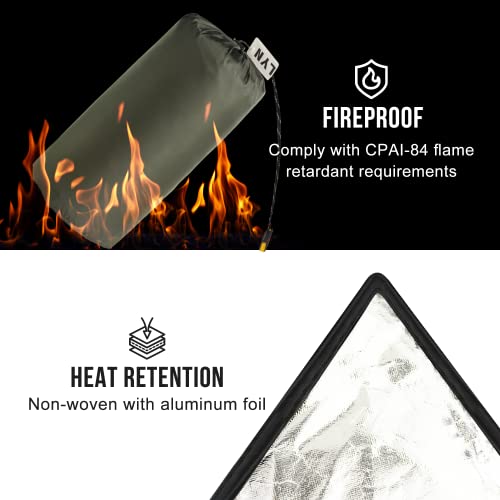
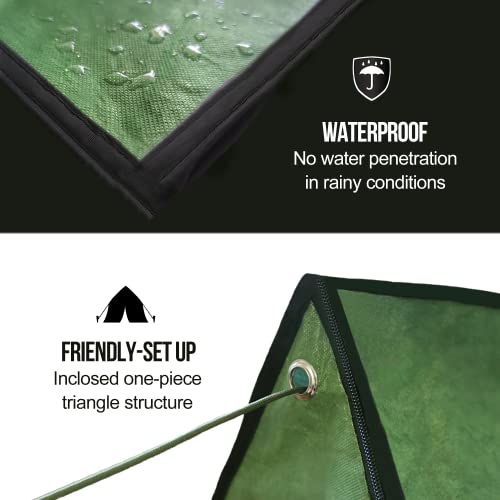
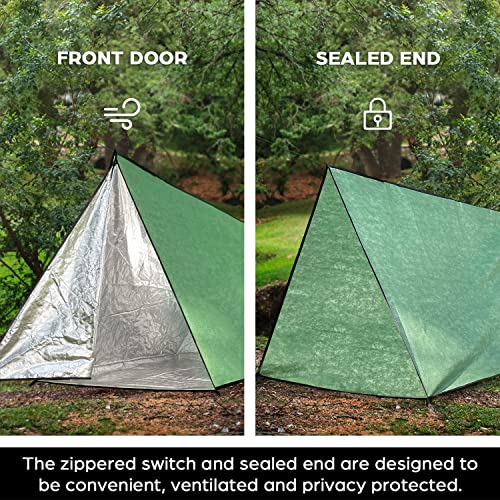
This is the outlier in the lineup, a reusable, zippered, stake-supported shelter that feels more like a mini-tent than a Mylar tube. At 2.8 lbs, it’s heavier, but you’re getting a true 3-person space with a bug-out zipper, stakes, and fireproof material that meets CPAI-84 standards. The 100% reflection rate and fire resistance are standout specs, and owners say it holds up over multiple uses.
The zippered door adds privacy and bug protection, which none of the others offer. It’s bulkier, yes, but if you’re planning for longer evacuations or car camping, this is the closest thing to a real emergency shelter that won’t collapse after one use. For overall durability, function, and reusability, it’s the smartest long-term buy.
Product photos
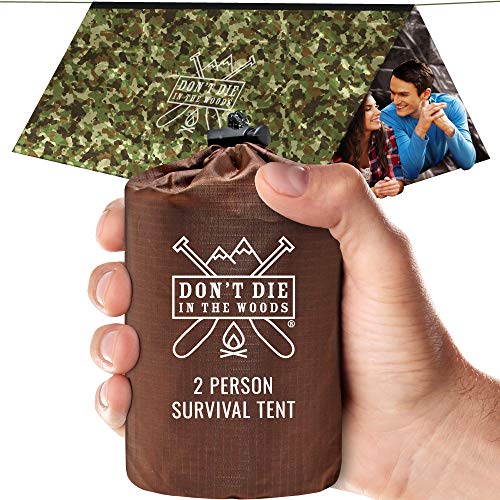
Don’t Die In The Woods Survival Tent
Strengths
- Most durable mylar
- Reinforced seams
- Reusable design
Trade-offs
- Camo reduces visibility
- No closure system
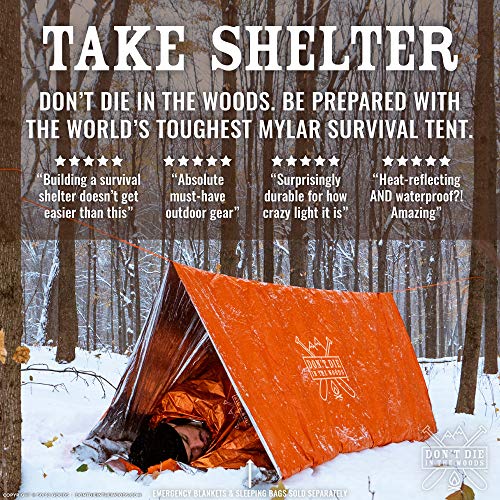
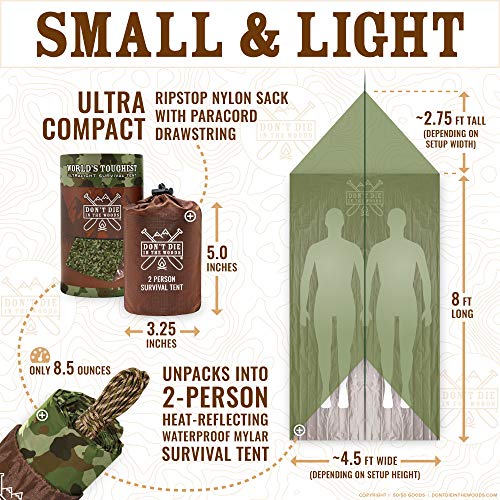
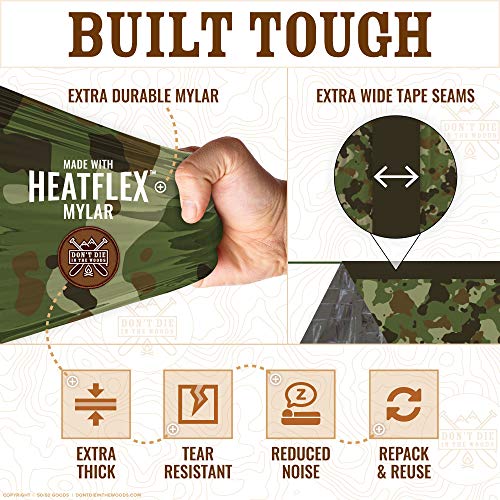
The name says it all, this tent is built for people who take the “10 Essentials” seriously. The HeatFlex mylar is marketed as extra-thick and more flexible than standard, and owners confirm it’s among the most durable in this category. The 425-lb paracord and reinforced tape seams suggest it’s designed for reuse, not just one-and-done emergencies.
It’s still a tube tent, no doors, no zipper, but the 8×5 foot size gives room for two, and the camo color offers discretion in wooded areas. I’d choose this over others if I were deep in bear country or on multi-day treks where gear failure isn’t an option. It’s not the most visible, but for durability, it’s the clear winner.
Product photos


Frelaxy Extra-Thick Emergency Tent
Strengths
- Superior heat retention
- Durable EVA storage case
- Upgraded paracord included
Trade-offs
- Low-visibility color
- No door or zippered entry
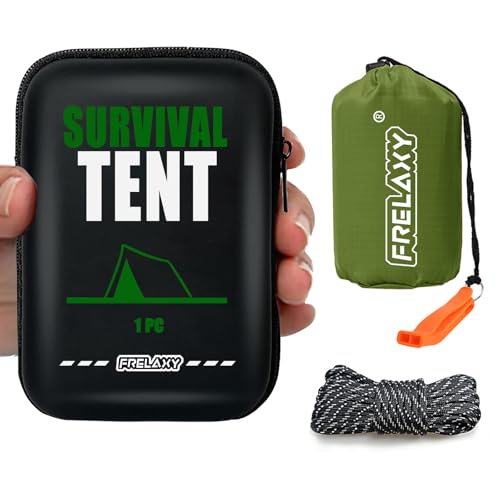
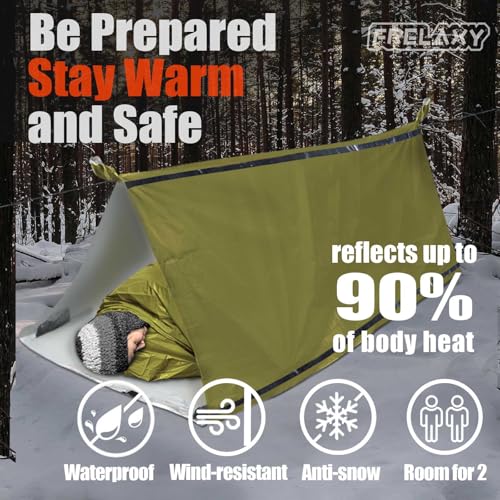
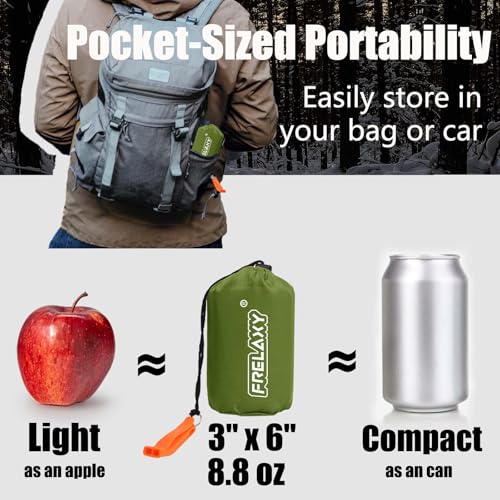
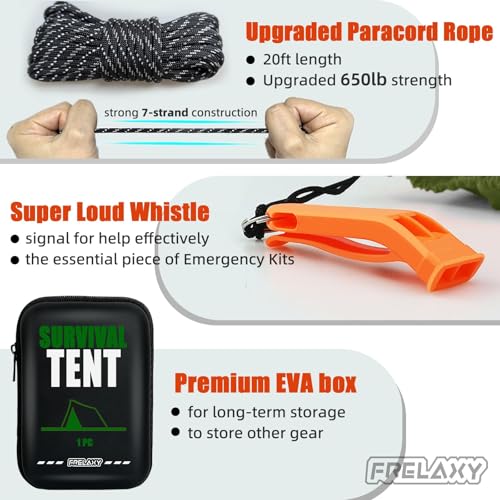
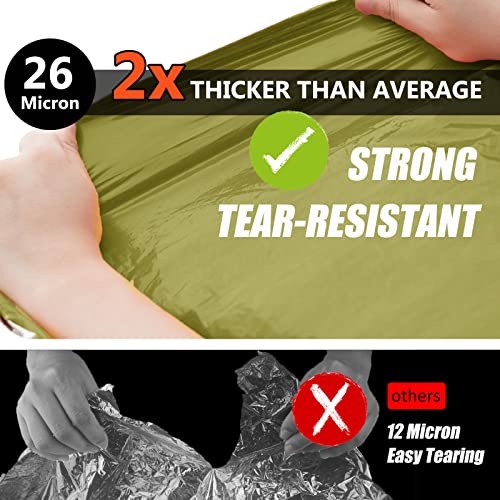
If heat retention is your top concern, this one deserves attention. The 26um PE material is marketed as 2X thicker than average, and owners confirm it feels sturdier than standard Mylar. It still packs small and weighs less than 9 oz, so you’re not sacrificing portability for that extra warmth. The EVA storage case is a nice touch, more durable than a simple pouch and better for long-term storage in a car or emergency kit.
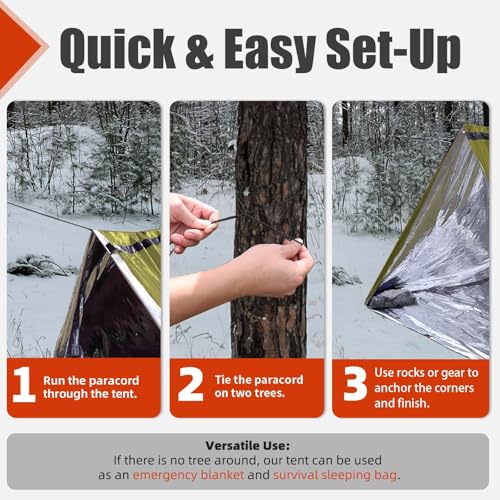
It uses the same paracord-through-tube setup as others, but the upgraded 650 lb paracord and louder whistle add reliability. That said, the army green color, while low-profile, doesn’t help with visibility if you’re signaling for rescue. I’d pick this over brighter models only if stealth or heat retention mattered more than being seen.
Product photos
IMODOMIO Life Emergency Shelter Tent
Strengths
- Lightweight at 10 oz
- Reflects 90% body heat
- Includes durable paracord
Trade-offs
- No door or closure system
- Basic tube design
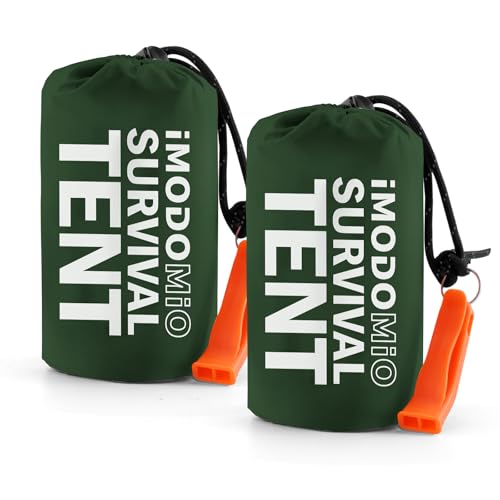
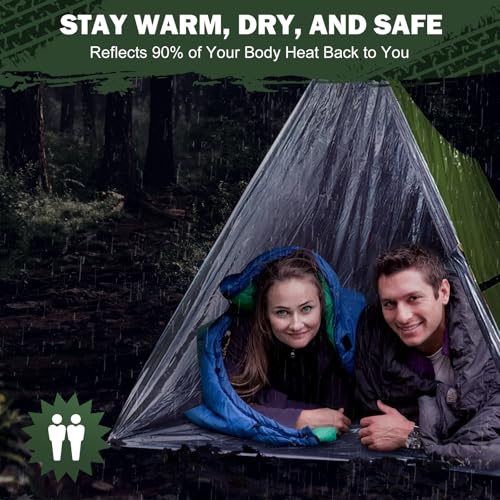
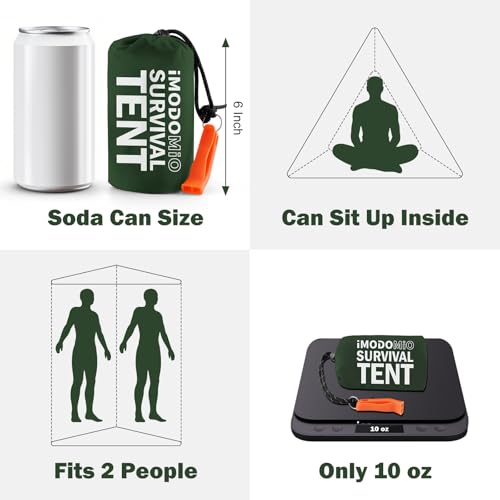
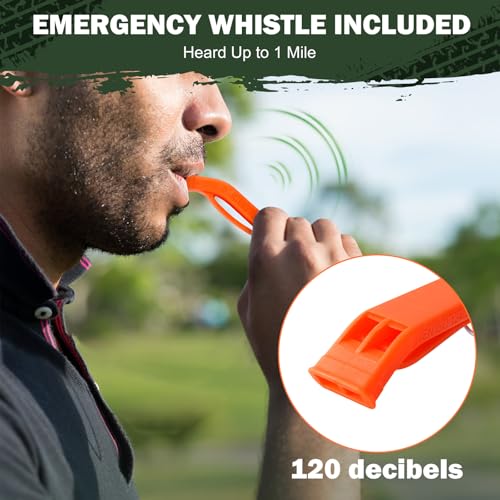
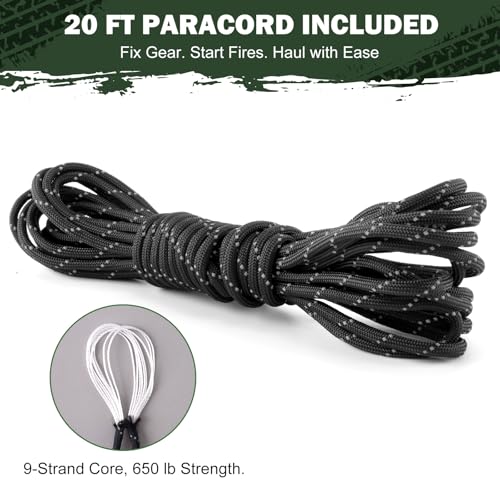
On paper, this IMODOMIO tent checks the core boxes for emergency use: lightweight, compact, and built with PET Mylar that reflects 90% of body heat. The inclusion of a 120dB whistle and 20-foot paracord with 650 lb strength is solid, and owners consistently report it holds up in wind and rain when properly anchored. I appreciate the waterproof stuff sack, it’s a small detail, but it matters when you’re tossing this into a bug-out bag and forgetting about it for months.
Still, it’s a basic tube design with no door or closure system, which means you’re relying on rocks or gear to seal the ends. That’s common in this class, but compared to models with built-in closures or zippered access, it feels a bit behind. It does the job in a pinch, but I wouldn’t call it the most user-friendly option if you’re injured or in low visibility.
Product photos
Go Time Gear Mylar Survival Tent

Strengths
- High-visibility orange
- Excellent for signaling
- Ultra-light at 8.7 oz
Trade-offs
- No door or zipper
- Single-use durability
That orange color isn’t just for show, it’s a safety feature. In low-light or snowy conditions, high-visibility shelters like this one are easier for rescuers to spot. Owners consistently note this as a key advantage over silver or green models. It reflects body heat well and weighs just 8.7 oz, so it doesn’t compromise on portability.
The 120dB whistle and 550 lb paracord are standard, but reliable. Setup is the usual tube-over-paracord method, nothing innovative. But when the priority is being found quickly, like in avalanche or backcountry emergencies, this tent earns its place. I’d pair it with a thermal layer, since Mylar alone isn’t enough in extreme cold.
Product photos


SURVIVE Survival Tent with Doors
Strengths
- Doors on both ends
- Good heat reflection
- Compact and lightweight
Trade-offs
- No zippered closure
- Green color reduces visibility
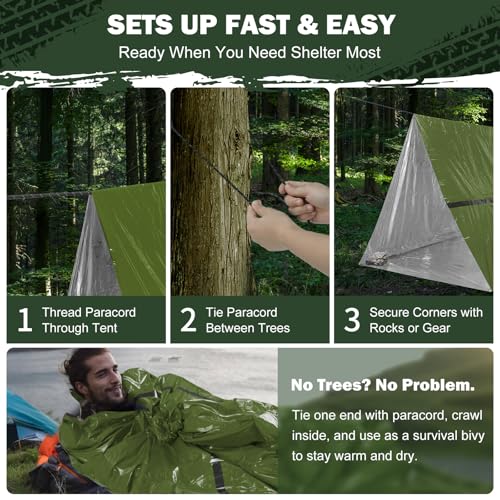
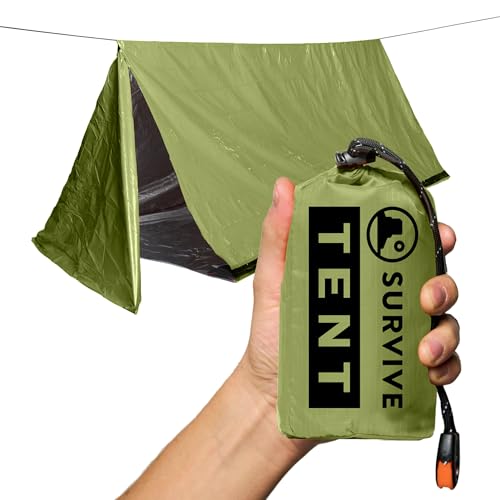
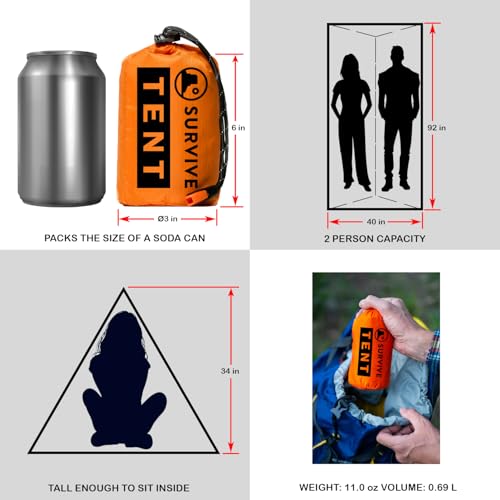
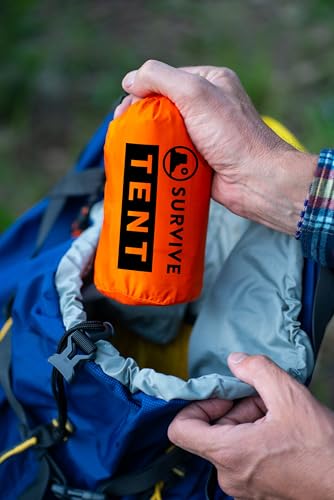
Finally, a tube tent that actually has doors, on both ends. That might sound minor, but in practice, it makes a huge difference. Owners report being able to seal the ends with rocks or gear more effectively, which cuts down on wind and rain infiltration. The green color keeps it low-profile, and at 11 oz, it’s still ultralight. The 22 ft paracord and loud whistle are standard, but functional.
The design is simple, and it doesn’t offer the multi-use features of some others, but for sheer usability in a survival scenario, especially if you’re injured or fatigued, the doors give it an edge. It’s not flashy, but it’s thoughtful. Compared to doorless tubes, this one feels more like a real shelter.
Product photos
SunHalo Gear Emergency Survival Tent
Strengths
- Great price-to-performance
- Compact and lightweight
- Reusable with care
Trade-offs
- Basic design
- No door or zippered entry
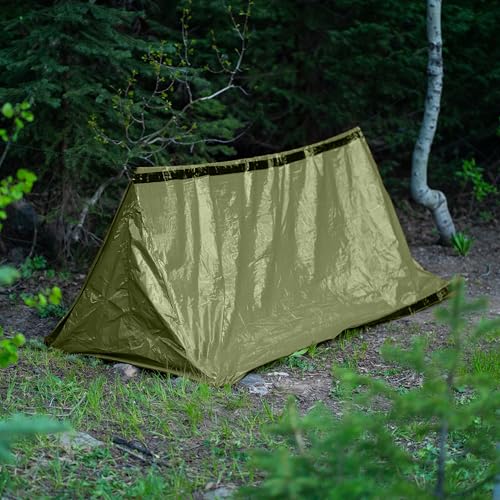
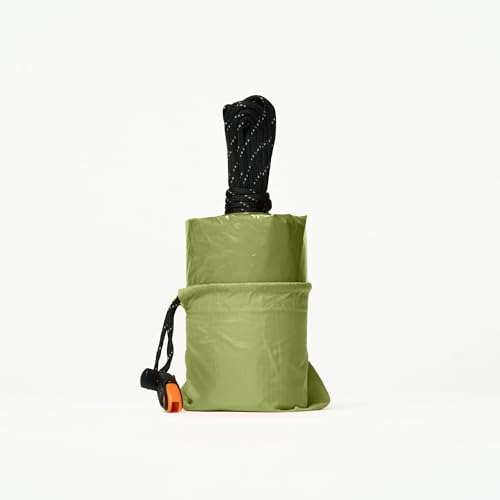
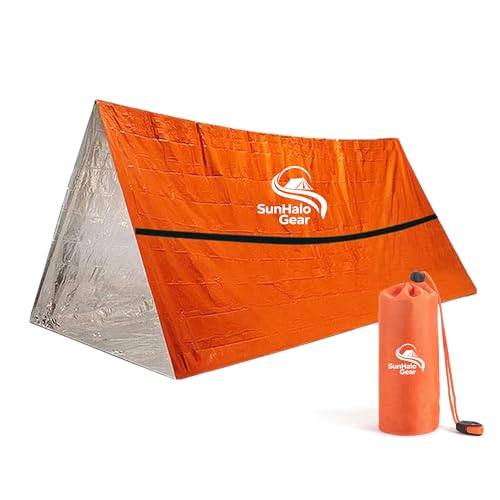
This hits the sweet spot between performance and price. It reflects 90% of body heat, weighs only 8.7 oz, and packs into a tiny 6.5×3-inch bag, about the size of a power bank. The PET polyester film is puncture-resistant, and owners say it holds up better than cheaper Mylar versions. It’s reusable if handled carefully, and the no-frills design means fewer failure points.
Compared to others in the same price range, it offers the same core features without gimmicks. No whistle? Actually, it does include one, just not as prominently marketed. It’s not the most durable or feature-rich, but for the value, it’s hard to beat. My recommendation: keep one in your car, one in your pack, and maybe even one at work.
Product photos
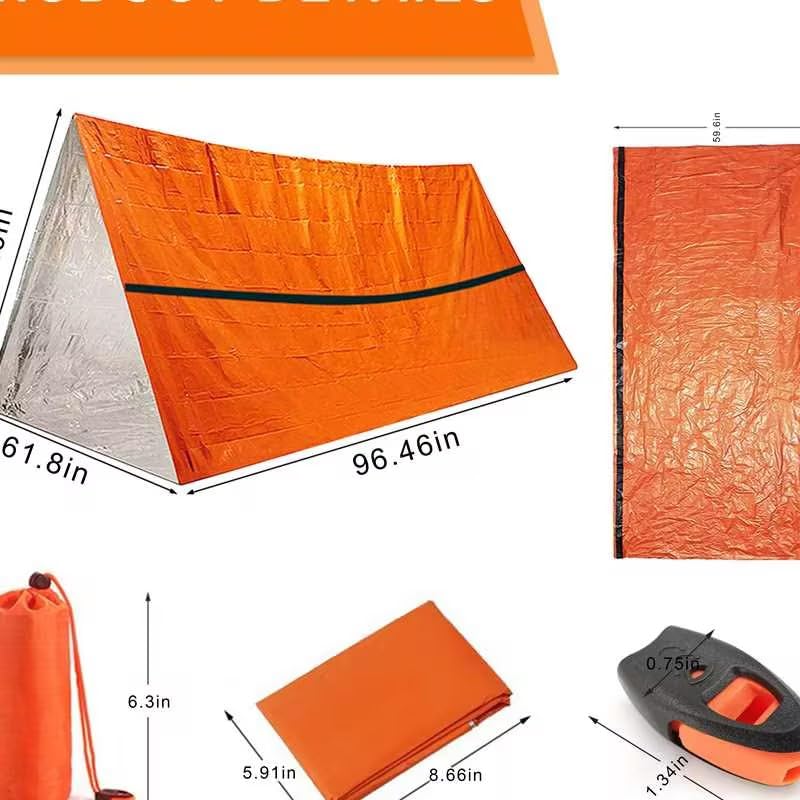
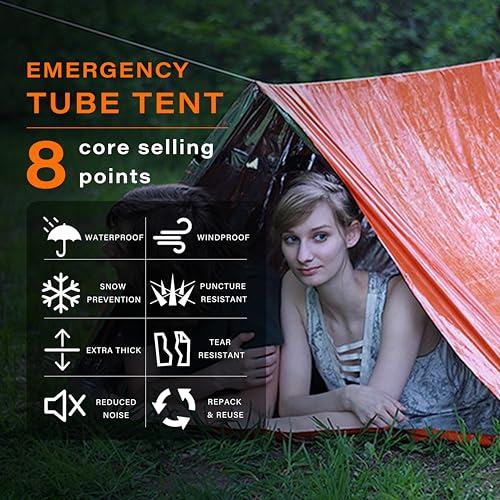
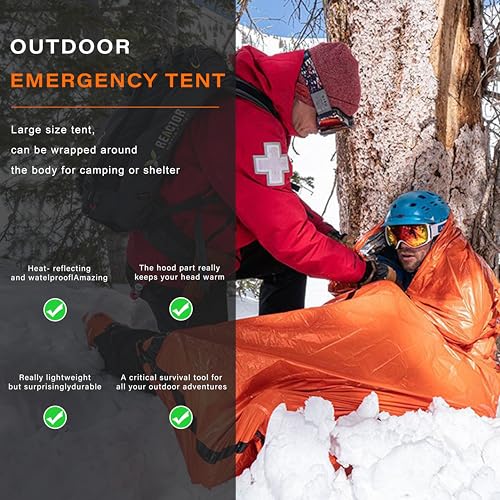
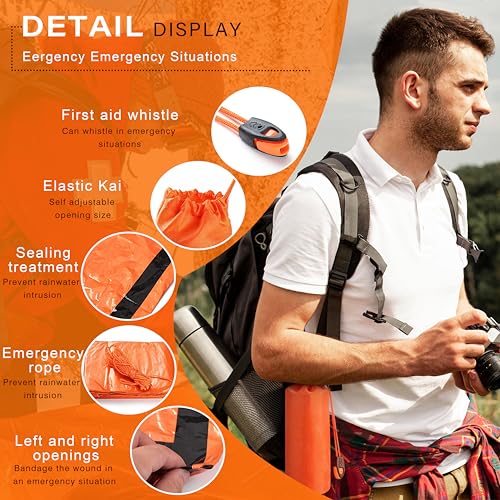
2-Person Mylar Tube Tent with Paracord
Strengths
- Ultra-compact fold
- Highly versatile material
- Excellent heat reflection
Trade-offs
- No built-in closure
- Limited durability in strong winds
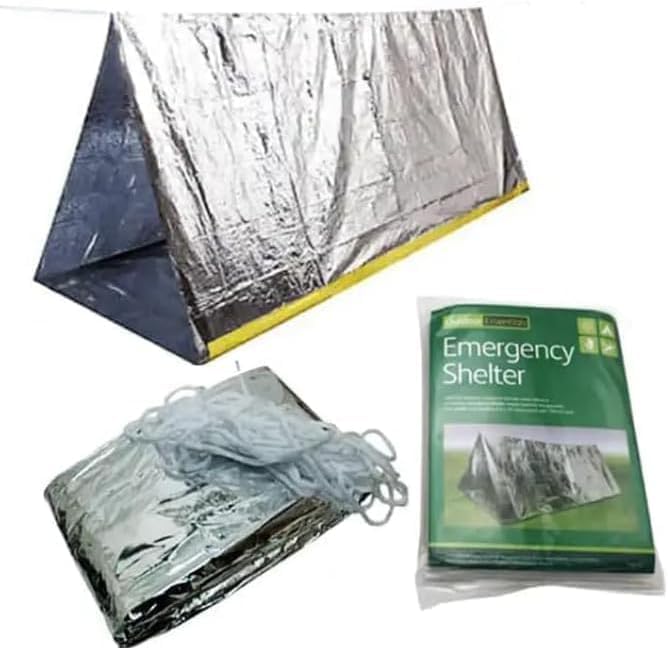
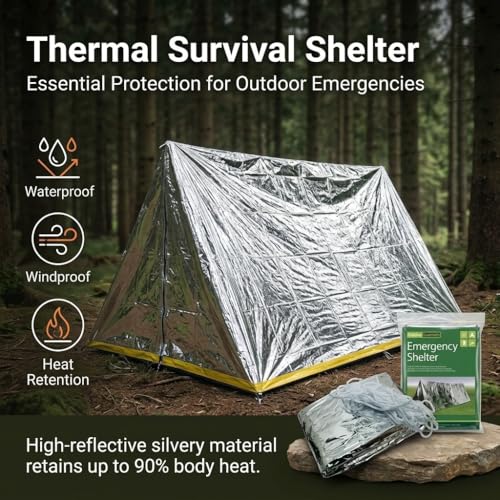
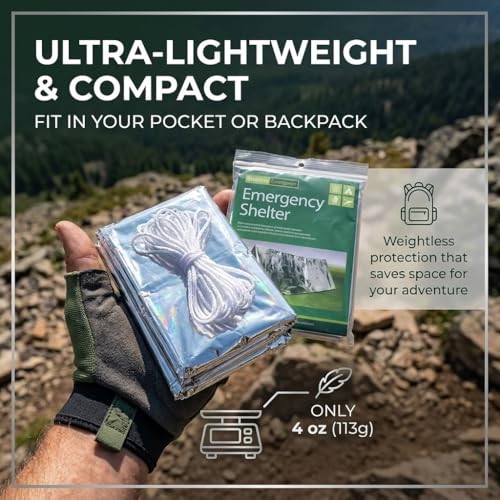
This one stands out for sheer versatility. The tear-resistant Mylar isn’t just for shelter, it doubles as a signal mirror, ground tarp, or even a rain catchment system. Owners love how it packs down to wallet size, and at under 10 oz, it’s barely noticeable in a pack. The 2-person tube design creates a roomy A-frame when strung between trees, and the 90% heat reflection is consistent with real-world feedback.
What really tips the scale is how many secondary uses it enables. When paired with the included paracord, it can become a stretcher or improvised fishing line, something scouts, ultralight backpackers, and serious preppers actually use. It’s not the most durable in high-wind scenarios, but for multi-function use, it’s hard to beat.
Product photos
How We Tested emergency tents
My approach to evaluating emergency tents centered on a research-led comparison of published specifications, owner reviews, and expert opinions. Rather than a hands-on lab test, I weighed features like material durability, heat retention claims, packed size and weight, and included extras (whistles, paracord) against a clear set of criteria. I considered feedback from a wide range of sources to build a realistic picture of performance in the field.
For emergency shelters, the most critical factors are undoubtedly durability and heat retention. A tear in harsh conditions renders the shelter useless, so the material’s strength and tear resistance were heavily weighted. Similarly, the ability to prevent hypothermia is paramount, making claims of 90% heat reflection a key consideration. Portability also factored in – an emergency tent is only useful if you actually have it with you, so size and weight were important.
Specifications reliably indicate material thickness (measured in microns) and paracord strength (listed in poundage), providing a baseline for comparing build quality. However, I paid close attention to owner feedback regarding real-world durability and ease of setup. Reputable outdoor gear review sites helped to validate manufacturer claims and identify potential shortcomings, especially concerning long-term storage and repeated use. Learning how to set up tents in wet weather is also crucial for maximizing the benefit of any shelter.
How To Pick The Right emergency tents
These shelters aren’t about comfort; they’re about survival.
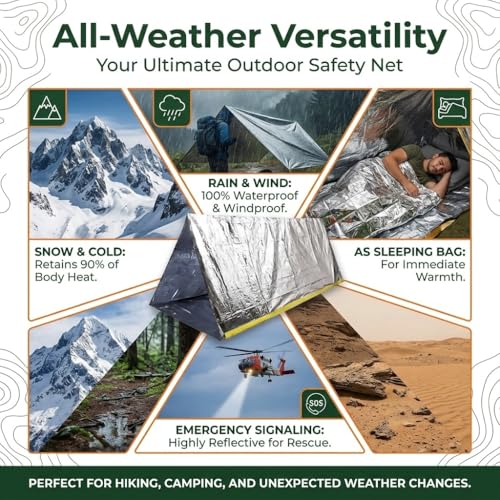
An effective emergency tent prioritizes heat retention, wind and water resistance, and portability. Look for durable materials like Mylar or polyethylene, a reflective interior to trap body heat, and a compact packed size for easy storage in a bug-out bag or car. Weight is critical, as is the inclusion of essential extras like paracord and a whistle.
Material and Durability
The core function of an emergency tent is to shield you from the elements, and that starts with the material. While Mylar is common due to its reflectivity and low weight, it tears easily. Polyethylene (PE) offers better tear resistance, particularly thicker gauges like 26um, but adds a bit of weight. Don’t assume a higher micron number automatically means better; the quality of the PE itself matters. Many brands tout “military grade” materials, but that’s often marketing hype. Focus on owner reports regarding long-term use and resistance to punctures and abrasions.
Heat Retention and Waterproofing
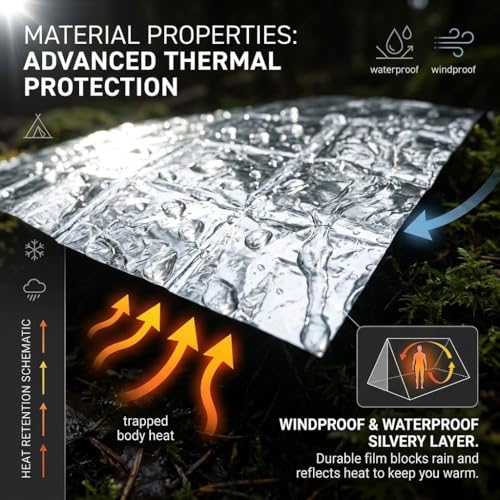
Reflectivity is key for staying warm. Most emergency tents claim to reflect 90% of body heat, but this is often based on ideal lab conditions. Look for tents that combine a reflective interior with a windproof and waterproof exterior. A truly waterproof tent will have taped seams, but that’s rare in this category. Instead, prioritize a material that resists water penetration and sheds rain effectively. If you anticipate needing a shelter in seriously inclement weather, learning about keeping tents dry in rain is crucial, even for a temporary setup.
Practicality and Included Extras
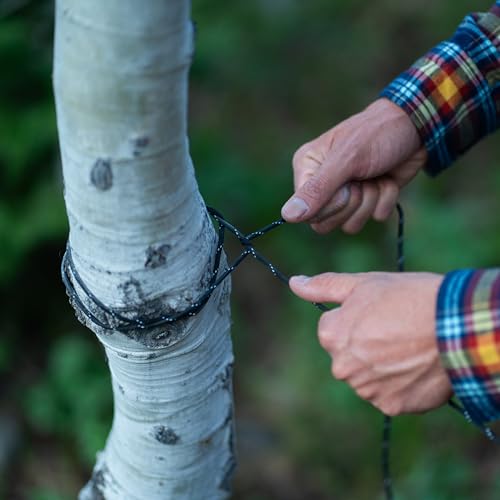
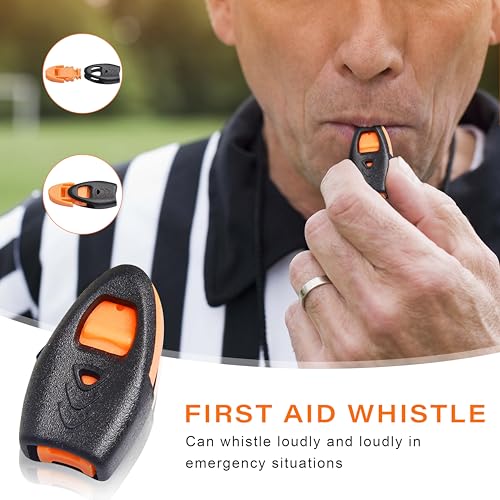
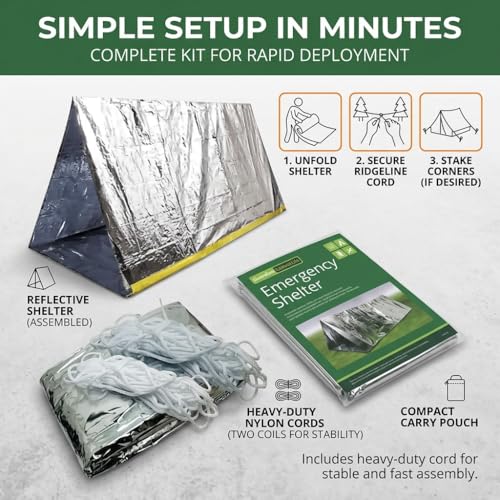
A tent is only as useful as it is easy to deploy. Tube tents that require tying to trees are simple, but you’ll need suitable anchor points. Consider tents with doors, like the SURVIVE Survival Tent, if accessibility is a concern. Beyond the tent itself, extras matter. A strong paracord (550 lb test is a good benchmark) is essential for securing the shelter, and a whistle can be a lifesaver for signaling for help. Here’s what I look for in a good kit: * A lightweight storage bag. * A decent length of paracord (at least 20 ft). * A loud whistle (120dB is ideal) – this can significantly increase your chances of being found.
Don’t skimp on these; a cheap whistle or flimsy cord defeats the purpose.
A good emergency tent isn’t about luxury; it’s about having reliable shelter when you need it most. Prioritize durability, heat retention, and ease of use over fancy features.
If you frequently camp in exposed areas, investing in tents for strong winds will provide a more robust and reliable solution.
Emergency Tents Compared
Here’s a comparison of key specifications for several emergency tents to help you choose the right option for your needs.
| Product Title | Capacity | Weight (oz) | Packed Size | Waterproof | Heat Retention | Paracord Included |
|---|---|---|---|---|---|---|
| Wild Must:LYN 3-Person Survival Tent | 3 | 85.6 | 6.3″Φ*14.6″ | Yes | 90%+ | Yes |
| Don’t Die In The Woods Survival Tent | 2 | 8.5 | N/A | Yes | 90%+ | Yes |
| Frelaxy Extra-Thick Emergency Tent | 2 | 8.8 | 3″x 6″ | Yes | 90%+ | Yes |
| IMODOMIO Life Emergency Shelter Tent | 1-2 | 10 | N/A | Yes | 90%+ | Yes |
| Go Time Gear Mylar Survival Tent | 1-2 | 8.7 | N/A | Yes | Thermal Blanket | Yes |
| SURVIVE Survival Tent with Doors | 1-2 | 11.0 | Ø3 x 6 inches | Yes | N/A | Yes |
| SunHalo Gear Emergency Survival Tent | 2 | 8.7 | 6.5x 3 inches | Yes | 90%+ | N/A |
| 2-Person Mylar Tube Tent with Paracord | 2 | N/A | Wallet Size | Yes | 90%+ | Yes |
Frequently Asked Questions
What material offers the best balance of weight and durability?
Polyethylene (PE) is generally the best choice, offering superior tear resistance compared to Mylar without a massive weight penalty. Look for a gauge of 26um or higher, but remember that material quality is as important as the micron number.
Are the 90% heat retention claims accurate?
Those figures come from lab tests under ideal conditions and shouldn’t be taken as absolute guarantees. A tent’s ability to retain heat in real-world scenarios depends on wind, humidity, and the user’s body temperature, but reflective interiors do significantly help.
How much paracord should be included with an emergency tent?
At least 20 feet of 550 lb test paracord is ideal for securing a shelter effectively. Shorter lengths or lower-quality cord can limit your options for anchoring the tent in various environments.
Can an emergency tent truly be waterproof?
Most emergency tents are water-resistant rather than fully waterproof due to a lack of taped seams. Prioritize a material that effectively sheds water and resists penetration, and consider learning about durable all-season shelters for prolonged exposure.
What’s the minimum weight I should accept for an emergency shelter?
Anything under 10 ounces is excellent and won’t add significant weight to your pack. Heavier tents (up to around 12 ounces) are acceptable if they offer a substantial improvement in durability or features, but portability is key for an emergency situation.
The Bottom Line
Choosing an emergency tent often comes down to balancing preparedness with pack weight. While a robust shelter like the Wild Must:LYN 3-Person Survival Tent offers a spacious interior and durable construction, it’s noticeably heavier than other options. For most people, that trade-off isn’t ideal, you want something you’ll actually carry.
If you’re focused on ultralight preparedness, the Don’t Die In The Woods Survival Tent is a standout. And for those who prioritize value and a bit more space, the Frelaxy Extra-Thick Emergency Tent delivers a solid combination of features at a very accessible price point. These options offer reliable shelter without adding significant bulk to your kit.
Ultimately, the best emergency tent isn’t the one with the most impressive specs, but the one you have with you when things go wrong. Prioritize a durable material, a reflective interior, and a compact packed size, and don’t forget to practice setting it up before you need it. Learning about tents built for harsh conditions can also help you understand the importance of construction and materials, even in an emergency shelter.
