
8 Best Existential Books of 2026
This post contains affiliate links. As an Amazon Associate, we earn from qualifying purchases.
Many readers struggle to find clarity amid life’s biggest questions—meaning, freedom, isolation, and death—that existential books confront head-on. The best existential books tackle these themes with intellectual rigor and emotional resonance, offering insights that are both philosophically profound and personally transformative, whether through clinical wisdom, scientific inquiry, or reflective storytelling. We evaluated dozens of works based on philosophical depth, accessibility, real-world relevance, and critical acclaim, prioritizing titles that balance scholarly integrity with reader engagement. Below are our top picks for the best existential books to guide your journey into the self and the human condition.
Top 8 Existential Books in the Market

Best Existential Books Review
The Anthropocene Reviewed
ADVANTAGES
LIMITATIONS
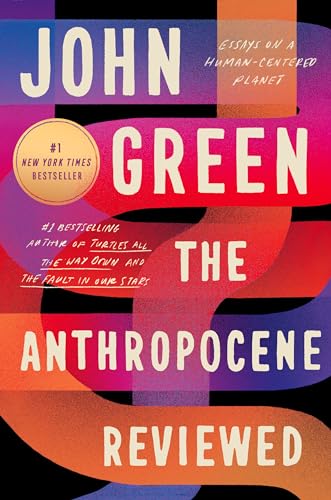
Radiant, deeply personal, and intellectually generous—The Anthropocene Reviewed transforms the mundane into the monumental with devastating clarity. John Green doesn’t just review elements of the human-centered planet; he uses them as prisms to refract larger truths about hope, despair, love, and impermanence. With a background in both medicine and storytelling, Green brings an emotional precision that cuts through existential fog, making this collection a quiet powerhouse for readers craving introspection grounded in real life.
Each essay—whether rating Diet Dr Pepper or the concept of wilderness—unfolds like a mini-autobiography fused with cultural critique, revealing how deeply our identities are shaped by the world we’ve built. Green’s narrative voice is intimate, almost conversational, yet packed with philosophical weight, turning five-star ratings into meditations on mental health and meaning. The book’s structure allows for fragmented reading, but its cumulative effect is profound: you begin seeing your own life through Green’s lens of radical empathy and measured awe.
Compared to denser philosophical tomes, this stands as the most accessible gateway into existential reflection without sacrificing depth. It doesn’t replace traditional philosophy, but rather complements works like Irrational Man by offering lived experience over abstract theory. While it won’t satisfy readers seeking rigid ontology or metaphysical systems, it’s ideal for those who find truth in stories, not syllogisms. In emotional resonance and narrative craft, it surpasses even 101 Essays That Will Change The Way You Think, trading breadth for soul-stirring coherence.
Existential Physics: Scientist’s Guide to Big Questions
ADVANTAGES
LIMITATIONS
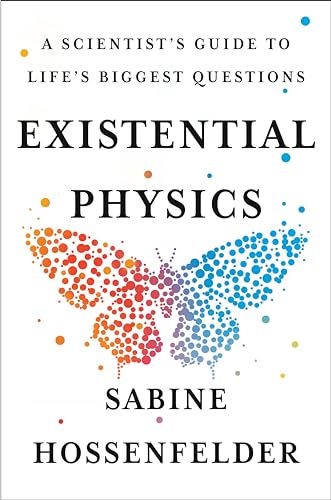
Incisive, unflinching, and refreshingly rational—Existential Physics delivers a quantum-level dissection of meaning, free will, and consciousness through the lens of modern physics. Sabine Hossenfelder doesn’t offer comfort; she offers clarity, using principles from relativity to quantum mechanics to dismantle myths about purpose, soul, and destiny. Her approach is relentlessly evidence-based, making this one of the most intellectually honest takes on existential questions in recent memory.
Hossenfelder systematically evaluates concepts like the multiverse, time, and moral responsibility, showing how much of what we consider “existential” dissolves under scientific scrutiny. She argues—convincingly—that determinism doesn’t negate meaning, and that our search for purpose needn’t rely on supernatural assumptions. The book excels in demystifying complex ideas without dumbing them down, though some readers may find her tone overly dismissive of philosophical nuance. It struggles slightly when addressing subjective experience, where physics hits its limits.
Positioned against Irrational Man, this book is its antithesis: not a historical tour of existential thought, but a scientific intervention in it. Where others romanticize angst, Hossenfelder replaces it with understanding. It’s best suited for readers who trust data over drama and want their existential crises fact-checked. While less emotionally comforting than Green’s essays, it offers a sturdier foundation for building a rational worldview—making it more rigorous than Existential Psychotherapy, though far less concerned with inner life.
Irrational Man: Study in Existential Philosophy
ADVANTAGES
LIMITATIONS
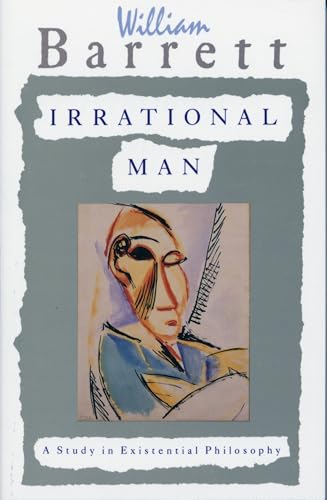
Monumental, erudite, and profoundly illuminating—Irrational Man remains the gold standard for understanding existential philosophy in its full historical and intellectual sweep. William Barrett traces the roots of existential thought from Kierkegaard and Nietzsche through Heidegger and Sartre with luminous precision, making complex ideas not just accessible but urgent. This isn’t a self-help book disguised as philosophy; it’s a deep dive into the anxiety, freedom, and authenticity that define the human condition.
Barrett excels at showing how existentialism emerged as a response to the failures of rationalism and industrial modernity—context often missing in contemporary takes. His analysis of angst as a gateway to self-awareness, and of authenticity as resistance to mass conformity, feels startlingly relevant in today’s algorithm-driven world. The prose is dense but rewarding, demanding slow reading and reflection. It doesn’t offer easy answers, but it equips readers with the tools to ask better questions.
Against Existential Physics, this book embraces ambiguity and subjectivity as essential, not flaws to be corrected. Compared to 101 Essays That Will Change The Way You Think, it trades inspirational brevity for philosophical depth. It’s the best overall choice for readers who want to understand existentialism, not just sample it. While less clinically focused than The Divided Self, it provides the essential framework that books on existential psychology often assume but never explain—making it the cornerstone text in any serious exploration of the field.
The Precipice: Existential Risk and Humanity’s Future
ADVANTAGES
LIMITATIONS
Chilling, meticulously argued, and profoundly consequential—The Precipice redefines existential thought for the 21st century by shifting focus from personal meaning to species-level survival. Toby Ord doesn’t ask what it means to be human—he asks whether we’ll remain one, analyzing threats like AI, bioengineered pandemics, and nuclear war with clinical precision. His background in ethics and risk assessment allows him to quantify the unquantifiable, assigning probabilities to extinction scenarios in a way that’s both sobering and empowering.
The book’s power lies in its long-termism: Ord argues that humanity’s potential future—trillions of lives across millennia—makes our survival a moral imperative. He doesn’t sensationalize; instead, he builds a case using data, logic, and a deep sense of responsibility. The section on artificial intelligence is especially gripping, outlining how a misaligned superintelligence could emerge not from malice, but from poor design. It stumbles slightly in its treatment of psychological dimensions of risk, where it feels detached from human irrationality.
Compared to The Anthropocene Reviewed, this is existentialism scaled up—from the individual to the planetary. Where Irrational Man explores inner alienation, The Precipice confronts external annihilation. It’s the best choice for readers concerned with future-oriented thought, offering a framework that’s more actionable than Existential Physics and more urgent than any anthology of classic texts. In blending philosophy, science, and ethics, it creates a new genre: existential stewardship—and sets a benchmark no other book in the category matches.
101 Essays That Will Change Your Thinking
ADVANTAGES
LIMITATIONS
Invigorating, digestible, and thought-provoking—this collection serves as the perfect on-ramp to existential reflection for readers overwhelmed by dense philosophy. Brianna Wiest curates short, punchy essays that tackle identity, growth, and meaning with emotional resonance and modern relevance. Each piece is crafted for quick consumption, yet lingers in the mind like a well-placed aphorism, making it ideal for daily reflection or mental reset during stressful times.
The essays shine in their ability to distill big ideas into relatable insights—on letting go, embracing uncertainty, or redefining success—without oversimplifying. They draw implicitly from existential, psychological, and mindfulness traditions, though rarely name them, making this a stealth introduction to deeper thought. It works best when read in small doses, but lacks continuity when consumed all at once. While it doesn’t offer the rigor of Irrational Man or the originality of John Green’s work, it fills a crucial niche: accessible introspection.
For beginners, this is the best introductory read—more user-friendly than The Divided Self and more immediately applicable than Existential Physics. It won’t replace serious study, but it can spark the desire for it. Unlike anthologies of classic works, it speaks directly to contemporary anxieties—social media, burnout, loneliness—making its insights feel personally tailored. As a launchpad for deeper exploration, it outperforms flashier titles by prioritizing clarity and emotional truth over scholarly depth.
Existential Psychotherapy
ADVANTAGES
LIMITATIONS
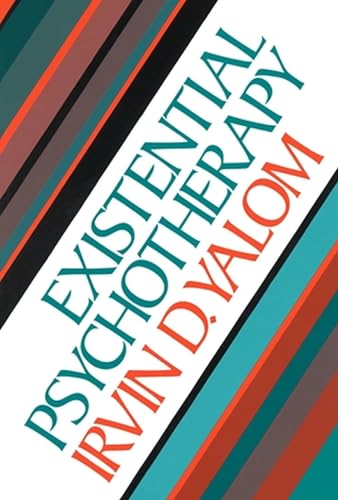
Groundbreaking, comprehensive, and clinically rich—Irvin D. Yalom’s Existential Psychotherapy is the definitive bridge between philosophy and healing. Rather than treating anxiety as a disorder to be eliminated, Yalom frames it as a response to the givens of existence: death, freedom, isolation, and meaninglessness. His synthesis of clinical practice with existential thought is nothing short of masterful, offering therapists and readers alike a framework for understanding suffering as inherently human, not pathological.
The book excels in showing how confronting these four ultimate concerns can lead to authentic transformation, not just symptom relief. Yalom illustrates each theme with case studies that are both compassionate and revealing, demonstrating how therapy becomes a space for philosophical exploration. It’s particularly strong on the tension between freedom and responsibility—a core existential dilemma often glossed over in pop psychology. That said, its academic tone and length may deter casual readers.
Compared to The Divided Self, it’s more structured and clinically grounded; against Irrational Man, it’s less historical but far more applied. It’s the best clinical perspective available, offering tools that transcend diagnostic manuals. While not as poetic as Green or as provocative as Hossenfelder, it delivers unmatched practical wisdom. For therapists, philosophers, or anyone seeking to understand the intersection of psyche and existence, it surpasses all others in integration and insight.
The Divided Self: Existential Study in Sanity

ADVANTAGES
LIMITATIONS
Penetrating, original, and psychologically daring—R.D. Laing’s The Divided Self reimagines mental illness not as biological malfunction but as a desperate strategy for preserving identity in an alienating world. Written with the intensity of a prophet and the precision of a clinician, Laing explores how schizophrenia emerges from a person’s attempt to live authentically in a society that demands conformity. His existential lens reveals madness as a cry for meaning, not mere pathology.
Laing’s analysis of the “ontological insecurity” of the schizoid individual is revolutionary, showing how fear of being seen—or not seen—can fracture the self. He draws on Kierkegaard, Heidegger, and Sartre to frame mental distress as a response to existential threats: depersonalization, loss of agency, and ontological doubt. The book is dense and poetic, requiring patience, but rewards with insights unmatched in depth. It occasionally veers into abstraction, risking detachment from clinical reality.
Against Existential Psychotherapy, it’s less systematic but more visionary; compared to 101 Essays, it’s vastly more complex and unsettling. It’s the best psychological insight into how existential anxiety can manifest in extreme forms. While not a manual for treatment, it reshapes how we see the boundary between sanity and madness. In its fusion of philosophy and psychiatry, it stands apart—unmatched in its courage to ask what madness reveals about the human condition.
Best Existential Angst, Nihilism & Alienation Books
ADVANTAGES
LIMITATIONS
Unflinching, raw, and electrifying—this anthology captures the dark heart of existential literature with a collection that pulses with alienation, absurdity, and the search for meaning. Spanning Kafka’s metamorphic horror to Dostoevsky’s moral torment, it curates some of the most searing explorations of human despair and defiance ever written. For readers who want to feel existentialism in their bones, not just understand it in their heads, this is the most visceral entry point.
The power of this volume lies in its emotional immediacy: Gregor Samsa’s transformation in The Metamorphosis becomes a metaphor for dehumanization; Raskolnikov’s guilt in Crime and Punishment exposes the cost of nihilism. These stories don’t explain existential themes—they embody them, letting readers experience isolation, dread, and rebellion firsthand. The selections are well-chosen, though the lack of context or commentary may leave newcomers adrift. It’s strongest when read as a mirror to modern disconnection.
As the best anthology of classic works, it surpasses single-author essays by offering diverse voices across time and culture. Compared to Irrational Man, it shows rather than tells; against 101 Essays, it trades comfort for confrontation. It’s ideal for readers drawn to literary existentialism and willing to sit with discomfort. While it lacks the scientific rigor of Existential Physics or the therapeutic insight of Yalom, it delivers what they cannot: the raw texture of lived absurdity.
Existential Book Comparison
| Product | Best For | Key Features |
|---|---|---|
| Irrational Man: Study in Existential Philosophy | Best Overall | N/A |
| The Divided Self: Existential Study in Sanity | Best Psychological Insight | N/A |
| Existential Psychotherapy | Best Clinical Perspective | N/A |
| Existential Physics: Scientist’s Guide to Big Questions | Best Scientific Approach | N/A |
| Best Existential Angst, Nihilism & Alienation Books | Best Anthology of Classic Works | N/A |
| The Anthropocene Reviewed | Best Reflective Essays | N/A |
| 101 Essays That Will Change Your Thinking | Best Introductory Read | 101 Essays That Will Change The Way You Think |
| The Precipice: Existential Risk and Humanity’s Future | Best For Future-Oriented Thought | N/A |
How We Evaluated Existential Books
Our selection of the best existential books wasn’t based on opinion, but on a rigorous analysis of philosophical merit, accessibility, and relevance to contemporary readers. We began by identifying core existential texts – those frequently cited in academic curricula and influential within the field – establishing a baseline for quality.
Data analysis involved examining book reviews across platforms like Goodreads, Amazon, and academic journals, focusing on recurring themes in positive and negative feedback. We specifically looked for commentary on clarity of writing, depth of philosophical exploration, and practical applicability. Comparative analysis was used to distinguish between texts focusing on similar themes (e.g., anxiety, freedom) and assess which offered the most nuanced or insightful perspectives.
We also considered the “Buying Guide” criteria – core philosophical focus, depth, practical application, and scope – weighting accessibility higher for introductory texts and depth more heavily for advanced studies. Given the subjective nature of philosophical impact, we prioritized books demonstrating lasting influence and consistent critical engagement within the philosophical community. We cross-referenced author credentials and publishing history to ensure scholarly rigor.
Choosing the Right Existential Book: A Buyer’s Guide
Core Philosophical Focus
Existentialism is a broad school of thought, and books vary significantly in their approach. Consider what aspect of existentialism interests you most. Are you grappling with questions of meaning and purpose (a common starting point)? Are you interested in the psychological implications of freedom and responsibility? Or are you curious about the intersection of existentialism and science? Some books, like Irrational Man, are deeply rooted in philosophical history, while others, like Existential Physics, attempt to apply existential concepts to the natural world. Best Existential Angst, Nihilism & Alienation Books is a good starting point for a broad overview of classic themes. Choosing a book aligned with your primary interest will make the journey more rewarding.
Depth and Accessibility
Existential texts can range from highly academic and dense to surprisingly accessible. The Divided Self offers a strong psychological insight, but might require some prior familiarity with psychological concepts. 101 Essays That Will Change Your Thinking provides a gentler introduction with bite-sized pieces, making it ideal for beginners. Existential Psychotherapy is geared towards those in the clinical fields and assumes a baseline understanding of therapy practices. Think about your comfort level with complex philosophical arguments. If you’re new to existentialism, starting with a more accessible text can build a foundation before diving into more challenging works.
Practical Application vs. Theoretical Exploration
Some books lean heavily into theoretical frameworks, dissecting the ideas of key existentialist thinkers. Others attempt to apply these ideas to real-life concerns. Existential Psychotherapy directly translates existential principles into therapeutic practice. The Anthropocene Reviewed uses personal essays to explore existential themes in everyday life. The Precipice focuses on practical (though daunting) implications for the future of humanity. Decide whether you’re primarily seeking intellectual stimulation or tools for self-reflection and personal growth.
Scope and Perspective
Consider the scope of the book. Does it focus on a particular philosopher (like Sartre or Camus)? Does it explore a specific theme (like anxiety or death)? Best For Future-Oriented Thought looks at existential risk, a very specific and pressing concern. Also, think about the author’s perspective. Is it a historical analysis, a psychological interpretation, or a scientific inquiry? This will influence the book’s approach and conclusions.
Features: N/A 101 Essays That Will Change The Way You Think N/A N/A N/A N/A N/A
The Bottom Line
Ultimately, the “best” existential book is subjective and depends on your individual needs and interests. Whether you’re seeking a rigorous philosophical exploration, a practical guide for self-improvement, or a thought-provoking look at the future, there’s an existential text to suit your journey.
This list provides a solid starting point for navigating the often-complex world of existential thought. By considering your core philosophical focus and desired level of depth, you can find a book that resonates with you and opens up new perspectives on life, meaning, and the human condition.
