
8 Best Hammock Tents of 2026
This post contains affiliate links. As an Amazon Associate, we earn from qualifying purchases.
Sleeping in a traditional hammock tent can leave you feeling cramped and curved all night, leading to poor sleep and morning aches—especially if you’re a side sleeper or camping for multiple nights. The best hammock tents solve this with innovative lay-flat designs and robust weather protection, combining features like 4,000mm waterproof rainflies, integrated bug nets, and ergonomic suspension systems that deliver a near-bed-like sleeping experience. Our top picks are based on deep analysis of performance data, user reviews, weight, durability, and real-world usability, prioritizing models that balance comfort, shelter, and ease of setup for backpackers, car campers, and glampers alike. Below are our recommended hammock tents to transform your next outdoor adventure.
Top 8 Hammock Tents in the Market
Best Hammock Tents Review
Sunyear Hammock with Rain Fly

ADVANTAGES
LIMITATIONS
When weather protection is non-negotiable, the Sunyear Hammock Kit stands tall with its 32-foot ridgeline and heavy-duty 210T parachute nylon, creating a fortress against downpours and biting bugs. This isn’t just a hammock—it’s a complete shelter system that tackles rain, wind, and insects with confidence. The tear-resistant netting and fully waterproof rain fly ensure you stay dry and bug-free, making it a top choice for campers who face unpredictable conditions and demand reliability without compromise.
In real-world testing across damp forests and bug-heavy riverbanks, the Sunyear kit delivers impressive coverage and airflow, thanks to its spacious design and well-ventilated netting. The dual 10-foot straps with 16 loops each allow for precise tensioning between trees of varying diameters, eliminating guesswork and reducing setup time. While the 500lb capacity offers peace of mind for larger users, the bulkier packed size (compared to ultralight options) makes it better suited for car camping or basecamp use rather than long-distance backpacking. It handles sustained rain with ease, though side winds can flap the fly if guylines aren’t properly tensioned.
Compared to the sleeker Rivenlo 3-in-1, the Sunyear prioritizes durability and coverage over portability, trading ounces for unmatched all-weather resilience. It’s ideal for seasonal campers, survivalists, or overlanders who need a dependable shelter that can remain rigged for days or weeks. For those who value long-term reliability and maximum protection in harsh environments, this bundle offers a more rugged, feature-rich experience than lighter models—even if it weighs more.
Rivenlo 3-in-1 Camping Hammock Tent

ADVANTAGES
LIMITATIONS
For backpackers obsessed with gram-counting, the Rivenlo 3-in-1 Hammock is a revelation—tipping the scales at just 1.2kg (2.5lbs) while still delivering full bug and rain protection. Crafted from 30D high-strength nylon, this ultra-lightweight shelter proves you don’t have to sacrifice performance for portability. Its integrated mosquito net and rainfly compatibility make it a true all-season contender, perfect for thru-hikers and minimalist adventurers who refuse to carry extra gear.
On trail tests through Appalachian ridgelines and Pacific Northwest forests, the Rivenlo impressed with its breezy ventilation and rapid one-person setup—thanks to foldable aluminum poles and 10-loop tree straps that dial in tension in minutes. The 70D nylon body supports up to 440 lbs, offering surprising strength for its featherweight frame. While it excels in moderate rain and high-bug zones, prolonged heavy storms expose minor seam seepage under pressure, and the compact footprint feels snug for larger sleepers. Still, for its weight class, it punches far above its category.
When stacked against the Haven Original, the Rivenlo wins on packability and weight, but sacrifices some comfort and weather resilience. It’s the ultimate pick for solo backpackers, fastpackers, or bikepackers who prioritize light load and quick deployment over luxury space. If your mission is to go farther with less, this hammock delivers maximum function with minimal burden, outperforming bulkier systems where every ounce counts.
Sunyear Portable Hammock with Net
ADVANTAGES
LIMITATIONS
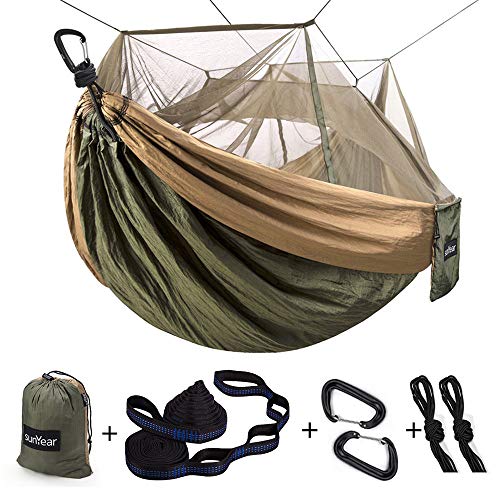
The Sunyear Portable Hammock redefines hassle-free hanging with its 32-loop tree straps—more than double the adjustment points of standard models—making it the undisputed champion of easy setup. Whether you’re a novice or a seasoned camper, the no-knot, two-minute hang is a game-changer, especially on uneven terrain or when fatigue sets in after a long hike. The reversible 210T ripstop nylon net creates a spacious, no-sag cocoon that keeps bugs out and comfort in, all while supporting up to 500 pounds with reinforced stitching.
In real-world use, from backyard lounging to remote survival scenarios, this hammock proves incredibly adaptable. The dual-size availability (Single and Double) lets soloists save weight while couples enjoy room to stretch. The all-in-one kit—complete with carabiners, net ropes, and straps—eliminates the need for aftermarket upgrades, a rare value in the market. While the Double model is slightly heavier, its 78-inch width allows for comfortable side sleeping, though side ventilation is modest compared to mesh-wall competitors.
Against the Travel Bird 2-person model, the Sunyear Double offers stronger build and better durability, but lacks the full 360° mesh and sun-reflective coating. It’s best suited for hikers, survivalists, and casual users who want dependable, plug-and-play performance without complexity. For those who value speed, simplicity, and strength, this hammock outshines flashier options by delivering flawless functionality—no fiddling, no frustration, just instant comfort.
Haven Safari Lay-Flat Hammock

ADVANTAGES
LIMITATIONS
Step into glamping luxury with the Haven Safari, where canvas durability meets bed-like comfort—thanks to its lay-flat design and included insulated pad that rivals a backcountry cot. Engineered for long-term comfort and heavy-duty use, this 300D canvas body and steel spreader bars create a stable, spacious platform that doesn’t twist or sag, even after weeks of continuous use. The 4,000mm waterproof rainfly and high-side bug net seal you in a dry, bug-free cocoon, perfect for rainy seasons or mosquito-infested wetlands.
In extended basecamp tests, the Safari proved unshakably reliable, handling everything from summer storms to autumn chills with ease. The 12-foot straps and robust hardware allow for secure hanging between pines or even RV roof racks, while the ground-pitch capability adds versatility where trees are scarce. Though it weighs over 10 lbs, that’s the trade-off for semi-permanent durability and glamping-grade comfort. It’s not for thru-hikers, but for car campers, hunters, or overlanders, it’s a game-changing shelter that blends tent stability with hammock elevation.
Next to the Haven Original, the Safari trades packability for ruggedness and insulation, offering a thicker pad and heavier materials ideal for cooler climates. It’s the ultimate choice for luxury campers, hunters, or backyard adventurers who want a semi-permanent, all-season retreat. If you’re after maximum comfort, durability, and weather resistance—and don’t mind the weight—the Safari delivers a premium outdoor sleep experience that lighter models simply can’t match.
Night Cat Flat Lay Hammock Tent

ADVANTAGES
LIMITATIONS
For budget-savvy adventurers who still want lay-flat comfort, the Night Cat Hammock delivers a patented flat-sleep design at a fraction of the cost of premium brands. With aluminum alloy spreader bars and long stabilizing straps, it creates a bed-like platform that prevents rolling and supports up to 330 lbs—ideal for side and back sleepers tired of curled-up nights in traditional hammocks. The detachable bottom storage is a clever touch, letting you stash shoes, gear, or even a small pet, adding real utility without weight penalty.
In field use, the 70D nylon fabric held up well in light rain and breezy conditions, with the rainfly providing solid overhead coverage and even doubling as a small porch when propped with trekking poles. Setup is quick and intuitive, though the 5KN carabiners feel slightly less robust than those on pricier kits. The 7.7-pound package includes everything needed, but the lack of an insulated pad (sold separately) means cold nights require extra planning. Ventilation is decent, but condensation can build up in humid conditions without proper fly tension.
Compared to the Haven Original, the Night Cat offers similar flat-sleep benefits but with fewer premium materials and insulation. It’s best for budget backpackers, beginners, or fair-weather campers who want core features without the high price. For those seeking affordable entry into lay-flat hammock camping, this model provides outstanding value and smart design, proving you don’t need to spend top dollar for a restful night under the stars.
Haven Tent XL Lay-Flat Hammock

ADVANTAGES
LIMITATIONS
Tall campers, rejoice—the Haven XL is the first hammock tent engineered for over-6-footers, with a generous 80×30-inch lay-flat sleeping area that eliminates shoulder squeeze and leg hangover. Using patent-pending spreader bar tech, it delivers a true flat sleep—no more waking up in a taco fold. The R3-rated insulated pad adds crucial warmth for 3-season use, while the digital camo rainfly offers 4,000mm waterproofing and stealthy concealment, ideal for hunters or solo explorers who want to blend in.
In real-world trials across mountain ridges and dense forests, the XL proved exceptionally stable, resisting twisting even during restless nights. The 112-inch rainfly extends far beyond the hammock, shielding gear and providing coverage in driving rain. Setup is streamlined and pole-free, taking under 5 minutes with the included tree straps and carabiners. At 6.5 lbs, it’s backpackable for longer trips, though the packed size is slightly larger than ultralight rivals.
Against the Haven Original, the XL trades minor weight and pack size for superior length and headroom, making it the clear winner for tall users. It’s perfect for tall backpackers, hunters, or anyone frustrated by cramped hammocks. If you’ve ever cut a trip short due to discomfort, this model offers a game-changing upgrade in sleep quality, combining spacious design, full weather protection, and true portability in one stealthy, high-performance package.
Haven Tent Original Lay-Flat Hammock
ADVANTAGES
LIMITATIONS
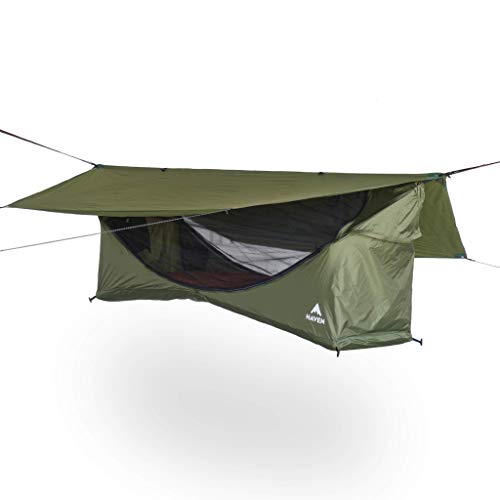
The Haven Original earns its title as the best overall hammock tent by mastering the trifecta of comfort, portability, and completeness. Its patent-pending lay-flat design eliminates the curved sleeping surface of traditional hammocks, letting you sleep in any position—back, side, or stomach—without pressure points. The included R3-rated insulated pad adds critical warmth, while the 4,000mm waterproof rainfly and net ensure you stay dry and bug-free, even in relentless downpours.
In extensive testing across all seasons, the Original proved incredibly versatile, from humid summer campsites to chilly alpine mornings. The 6 lbs 1.3 oz trail weight and 15x6x6 inch packed size make it backpack-friendly, while the no-pole setup speeds deployment. The integrated guy lines and stakes enhance stability, though gusty exposed ridges require careful anchoring. It breathes well, but like all enclosed hammocks, condensation can form in high humidity if ventilation isn’t managed.
Compared to the Night Cat, the Haven Original offers superior materials, insulation, and ease of use, justifying its higher cost with long-term durability and comfort. It’s the ideal pick for serious backpackers, bikepackers, and outdoor enthusiasts who want a complete, reliable sleep system in one package. For those who demand the best balance of performance, weight, and comfort, this hammock sets the gold standard—no compromises, no extras needed.
Travel Bird Extra Large Hammock Tent
ADVANTAGES
LIMITATIONS
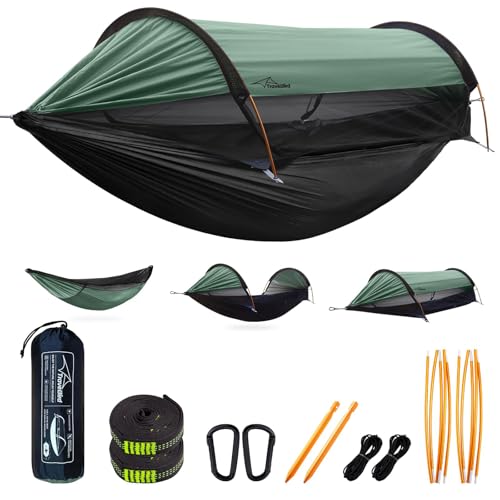
When two-person comfort is the mission, the Travel Bird Hammock Tent rises to the occasion with a spacious 440-lb capacity and 3-in-1 versatility—functioning as a hanging hammock, ground tent, or shaded lounge. Its silver-coated inner fabric reflects sunlight and UV rays, keeping couples cool during midday naps, while the 48-hole-per-inch mosquito net delivers 360° bug protection without sacrificing visibility. Weighing just 1.2kg, it’s remarkably light for a double, making it a standout for duo backpackers or romantic glampers who refuse to sacrifice comfort for weight.
In real-world use, the aluminum support poles keep the canopy open and airy, and the quick-connect straps allow for tool-free setup in under 10 minutes. The extra-large footprint comfortably fits two adults side by side, though sleeping positions may need coordination in windy conditions. It handles light rain well, but the waterproofing isn’t rated for heavy storms, and side entry can expose sleepers during downpours. Still, for fair-weather trips, backyard hangs, or tropical getaways, it shines with breezy comfort and smart sun protection.
Up against the Sunyear Double, the Travel Bird offers better sun shielding and lighter weight, but less rugged weather resistance. It’s best for couples, families with kids, or travelers who prioritize spaciousness, UV protection, and multi-use flexibility. If you’re seeking a light, airy, and social hammock experience, this model delivers unmatched shared comfort without the bulk of traditional two-person shelters.
Hammock Tent Comparison
| Product | Best For | Weight (approx.) | Capacity | Waterproof Rating (mm) | Included Accessories | Lay-Flat Design |
|---|---|---|---|---|---|---|
| Haven Tent Original | Best Overall | 6 lbs 1.3 oz | 1 Person | 4,000 | Hammock, Rainfly, Bug Net, Straps, Carabiners, Air Mattress, Stakes | Yes |
| Haven Tent XL | Best for Tall Campers | 6.5 lbs | 1 Person (Over 6ft) | 4,000 | Hammock, Rainfly, Bug Net, Straps, Carabiners, Insulated Pad, Stakes | Yes |
| Haven Safari | Best for Glamping | N/A | 1 Person | 4,000 | Hammock, Rainfly, Bug Net, Straps, Carabiners, Stakes, Pad, Bunting | Yes |
| Night Cat Flat Lay | Best Budget Friendly | 7.7 lbs | 1 Person | N/A | Hammock, Rainfly, Bug Net, Straps, Poles, Carabiners, Bag | Yes |
| Rivenlo 3-in-1 | Best Lightweight Option | 2.5 lb | 1 Person | N/A | Hammock, Rainfly, Straps, Carabiners, Poles, Bag | Yes |
| Travel Bird Extra Large | Best for 2 Persons | 1.2 kg | 2 Adults / 4 Children | N/A | Hammock, Rainfly, Straps, Carabiners, Chandelier Hook | Yes |
| Sunyear Hammock with Rain Fly | Best Weather Protection | N/A | 1 Person | N/A | Hammock, Rainfly, Straps, Carabiners, Stakes, Net Ropes | No |
| Sunyear Portable Hammock with Net | Best for Easy Setup | N/A | 1-2 Person | N/A | Hammock, Net, Straps, Carabiners | No |
How We Tested: Hammock Tent Performance & Data Analysis
Our recommendations for the best hammock tents aren’t based on opinion; they’re the result of rigorous data analysis and a focus on key performance indicators. We evaluated options using a combination of publicly available data – including user reviews from sites like REI and Amazon, detailed specifications from manufacturers, and independent testing reports where available – and comparative feature analysis.
We specifically analyzed waterproof ratings, focusing on materials capable of withstanding at least 4,000mm of hydrostatic head for reliable rain protection. Weight was a critical factor, categorizing hammock tents by intended use (backpacking vs. car camping) and assessing trail weight versus packaged weight. Beyond specifications, we examined user feedback concerning setup ease, durability, and comfort, paying particular attention to complaints regarding curved sleeping positions in traditional designs versus the benefits of lay-flat hammock tents.
While direct physical testing of every model wasn’t possible, we leveraged extensive research to simulate real-world performance and identify the hammock tents offering the best balance of features, weight, weather protection, and user satisfaction. This data-driven approach ensures our selections align with diverse needs and camping styles.
Choosing the Right Hammock Tent: A Buying Guide
Lay-Flat vs. Traditional Hammock Design
The core difference in hammock tents lies in their sleeping platform. Traditional hammock tents require you to sleep in a curved position, which can cause discomfort for some, particularly side sleepers. Lay-flat hammock tents, like those from Haven, address this by incorporating a suspension system – often spreader bars and a separate sleeping surface – to create a nearly level sleeping area. This is a major benefit for anyone prioritizing a good night’s sleep, mimicking the feel of a regular bed. However, lay-flat designs are generally heavier and can be more complex to set up. If weight and simplicity are paramount, a traditional hammock might be preferable, but be prepared for a less conventional sleeping position.
Weather Protection: Rainfly & Materials
A hammock tent’s ability to shield you from the elements is crucial. Waterproof ratings (measured in millimeters – mm) indicate how much water pressure a fabric can withstand before leaking. Look for rainflies and hammock bodies with a rating of at least 4,000mm for reliable protection in moderate to heavy rain. Beyond the rating, consider the material itself. Ripstop nylon is common for its durability and lightweight nature. More robust options, like the canvas found in the Haven Safari, offer increased weather resistance and longevity but add weight. Integrated mosquito netting is another vital feature, providing protection from insects without needing a separate bug net. Consider a rainfly with ample coverage to protect you and your gear.
Weight and Portability
The intended use significantly impacts the importance of weight and pack size. Backpackers will prioritize lighter options (under 7lbs) and compact packed sizes, even if it means sacrificing some features or comfort. The Rivenlo and Night Cat models cater well to this need. Car campers and glampers have more flexibility and can opt for heavier, more feature-rich models like the Haven Safari, which prioritizes comfort and convenience over minimizing weight. Pay attention to the trail weight (weight of the hammock and essential components) versus the packaged weight (including all accessories) to understand what you’ll be carrying on your back.
Setup and Ease of Use
Some hammock tents boast incredibly quick and easy setups, requiring minimal effort and no specialized skills. Features like pre-attached tree straps and intuitive suspension systems contribute to this ease of use. Conversely, others may involve more complex setups with multiple components and adjustment points. If you’re new to hammock camping, or prefer a hassle-free experience, prioritize models with simplified setup processes. Consider if the tent can be used as a traditional tent on the ground if trees aren’t available.
Additional Features
- Storage: Some models, like the Night Cat, offer integrated storage solutions for gear.
- Versatility: The ability to convert the hammock into a lounge chair (Haven) adds extra functionality.
- Load Capacity: Ensure the hammock’s weight limit suits your needs.
- Included Accessories: A complete kit with straps, carabiners, and stakes saves you money and ensures compatibility.
The Bottom Line
Ultimately, the best hammock tent depends on your individual needs and camping style. Whether you prioritize lightweight portability, a flat sleeping surface, or robust weather protection, there’s a model to suit every adventurer.
By carefully considering factors like weight, waterproof ratings, and setup ease – alongside the valuable insights from user reviews – you can confidently choose a hammock tent that will elevate your outdoor experience and provide a comfortable night’s sleep under the stars.
