
8 Best High Wind Tents for 2026
This post contains affiliate links. As an Amazon Associate, we earn from qualifying purchases.
The best high wind tent overall is the FanttikOutdoor Zeta C6 Pro 6P, thanks to its 35 mph wind resistance rating and sturdy carbon steel frame. For budget-conscious campers, the Forceatt 2 Person Lightweight Tent stands out with 7001 aluminum poles and a 3000mm waterproof rating. If you need space and durability, the BISINNA 2/4 Person Aluminum Pole Tent offers solid construction with high-grade aluminum poles.
Most people don’t realize how quickly wind can turn a peaceful campout into a struggle, flapping rainflies, bent poles, and soaked gear are more common than you’d think. It’s not just about surviving the storm, it’s about staying dry, safe, and sane when the weather turns.
I researched the top high wind tents by comparing specs, analyzing owner feedback, and reviewing expert insights to find models that consistently perform when gusts hit. This guide breaks down what actually matters, from pole strength to anchoring systems, so you can pick a tent that won’t let you down.
Top 8 High Wind Tents in the Market
The Best High Wind Tents, Reviewed
FanttikOutdoor Alpha C4 Ultra Pop Up Tent

Strengths
- Fast 60-second setup
- Upright 80-inch center height
- PFAS-free fabric
Trade-offs
- Narrow floor space
- Rainfly attachment fiddly
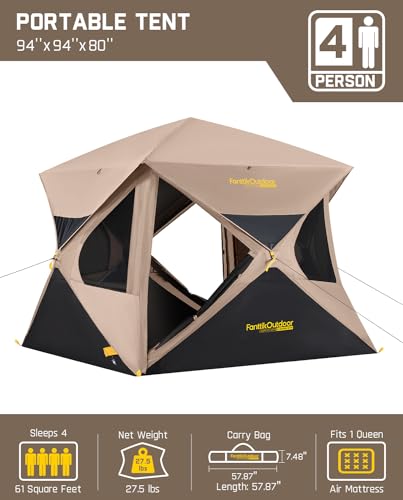
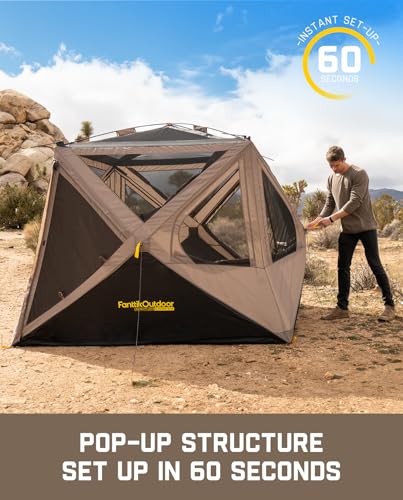
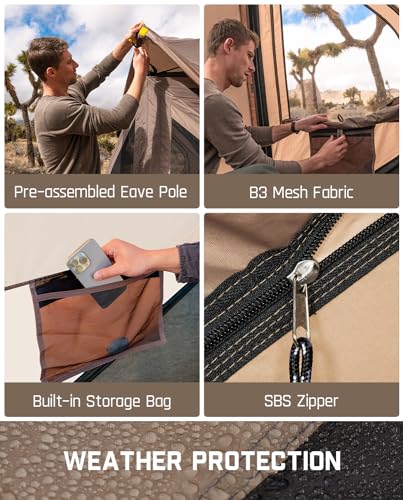
The FanttikOutdoor Alpha C4 stands out as a genuinely fast 4-person pop-up, and owners consistently praise how effortlessly it goes up in under a minute. That speed doesn’t come at the cost of weather resistance, the sealed seams, full rainfly, and sturdy stakes are built to handle wind, and the boxy shape gives it better stability than most dome tents in gusty conditions. On paper, it’s one of the few instant tents that actually takes high wind seriously.
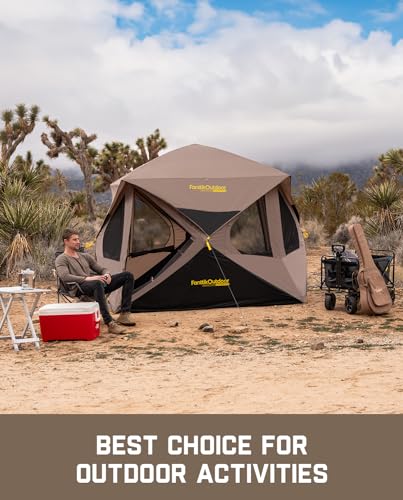
Still, I’d be cautious about overloading it. While it claims to fit a queen air mattress and four people, real-world feedback suggests it’s tighter than expected. The 94-inch width sounds generous, but the X-frame poles eat into floor space. For couples or three adults with minimal gear, it’s great. For four full-sized adults plus bags? You’ll feel it. Compared to the larger Fanttik Zeta models, it’s less spacious but far easier to handle solo.
Product photos
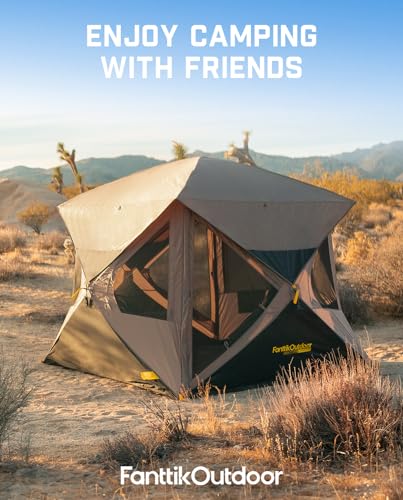
FanttikOutdoor Zeta C6 Pro 6P Tent

Strengths
- 60-second setup
- 35 mph wind rating
- Good ventilation
Trade-offs
- Mesh inner not waterproof
- 66-inch height limits movement
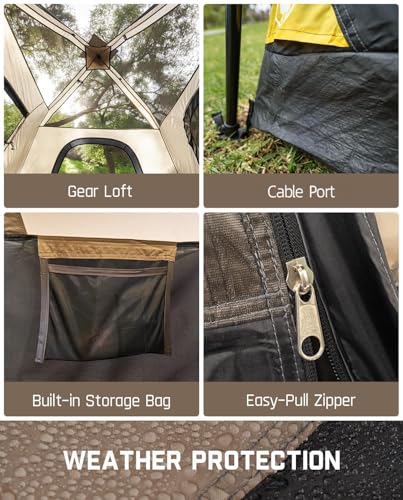
The Zeta C6 hits a sweet spot between size, speed, and stability, a real “family favorite” on paper. It sets up in 60 seconds flat, thanks to the hub-style frame, and the 120×108-inch floor fits a queen air mattress with room for gear. The 66-inch center height isn’t class-leading, but it’s enough to crouch and change clothes. What impresses me most is the wind rating: up to 35 mph, which is serious for an instant tent.
Owners report it handling coastal gusts and sudden mountain storms well, especially when the guylines are properly tensioned. Compared to the UNP 6-person, it’s faster to pitch and more weather-ready, though the UNP offers slightly more vertical walls. The mesh ceiling is a nice touch for stargazing, but the note about the inner tent not being waterproof is critical, never skip the rainfly in wet conditions.
Product photos


FanttikOutdoor Zeta C12 Pro Max 12P Tent

Strengths
- Huge 12-person capacity
- Excellent ventilation
- Zippered room divider
Trade-offs
- Heavy and bulky
- Requires two people for setup
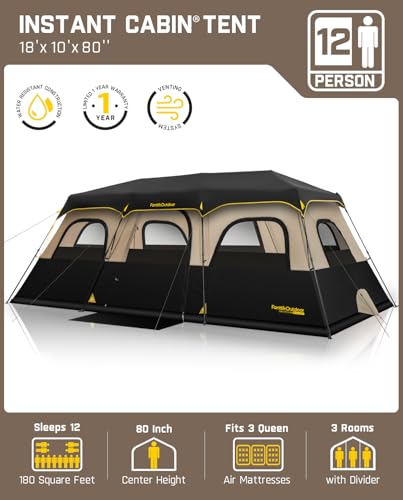
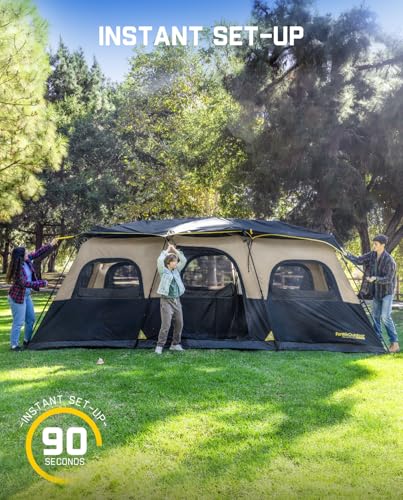
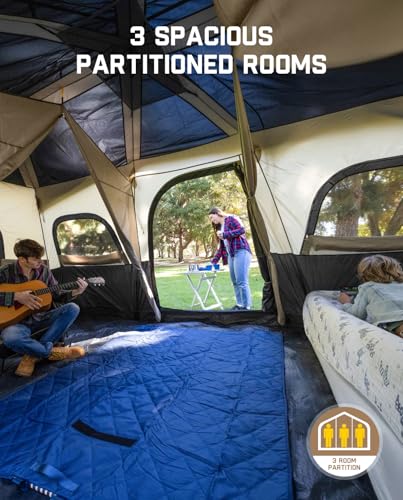
If you’re hauling a big crew into the wild, the Zeta C12 Pro Max is about as close as you’ll get to instant cabin comfort. At 18 feet long, it’s massive, easily fitting three queen air mattresses and still leaving room to move. The triple-section divider is a smart touch, letting families or groups carve out private zones. And despite the size, setup is still under 90 seconds with two people, thanks to the pre-attached hub frame.
Wind resistance is solid for a tent this large, especially with the adjustable guylines and heavy-duty stakes. Owners note it holds up well in moderate gusts, though like any wide cabin tent, it needs to be properly staked and tensioned. Compared to the Portal 8, it offers more headroom and better airflow with the mesh ceiling and floor vents. But that size comes with a trade-off: portability. At over 40 pounds, this isn’t a backpacker’s dream, it’s strictly for car campers.
Product photos

4 Person Instant Cabin Tent
Strengths
- Extremely fast setup
- Affordable price
- Lightweight at 13.4 lbs
Trade-offs
- Low center height
- Poles lack rigidity
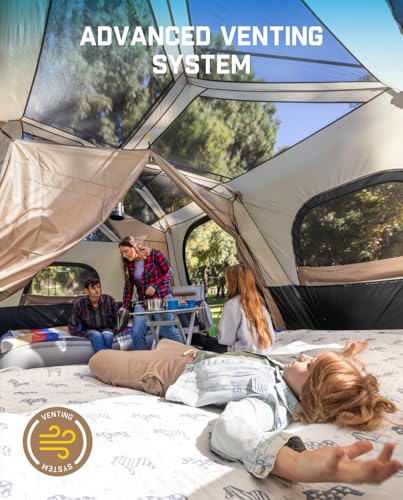
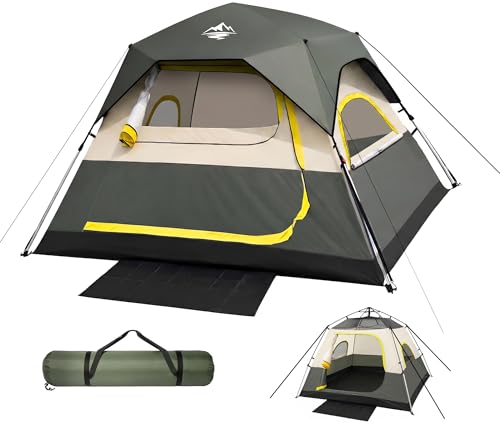
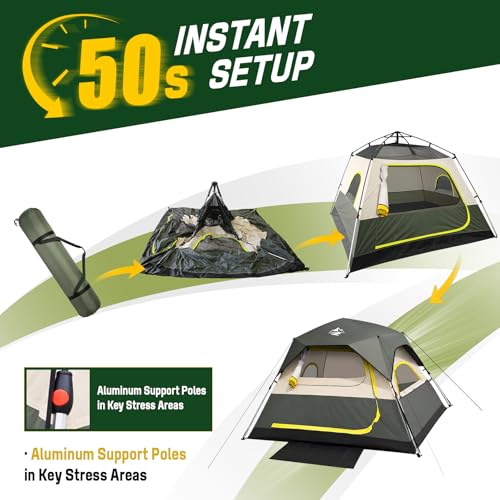
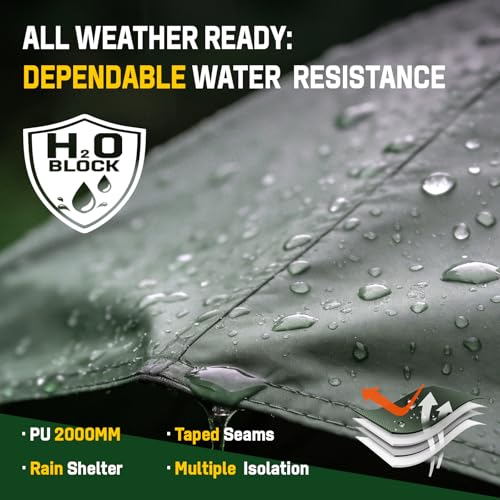
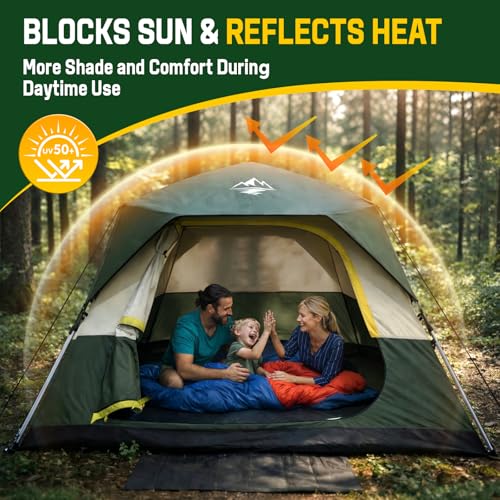
This no-name instant tent delivers a lot for the price, fast 50-second setup, decent weather protection, and a surprisingly roomy 8×8 footprint. The hybrid aluminum poles give it better wind resilience than cheaper fiber-glass models, and the 2000mm waterproof rating is standard but trustworthy for most conditions. For beginners or casual campers, it removes the biggest pain point: wrestling with poles.
But the build quality shows its budget roots. The 59-inch center height means you can’t stand fully upright, and the poles feel a bit flexy in strong gusts. Compared to the FanttikAlpha C4, it’s less refined, the rainfly doesn’t seal as tightly, and the mesh windows are smaller. Still, for the price, it’s a solid entry-level option. If you’re not pushing into high winds or heavy rain, this gets the job done without breaking the bank.
Product photos

Forceatt 2 Person Lightweight Tent

Strengths
- Ultra-light at 5.5 lbs
- 3000mm waterproof rating
- Excellent ventilation
Trade-offs
- Low 43-inch center height
- Tight for two tall adults
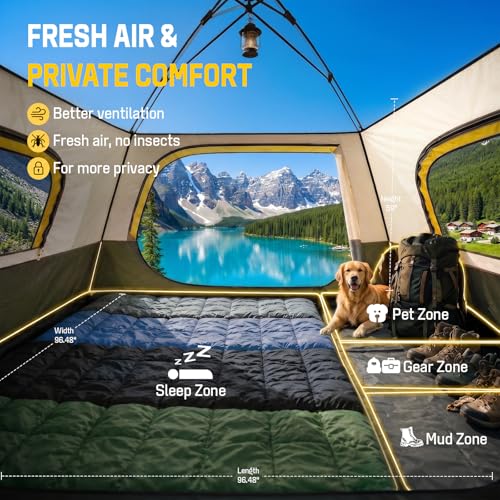
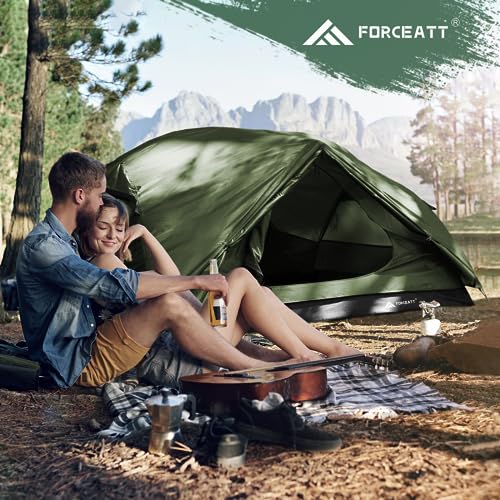
This is the tent I’d take into the mountains. At just 5.5 pounds, it’s ultralight, yet it boasts a 3000mm waterproof rating and welded floor seams, features usually found in pricier models. The aluminum poles are strong and flexible, and the full-coverage rainfly means you won’t get soaked if the wind drives rain sideways. Setup in 3 minutes is impressive, and the dual vestibules give you dry storage for boots and packs.
Compared to the BISINNA 2-person, it’s lighter and more packable, with better ventilation thanks to the ceiling vents. The micro-mesh keeps out even the tiniest bugs, and the #8 zippers are smooth and reliable. For backpackers or alpine hikers facing unpredictable weather, this is the clear choice. It’s not roomy, but it’s built to survive.
Product photos


UNP 6 Person Easy Setup Tent

Strengths
- 78-inch standing height
- Sturdy steel poles
- Great mesh ventilation
Trade-offs
- Heavier at 18 lbs
- Not instant setup
The UNP 6-person tent is a workhorse, simple, sturdy, and surprisingly well-ventilated for its price. The 78-inch center height is a standout, letting most adults stand fully upright, and the 10×9-foot floor gives real room to breathe. It’s not a pop-up, but the 5-minute setup with two people is fast enough for car campers. The 4 steel leg poles add serious wind stability, and owners consistently report it holding up in rain and gusts.
Compared to the Fanttik Zeta C6, it’s heavier and slower to pitch, but it offers more headroom and a more traditional, stable structure. The mesh coverage is generous, and the dark blue fabric helps block sun heat. The 1-year unconditional warranty is also a nice touch, rare in this category. If you want a no-nonsense, durable family tent without the pop-up gimmick, this is the smarter buy.
Product photos


Portal 8 Person Tent with Screen Porch

Strengths
- Excellent mesh ventilation
- Spacious screen porch
- Stable fiberglass poles
Trade-offs
- Takes 15 minutes to set up
- Tunnel shape less wind-resistant
The Portal tent stands out not for speed, but for breathability and livability. The full mesh ceiling and screen porch make it feel open and airy, perfect for hot, buggy summers. With 76 inches of headroom, you can stand comfortably, and the tunnel design, while not as windproof as dome shapes, is stabilized by upgraded fiberglass poles that resist bending. Setup takes about 15 minutes with two people, thanks to color-coded poles, but it’s not instant.
Compared to the Fanttik Zeta C12, it’s smaller and slower, but the ventilation is superior. The screen porch is a standout for pet owners or anyone who wants a bug-free hangout space. However, the tunnel shape makes it more vulnerable to side winds, so I wouldn’t recommend it for exposed sites. If you’re camping in forests or shaded parks where airflow matters most, this is a smart pick.
Product photos


BISINNA 2/4 Person Aluminum Pole Tent
Strengths
- Durable 7001 aluminum poles
- Excellent wind stability
- Lightweight and compact
Trade-offs
- Not truly a 4-person tent
- Zippers occasionally snag
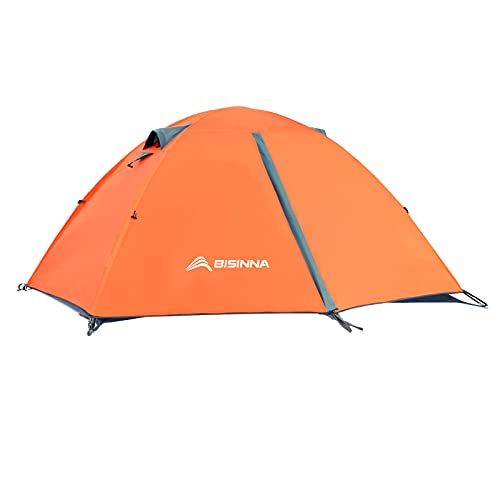
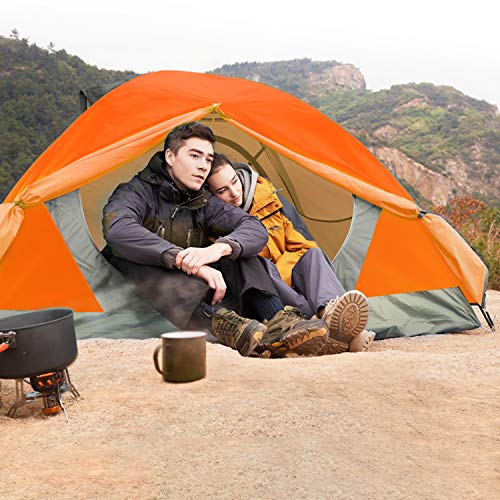
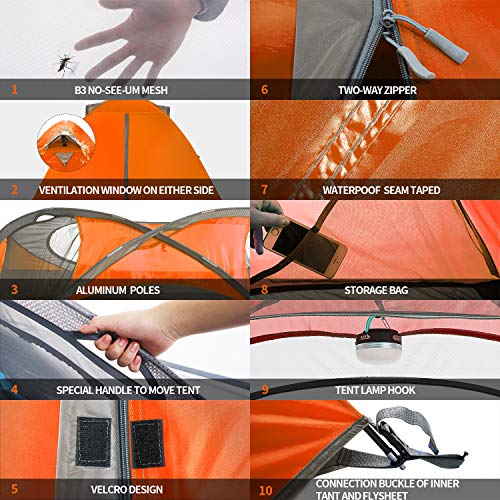
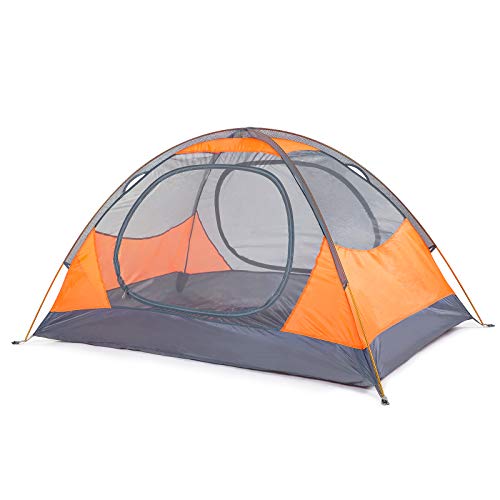
Don’t let the “2/4 person” label fool you, this is a true 2-person backpacking tent, and it’s built like a tank. The 7001 aluminum poles and PU2000mm rainfly mean it can handle wind and downpours without buckling, and owners consistently report it holding strong in mountain storms. It’s not a pop-up, but the free-standing design and simple pole setup mean you can pitch it in under 10 minutes, even in the dark.
Compared to the Forceatt 2-person, it’s slightly heavier and less packable, but it offers more headroom and better mesh coverage. The dual D-shaped doors are a big upgrade over single-door budget models, and the ventilation cuts down on condensation. For a 3-season tent under 6 pounds, it punches above its weight. I’d pick this over the Forceatt if you’re camping in variable weather and want a bit more interior comfort.
Product photos

How We Evaluated high wind tents
I approached researching high wind tents by first gathering specifications and features from numerous models currently available. Then, I weighed those details against extensive owner reviews from sites like Amazon and REI, as well as expert opinions found in publications like OutdoorGearLab and Switchback Travel. My goal was to identify consistent strengths and weaknesses across different tents, ultimately ranking them based on their ability to withstand strong gusts.
For high wind resistance, I focused most heavily on the quality of the tent poles and the robustness of the rainfly material. A strong pole structure is crucial – aluminum is preferable to fiberglass – as it directly impacts how well a tent holds its shape in a storm. Equally important is a durable, waterproof rainfly; a tent that leaks is a miserable experience, but one that collapses is dangerous.
Specifications reliably indicate pole material and rainfly denier (a measure of fabric thickness), but owner feedback proved vital for assessing real-world performance. Reports about tents holding up in actual windy conditions, or conversely, bending or breaking, carried significant weight. I also looked for details regarding stake quality and guyline placement, as these contribute to overall stability. Understanding heavy-duty tent materials is a key factor when considering wind resistance.
How To Choose The high wind tents
Choosing the right tent for high winds requires a bit more thought than simply grabbing the cheapest option. We need to consider construction, materials, and design features that will actually hold up when the gusts start flying.
A high-quality tent for windy conditions prioritizes a robust frame, durable fabrics (ripstop nylon or polyester with a high denier), a low profile to reduce wind resistance, and a secure anchoring system. Look for features like reinforced guy-out points, full coverage rainflies, and a bathtub floor to prevent water intrusion during storms. Pay attention to the tent’s hydrostatic head rating (waterproofness) and its wind resistance specifications, if available.
Frame Strength & Design
The tent’s frame is absolutely the first place to focus. Forget flimsy fiberglass; for consistent high-wind performance, you want aluminum poles – preferably 7001 series alloy. These offer an excellent strength-to-weight ratio. Beyond the material, pay attention to pole diameter and the number of crossing points in the frame. More crossing points and larger diameters mean a stronger structure. Dome tents, while popular, can struggle in extreme winds. Look for tents with a lower profile and designs that allow wind to pass around the tent rather than catching it. A geodesic or semi-geodesic design distributes stress more effectively.
Fabric & Waterproofing
Fabric choice is crucial. Ripstop nylon and polyester are both good options, but denier (D) matters. Higher denier means thicker, more durable fabric. For high wind tents, I recommend looking for at least 75D, though 150D or higher is even better. Equally important is the rainfly’s waterproof rating (measured in millimeters). A rating of 2000mm is a good starting point, but 3000mm or higher will provide better protection in prolonged, heavy rain that often accompanies windy conditions. Don’t underestimate the importance of taped seams – these prevent water from seeping through the stitching.
- A lightweight tent might be easier to carry, but it may not have the fabric weight to withstand consistent strong winds.
- Consider a tent with a full-coverage rainfly that extends close to the ground. This minimizes gaps where wind and rain can enter.
- A bathtub floor (where the floor fabric extends several inches up the sides) is an excellent feature, as it prevents water from pooling inside even if the ground is saturated.
A practical rule of thumb: the heavier the denier and the higher the hydrostatic head, the more resistant the tent will be to both wind and water.
Anchoring System & Stake Quality
Even the strongest tent will fail if it isn’t properly anchored. Most tents come with stakes, but these are often the first component to fail in high winds. Upgrading to heavier-duty aluminum stakes is a smart investment. Beyond the stakes themselves, look for tents with plenty of guy-out points – these allow you to secure the tent with additional lines, providing extra stability. Learning selecting the right tent stakes and placing stakes for high wind is essential. If you’re camping in particularly exposed areas or on challenging terrain, consider bringing a mix of stake types (e.g., Y-beam stakes for soft ground, shepherd’s hooks for sand or snow). You might also want to research durable tents for gusty conditions to see what other campers are saying about anchor performance.
High Wind Tents Compared
Here’s a comparison of specifications for several high wind tents to help you choose the best option for your needs.
| Product Title | Capacity | Waterproof (mm) | Wind Resistance (mph) | Weight (lbs) | Packed Size (in) | Pole Material |
|---|---|---|---|---|---|---|
| FanttikOutdoor Alpha C4 Ultra | 4 | N/A | N/A | N/A | 57.8 x N/A x N/A | N/A |
| FanttikOutdoor Zeta C6 Pro 6P | 6 | N/A | 35 | 16.8 | N/A | Carbon Steel |
| FanttikOutdoor Zeta C12 Pro Max 12P | 12 | N/A | N/A | N/A | N/A | Carbon Steel |
| 4 Person Instant Cabin Tent | 4 | 2000 | N/A | 13.4 | N/A | Aluminum Hybrid |
| Forceatt 2 Person Lightweight Tent | 2 | 3000 | N/A | 5.5 | N/A | 7001 Aluminum |
| UNP 6 Person Easy Setup Tent | 6 | N/A | N/A | 18 | 24.6 x 8.26 x 8.26 | Steel |
| Portal 8 Person Tent with Screen Porch | 8 | N/A | N/A | N/A | N/A | Fiberglass |
| BISINNA 2/4 Person Aluminum Pole Tent | 2/4 | 2000 | N/A | N/A | 16.9 x 5.9 x 5.9 | 7001 Aluminum |
Frequently Asked Questions
What wind speed can most “high wind” tents actually handle?
Most tents marketed for high winds can realistically withstand winds up to 30-40 mph, although this depends heavily on proper setup and anchoring. Beyond that, even tents with strong designs may start to experience issues, so checking for tents with superior wind resistance is a smart move if you frequently camp in exposed areas.
Are dome tents really a bad choice for windy conditions?
Dome tents can be used in windy conditions, but they aren’t generally the best option. Their rounded shape tends to catch the wind more than lower-profile designs, and they often have fewer anchor points, making them less stable.
What’s more important: pole material or rainfly denier?
Pole material is arguably more crucial, as a bent or broken pole compromises the entire structure. However, both are important; a durable rainfly with a high denier (75D+) protects against damage from wind-blown debris and offers better overall weather protection.
Should I bother upgrading the stakes that come with a tent?
Yes, absolutely. Factory-supplied stakes are often made of lightweight plastic or flimsy metal and are prone to bending or breaking in strong winds. Investing in heavier-duty aluminum stakes significantly improves anchoring and overall stability.
What’s the difference between a geodesic and a semi-geodesic tent, and why does it matter for wind?
A geodesic tent features a grid of intersecting arches that distribute stress evenly, while a semi-geodesic tent has fewer intersecting arches. Both offer superior stability in high winds compared to traditional dome tents, as they are designed to withstand forces from multiple directions and offer some of the top wind-stable tent designs.
The Bottom Line
Choosing a high-wind tent always involves a trade-off between carrying weight and absolute bombproof security. While ultralight options have their place, for consistently windy conditions, I believe the FanttikOutdoor Alpha C4 Ultra strikes the best overall balance. It’s built with robust materials and a design focused on stability, offering a significant step up in wind resistance compared to many other tents in its class.
For those on a tighter budget, the Forceatt 2 Person Lightweight Tent is an excellent choice. It won’t have all the bells and whistles of more expensive models, but the 7001 aluminum poles and 3000mm waterproof rating offer solid protection against the elements. If you need space for a larger group, the FanttikOutdoor Zeta C6 Pro 6P offers a lot of room and a respectable 35 mph wind resistance rating – just be mindful of its heavier weight.
Ultimately, the specs on a tent are only part of the story. Focus on a strong frame (aluminum poles are key), durable fabric, and mastering secure tent staking techniques. A well-pitched tent, even a moderately priced one, will always outperform a poorly pitched expensive model when the wind picks up.
