
7 Best Hot Tent Stoves for 2026
This post contains affiliate links. As an Amazon Associate, we earn from qualifying purchases.
The VEVOR 3000in³ Firebox Wood Stove stands out as the best overall hot tent stove for its reliable heat output and rugged build, ideal for larger shelters. For backpackers or those on a budget, the DANCHEL TA1 Titanium Tent Stove offers solid performance in a lightweight, packable design.
Choosing the wrong hot tent stove can turn a winter adventure into a cold, frustrating mess. Too little heat and you’re shivering all night. Too much, or a flimsy build, and you’re risking safety and durability.
This guide cuts through the noise by focusing on what actually matters, real heating performance, material quality, and smart design, based on specs, owner feedback, and my years evaluating gear for tough outdoor use.
Top 7 Hot Tent Stoves in the Market
The Best Hot Tent Stoves, Reviewed
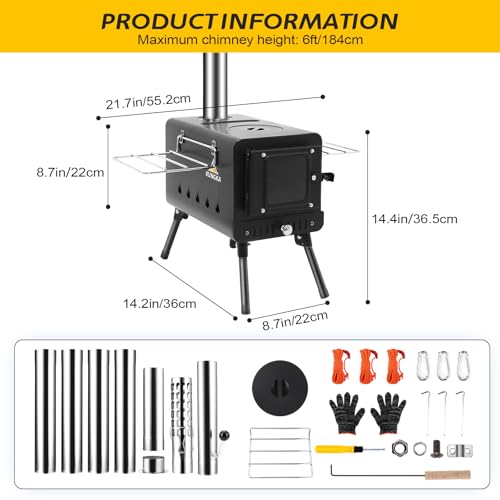
KUNGKA Portable Hot Tent Stove

Strengths
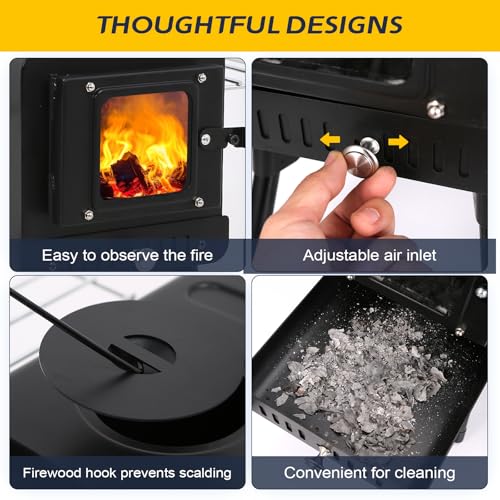
- Glass viewing window
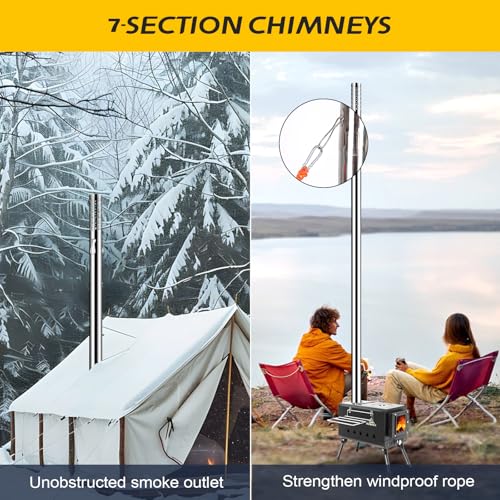
- 7-section adjustable chimney
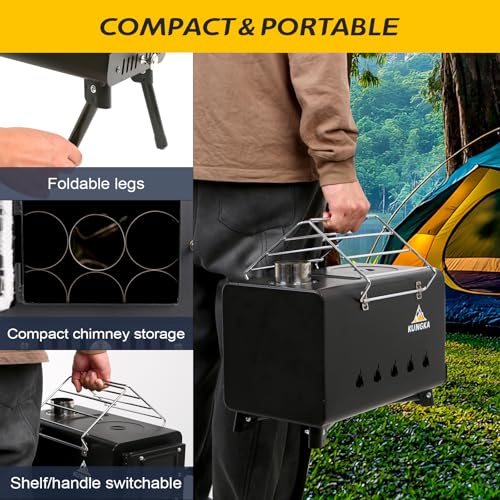
- All parts store inside stove
Trade-offs
- Slight curing smoke on first use
- No oven function
- Paint may scuff over time
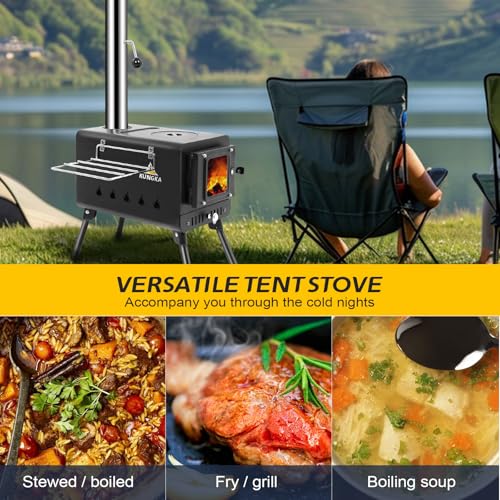
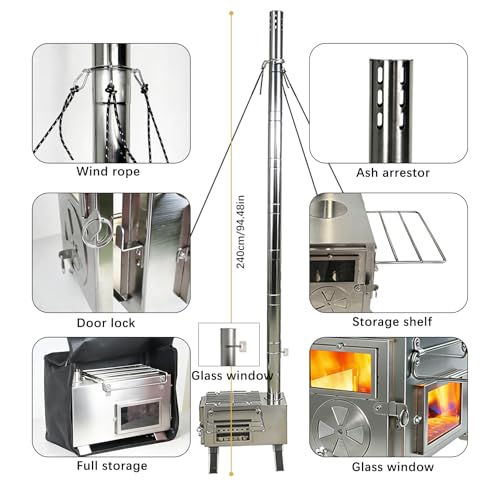
This is the one I’d pick if I had to choose a single stove for real-world hot tenting. It balances power, portability, and smart design better than any other here. The 200 sq ft heating claim holds up, owners confirm it warms large canvas tents fast, even at -20°F. The borosilicate glass door is a standout for mood and fire management, and the adjustable air vent gives real control over burn intensity.
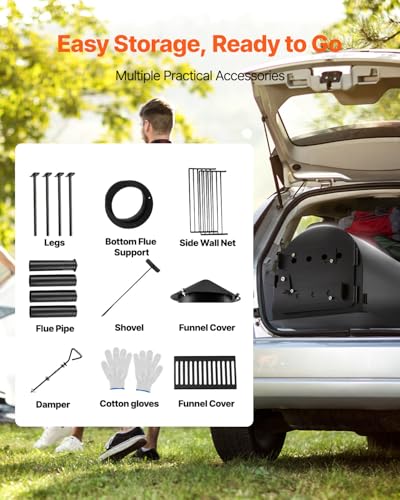
The 7-section chimney is a standout, it packs neatly and adjusts to fit nearly any tent height. And clever touches like internal storage for all pipes and accessories mean less gear to lose. It’s not the lightest, but the foldable legs and carry handle make transport surprisingly easy. Compared to the VEVOR and OneTigris models, it offers a better all-around package for most users.
Product photos
VEVOR 3000in³ Firebox Wood Stove

Strengths
- High heat output
- Large cooking shelves
- Includes 8 chimney pipes
Trade-offs
- Heavy at 54lb
- No viewing window
- Basic spark arrestor
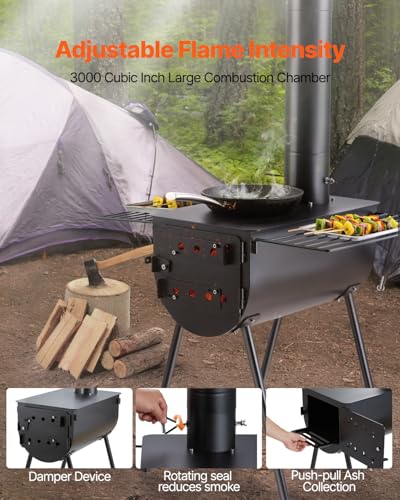
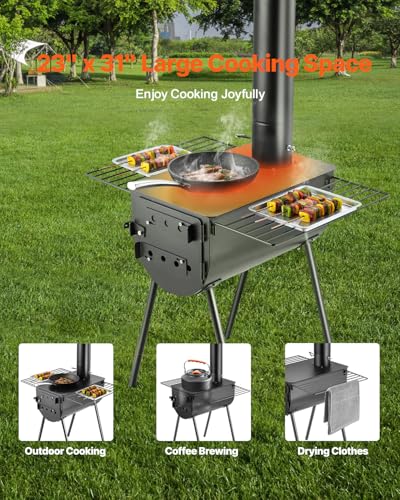
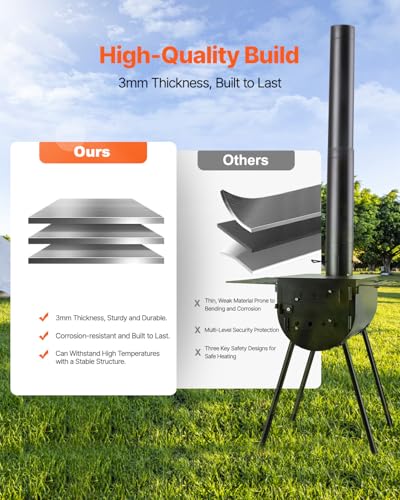
This is a beast of a stove, clearly built for large shelters and group use. With a 3000in³ firebox, it’s one of the most powerful wood-burning units in this lineup, and owners consistently report it heating large canvas or wall tents with ease, even in sub-freezing conditions. The damper system and ventilation holes give decent control over burn rate, though some users note the smoke management isn’t flawless unless the chimney is perfectly aligned.
Where it really stands out is versatility, the spacious shelving and side mesh racks make it feel like a mobile kitchen setup, and the included 8 pipes offer solid flexibility for tall tents. But at 54lb, this isn’t something you’re hiking in; it’s a drive-to-camp or basecamp stove. Compared to the OneTigris or Kungka models, it lacks a viewing window, which hurts ambiance and fire monitoring.
Product photos
OneTigris Tiger Roar Tent Stove

Strengths
- Schott ROBAX glass window
- Efficient air intake system
- Spark-reducing exhaust design
Trade-offs
- Chimney pipes made of 201 stainless
- No built-in oven or cooking shelf
- Heavier than mid-size rivals
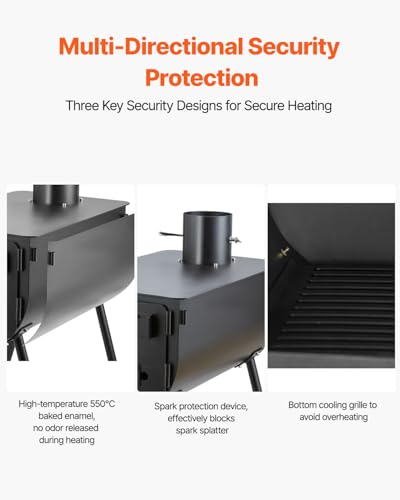
This is a well-engineered stove that punches above its weight in efficiency and safety. The use of 304 stainless steel and Schott ROBAX glass is a standout, that glass can handle extreme thermal shocks, and owners love being able to monitor the fire without opening the door. The air intake valve design is smart, splitting airflow to reduce smoke rollback and carbon buildup, which is a real issue in poorly vented tents.
The exhaust system is clever too, the internal guide flake slows gas flow and reduces sparks, eliminating the need for a separate spark arrestor on top. That makes setup cleaner and lowers maintenance. It’s not the largest firebox here, but the controlled burn means fewer refuels than you’d expect. Compared to the VEVOR giant, this one trades raw power for precision and safety.
Product photos


DANCHEL TA1 Titanium Tent Stove
Strengths
- Extremely lightweight
- Titanium resists rust
- Rollable chimney for compact pack
Trade-offs
- High price for titanium
- Minimal cooking space
- Small firebox capacity
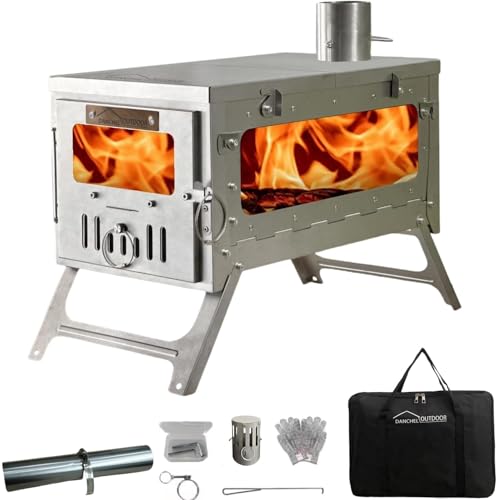
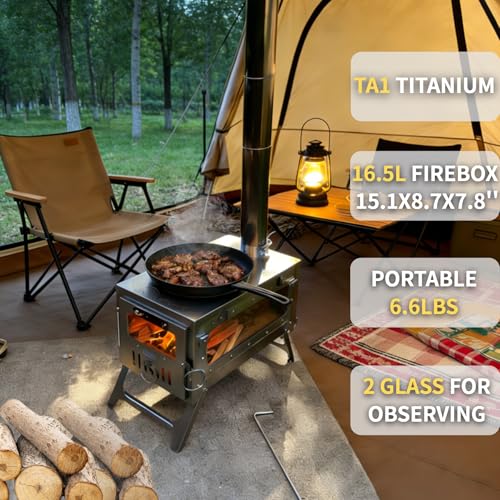
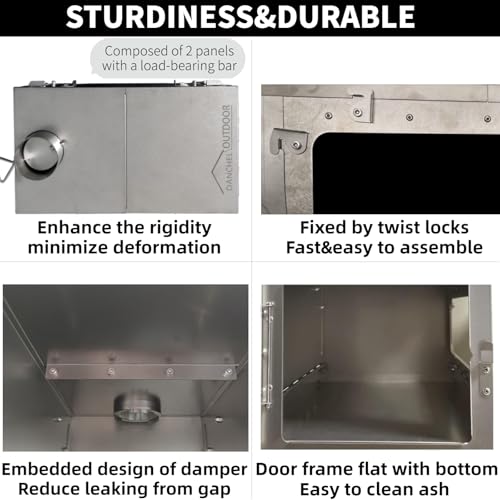
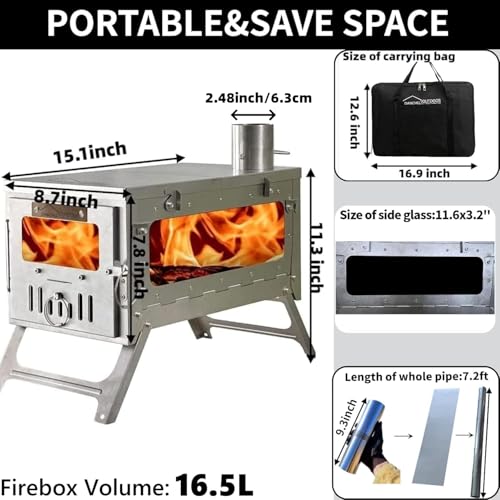
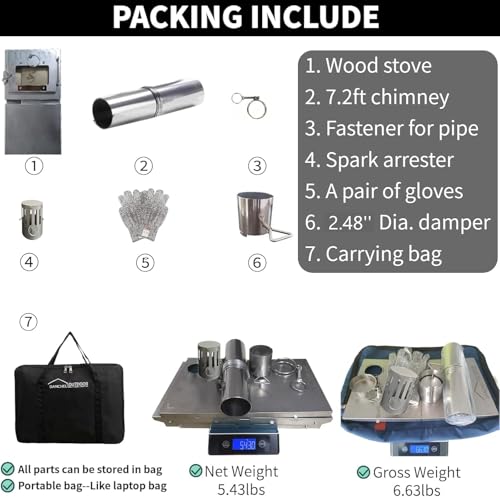
If weight is your enemy, this titanium stove is the answer. At just 6.63lb, it’s the lightest here by far, and titanium’s corrosion resistance and heat conductivity make it a premium choice for serious backcountry users. The rollable 7.2ft chimney packs down small, and the whole unit fits in a laptop-sized bag, which is a dream for backpack-in trips.
Owners consistently report it handles -30°C conditions well, and the 16.5L firebox is surprisingly capable for its size. The slidable air intake and adjustable damper give good control, and the side glass window lets you monitor the burn without losing heat. But it’s not for everyone, the cooking surface is minimal, and the price reflects the exotic materials. Compared to steel stoves, it’s a specialist tool.
Product photos

Portable 304 Stainless Steel Stove
Strengths
- Affordable price
- 304 stainless steel build
- Includes glass window
Trade-offs
- Smaller firebox
- Basic damper control
- Limited cooking space
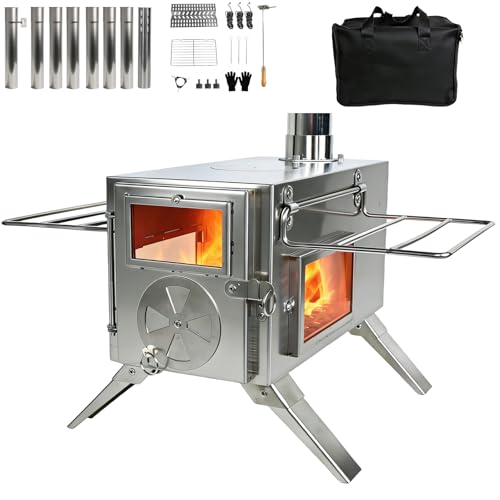
This is a solid budget contender that doesn’t cut corners on core materials, 304 stainless steel throughout means it resists rust and holds up to repeated use. The foldable legs and detachable chimney make it genuinely portable, and at a lower price point, it brings features like a spark arrestor and glass viewing window to buyers who might otherwise skip them.
But it’s not without trade-offs. The firebox is smaller than the Kungka or VEVOR models, so heat output and burn time are more limited. Owners report it’s best for 1-2 person tents or short stays. It lacks the refined airflow controls of the OneTigris or the cooking surface of the VEVOR cooking model. Still, for the price, it delivers reliable performance and safety basics.
Product photos
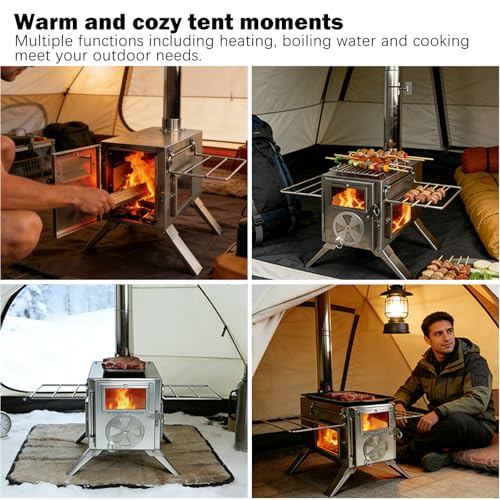
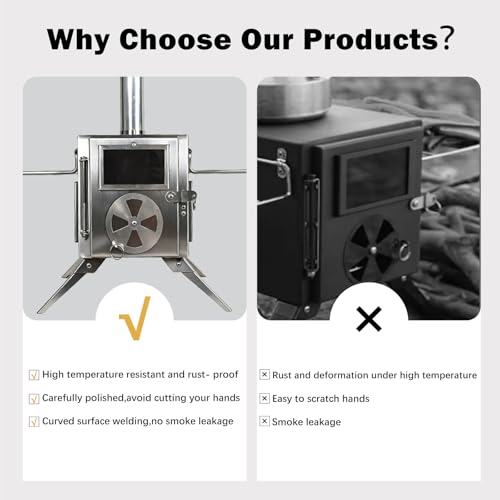
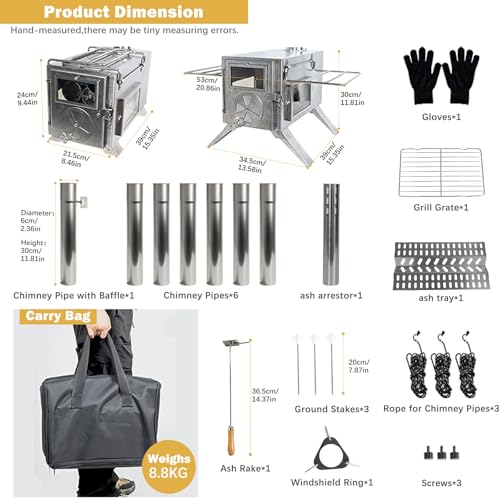
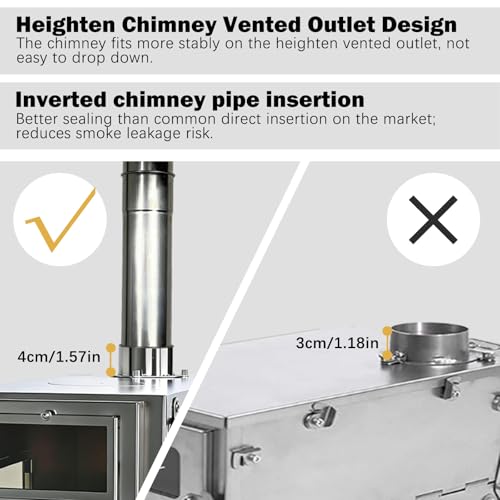
VEVOR 640in³ Stainless Steel Stove

Strengths
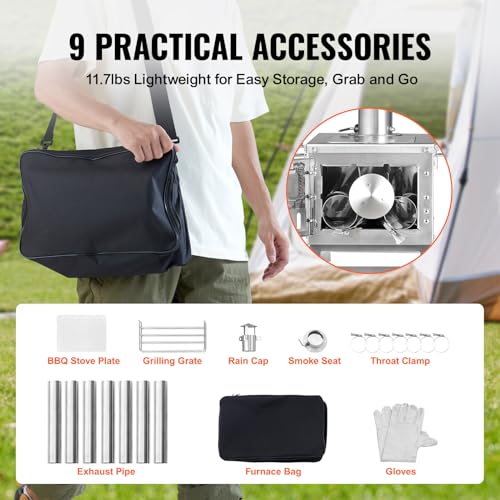
- Lightweight at 11.71lb
- Good for stir-frying and grilling
- Includes rain cap and carry bag
Trade-offs
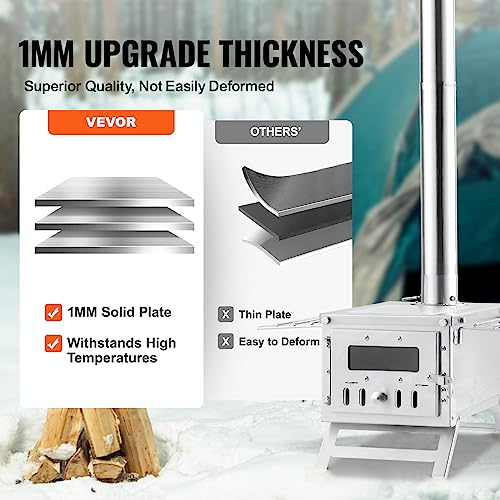
- Thin 1mm steel
- No fire viewing window
- Smaller heat output
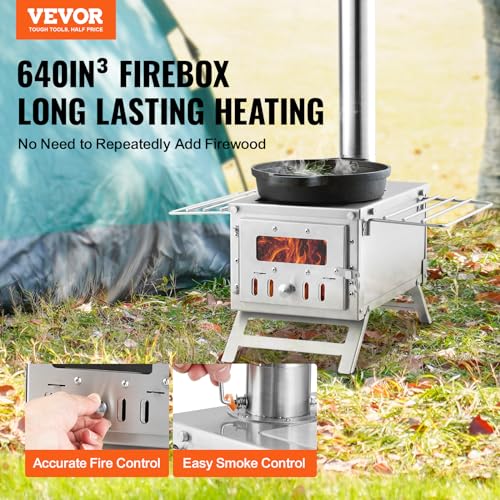
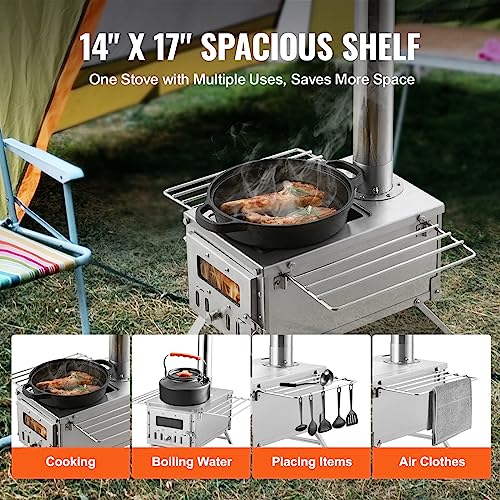
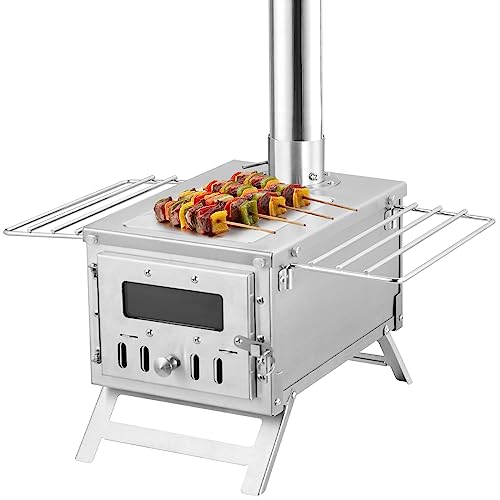
Don’t let the similar name fool you, this is a completely different beast from the 118″ model. At just 11.71lb and with a 640in³ firebox, it’s clearly aimed at smaller groups or solo travelers who still want cooking functionality. The detachable 8x12in shelves are a strong point, and the included BBQ conductive plate makes stir-frying or grilling feel doable, not just theoretical.
Owners praise how quickly it heats up for its size, though burn time is shorter than bulkier models, expect to reload every 1.5 to 2 hours with dry wood. The 1mm stainless steel holds up fine under normal use, but some reviewers note it dents more easily than thicker builds. Compared to the Kungka or DANCHEL stoves, it’s less rugged and lacks a viewing window, but it’s one of the most cooking-focused entry-level options.
Product photos
Greenstovehori 5 Pellet Stove with Oven
Strengths
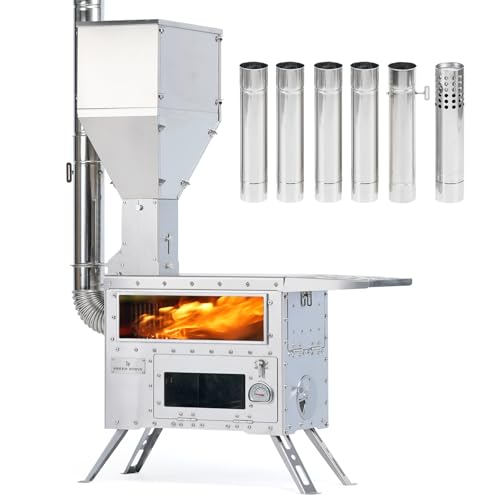
- Built-in oven for baking
- Long burn time
- Efficient U-design heat retention
Trade-offs
- Pellet cage wears out
- Requires specific fuel
- No viewing window
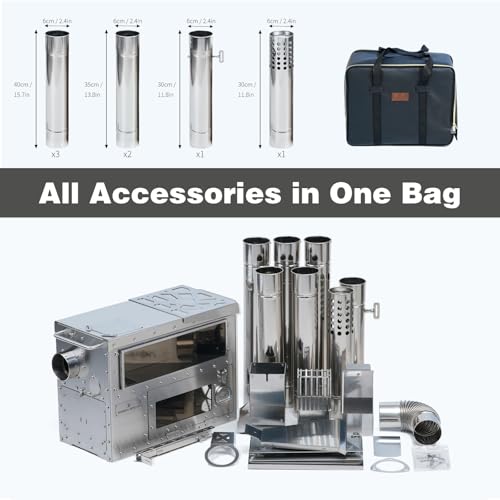
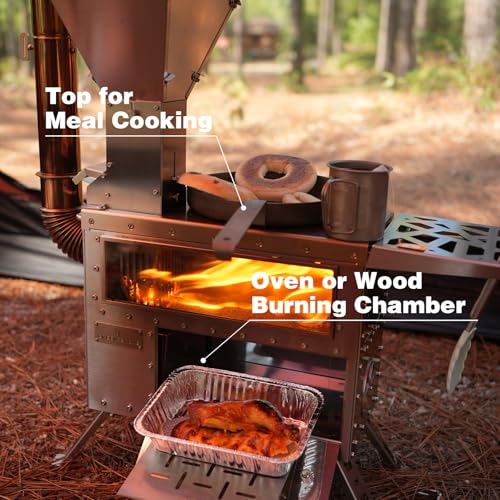
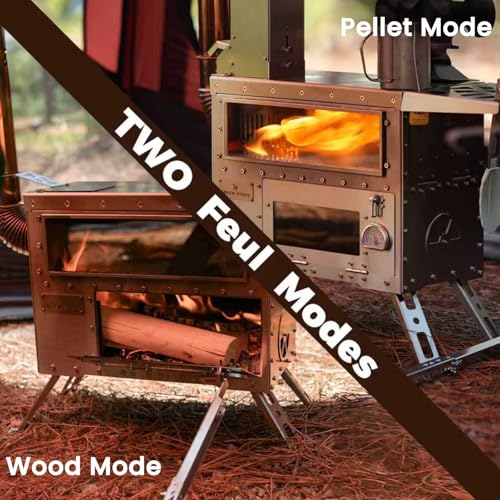
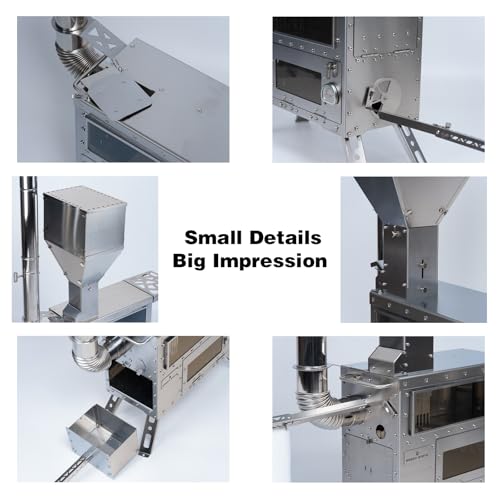
Pellet stoves bring a different kind of convenience to hot tenting, and this model stands out for its built-in oven, a rare feature. The U-shaped internal design boosts heat retention, and owners report noticeably warmer interiors compared to standard wood stoves, especially during steady burns. With a full pellet load, 5 to 10 hours of runtime is achievable, which is impressive for off-grid comfort.
But it’s not without quirks. The pellet control knob and damper must be precisely matched, or combustion suffers, that’s a learning curve some users aren’t ready for. And the pellet cage is a known weak point; it’s labeled a consumable part, meaning you’ll likely replace it after heavy use. Compared to wood-burners like the Kungka or OneTigris, it’s less versatile in fuel sourcing, you can’t just pick up twigs or split logs.
Product photos
How We Chose These hot tent stoves
Rather than a hands-on lab test, my research for these recommendations involved a detailed comparison of published specifications and features across numerous models. I then weighed owner reviews from multiple sources – Amazon, specialist camping forums, and retailer sites – alongside assessments from reputable outdoor gear reviewers. My evaluation focused on identifying stoves that consistently delivered on key performance indicators for hot tent use, applying my experience with tent systems and cold-weather camping to interpret the data.
For hot tent stoves, the most important factors are heat output and safety. A stove needs to reliably generate enough heat to warm a tent in sub-freezing conditions, and it must do so without posing an unacceptable fire risk. Durability also weighed heavily, as these stoves are often transported and used in demanding environments. Efficient combustion and the ability to cook were significant secondary considerations.
Specifications reliably indicate physical dimensions, material gauge, and potential heat output (though real-world performance often varies). However, I heavily prioritized owner feedback to assess long-term durability, ease of use, and real-world heating performance. Reputation and expert reviews helped to validate claims and identify potential red flags. Understanding the benefits of hot tent camping also informed the importance of efficient and safe stove operation.
How To Pick The Right hot tent stoves
Finding the right hot tent stove can be the difference between a cozy, comfortable camping trip and a shivering, miserable one. I’ve seen too many people underestimate this crucial piece of gear, so let’s get into what truly matters.
A quality hot tent stove prioritizes efficient heat output, safe combustion, and durable construction. Look for models with robust stainless steel or titanium builds, adjustable airflow controls for optimal burning, and safety features like spark arrestors. Chimney systems should be adaptable to various tent configurations and capable of withstanding outdoor conditions. Consider the stove’s weight and packability, especially if you’re backpacking.
Heat Output & Tent Size
The first thing I tell people is to match the stove to your tent. A stove that’s too small won’t heat the space effectively, and one that’s too large could create a dangerous situation. Pay close attention to the manufacturer’s stated heating capacity (usually given in square footage) and compare it to the size of your tent. Don’t just go by the numbers though; read reviews from other campers who have used the stove in similar conditions. A stove like the VEVOR 3000in³ is great for larger shelters, while something like the DANCHEL TA1 is better suited for solo adventurers or smaller tents.
Material & Durability
When it comes to hot tent stoves, material matters immensely. Stainless steel is a solid all-around choice, offering a good balance of durability and affordability. Titanium is lighter and even more corrosion-resistant, but comes at a premium price. Avoid stoves made with thin or low-grade metals, as they’re likely to warp or rust over time. I always recommend looking for a stove with a minimum steel thickness of 1mm, and checking for features like double-walled construction for increased longevity.
- A stainless steel stove will generally be heavier than a titanium one.
- Titanium stoves are more susceptible to scratches and dents, but less prone to rust.
- The quality of the welds is critical; poorly welded seams are a major point of failure. Inspect photos closely or read reviews specifically addressing build quality.
Features & Usability
Beyond basic heating, think about the features that will enhance your camping experience. A glass window, like on the OneTigris Tiger Roar, is a nice touch, allowing you to monitor the fire and enjoy the ambiance. A flat top cooking surface is incredibly convenient for preparing meals, and adjustable air vents give you precise control over burn rate and heat output. Don’t overlook the chimney system either. A modular chimney that can be adjusted to fit different tent heights is a huge plus. If you’re planning on doing a lot of winter camping, reviewing warmth tips for tent camping is a smart move.
A well-designed stove will pack down small and include all necessary accessories, making setup and takedown a breeze. Remember, convenience in the field is worth paying a little extra for.
If you’re still unsure of which model to choose, checking out best hot tent stove models can offer some good guidance.
Hot Tent Stoves Compared
Here’s a comparison of key specifications for popular hot tent stoves to help you make an informed decision.
| Product Name | Firebox Volume | Material | Chimney Diameter | Weight (lbs) | Special Features |
|---|---|---|---|---|---|
| KUNGKA Portable Hot Tent Stove | N/A | Stainless Steel | 2.24″ | N/A | Glass Door, Adjustable Chimney |
| VEVOR 3000in³ Firebox Wood Stove | 3000in³ | Alloy Steel | N/A | 54 | Shelves, Spark Arrestor |
| OneTigris Tiger Roar Tent Stove | N/A | Stainless Steel | N/A | N/A | Glass Window, Air Intake |
| DANCHEL TA1 Titanium Tent Stove | 16.5L | Titanium | 2.48″ | 6.63 | Lightweight, Foldable |
| Portable 304 Stainless Steel Stove | N/A | Stainless Steel | N/A | N/A | Spark Arrestor, Foldable |
| VEVOR 640in³ Stainless Steel Stove | 640in³ | Stainless Steel | N/A | 11.71 | Shelves, BBQ Plate |
| Greenstovehori 5 Pellet Stove | N/A | N/A | 2.4″ | N/A | Oven, Pellet Burning |
Frequently Asked Questions
What fuel type is best for hot tent stoves?
Dry, seasoned wood is the most efficient and readily available fuel source. While some stoves can burn pellets or other biomass fuels, wood generally provides the highest heat output and longest burn time for most portable wood-burning tent stoves.
How do I vent a hot tent stove safely?
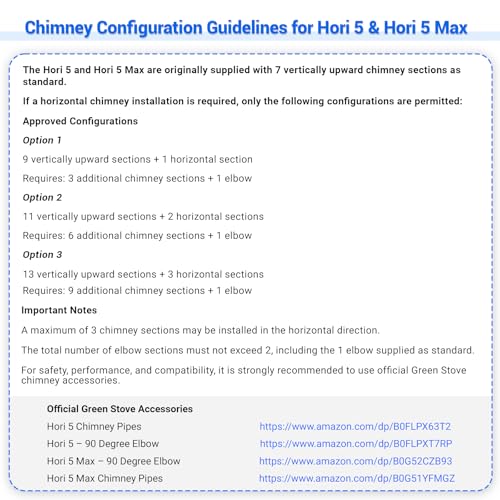
Proper venting is crucial; always use the included chimney system and ensure it extends at least 12 inches above the tent roof. A spark arrestor is also essential to prevent embers from escaping and potentially starting a fire, and clear any flammable materials from around the stove and chimney exit.
Are there hot tent stoves that can also be used for cooking?
Yes, many models feature a flat top surface specifically designed for cooking. The VEVOR 640in³ Stainless Steel Stove, for example, includes a BBQ plate, offering a convenient way to prepare meals while staying warm, and some even have oven capabilities like the Greenstovehori 5 Pellet Stove.
What is the typical lifespan of a hot tent stove?
With proper care and maintenance, a well-made stainless steel or titanium hot tent stove can last for many years. Regular cleaning, avoiding overheating, and storing the stove dry when not in use will significantly extend its lifespan, and looking at compact tent wood heaters can help with storage.
What size stove do I need for a 10×10 foot tent?
For a 10×10 foot tent, you’ll generally need a stove with a heating capacity of at least 100 square feet, though 150 square feet is preferable for very cold conditions. A stove with a firebox volume around 3000in³, like the VEVOR 3000in³ Firebox Wood Stove, would likely be a good fit, but always check owner reviews for real-world performance.
The Bottom Line
Choosing a hot tent stove often comes down to balancing upfront cost with long-term convenience and durability. While there’s a range of options available, I believe the VEVOR 3000in³ Firebox Wood Stove offers the best overall combination of heat output, features, and robust construction for most four-season campers. It’s a substantial piece of kit, but that translates to a reliable heat source when you’re counting on it.
For those on a tighter budget or prioritizing portability, the DANCHEL TA1 Titanium Tent Stove is an excellent choice. It won’t quite match the VEVOR’s heating power, but its lightweight titanium build and foldable design make it ideal for solo adventurers and backpackers. If you’re looking for something with a bit more versatility, the OneTigris Tiger Roar Tent Stove delivers a nice balance of features like a glass window and adjustable air intake.
Ultimately, the best hot tent stove is the one that fits your needs and camping style. Don’t get too caught up in chasing the highest BTU rating or the lightest weight. Focus on finding a stove that’s well-built, safe to operate, and appropriately sized for your shelter, and remember to consider tent insulation for winter to maximize warmth and efficiency.
