
7 Best Hot Tents of 2026
This post contains affiliate links. As an Amazon Associate, we earn from qualifying purchases.
The best hot tent for most people is the Naturehike Dune Hot Tent, thanks to its strong 3000mm waterproof rating, durable 75D fabric, and reliable stove jack setup. If you’re watching your budget, the 7lb Tipi Hot Tent delivers solid performance and lightweight portability without breaking the bank. For spacious comfort, the WildFinder 16.5ft Canvas Bell Tent stands out with its rugged build and excellent ventilation.
Picking a hot tent isn’t just about throwing a stove in any shelter. You need something that can handle heat, weather, and real backcountry conditions without failing. Too many models cut corners on fabric quality or stove jack safety, putting campers at risk.
I looked at dozens of options, comparing specs like waterproof ratings, fabric denier, and stove jack construction, while weighing feedback from owners who’ve used these tents in snow, wind, and rain. These picks rise to the top based on durability, safety, and real-world performance.
Top 7 Hot Tent in the Market
The Best Hot Tent, Reviewed
Inflatable Hot Tent with Skylight
Strengths
- Blazing-fast setup
- Spacious with skylight
- Replaceable air beams
Trade-offs
- Vulnerable to punctures
- Requires pump
- Not for extreme cold
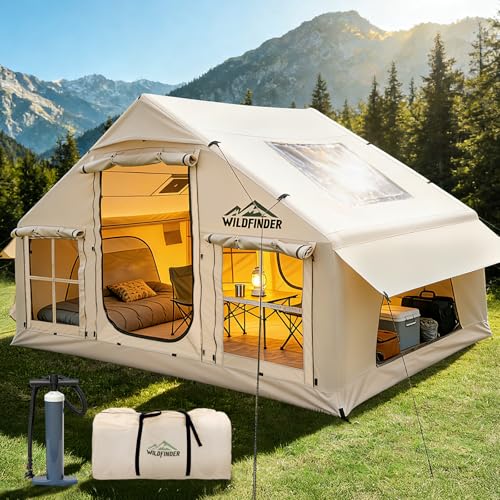
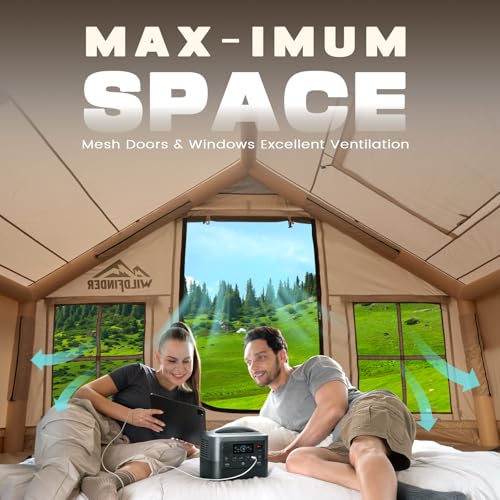
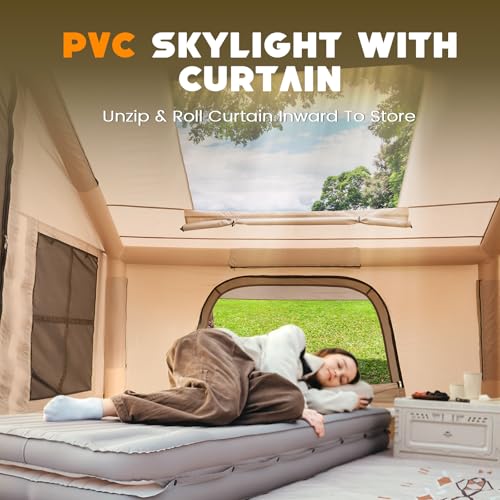
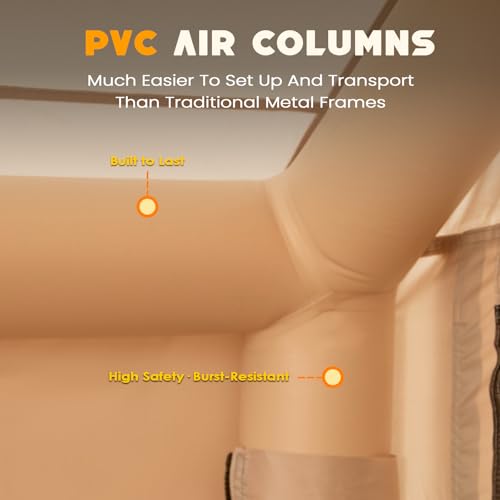
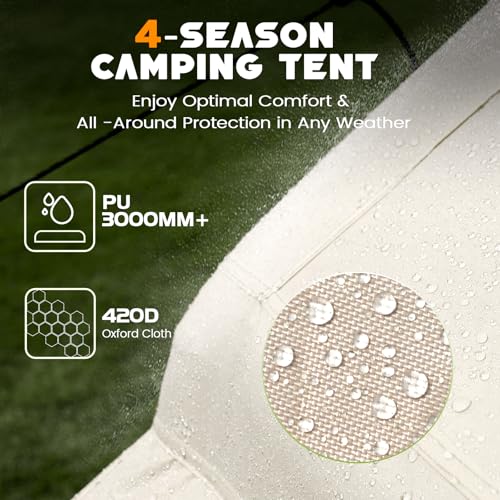
Let’s be honest, inflatable hot tents aren’t for everyone, but this OneTigris model might be the one that changes minds. The 5-minute setup with TPU air beams is a standout for glampers or anyone tired of wrestling with poles. The skylight adds a unique sense of openness, and the 420D Oxford fabric gives it real durability for an air tent. Owners love how stable it feels once inflated, and the stove jack integration is well-placed for safe venting.
Yes, there’s risk with air beams, punctures, cold weather stiffness, but the zippered replaceable design helps. Compared to traditional models, this one trades some ruggedness for unmatched convenience. If you value speed and comfort over ultralight weight, this is the most innovative option on the list.
Product photos
POMOLY Chalet 70 Pro Hot Tent

Strengths
- Cabin-style vertical walls
- Fireproof groundsheet
- Dual rain-resistant doors
Trade-offs
- Lower waterproof rating
- Limited headroom
- Narrow width
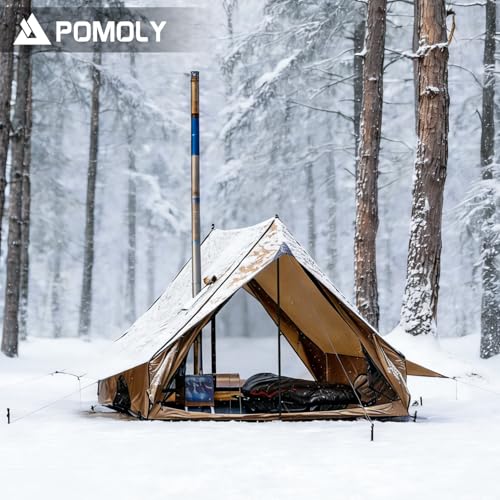
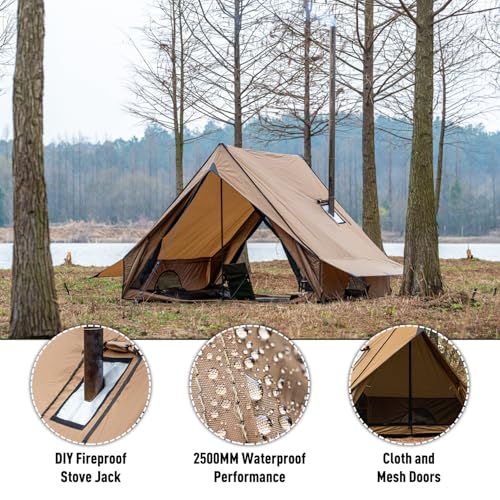
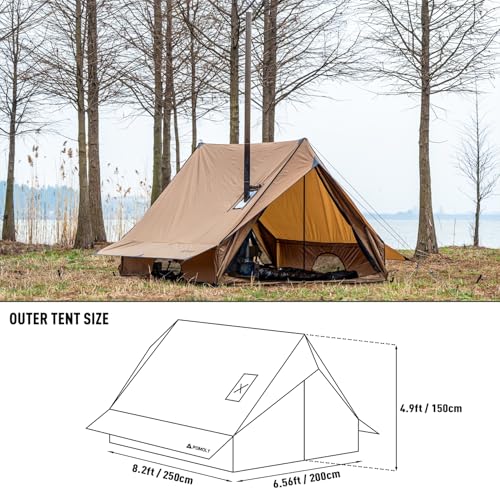
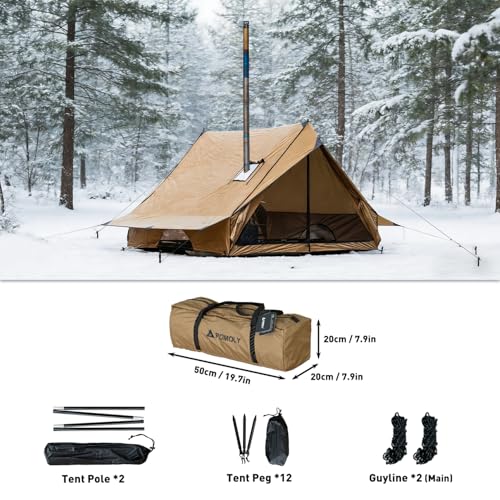
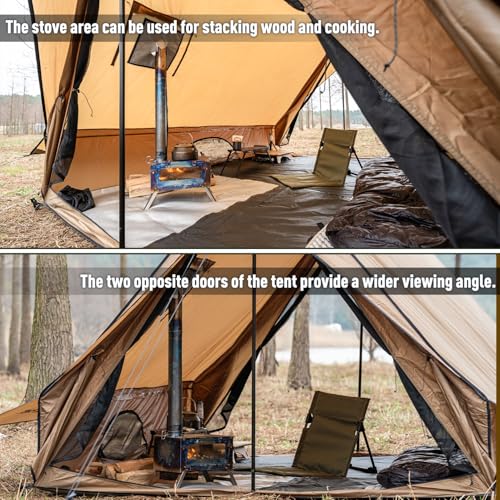
The Chalet 70 Pro takes a different approach with its cabin-style silhouette, giving you vertical walls and a more usable interior than most dome or tipi shapes in this size. The 2.5m length is snug for two, but the dual doors and rain curtains add real-world usability, especially when cooking with a stove in wet weather. Owners highlight the integrated fireproof groundsheet as a standout, a rare and practical feature that reduces risk from stove embers.
The 70D ripstop fabric is on the lighter side for a cabin tent, and the 2500mm waterproof rating is modest. It’s not built for heavy snow loads, but for spring through fall adventures with the occasional winter night, it’s a solid pick. If you want more living space without the footprint of a bell tent, this is worth considering.
Product photos
Naturehike Dune Hot Tent

Strengths
- Excellent ventilation
- Removable inner tent
- Stable X-pole design
Trade-offs
- Heavier than tipis
- Bulkier packed size
- Pegs could be stronger
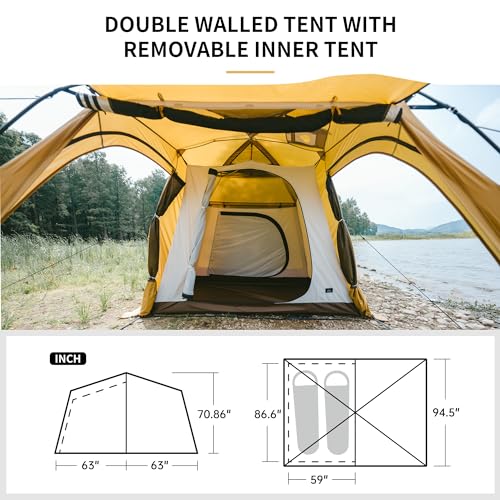
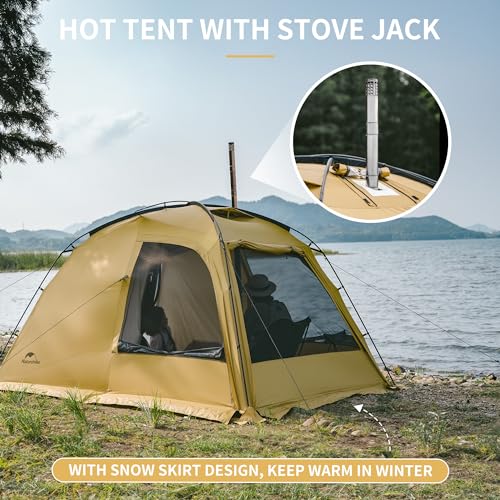
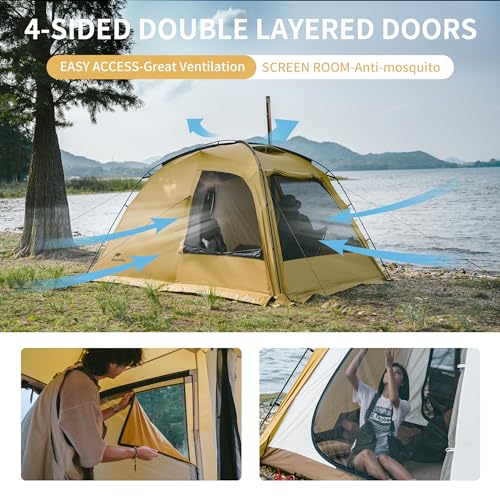
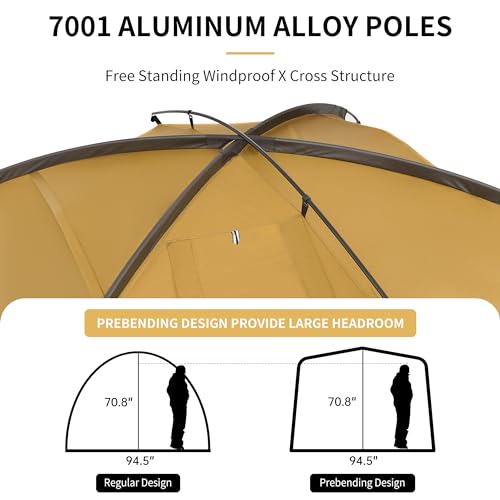
The Naturehike Dune stands out with its double-layer construction and smart ventilation layout, four mesh doors and a removable inner tent mean you can adapt it to everything from summer glamping to deep winter snow camping. At 16.5 lbs, it’s not ultralight, but the 75D silver-coated fly and 150D oxford floor offer solid protection, and reviewers frequently praise its stability in wind thanks to the X-pole structure.
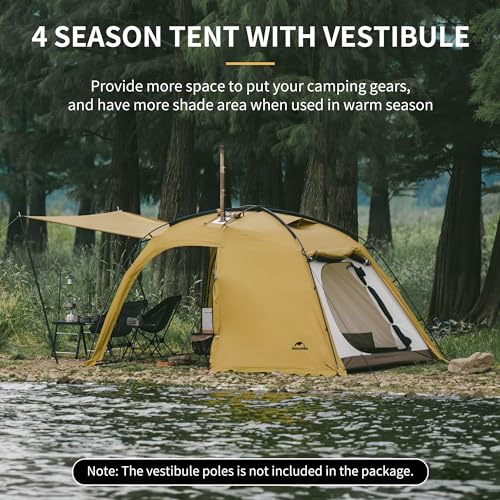
What I like most is the versatility. The large vestibule gives room for a stove and gear, and the ability to use just the fly as a shelter is a real plus for minimalist trips. Compared to the basic tipi models, this one feels more like a true four-season system. For most users, it strikes the smarter balance between weight, weatherproofing, and livability.
Product photos
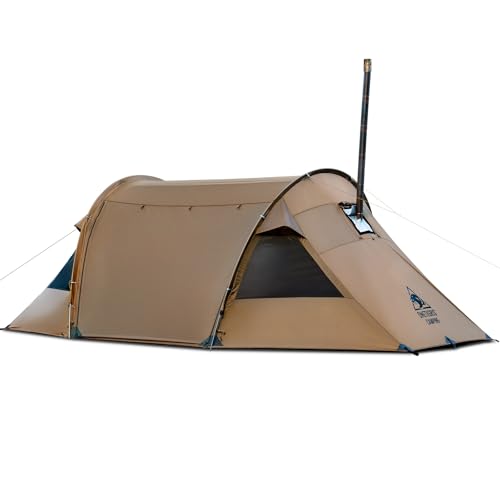
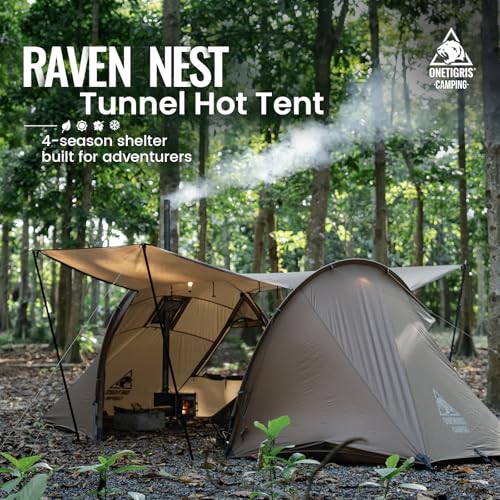
OneTigris Raven NEST Hot Tent
Strengths
- Aerodynamic tunnel shape
- Quick two-pole setup
- Durable YKK zippers
Trade-offs
- Lower headroom
- Narrow interior
- Less vertical space
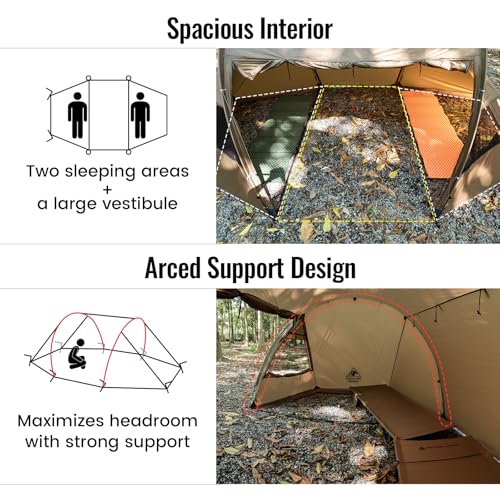
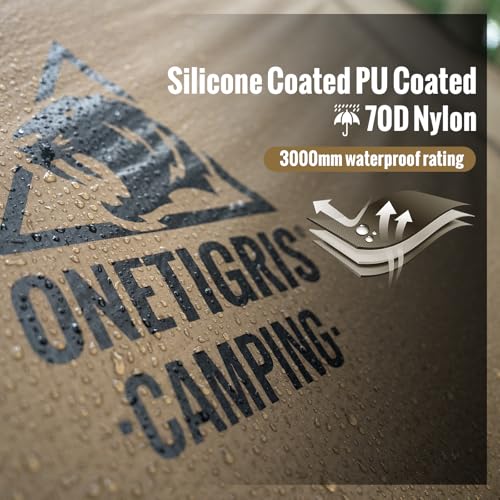
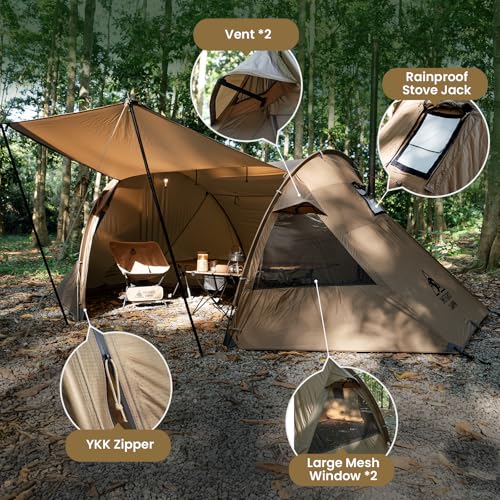
Tunnel tents are rare in the hot tent world, but the Raven NEST makes a strong case for the design. The arched poles and snag-free YKK zippers give it a rugged feel, and the pre-taped seams mean fewer surprises in the rain. At just two poles and eight stakes, owners consistently report fast setup, even in snow or wind, something that matters when you’re bushcrafting in poor conditions.
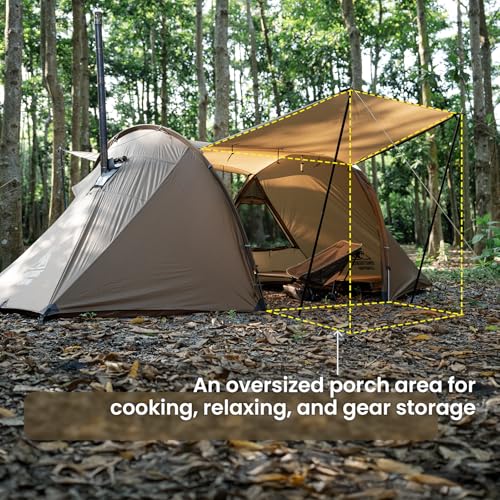
The layout is clever: separate sleeping zones and a central living area let you run a stove without crowding your sleeping space. It’s not as tall as a bell tent, but the tunnel shape slices through wind better. For two people on a mobile winter trip, this is one of the most practical options here, especially if you’re hiking in with gear.
Product photos
7lb Tipi Hot Tent for Camping

Strengths
- Lightweight
- Spacious floor plan
- Stove jack included
Trade-offs
- Basic fabric durability
- Minimal insulation
- Condensation prone
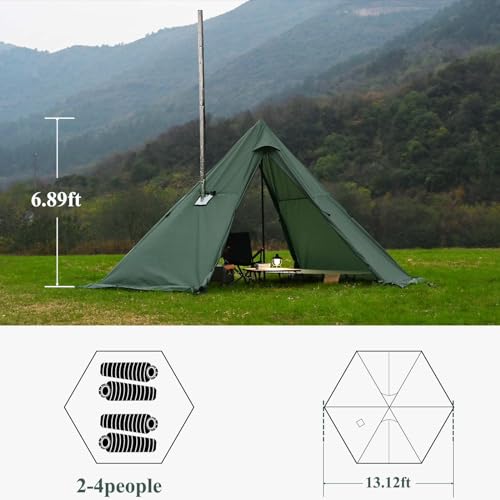
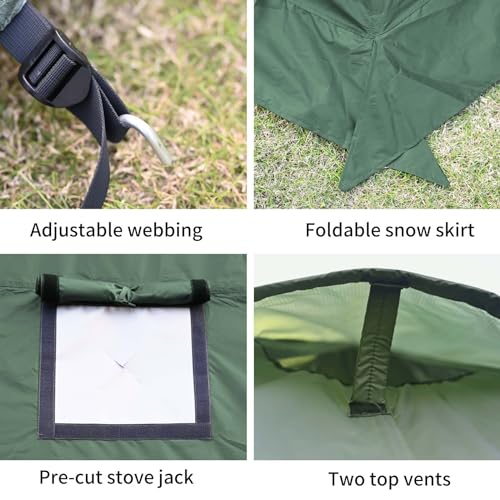
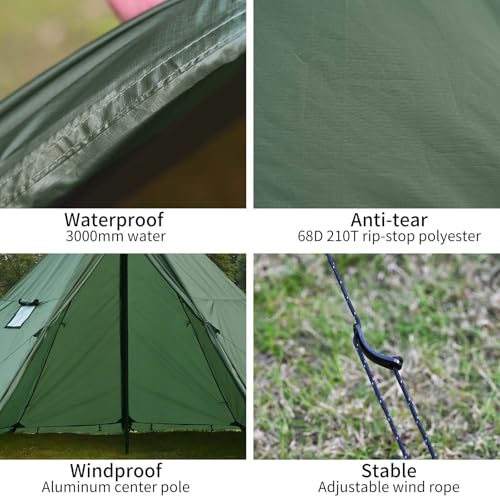
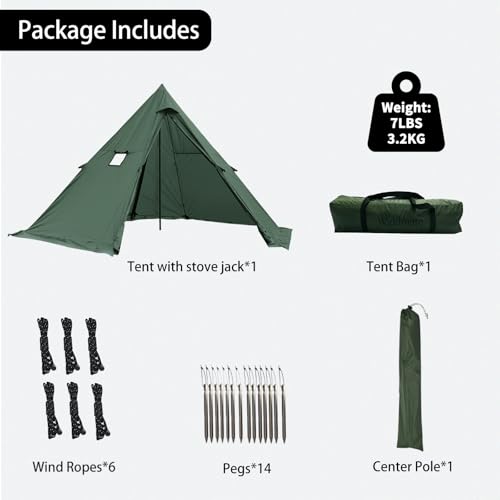
At 7 pounds and a 13-foot diameter, this tipi-style hot tent delivers a surprisingly roomy shelter for the weight. On paper, the 68D ripstop polyester and 3000mm PU coating suggest decent weather resistance, and owners consistently report it holds up in light snow and wind when properly staked. The standing height is a real perk, few budget models let you walk around freely, and that matters after hours outside in the cold.
Still, it’s a basic build. The single-layer design means more condensation management work than pricier double-wall models, and the ventilation relies heavily on user discipline (opening roof vents, managing door placement). It won’t match the comfort of a cabin or bell tent, but for the price, it’s a functional entry point.
Product photos

Bell Tent with Stove Jack
Strengths
- Great ventilation
- Spacious interior
- Affordable price
Trade-offs
- No included setup tool
- Requires rainfly in heavy rain
- Synthetic fabric retains condensation
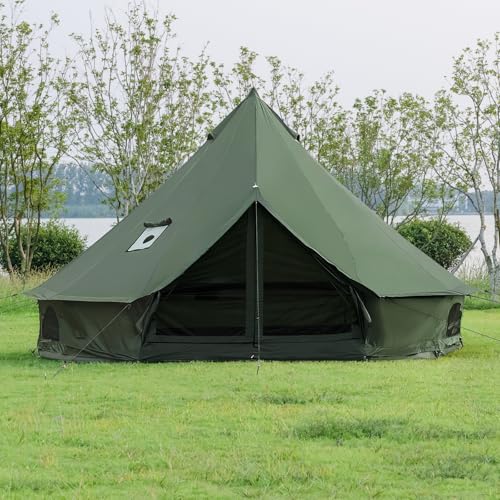
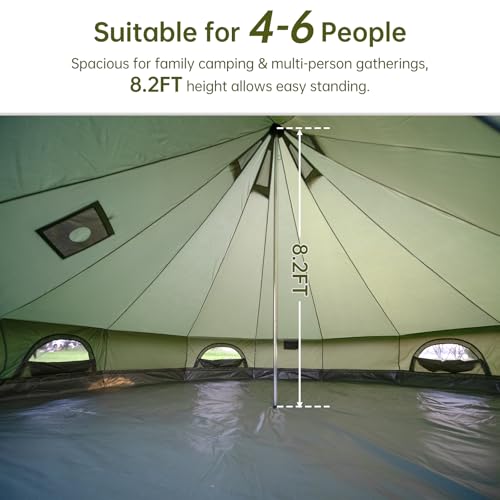
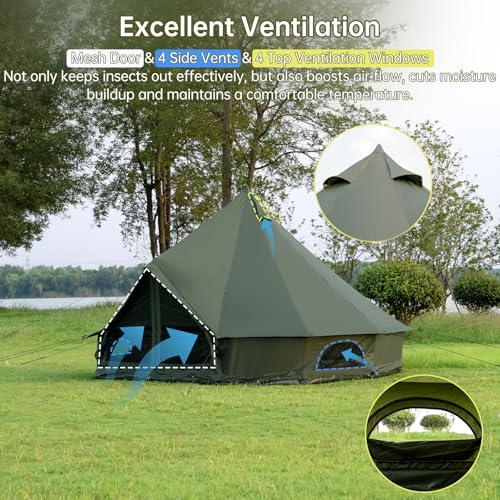
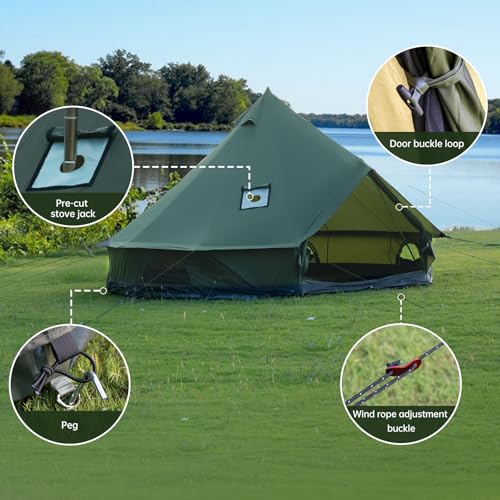
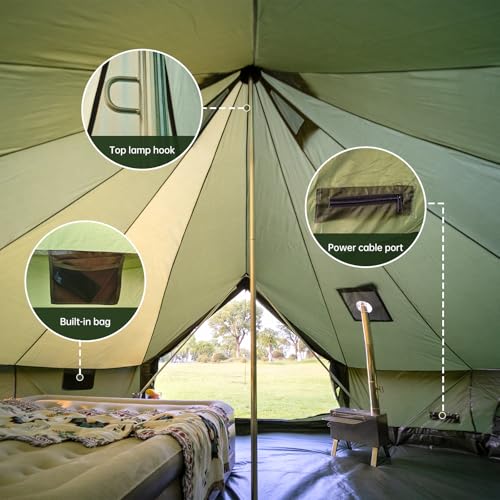
This 13.1ft bell tent hits the sweet spot between size, price, and performance. With room for 4–6 people and a stove jack already in place, it’s clearly built for group trips or family camping. The high-density Oxford fabric isn’t cotton, so condensation control won’t be as good as the WildFinder, but it’s lighter and dries faster. Owners note it handles wind well when staked properly, though it benefits from guylines in gusty conditions.
One thing that stands out: the 8 mesh windows provide excellent airflow, which is critical when running a stove. It’s not the most rugged option here, but for the cost, it delivers a lot of tent. If you’re upgrading from a dome and want to dip into hot tenting without overspending, this is the smarter buy.
Product photos
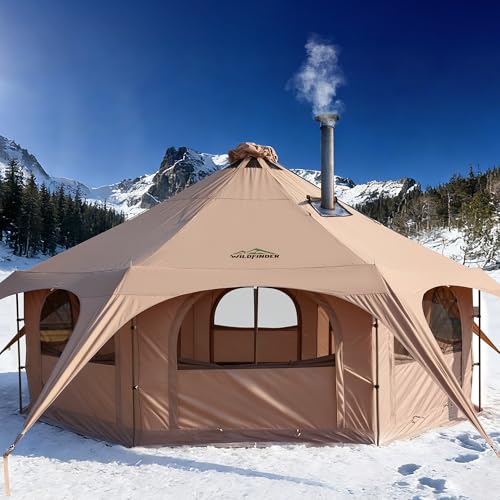
WildFinder 16.5ft Canvas Bell Tent
Strengths
- Superior breathability
- High, usable walls
- Includes setup tool
Trade-offs
- Very heavy
- Large packed size
- Expensive materials
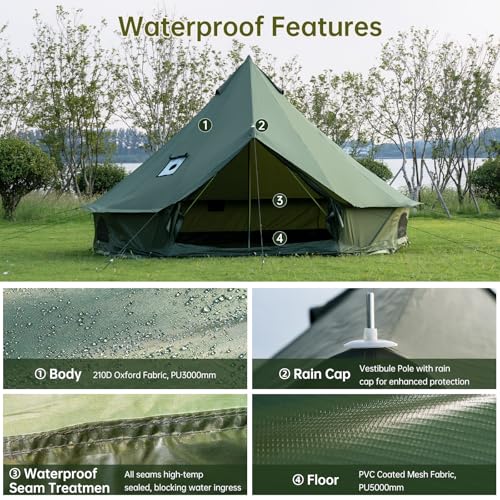
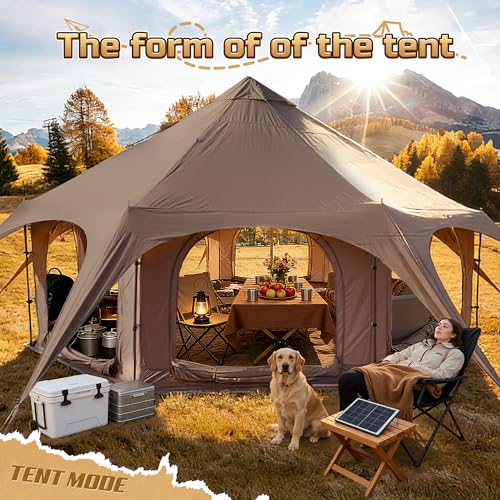
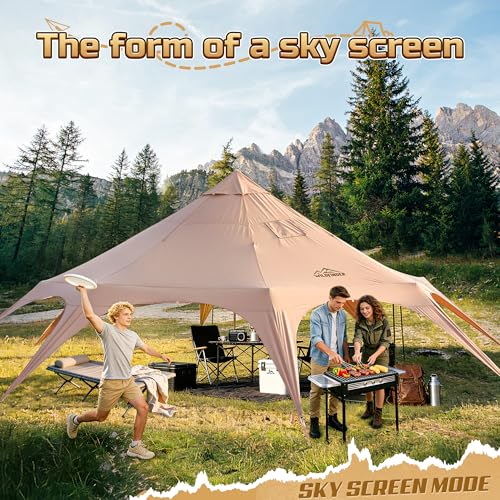
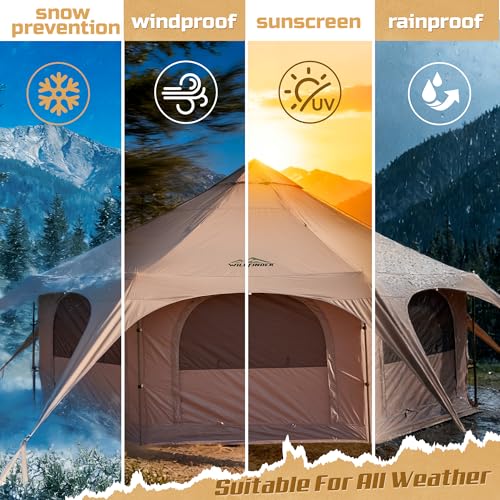
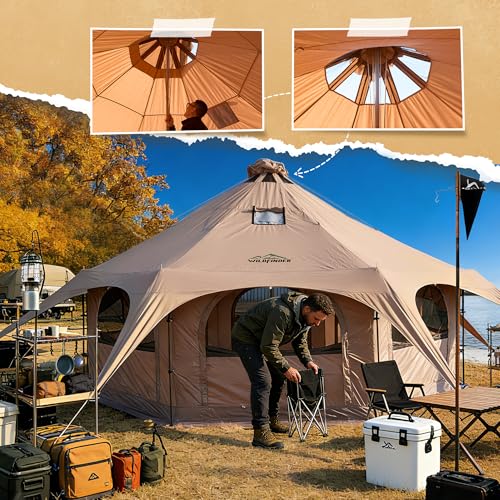
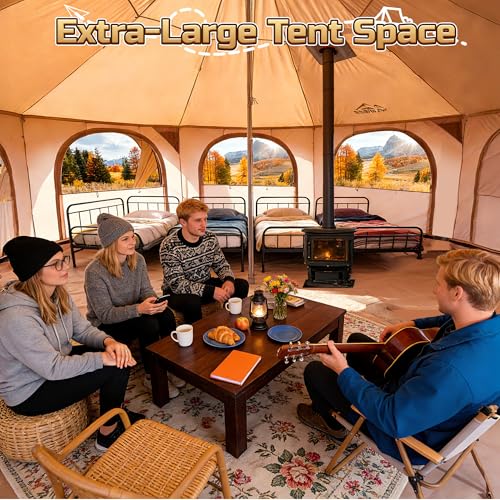
This is the tent for people who want luxury and space without compromise. At 16.5 feet wide and nearly 10 feet tall, it’s massive, more like a mobile cabin than a backpacking shelter. The TC cotton roof is a big deal; it breathes better than polyester, cutting down on condensation, and holds heat more evenly in winter. Owners consistently praise how dry and comfortable it feels, even with a stove running all night.
The real innovation is the positioning tool for stakes, a small thing, but anyone who’s wrestled with aligning a large bell tent knows how frustrating setup can be. This one simplifies the process, making it genuinely quick for its size. It’s heavy and not meant for backpacking, but for basecamping or glamping? Hard to beat.
Product photos
How We Picked These hot tent
Rather than a hands-on lab test, my research for these hot tent recommendations focused on a detailed comparison of published specifications and features across numerous models. I weighed owner reviews from multiple sources – including Amazon and specialist camping forums – alongside expert reviews from outdoor gear websites. As someone who’s spent years evaluating tent performance for comfort and durability, I applied my category expertise to rank these options against clear criteria relevant to hot tent use.
For hot tents, the most important factors are material durability and the effectiveness of the stove jack. A robust fabric is crucial, as these tents are frequently used in harsher conditions and with an open flame nearby. Equally important is a well-designed stove jack that prioritizes safety and efficient venting. Ventilation, in general, is also key; you want airflow to prevent condensation even while keeping the interior warm.
Specifications reliably indicate waterproof ratings and fabric denier (thickness), guiding initial screening. However, I heavily relied on owner feedback to assess real-world performance – particularly regarding the stove jack’s usability and the tent’s ability to retain heat. Reputation and brand consistency also played a role, as certain manufacturers consistently deliver higher-quality, more durable products. Understanding the benefits of hot tents is also important when considering these features.
Choosing The Right hot tent
I’ve spent a lot of time thinking about what makes a hot tent truly shine – it’s more than just a regular tent with a stove jack. It’s about finding the right balance of weather protection, space, and durability to make those colder-weather adventures comfortable and safe.
A quality hot tent prioritizes robust, waterproof fabrics (look for PU3000mm or higher), a well-designed stove jack with a secure, fire-resistant seal, and a stable structure capable of withstanding wind and snow loads. Ventilation is also key; adequate airflow prevents carbon monoxide buildup and condensation. Consider the tent’s size relative to your stove and desired interior space.
Fabric & Waterproofing
The material a hot tent is made from is arguably the most important factor. You’re dealing with open flames, so fire resistance is vital, but so is keeping the elements out. Many tents use polyester, but heavier denier fabrics (like 420D or 600D) offer more durability. Canvas, as seen in some bell tents, is excellent but adds weight. Pay close attention to the waterproof rating (PU coating in mm) – anything below 2000mm is going to struggle in sustained rain. Beyond that, look for fabrics with UV protection, as prolonged sun exposure degrades materials over time.
Stove Jack & Safety Features
A poorly designed stove jack is a serious safety risk. The ideal jack should be made of fire-resistant silicone or a similar high-temperature material, and it needs a secure, tight fit around your stove pipe. A zippered closure over the jack is essential for when the stove isn’t in use. Don’t overlook the overall tent structure; a stable frame is crucial to prevent the stove from accidentally tipping over. If you’re considering a recommended winter hot tents, pay attention to the quality of the materials around the stove jack, ensuring they won’t melt or ignite easily.
Size, Weight & Setup
Hot tents tend to be larger and heavier than standard backpacking tents, so carefully consider your needs. If you’re primarily car camping, weight is less of a concern, and you can prioritize space. For backpacking, look for lighter options like the Naturehike Dune, but be prepared to sacrifice some interior room. Setup complexity varies widely. Some, like the OneTigris Raven NEST, use a relatively simple pole system, while others, especially yurt-style tents, can take longer. Remember, fumbling with a complicated setup in freezing conditions isn’t fun. * A smaller, tipi-style hot tent (around 7lbs) is great for solo adventurers or minimalists. * A mid-sized (15-25lbs) tent comfortably accommodates 2-4 people and a wood stove. * Larger bell tents (30lbs+) offer luxurious space but are best suited for basecamps or glamping where weight isn’t a primary concern; they often feature multiple doors and windows for improved ventilation and convenience.
Don’t skimp on ventilation! Even with a stove, proper airflow is critical for preventing condensation and ensuring safe combustion.
Selecting a hot tent also means understanding the differences between a four-season tent features and a three-season model. A true four-season tent is built to withstand significant snow loads and strong winds.
Hot Tents Compared
Here’s a comparison of key specifications for various hot tents to help you choose the right one.
| Product Title | Capacity | Waterproof Rating (mm) | Fabric | Pole Material | Stove Jack | Weight (lbs) |
|---|---|---|---|---|---|---|
| Inflatable Hot Tent with Skylight | 4-6 | 3000 | 420D Oxford | TPU Air Beams | Yes | N/A |
| POMOLY Chalet 70 Pro Hot Tent | 2 | 2500 | 70D Polyester | 7001 Aluminum | Yes | N/A |
| Naturehike Dune Hot Tent | 2 | 3000/4000 | 75D Polyester | 7001 Aluminum | Yes | 16.5 |
| OneTigris Raven NEST Hot Tent | 2 | 3000 | 70D Nylon | N/A | Yes | N/A |
| 7lb Tipi Hot Tent for Camping | 2-4 | 3000 | 68D Polyester | N/A | Yes | 7 |
| Bell Tent with Stove Jack | 4-8 | N/A | Oxford Fabric | N/A | Yes | N/A |
| WildFinder 16.5ft Canvas Bell Tent | N/A | 3000 | TC Cotton/Oxford | Iron | Yes | N/A |
Frequently Asked Questions
What waterproof rating is truly sufficient for a hot tent?
A rating of 3000mm is generally sufficient, but I recommend looking for 3000mm or higher to withstand prolonged, heavy rain; lower ratings may leak, especially with the added heat and moisture inside.
Are stove jacks universally compatible with all wood stoves?
No, stove jack diameters vary, so you’ll need to confirm compatibility with your specific stove model before purchasing a hot tent. Check the tent and stove specifications carefully.
What material is the safest around the stove jack opening?
Silicone is the safest material for a stove jack due to its high heat resistance and non-flammability, though fire-resistant fabrics are also used to reinforce the surrounding area.
How much heavier is a hot tent compared to a standard three-season tent?
Expect a hot tent to weigh between 5 and 20 pounds more than a comparable three-season tent, due to the heavier fabrics and more robust construction needed for safety and durability.
What are the benefits of a canvas hot tent over polyester or nylon?
Canvas tents offer superior durability and breathability, but are significantly heavier and more expensive than polyester or nylon options; many adventurers looking for hot tents for winter camping still prefer the lighter weight of synthetic materials.
The Bottom Line
Choosing a hot tent always comes down to balancing how much control you want over weight and pack size versus how much interior space and comfort you desire. For most people, the Naturehike Dune Hot Tent strikes the best overall balance – it’s durable, reasonably lightweight, and has positive owner feedback regarding its stove jack and heat retention. It’s a solid choice for those wanting reliable performance without breaking the bank or their backs.
If you’re on a tighter budget or need something exceptionally lightweight for backpacking, the 7lb Tipi Hot Tent for Camping is your best bet. For those prioritizing space and a more luxurious experience – perhaps for a basecamp setup – the Bell Tent with Stove Jack offers ample room and a unique aesthetic. Remember to research safe ways to heat a tent before you head out.
Ultimately, the numbers on a spec sheet matter less than a well-considered approach to cold-weather camping. Focus on quality materials, a secure stove jack, and a structure that can handle the conditions you’ll encounter. Don’t get caught up chasing the lightest weight if it means sacrificing durability or safety; a comfortable and secure shelter is paramount when the temperatures drop.
