
7 Best Hot Tents for Backpacking 2026
This post contains affiliate links. As an Amazon Associate, we earn from qualifying purchases.
The MC TOMOUNT Ultralight Hot Tent is the best overall pick for backpackers who need a reliable, lightweight shelter with solid heating capability, while the Longeek 2-Person Ultralight Tent stands out as a budget-friendly option that doesn’t skimp on key features like waterproofing and stove compatibility.
Most backpackers looking for a hot tent face the same struggle, finding one that’s light enough to carry but tough and safe enough to run a stove inside. Too many options are either too heavy or cut corners on critical details like the stove jack or fabric quality.
As someone who’s spent years testing shelters in the wild, I focused this guide on models that balance weight, durability, and safety, using specs, owner feedback, and real-world performance reports to identify the ones worth your trust.
Top 7 Hot Tents For Backpacking in the Market
The Best Hot Tents For Backpacking, Reviewed
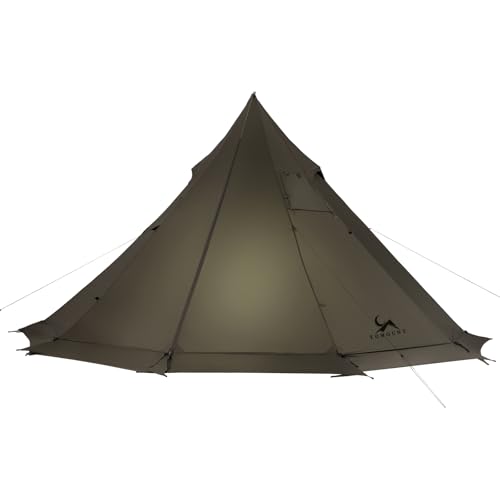
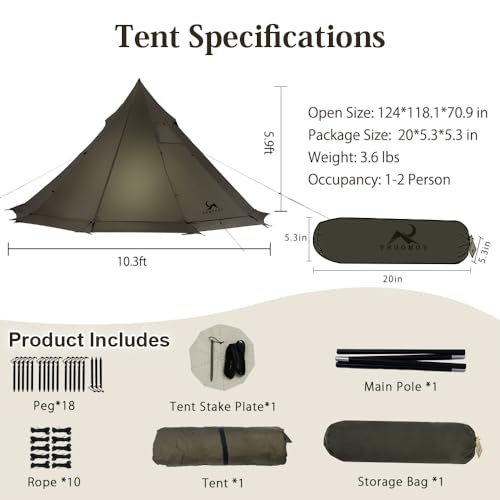
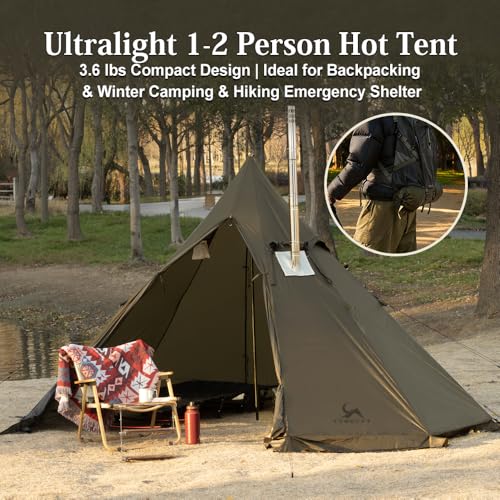
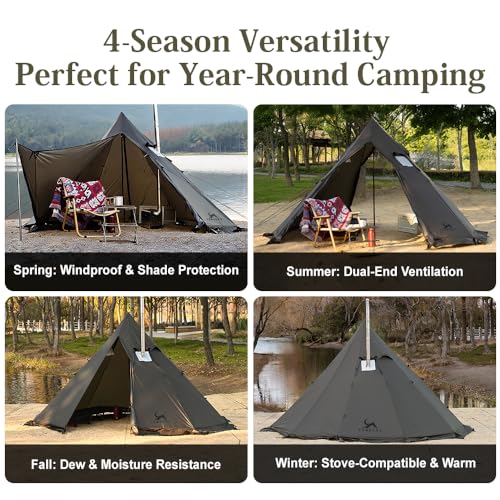
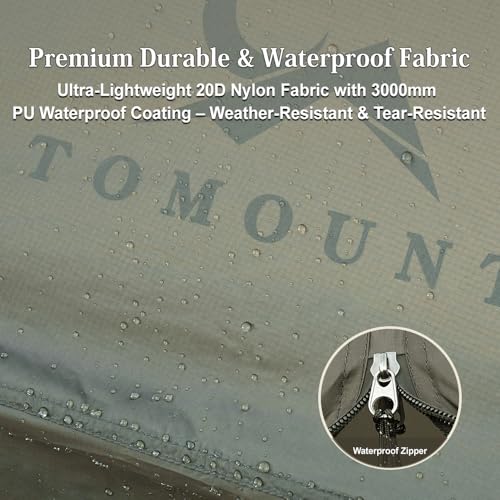
MC TOMOUNT Ultralight Hot Tent
Strengths
- Extremely lightweight
- All-season ready
- Excellent airflow design
Trade-offs
- No inner tent included
- Basic pole construction
- Limited headroom
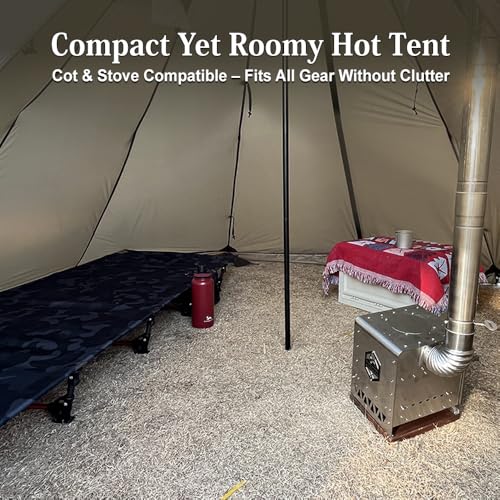
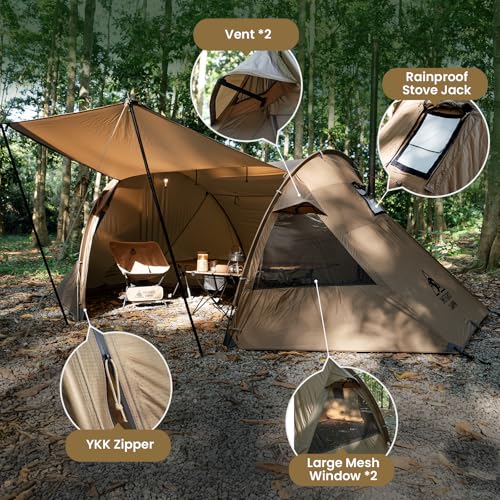
At just 3.6 lbs, this might be the lightest full-featured hot tent on the market that still includes a stove jack, snow skirt, and dual ventilation. The 20D ripstop nylon with silicone coating is impressively tough for its weight, and reviewers note it handles wind-driven snow better than expected, though it’s not indestructible in blizzard conditions. What really sells me is the balance of weight, weather protection, and ventilation. Dual doors and two windows mean you can run a stove without suffocating, which is a real issue in cheaper models.
It’s not perfect, the inner tent isn’t included, so you’ll need to buy one or DIY a setup, and the pole is basic aluminum. But for solo or two-person winter backpacking where every ounce counts, this hits a sweet spot. I’d pick this over bulkier models if I were planning a long backcountry trek in cold weather.
Product photos
4-Person Lightweight Tipi Tent
Strengths
- Great size-to-weight ratio
- Tear-resistant polyester
- Large doors and vents
Trade-offs
- No floor or inner included
- Moderate waterproof rating
- Condensation risk
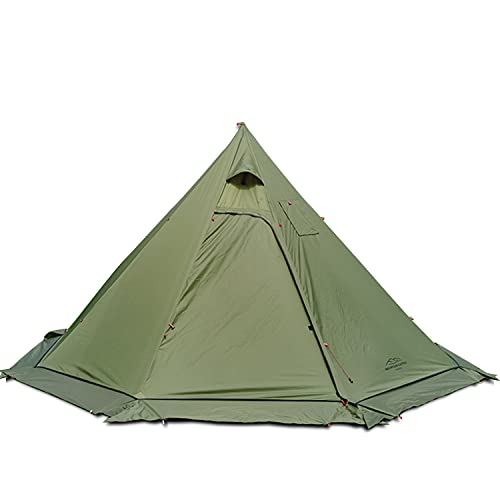
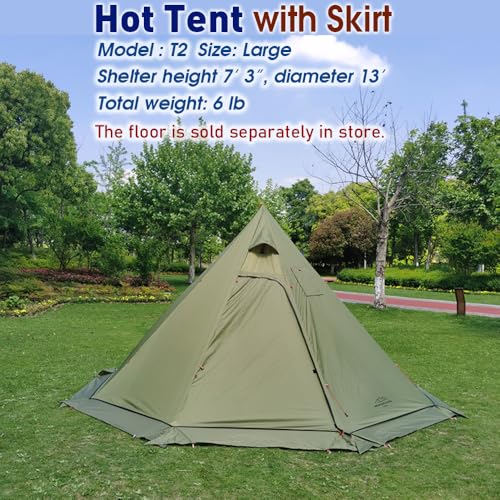
At 5 lbs and 13 feet in diameter, this tent offers serious value for group use without going overboard on weight. The 210T polyester is heavier than nylon but more tear-resistant, and the PU2000mm rating is decent for most conditions. Standing room at 7’3″ makes it feel spacious, and the dual doors help with airflow when the stove is running.
But the fabric isn’t as breathable as silicone-coated models, so condensation can build up if you’re not careful with ventilation. Also, no floor or inner mesh is included, those are add-ons. Still, for the price, it’s a solid pick for family winter camping or team hunting trips where you’re not hiking more than a few miles.
Product photos
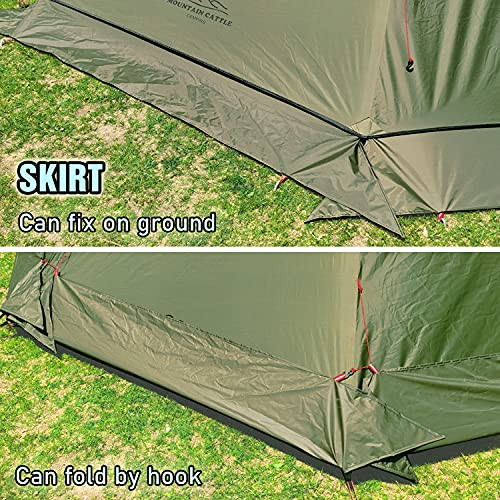


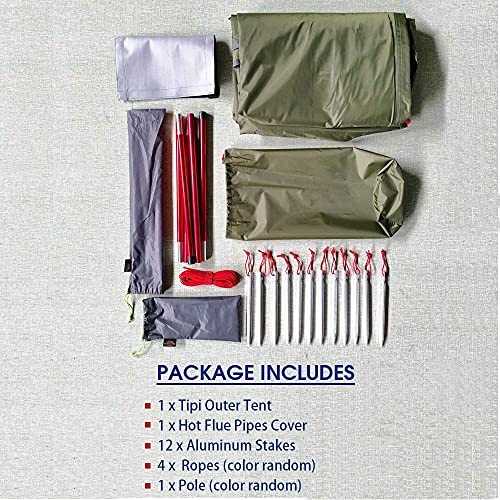
Dandelion Shell 3-4 Person Tent
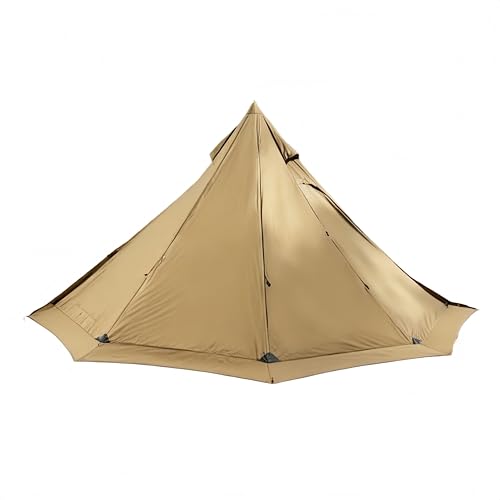
Strengths
- Durable 70D polyester
- Excellent weather protection
- Thoughtful reinforced design
Trade-offs
- Slightly heavier than ultralights
- No floor included
- Ventilation could be improved
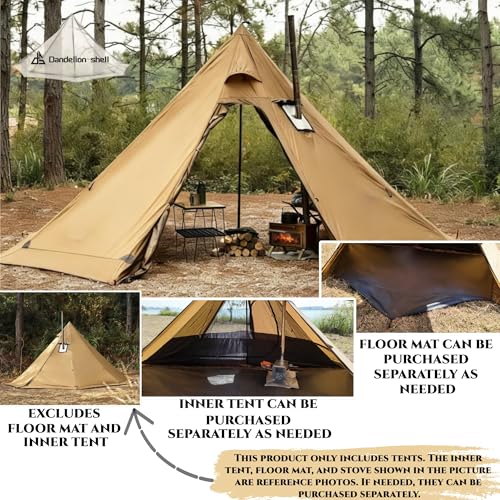
This tent gets the durability and detail balance right. The 70D single-sided silicone-coated polyester is tough yet surprisingly light at 4.8 lbs, and the 3000mm waterproof rating matches premium models. Owners highlight the reinforced stress points and double zippers, small things that matter when you’re in a storm. The 145-inch diameter gives real elbow room for three, and the stove jack is well-placed for safe clearance.
It’s not the lightest, but for all-season reliability with minimal compromises, it stands out. The aluminum poles are sturdy, and the included pegs and guylines are quality. If you want a do-it-all hot tent that won’t fall apart after two winters, this is worth serious consideration.
Product photos


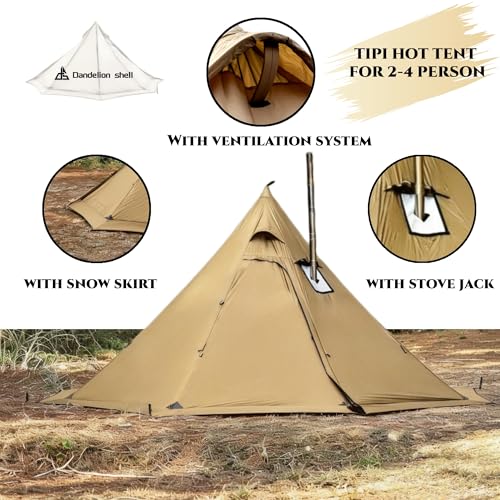
OneTigris Rock Fortress Tent
Strengths
- Massive interior space
- Sturdy 70D build
- Good ventilation options
Trade-offs
- Too heavy for serious backpacking
- Bulky packed size
- Overkill for solo use
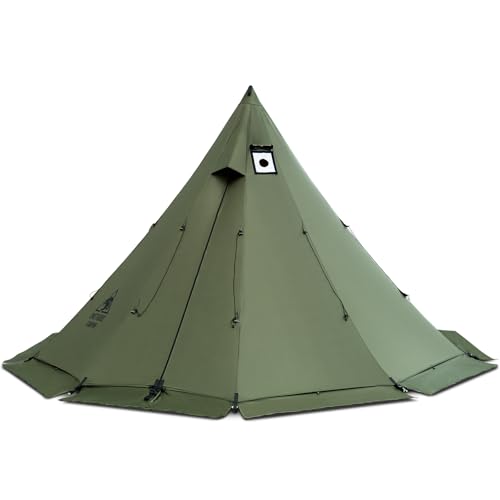
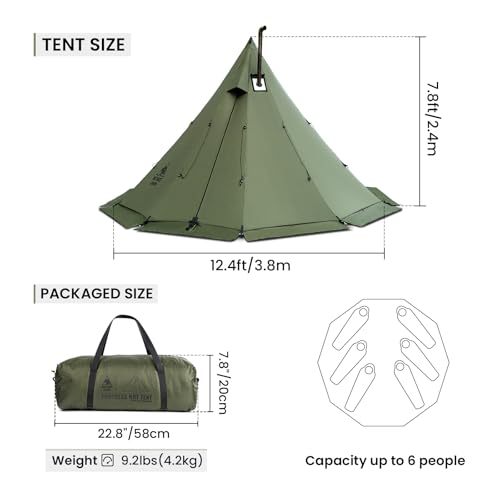
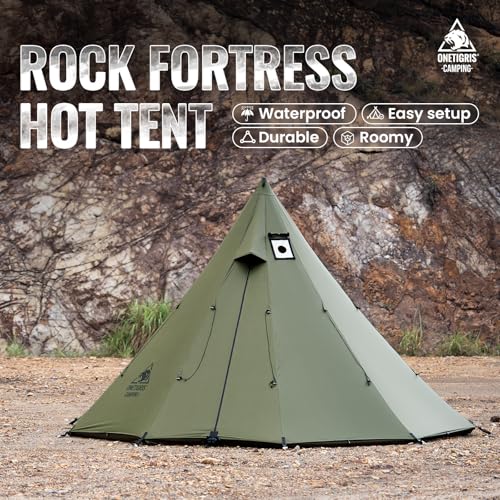
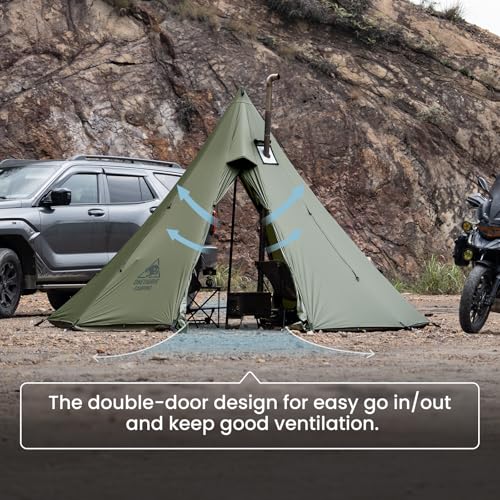
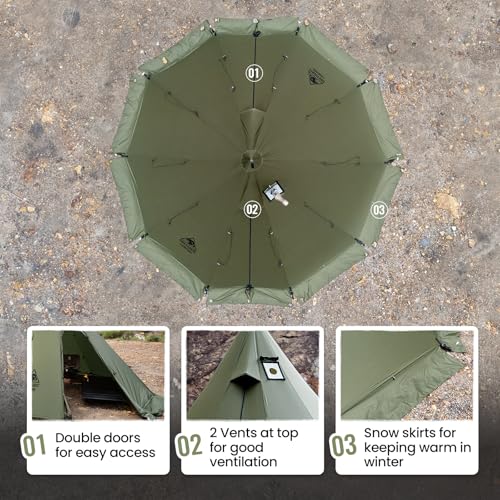
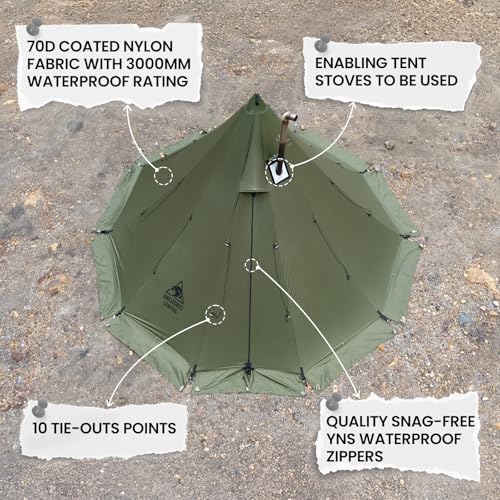
This is the big rig of hot tents, 12.4 feet across and nearly 8 feet tall, it’s designed for groups or serious basecamping. Standing height is a standout; you can cook, stretch, or even do light yoga inside, which most hot tents don’t allow. The 70D nylon and YKK zippers suggest solid durability, and owners confirm it handles heavy snow loads when properly staked.
But let’s be real: 9.2 lbs is not backpacking-friendly. This is for car camping, ice fishing outposts, or snowshoe basecamps where weight isn’t the priority. It’s overkill for solo trips, but for a group winter hunting trip or family snow camping, it makes sense. If you need space and stove heat for multiple people, this delivers.
Product photos
OneTigris Raven NEST Tent
Strengths
- Spacious interior
- Rugged 70D fabric
- Stable arched frame
Trade-offs
- Heavier than tipis
- More complex setup
- Larger packed size
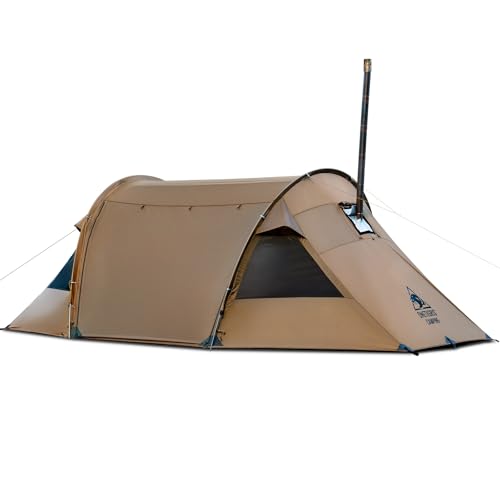
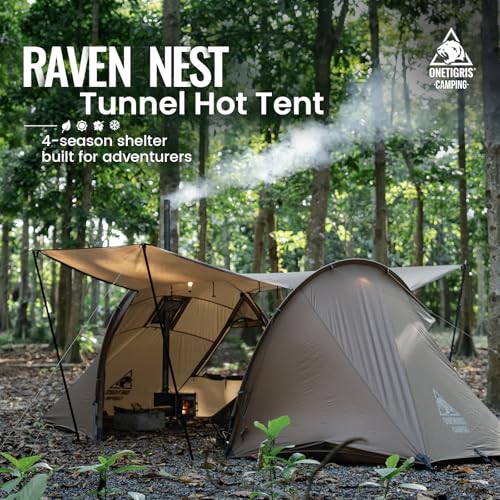
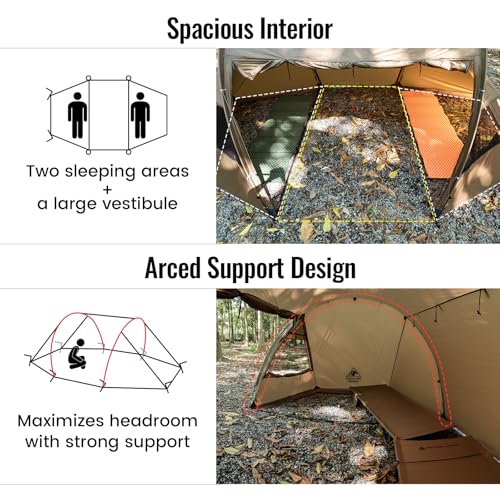
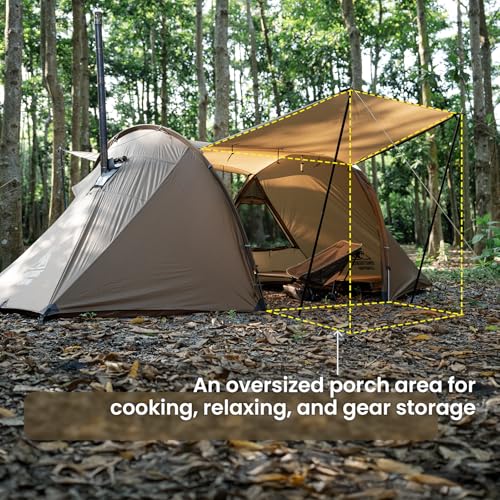
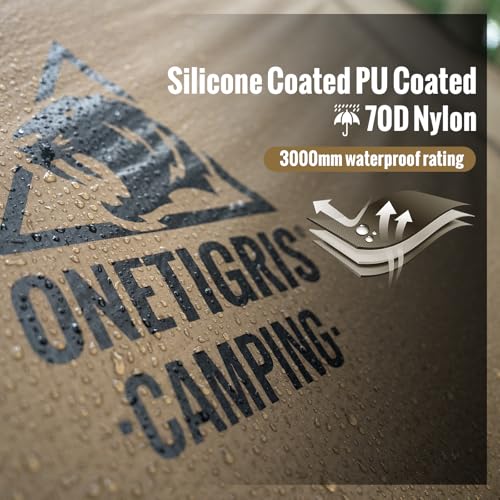
The Raven NEST stands out in a field dominated by tipis because it’s one of the few true tunnel tents built for hot tenting. That arched support design isn’t just for looks, it delivers better wind resistance than most conical models, especially in exposed alpine zones where crosswinds can destabilize round tents. On paper, the 70D sil-coated nylon gives it serious durability, and owners consistently report it holding up well in sleet and sustained rain, which is rare for a backpackable stove-compatible tent.
Still, the tunnel layout demands more guylines and precise stake placement than a tipi, and it’s heavier than ultralight options. But if you value interior volume and a true living space where you can fit two cots and still move around, this is a smart pick. It’s not the lightest, but for backpackers prioritizing comfort and stormworthiness over pack size, it’s a strong contender.
Product photos
Longeek 2-Person Ultralight Tent
Strengths
- Extremely lightweight
- Poleless hanging option
- Strong UV and weather protection
Trade-offs
- No floor or inner included
- Requires skill for stable setup
- Limited ventilation with stove
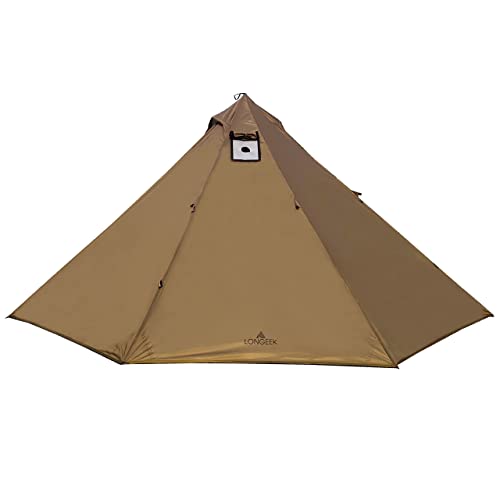
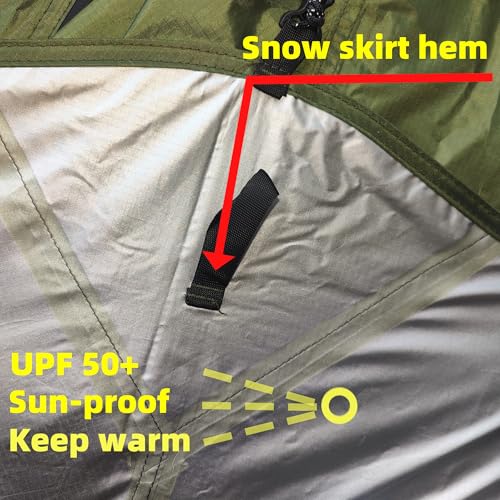
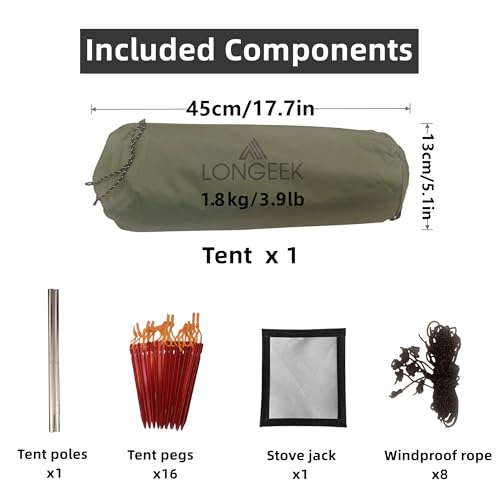
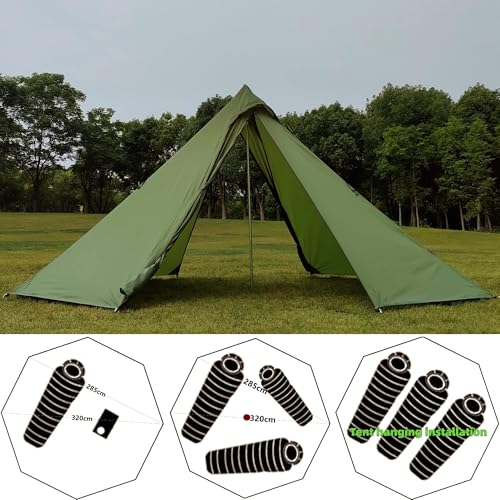
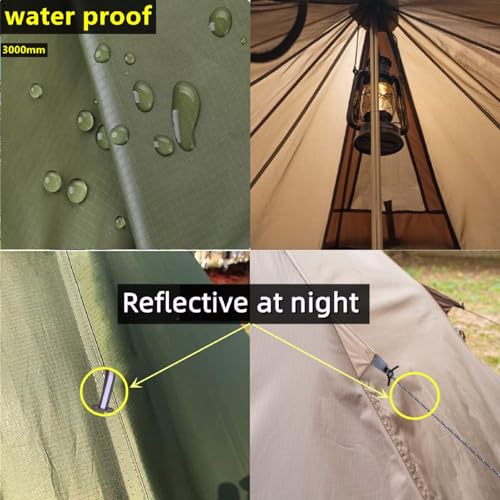
At just 1.8 kg (4 lbs), this is one of the lightest hot-capable tents out there, and it doesn’t rely on a traditional pole system. The octagonal design allows for poleless hanging, which is genius for basecamps or tree-supported setups. The UPF50+ coating is a nice touch for sun-heavy alpine zones, and the 3000mm waterproof rating matches heavier models.
But the lack of a floor or inner net is a dealbreaker for many. You’ll need to buy or build those separately. And while owners say it’s stable in 50–60 km/h winds, that’s only with perfect guylines and snow anchoring. It’s best for experienced campers who know how to tune a shelter. Still, for the weight and pack size, it’s a clever, minimalist option.
Product photos

OneTigris Smokey HUT Tent
Strengths
- Detachable waterproof floor
- Lightweight for 4-season
- Good stove clearance
Trade-offs
- Floor adds weight when attached
- 20D fabric less abrasion-resistant
- Ventilation could be better
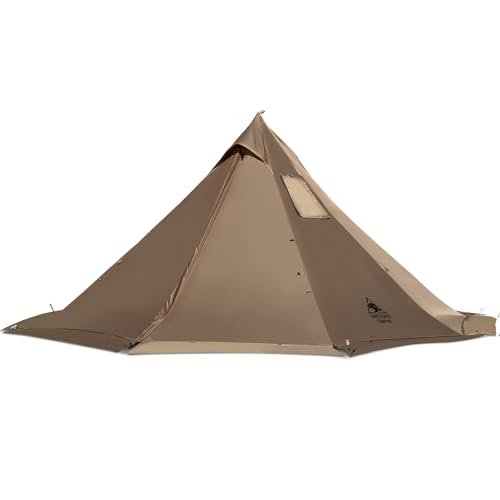
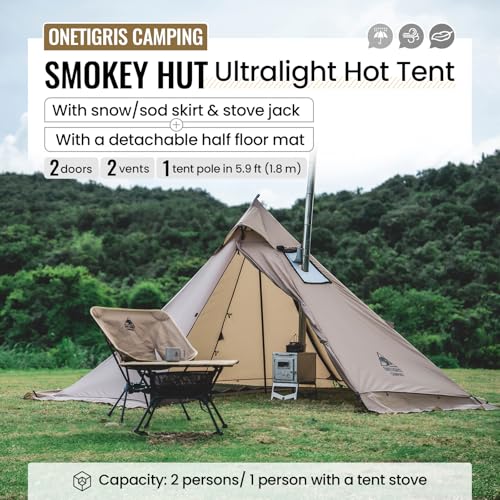
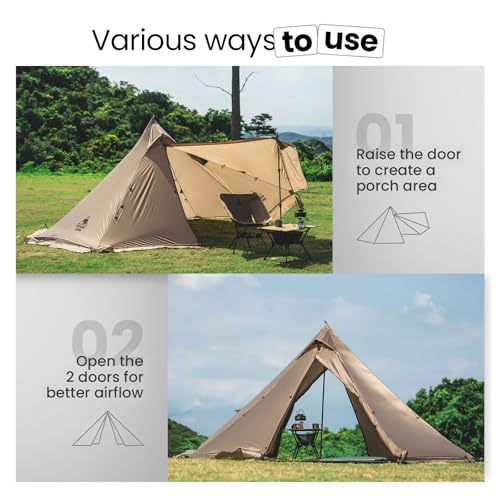
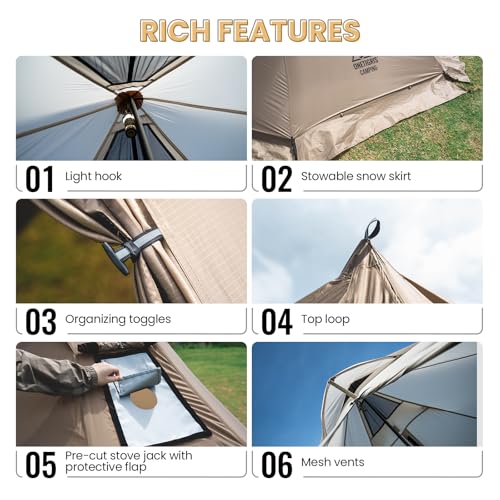
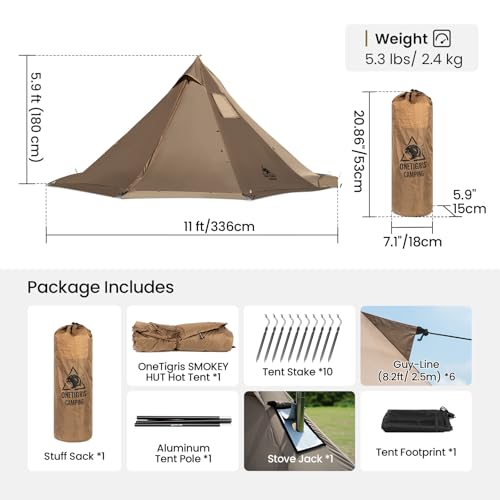
The standout here is the detachable floor, a rare feature in hot tents. Most models weld the floor in, which traps moisture and makes cleaning a nightmare. This one lets you remove the 75D PU-coated mat, so you can air it out, clean spills, or even go floorless in dry conditions to reduce condensation. At 5.3 lbs with the floor and pole, it’s still backpackable, especially for two people sharing the load.
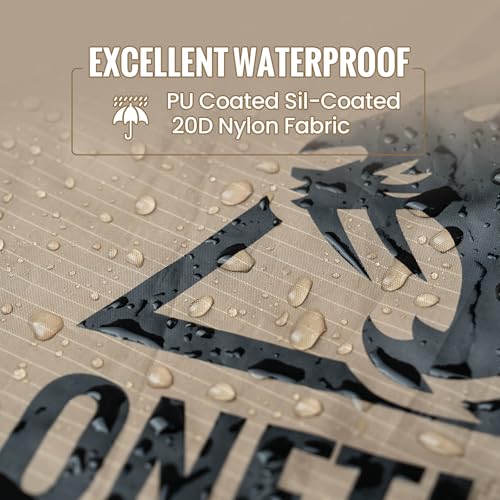
The 20D nylon is lightweight but not as tough as 70D builds, so I’d be cautious in rocky or abrasive terrain. Still, owners praise its quick setup and stove compatibility. For me, the removable floor tips the scales, it’s a small detail that makes a big difference in long-term comfort and hygiene.
Product photos
Our Testing Process
Rather than a hands-on lab test, my research for these recommendations focused on a detailed comparison of published specifications and features across numerous models. I weighed owner reviews from a variety of sources – including major retailers and dedicated camping forums – alongside expert reviews from respected outdoor gear sites. As someone who’s spent countless nights seeking shelter under canvas, I applied my experience to prioritize features most important for backpackers needing a warm, reliable shelter.
For hot tents specifically, weight, material durability, and stove compatibility were the most heavily weighted factors. Backpacking demands keeping every ounce to a minimum, so a lighter tent is always favored, assuming it doesn’t sacrifice structural integrity. Durable materials are essential to withstand the rigors of trail life and repeated use, and a well-designed stove jack is crucial for safe and efficient heating. Understanding a hot tent definition is also key to knowing what features to prioritize.
Published specifications reliably indicate a tent’s size, weight, and waterproof ratings. However, I relied more heavily on owner feedback to gauge real-world performance – particularly regarding condensation, wind resistance, and the ease of setting up the tent in challenging conditions. Reputation and long-term durability are difficult to quantify through specs alone, so I gave significant weight to brands with a proven track record and consistently positive user experiences. Learning about the benefits of hot tents helped me understand what owners would be looking for.
What To Look For In hot tents for backpacking
Choosing a hot tent requires a bit more thought than a standard three-season shelter. We’re talking about creating a potentially habitable space even in freezing conditions, so attention to detail is key.
A good hot tent balances weight with durability, prioritizes safety around a heat source, and offers adequate space for occupants and essential gear. Key considerations include fabric choice (ripstop nylon or polyester), waterproof ratings, stove jack quality, and overall construction for wind resistance and heat retention. A well-designed hot tent will make winter camping significantly more enjoyable.
Fabric & Waterproofing
The material a hot tent is made from is the foundation of its performance. Don’t automatically assume heavier is better; modern fabrics offer excellent strength-to-weight ratios. Look for ripstop nylon or polyester with a high denier (70D or higher is a good starting point) and a durable water column (DWC) rating of at least 3000mm. While a higher DWC is good, remember that seam sealing and overall tent design are equally important in keeping you dry. Silicone or PU coatings add waterproofing, but silicone tends to be lighter and more durable.
Stove Jack Quality & Placement
The stove jack is arguably the most critical component of a hot tent. A poorly designed or installed jack can create a significant fire hazard. Ensure the jack is made from fire-resistant material (silicone-coated fiberglass or similar) and that it’s securely attached to the tent body. The placement should be high enough to avoid overheating the tent fabric, but low enough to allow for efficient heat distribution. Also, consider the diameter of the jack – it needs to be compatible with the stove pipe you plan to use. If you’re unsure about tent insulation techniques to maximize your stove’s effectiveness, do some research.
Size, Weight & Packability
Hot tents often sacrifice some weight savings for the ability to safely use a stove. However, if you’re planning on carrying your shelter, finding a balance is crucial. Consider how many people you’ll typically be using the tent for. A two-person tent might be comfortable for solo use with extra gear, while a four-person tent offers more space for a small group.
Here’s a quick breakdown of what to prioritize based on your needs: * Solo/Minimalist: Prioritize ultralight materials and a smaller footprint. * Couple: Look for a balance of space, weight, and features like a functional stove jack. * Group: Focus on spaciousness and durability, even if it means a slightly heavier pack weight. A larger tent will provide more room for gear and allow for a more comfortable experience.
Remember, a well-chosen hot tent can transform a frigid winter camping trip into a cozy and enjoyable experience. Don’t underestimate the importance of a good shelter when venturing into cold weather. If you are looking for backpacking-specific hot tents, be sure to check out some of the ultralight options available.
Don’t skimp on the quality of the stove jack. A secure, fire-resistant jack is the single most important safety feature of any hot tent.
Hot Tents for Backpacking Compared
Here’s a comparison of key specifications for popular hot tents designed for backpacking.
| Product Title | Capacity | Weight (lbs) | Waterproof Rating (mm) | Material | Stove Jack | Detachable Floor |
|---|---|---|---|---|---|---|
| MC TOMOUNT Ultralight Hot Tent | 1-2 | 3.6 | 3000 | 20D Ripstop Nylon | Yes | No |
| 4-Person Lightweight Tipi Tent | 2-4 | 5 | 2000 | 210T Polyester | Yes | No |
| Dandelion Shell 3-4 Person Tent | 3-4 | N/A | 3000 | 70D Polyester | Yes | No |
| OneTigris Rock Fortress Tent | Up to 6 | 9.2 | 3000 | 70D Coated Nylon | Yes | No |
| OneTigris Raven NEST Tent | 2+ | N/A | 3000 | 70D Nylon | Yes | No |
| Longeek 2-Person Ultralight Tent | 1-3 | 1.8 | 3000 | 210T Nylon | Yes | No |
| OneTigris Smokey HUT Tent | N/A | 5.3 | 2000 | 20D Nylon | Yes | Yes |
Frequently Asked Questions
What waterproof rating is truly necessary for a hot tent?
A rating of 3000mm is generally sufficient, but I recommend looking for tents with 4000mm or higher if you frequently camp in very wet conditions. Remember that a higher number doesn’t guarantee dryness; seam sealing and overall design play a big role too.
Are stove jacks universally compatible, or do I need to worry about sizing?
Stove jacks aren’t universal. You absolutely need to check the diameter of the jack against the diameter of your stove’s exhaust pipe to ensure a snug and safe fit. An ill-fitting connection is a serious fire hazard.
What’s the deal with detachable floors in hot tents? Are they useful?
Detachable floors are primarily for protecting the tent fabric from direct contact with the stove and for easier cleaning. While not essential, they can extend the life of your hot tent and provide a cleaner interior space, particularly in muddy conditions.
How much heavier can I expect a hot tent to be compared to a standard backpacking tent of the same capacity?
Hot tents generally add between one to three pounds compared to a standard backpacking tent of similar size. This weight increase is due to the heavier fabrics needed for stove compatibility and durability, plus the added structure required for a stable stove jack.
What are the best brands currently offering reliable hot tents designed for backpacking?
Currently, OneTigris and MC TOMOUNT consistently receive positive feedback for their backpack-friendly heated tents and are known for offering a good balance of features and affordability. Longeek also has some very lightweight options worth considering if you prioritize minimal weight.
The Bottom Line
Choosing a hot tent always involves a trade-off between carrying weight and having a truly comfortable, warm shelter. While many options exist, for a fantastic balance of weight, durability, and features, I recommend the MC TOMOUNT Ultralight Hot Tent. It’s a solid pick for solo adventurers or pairs who prioritize keeping their pack light without sacrificing essential warmth.
If you’re looking for something specifically suited to a particular need, we’ve got you covered. For those on a budget, the Longeek 2-Person Ultralight Tent offers surprising value. If you need space for a small group, the 4-Person Lightweight Tipi Tent delivers on roominess. And for those wanting a detachable floor for versatility, the OneTigris Smokey HUT Tent is a strong contender.
Ultimately, the numbers on a spec sheet matter less than understanding your typical conditions and prioritizing safety. A robust stove jack and durable fabric are paramount, but don’t overlook the importance of practicing safe tent heating methods and learning how to properly ventilate your shelter. A well-chosen hot tent is an investment in enjoyable winter adventures, but knowledge and careful practice are the keys to staying safe and warm.
