
7 Best Hot Tents for Backpacking 2026
This post contains affiliate links. As an Amazon Associate, we earn from qualifying purchases.
The OneTigris Smokey HUT stands out as the best overall hot tent for backpacking, combining smart design and solid specs for serious backcountry use. For those watching their budget, the 4 Persons 5lb Tipi Hot Tent delivers reliable performance without breaking the bank. And if you’re after something more versatile for different setups, the OneTigris Raven NEST brings quality and packability to the table.
Picking a hot tent for backpacking isn’t just about warmth, it’s about finding something that won’t weigh you down or fail when the weather turns. Too many hikers end up with bulky, unsafe, or flimsy shelters that make winter trips miserable.
As Chloé Bourgeois, I’ve spent years studying gear that holds up in real trail conditions, and this guide cuts through the noise. These picks are based on specs, owner feedback, and what actually matters when you’re miles from the trailhead: weight, durability, and safe stove integration.
Top 7 Hot Tents For Backpackings in the Market
The Best Hot Tents For Backpackings, Reviewed
OneTigris Smokey HUT Hot Tent
Strengths
- Ultralight at 5.3 lbs
- Detachable floor included
- Quick pole-up setup
Trade-offs
- 20D fabric less abrasion-resistant
- Lower 2000mm waterproof rating
- Smaller diameter than group tents
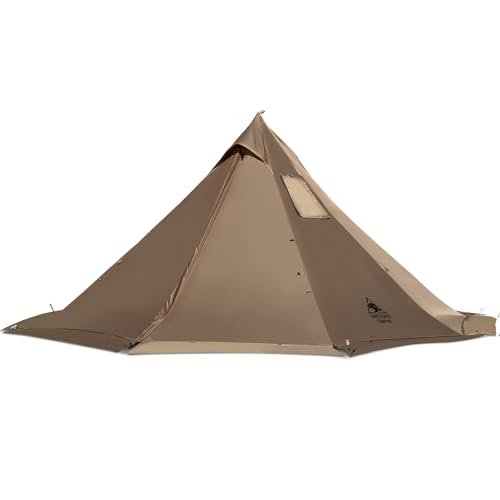
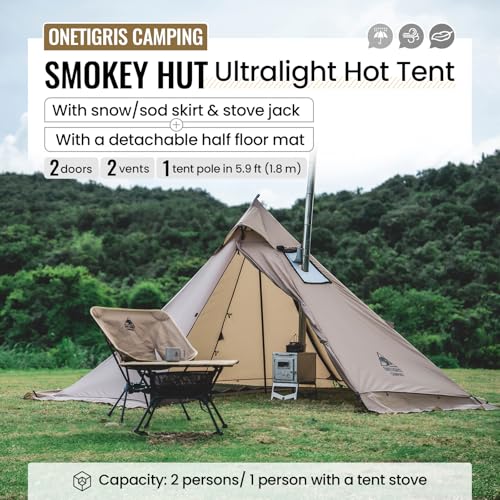
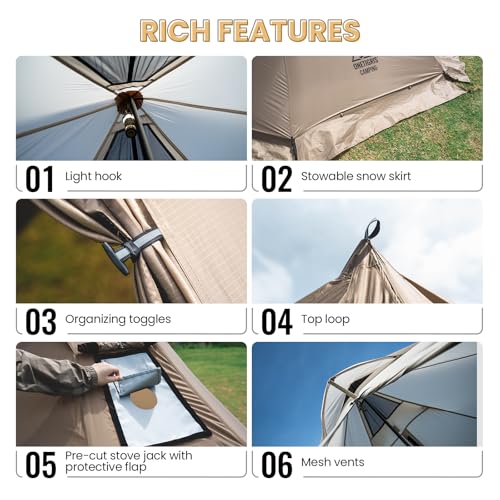
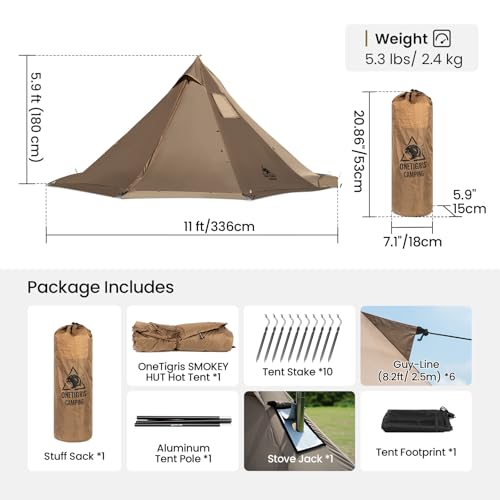
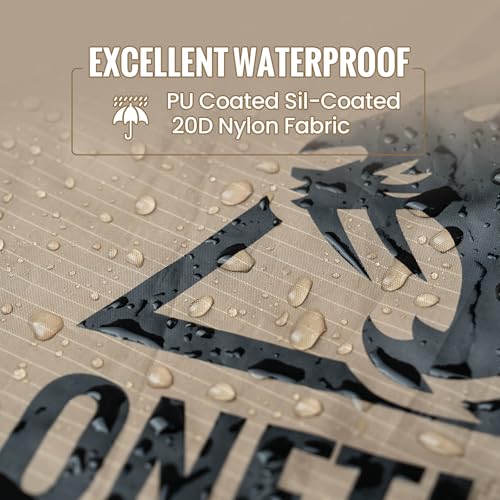
At 5.3 lbs with pole and floor included, the Smokey HUT is one of the lightest full-featured hot tents on the market, and that’s a big deal. It hits the sweet spot between weight, space, and winter readiness, making it a top contender for backpackers who want to go deep in cold seasons. The 20D nylon might sound thin, but owners report it’s surprisingly tough, especially with the heat-taped seams and YKK zippers backing it up.
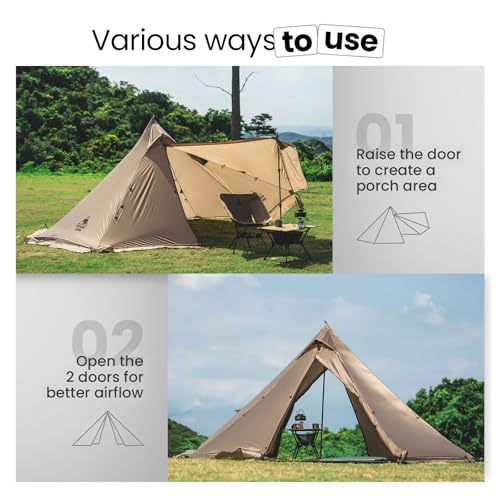
The detachable floor is a standout. It adds protection without locking in moisture, and the stove jack is pre-installed and well reinforced. You still get two doors for cross-ventilation, which is crucial when running a stove. For its class, it packs down small and sets up fast, just one pole and guy lines. Between this and the Rock Fortress, I’d take the Smokey HUT for any solo or duo backpacking trip where every ounce counts.
Product photos
4 Persons 5lb Tipi Hot Tent
Strengths
- Extremely lightweight
- Budget-friendly
- Simple, fast setup
Trade-offs
- No floor or mesh included
- Basic 2000mm waterproofing
- Lower-end zippers than premium models
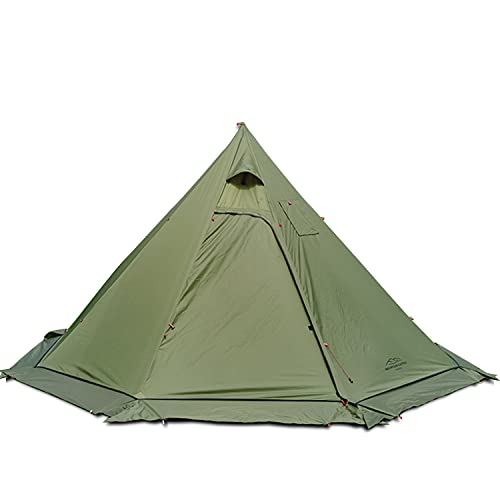
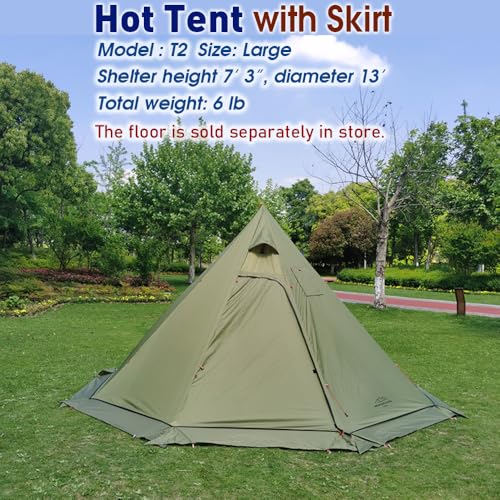
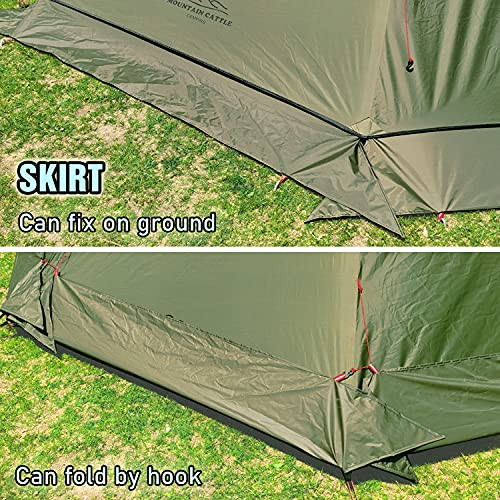
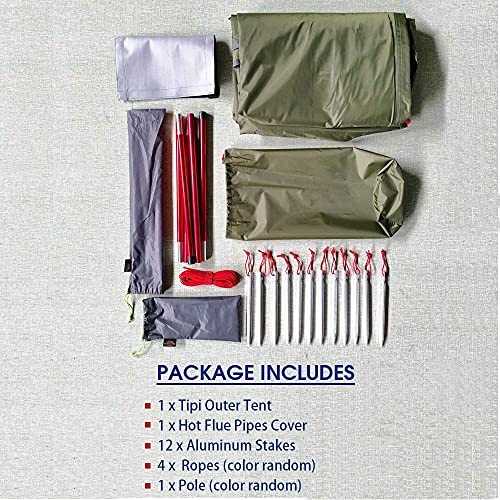
At 5 lbs and built with 210T polyester, this budget-friendly tipi delivers surprising value. It’s lightweight, packs small, and has the basics covered: stove jack, double doors, two air vents, and decent height. The material isn’t as high-end as 70D nylon, but 210T holds up better than you’d expect for the price, especially since polyester resists tearing better than nylon in some conditions.
Owners say setup is quick, often under 10 minutes, and the included pole simplifies things. But it’s worth noting: no floor or inner mesh is included, which means you’ll likely need to buy those separately for real-world use. That said, for the price, it’s a solid entry point. If you’re new to hot tents or want a spare shelter for hunting trips, this beats spending top dollar on your first try.
Product photos


OneTigris Raven NEST Hot Tent
Strengths
- Aerodynamic tunnel shape
- Spacious 2-person layout
- YKK waterproof zippers
Trade-offs
- Slightly heavier than ultralight options
- Limited headroom at ends
- Packed size not tiny
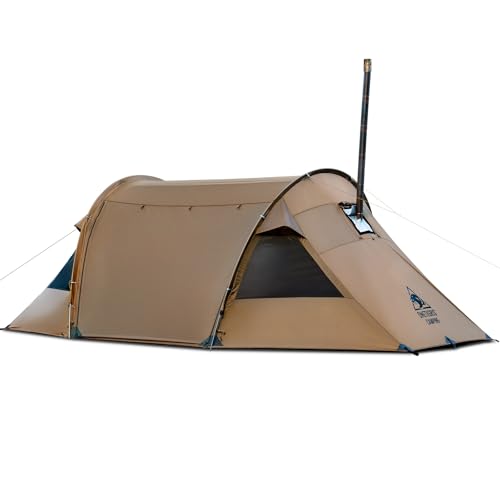
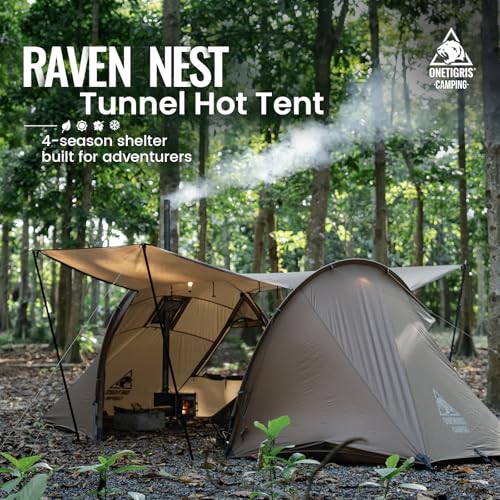
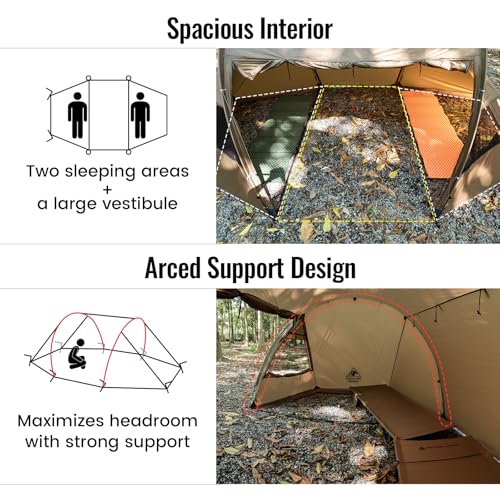
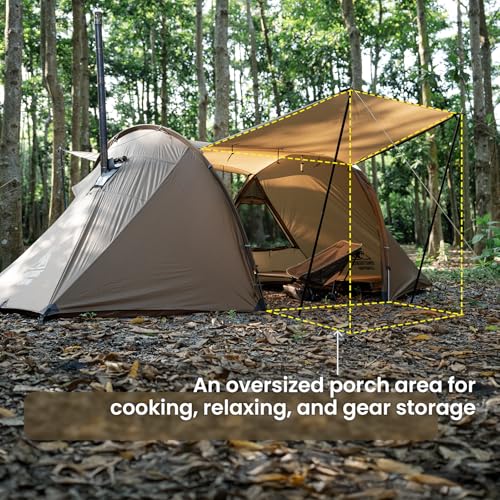
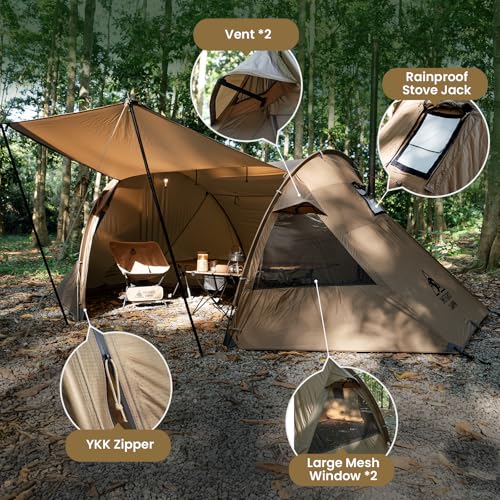
The Raven NEST stands out in a sea of tipis by going with a tunnel design, a smart move for wind resistance. Its arched pole structure and extra tie-out points give it an edge in stormy conditions, and owners say it stays stable even when the wind kicks up. The layout actually feels roomy for two, with space not just for sleeping bags but folding cots and camp furniture, which is rare at this size.
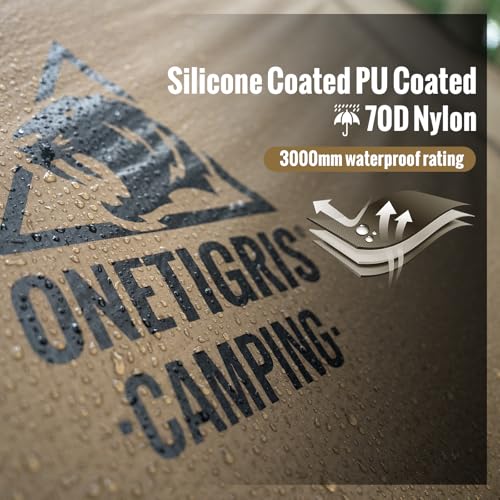
It’s not the lightest at just over 6 lbs, but the trade-off is a rugged build with Sil-PU coated 70D nylon and fully taped seams. The stove jack works well with compact wood stoves, and the large vents help manage condensation. Compared to tipi-style tents, this one sacrifices a bit of that classic 360 visibility but gains real-world stability. For two-person backpacking with winter ambitions, I’d lean toward this over a flimsier dome.
Product photos
OneTigris Rock Fortress Hot Tent
Strengths
- Spacious interior
- Durable 70D nylon
- Double-door ventilation
Trade-offs
- Heavy for backpacking
- Bulky packed size
- Not ideal for solo use
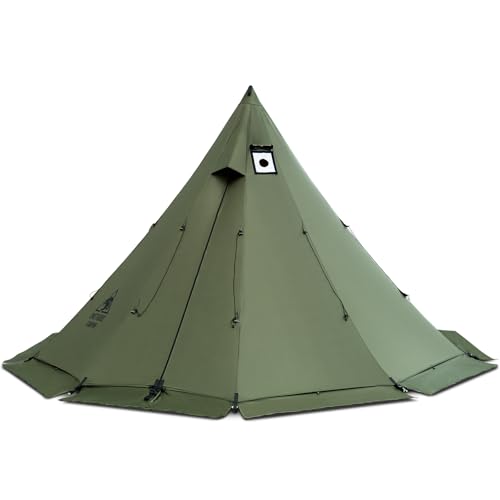
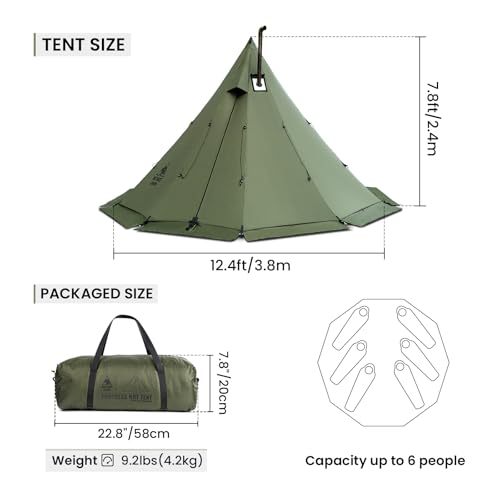
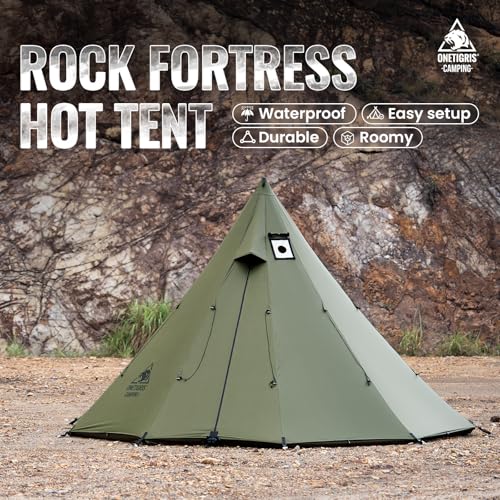
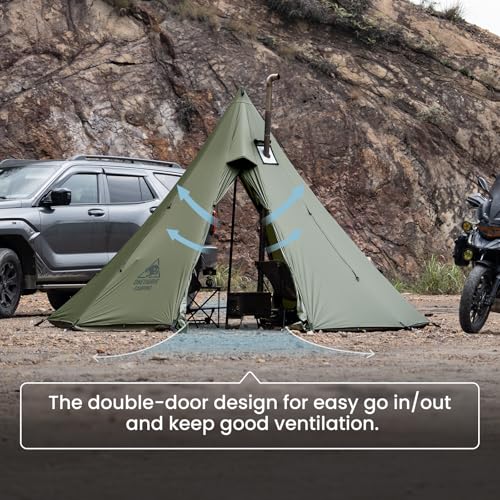
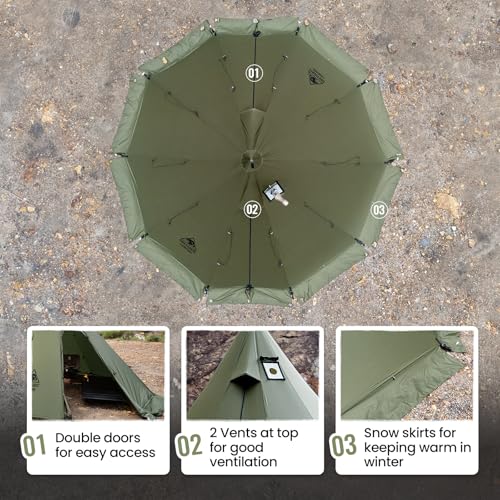
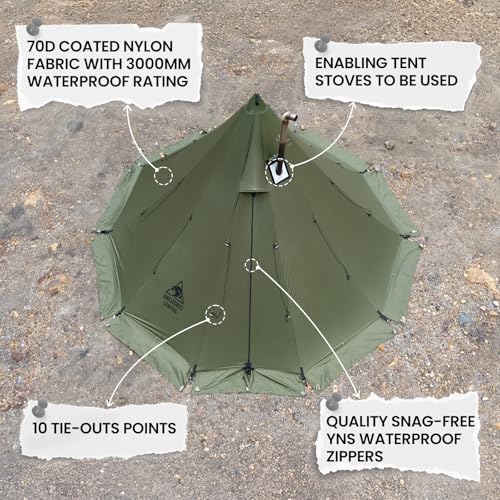
This is a big tent, really big. At nearly 12.5 feet in diameter and standing 7.8 feet tall, the Rock Fortress gives you room to move, cook, and even fit a small table inside with a wood stove. On paper, it’s built for group expeditions or family winter camping where space and heat retention matter. The dual doors and snow skirt are smart touches, offering ventilation options while keeping wind and snow out.
Owners consistently report it holds up well in harsh conditions, thanks to the 3000mm waterproof rating and sturdy aluminum poles. But that size comes at a cost: 9.2 lbs is heavy for backpacking, even for two. This isn’t a solo trekker’s tent, it’s for car campers, basecamp setups, or group trips where weight isn’t the priority. I’d pick it over smaller models when you need space and durability more than portability.
Product photos
OneTigris ROCDOMUS Hammock Tent

Strengths
- Hammock-compatible design
- Lightweight and compact
- Multi-use shelter options
Trade-offs
- Tricky to pitch perfectly
- Limited floor space
- Not ideal for ground sleeping
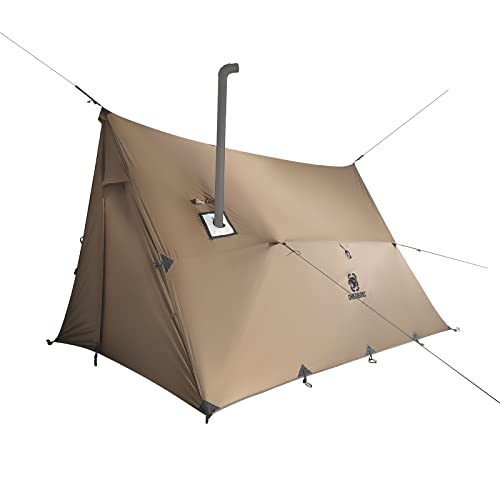
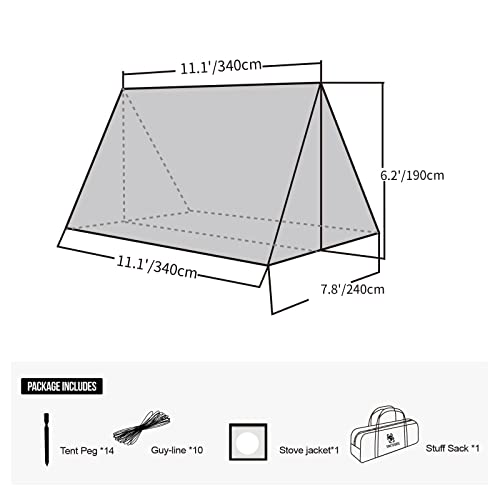
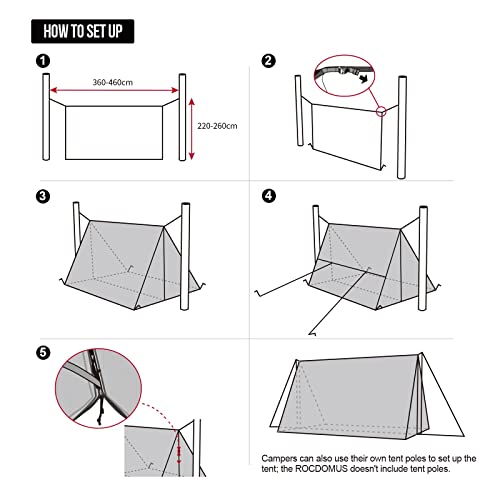
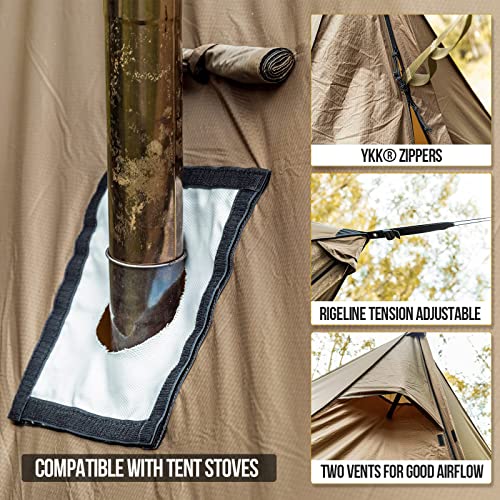
The ROCDOMUS is built for hammock campers who still want stove heat, a niche but growing crowd. At 6.2 lbs and a compact 15.7-inch pack size, it’s one of the more portable hot tents out there. The 70D ripstop nylon and 3000mm PU coating hold up well in wet conditions, and the top vents with support bar help manage airflow when the stove is running.
It’s not a traditional tent, you can pitch it over a hammock, use it as a shelter with trekking poles, or even set it up as a mini cabin with cots. That versatility is its biggest strength. But owners note it takes practice to tension correctly, especially in wind. Compared to the Smokey HUT, it’s heavier for backpacking but more flexible in setup options. If you’re already a hammock sleeper and want winter capability, this is one of the few real choices.
Product photos

REDCAMP Large Hammock Hot Tent

Strengths
- Excellent wind resistance
- Spacious 3-zipper design
- Snow skirt included
Trade-offs
- Heavy at 7.9 lbs
- No pole included
- Bulkier pack size
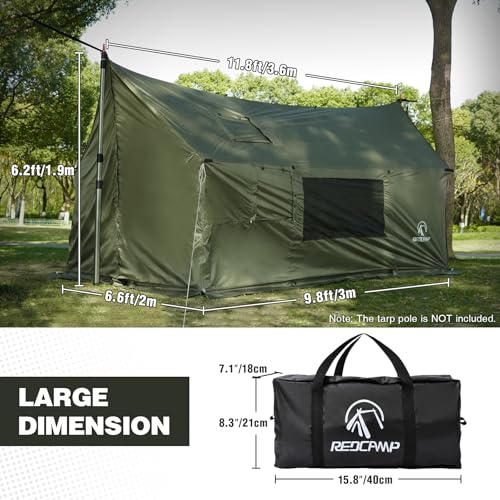
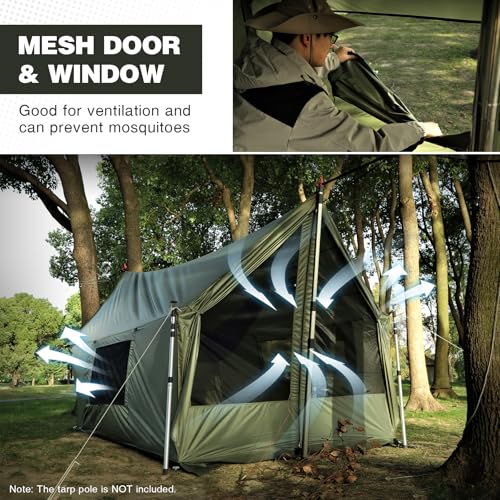
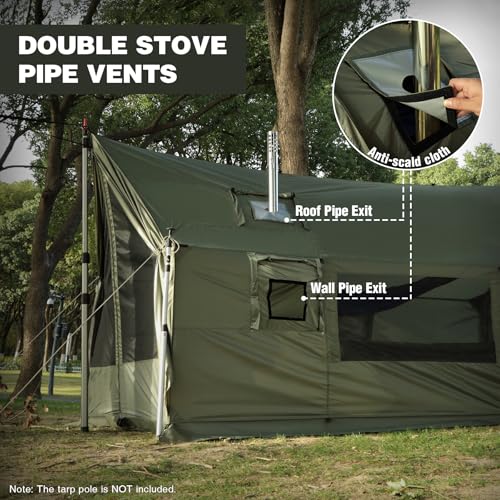
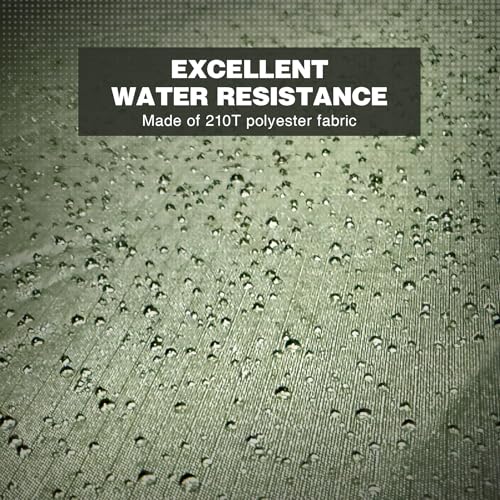
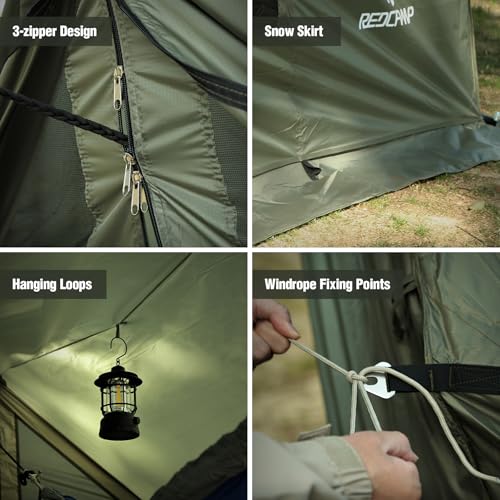
REDCAMP’s hammock hot tent leans into size and weather resistance, with a 11.8-foot length and snow skirt for winter use. The 3-zipper door design is unique, it makes entry easier, especially when paired with a hammock. Made from 210T grid polyester, it’s not the lightest, but owners say it handles wind and snow impressively well. The lack of included pole is a downside, though the stainless steel guyline anchors help with rigging.
At 7.9 lbs, it’s heavier than other backpacking options, but the space-to-weight ratio makes sense if you’re camping with a partner or need room for gear. Compared to the ROCDOMUS, it’s less refined but more rugged. I’d pick this for car camping or basecamp use where you want hammock comfort and stove heat without sacrificing weather protection.
Product photos
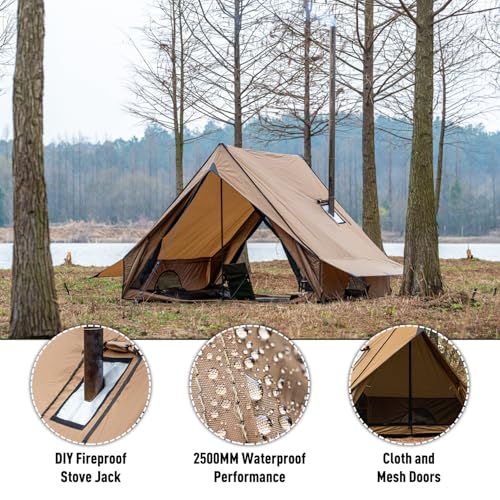
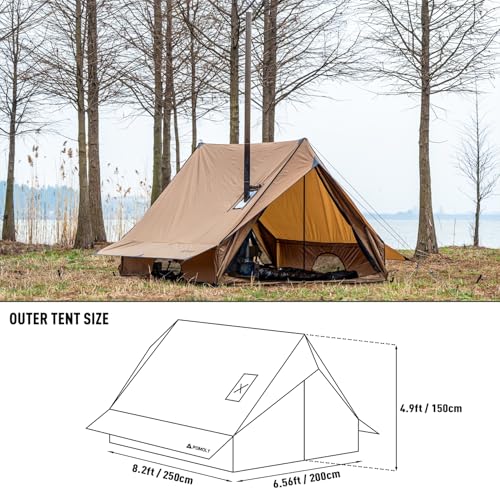
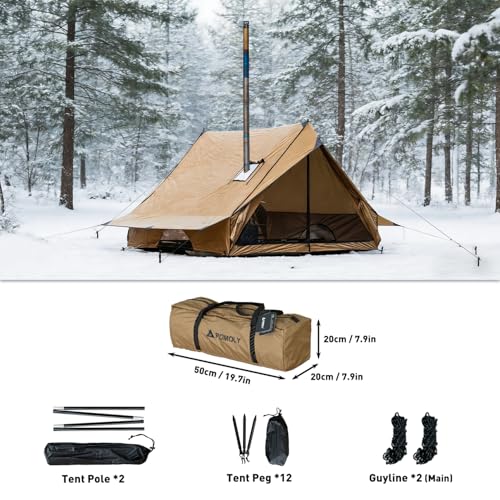
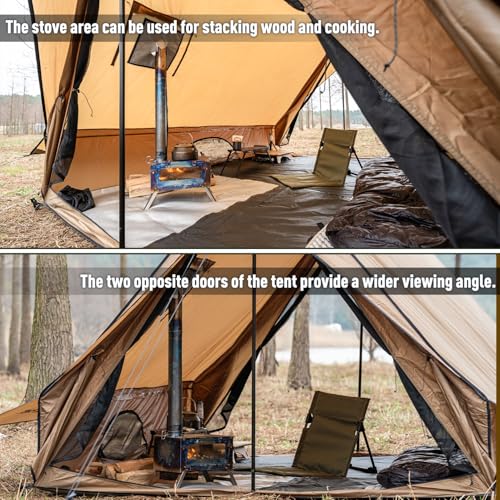
POMOLY Chalet 70 Pro Cabin Tent

Strengths
- Dual-pole stability
- Fireproof integrated floor
- Rain curtains on doors
Trade-offs
- Heavier than tipis
- Lower waterproof rating
- Not packable for long hikes
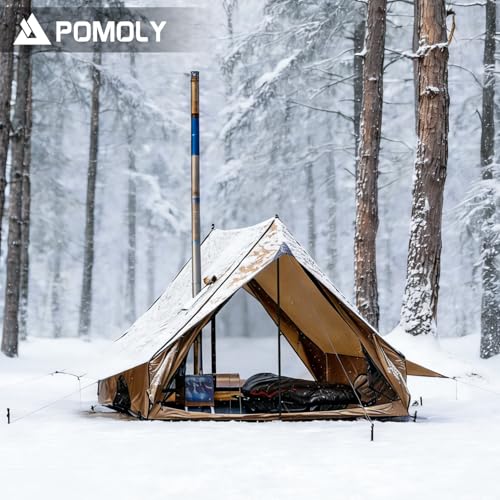
The Chalet 70 Pro bucks the tipi trend with a cabin-style wall tent and dual aluminum poles, and that design pays off in stability. Owners praise its ability to handle snow loading and strong winds, thanks to the 8 guy points and rigid frame. At 2.5m long, it’s snug for three but a solid fit for two with gear. The side rain curtains are a thoughtful touch, letting you vent without inviting in sideways rain.
But the real standout is the integrated fireproof ground sheet made of silicone-fiberglass. That’s not something you see often, and it adds real peace of mind when using a wood stove. Still, the 70D polyester is only 2500mm waterproof, slightly below some competitors. And while it’s roomy, it’s not light, weight isn’t listed, but similar cabin tents hover around 8+ lbs. I’d recommend this over a tipi if you’re setting up a semi-permanent winter camp and want bombproof stability.
Product photos
How We Chose These hot tents for backpackings
Rather than a hands-on lab test, my research for these recommendations centered on a detailed comparison of published specifications and features across numerous hot tent models. I weighed owner reviews from sites like Amazon and Reddit alongside expert opinions from backpacking and camping publications. As someone who’s spent years refining my outdoor setup, I applied my understanding of materials, construction, and real-world camping needs to rank these tents against key criteria.
For hot tents, weight, durability, and stove compatibility were the most important factors. A lighter tent is crucial for backpacking, so I prioritized models utilizing lighter materials like ripstop nylon. Durability matters immensely – these tents endure more stress with stove use and harsher weather. Finally, a well-designed stove jack and compatibility with various stove types are essential for safe and effective heating.
Specifications reliably indicate material weights, waterproof ratings, and tent dimensions. However, I placed greater emphasis on owner feedback regarding real-world performance, particularly concerning condensation buildup, wind resistance, and the ease of setting up and using the stove jack. Reputation and brand history also played a role; established brands with positive track records generally signaled better quality control and design. You can learn more about what is a hot tent if you’re new to this style of shelter.
How To Choose The hot tents for backpackings
Choosing a hot tent can feel overwhelming – there are a lot of options out there promising cozy winter camping. But beyond the hype, a few key features separate a truly useful hot tent from one that’ll leave you cold and frustrated.
A good hot tent balances durability with lightweight portability. Look for robust fabrics (70D nylon or polyester are good starting points) with a waterproof rating of at least 2000mm, a well-designed stove jack, and a stable frame capable of withstanding wind and snow. Prioritize quality YKK zippers and reinforced stress points for longevity.
Fabric & Waterproofing
Don’t skimp on the fabric. While a lighter weight is appealing, especially when considering ultralight hot tents, a flimsy material won’t hold up to repeated use, stove heat, or harsh weather. Look for fabrics like 70D nylon or polyester with a PU coating – the higher the coating number (e.g., 3000mm), the better the waterproof rating. Ripstop weaves are also essential; they prevent small tears from becoming larger disasters. Remember, even with a high waterproof rating, seam sealing is crucial. Heat-taped seams are superior to simply stitched ones.
Stove Jack & Safety
The stove jack is the heart of a hot tent, and its design is paramount. A poorly designed jack can lead to carbon monoxide buildup or even a fire hazard. It needs to be securely attached to the tent body with a robust, heat-resistant material. I always recommend looking for tents that specifically mention compatibility with standard stovepipe diameters (usually 2.5” or 3”). Beyond the jack itself, the surrounding fabric must be fire-retardant, not just fire-resistant. There’s a big difference.
- A small, adjustable stove jack is easier to seal tightly when not in use.
- Reinforced grommets around the stove jack are a sign of a well-made tent, preventing tears from the stovepipe’s weight.
- Consider the material surrounding the jack. Silicone-coated fabrics offer increased heat resistance, but they can be more expensive. This is especially important if you’re planning on using your hot tent frequently or in very cold conditions.
A properly installed and maintained stove is essential for safe operation. Always vent your hot tent adequately and never leave a burning stove unattended.
Weight & Packability
While the appeal of a hot tent is often warmth, remember you still need to carry it. Weight adds up quickly when you’re on the trail, so consider how the tent’s weight stacks up against its features and capacity. The OneTigris Smokey HUT, for example, is relatively heavy at 5.3lbs, while some of the smaller models are closer to 4lbs. If you’re prioritizing a minimalist setup and are looking at backpacking hot tent models, every ounce counts. Also, assess how easily the tent packs down. A compact stuff sack is a must, and the overall packed size will influence how it fits into your backpack. If you want to know more about tents that can withstand harsh conditions, be sure to check out 4-season tent features.
Hot Tents for Backpacking Compared
Here’s a comparison of key specifications for popular hot tents designed for backpacking.
| Product Title | Capacity | Weight (lbs) | Waterproof Rating (mm) | Material | Floor Included? | Stove Jack? |
|---|---|---|---|---|---|---|
| OneTigris Smokey HUT Hot Tent | N/A | 5.3 | 2000 | 20D Nylon | Yes | Yes |
| 4 Persons 5lb Tipi Hot Tent | 2-4 | 5 | 2000 | 210T Polyester | No | Yes |
| OneTigris Raven NEST Hot Tent | 2 | N/A | 3000 | 70D Nylon | N/A | Yes |
| OneTigris Rock Fortress Hot Tent | 6 | 9.2 | 3000 | 70D Nylon | N/A | Yes |
| OneTigris ROCDOMUS Hammock Tent | N/A | 6.2 | 3000 | 70D Ripstop Nylon | N/A | Yes |
| REDCAMP Large Hammock Hot Tent | N/A | 7.9 | N/A | 210T Polyester | N/A | Yes |
| POMOLY Chalet 70 Pro Cabin Tent | 2 | N/A | 2500 | 70D Polyester | Yes | N/A |
Frequently Asked Questions
What’s the biggest difference between a hot tent and a standard backpacking tent?
A hot tent is specifically designed with a stove jack to safely vent a wood-burning or multifuel stove, allowing you to heat the interior. Standard backpacking tents lack this feature and aren’t intended for use with a stove, focusing instead on lightweight portability and weather protection.
How important is the waterproof rating (mm) for a hot tent?
A rating of at least 2000mm is crucial, but higher is better. Hot tents experience more condensation due to the stove, and a solid waterproof rating prevents leaks and keeps you dry even with prolonged exposure to moisture.
Are all stove jacks the same size, and will any stove fit?
No, stove jack diameters vary. Most hot tents accommodate 2.5” or 3” stovepipes, so checking compatibility before purchasing both the tent and stove is essential.
What materials are best for the stove jack and surrounding fabric to handle heat?
Silicone-coated nylon or polyester is ideal around the stove jack due to its increased heat resistance. Reinforced grommets and robust attachment points are also vital to prevent tears from the stovepipe’s weight and heat. For more on choosing between materials, check out lightweight portable hot tents.
Beyond the tent itself, what other gear do I absolutely need for safe hot tent camping?
A quality stove is essential, along with a carbon monoxide detector. You’ll also need proper ventilation, fire-retardant gloves, and a stable base for the stove outside the tent, as well as the skills to safely operate your chosen stove and manage a fire. If you’re planning a winter adventure, be sure to look at best cold-weather hot tents.
The Bottom Line
Choosing a hot tent always comes down to balancing how much you’re willing to carry against how much space and comfort you want. For most backpackers, the OneTigris Smokey HUT Hot Tent strikes that balance best, it’s a durable, well-designed option with a proven track record, and offers a good level of weather protection for its weight. It’s not the lightest, but it provides a solid foundation for extended cold-weather adventures.
If you’re on a tighter budget or prioritize versatility, the 4 Persons 5lb Tipi Hot Tent is a great starting point. Similarly, for hammock enthusiasts looking to extend their camping season, the OneTigris ROCDOMUS Hammock Tent offers a comfortable and integrated solution. Both provide reliable shelter, but you might need to compromise a bit on premium features or overall durability compared to the Smokey HUT.
Ultimately, the specs on paper matter less than understanding your needs and prioritizing safety. A robust stove jack, fire-retardant fabrics, and proper ventilation are far more important than a super-low weight or a fancy coating. Remember to research safe ways to heat a tent and always practice responsible stove operation for a comfortable and secure experience in the backcountry.
