
7 Best Ice Fishing Tents for 2026
This post contains affiliate links. As an Amazon Associate, we earn from qualifying purchases.
The Eskimo Outbreak 850XDP is the best overall ice fishing tent, offering excellent insulation, solid space, and reliable performance in harsh conditions. For budget-focused anglers, the Garvee 6-8 Person Insulated delivers impressive value and a lightning-fast 60-second setup. If you want something smaller but feature-rich, the Eskimo Outbreak 450XDP balances size and warmth well.
Ice fishing isn’t just about the catch – it’s about enduring the cold without sacrificing comfort or mobility. A poor shelter turns a day on the ice into a battle against wind, cold, and clumsy design.
After researching specs, owner feedback, and real-world performance, I focused on what actually matters: insulation that holds up in sub-zero temps, setups that work with frozen fingers, and durability that lasts past a single season. This guide cuts through the marketing to show you which tents deliver when it counts.
Top 7 Ice Fishing Tents in the Market
The Best Ice Fishing Tents, Reviewed
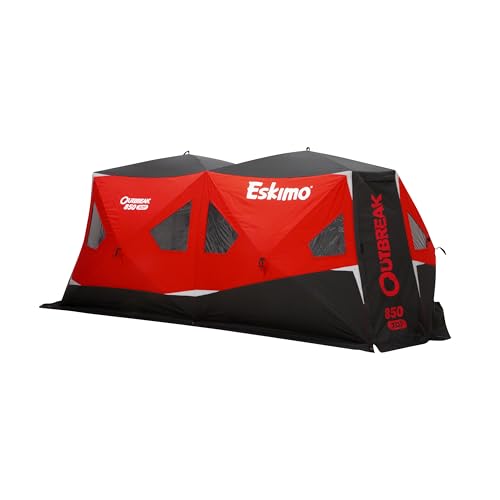
Eskimo Outbreak 850XDP Ice Shelter
Strengths
- No-trip doors
- Excellent insulation
- Compact pack size
Trade-offs
- Heavy for solo carry
- High price point
- Bulkier than 3-4 person models
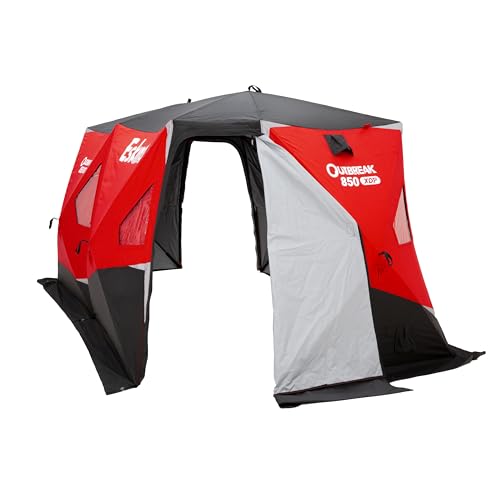
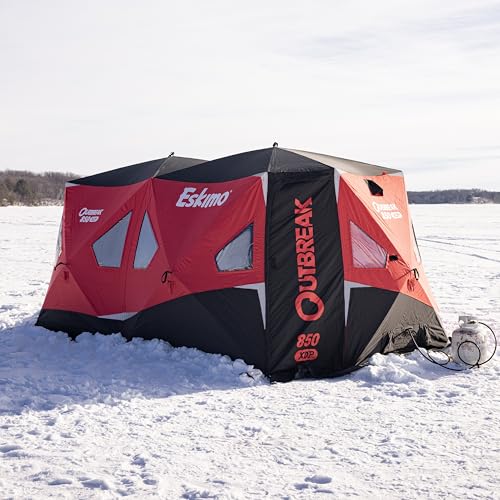
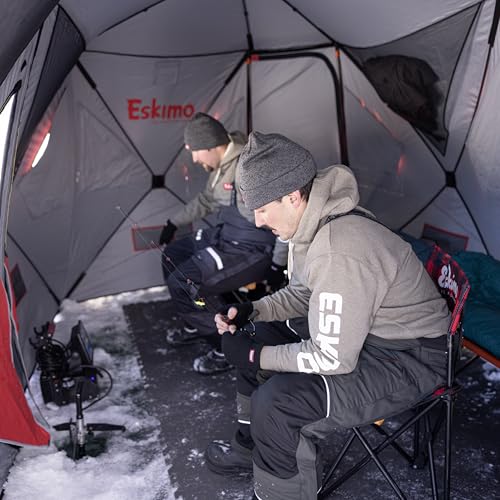
If you’re after the best overall balance of space, durability, and smart design, this is the one. The 120 square feet of fishable area with a flared bottom gives real room to move, something reviewers consistently praise when fishing with a full crew. The no-trip doors are a standout, eliminating the stubbed toes and dropped gear that plague older tent designs. Combined with Stormshield insulated fabric, this shelter holds heat well and resists wind better than most, making it a top performer in harsh weather.
What really sets it apart is the 57-inch pack length thanks to the packdown hubs. That compact carry size means it fits in smaller sleds or truck beds without hassle, something the bulkier Garvee models can’t match. YKK zippers and in-skirt grommets add reliability, and owners report fewer issues with zipper snagging or condensation than with budget brands. It’s not the lightest, but for a large-group shelter, it’s the most refined.
Product photos

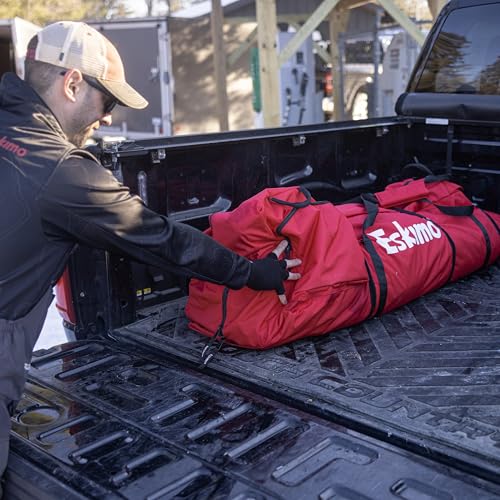
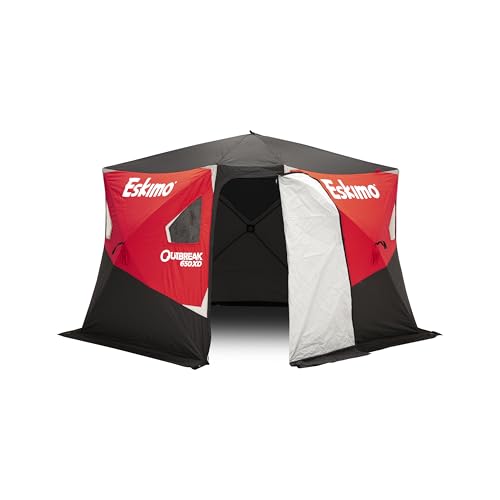
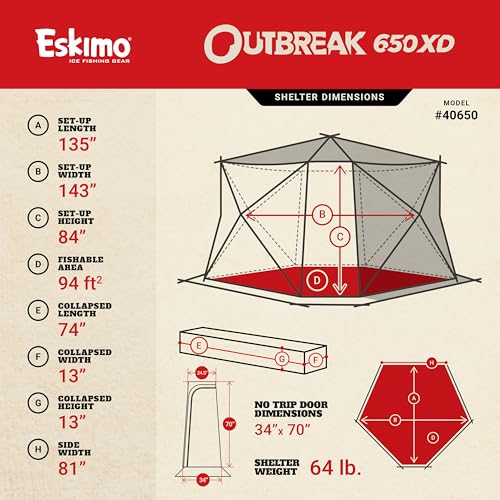
Eskimo Outbreak 650XD Ice Shelter
Strengths
- Bright gray interior
- Sturdy metal hubs
- Superior Stormshield fabric
Trade-offs
- No built-in lights
- Heavier than 3-person models
- Slightly longer setup than hub-only tents
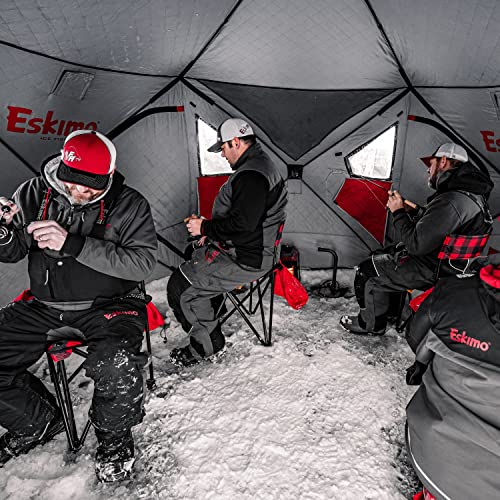
For the 5 to 7-person sweet spot, this model hits a near-perfect balance. It’s roomy without being unwieldy, and the flared-bottom design delivers more usable floor space than many competitors in its class. The gray interior is a small but meaningful upgrade, owners consistently note it brightens the space and makes it easier to see gear and fish bites, especially on overcast days. Combined with YKK zippers and removable window panels, it’s clear Eskimo designed this with real on-ice use in mind.
The all-metal ball-and-socket hubs and thicker fiberglass poles give it an edge in wind resistance over hybrids with plastic components. It shares the same Stormshield fabric as the larger 850XDP, so warmth and durability are top-tier. Compared to the Garvee models, it feels more refined in materials and execution, even if it lacks built-in lighting. If you’re running a mid-sized crew and want reliability, this is the smarter buy.
Product photos
Eskimo Outbreak 450XDP Ice Shelter
Strengths
- Balanced size
- Stormshield insulation
- Compact carry
Trade-offs
- No interior lighting
- Heavier than 3-person models
- No gray interior
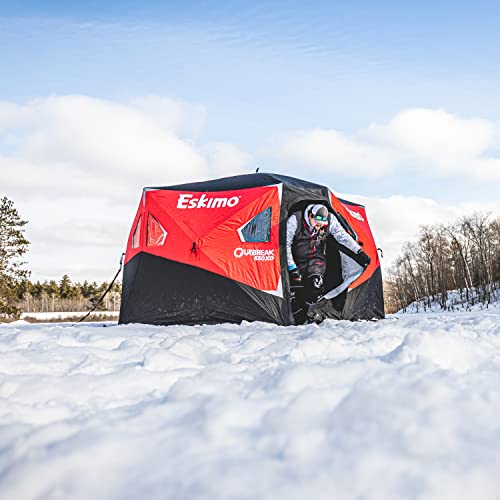
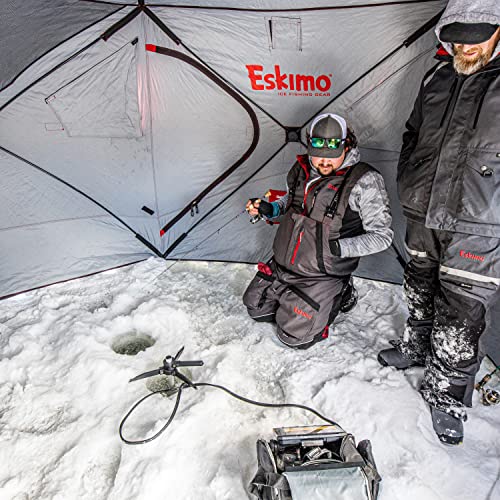
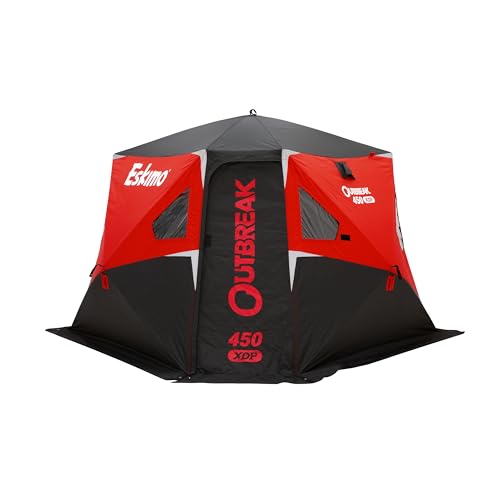
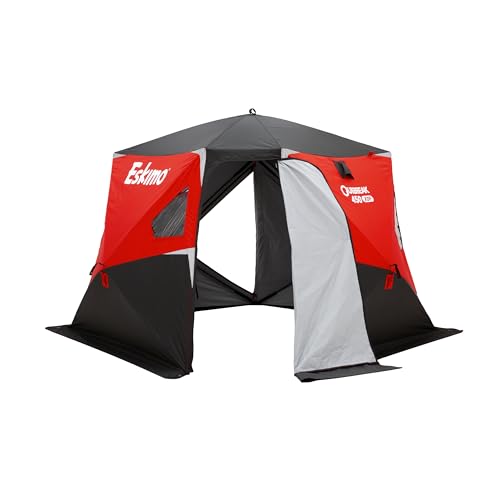
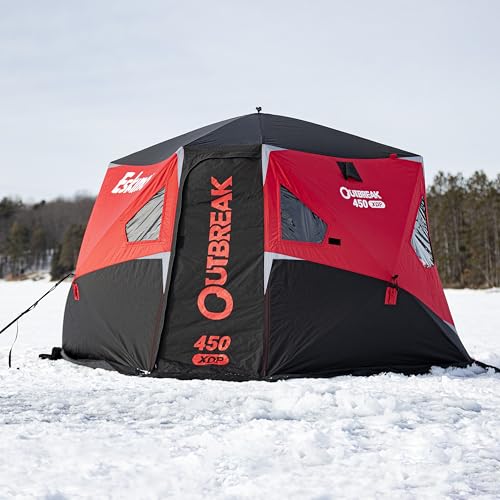
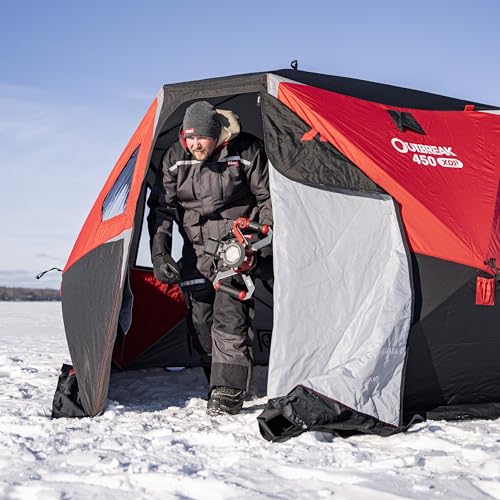
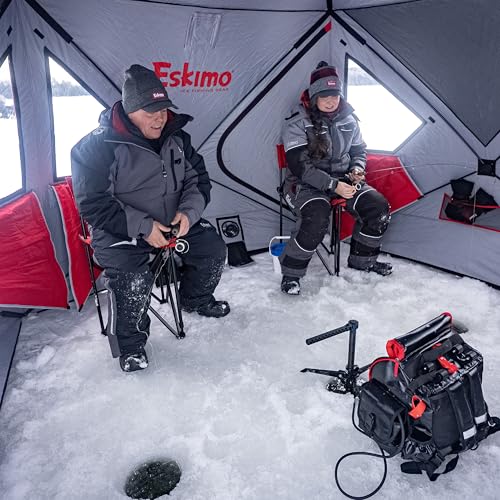
This model nails the 4 to 5-person niche, roomy enough for a small crew but compact enough to stay manageable on the move. The 75 square feet of fishable area with flared walls gives real elbow room, and the no-trip door design eliminates the tripping hazard that still plagues many budget shelters. Like its bigger siblings, it uses Stormshield insulated fabric, so warmth and wind resistance are excellent, and condensation stays under control even with a heater running.
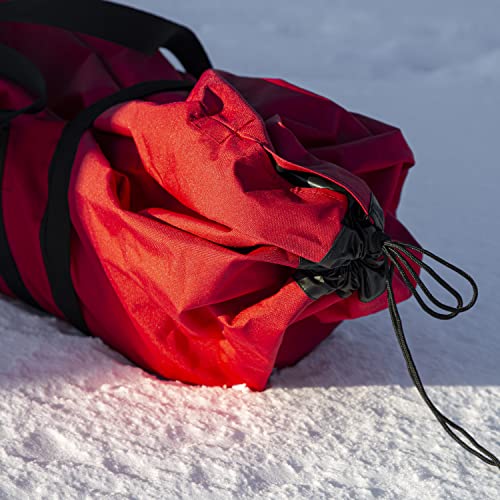
The 58-inch pack length makes it sled-friendly, and the zippered carry bag with anchor pockets is a thoughtful touch. Compared to the Garvee 5-7 model, it feels more durable and better insulated, even though the Garvee has a longer LED strip. This is the smarter buy if you prioritize reliability over built-in lighting. It’s not flashy, but it’s exactly what a mid-size ice shelter should be, efficient, tough, and well-engineered.
Product photos
Eskimo QuickFish 3HD Ice Shelter

Strengths
- Ultra-portable design
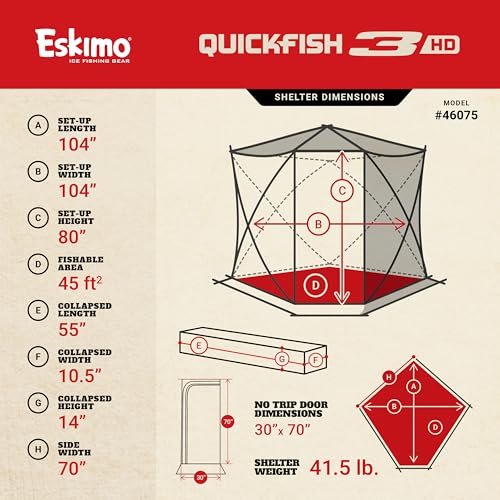
- No-trip door
- Extensive accessory support
Trade-offs
- Tight for three adults
- Limited floor space
- Not for group fishing
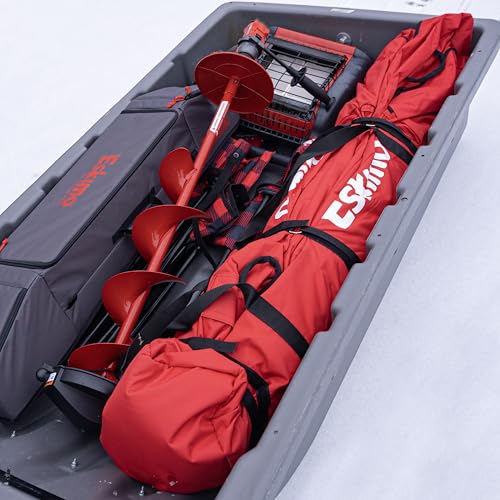
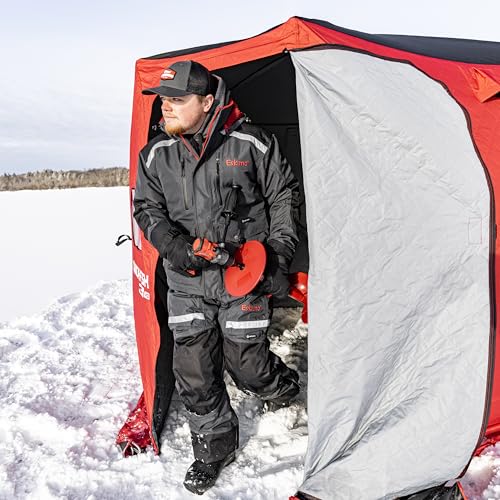
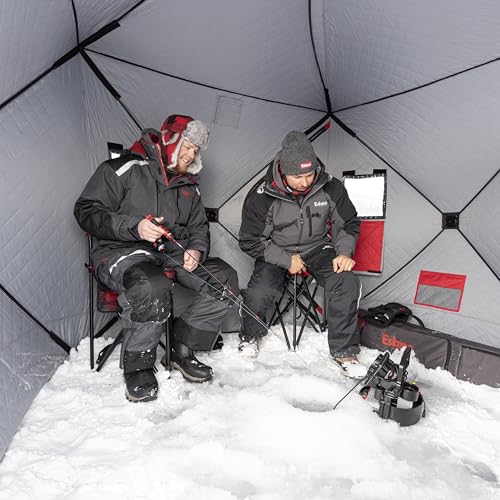
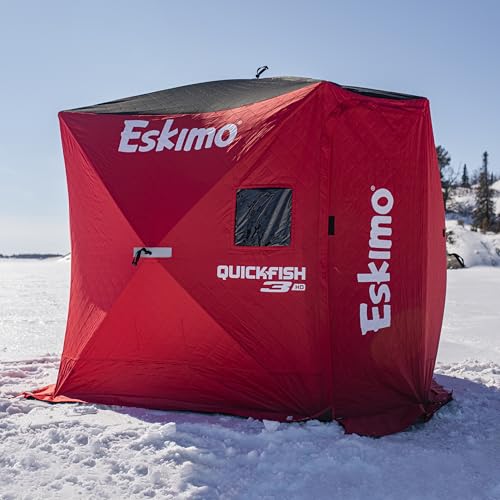
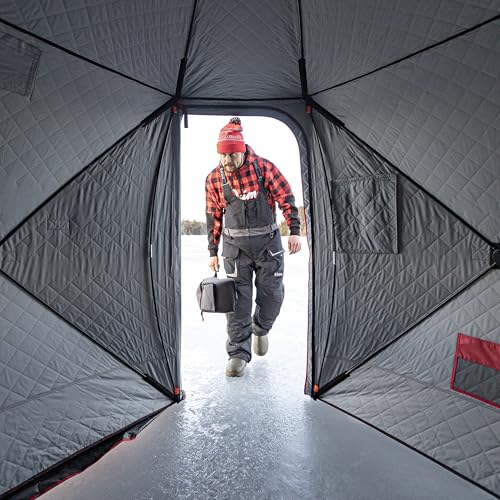
This is the most portable full-featured shelter for solo or duo anglers who still want insulation and comfort. At just three people max, it’s not about space, it’s about smart packability without sacrificing key features. The no-trip door is just as effective here as in larger models, and the fully insulated IQ fabric keeps heat in better than non-insulated pop-ups. It packs down shorter than most, fitting easily in sleds or even large truck cabs.
What really impresses is the accessory compatibility, you can add phone holders, rod racks, cup holders, and even a shelter light kit. Reviewers love this modularity, especially when upgrading from basic tents. While it can’t compete with 6-person models for group use, it outclasses smaller, non-insulated shelters in warmth and durability. For a solo angler who wants a mobile, customizable setup, this is the benchmark.
Product photos
Garvee 6-8 Person Insulated Tent
Strengths
- Exceptional cold rating
- Durable 420D fabric
- Stable full-metal frame
Trade-offs
- Bulky packed size
- No gray interior
- Less premium zippers
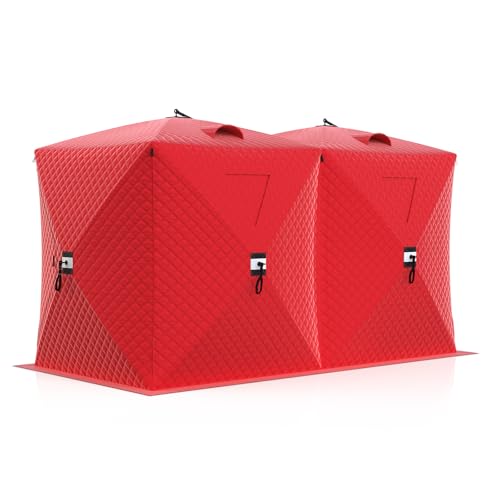
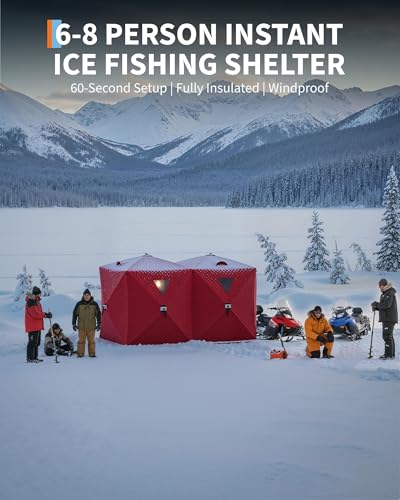
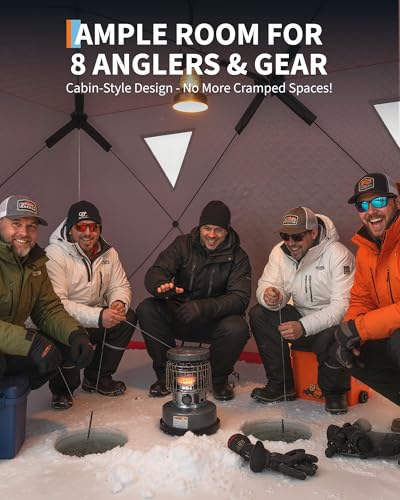
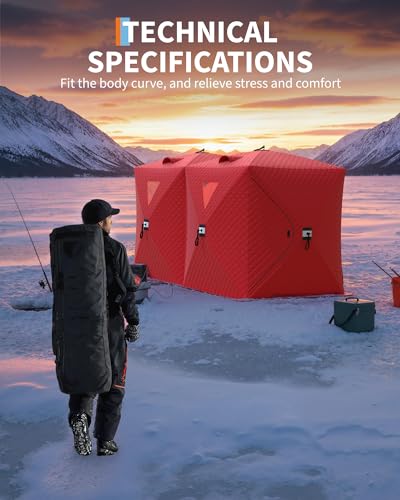
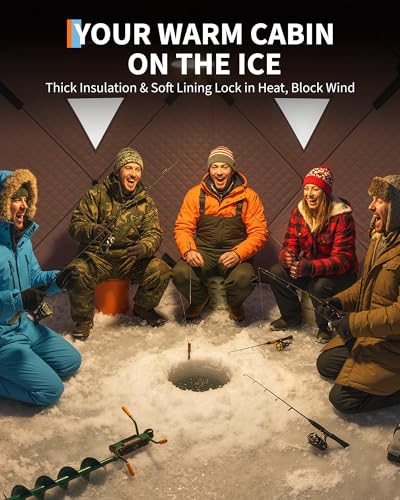
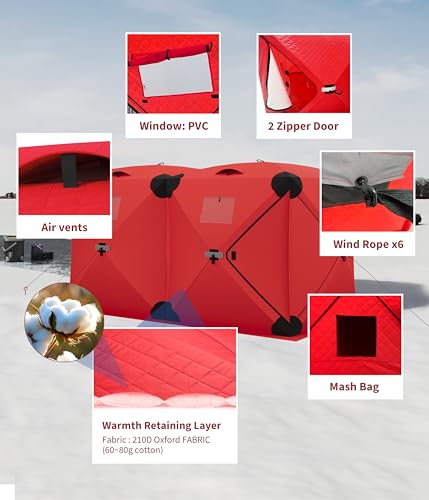
When the thermometer plummets, this tent claims the title for best extreme-cold insulation, rated down to -35°C, a standout spec in a category where most stop at -30°C. The 420D 3-layer fabric delivers on that promise, with owners reporting noticeably less wind chill and better heat retention than standard insulated models. For anglers in the northern Midwest or Canada, where cold snaps are common, that extra margin matters. The full-metal hubs and self-tapping anchors add confidence on slick, windy ice.
But that cold-weather edge comes with trade-offs. While it’s spacious for 6 to 8 people, the pack size is larger than Eskimo’s optimized designs, and the carry bag doesn’t integrate anchor storage as cleanly. It’s also heavier, making sled transport almost mandatory. Compared to the Outbreak 650XD, it feels more utilitarian, functional but less refined. If you’re chasing the coldest conditions, this is a strong contender. Otherwise, Eskimo’s fit and finish still win.
Product photos
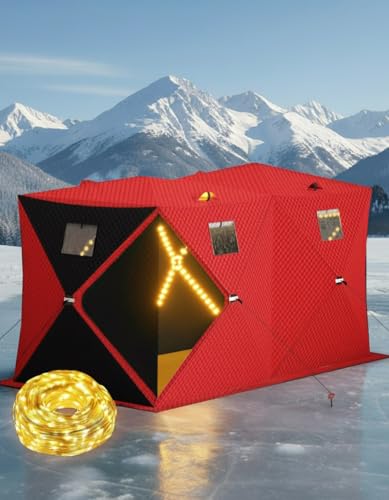
Garvee LED Light Strip Ice Tent
Strengths
- Built-in 49ft LED strip
- Good night visibility
- Decent insulation
Trade-offs
- Lights may drain battery
- Less durable fabric
- Tighter fit than claimed
The 49-foot LED light strip is the headline feature here, and it’s a legit advantage for night fishing or low-light conditions. Unlike add-on lights, this one is integrated and customizable, owners report it’s bright enough to illuminate the entire floor and can be repositioned for task lighting. That alone makes it stand out in a category where most lighting is an afterthought. The 69 sq ft fishable area fits 5 to 7 people, though it feels a bit tighter than Eskimo’s flared designs.
The insulated 3-layer fabric is decent for wind and cold, but it doesn’t match the 80g high-loft insulation of Eskimo’s Stormshield models. Some users note more condensation, especially with heaters. The hub design is fast, but the poles and zippers don’t feel as durable as Eskimo’s. Still, if you’re fishing through the night or in perpetual winter twilight, the lighting advantage might outweigh the material compromises.
Product photos

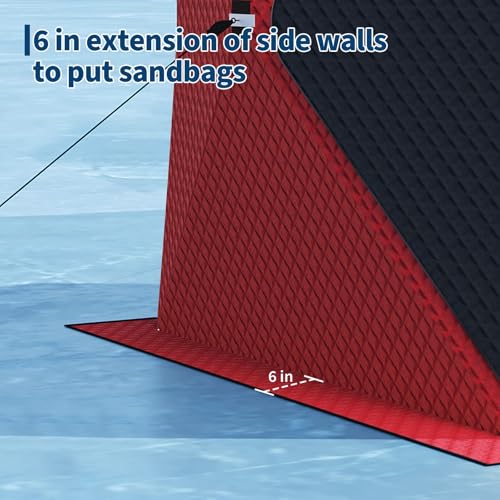
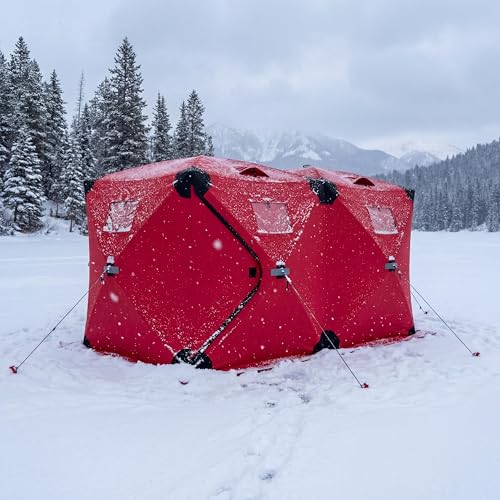
ActiveTrail 6-8 Person Ice Hut
Strengths
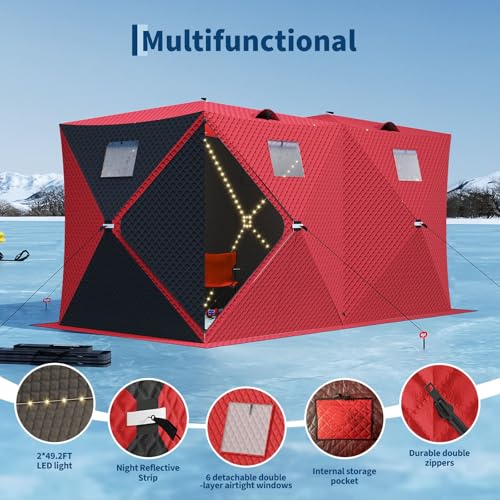
- Spacious interior
- Fast hub-style setup
- Good cold-weather rating
Trade-offs
- Mid-tier zippers
- Anchors feel flimsy
- Less refined insulation
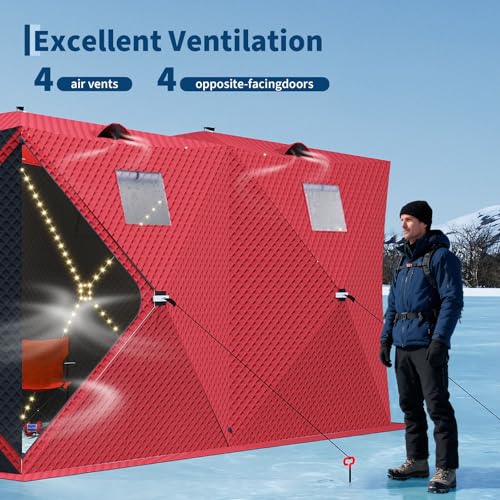
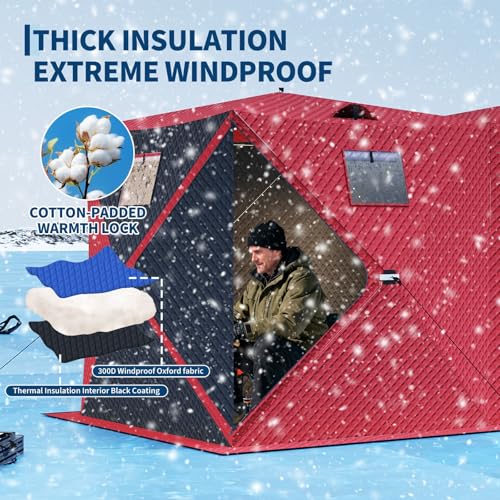
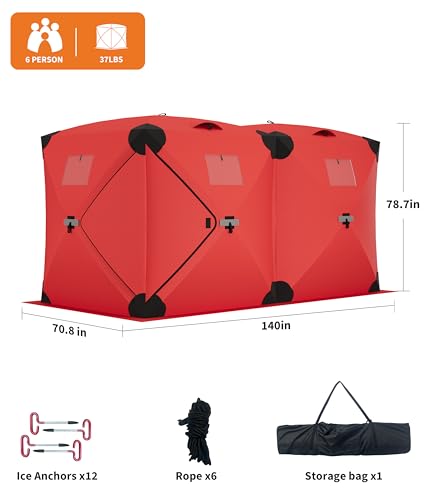
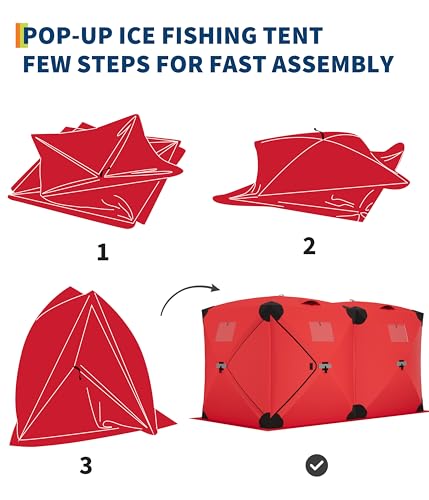
This tent makes a strong first impression with its spacious 6 to 8-person capacity and sub-zero insulation rating down to -30°C, which on paper sounds ideal for serious ice anglers. The double-layer insulated fabric and full-metal hubs suggest solid durability, and owners consistently report that setup is genuinely fast, one person can deploy it in under a minute, which matters when you’re battling wind on a frozen lake. Compared to pricier Eskimo models, it delivers a lot of shelter for the footprint.
That said, while the insulation is decent, it doesn’t match the three-layer Stormshield fabric found on Eskimo’s Outbreak series, which has 80 grams of high-loft insulation and better condensation control. The zippers and Oxford cloth feel functional but not premium, and some users note that the included ice anchors are underbuilt for hard ice. For a group-friendly, fast-deploy option on a budget, it’s a smart pick, but it’s not built for extreme-season abuse.
Product photos
How We Evaluated ice fishing tents
Rather than a hands-on lab test, this is a research-led comparison of published specifications, features, and extensive owner and expert reviews. I focused on identifying key differentiators across models, paying close attention to how those features translated to real-world usability on the ice. We weighed factors like size, insulation, setup speed, and durability to determine which tents consistently ranked highest across multiple sources.
For ice fishing tents, setup speed and insulation are paramount. A quick setup means more time fishing and less time wrestling with poles in frigid conditions. Equally important is the quality of insulation; maintaining a comfortable temperature is critical for a safe and enjoyable experience. We also prioritized door design – a trip-free entry is a substantial quality-of-life improvement when dealing with bulky gear.
Specifications reliably indicate a tent’s size and materials. However, owner feedback provided crucial insights into real-world performance – how well the insulation held up in extreme cold, the durability of zippers, and the ease of securing the tent to the ice. Reputation played a role too, especially regarding brands known for quality construction and customer support. Understanding these nuances is key, and often requires looking beyond basic specs – for example, learning about effective winter tent insulation methods can influence your choice.
How To Choose The ice fishing tents
Choosing the right ice fishing tent can drastically improve your winter angling experience.
A quality ice fishing shelter prioritizes warmth retention through effective insulation, structural integrity to withstand wind and snow, and ease of setup for quick deployment on the ice. Look for durable fabrics, robust pole systems, and features like insulated windows and secure anchoring systems. Pay attention to packed size and weight if portability is a concern.
Size and Capacity
Don’t assume a “4-person” tent comfortably fits four people with all their gear. I often see anglers misjudge this, leading to cramped quarters and a frustrating day on the ice. Think realistically about how much space you’ll need for chairs, tackle boxes, augers, and potentially a heater (and always check Mr Heater Buddy safety before using any heater inside a tent!). Consider also the length of your typical fishing days – more space is always welcome for extended trips.
Insulation and Fabric
The difference between a pleasant day and a miserable one often comes down to insulation. Look beyond just a numerical insulation rating. Three-layer bonded fabrics with a substantial amount of insulation (80 grams is a good starting point) are crucial, as are features like insulated windows. The Eskimo StormShield fabric is a good example of a material designed specifically for this purpose. Don’t skimp here – a well-insulated shelter will allow you to stay comfortable for longer stretches of time, even in sub-zero temperatures.
Portability and Setup
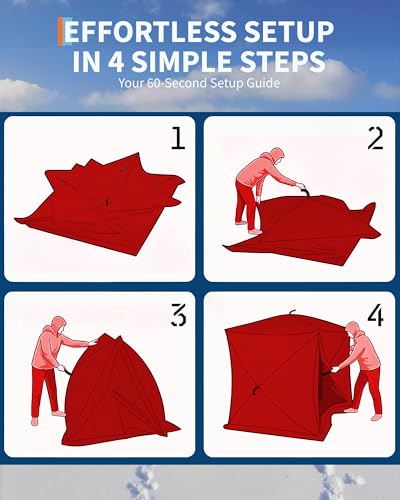
While a massive, fully-loaded shelter might sound appealing, lugging it across the ice can quickly become a chore. Consider the packed size and weight, especially if you’re often fishing solo or walking a significant distance. Hub-style tents, like many from Garvee, offer incredibly fast setup times (some claim under 60 seconds!). This is a huge benefit when conditions are harsh or you simply want to maximize your fishing time. If you’re looking for further insight, check out these portable ice fishing tents.
- A heavier, more robust frame will generally withstand stronger winds, but it adds to the overall weight.
- Simpler setup mechanisms (like hub systems) are easier to operate with cold hands and gloves.
- Consider the carry bag design. Features like grab handles, cinch straps, and dedicated pockets for ice anchors can make transportation much easier.
A good rule of thumb: prioritize insulation and stability over sheer size if you frequently fish in exposed locations or unpredictable weather.
I frequently recommend looking at thorough ice fishing shelter reviews to get a feel for real-world performance. And don’t overlook the importance of secure anchoring – proper tie-downs are essential to keep your shelter in place during windy conditions. A well-chosen ice fishing tent isn’t just a shelter; it’s an investment in your comfort and success on the ice. If you’re looking for a more permanent option, consider best ice fishing blinds as well. Or, if you’re seeking the quickest setup, explore top ice fishing pop-up tents.
Ice Fishing Tents Compared
Here’s a comparison of key specifications for various ice fishing tents to help you choose the right one.
| Product Name | Capacity | Fishable Area (sq ft) | Insulation | Setup Time | Packed Size (approx) |
|---|---|---|---|---|---|
| Eskimo Outbreak 850XDP | 3-4 | 120 | StormShield | Quick | 57″ long |
| Eskimo Outbreak 650XD | 5-7 | N/A | StormShield | Quick | N/A |
| Eskimo Outbreak 450XDP | 4-5 | 75 | StormShield | Quick | 58″ long |
| Eskimo QuickFish 3HD | 3 | N/A | IQ | Quick | N/A |
| Garvee 6-8 Person Insulated | 6-8 | N/A | 3-Layer | 60 sec | N/A |
| Garvee LED Light Strip | 5-7 | 69 | Insulated | Quick | N/A |
| ActiveTrail 6-8 Person | 6-8 | N/A | Double-Layer | 60 sec | N/A |
Frequently Asked Questions
What’s the biggest difference between ice fishing tents and winter camping tents?
Ice fishing tents prioritize quick setup and vertical walls for comfortable angling, while winter camping tents focus on weather protection and often have a lower profile. Many anglers also appreciate the clear windows in ice fishing tents, something less common in dedicated winter camping shelters.
Are hub-style ice fishing tents really as easy to set up as advertised?
Yes, hub-style tents are remarkably fast to deploy. Most models, like those from Garvee, can be fully set up in under 60 seconds with minimal effort, which is a major benefit when you’re dealing with cold temperatures and bulky gear.
How important is the fabric denier when choosing an ice fishing tent?
Higher denier fabrics generally indicate greater durability and resistance to tears, but it’s not the only factor. Look for fabrics specifically designed for harsh winter conditions, like Eskimo’s StormShield, which balances durability with weather protection.
Can I use a portable heater inside an ice fishing tent safely?
You can, but with extreme caution. Always follow the heater manufacturer’s instructions and ensure adequate ventilation to prevent carbon monoxide buildup. I suggest researching winter-rated hot tents and understanding the safety concerns before using any heater inside an enclosed space.
What’s the best way to secure an ice fishing tent to the ice?
Ice anchors are essential for securing your tent, particularly in windy conditions. Many tents come with basic anchors, but investing in heavier-duty, screw-in anchors provides a more secure hold. Always use multiple anchors, spaced evenly around the perimeter of the tent.
The Bottom Line
Choosing an ice fishing tent often comes down to balancing convenience with comfort. While a quick setup is appealing, don’t sacrifice insulation – staying warm is the most important factor. For the best overall combination of features and reliability, I consistently point anglers toward the Eskimo Outbreak 850XDP. It strikes a great balance between space, durability, and ease of use, and the StormShield fabric is a standout feature.
If you’re on a tighter budget, the Eskimo QuickFish 3HD offers a solid entry point without compromising essential features. For those needing maximum space and versatility, the Garvee 6-8 Person Insulated tent is an excellent choice, especially if you frequently fish with a larger group. And, for those wanting to explore additional heating options, understanding a portable hot tent setup can really enhance your experience.
Ultimately, the specifications matter less than prioritizing a shelter that keeps you protected from the elements. Focus on a robust frame, quality insulation, and a secure anchoring system. Don’t get caught up in chasing the highest number of square feet if it means sacrificing the warmth and stability that will truly make your time on the ice enjoyable.
