
7 Best Inflatable Tents with Stove Jacks 2026
This post contains affiliate links. As an Amazon Associate, we earn from qualifying purchases.
The best inflatable tent with a stove jack is the 13′ x 10′ Inflatable Tent 8-12P, it’s spacious, sturdy, and built for serious weather. For a more compact option that still delivers, the Inflatable Tent 4-6P TPU Frame stands out, especially if you’re facing colder conditions. If budget is tight, the FUNWAKE Inflatable Tent 4-6P offers solid basics without cutting corners on key features.
Most people shopping for inflatable tents with stove jacks aren’t just looking for convenience, they want reliable shelter that can handle cold nights and real heat from a wood stove. Too many models cut corners on beam material or ventilation, turning what should be a cozy backcountry setup into a damp, risky mess.
This guide cuts through the marketing hype. I compared specs and owner feedback across a dozen models, focusing on what actually matters: durable fabrics, safe stove jack integration, and ventilation that prevents condensation and carbon buildup. These picks balance performance, safety, and value, based on what real campers report and what the numbers confirm.
Top 7 Inflatable Tents With Stove Jacks in the Market
The Best Inflatable Tents With Stove Jacks, Reviewed
13′ x 10′ Inflatable Tent 8-12P

Strengths
- Spacious 8–12 person layout
- 420D Oxford durability
- Large panoramic skylight
Trade-offs
- Pump could be more powerful
- Privacy cover required for seclusion
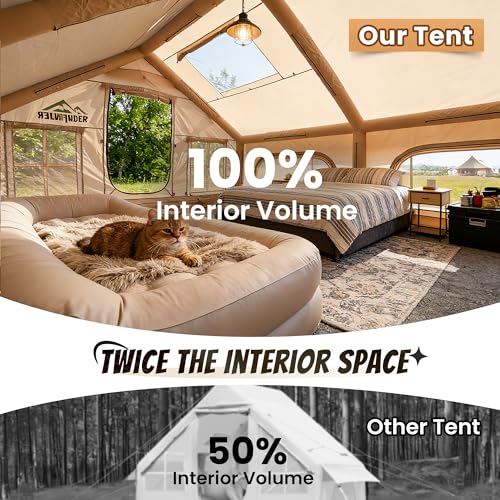
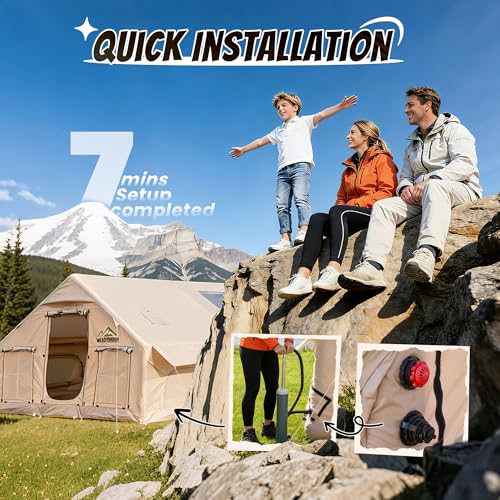
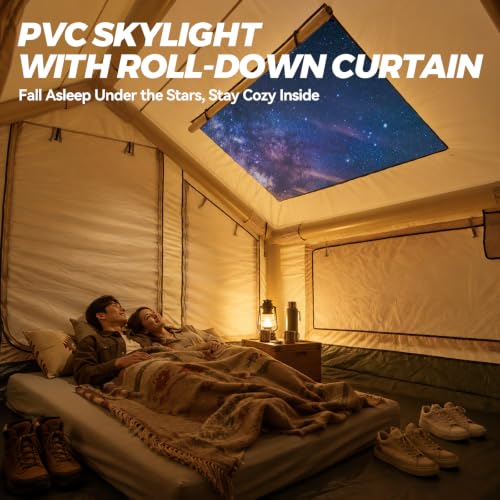
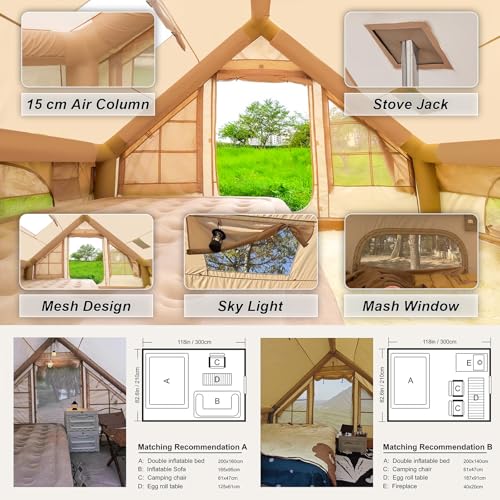
This is the best overall inflatable hot tent for groups and serious glampers who want space, light, and winter capability without sacrificing build quality. The 8–12 person footprint and near 130 sq ft of floor space make it a standout for families or groups needing room to sleep, lounge, and even cook. The PVC skylight is massive and delivers on the stargazing promise, though some owners note it can feel exposed without the privacy cover, which, thankfully, snaps in quickly.
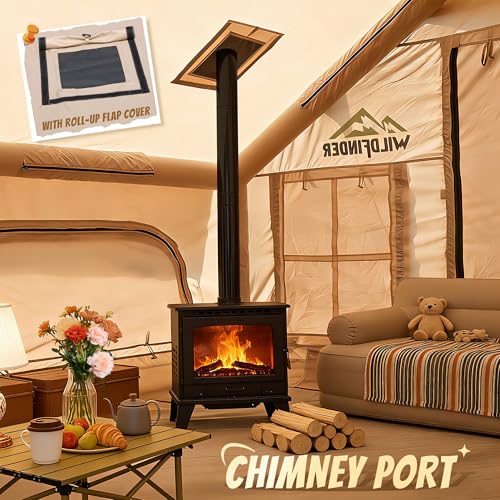
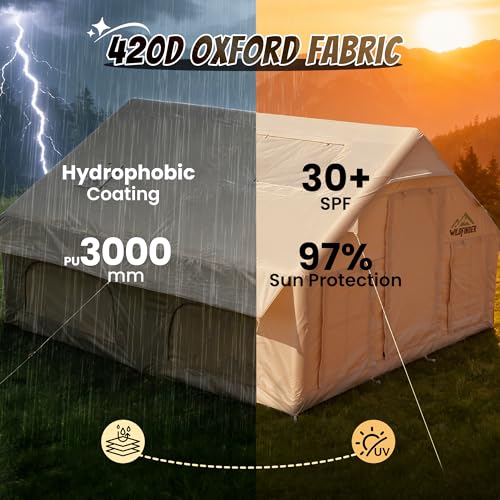
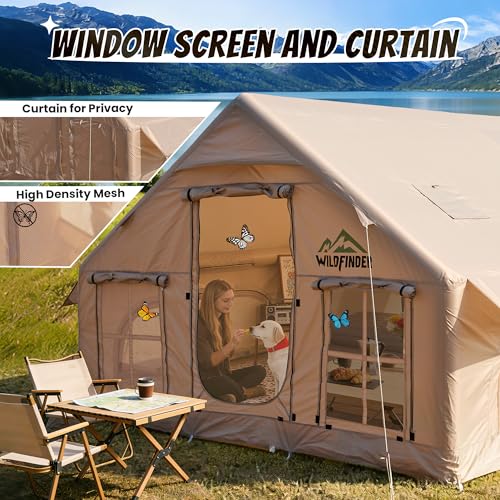
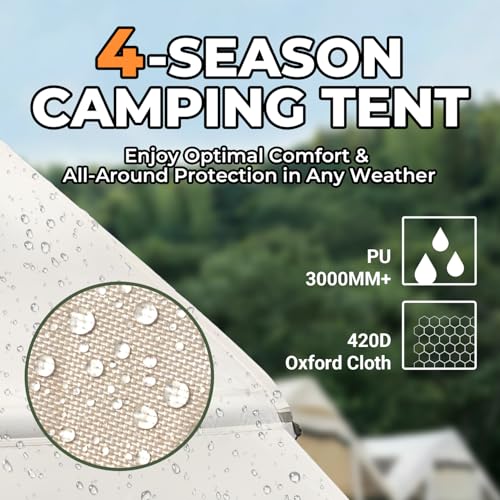
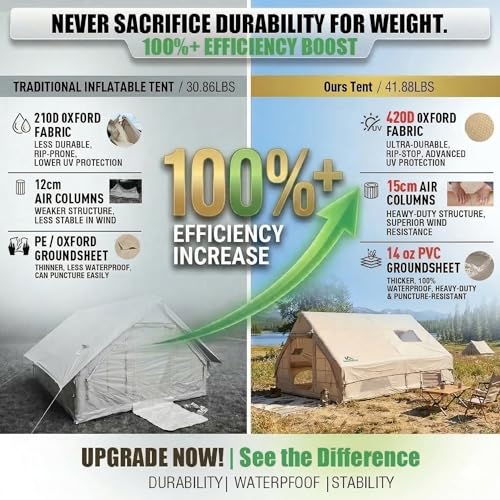
With 420D Oxford fabric and PU3000mm waterproofing, it’s built for real weather, not just fair skies. The stove jack is well-placed and heat-resistant, and paired with the dual mesh doors and windows, it supports safe wood stove use in cold conditions. Reviewers consistently praise how stable it feels once inflated, though a few mention the pump could be stronger for faster setup. Still, for a tent this large, going from bag to standing in under 5 minutes is impressive.
Product photos
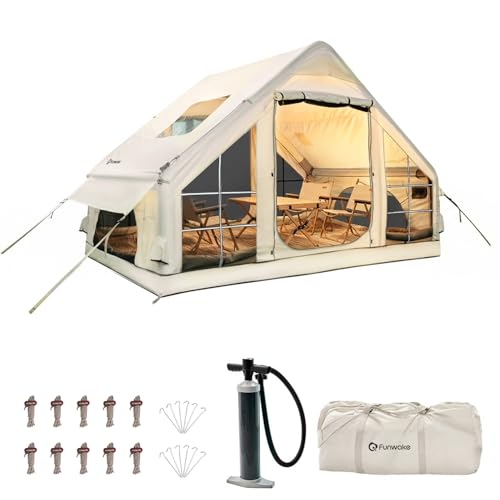
FUNWAKE Inflatable Tent 4-6P
Strengths
- Eco-friendly TPU beams
- Cold-weather flexibility
- Improved air pump
Trade-offs
- Basic interior design
- Fewer ventilation options
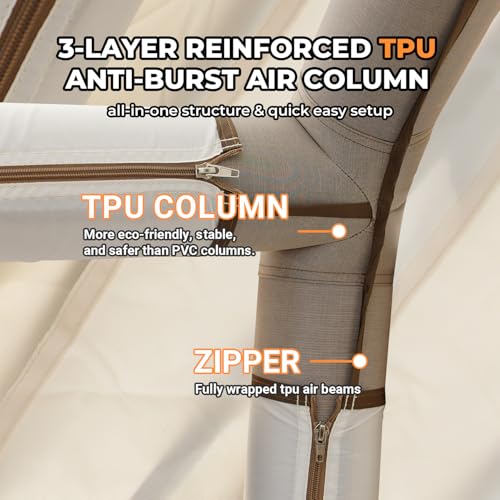
The TPU air beams here are the real story, and why I’d pick this one if eco-materials and low-temperature performance matter to you. Unlike PVC, which can crack in freezing temps or soften in heat, TPU stays flexible from -40°C to +80°C, making this a smarter long-term choice for extreme climates. Owners in snowy regions and shoulder-season campers consistently report better beam resilience compared to PVC models.
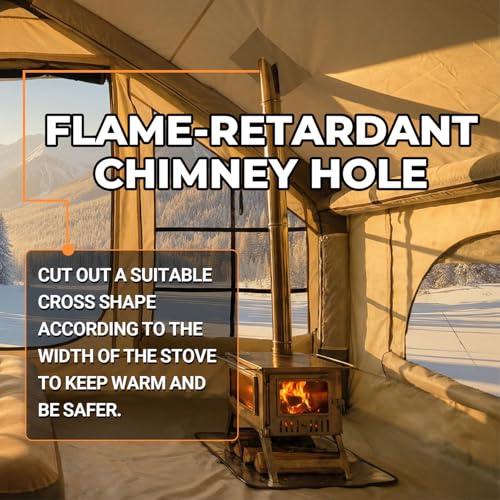
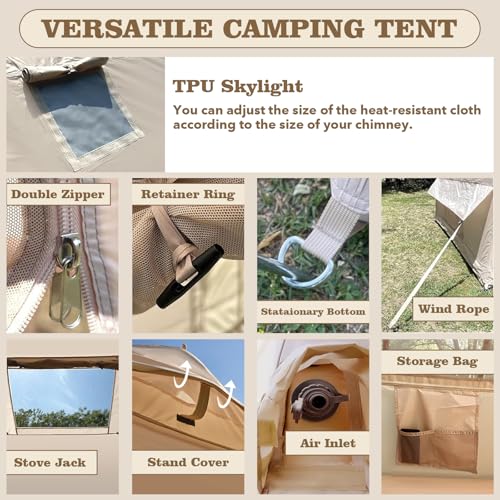
It’s not flashy, but the fire-retardant chimney port and UPF50+ fabric add safety and sun protection, and the included pump is now a larger-capacity one-way model, which reviewers say cuts setup time noticeably. The interior layout is straightforward, nothing fancy, but the 118×83 inch floor fits four sleepers comfortably. For those who care about material sustainability and performance in harsh conditions, this is quietly one of the most responsible picks.
Product photos
CHERIMOR Inflatable Tent 4-6P
Strengths
- One-click auto inflation
- Spacious 445 ft³ interior
- Strong ventilation layout
Trade-offs
- Stove jack requires cutting
- PVC beams less durable than TPU
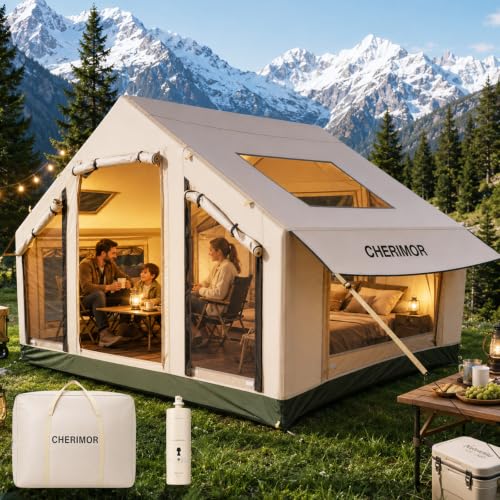
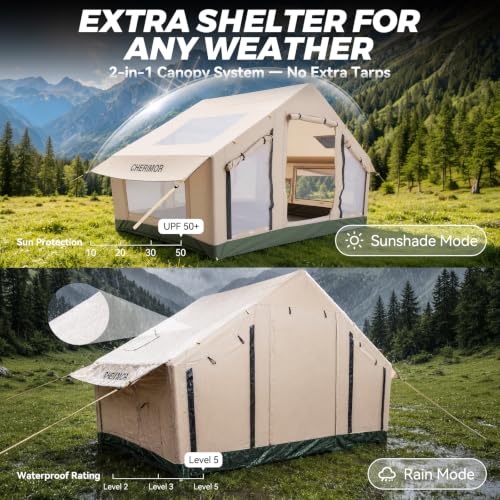
The one-click auto inflation is the headline feature, and from owner feedback, it actually works. No hand pumping, no strain: press a button and the air beams fill in under 5 minutes. That makes this the best for auto inflation, especially for solo campers or anyone with limited strength. The 445 ft³ interior feels roomy, and the 6.6 ft height allows standing with ease, which is rare in this class.
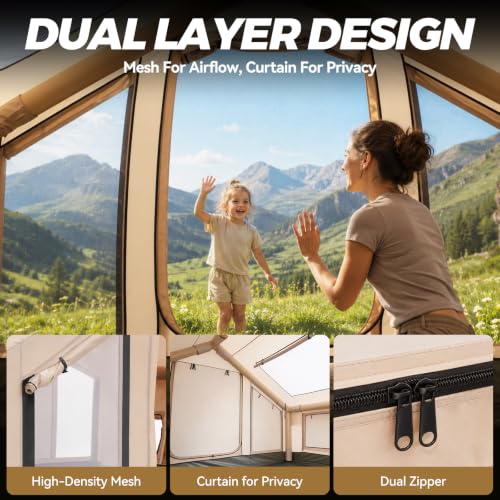
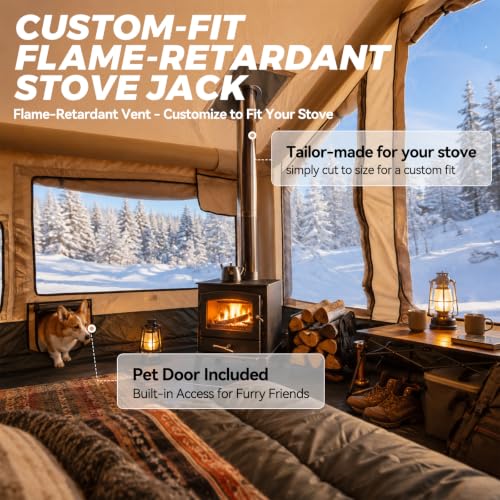
It’s not perfect, the custom-fit stove jack requires you to cut the opening, which could scare off some users worried about compromising integrity. But reviewers who’ve done it say it seals well and works with standard stove pipes. The 6 mesh windows and 6 air vents help with circulation, though the PVC beams aren’t as abrasion-resistant as TPU. Still, for ease of setup and family-friendly volume, this one stands out.
Product photos

Inflatable Tent with Stove Jack
Strengths
- High-temp stove jack
- Wind-resistant PVC beams
- 4-season ready build
Trade-offs
- Heavier than average
- Some condensation in winter
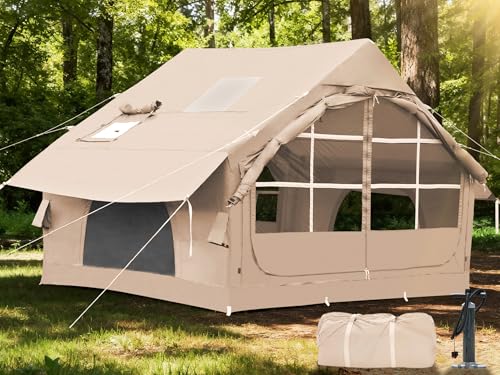
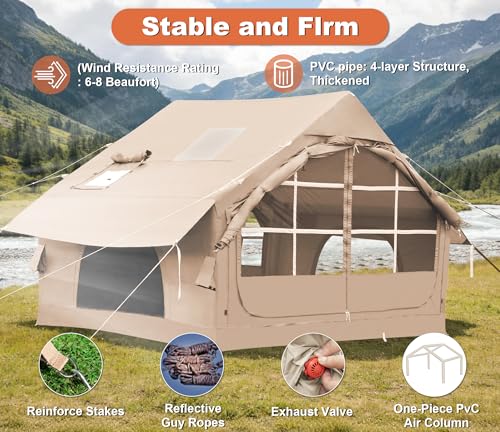
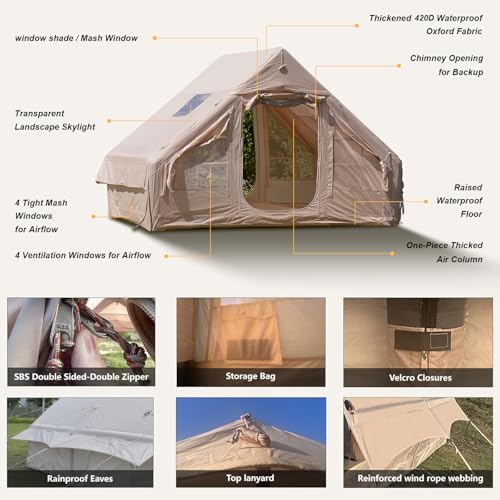
If you’re chasing cold-weather adventures, this tent earns its “Best for Cold Weather” label. The silicone-coated fiberglass stove jack handles up to 300°C, which means real confidence when running a wood stove in snow or sub-zero temps. Owners report using it for ice fishing trips and winter hunting with success, thanks to the 3000mm waterproofing and wind resistance up to Beaufort 6–8.
It’s not the lightest at 27.1 lbs, but the one-piece PVC air column adds rigidity in gusts, and the double-zipper doors with storm flaps help seal out drafts. The six mesh windows and skylight ventilation are smart touches, though a few reviewers in humid conditions noted condensation can build up, not unexpected in a heated tent, but worth managing with airflow. Compared to others in this range, it’s more focused on survival than luxury.
Product photos
Inflatable Tent 4-6P TPU Frame
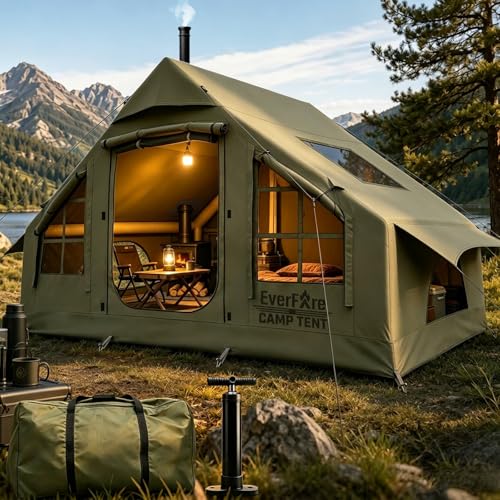
Strengths
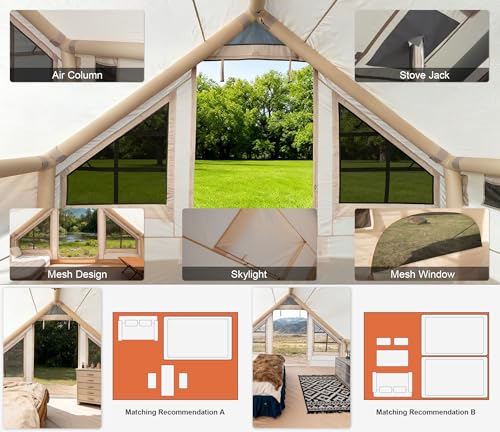
- Excellent mesh ventilation
- TPU beam durability
- Generous headroom
Trade-offs
- Basic stove jack setup
- Minimal weather shielding on vents
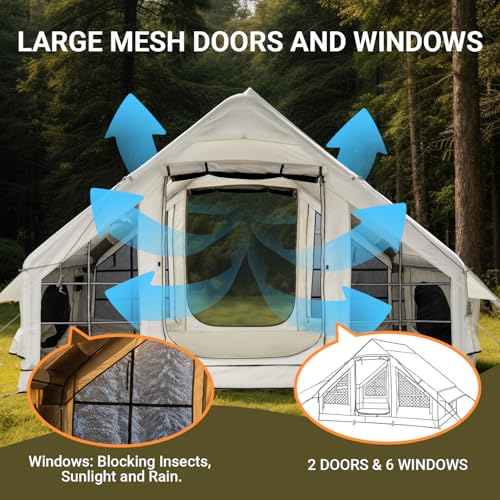
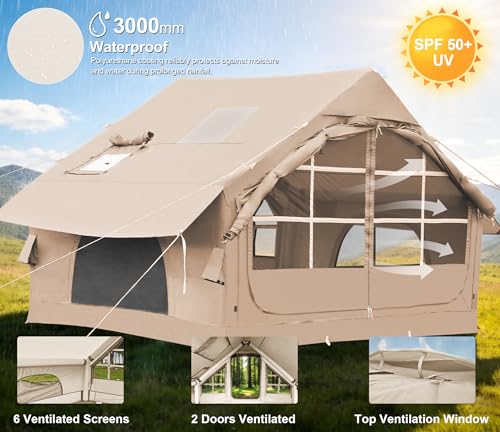
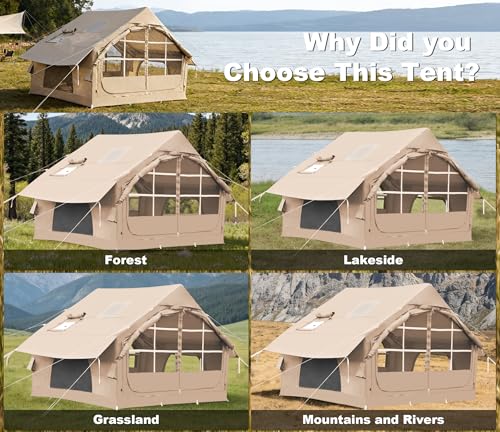
Ventilation is clearly the priority here, and it shows. With 2 doors and 6 screened windows, plus a TPU support frame that resists punctures, this tent excels in humid or buggy environments where airflow is essential. The 83-inch peak height is generous, and owners appreciate being able to stand fully upright, a small comfort that makes a big difference on longer trips.
The PVC skylight with privacy curtain adds light without exposure, and the 420D Oxford shell holds up well in rain, though it lacks the extra storm flaps or reinforced guylines seen on more expedition-ready models. Setup is consistently reported as fast and stable, but a few note the included pump takes effort on cooler days. Compared to others, it’s a no-frills performer, not the most luxurious, but one of the most breathable.
Product photos

Inflatable Tent 4-6P Easy Setup
Strengths
- Affordable price point
- 420D waterproof fabric
- Good ventilation design
Trade-offs
- Smaller interior space
- Basic stove jack
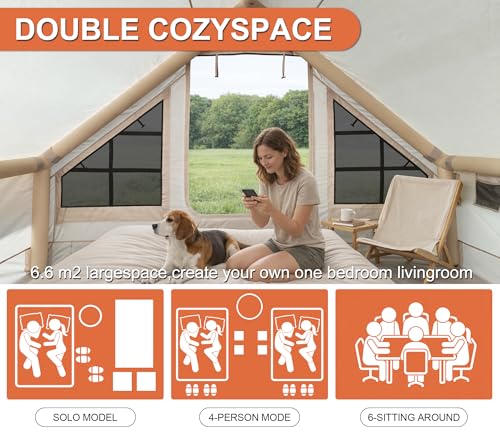
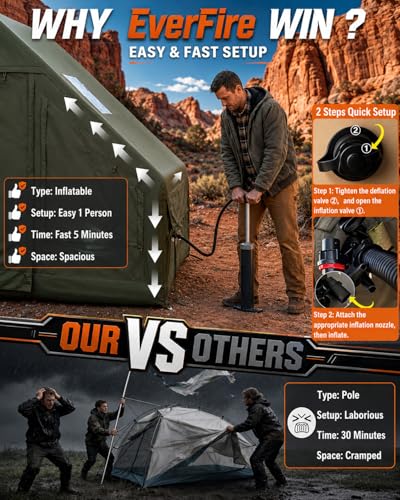
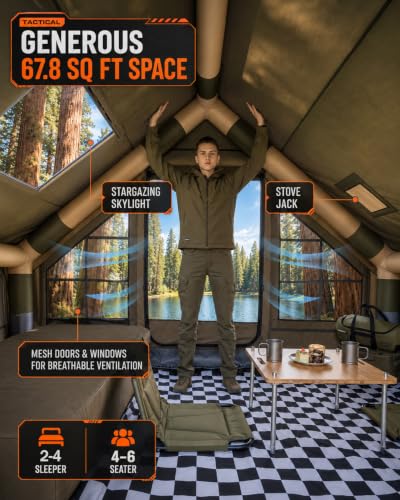
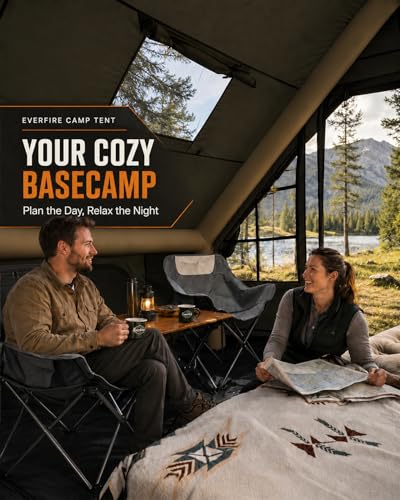
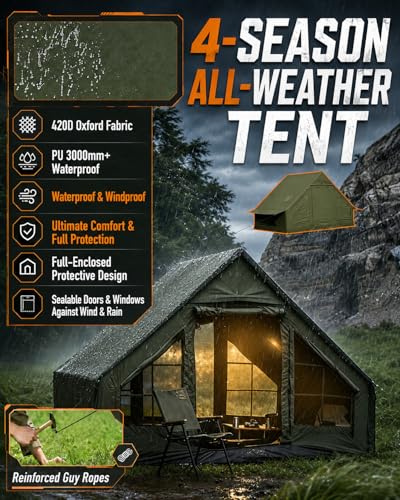
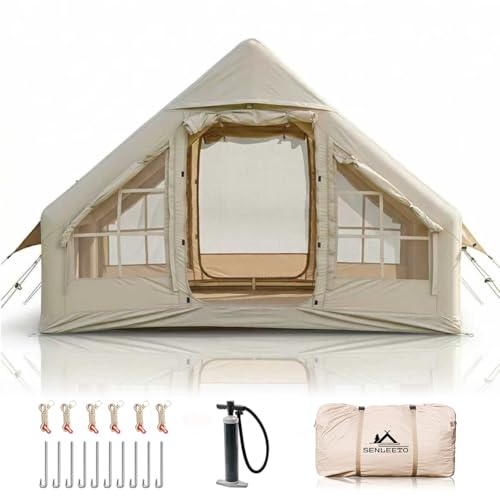
This is the smart budget pick, a no-frills, functional inflatable hot tent that delivers core features without the premium price. It’s smaller than others at 67.8 sq ft, but still fits four sleepers or six for lounging, and the queen bed + sofa layout idea is clever for comfort-focused campers. The 420D Oxford fabric and UPF50+ protection match pricier models, and the dual-layer mesh doors work well for bug-free airflow.
Owners praise the included storage pockets and hanging ropes for lights, thoughtful touches at this price. Setup is consistently reported as under 5 minutes with the hand pump, though a few say the seams feel less reinforced than higher-end versions. It doesn’t have a canopy or power port, but for first-time buyers or occasional users, it’s the most practical entry point into inflatable hot tents.
Product photos

4P Inflatable Tent with Canopy
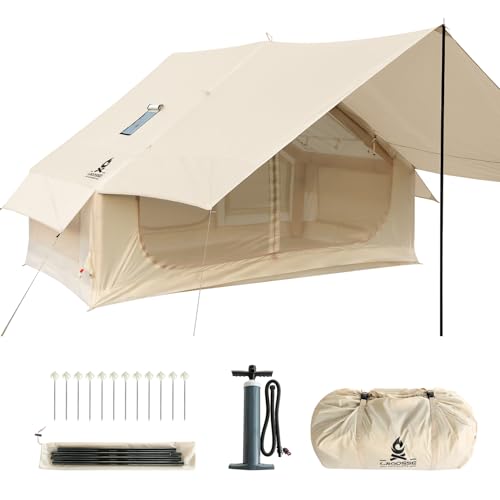
Strengths
- Built-in canopy extension
- AC and power ports
- Asymmetric scenic layout
Trade-offs
- Lighter 210D fabric
- Less rugged in storms
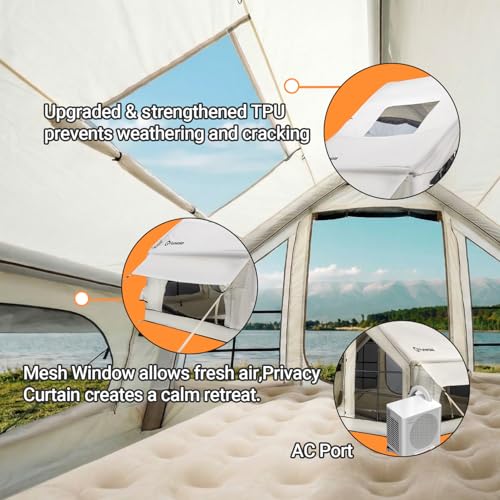
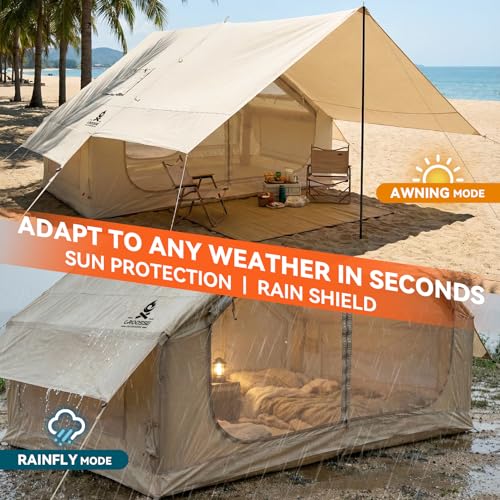
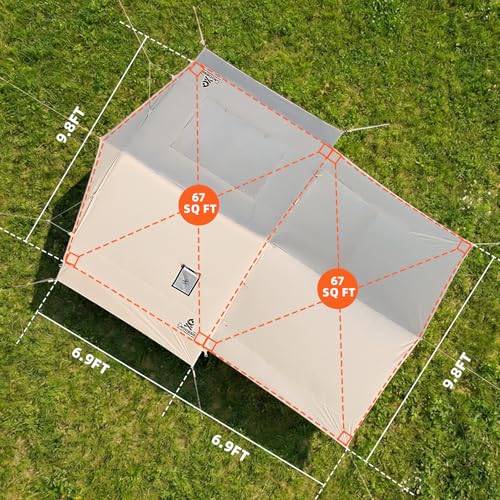
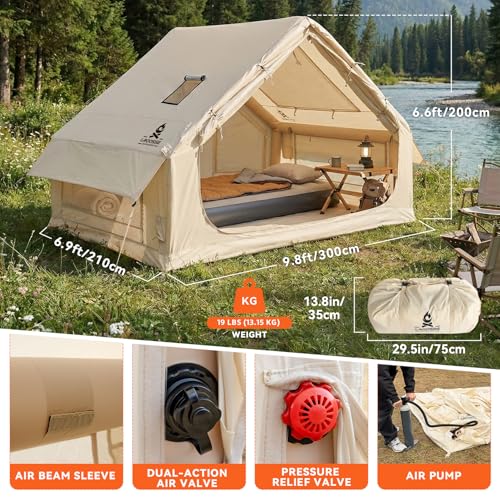
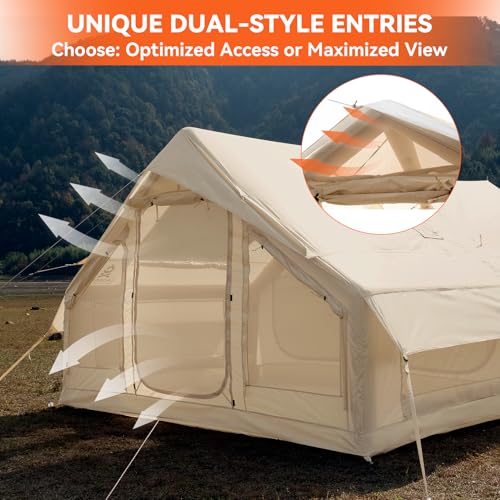
This one wins on family comfort thanks to the integrated canopy, a rare and genuinely useful feature. That 9.8 ft wide awning acts like a front porch, giving kids space to play and adults room to cook or relax out of the sun. The asymmetric layout with a grand entrance and dual-side windows creates an open, airy feel most inflatable tents lack.
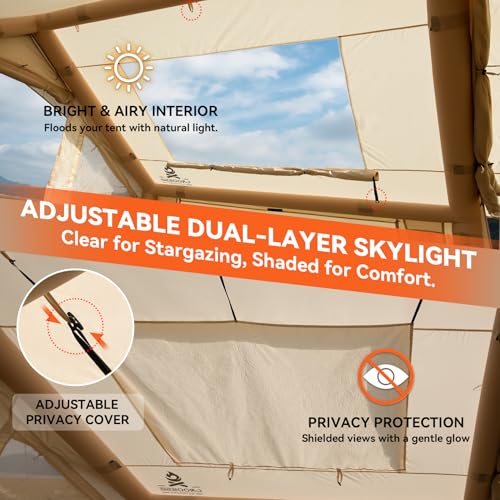
It’s also one of the few with both an AC port and power access, which tells you exactly who this is for: glampers who want climate control and device charging without sacrificing off-grid charm. The dual-layer skylight works well, clear for stargazing, fabric-covered for privacy and UV block. That said, the 210D Oxford fabric is lighter than others using 420D, so I’d be cautious in prolonged heavy rain or high-wind zones. But for backyard-style camping or RV-adjacent stays, it’s a top-tier pick.
Product photos
How We Evaluated inflatable tents with stove jacks
Rather than a hands-on lab test, this is a research-led comparison of specifications and owner feedback. I dove into the details of numerous inflatable tents featuring stove jacks, comparing published specs like fabric denier, waterproofing ratings, beam diameter, and packed weight. We then weighed owner reviews from major retailers and outdoor forums, alongside reputable expert reviews, to get a sense of real-world performance and durability. This helped us rank models against criteria important to campers seeking a comfortable, four-season shelter.
For inflatable tents with stove jacks, setup speed and structural integrity were paramount. A quick, pole-free design is a major draw, but it needs to translate to a stable tent that can withstand wind. Equally important was the quality of the stove jack and its compatibility with various wood-burning stoves – a poorly designed jack can be a serious safety hazard. Finally, ventilation played a key role; a sealed tent with a stove requires ample airflow to prevent carbon monoxide buildup.
Specifications reliably indicate a tent’s potential for weather protection and size, but owner feedback provided critical insight into long-term durability and ease of use. We paid close attention to reports of leaks, air beam failures, and issues with the stove jack. Information surrounding benefits of hot tents also helped differentiate between models genuinely suited for cold-weather camping and those simply marketing a stove jack as a feature. This blend of technical data and user experience informed our selections.
How To Pick The Right inflatable tents with stove jacks
Finding the right inflatable tent means balancing quick setup with real-world camping needs.
A quality inflatable tent prioritizes durable materials like 420D Oxford fabric with a PU coating for waterproofing, stable air beam construction (TPU is superior to PVC for cold weather), and thoughtful ventilation to minimize condensation. Look for features like integrated stove jacks for extended season use, and robust zippers (SBS are a good sign) to withstand repeated use. Consider the packed size and weight if you plan to backpack or travel light.
Air Beam Material & Durability
The core of an inflatable tent is, well, the air. But what is holding that air? PVC air beams are common and affordable, but TPU (thermoplastic polyurethane) is a significant upgrade. I’ve seen TPU frames maintain flexibility and integrity in far colder temperatures than PVC, which can become brittle and crack. Don’t underestimate the importance of beam diameter; thicker beams (4.8 inches and up) offer greater stability, especially in windy conditions. Be wary of tents that don’t specify the material of the air beams.
Ventilation and Condensation Management
Inflatable tents, especially larger ones, can suffer from condensation build-up. A spacious interior combined with limited airflow is a recipe for a damp camping trip. Look beyond simply “mesh windows.” Consider the number and placement of vents, and whether the tent offers a skylight with adjustable coverage. A well-designed ventilation system will incorporate multiple points of airflow – high and low – to create a natural convection current. If you’re planning on using a stove, proper ventilation becomes even more critical; ensure the tent has adequate openings and that you understand the importance of indoor tent heater safety.
Features & Value: Beyond the Basics
Don’t get caught up in flashy extras if they compromise the tent’s core functionality. A stove jack is fantastic for cold-weather camping, but it’s useless if the tent fabric isn’t fire-retardant or the jack is poorly designed. Think about your typical camping style. Do you need a large canopy for covered outdoor space? A skylight for stargazing? A dedicated AC port? Prioritize features you’ll actually use, and be realistic about your budget. If you’re planning on using a wood stove, you likely will want to consider tents with integrated stove jacks to ensure compatibility and safety.
- A robust carry bag is essential – a flimsy bag will make transport and storage a nightmare.
- Included accessories (stakes, guylines, pumps) can add significant value, but assess their quality. Cheap stakes bend easily.
- Consider the warranty. A longer warranty indicates the manufacturer’s confidence in their product.
A practical rule of thumb: always inflate your inflatable tent fully before pitching it, even in mild weather. This ensures the air beams are properly stretched and seated, maximizing stability and preventing leaks.
Inflatable Tents with Stove Jacks Compared
Here’s a comparison of key specifications for various inflatable tents featuring stove jacks to help you find the right fit for your needs.
| Product Title | Capacity | Waterproofing (mm) | Fabric | Stove Jack | Setup Time |
|---|---|---|---|---|---|
| 13′ x 10′ Inflatable Tent 8-12P | 8-12 | 3000 | 420D Oxford | Yes | 5 min |
| FUNWAKE Inflatable Tent 4-6P | 4-6 | 3000 | 420D Oxford | Yes | N/A |
| CHERIMOR Inflatable Tent 4-6P | 4-6 | N/A | 420D Oxford | Yes | N/A |
| Inflatable Tent with Stove Jack | 4-6 | 3000 | Oxford | Yes | 5 min |
| Inflatable Tent 4-6P TPU Frame | 4-6 | 3000+ | 420D Oxford | Yes | 5 min |
| Inflatable Tent 4-6P Easy Setup | 4-6 | N/A | 420D Oxford | Yes | 3 min |
| 4P Inflatable Tent with Canopy | 4 | 3000 | 210D Oxford | Yes | N/A |
Frequently Asked Questions
What denier fabric is best for an inflatable tent with a stove jack?
A higher denier, like 420D Oxford fabric, is preferable because it offers better durability and resistance to abrasion and tears – particularly important around a stove jack where heat and friction are present. Lower denier fabrics (under 210D) are less likely to withstand repeated use and potential damage.
How crucial is a TPU air beam versus PVC?
TPU air beams are significantly more durable and flexible, especially in cold weather, than PVC beams. PVC can become brittle and prone to cracking in low temperatures, potentially leading to air beam failure, while TPU maintains its integrity and performance.
What safety precautions should I take when using a stove jack?
Always ensure adequate ventilation when using a stove jack to prevent carbon monoxide poisoning, and verify the tent fabric is fire-retardant. Never leave a burning stove unattended and maintain a safe distance between the stove and tent walls to avoid accidental fires.
Are all stove jacks universally compatible with wood-burning stoves?
No, stove jack sizes and designs vary, so compatibility isn’t guaranteed. Look for tents that specify the diameter of the stove jack opening and ensure it matches your stove’s flue pipe. Many campers choose four-season stove jack tents to avoid these compatibility issues.
How do I properly maintain the air beams in an inflatable tent?
Regularly check the air pressure and avoid over-inflation, which can stress the beams. Clean the beams with mild soap and water, and store the tent fully deflated and dry to prevent mildew and material degradation.
The Bottom Line
Choosing an inflatable tent with a stove jack often comes down to how much fuss you’re willing to trade for control. Do you want the absolute quickest setup, or are you willing to spend a bit more for a more durable build and refined features? For overall performance and a balance of features, the 13′ x 10′ Inflatable Tent 8-12P stands out as a strong contender – it offers ample space, a solid waterproofing rating, and a well-regarded stove jack design.
If you’re on a tighter budget, or need something for smaller groups, the FUNWAKE Inflatable Tent 4-6P is a great starting point. For those prioritizing a more robust frame, especially for colder conditions, the Inflatable Tent 4-6P TPU Frame is a worthwhile investment. And if you’re really looking to maximize comfort during winter camping, remember to research safe tent heating methods before you head out.
Ultimately, the best inflatable tent isn’t about the highest spec sheet; it’s about finding one that matches your camping style and priorities. Focus on durable materials, a reliable stove jack, and, most importantly, adequate ventilation. A well-ventilated tent will always be more comfortable and safer than one packed with features but lacking proper airflow.
