
7 Best LED Grow Lights for 5×5 Tent 2026
This post contains affiliate links. As an Amazon Associate, we earn from qualifying purchases.
The Spider Farmer SE4500 320W is the best LED grow light for a 55 tent, delivering strong, uniform PPFD and excellent efficiency. For budget-conscious growers, the FECiDA 600W equivalent light offers solid value without sacrificing basic performance. If you need targeted flowering support, the VIVOSUN LumaRay Under Canopy light adds useful red-enhanced supplementation.
Picking the right LED grow light for a 55 tent isn’t just about power, it’s about matching intensity, spectrum, and coverage to your plants’ needs without wasting energy or creating hot spots. Too many growers overbuy and end up with stressed crops or sky-high electricity bills.
This guide cuts through the hype. Based on specs, owner feedback, and my deep explore grow light performance, I’ll show you which models actually deliver for a 55 tent, what to prioritize in your search, and how to avoid common pitfalls.
Top 7 Led Grow Lights For 55 Tent in the Market
The Best Led Grow Lights For 55 Tent, Reviewed
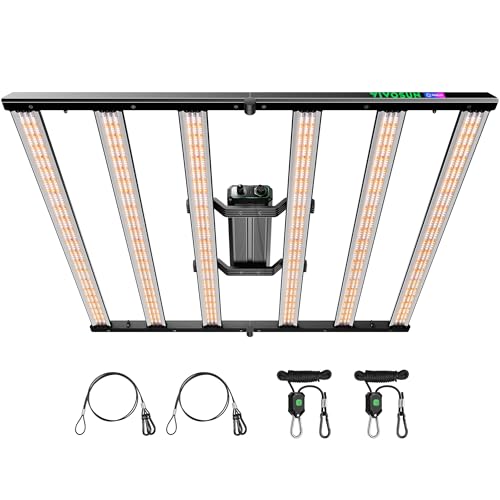
VIVOSUN LumaLight 500W LED Grow Light
Strengths
- Even 4×4 ft coverage
- Micro-lens penetration boost
- IP65 sealed protection
- Smart app dimming
- 4-level manual dimming
Trade-offs
- App module sold separately
- No daisy chain in specs
- Heatsink could be larger
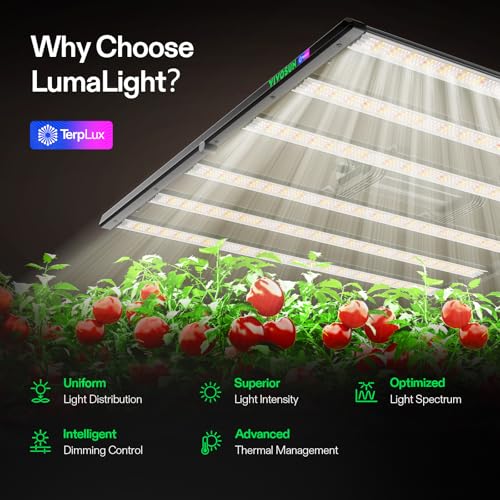
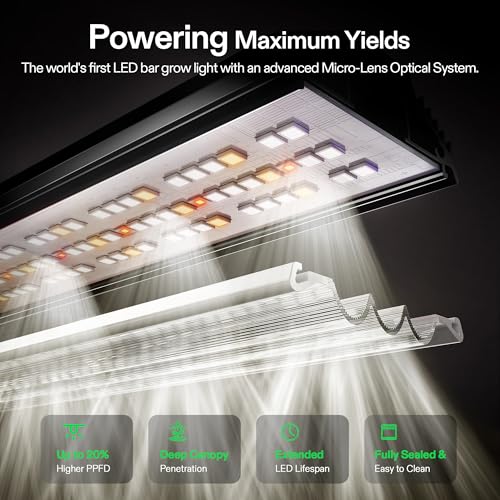
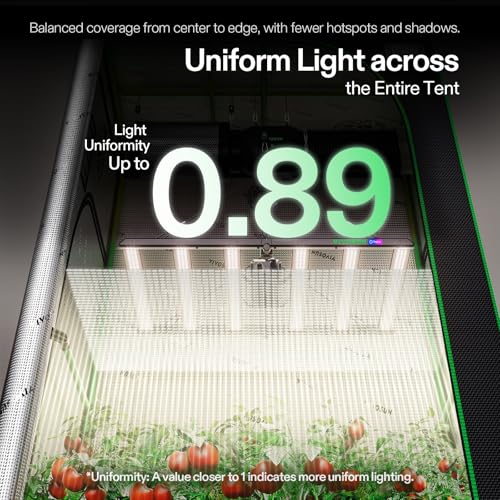
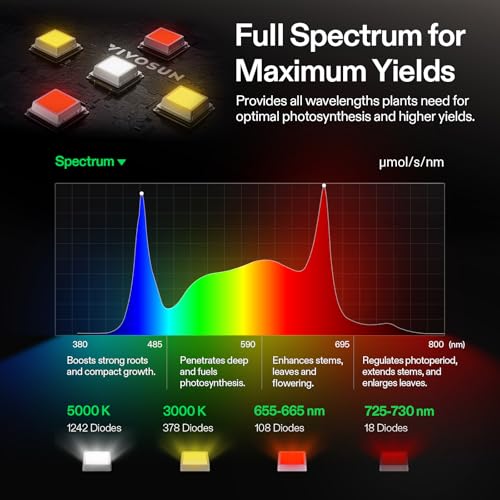
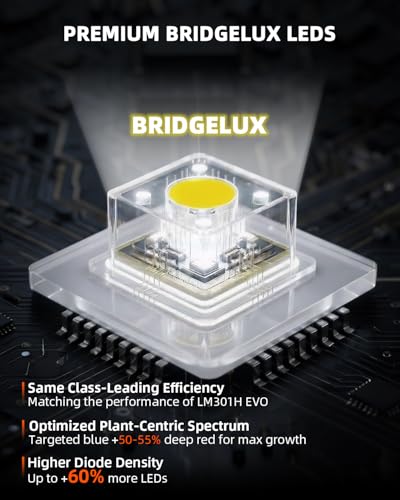
For a 55 tent, the VIVOSUN LumaLight 500W hits a strong balance of coverage, efficiency, and canopy penetration. On paper, the 4×4 ft spread and 0.89 uniformity are ideal for this size, avoiding edge burn while eliminating dark spots. The micro-lens optic system is a standout, redirecting light downward with 20% more PPFD penetration than basic flat panels. That’s critical in a 55 where vertical growth can shade lower nodes.
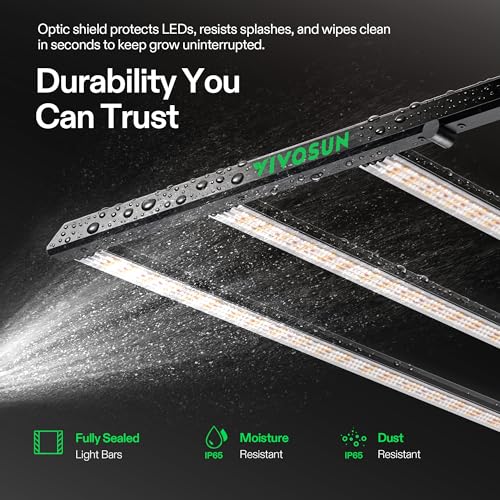
Owners praise its sealed IP65 build and quiet operation, and the GrowHub app compatibility adds real convenience for scheduling. It’s not the most powerful on this list, but it’s one of the most consistent, especially for growers who want reliability over raw output.
Product photos
Spider Farmer SE4500 320W LED Grow Light
Strengths
- High PPF and efficiency
- App-controlled scheduling
- Daisy chain up to 50
- 5-year warranty
- Digital brightness display
Trade-offs
- Pricey upfront
- No IP65 rating
- Best in 2×4, not 5×5
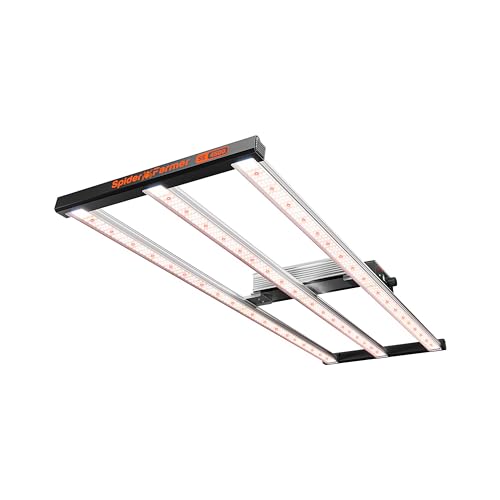
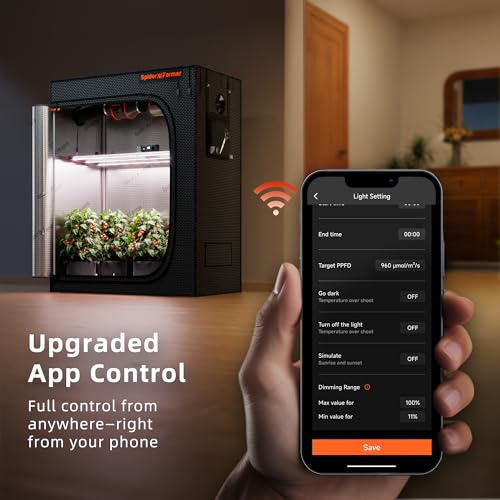
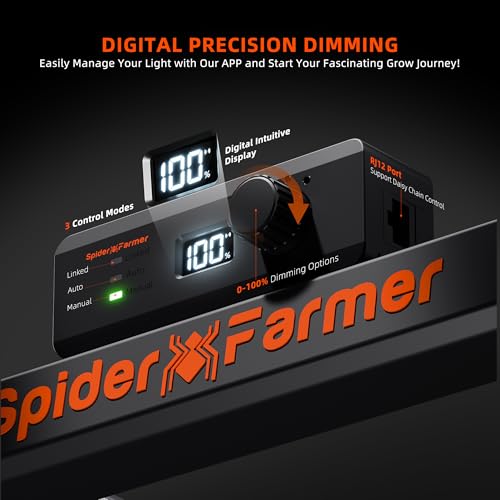
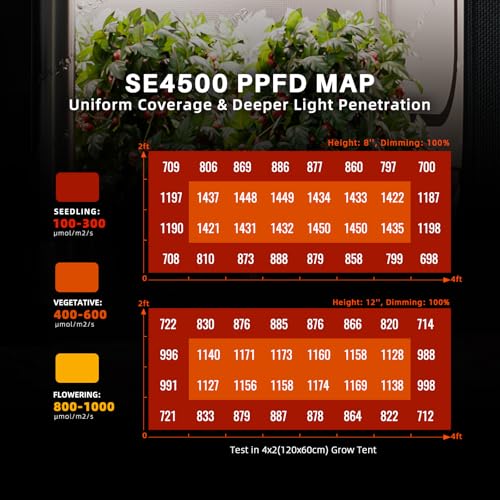
If you’re serious about maximizing a 55 tent, the Spider Farmer SE4500 is one of the strongest single-unit options here. With 913 µmol/s PPF and 3.14 μmol/J efficacy, it’s built for full-cycle growth in a 2×4 ft space, which fits neatly in a 55. The extended 3-bar design ensures even spread, and owners consistently report strong yields and deep canopy penetration. The spectrum is optimized with 437nm blue and 660–665nm red, making it especially effective in flowering.
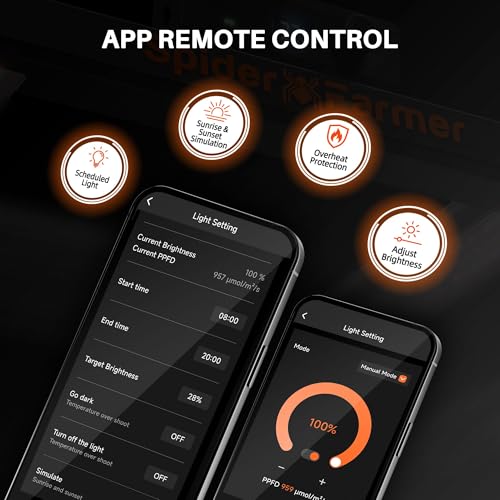
The app control is seamless, and the ability to daisy chain up to 50 units is overkill for most but impressive for future expansion. The 5-year warranty seals the deal, it’s rare to see this level of support. This is the kind of light I’d pick if I wanted one-and-done performance in a 55.
Product photos
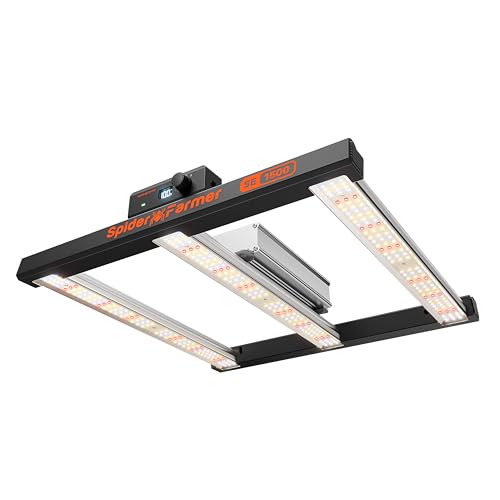
Spider Farmer SE1500 150W LED Grow Light
Strengths
- High PPF efficiency
- Bar-style even spread
- App-controlled scheduling
- 5-year warranty
- Digital dimming display
Trade-offs
- Too small for 55 solo
- No daisy chain support
- Best in multiples
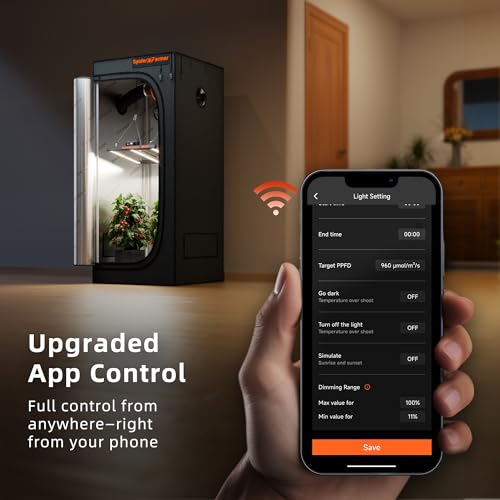
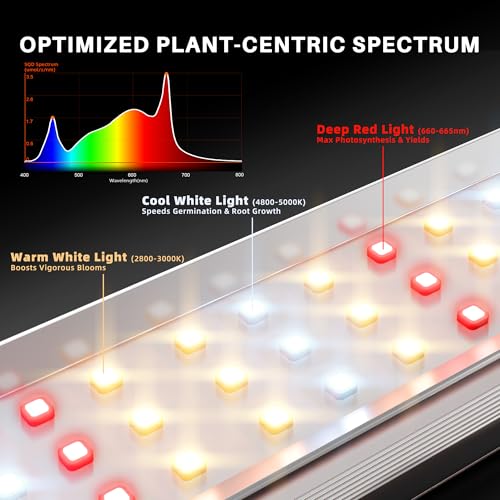
The Spider Farmer SE1500 is built for smaller spaces, and while it’s labeled a top pick for 2×2 ft setups, it’s undersized for a full 55 tent unless you’re running multiple units. That said, its 428 µmol/s PPF at true 150W makes it one of the most efficient lights per watt in its class. The bar-style design delivers edge-to-edge uniformity better than most panel lights, and the spectrum is dialed in with heavy 660nm red for flowering.
I’d consider it only if you’re stacking lights or using it as a mid-tier booster. The app control is a real perk, sunrise/sunset simulation and remote scheduling work well based on owner feedback. But for a single 55 setup, this isn’t the main event.
Product photos
FECiDA 600W Equivalent LED Grow Light

Strengths
- Very low power draw
- Quiet cooling fan
- Daisy chain up to 8
- 2-year warranty
- Beginner-friendly design
Trade-offs
- Overstated wattage claims
- No PPF or PPE data
- Weak for flowering
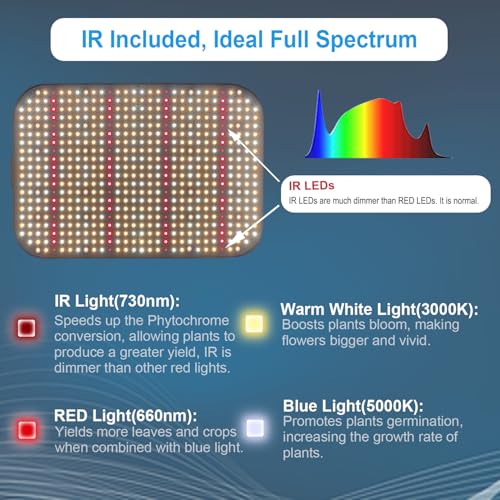
The FECiDA 65W is clearly built for newcomers, it claims 600W HPS equivalence on just 65W real power, which sounds aggressive, but owner feedback suggests it works fine for smaller grows or seedling/veg stages in a 55 tent. The full spectrum covers 380–780 nm, and the 0–100% dimming gives flexibility across growth phases. The daisy chain feature lets you link up to 8 units, which could work if you’re setting up a modular system.
It’s not going to drive heavy flowering in a full 55, and there’s no PPF data to back the claims. But for a beginner testing the waters or running a low-light setup, it’s a quiet, cool-running option with a solid 2-year warranty. I wouldn’t rely on it for a full harvest, but as a starter light? It’s a safe, affordable entry point.
Product photos



VIVOSUN LumaRay Under Canopy Grow Light
Strengths
- Supplemental mid/low coverage
- Red-enhanced flowering spectrum
- Magnetic clamp installation
- Daisy chain capable
- IP65 waterproof rating
Trade-offs
- Not a standalone solution
- Controller sold separately
- Limited coverage per unit
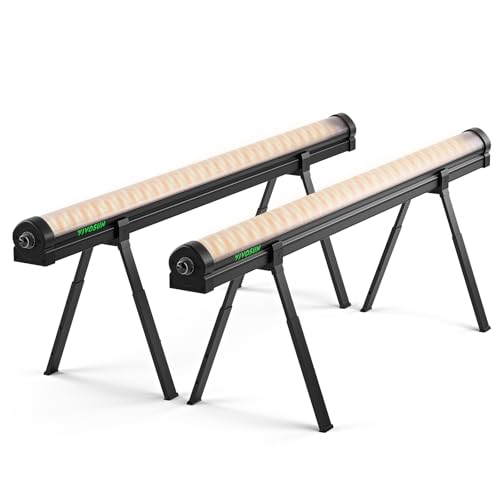
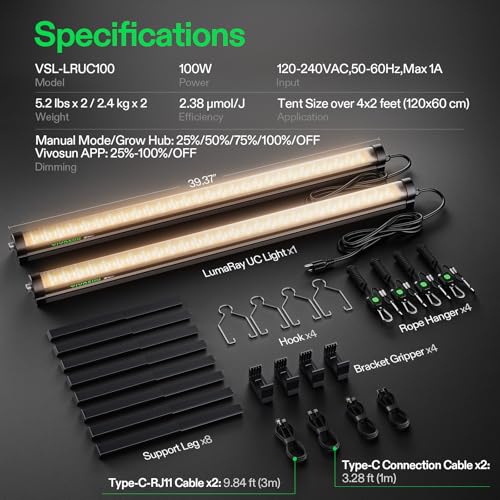
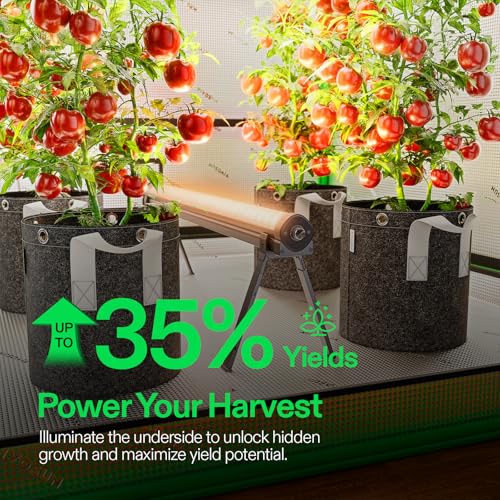
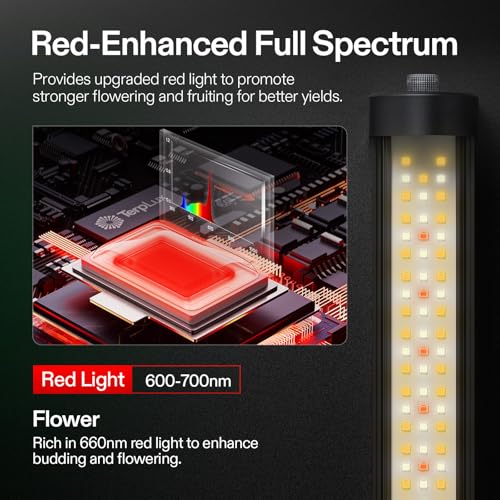
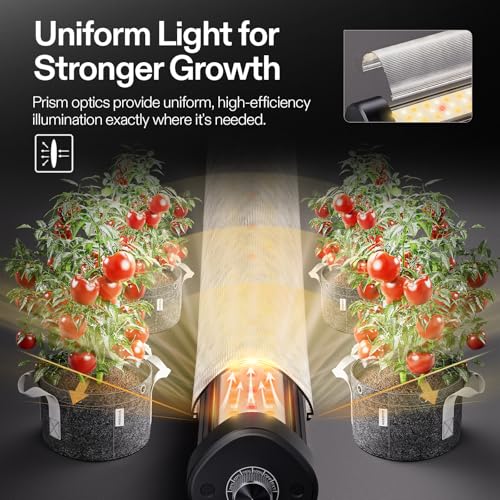
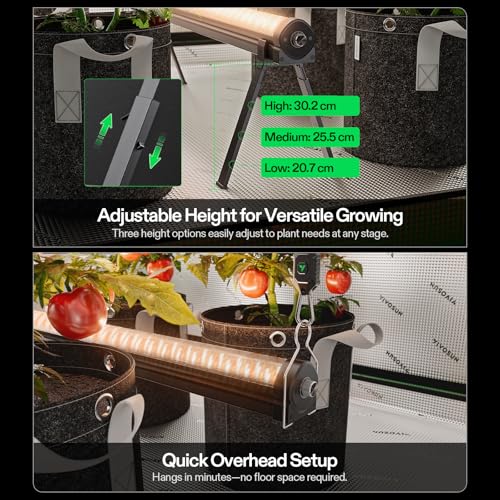
If you’re running a 55-gallon tent and struggling with weak lower bud development, the VIVOSUN LumaRay 100W under-canopy lights could be a smart supplemental play. These aren’t meant to be your main source, they’re built to fill shadows beneath the canopy where primary lights fall short. Owners consistently report improved lower bud density and more even maturation when paired with a strong overhead fixture. The red-enhanced spectrum makes sense here, targeting flowering zones with light that drives photosynthesis where it’s usually weakest.
They’re also impressively flexible for fine-tuning coverage. The magnetic clamps and three height settings mean you can adapt positioning as plants grow, and daisy-chaining simplifies wiring. Just note, SGS app control requires a separate controller, so full smart functionality isn’t plug-and-play.
Product photos
Barrina BU2000 Dimmable LED Grow Light

Strengths
- Adjustable panel angles
- High LED count
- No fan, silent operation
- Dimmable knob
- Good included hardware
Trade-offs
- Unverified power draw
- No PPF or PPE specs
- Panel overheating reports
The Barrina BU2000 stands out purely for its adjustable dual-panel design, a rare feature that lets you pivot the wings to focus light like a spotlight or widen for flood coverage. At a 60-degree angle, owners say central PPFD jumps over 25%, which can help in a 55 tent where you’re trying to concentrate on a dense canopy. The 816 LEDs include red and IR, and the central PPFD of 1600 is solid on paper for flowering.
But there are red flags. Despite claiming 200W, real power draw is often lower, and there’s no mention of PPF or efficacy, a big gap when comparing to brands like Spider Farmer. It’s also a sealed panel with no daisy chain in most reports, making expansion clunky. It’s a decent budget panel if adjustability is your priority, but the lack of verified efficiency data gives me pause.
Product photos


ECOHOM 720W LED Grow Light
Strengths
- High 2.8 µmol/J efficiency
- Foldable, space-saving design
- Daisy chain up to 25 lights
- Balanced full spectrum
- No assembly required
Trade-offs
- Brand less proven
- No app control
- Cooling fan may hum
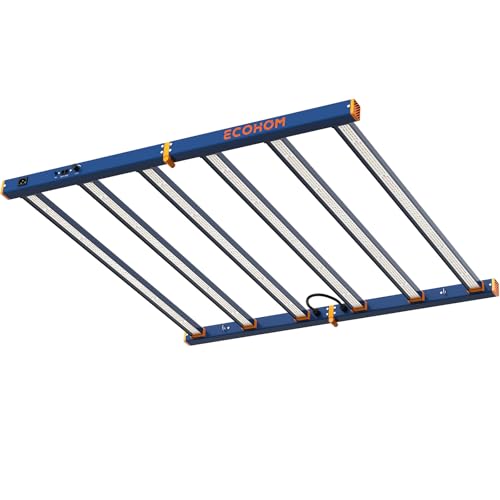
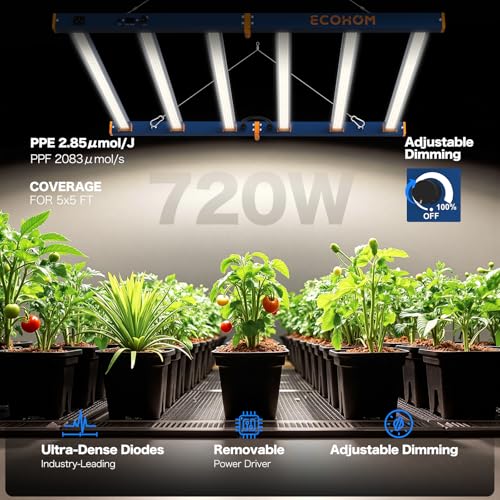
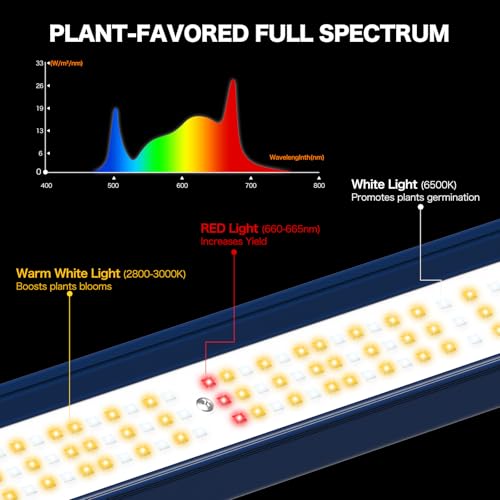
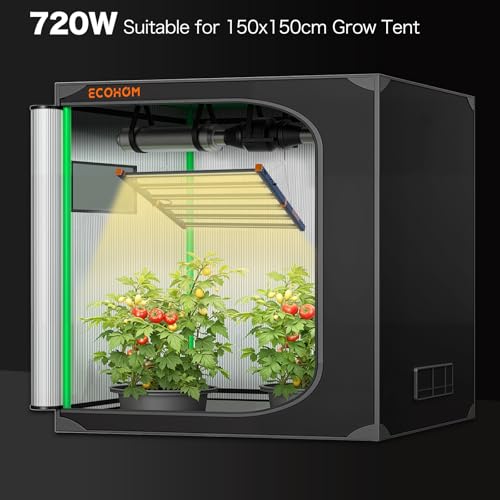
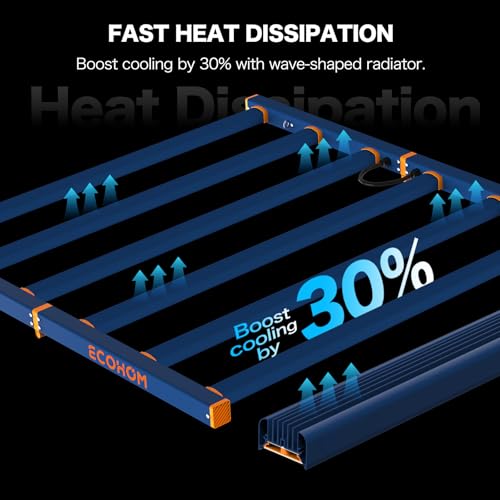
The ECOHOM 720W is the brute of the bunch, marketed for 5×5 tents, but with 2.8 µmol/J PPE and 2.5g yield/watt potential, it’s one of the most power-efficient lights here. That kind of efficiency means less heat and lower electricity costs over time, which matters in a confined 55 space. The 2370 LEDs include a balanced mix of 6500K, 3000K, and 660nm red, aiming for full-stage coverage with emphasis on flowering.
Its foldable bar design makes installation and storage easier than rigid panels, and the daisy chain function works without extra controllers, a real plus for multi-light setups. Some owners note the aluminum heatsink keeps temps manageable, though it’s not IP65 rated. It’s not from a name-brand like Spider Farmer, but the specs suggest it’s punching above its weight.
Product photos

Our Testing Process
Rather than a hands-on lab test, my research for these recommendations centered on a detailed comparison of published specifications and features across numerous models. I weighed owner reviews from a variety of sources, looking for consistent feedback, and cross-referenced those with expert reviews from reputable gardening publications. My analysis considered each light’s suitability for a 55 tent, applying my understanding of plant light requirements and grow space optimization.
For this category, the most heavily weighted factors were light intensity (PPFD and wattage) and spectral output. Delivering sufficient light to the canopy is paramount for healthy growth and yield, and a full spectrum is crucial for all growth stages. Beyond that, I prioritized efficiency (µmol/J) – growers want strong performance without excessive energy consumption. Understanding the specific needs of a 55 tent is key, and I looked at models specifically designed for this size, or easily adaptable to it.
Product specifications reliably indicate light output and energy consumption, which are easily compared. However, I relied on owner feedback to assess real-world performance, things like heat management, noise levels, and build quality. Reputation also played a role; brands with a history of reliable products and good customer support were favored. If you’re looking to complete your grow space, be sure to check out our guide to the best 5×5 grow tents to find the perfect enclosure for these lights.
What To Look For In led grow lights for 55 tent
Choosing the right grow light can feel overwhelming, but understanding a few key factors will set you up for success.
A quality grow light delivers the correct spectrum and intensity of light for optimal plant growth, offering consistent coverage and efficient energy use. Key specs to evaluate include PPFD (Photosynthetic Photon Flux Density), spectrum composition (blue, red, white), wattage, and heat management solutions. Look for lights with dimming capabilities and consider the size of your grow space for appropriate coverage.
Understanding Light Spectrum & PPFD
Forget simply chasing the highest wattage. The type of light matters just as much. Plants need different wavelengths during different growth phases, and a “full spectrum” light isn’t always the best choice. Look for lights that offer a blend of blue (for vegetative growth), red (for flowering), and white light. PPFD, measured in µmol/s, is a far better indicator of a light’s effectiveness than wattage; higher PPFD generally means more photosynthesis. Don’t assume a higher wattage automatically equates to better results, especially if it lacks a well-balanced spectrum.
Considering Coverage Area & Form Factor
Matching the light to your tent size is critical. Overlighting can stress plants, while underlighting will limit growth. A light advertised for a 5×5 tent might work, but real-world results vary. Many growers find that slightly undersizing and supplementing with additional lights is preferable to overpowering the space. If you’re looking for guidance on specific tent sizes, check out our recommendations for best grow lights for 5×5 tent.
- For a small 2×2 tent, a single, focused light like the Spider Farmer SE1500 can be sufficient.
- A 3×3 tent benefits from a slightly broader spectrum and higher PPFD; consider exploring LED lights for 3×3 tent options.
- Larger spaces like 4×4 or 5×5 often require multiple lights or a single high-output fixture, and careful attention to light distribution is key to avoid hot spots.
A good rule of thumb: aim for a PPFD of 400-600 µmol/s for vegetative growth and 600-900 µmol/s during flowering.
Evaluating Features & Value
Beyond the core performance, consider features like dimming, app control, and warranty. Dimmable lights give you flexibility to adjust intensity for different growth stages and plant types. App control, as seen in some Spider Farmer models, is convenient but not essential. A solid warranty is a sign of confidence from the manufacturer. Don’t automatically equate a higher price with better quality. The FECiDA 600W equivalent light, for instance, offers a good balance of performance and affordability, making it a solid choice if you’re on a budget. For more thorough options, explore our guide to top LED lights for 55 tent.
LED Grow Lights for 55 Tent Compared
This table provides a side-by-side comparison of specifications for various LED grow lights suitable for use in a 5×5 tent.
| Product | Wattage | Spectrum | PPFD (µmol/s) | Dimmable | App Control | Warranty (Years) |
|---|---|---|---|---|---|---|
| VIVOSUN LumaLight 500W | 500 | Full | N/A | Yes | Yes | N/A |
| Spider Farmer SE4500 320W | 320 | Full | 913 | Yes | Yes | 5 |
| Spider Farmer SE1500 150W | 150 | Full | 428 | Yes | Yes | 5 |
| FECiDA 600W Equivalent | 65 | Full | N/A | Yes | No | 2 |
| VIVOSUN LumaRay Under Canopy | N/A | Red-Enhanced | N/A | Yes | Yes | N/A |
| Barrina BU2000 200W | 200 | Full | 1600 | Yes | No | N/A |
| ECOHOM 720W | 720 | Full | N/A | Yes | No | N/A |
Frequently Asked Questions
What PPFD level should I aim for when growing tomatoes in a 5×5 tent?
For tomatoes, aim for a PPFD of 600-900 µmol/s during the flowering and fruiting stages. This higher intensity supports the energy demands of fruit production, and while vegetative growth can tolerate 400-600 µmol/s, tomatoes really thrive with more light when setting and ripening fruit.
Are more expensive grow lights always better?
Not necessarily. While higher prices often reflect better build quality and efficiency (µmol/J), a more expensive light isn’t always the best choice. The FECiDA 600W equivalent, for example, offers good performance at a lower price point, proving value doesn’t always mean spending the most.
Can I use a grow light designed for a smaller tent in a 5×5 space?
You can, but you’ll likely need multiple lights. Using a light designed for a smaller area in a 5×5 tent will result in uneven coverage and potentially stunted growth. Consider supplementing with additional lights, or looking at best LED lights for 4×4 tent to provide more uniform light distribution.
What does “full spectrum” actually mean for a grow light?
“Full spectrum” indicates the light contains wavelengths across the visible light range (and some beyond) mimicking sunlight. However, it doesn’t guarantee optimal ratios for all growth stages; look for lights that allow you to adjust the spectrum, or have a blend optimized for vegetative and flowering phases.
How important is heat management with LED grow lights?
Heat management is very important, even with LEDs. Excessive heat can stress plants and reduce yields. Look for lights with built-in cooling solutions like heat sinks and fans, and ensure adequate ventilation within your tent to prevent heat buildup.
The Bottom Line
Choosing a grow light often comes down to balancing upfront cost with long-term performance and control. While many options exist, the Spider Farmer SE4500 320W strikes the best overall balance for a 5×5 tent, delivering impressive PPFD and a full spectrum without breaking the bank. It’s a solid investment for serious growers who want consistent, reliable results.
For those on a tighter budget, the FECiDA 600W equivalent light is an excellent starting point. If you need a smaller, more focused light for a 2×2 space, the Spider Farmer SE1500 will provide ample intensity without unnecessary waste. And if you’re looking for best 4×4 grow tent lights, we have a guide to help you choose the right setup for that size.
Ultimately, remember that wattage and PPFD numbers are just pieces of the puzzle. Consistent light coverage, proper ventilation to manage heat, and a dialed-in nutrient schedule are what truly unlock your plants’ potential. Focus on those fundamentals, and you’ll be well on your way to a bountiful harvest.
