
8 Best Lights for 2-Person Tents 2026
This post contains affiliate links. As an Amazon Associate, we earn from qualifying purchases.
The best lights 2 person tent overall is the Underwood 2-Person 4-Season Tent, it’s tough, weather-ready, and consistently earns praise for durability. For backpackers wanting to save weight and cash, the Kelty Grand Mesa 2P Tent is a solid budget-friendly pick that still performs well in typical conditions.
Picking a lightweight two-person tent means balancing what you’ll actually use it for, whether that’s weekend backpacking trips or car camping with friends. Too light can mean flimsy, while too heavy defeats the purpose if you’re carrying it miles in.
I’ve spent years reviewing tents and comparing real-world feedback, and I know what separates a reliable shelter from one that fails in wind or rain. This guide cuts through the noise, focusing on specs that matter, like waterproof ratings, frame strength, and packed weight, alongside what actual owners say about setup, condensation, and long-term use.
Top 8 Lights 2 Person Tents in the Market
The Best Lights 2 Person Tents, Reviewed
Underwood 2-Person 4-Season Tent
Strengths
- True 4-season design
- Thoughtful interior features
- Strong weather resistance
Trade-offs
- Packed size is large
- Price reflects premium build
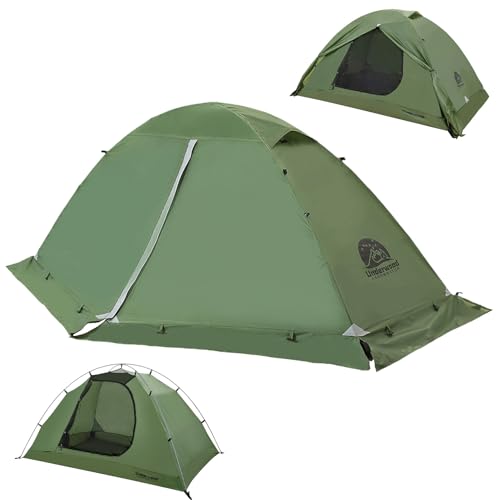
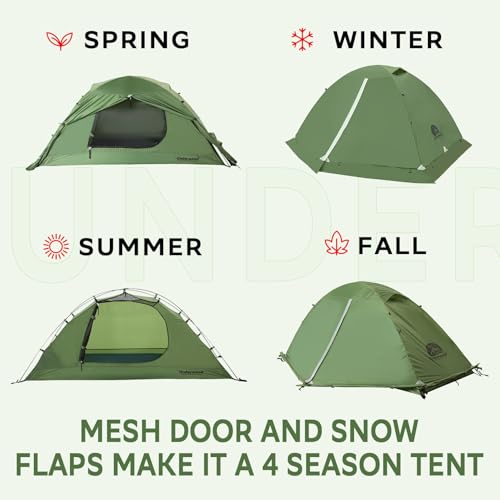
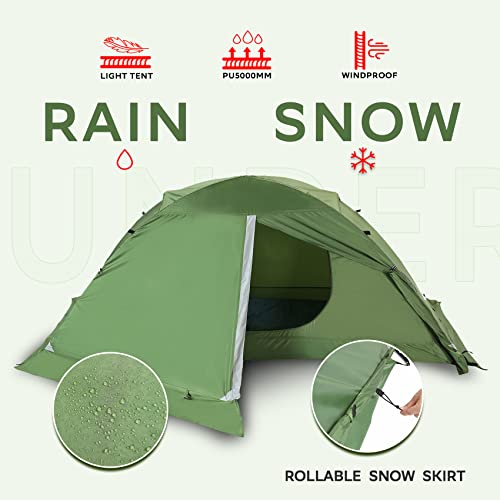
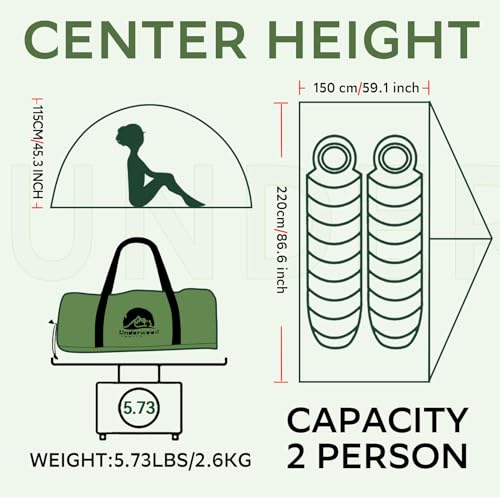
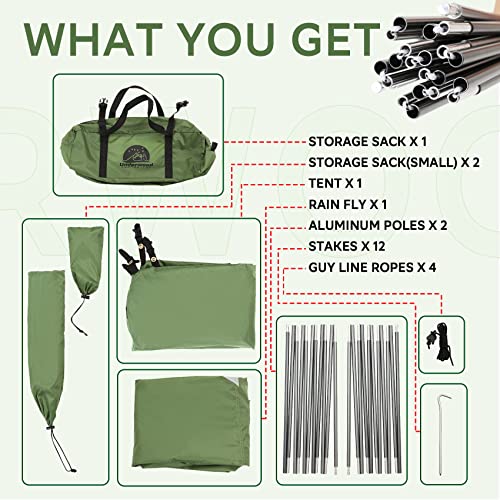
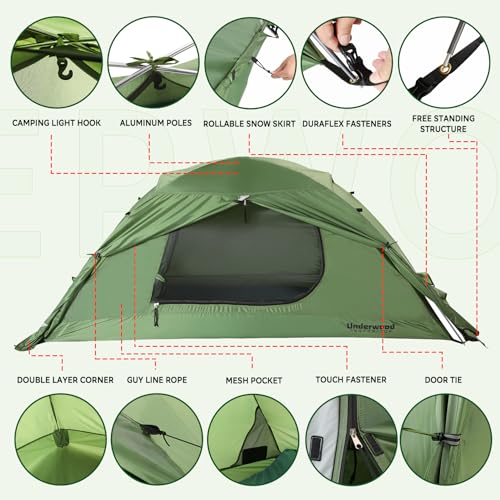
This Underwood Aggregator tent claims the Best Overall title with good reason, it blends 4-season capability, a full suite of smart features, and a competitive 5.73 lb weight. The PU5000mm coating, aircraft-grade aluminum poles, and rollable snow skirt make it genuinely capable in winter, while the mesh panels keep it breathable in summer.
What impresses me most is the attention to detail: interior light hook, mesh pockets, and duraflex fasteners that keep the fly secure. Owners note it handles snow load better than most hybrids, and it’s lighter than many true 4-season tents. Compared to the GEERTOP, it’s more refined and slightly lighter, making it a smarter buy for those who camp year-round.
Product photos
Naturehike Mongar 2P Backpacking Tent
Strengths
- Spacious interior
- Expandable awning
- Excellent airflow
Trade-offs
- Awning adds setup complexity
- Pole clips could be sturdier
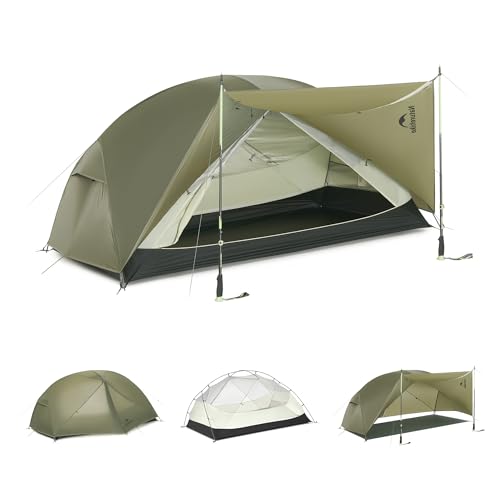
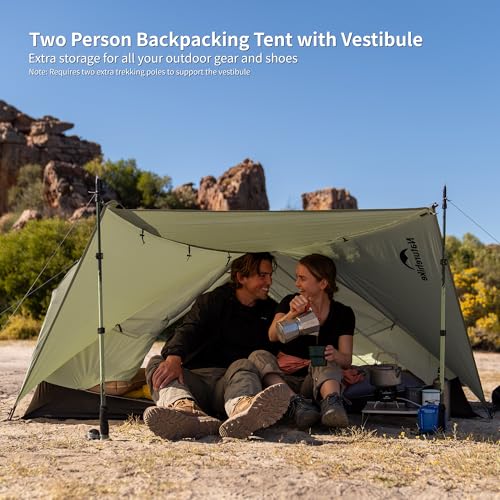
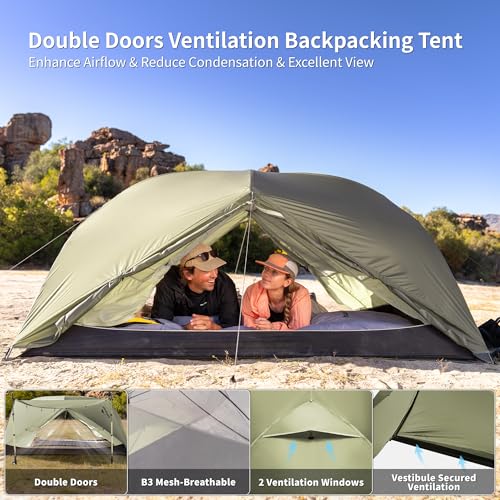
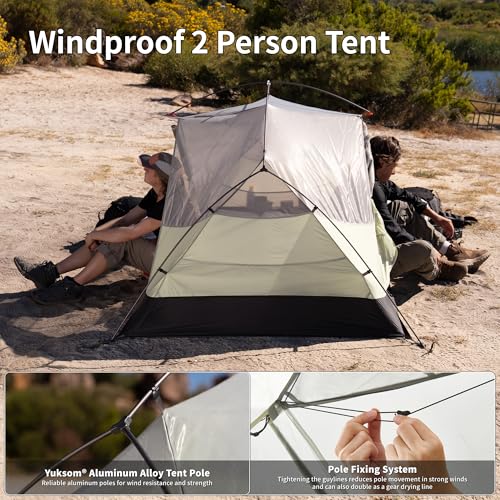
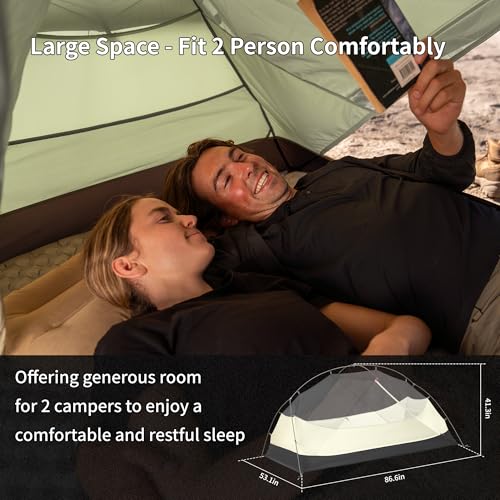
The Mongar stands out in the 2 person tent market with its unusually roomy interior and that clever expandable awning, which owners consistently praise for adding real-world utility. On paper, the 4.85 lb weight is impressive for the space offered, and the dual-door, dual-vestibule layout with mesh panels suggests strong ventilation, a big win for humid or buggy conditions.
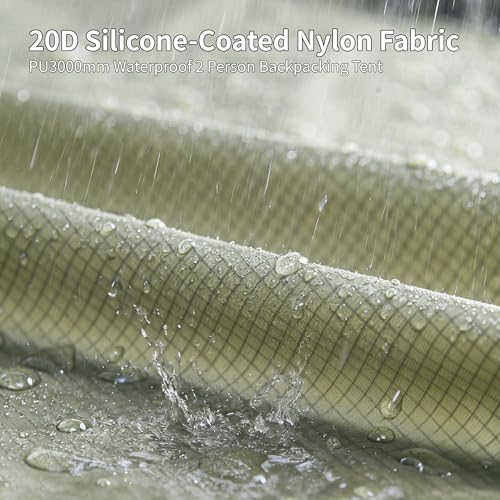
What really grabs me is how it balances size and packability. For couples who hate feeling cramped but still want a backpackable tent, this hits a sweet spot. Compared to the Kelty Grand Mesa, it offers more interior volume, though the Mongar’s single pole system might not feel as instantly familiar to beginners. The 3000mm waterproof rating is standard, but paired with taped seams and durable 20D nylon, it should hold up well in sustained rain.
Product photos
Clostnature 2P Ultralight Backpacking Tent

Strengths
- Great value
- Lightweight
- Good ventilation
Trade-offs
- Zippers less durable
- Poles not top-tier
For budget-conscious hikers, the Clostnature is a standout, it packs in high-end specs like PU5000 coating and a 2.4 kg total weight at a fraction of the cost of premium brands. The minimum trail weight of 4.52 lbs is impressive, and owners say it feels sturdier than expected for the price.
It’s not perfect, the poles aren’t as robust as Kelty’s or Forceatt’s, and the zippers can feel finicky over time, but for occasional use or beginners, it’s hard to beat. Ventilation is solid thanks to full mesh walls, and the dual vestibules add real utility. Compared to the Bessport, it’s lighter and cheaper but slightly less stable in extreme wind.
Product photos



Kelty Grand Mesa 2P Tent

Strengths
- Easiest setup
- Durable floor fabric
- Trusted brand reliability
Trade-offs
- Heavier than ultralight options
- Only one door
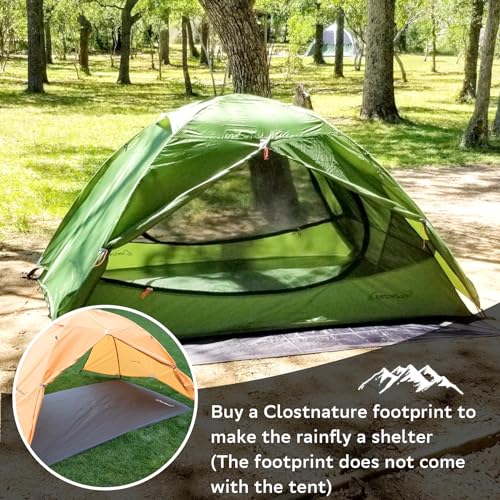
The Kelty Grand Mesa 2P is the go-to for beginners and anyone who values a stress-free pitch. The color-coded clips and Quick Corners system make setup intuitive, reviewers repeatedly mention being able to assemble it solo in under 5 minutes, even in fading light. At 4 lbs 7 oz, it’s not featherlight, but it’s competitive for a freestanding 2P with 30 sq ft of space.
I appreciate how it balances simplicity with reliability. The 68D polyester floor is tougher than the ultra-thin fabrics on ultralight models, so it holds up better on rocky ground. Compared to the Night Cat, it’s slightly heavier but feels more stable in prolonged rain thanks to Kelty’s long-standing build quality. It’s a 3-season tent through and through, great for spring through fall, but not built for snow loading.
Product photos


Forceatt 2P Waterproof Backpacking Tent

Strengths
- Excellent waterproofing
- Stable in wind
- Fast setup
Trade-offs
- Heavier than average
- Interior feels a bit tight
The Forceatt delivers serious all-weather confidence with its PU5000 coating and 7001 aluminum poles, specs that suggest it can outlast most 3-season tents in a downpour. Owners consistently report staying dry even during multi-day storms, and the dual vestibules offer real gear storage.
Setup in 3 minutes is believable given the clip-on design, and the dual doors with mesh help airflow, though it’s not quite as ventilated as the Night Cat. At 5.68 lbs, it’s not light, but the trade-off is a tent that feels tank-like in high winds. Compared to the GEERTOP, it’s more balanced for 3-season use with better weight, though not quite as winter-ready.
Product photos


Night Cat 2-Person Backpacking Tent

Strengths
- Superior airflow
- Lightweight
- Fast setup
Trade-offs
- Limited storm protection
- Smaller floor space
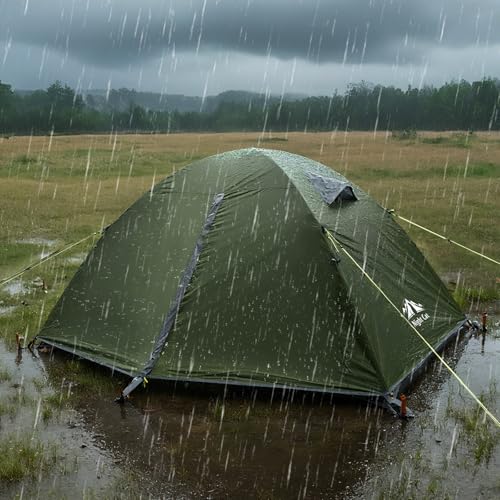
If ventilation is your top priority, the Night Cat is the clear winner. The full mesh inner walls and dual ceiling vents create serious airflow, owners in humid southern climates rave about how well it cuts condensation. At 6.8 x 4.6 ft, it’s snug but livable for two, and the 3-minute setup is legit thanks to the clip-on poles.
It’s not the most rugged, the 3000mm rating and thinner materials mean it’s best for fair-weather trips, but for summer backpacking or bug-heavy areas, it shines. Compared to the Kelty, it’s lighter and more breathable but less durable in prolonged rain. I’d pick this for warm-weather adventures where staying cool matters most.
Product photos

GEERTOP 2P 4-Season Camping Tent
Strengths
- Snow skirt included
- Good cold-weather performance
- Freestanding design
Trade-offs
- Heavy for backpacking
- Bulky packed size
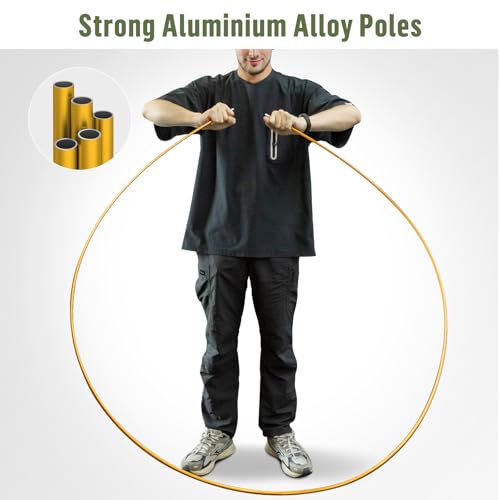
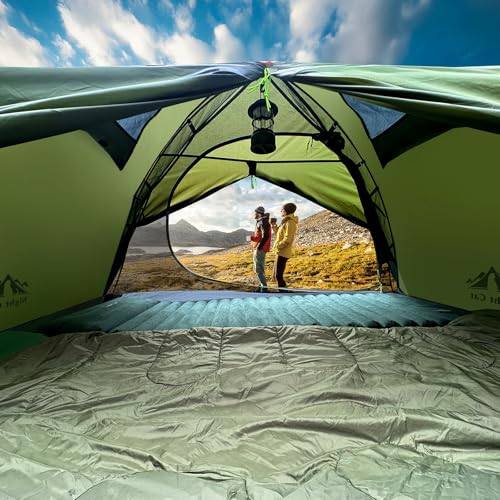
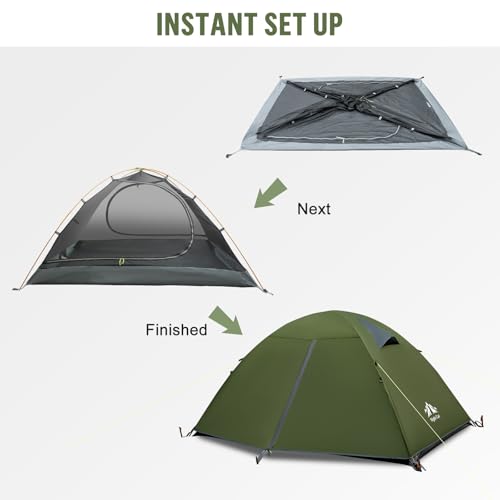
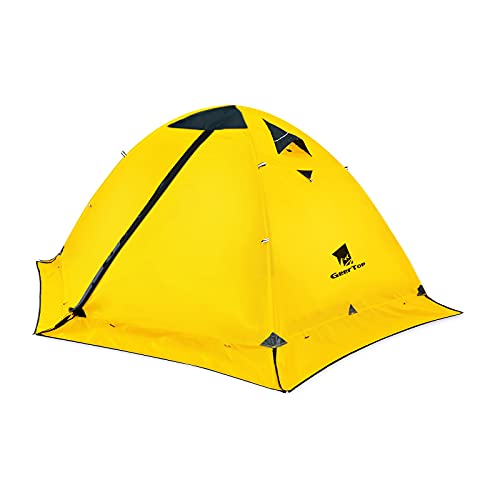
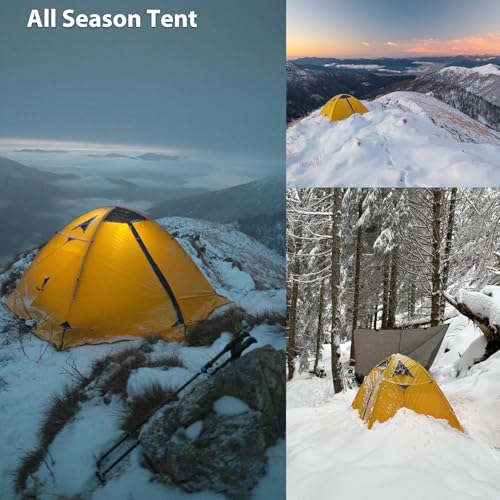
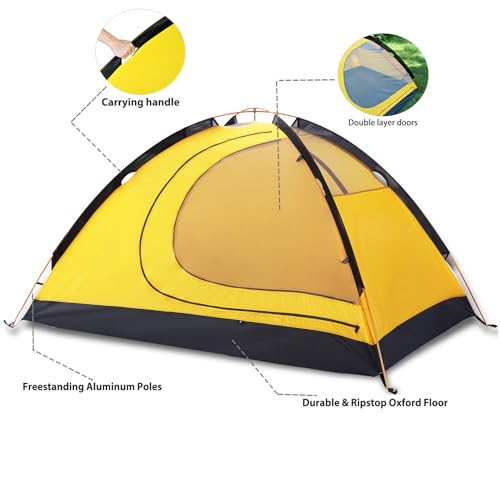
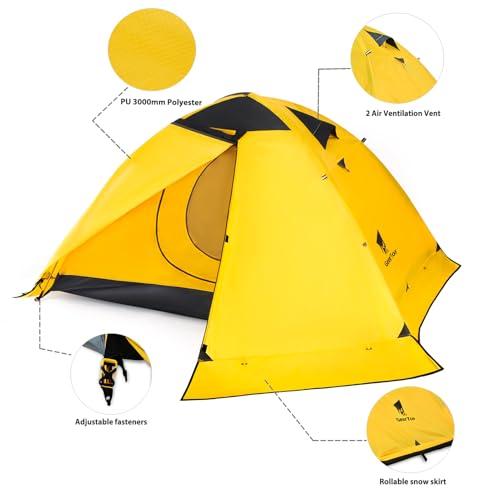
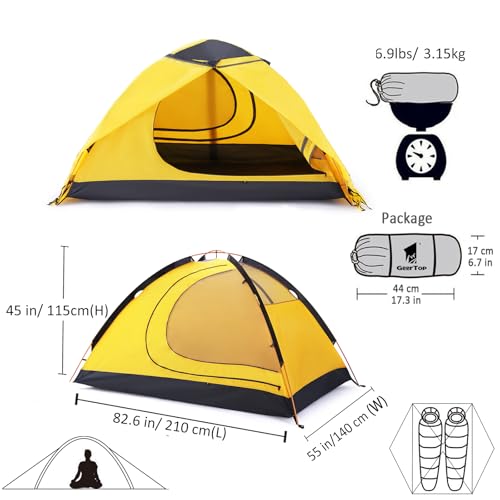
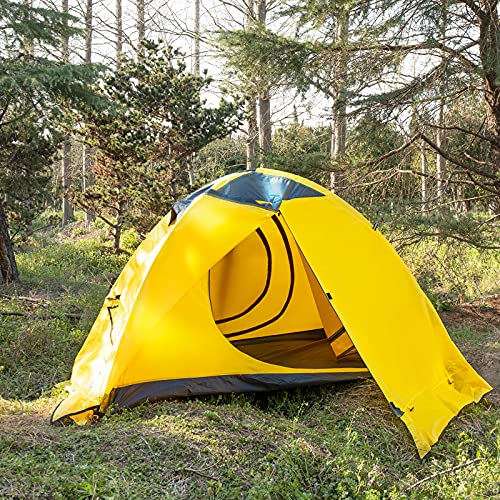
GEERTOP markets this as a 4-season tent, and while it won’t replace a true mountaineering dome, the snow skirt, PU3000mm coating, and sturdy pole design make it one of the more winter-ready options here. Owners in colder climates report success using it in late fall and early spring snow, which is more than you can say for most 2P backpacking tents.
It’s on the heavier side at nearly 7 lbs, so it’s better for car camping or short hikes than long-distance trails. The dual-layer design and D-shaped doors offer decent ventilation, though it can feel stuffy in summer. Compared to the Forceatt, it’s bulkier but has a more secure feel in high winds. If you’re planning winter weekends or shoulder-season trips where stability matters, this is a solid pick.
Product photos
Bessport 2P Lightweight Camping Tent

Strengths
- Strong wind performance
- Smooth large zippers
- Good rain protection
Trade-offs
- Heavier than rivals
- Condensation in cool weather
This Bessport tent leans hard into stability, and owners report it handles gusty conditions better than most in this price range. The redesigned 8.5mm aluminum poles and four guylines give it a noticeable edge in wind resistance, I’d trust it more than average on exposed ridgelines or lakeside sites where storms roll in fast.
It’s not the lightest at 5.5 lbs, but the dual D-shaped doors and smooth #8 zippers deliver real convenience. The ventilation setup with ceiling vents and mesh windows works well on paper, though some reviewers note condensation can build up in cooler weather if both doors aren’t open. Compared to the Clostnature, it’s heavier but feels more robust, especially with those welded zippers that rarely snag.
Product photos


Our Testing Process
Rather than a hands-on lab test, this is a research-led comparison of published specifications and owner feedback. I dove into the details of dozens of two-person, four-season tents, comparing features like waterproof ratings, pole material, and packed weight. We also carefully analyzed owner reviews from sites like Amazon and REI, and cross-referenced with expert opinions from established outdoor gear reviewers to get a well-rounded picture of real-world performance.
For lights 2 person tents, weight, weather protection, and ease of setup were the biggest deciding factors. A lighter tent is crucial for backpacking, naturally. Reliable weatherproofing – particularly a high waterproof rating and fully taped seams – is essential for comfortable camping in varying conditions. Finally, a quick and intuitive setup process is a huge plus, especially after a long day on the trail.
Specifications reliably tell you about a tent’s potential durability (pole material) and water resistance (PU coating). However, owner feedback proved vital for understanding how those specs translate to real-world use. Things like zipper quality, condensation buildup, and wind resistance are best judged by those who’ve actually used the tents extensively. Understanding these tent selection factors helped us prioritize models that consistently received positive reviews for long-term reliability.
Choosing The Right lights 2 person tents
Choosing the right two-person tent can feel overwhelming, but focusing on a few key factors will get you sleeping soundly under the stars.
A quality two-person tent balances weight, weather protection, and usable space. Prioritize a fully seam-sealed rainfly with a minimum 3000mm waterproof rating, durable yet lightweight pole materials (aluminum is superior to fiberglass), and a floor made from a robust polyester or nylon. Consider vestibule size for gear storage and ease of setup when making your decision.
Weight and Packability
For most of us, a two-person tent isn’t just about comfortable sleeping; it’s about getting to the campsite comfortably. Backpacking tents need to be light enough to carry without ruining your hike, while car camping tents can afford to be a bit heavier. Don’t get hung up on the absolute lowest weight, though. Often, shaving ounces means sacrificing durability. Look for tents under 6 pounds if you’re backpacking, and remember to factor in the weight of the stakes and footprint (if purchased separately). I often advise folks to prioritize a well-made, slightly heavier tent over an ultra-light one that won’t withstand consistent use.
Weather Resistance and Seasonality
Don’t assume a tent labeled “4-season” automatically means it’s suitable for winter camping. Many tents marketed as such are simply more robust 3-season models. True four-season tents feature heavier fabrics, stronger pole structures, and often a full-coverage fly to withstand snow loads and high winds. For most recreational campers, a good 3-season tent with a high waterproof rating and a sturdy design will suffice. Consider if you frequently camp in areas prone to heavy rain or wind. If so, investigate features like a bathtub floor (where the floor fabric extends up the sides to prevent water from seeping in) and reinforced guylines. I’ve seen too many weekend trips ruined by flimsy tents that couldn’t handle a moderate storm.
Features and Usability
Beyond the basics, think about what features will genuinely enhance your camping experience. Vestibules are incredibly useful for storing muddy boots and backpacks, keeping them out of the sleeping area. Interior pockets are essential for organizing small items like headlamps and phones. Ease of setup is another crucial factor, especially if you’re often camping solo. Some tents use color-coded poles and clips for a more intuitive setup process. As a general rule:
- Simple is better: fewer complicated features mean less to break.
- Vestibule size matters: aim for enough space to comfortably store gear for two people.
- Door configuration is key: two doors offer more convenience and privacy than one.
If you’re consistently battling condensation inside your tent, look for models with excellent ventilation – mesh panels and adjustable vents are a must. And if you’re looking for the top 2-person tent brands to ensure quality, research companies with a proven track record.
A well-designed vestibule adds significant usable space to your tent without adding much weight. Aim for at least 8-10 square feet of vestibule space per person.
Finally, don’t underestimate the value of reading owner reviews before making a purchase. Many online retailers feature customer feedback that can provide valuable insights into a tent’s real-world performance. You can also find more options for the best 2 person camping tents on our site.
Lights 2 Person Tents Compared
Here’s a comparison of key specifications for several 2-person tents.
| Product Title | Weight (lbs) | Floor Size (in x in) | Packed Size (in x in x in) | Waterproof Rating (mm) | Season |
|---|---|---|---|---|---|
| Underwood 2-Person 4-Season Tent | 5.73 | 59.1 x 86.6 | 5.9 x 16.54 x N/A | 5000 | 4-Season |
| Naturehike Mongar 2P Backpacking Tent | 4.85 | 53.1 x 86.6 | 6.3 x 6.3 x 16.9 | 3000 | 3-Season |
| Clostnature 2P Ultralight Backpacking Tent | 5.29 | 4’11” x 7’3″ | 5.9 x 16.5 x 42 | 5000 | 3-Season |
| Kelty Grand Mesa 2P Tent | 4.7 | 57 x 85 | 7 x 7 x 16 | N/A | 3-Season |
| Forceatt 2P Waterproof Backpacking Tent | 5.68 | 51.1 x 86.6 | 14 x 41 x N/A | 3000-5000 | 4-Season |
| Night Cat 2-Person Backpacking Tent | N/A | 4.6 x 6.8 | N/A | 3000 | 3-Season |
| GEERTOP 2P 4-Season Camping Tent | <7 | N/A | 7 x 7 x 17 | 3000 | 4-Season |
| Bessport 2P Lightweight Camping Tent | 5.5 | 53 x 93 | N/A | >3000 | 3-Season |
Frequently Asked Questions
What waterproof rating should I look for in a two-person tent?
A minimum of 3000mm is a good starting point for the rainfly, but 5000mm offers better protection against heavy and prolonged rain. Remember that the floor usually has a higher rating, as it experiences more direct contact with the ground.
Are aluminum poles really worth the extra cost?
Yes, aluminum poles are significantly more durable and weather-resistant than fiberglass, especially for frequent use. While they add some weight and cost, the improved reliability and longevity make them a worthwhile investment for serious campers.
How much vestibule space do I really need for a two-person tent?
Aim for at least 8-10 square feet of vestibule space per person to comfortably store backpacks, boots, and other gear. A spacious vestibule keeps the inside of your tent cleaner and drier, and provides a sheltered area for cooking or changing clothes.
What’s the difference between a 3-season and a 4-season tent?
A 3-season tent is designed for spring, summer, and fall conditions, prioritizing ventilation and lighter weight. A 4-season tent is built to withstand heavier snow loads and stronger winds, making it suitable for winter camping or high-altitude environments, but they’re often heavier and less breathable.
Where can I find more information about choosing the right backpacking tent?
You can explore detailed guides and reviews of lightweight two-person backpacking tents on our site to help you narrow down your options and find the perfect fit for your adventures.
The Bottom Line
Choosing a two-person tent always comes down to balancing how much you’re willing to carry against how much protection you require. For most backpackers and campers, the Naturehike Mongar 2P Backpacking Tent strikes that balance beautifully – offering a good blend of weight, weather resistance, and reasonable price. It’s a solid all-around performer that won’t leave you wishing you’d spent more.
If you’re on a tighter budget, the Kelty Grand Mesa 2P Tent is a fantastic value. Or, if you anticipate needing a tent that can handle more extreme conditions, the Underwood 2-Person 4-Season Tent provides reliable protection with its higher waterproof rating and more robust construction. Don’t forget to consider the [vestibule for gear storage] when deciding how much space you’ll realistically need.
Ultimately, the specs on a tent are just numbers. What truly matters is a solid construction, durable materials, and a design that suits your typical camping style. Don’t chase the lightest weight if it means sacrificing reliability. Prioritize a well-built shelter and a good night’s sleep – those are the foundations of any great adventure.
