
7 Best Lightweight 4 Person Tents 2026
This post contains affiliate links. As an Amazon Associate, we earn from qualifying purchases.
The Clostnature Lightweight 4-Person stands out as the best overall pick for its low weight, high waterproof rating, and strong owner feedback, while the Purebox 4-Person Pop Up is a solid budget-friendly choice if you prioritize speed over ruggedness. For families wanting space and comfort, the Mimajor 4-Person Instant offers solid weather protection and easy setup.
Picking a lightweight 4-person tent means balancing space, weight, and real-world reliability. Too many hikers end up with bulky shelters that are miserable to carry or flimsy models that leak at the first sign of rain.
As Chloé Bourgeois, I’ve spent years analyzing tents built for the trail and tested across seasons. This guide cuts through the noise, focusing on what actually matters, specs backed by owner experiences, not just marketing claims. I looked at weight, waterproofing, durability, and ease of setup to find models that deliver in the wild, not just online.
Top 7 Lightweight 4 Person Tents in the Market
The Best Lightweight 4 Person Tents, Reviewed
Clostnature Lightweight 4-Person Backpacking Tent

Strengths
- Freestanding design
- Double vestibules
- PU 5000 waterproofing
- Lightweight for size
- Excellent ventilation
Trade-offs
- Heavier than ultralight backpacking tents
- Stakes could be stronger
- Setup takes practice
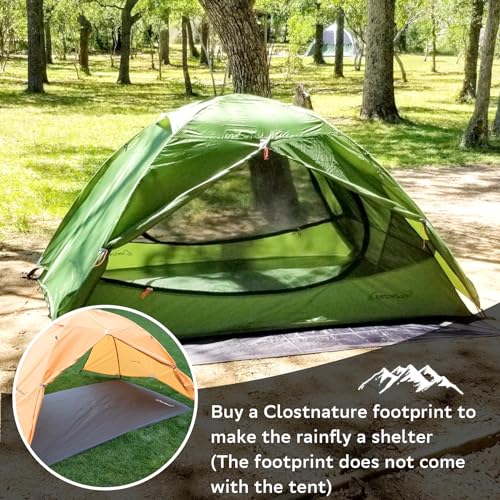
On paper, the Clostnature 4-person tent hits a sweet spot for backpackers who want real space without a backpack-breaking load. At 6.54 lbs trail weight, it’s not the lightest, but that’s reasonable for a freestanding tent with a full-coverage fly and double vestibules. The X-braced pole system stands out, it’s a design I’ve seen improve wind stability in other high-end models, and owners consistently report it holds up well in gusts, which is rare for tents in this class.
The PU 5000 coating is a serious spec. Most 3-season tents stop at 3000mm, so this gives real confidence in prolonged rain. Add factory-sealed seams and full mesh walls, and you’ve got a tent that balances ventilation and weather protection better than most. Some reviewers mention condensation in humid conditions, but that’s typical across double-wall tents, this one just gives you more tools to manage it.
Product photos



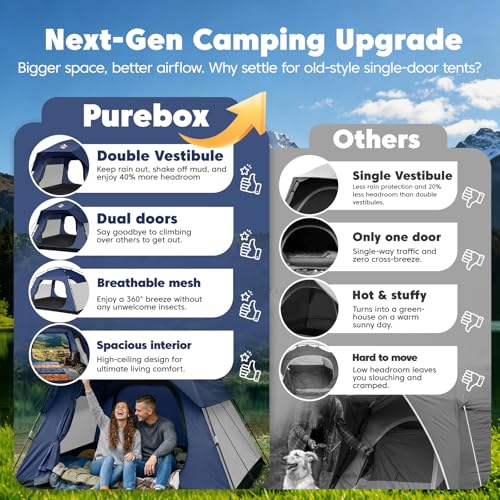
Purebox 4-Person Pop Up Tent
Strengths
- Ultra-lightweight
- Compact packed size
- Double doors
- Good mesh coverage
- Affordable
Trade-offs
- Fiberglass poles
- Lower waterproof rating
- Less durable in wind
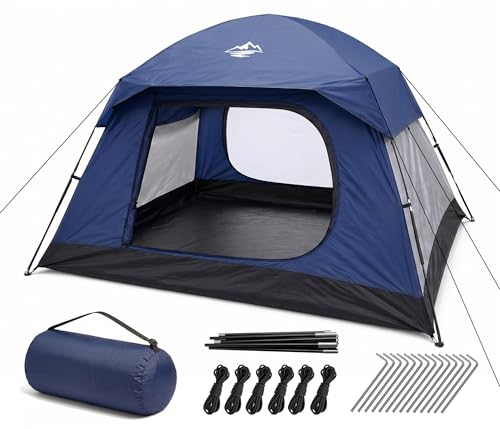
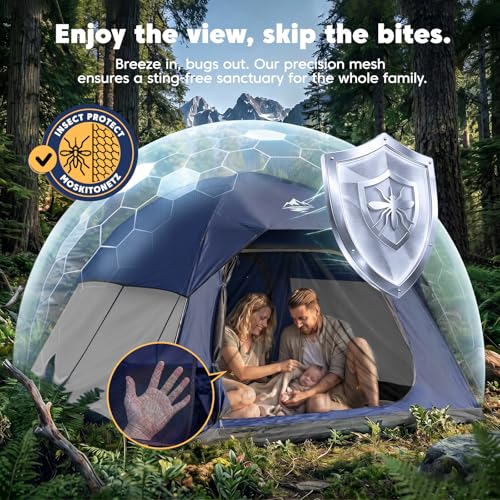
The Purebox tent is the budget pick that doesn’t completely cut corners. At just 6 lbs and 16×7×6.6 inches packed, it’s impressively compact, lighter than some backpacking models. The extended floor design gives real usable space, and the double doors with large mesh panels help with airflow and access.
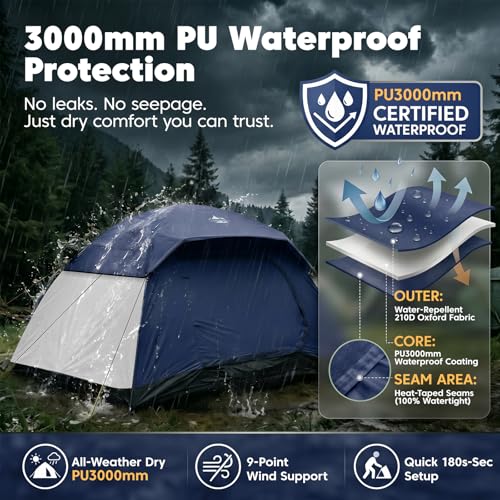
But it’s built with fiberglass poles, which I’ve seen snap under stress in similar tents. Owners report it’s fine for calm weekends, but not for wind or rough terrain. The 2000mm waterproofing is standard, but not exceptional. Still, for the price, it’s a solid option if you’re camping occasionally and need something portable. Just don’t skip the footprint.
Product photos
FanttikOutdoor Zeta C4 Pro Instant Tent

Strengths
- Extremely fast setup
- Excellent visibility
- Full mesh walls
- Power cord port
- Sturdy build
Trade-offs
- Steel frame adds weight
- Inner tent not waterproof
- Requires careful rainfly tensioning
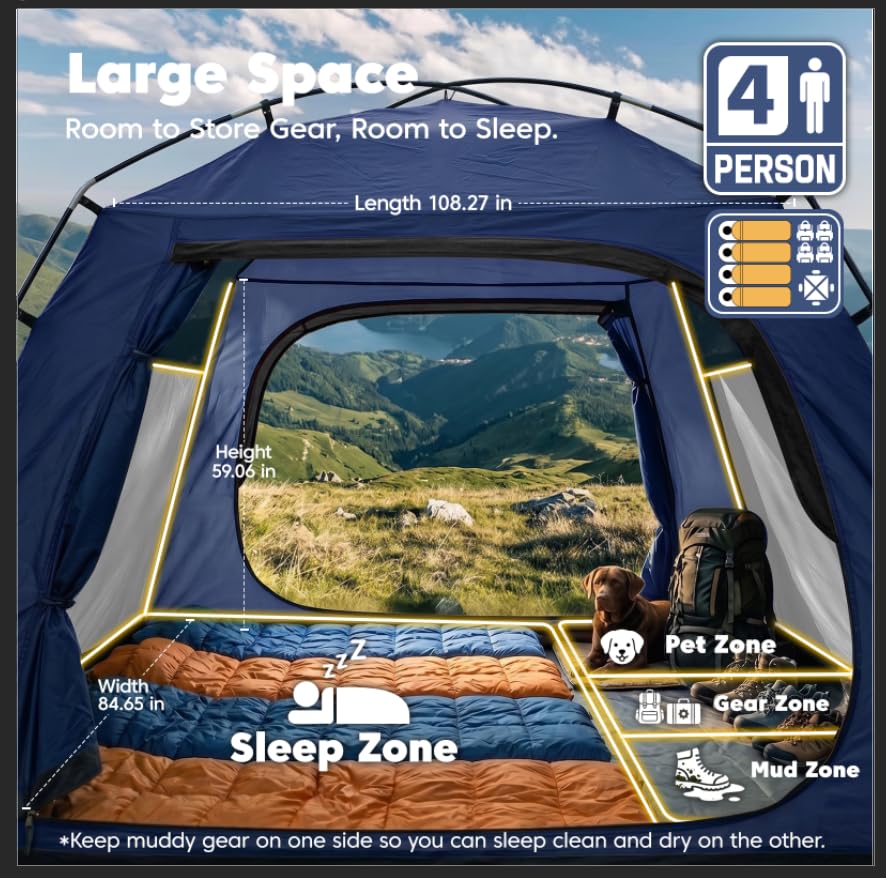
The FanttikOutdoor Zeta C4 Pro lives up to its ‘Quick Setup’ title, 60 seconds is realistic with the pre-attached poles and simple frame. It’s not the lightest at 14.5 lbs, but the 96×96 inch footprint gives real room, and the 59-inch height means you won’t feel boxed in.
Ventilation is strong with mesh on all four sides and a ceiling screen, making it great for stargazing and airflow. But the carbon steel frame raises concerns, steel is stronger than fiberglass, but heavier and prone to rust if not dried properly. And the note about the inner roof not being waterproof is critical: you must use the rainfly in wet weather.
Product photos


Mimajor 4-Person Instant Camping Tent
Strengths
- Excellent rain protection
- Panoramic ventilation
- Quick setup
- Stargazing ceiling
- Removable welcome mat
Trade-offs
- Heaviest on the list
- Hydraulic system may wear over time
- Bulkier packed size
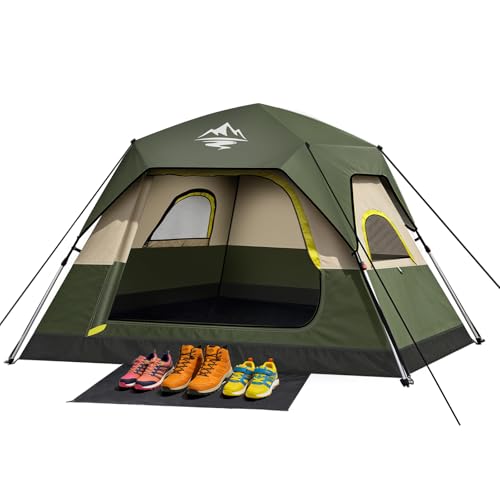
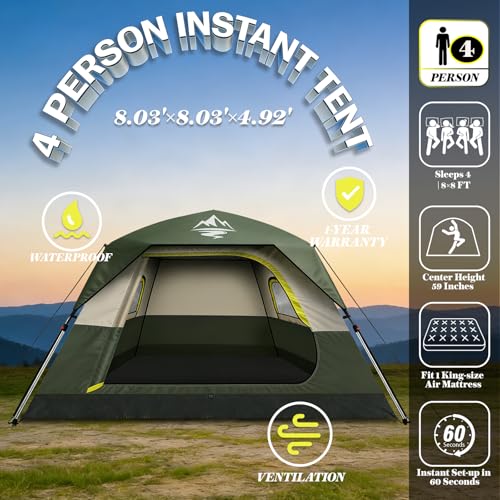
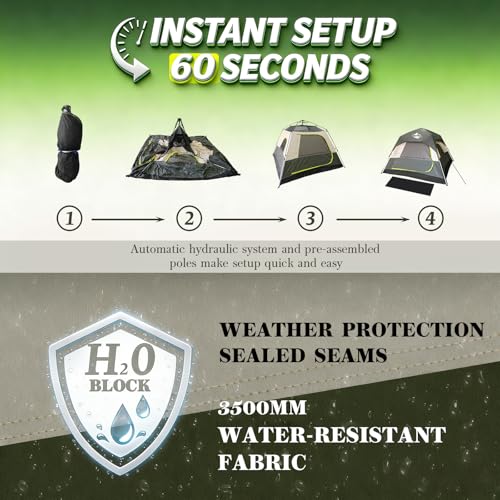
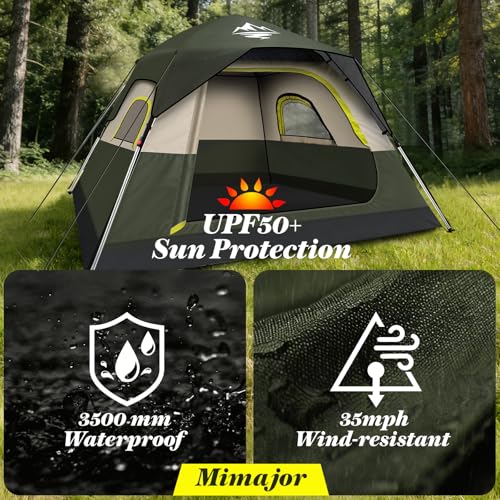
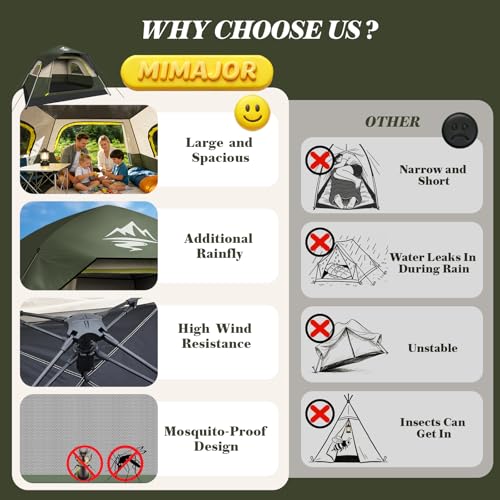
When weather protection is your top priority, the Mimajor tent makes a strong case. The 3500mm PU coating, fully taped seams, and 19 stakes with 11 guylines suggest serious attention to storm readiness. Owners in rainy regions report staying dry through heavy downpours, and the rust-resistant aluminum poles add durability over fiberglass.
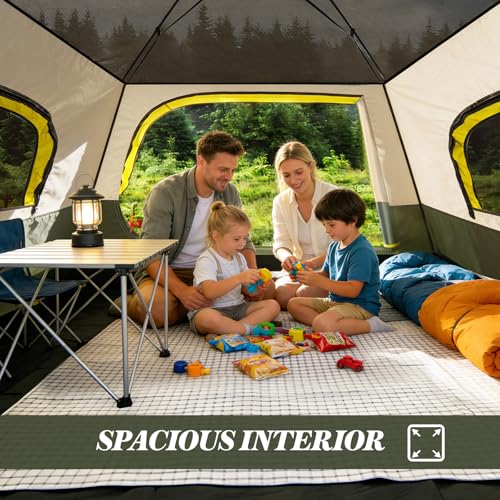
The 60-second hydraulic setup is a standout for anyone frustrated with pole threading. And unlike many instant tents, it doesn’t sacrifice ventilation, three large mesh windows and a ceiling panel keep airflow strong. The removable welcome mat is a small but smart touch for keeping dirt out. At 15.4 lbs, it’s heavy, but that’s the trade-off for this level of weather defense.
Product photos
OLIXIS 4-Person Lightweight Dome Tent
Strengths
- Excellent airflow
- Quick setup
- Lightweight for car camping
- Good light transmission
- Beginner-friendly
Trade-offs
- Fiberglass poles less durable
- Thin floor material
- Limited stormworthiness
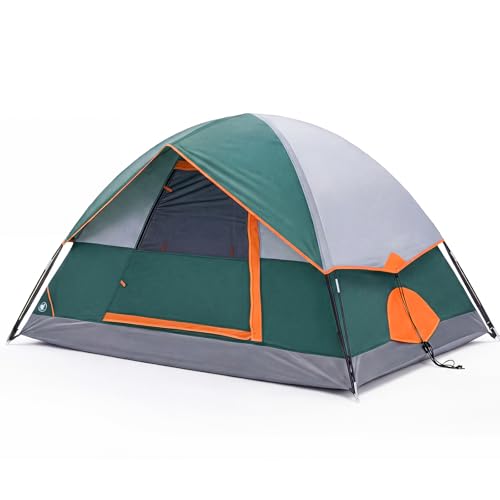
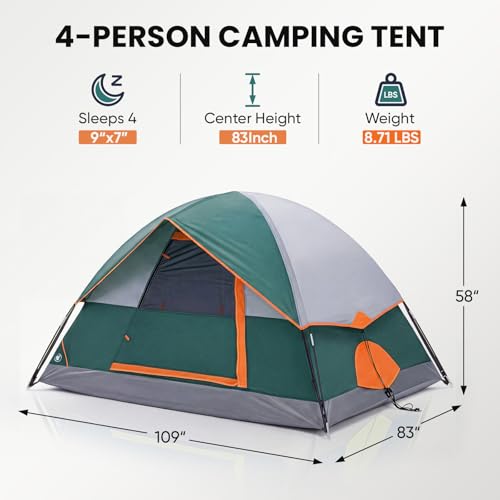
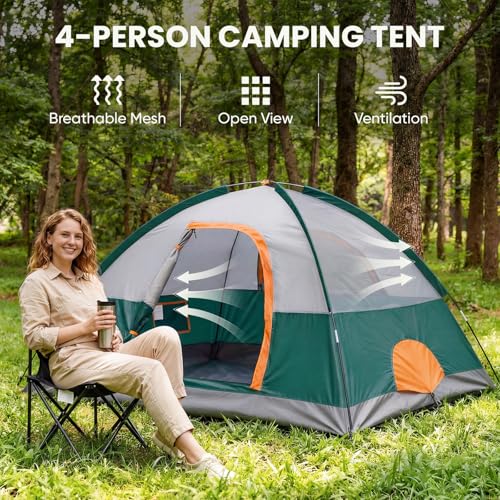
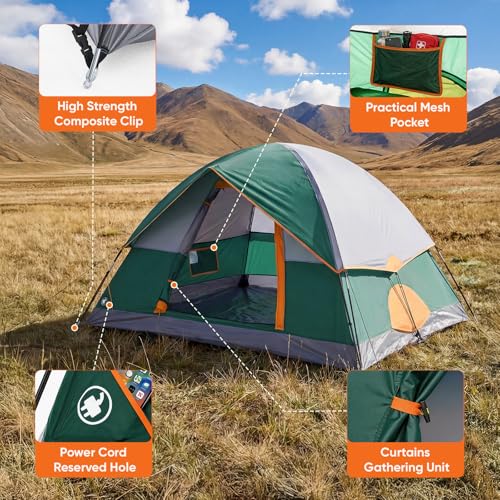
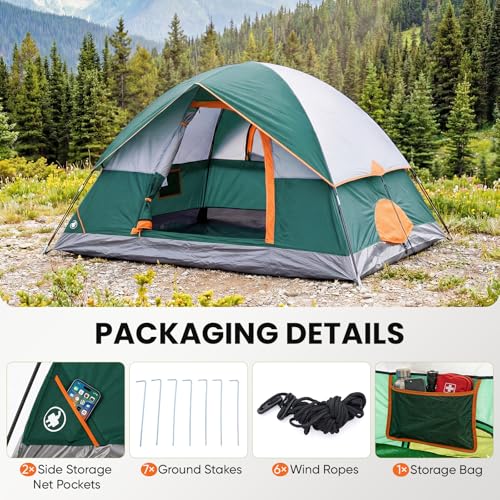
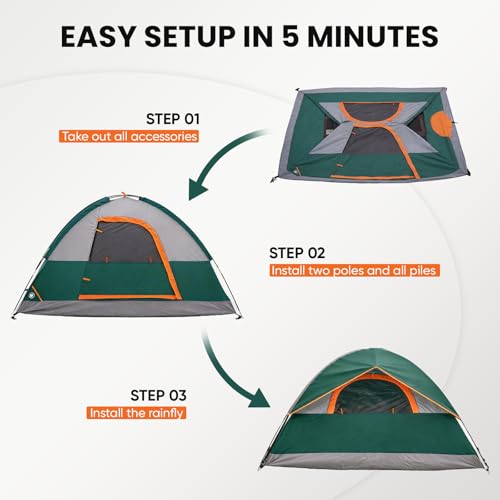
The OLIXIS tent is clearly aimed at casual campers and beginners, and it delivers on simplicity. At 8.7 lbs, it’s not a backpacking standout, but the 5-minute setup and multi-directional vents, including skylights, are a big win for family comfort. The mesh layout is smart, reducing that stuffy, overheated feeling so common in budget domes.
Fiberglass poles keep costs down, but they’re a red flag for serious wind. The 210D polyester and sealed seams offer decent rain protection, but the 110g PE floor is thin compared to tub floors on pricier models. Owners note it’s fine for short trips on established sites, but not for rocky or damp terrain without a footprint. It’s a solid pick if you’re car camping and value ventilation over ruggedness.
Product photos
Coleman Skydome 4-Person Camping Tent

Strengths
- Ultra-fast setup
- Tall interior
- WeatherTec protection
- Durable zippers
- Great for air beds
Trade-offs
- Heavy for backpacking
- Poor ventilation
- Bulky packed size
Coleman’s Skydome is the definition of a no-frills family tent, reliable, roomy, and built for car campers who want to get in and out fast. The pre-attached poles make setup a true 5-minute job, and the 20% more headroom claim checks out. At 4 ft 8 in center height, you can actually move around without crouching, which matters with kids or air mattresses.
But this is not a backpacking tent. At nearly 15 lbs (estimated), it’s a car-camping-only play. The WeatherTec system is proven over years, welded seams and inverted zippers do keep water out, and the frame’s 35 mph wind rating is credible. Still, the polyester isn’t as breathable as mesh-heavy designs, so expect some condensation on cool nights. If you’re not chasing miles, this one’s a dependable workhorse.
Product photos


4-Person Instant Pop Up Cabin Tent
Strengths
- Superb ventilation
- Fast setup
- Good headroom
- Mosquito-proof mesh
- Lightweight
Trade-offs
- Only 2000mm waterproofing
- Average storm performance
- Aluminum hybrid poles less rigid
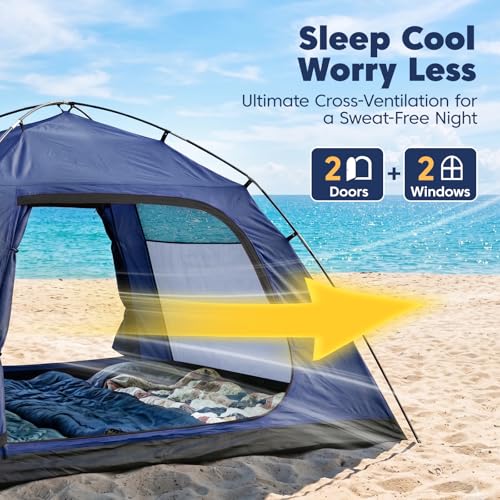
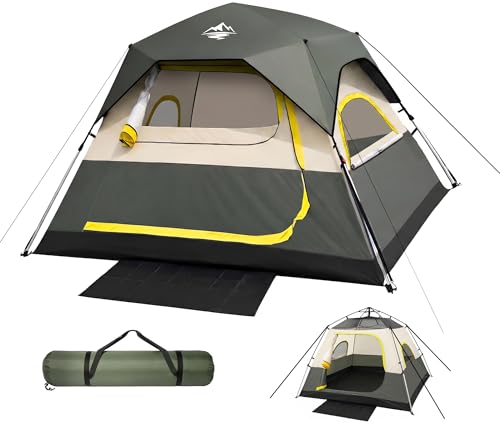
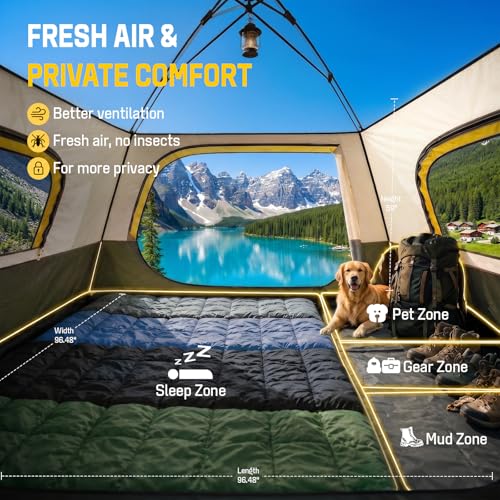
This tent earns its ‘Best Ventilation Design’ label. The mesh windows plus mesh ceiling create real cross-flow, and owners in hot climates praise how cool it stays overnight. The B3 mosquito-proof mesh is a detail I appreciate, many budget tents skimp here, leading to bugs sneaking in.
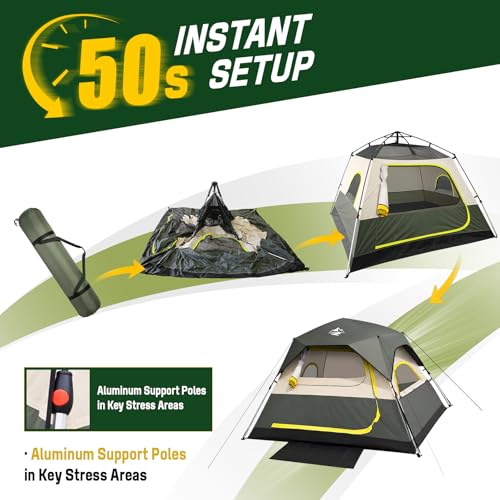
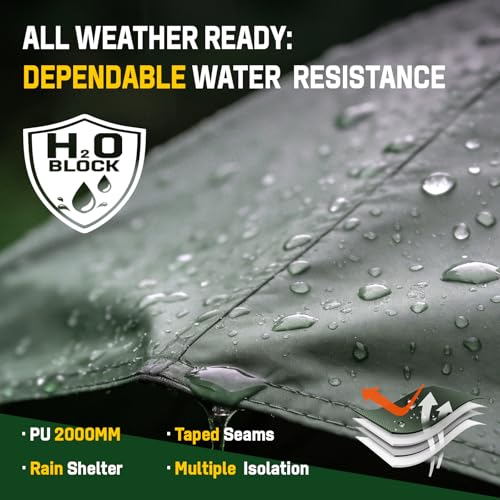
Setup in 50 seconds is believable thanks to pre-attached poles, and the 59-inch center height makes it feel airy. But the 2000mm waterproofing is the weak link. In heavy rain, some reviewers report dampness, especially if the guylines aren’t tensioned right. It’s best as a summer tent or fair-weather shelter. For hot, dry camping, the airflow wins.
Product photos

Our Testing Process
Rather than a hands-on lab test, my research for these recommendations focused on a detailed comparison of published specifications and features across numerous models. I weighed owner reviews from major retailers alongside expert opinions from established outdoor gear reviewers. As someone who’s spent years navigating the world of tents – from weekend trips to longer backcountry excursions – I applied my category knowledge to rank options against a set of clear criteria.
For lightweight 4-person tents, pack weight, waterproof rating, and ease of setup were the most heavily weighted factors. A lower weight is crucial for backpacking, while a higher waterproof rating (measured in mm) directly impacts comfort and dryness during inclement weather. Quick setup is a major convenience for families or those who don’t want to spend ages pitching a tent after a long day. Understanding these features is central to tent selection guide.
Specifications reliably indicate a tent’s potential for weather protection and its basic dimensions. However, I placed significant emphasis on owner feedback regarding real-world durability, ventilation effectiveness, and how well the tent holds up to wind. Reputation and consistent positive comments about build quality and longevity were key indicators, especially when assessing long-term value and avoiding common issues like leaky seams or broken poles. Considering these key tent features helped me narrow down the field.
How To Pick The Right lightweight 4 person tents
Picking the right shelter for a group of four doesn’t have to be overwhelming. I’ve seen too many families cramped into tents that just don’t fit, or battling leaks during unexpected downpours. Let’s get you set up with a tent that’s comfortable, reliable, and perfect for your adventures.
A quality lightweight 4-person tent balances pack weight with usable space, weather protection, and ease of setup. Key considerations include the denier and coating of the rainfly, the pole material (aluminum is preferred for durability), the floor material’s waterproof rating, and the overall packed size and weight. Prioritize features like full-coverage rainflies, taped seams, and robust ventilation to ensure comfort in various conditions.
Weight and Packability
For a 4-person tent, keeping the weight down is a balancing act. You want enough room for everyone, but you also don’t want to be burdened with a ridiculously heavy pack. I typically recommend looking for tents under 10 pounds, and ideally closer to 7-8 pounds if you’re planning on backpacking. Consider the materials used; polyester is generally lighter than canvas, and aluminum poles are lighter (and stronger) than fiberglass. Don’t just look at the total weight, either. Pay attention to the trail weight (fly, inner tent, and poles only) as that’s what you’ll actually be carrying.
Waterproofing and Weather Resistance
Don’t be fooled by terms like “water-resistant.” You need a tent that can genuinely withstand rain. Look for a rainfly with a PU (polyurethane) coating of at least 2000mm, and preferably 3000mm or higher. More importantly, check if the seams are taped or sealed. Taped seams prevent water from seeping through the needle holes. A bathtub floor (where the floor fabric extends up the sides) adds an extra layer of protection, and a good tent vestibule benefits provides a sheltered space to store muddy boots and gear.
- Coating Matters: A higher PU coating isn’t always better. Beyond 3000mm, you often see diminishing returns and increased cost.
- Floor Material: Look for a floor with a higher denier (D) rating for increased durability. 75D is a good starting point.
- Wind Resistance: A well-designed frame with guylines is essential for stability in windy conditions. Some tents, like the Mimajor, specifically emphasize reinforced ground stakes and adjustable guylines for this purpose.
A good rule of thumb: always overestimate the amount of rain you might encounter. It’s better to be prepared for a downpour than to be soaked and miserable.
Setup Speed and Ease of Use
Unless you enjoy fiddling with poles and cords for an hour, setup speed is a crucial factor, especially if you’re arriving at camp after dark. Pop-up tents like the Purebox are the fastest to set up, but they often sacrifice durability and weather protection. Instant tents, with pre-attached poles, are a great compromise. Even traditional dome tents can be relatively quick to pitch with a little practice. Before you head out, I strongly suggest setting up your tent at home to familiarize yourself with the process and make sure you have all the necessary parts. If you’re looking for more gear to make your adventures easier, check out some of the top 4 person backpacking tents available.
Lightweight 4 Person Tents Compared
Here’s a comparison of key specifications for several lightweight 4-person tents to help you choose the best option for your needs.
| Product Name | Capacity | Weight (lbs) | Waterproof Rating (mm) | Setup Time | Dimensions (ft) |
|---|---|---|---|---|---|
| Clostnature Lightweight 4-Person | 4 | 7.38 | 5000 | Quick | 7.3 x 7.8 |
| Purebox 4-Person Pop Up | 4 | 6 | N/A | Instant | N/A |
| FanttikOutdoor Zeta C4 Pro | 4 | 14.5 | N/A | 60 sec | 9.6 x 9.6 |
| Mimajor 4-Person Instant | 4 | 15.4 | 3500 | 60 sec | 8.04 x 8.04 |
| OLIXIS 4-Person Lightweight Dome | 4 | 8.7 | N/A | 3-5 min | N/A |
| Coleman Skydome 4-Person | 4 | N/A | N/A | < 5 min | 8 x 7 |
| 4-Person Instant Pop Up Cabin | 4 | 13.4 | 2000 | 50 sec | 8.04 x 8.04 |
Frequently Asked Questions
What’s the difference between a “trail weight” and a “packed weight”?
Trail weight refers to the weight of only the essential components you carry – the tent body, rainfly, and poles. Packed weight includes everything that comes with the tent, like stakes, guylines, and the carry bag, which can add a significant amount.
Are pop-up tents durable enough for regular use?
Generally, pop-up tents prioritize convenience over longevity. While quick to set up, they often use less durable materials and simpler construction compared to traditional dome or cabin-style tents, making them less suitable for frequent or rugged use.
What waterproof rating is truly necessary for a 4-person tent?
A rainfly coating of 2000mm is a minimum baseline for decent weather protection, but 3000mm offers a better margin of safety, especially if you anticipate heavier rainfall. Beyond that, increases in the mm rating yield smaller improvements for the cost.
How important are taped seams, and can a tent still be waterproof without them?
Taped seams are extremely important because they seal the needle holes created during manufacturing, preventing water from leaking through. A tent can claim a high waterproof rating, but without taped seams, it won’t perform well in sustained rain.
I’m planning a backpacking trip; what should I look for in a lightweight 4 person hiking tents?
Beyond a weight under 10 pounds, prioritize a tent with durable aluminum poles, a high-denier floor, and a fully-covering rainfly. Look closely at owner reviews for feedback on how the tent holds up in windy conditions, as backpacking often means exposure to more extreme weather.
The Bottom Line
Choosing a tent always comes down to what you’re willing to trade. Do you prioritize shaving every ounce of weight, even if it means a slightly higher price tag? Or are you looking for the most space and convenience for family camping, even if it adds a few pounds to your pack? For the best all-around performance, I recommend the Clostnature Lightweight 4-Person tent. It strikes a fantastic balance between weight, weather protection, and price, making it a solid choice for most adventurers.
If you’re on a tighter budget, the Purebox 4-Person Pop Up is a surprisingly decent option for fair-weather campers. And for those who value speed and ease of setup above all else, the Mimajor 4-Person Instant tent is hard to beat. Remember to also check out some of the reliable tent companies if you’re looking for a more established brand.
Ultimately, specs are just numbers. Focus on finding a tent that fits your group’s size, matches the conditions you’ll encounter, and is made by one of the top tent manufacturers. A well-chosen tent isn’t just about waterproof ratings or low weights; it’s about creating a comfortable and memorable experience under the stars.
