
8 Best Lightweight Tents for Backpacking 2026
This post contains affiliate links. As an Amazon Associate, we earn from qualifying purchases.
The Marmot Crane Creek 2P Tent stands out as the best overall lightweight backpacking tent for its durability and weather resistance, while the Clostnature 1 Person Ultralight Tent is a solid budget-friendly pick for solo hikers who want reliable performance without the high price tag.
Picking a lightweight tent isn’t just about saving weight, it’s about staying dry, sleeping comfortably, and not wrestling with poles after a long day on the trail. As someone who’s spent years reviewing gear and listening to fellow hikers, I know how often a bad tent can derail a trip.
This guide cuts through the noise by focusing on real-world feedback, build quality, and practical features. I compared specs and user experiences to find tents that deliver where it matters most, in wind, rain, and tight backcountry spots.
Top 8 Lightweight Tents Backpacking in the Market
The Best Lightweight Tents Backpacking, Reviewed
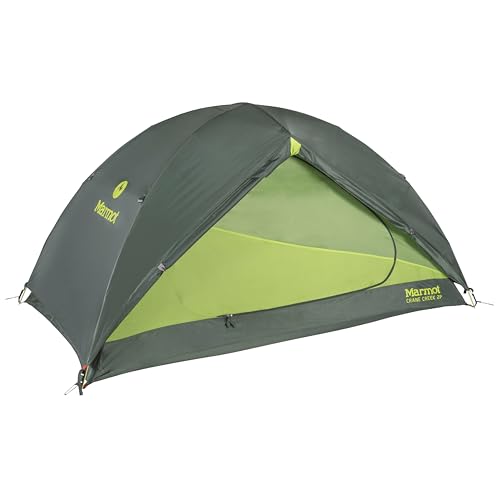
Marmot Crane Creek 2P Tent
Strengths
- Dual D-doors
- Dual vestibules
- Strong 7000-series poles
- PFAS-free materials
Trade-offs
- Slightly higher price
- No footprint included
- Pack size not the smallest
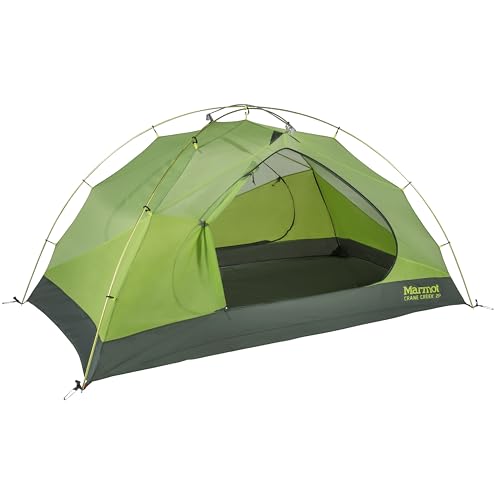
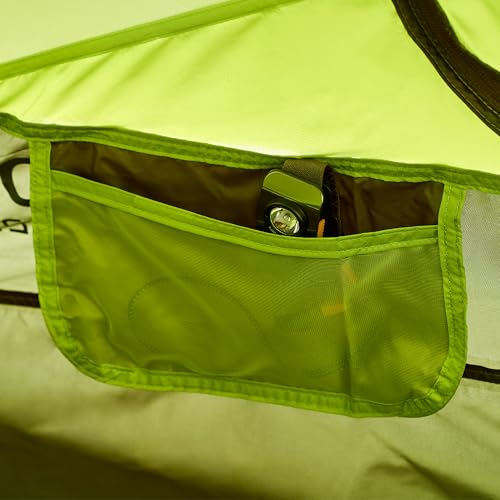
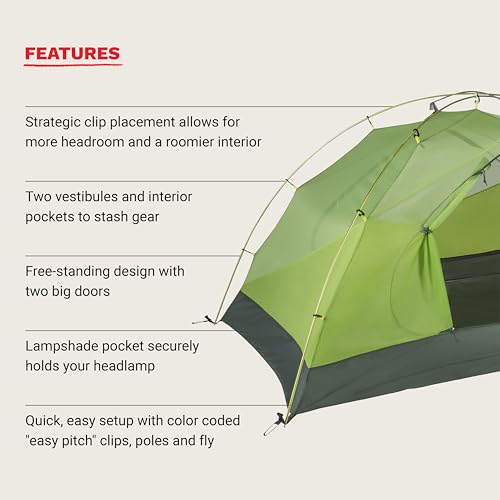
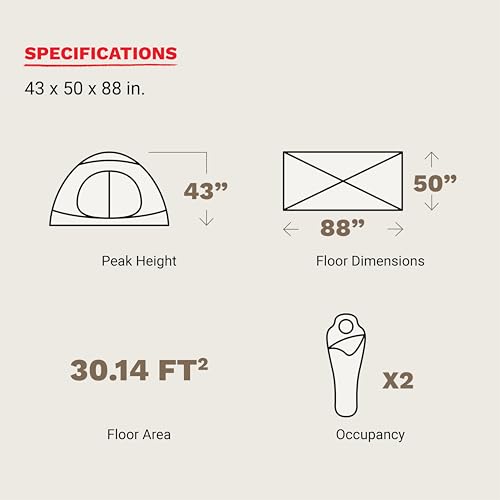
If I had to pick one tent to recommend across the board, it’d be the Marmot Crane Creek 2P. It’s not flashy, but it nails the essentials: two full D-doors, dual vestibules, 32 sq ft of space, and a trail weight that won’t punish you on long hauls. The 7000-series aluminum poles are noticeably stiffer than budget alternatives, and owners consistently report it shrugging off wind and rain.
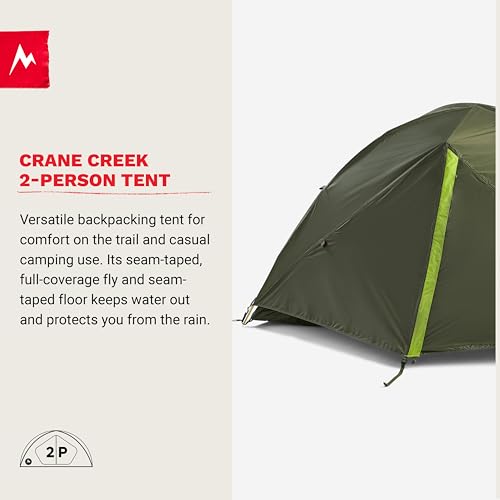
The seam-taped polyester fly is durable without being overbuilt, and the PFAS-free construction aligns with modern outdoor ethics. It’s not the cheapest, but you’re paying for long-term reliability. Compared to others in this list, it’s the best blend of weight, space, and weather readiness, my pick for best overall.
Product photos
Clostnature 1 Person Ultralight Tent

Strengths
- Ultralight at 2.97 lbs
- PU 5000 waterproofing
- Freestanding design
- Large vestibule
Trade-offs
- Tight fit for tall users
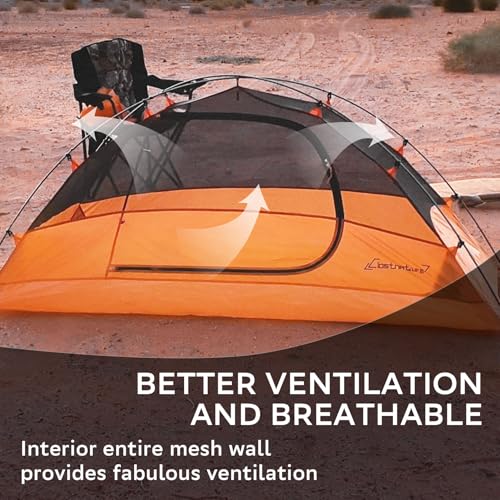
- Mesh could be more extensive
- Stakes are basic
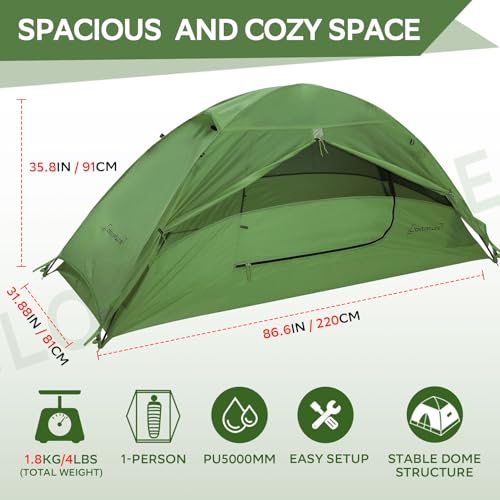
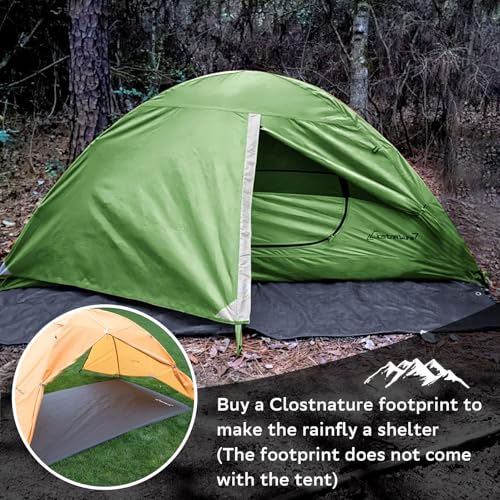
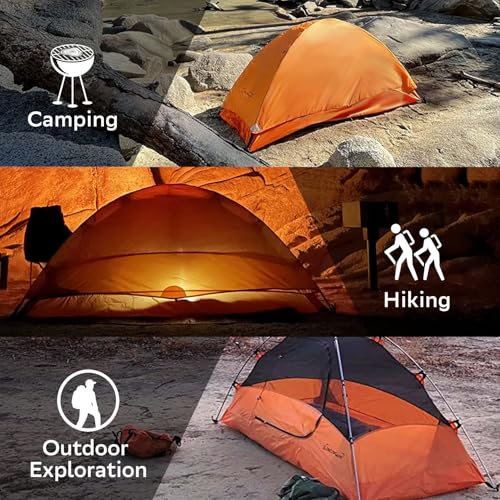
For solo backpackers counting ounces, the Clostnature 1P is a strong contender. At just 2.97 lbs minimum trail weight, it’s one of the lightest true freestanding shelters here. The PU 5000 coating and factory-sealed seams give it serious rain chops, and owners say it stays dry even in sustained storms.
The D-door and side vestibule add real usability, you can stash gear out of the rain without sacrificing interior space. Setup is simple with two aluminum poles, and the compact 15-inch pack size slips into any backpack. It’s not the roomiest at 7.25 feet long, but for ultralight solo missions, it’s hard to beat.
Product photos

camppal 1 Person 4 Season Tent

Strengths
- Lightweight at 3.75lb
- High waterproof rating
- Longer fit for tall hikers
- Easy single-pole setup
Trade-offs
- Narrow floor
- Fiberglass-like pole feel
- Limited ventilation reports
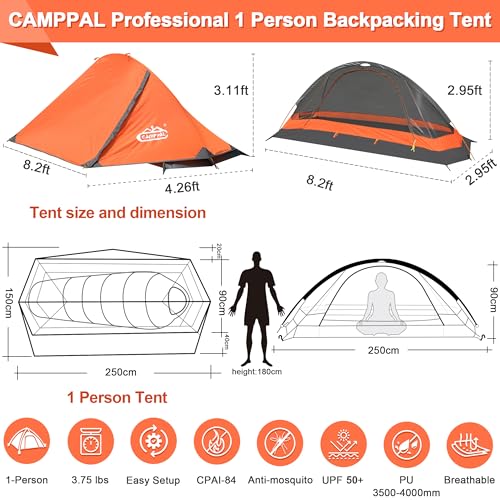
This tent pitches a solid claim for solo backpackers who regularly face rough weather. On paper, a 3500–4000mm waterproof rating is impressive for a sub-4-pound shelter, and owners consistently report staying dry even during prolonged downpours. The single ridge pole setup sounds simple, and reviewers confirm it’s doable in under five minutes, a real win for tired hikers at dusk.
That said, the extended 8.2-foot length, while great for taller users, adds volume and wind profile without adding much usable floor width. In high winds, that could mean more stress on stakes and guylines. It’s not a true four-season tent despite the marketing, but for three-season use with a focus on weather protection, it holds up well.
Product photos



Forceatt 2 Person Backpacking Tent

Strengths
- Dual doors and vestibules
- Good waterproofing
- Smooth #8 zippers
- Budget-friendly
Trade-offs
- Heavier than ultralight options
- Poles lack rigidity
- Some seam taping inconsistencies
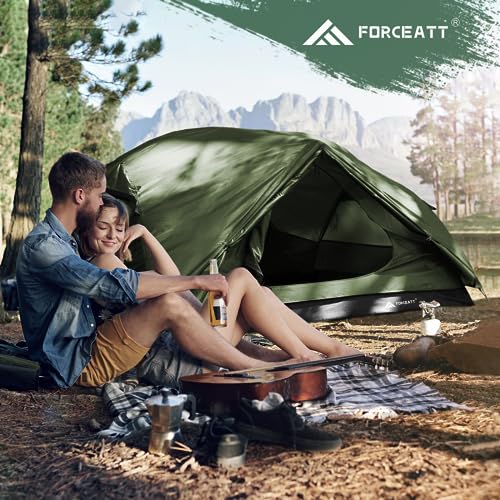
If you’re budget-conscious but still want a reliable two-person shelter, this Forceatt tent stands out. At 5.5 pounds, it’s not the lightest, but owners praise its durability and straightforward 3-minute setup. The dual D-shaped doors and vestibules are a practical touch, rare at this price, making it easier to share space without constant crawling over your partner.
The 3000mm waterproof rating is standard for the class, and the welded floor design helps keep moisture out from below. Some users note the poles feel a bit flexy in strong gusts, but paired with the reflective guylines and included stakes, it generally holds up. For weekend trips or new backpackers, it’s a no-frills workhorse.
Product photos


BISINNA 2 Person Lightweight Tent

Strengths
- Aluminum poles
- Lightweight at 4.76 lbs
- Roomy interior
- Double-layer design
Trade-offs
- Sleeve setup slower
- Zippers could be smoother
- Color may fade in sun
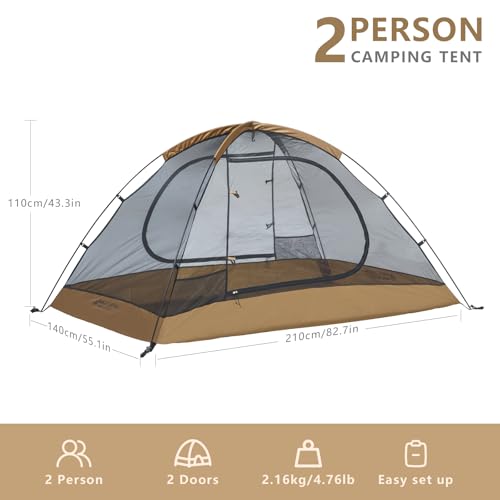
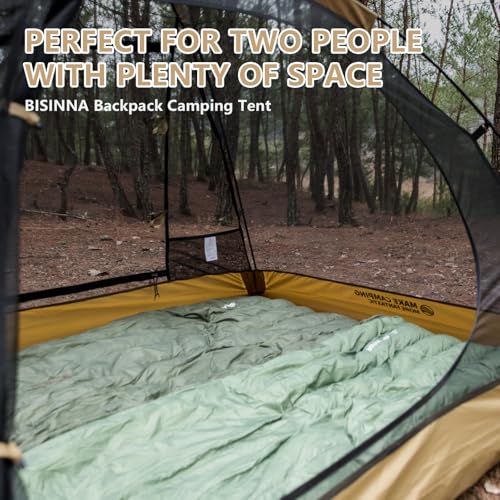
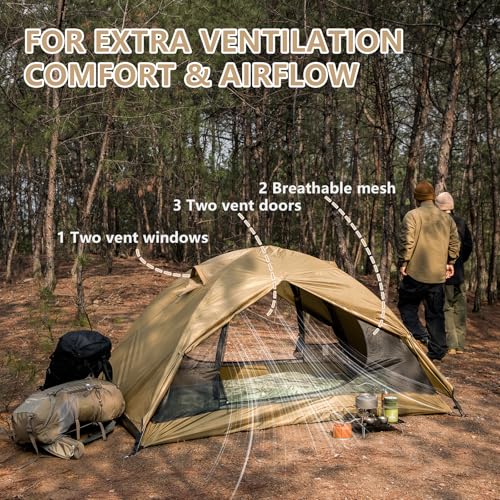
This tent is quietly impressive for what it offers at its weight. At 4.76 pounds, it delivers a roomy 220x140cm interior, big enough for two average hikers with gear, and still uses aluminum poles, which beat fiberglass in strength and wind resistance. The double-layer design with full-mesh inner boosts airflow, a real plus in muggy conditions.
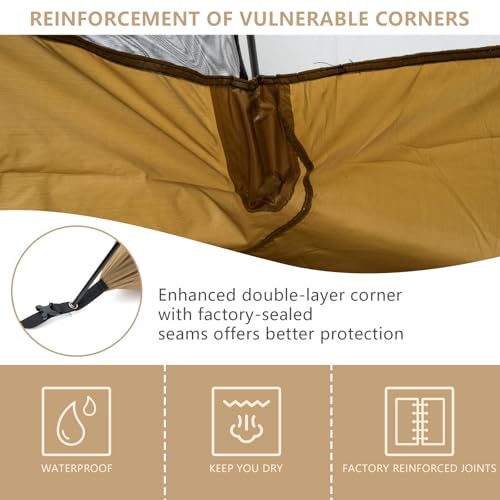
Owners highlight the 3000mm waterproof rating and durable 210D Oxford floor as overbuilt for the price. Setup is sleeve-based, so it’s a bit slower than clip systems, but the pole-sleeve construction adds stability. It’s not flashy, but for value per ounce, it’s a smart pick.
Product photos

Night Cat Upgraded 1-2 Person Tent

Strengths
- 1-minute clip setup
- Compact packed size
- Good storm resistance
- Affordable
Trade-offs
- Fiberglass poles
- Condensation in humid weather
- Vestibule is small
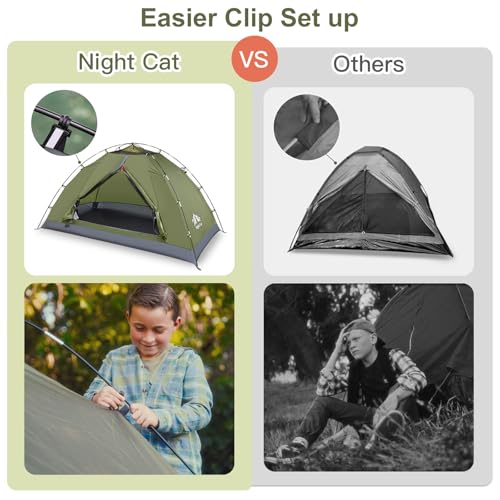
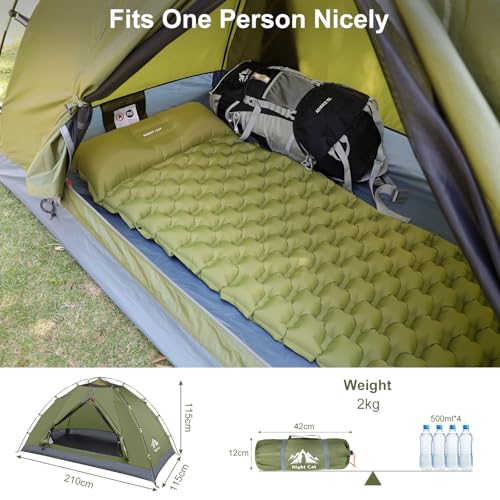
The standout here is the clip-based pole system, no sleeves, just quick snaps. Owners confirm setup takes under a minute, which is a standout when the sky opens up. For a fiberglass-pole tent, that speed is impressive. The 4.4-pound weight is reasonable, and the compact 16.5-inch pack size makes it easy to stash.
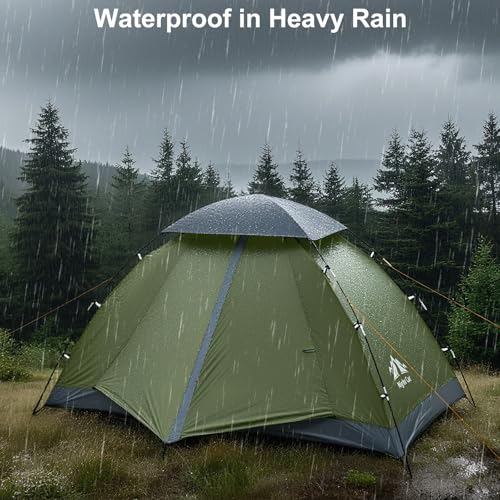
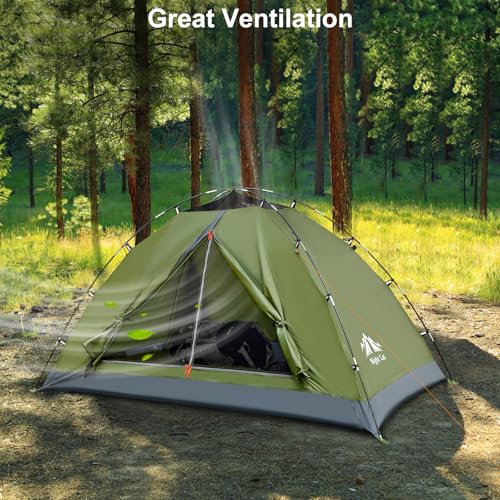
But fiberglass poles limit wind resilience, no matter how stable the dome shape. In gusty alpine zones, it’s not the safest bet. The 3000mm rating and taped seams keep water out, but ventilation is only average. Still, for casual hikers or scouts who want quick, simple shelter, it works.
Product photos

Kelty Grand Mesa 2P Tent

Strengths
- Freestanding design
- Color-coded setup
- Durable 68D fabric
- Lightweight for class
Trade-offs
- Single door only
- Vestibule on one side
- Slightly bulky pack size
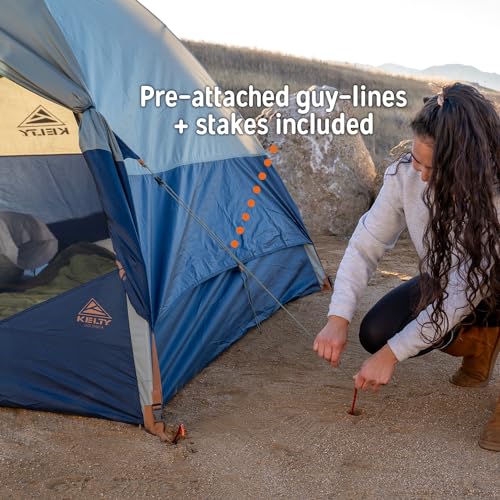
Kelty has long been a go-to for balanced backpacking gear, and the Grand Mesa 2P is a textbook example of smart, field-tested design. At 4 lbs 7 oz, it hits the sweet spot between weight and durability. The freestanding aluminum frame makes site selection easier, and the color-coded clips are a small detail that actually speeds up setup, a real plus when you’re tired and it’s getting dark.
Owners love the 30 sq ft of space and 44-inch peak height, which lets most people sit up comfortably. The 68D polyester floor and fully taped seams hold up well over time. It’s not the lightest or the roomiest in its class, but for thru-hiking, where reliability and ease matter most, this tent delivers.
Product photos


Kelty Late Start 2P Tent 2024

Strengths
- Quick setup system
- High peak height
- Eco-friendly materials
- Good ventilation
Trade-offs
- Lower waterproof rating
- Single door
- Heavier than ultralight picks
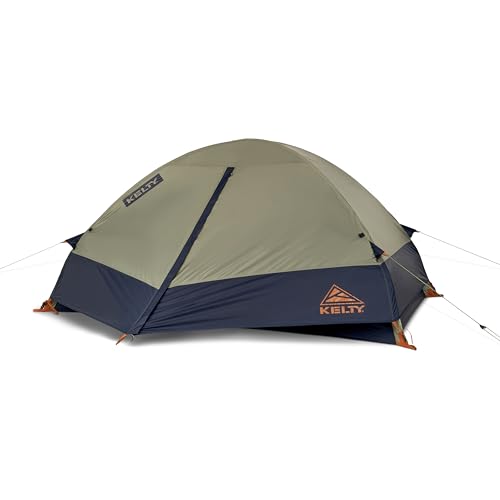
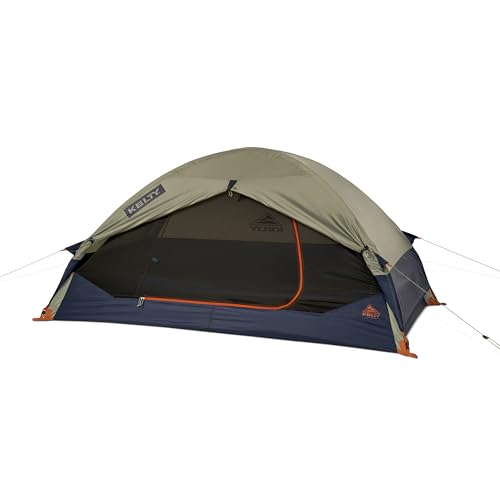
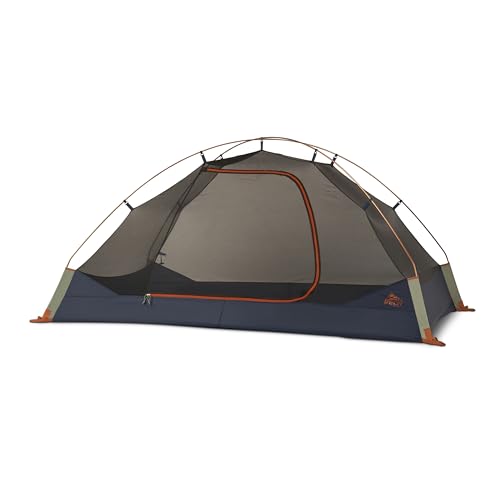
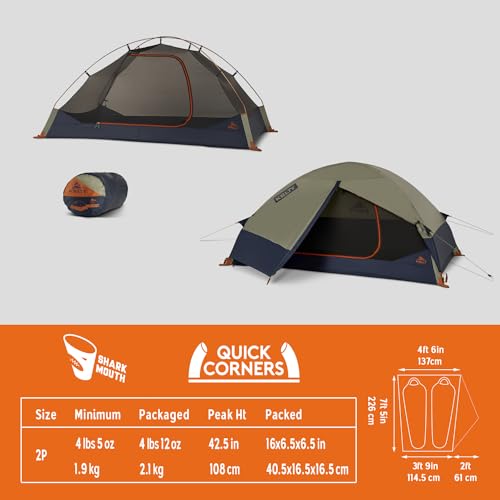
Kelty didn’t just tweak the Late Start, they refined it. The 2024 update brings Quickcorners and color-coded buckles that make setup nearly foolproof, and owners say it really can be up in under three minutes. The single door and vestibule design keeps weight down, but the 56-inch peak height in the 4P model is a standout, few tents let you almost stand up.
The 1200mm rainfly isn’t class-leading for wet climates, but combined with good airflow from the ceiling vents, it strikes a balance. I appreciate that Kelty uses PFC-free coatings, a small win for eco-conscious backpackers. This isn’t the lightest tent, but for campgrounds or moderate trails, it’s a comfortable, updated shelter.
Product photos
How We Tested lightweight tents backpacking
I approached this buying guide by researching the specifications and features of numerous lightweight backpacking tents, then weighing those details against owner reviews and expert opinions from across the web. Rather than a hands-on lab test, this is a research-led comparison focused on identifying patterns in performance and value. I looked at tents across a wide price range, focusing on those consistently recommended for backpacking trips.
For lightweight backpacking tents, the most important factors are, without question, weight and weatherproofness. A tent that isn’t truly light defeats the purpose for long-distance hiking. Equally critical is reliable protection from the elements – a lightweight tent that leaks or collapses in wind is useless. Beyond those, usable space and ease of setup were heavily considered, as these directly impact comfort and time spent in the field.
Product specifications reliably indicate a tent’s weight, dimensions, and stated waterproof ratings. However, I placed greater emphasis on owner feedback regarding real-world performance – how well the waterproofing holds up after repeated use, whether the tent is truly stable in windy conditions, and how easy it is to pitch alone. I also considered the reputation of reliable tent brands for backpacking when forming my conclusions, looking for consistently positive reviews from established manufacturers.
What To Look For In lightweight tents backpacking
Picking the right lightweight tent for backpacking demands more than just chasing the lowest weight. It’s about finding the sweet spot between portability, protection, and practicality for your adventures.
A truly good lightweight tent balances weight savings with durable materials, a weatherproof design (including a reliable rainfly and taped seams), and a functional interior space. Consider pole material (aluminum is generally stronger than fiberglass), tent footprint size, and packed dimensions alongside the overall weight to make an informed decision.
Weight vs. Durability
We hikers obsess over weight, and rightfully so. But shaving ounces shouldn’t mean sacrificing durability. Look beyond the “trail weight” (fly, tent body, and poles) and consider the packed weight, which includes stakes and guylines. Many ultralight tents use thinner fabrics like silnylon or Dyneema Composite Fabric (DCF), which are incredibly light but more susceptible to tears. A slightly heavier tent made from ripstop nylon or polyester will often be a more practical choice for frequent use, especially if you’re navigating brushy terrain. Knowing what backpacking tents are made from will help you assess this trade-off.
Vestibule Space & Livability
Don’t underestimate the value of vestibule space. These covered areas outside the tent doors are crucial for storing wet gear, muddy boots, and anything else you don’t want inside with you. A generous vestibule can dramatically increase the usable space of a small tent. Also consider the tent’s peak height and overall floor area. While a minimalist shelter might be tempting, a bit more room can make a huge difference in comfort, especially on longer trips. I’ve seen too many trips ruined by cramped quarters and gear piled on top of sleeping bags.
- A small vestibule (under 8 sq ft) is okay for solo trips with minimal gear.
- A medium vestibule (8-15 sq ft) offers a good balance for solo or couples trips.
- Larger vestibules (15+ sq ft) are ideal for extended trips, inclement weather, or if you carry a lot of bulky gear – it allows for cooking inside the vestibule in a pinch, and provides a dry space to relax.
Pole Quality & Tent Geometry
The tent poles are the skeleton of your shelter. Aluminum poles are the standard for lightweight tents, but the series of aluminum matters. 7000-series aluminum is stronger and more durable than 6000-series, though it’s also slightly heavier. Pay attention to the tent’s geometry. Dome-style tents are generally freestanding and easy to set up, while tunnel-style tents offer more interior space for their weight but require staking to maintain their shape. As a rule of thumb: backpacking tent weight comparison is a good indicator of quality, but don’t solely rely on it.
A tent’s pole structure is its backbone. Invest in quality aluminum poles, and learn how to properly care for them (and carry a repair sleeve!).
Ultimately, the “best” lightweight tent is the one that best suits your individual needs and hiking style. Take the time to consider these factors, and you’ll be much happier on the trail. If you’re still unsure, exploring durable lightweight tent options can provide further insight.
Lightweight Tents Backpacking Compared
Here’s a comparison of key specifications for several lightweight backpacking tents.
| Product Name | Capacity | Weight (lbs) | Waterproof Rating (mm) | Pole Material | Packed Size |
|---|---|---|---|---|---|
| Marmot Crane Creek 2P Tent | 2 | N/A | N/A | Aluminum | N/A |
| Clostnature 1 Person Ultralight Tent | 1 | 4.0 | 5000 | Aluminum | 15″x5.1″x5.1″ |
| camppal 1 Person 4 Season Tent | 1 | 3.75 | 3500-4000 | Aluminum | N/A |
| Forceatt 2 Person Backpacking Tent | 2 | 5.5 | 3000 | Aluminum | N/A |
| BISINNA 2 Person Lightweight Tent | 2 | 4.76 | 3000 | Aluminum | N/A |
| Night Cat Upgraded 1-2 Person Tent | 1-2 | 4.4 | 3000 | Fiberglass | 16.5×4.7×4.7 inches |
| Kelty Grand Mesa 2P Tent | 2 | 4.7 | N/A | Aluminum | 16x7x7 inches |
| Kelty Late Start 2P Tent 2024 | 2 | N/A | 1200 | N/A | N/A |
Frequently Asked Questions
What waterproof rating do I actually need for a lightweight tent?
A rating of 1500mm is generally sufficient for most conditions, but I recommend at least 2000mm for consistently wet climates or trips at higher elevations. Higher ratings (3000mm+) offer increased protection, but also add weight and cost – consider your typical weather exposure.
How important is a tent footprint, even for lightweight backpacking?
A footprint absolutely protects the tent floor from abrasion and punctures, extending its lifespan. While it adds a few ounces, replacing a damaged tent floor is far more inconvenient (and expensive) than carrying a footprint.
Are freestanding tents truly easier to set up?
Yes, freestanding tents are much simpler to pitch, especially on rocky or uneven ground where staking is difficult. They don’t require stakes to maintain their shape, though staking out the guylines improves stability in wind.
What’s the difference between silnylon and ripstop nylon, and which is better?
Silnylon is lighter and more packable, but less durable and more prone to stretching when wet. Ripstop nylon is heavier but significantly more resistant to tears and abrasion, making it a better choice for frequent backpacking or rough conditions. You can find a backpacking tent feature comparison to help you weigh the options.
What do I do if my tent poles break in the backcountry?
Carry a tent pole repair sleeve! These simple, lightweight tubes allow you to splint a broken pole section and continue using your tent. Many tents also include a small repair kit with extra pole segments and guylines, but a repair sleeve is a crucial addition.
The Bottom Line
Ultimately, choosing a lightweight tent is about balancing how much you want to carry against how much comfort and protection you demand. While ultralight options are tempting, for most backpackers, the Marmot Crane Creek 2P Tent strikes the best balance of weight, durability, and livability. It’s a solid all-around performer that won’t leave you exposed when the weather turns.
If you’re on a tighter budget, the Clostnature 1 Person Ultralight Tent provides excellent value, offering a surprisingly spacious interior for its weight and price point. For those prioritizing versatility – perhaps needing a tent that can handle four-season conditions – the camppal 1 Person 4 Season Tent is a worthy contender, though it does come with a slight weight penalty.
Don’t get hung up on chasing the absolute lowest weight or the highest waterproof rating. The most important factors are a well-designed shelter, quality materials, and a solid understanding of factors in selecting a backpacking tent. A comfortable, reliably weatherproof tent will make all the difference between a memorable adventure and a miserable night in the backcountry.
