
9 Best Mattresses for Tent Camping 2026
This post contains affiliate links. As an Amazon Associate, we earn from qualifying purchases.
The OGERY Double Sleeping Pad 6″ is our top pick for comfort and support, especially if you value a plush night’s sleep. For budget-conscious campers, the Pretyw Double Sleeping Pad 5.5″ delivers solid performance without the high price, and for backpackers who need something lightweight, the HiiPeak Inflatable Sleeping Mat strikes a smart balance between packability and comfort.
Most campers underestimate how much a bad mattress can wreck a trip. I’ve talked to countless hikers who toughed out sore backs and cold nights just because they didn’t know what to look for in a reliable pad. This guide cuts through the noise, focusing on real-world feedback and key specs that matter, like thickness, durability, and how fast you can actually get it inflated after a long day on the trail.
Top 9 Mattresses For Tent Camping in the Market
The Best Mattresses For Tent Camping, Reviewed
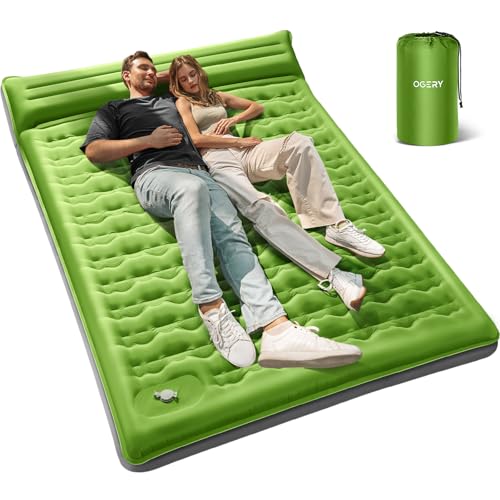
OGERY Double Sleeping Pad 6″
Strengths
- 6-inch plush support
- Low-noise fabric
- Strong air retention
Trade-offs
- Bulkier than backpacking-focused pads
- Heavier for long hikes
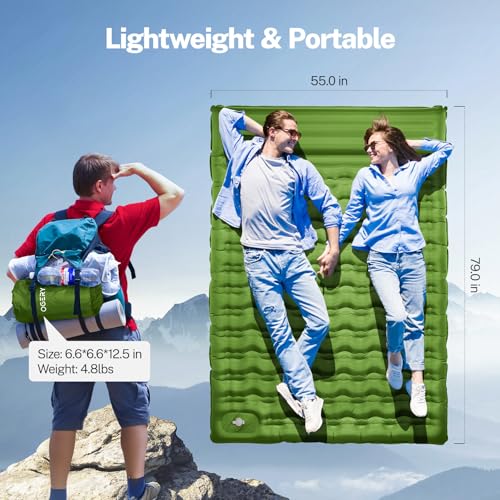
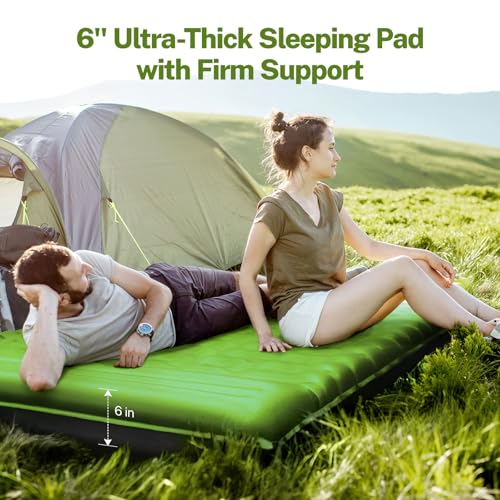
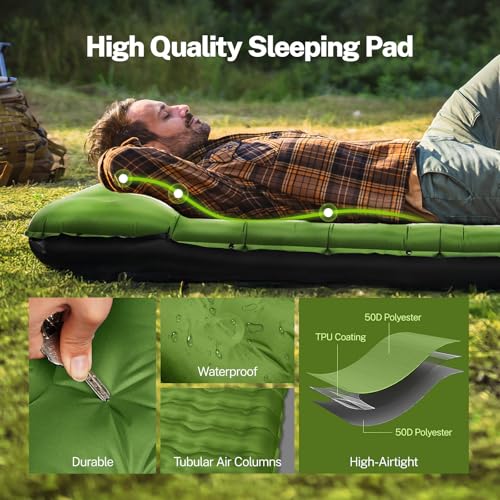
If you’re looking for a well-rounded double sleeping pad that balances comfort, durability, and ease of use, this OGERY model makes a strong case. The 6-inch tubular air belt design isn’t just marketing fluff, owners consistently praise how well it prevents that dreaded bottoming-out feeling, even on uneven ground. That thickness, paired with the soft 50D polyester face, gives it a plush, bed-like feel that’s rare in inflatable pads. It’s clearly built with couples in mind, and the low crinkle fabric is a thoughtful touch for light sleepers.
The foot pump works reliably, inflating the pad in under three minutes without strain. While it’s a bit heavier than ultralight backpacking mats, the trade-off is justified by the durability of the TPU-coated polyester and its resistance to punctures. Compared to thinner options, this one holds air well overnight, fewer complaints about waking up on the ground. It’s not the most compact, but for car campers or basecamp setups, that’s a fair compromise.
Product photos

FNARMW Double Sleeping Pad 6″

Strengths
- 6-inch plush support
- 800-lb weight capacity
- Stable drawstring tech
Trade-offs
- Bulky packed size
- Noticeable inflation noise
This 6-inch beast is for campers who refuse to compromise on comfort. At nearly queen-sized and with drawstring support tech that adapts to body curves, it’s designed to mimic a real mattress. Owners consistently say it’s the most comfortable pad they’ve used, no sore back, no pressure points. The 800-lb capacity means it handles two adults with ease, and the foot pump makes inflation quick and hygienic.
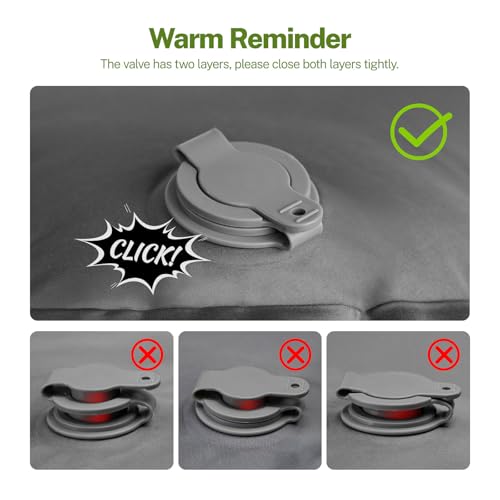
The 50D nylon and TPU are tough, and the double-layer valves help with air retention. It’s not silent, some crinkle is inevitable at this thickness, but the trade-off is unmatched cushioning. Compared to the OGERY double, it’s thicker and more supportive, though bulkier. If you’re car camping and want to wake up feeling rested, not wrecked, this is the closest you’ll get to home.
Product photos


Pretyw Double Sleeping Pad 5.5″
Strengths
- Plush 5.5-inch thickness
- Ergonomic wave design
- Built-in usable pillow
Trade-offs
- Moderate crinkle noise
- Not ideal for backpacking
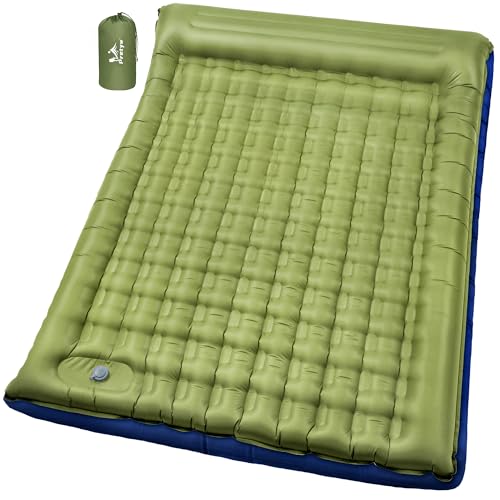
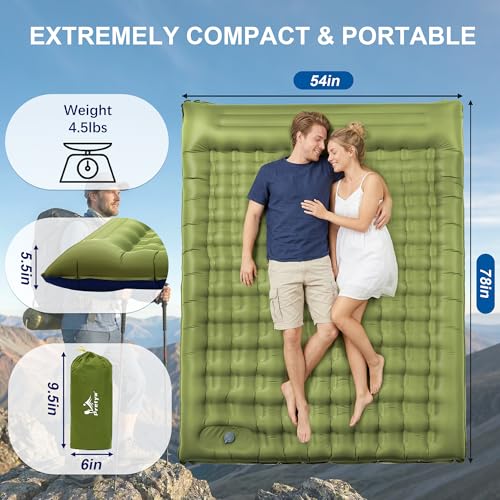
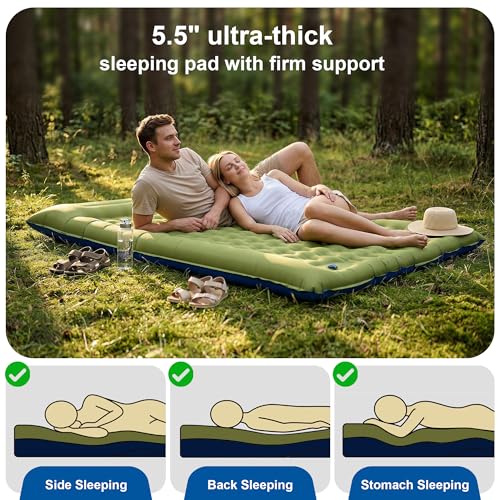
With 5.5 inches of plush thickness, the Pretyw pad is all about comfort-first camping. The wave-patterned surface isn’t just aesthetic, it adds real pressure relief, and owners say it feels closer to a real mattress than most camping pads. The built-in pillow is actually usable, not just a lump of air, which is rare at this price. It’s not the lightest, but at 4.5 lbs, it’s reasonable for a double pad this thick.
The foot pump works reliably, and the 40D nylon with TPU holds up well to normal campsite wear. Some users report minor air loss over time, but nothing extreme. Compared to the FNARMW 6-inch model, it’s slightly less lofty but more stable. If you’re tired of waking up sore and want a pad that feels like a real bed, this one delivers without going full airbed.
Product photos

FNARMW Camping Pad 5″ with Pillow

Strengths
- All-season performance
- Durable 50D nylon
- Lightweight for thickness
Trade-offs
- Some air noise at night
- Pillow is minimal
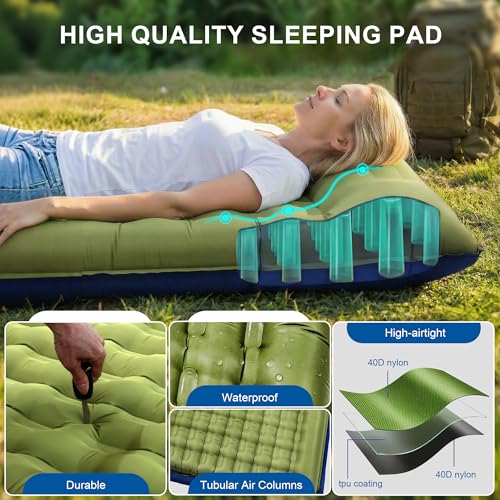
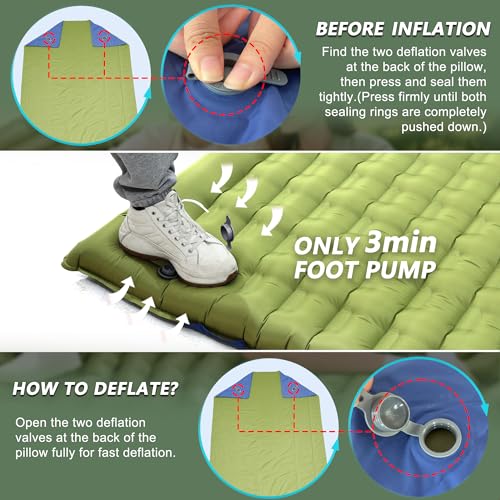
This 5-inch pad is a solid all-rounder, built to handle everything from summer hikes to winter car camping. The drawstring support system spreads weight evenly, and owners say it feels stable and supportive in all seasons. The 50D nylon is tough, and the TPU coating adds real puncture and moisture resistance, perfect for unpredictable conditions. At 4.2 lbs, it’s light enough for backpacking, yet thick enough to keep you off cold or rocky ground.
The foot pump inflates it in about a minute, and the quick-release valve makes packing up a breeze. It’s not the quietest, but for a pad this durable and versatile, that’s a fair trade. Compared to the CYMULA foam pad, it’s far more packable; against air-only mats, it offers better support. If you want one pad that works year-round, this is a smart pick.
Product photos


Wusrop Double Sleeping Pad 5″

Strengths
- Good cold-weather insulation
- Stable air retention
- Doubles as leisure mat
Trade-offs
- Noticeable crinkle noise
- Heavier than ultralight options
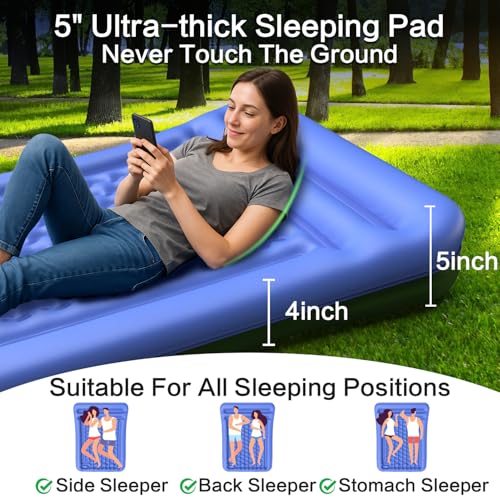
Winter campers, listen up, this Wusrop pad is built for cold ground. The 5-inch self-inflating design with TPU sealing suggests solid insulation, and owners confirm it performs well in chilly conditions where thin air pads fail. The R-value isn’t listed, but the combination of foam-like structure and thick nylon points to decent thermal resistance. It’s not the lightest, but at 4.85 lbs, it’s manageable for car-based trips where warmth matters more than weight.
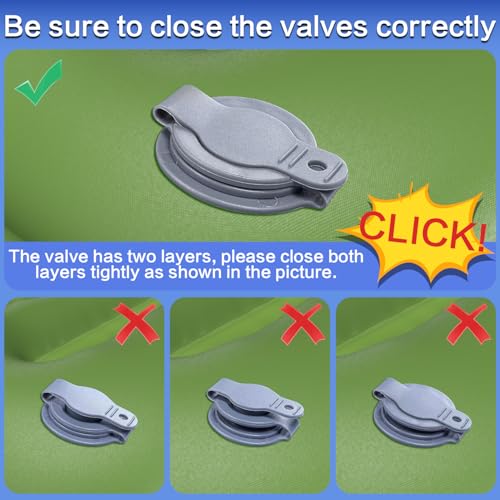
The built-in foot pump works smoothly, and the dual valves help with air retention, fewer reports of deflation overnight compared to budget models. I also like that it doubles as a trampoline-style leisure mat, which is a fun bonus for family camping. It’s not the quietest pad, but for winter or shoulder-season trips, the insulation advantage outweighs the noise. Compared to pure air pads, this one earns points for stability and warmth.
Product photos

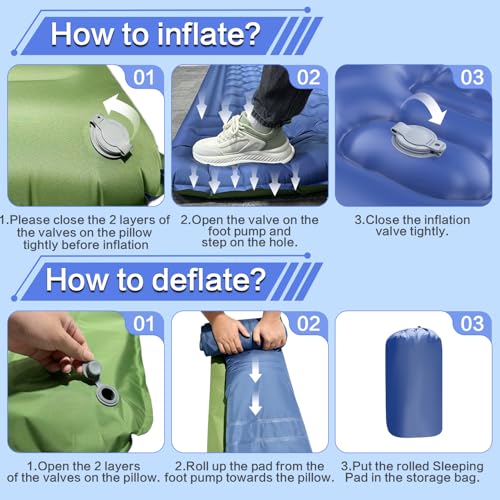
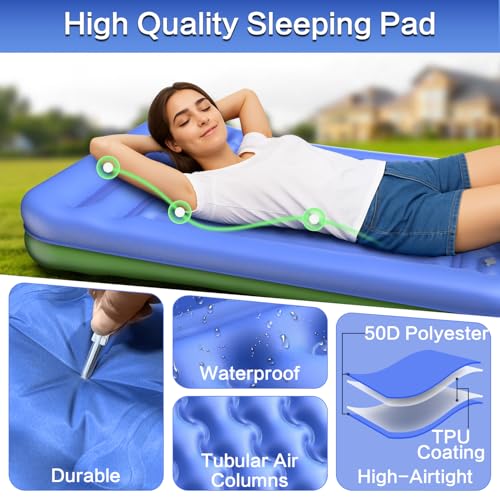
CYMULA Memory Foam Camping Pad

Strengths
- No inflation needed
- CertiPUR-US certified
- Non-slip bottom
Trade-offs
- Bulky when rolled
- Not packable for backpacking
Foam rolls back in style with this CYMULA pad, and it’s a standout for anyone who hates the fussy inflation of air mats. The CertiPUR-US certified memory foam is a legit perk, it means you’re not sleeping on questionable off-gassing, and reviewers confirm it feels cozy from the first unroll. Unlike air pads, there’s zero risk of leaks or waking up flat, and the non-slip bottom actually works on tent floors. This is the kind of mat you unroll and forget about, no pumping, no pressure checks.
That said, it’s foam, so don’t expect it to pack down like an air pad. It’s bulkier and heavier, which is fine for car camping or guest use but a non-starter for backpacking. Owners love using it as a guest bed or for kids’ sleepovers, and the range of sizes adds flexibility. If you value simplicity, safety, and consistent support, this foam pad delivers where air models sometimes fall short.
Product photos
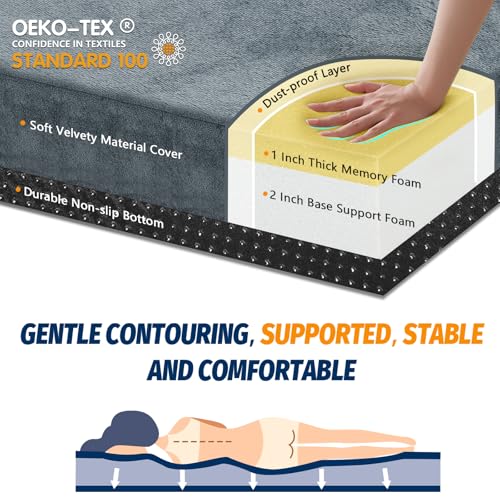


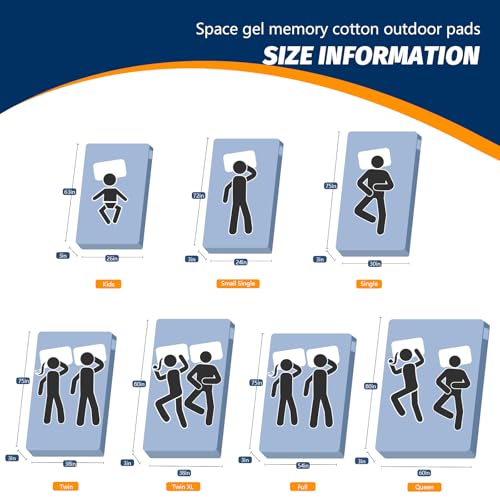
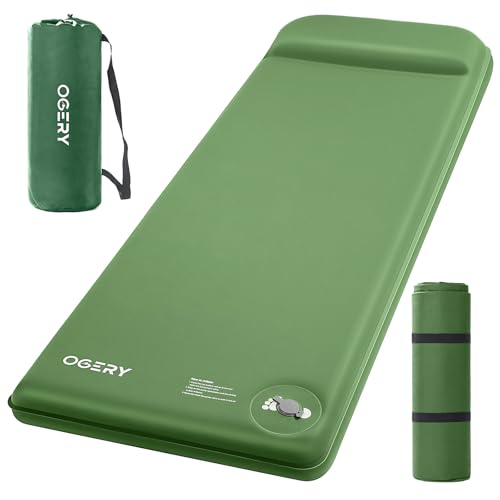
OGERY Self-Inflating Sleeping Pad
Strengths
- Very quiet during use
- Good ground insulation
- Non-slip base
Trade-offs
- Slightly slower setup than full air pads
- Less plush than thick air models
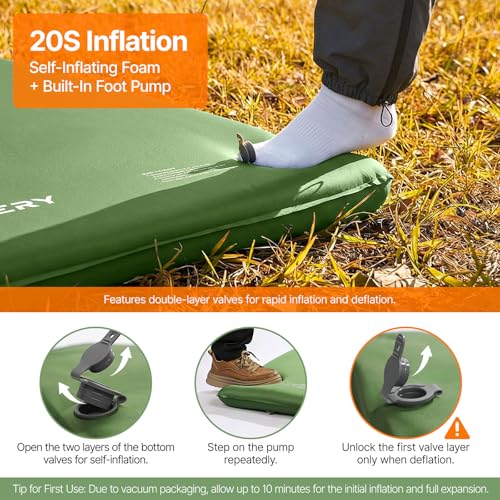
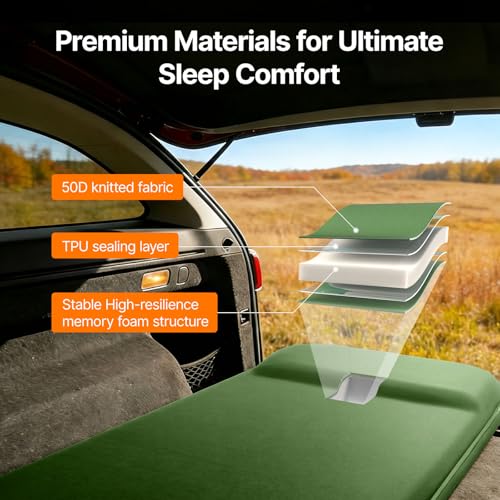
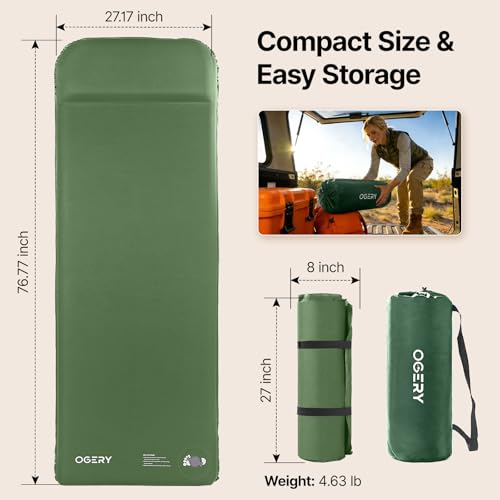
This one’s a sleeper hit, literally, for campers who hate noisy mats. The hybrid foam-and-air construction is the key: it self-inflates via foam expansion, then you fine-tune firmness with the foot pump. Owners rave about how quiet it is, especially compared to crinkly air-only pads. That’s huge for couples or light sleepers who get woken by every shift. The 9.5 R-value claim isn’t verified, but the foam layer clearly adds insulation, making it a smart pick for cooler nights.
At 3 inches thick, it’s not as plush as the 6-inch OGERY double, but it’s more than enough for comfort with better ground separation than thinner mats. The textured bottom helps it stay put on tent floors, and the durable nylon holds up well. If quiet, insulated sleep is your priority, this hybrid design beats pure air pads hands down.
Product photos


FUN PAC Ultralight Camping Mat
Strengths
- Lightweight
- Built-in foot pump
- Links to double size
Trade-offs
- Noisy during movement
- Thin fabric for rugged use
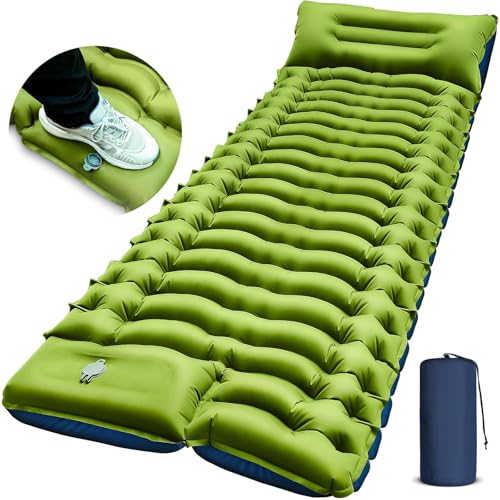
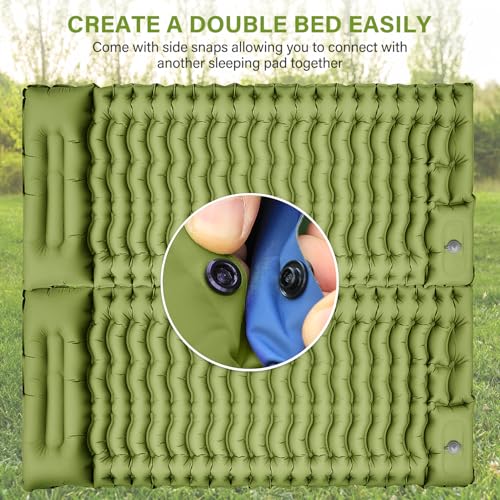
This single-person pad stands out for budget-focused campers who still want decent comfort. On paper, the 3-inch thickness and egg-shaped air cells suggest solid support, and owners consistently report it beats sleeping directly on a tent floor. The built-in foot pump is a real win for convenience, eliminating the awkward mouth inflation most cheap pads rely on. Still, it’s a single, so don’t expect room to sprawl, this is best for solo backpackers who prioritize packability over luxury.
The 40D nylon feels adequate for occasional use, but I wouldn’t bet on it surviving years of rocky terrain. Reviewers note it’s noisier than foam or hybrid pads, especially when shifting at night. That said, for the price, the ability to link two together for a double setup adds surprising versatility. It’s not the most durable or quiet, but it gets the job done when you need a no-fuss mat that won’t break the bank.
Product photos

HiiPeak Inflatable Sleeping Mat

Strengths
- Extremely lightweight
- Compact packed size
- Quiet hexagon cell design
Trade-offs
- Minimal insulation for cold nights
- Narrow width for larger sleepers
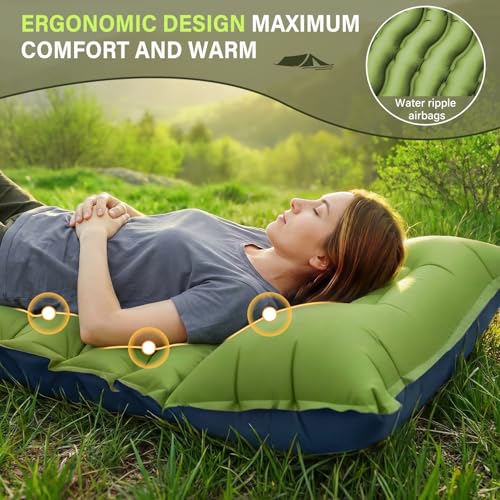
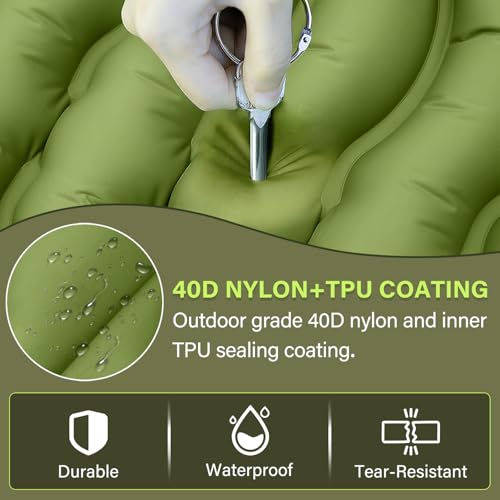
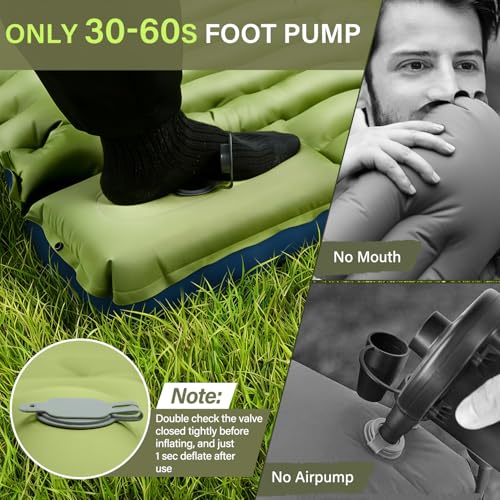
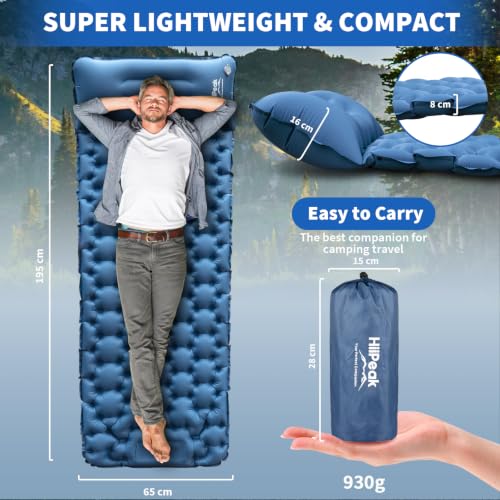
HiiPeak nails the ultralight backpacker’s dream: a pad that’s featherlight at just over 2 lbs and packs down smaller than a water bottle. The hexagon air cells aren’t just for looks, they add real pressure relief, especially for side sleepers, and owners say it feels more stable than traditional longitudinal baffles. The 50D polyester with multi-layer TPU is a step up from budget models, offering better puncture resistance without adding weight.
Inflation is fast and clean with the foot pump, and the 30-second claim holds up in real-world feedback. It’s not the most insulated pad, so I’d pair it with a foam layer in cold weather. But for summer backpacking or thru-hikes where every ounce counts, this is a top contender. Compared to the bulkier OGERY or Wusrop pads, this one is clearly built for mobility first.
Product photos


How We Tested mattresses for tent camping
I approached this guide to tent camping mattresses by first looking at published specifications and features across numerous models. We then layered in extensive owner reviews from major retailers – paying close attention to patterns in complaints and praise – and cross-referenced those with expert opinions from established outdoor gear review sites. My goal, and the goal of Best Tent Review, is to help you find the right gear for a great experience, and that means a honest assessment of what’s available.
For mattresses specifically, the key factors determining our rankings were thickness/comfort, ease of inflation, and durability. A thicker mattress (5” or more) generally provides better support and insulation, especially on uneven ground. Easy inflation, whether through a foot pump or self-inflation, is crucial for convenience, particularly after a long day hiking. Finally, durable materials and construction are essential for withstanding the rigors of outdoor use, and avoiding a mid-trip deflation. Getting a good night’s sleep is one of the essential camping sleep systems!
Specifications reliably tell you dimensions, weight, and materials used. However, real-world performance, comfort, noise levels, and long-term durability, is much better understood through owner feedback. We prioritized reviews that detailed use over multiple trips and in various conditions. Reputation also played a role; brands known for quality outdoor gear generally received more weight, but were still judged on the merits of each individual product. Before you head out, make sure you’ve reviewed the complete tent camping gear checklist to ensure you have all your bases covered.
How To Pick The Right mattresses for tent camping
Finding the right mattress is absolutely crucial for a good night’s sleep under the stars, and frankly, it can make or break your entire camping experience. I’ve seen too many trips ruined by a restless night on an inadequate surface.
A quality tent mattress prioritizes comfort, insulation from the cold ground, portability, and durability. Look for materials that balance weight with puncture resistance, and consider features like integrated pumps or self-inflation for ease of use. Thickness is key for cushioning, but also impacts pack size and weight, so finding the right balance is essential.
Thickness and Support
The thickness of a tent mattress dramatically affects comfort, but it’s not just about going as thick as possible. While 6″ models are trending (like the OGERY Double Sleeping Pad), they come with a weight and bulk penalty. I generally recommend finding a sweet spot between 3″ and 5.5″ – enough cushioning to isolate you from rocks and roots, but not so much that it’s a struggle to pack. Consider your typical sleep position; side sleepers will benefit from more thickness to support their shoulders and hips. Don’t discount the importance of internal construction too. Some pads, like the FNARMW Camping Pad 5″, use “egg-cell” designs to distribute weight more effectively.
Material and Durability
Nylon and TPU are the materials you’ll see most often, and for good reason. Nylon offers a good balance of weight, durability, and cost, while TPU provides the waterproof barrier and air retention. However, the denier (D) of the nylon matters. Higher denier (like 40D or 50D) means a more robust fabric. If you anticipate rough terrain or frequent use, prioritize a higher denier. Beyond the fabric, look at the overall construction. Welded seams are generally more reliable than glued seams, and reinforced corners can prevent punctures. If you’re also planning on using your mattress as a guest bed, you might want to check out some foam mats for tent camping for extra durability.
Inflation and Portability
Let’s be honest: nobody wants to spend 20 minutes huffing and puffing to inflate a mattress. Built-in foot pumps (found on many models like the FNARMW Double Sleeping Pad and the Pretyw Double Sleeping Pad) are a huge time-saver and hygienic. Self-inflating pads offer convenience, but often require a little topping up with a foot pump or even your lungs.
Here’s how I break down the portability factor:
- Weight: Under 5 pounds is ideal for backpacking.
- Packed Size: Look for something that fits comfortably in your backpack without taking up all the space.
- Ease of Packing: Some pads roll up more easily than others. A good carry bag is also essential.
A good rule of thumb: prioritize ease of inflation if you’re frequently setting up and breaking down camp. A complicated inflation process can quickly become frustrating, especially in inclement weather.
Ultimately, don’t forget to consider all your sleep system gear for camping when making your choice. A comfortable mattress is a great start, but it’s only one piece of the puzzle.
Mattresses for Tent Camping Compared
This table provides a side-by-side comparison of key specifications for various mattresses designed for tent camping.
| Product Name | Thickness | Dimensions (Inflated) | Weight | Material (Top) | Inflation Type |
|---|---|---|---|---|---|
| OGERY Double Sleeping Pad 6″ | 6″ | N/A | N/A | 50D Polyester | Foot Pump |
| FNARMW Double Sleeping Pad 6″ | 6″ | 79″ x 55″ x 6″ | N/A | 50D Nylon | Foot Pump |
| Pretyw Double Sleeping Pad 5.5″ | 5.5″ | 78″ x 54″ x 5.5″ | 4.5 lbs | 40D Nylon | Foot Pump |
| FNARMW Camping Pad 5″ | 5″ | 79″ x 28″ | N/A | 50D Nylon | Foot Pump |
| Wusrop Double Sleeping Pad 5″ | 5″ | 79″ x 55″ x 5″ | 4.85 lbs | Nylon | Foot Pump |
| CYMULA Memory Foam Camping Pad | 3″ | N/A | N/A | N/A | Self-Inflating |
| FUN PAC Ultralight Camping Mat | 3″ | 78″ x 27″ x 3″ | N/A | 40D Nylon | Foot Pump |
| HiiPeak Inflatable Sleeping Mat | 3″ | 76.7″ x 25.6″ x 3″ | 2.05 lbs | 50D Polyester | Foot Pump |
Frequently Asked Questions
What mattress thickness is best for side sleepers?
A thickness of 5 inches or more is generally best for side sleepers, as it provides the necessary cushioning to support your shoulders and hips and maintain spinal alignment. While 6” models are available, remember they add weight and bulk to your pack.
Are self-inflating mattresses truly convenient?
Self-inflating mattresses offer convenience, but often require topping up with air from a foot pump or your lungs to reach full firmness. Don’t rely on them being completely ready to go right out of the bag, especially at higher altitudes.
What does the ‘denier’ of a mattress material mean?
The denier (D) of a mattress’s nylon fabric indicates its robustness; a higher denier (like 40D or 50D) means a more durable and puncture-resistant material. For frequently used mattresses or rough terrain, prioritize a higher denier rating.
Can a camping mattress be used as a spare guest bed?
Yes, some camping mattresses, particularly foam or thicker air mattresses, can function as a guest bed in a pinch. However, they typically won’t offer the same level of long-term comfort or support as a dedicated guest mattress, so consider one of the comfortable sleeping pads for cold weather if you value extra durability.
What’s the biggest difference between nylon and TPU materials?
Nylon provides a good balance of weight, durability, and cost, while TPU (thermoplastic polyurethane) creates the waterproof barrier and helps with air retention. Generally, you’ll find a mattress with a nylon exterior and a TPU bladder when shopping for [insulated sleeping pads].
The Bottom Line
Choosing a tent mattress often comes down to balancing the desire for luxurious comfort with the realities of pack weight and setup time. While a thicker, more supportive mattress like the OGERY Double Sleeping Pad is fantastic for car camping or extended stays, it’s not always practical for backpacking. Ultimately, the best mattress isn’t the most expensive or feature-rich; it’s the one that lets you get a restorative night’s sleep so you can enjoy your time in the outdoors.
For those prioritizing budget without sacrificing too much comfort, the FUN PAC Ultralight Camping Mat is a solid choice. If you need versatility, a pad that works well for both solo backpacking and couples camping, I’d recommend the FNARMW Double Sleeping Pad. And for folks who want to improve tent camping comfort without a lot of fuss, the Pretyw Double Sleeping Pad with its integrated foot pump is a great option.
At the end of the day, thickness, material, and inflation type are all important specs, but they’re secondary to finding a mattress that fits your body and your camping style. Don’t get caught up in chasing the latest features or highest numbers. Prioritize a good night’s rest, and you’ll be well on your way to enjoying countless adventures under the stars.
