
8 Best NatureHike Tents of 2026
This post contains affiliate links. As an Amazon Associate, we earn from qualifying purchases.
After comparing the field and digging into owner feedback, the Naturehike Cloud up Pro 2P stands out as the best overall pick for its ultralight build and solid weather protection, followed by the Naturehike Village Instant Tent as a strong budget-friendly option for car campers who want fast setup and extra space.
Most people don’t realize how much tent performance varies within the same brand, especially when you’re balancing weight, weather resistance, and price. I’ve looked at dozens of real-world reports and hard specs to identify which Naturehike models actually deliver where it matters.
This guide cuts through the noise, focusing on what matters: waterproof ratings, ease of setup, and how much usable space you really get. These picks are based on consistent owner praise, build quality, and value across different camping styles, from solo backpackers to weekend car campers.
Top 8 Naturehike Tents in the Market
The Best Naturehike Tents, Reviewed
Naturehike Village Instant Tent
Strengths
- True instant setup
- Blackout UV protection
- Detachable screened porch
Trade-offs
- Very heavy
- Bulky packed size
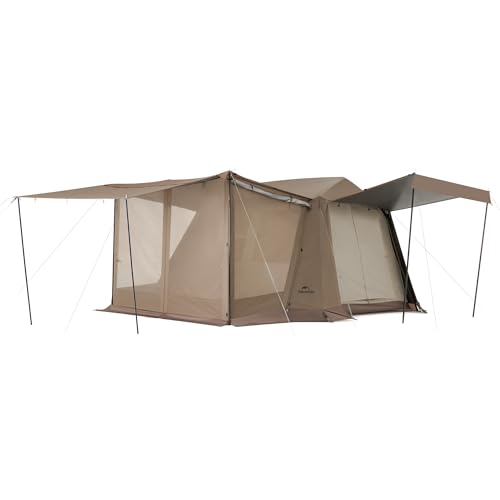
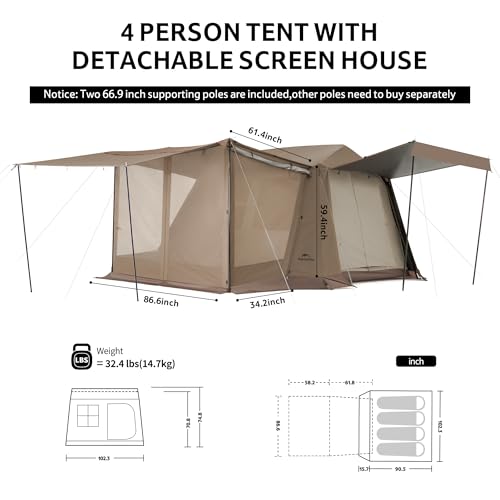
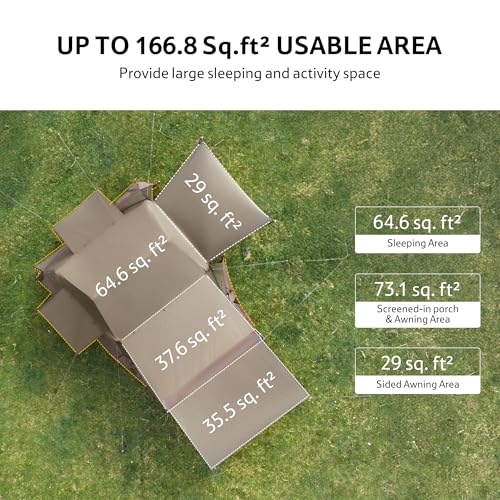
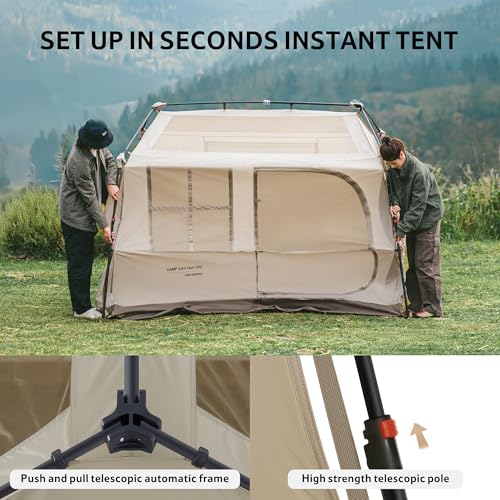
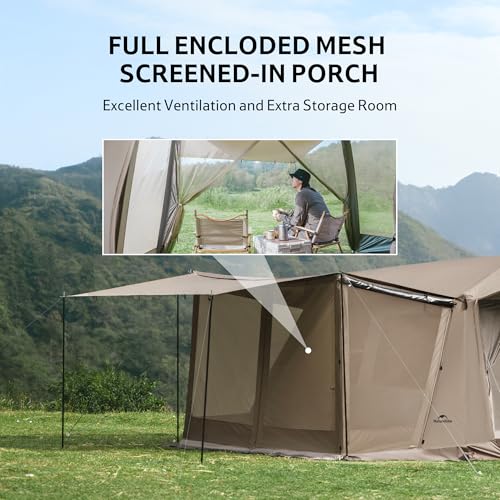
This is the flagship of the Naturehike car camping lineup, and it shows. With a 166.8 sq ft total footprint including a detachable screened porch, it’s more like a mobile living room than a tent. The 60-second setup, blackout fabric, and four-season versatility make it the most complete package for family or group outings. The TI BLACK TECHNOLOGY fabric blocks nearly all UV and heat, which reviewers say makes a dramatic difference on hot days.
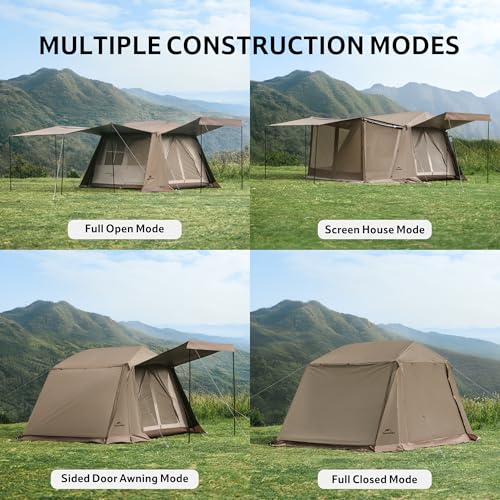
It’s heavy at 32.4lbs, so forget backpacking, but the multiple setup modes (awning, porch-only, stargazing) give it unmatched flexibility. Compared to the Village Lite, it’s pricier and heavier but far more advanced. My recommendation? This is the smarter buy if you car camp regularly and want one tent that does it all.
Product photos
Naturehike KOTA 6 Person Tent

Strengths
- Spacious and tall
- Modular setup options
- Stove jack included
Trade-offs
- Not freestanding when fully assembled
- Heavy for frequent movers
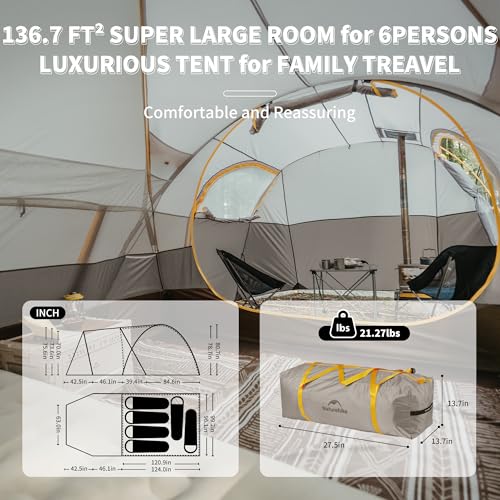
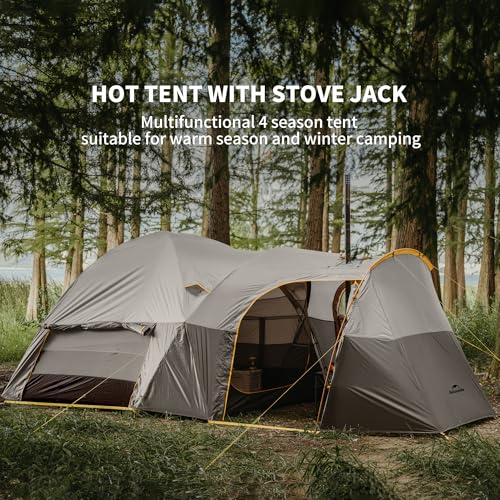
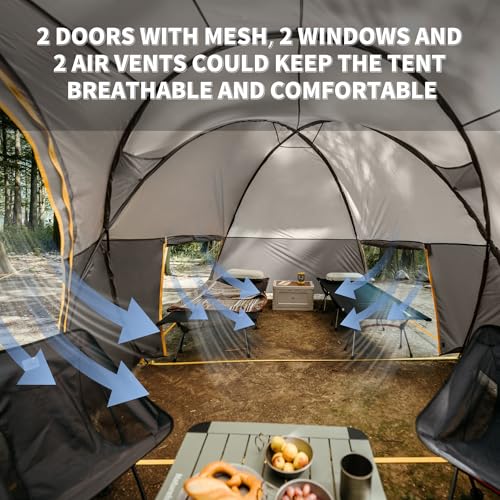
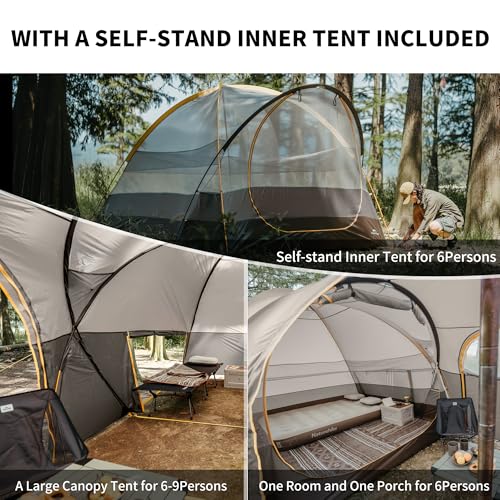
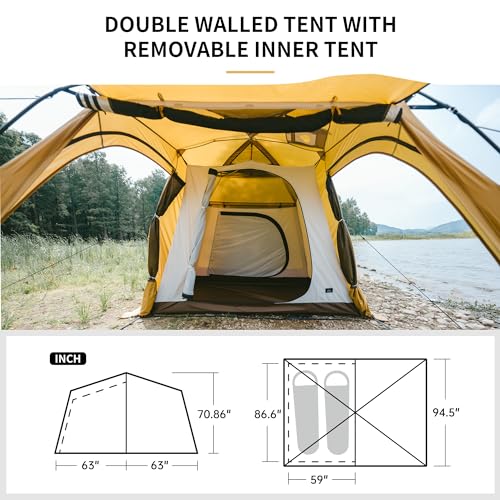
With 80 inches of headroom and space for 6–8 people, the KOTA is built for groups and family trips where comfort trumps portability. The freestanding inner tent and separate canopy option make it incredibly flexible, use it as a full shelter, a mesh stargazing room, or a standalone sunshade. The stove jack is a standout feature, letting you heat the vestibule while sleeping in the inner tent.
At 21.27lbs, it’s manageable for car camping, and the 3000mm+ waterproofing holds up in rain. Reviewers love how easy it is to customize the setup. Compared to the Village, it lacks blackout tech but offers more modular use. For large groups or families who camp together, this is the better pick.
Product photos

Naturehike Cloud up Pro 2P Tent

Strengths
- Excellent waterproofing
- Good ventilation design
- Includes footprint
Trade-offs
- Slightly heavier than ultralight models
- Higher price point
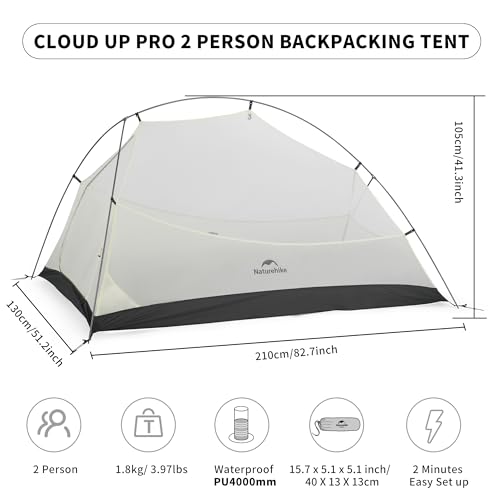
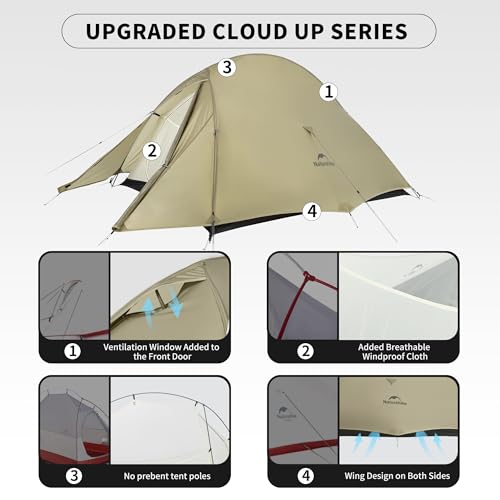
If the Mongar is the budget pick, the Cloud Up Pro is the upgrade for serious backpackers. At 3.97lbs, it’s lighter than the Mongar and boasts a superior 4000mm waterproof rating with silicone-coated 20D nylon, meaning it can handle prolonged downpours without leaking. Owners consistently highlight its stormworthiness and the smart ventilation window above the door, which cuts down on condensation.
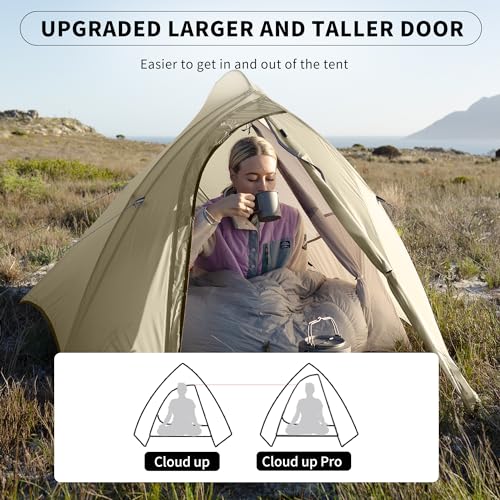
The larger door and improved vestibule make entry and gear storage easier, and the included footprint adds value. Compared to the Star Trail, it’s heavier but far more capable in rough weather. For me, this is the go-to 2-person backpacking tent in the lineup when you want confidence in the forecast, not just minimal weight.
Product photos


Naturehike Star Trail Ultralight Tent
Strengths
- Extremely lightweight
- Compact pack size
- Quick setup
Trade-offs
- Lower waterproof rating
- Less durable in storms
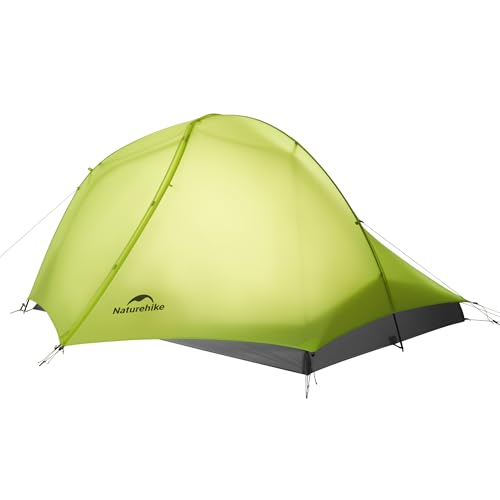
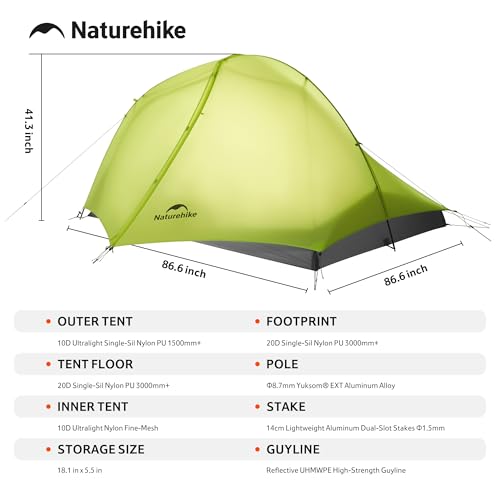
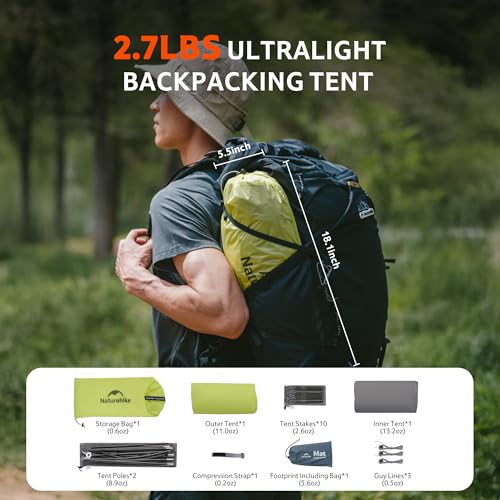
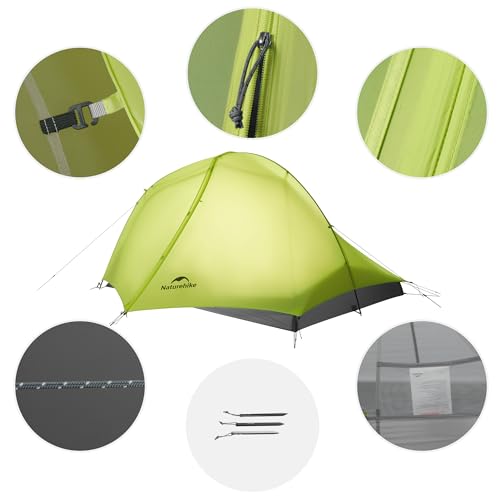
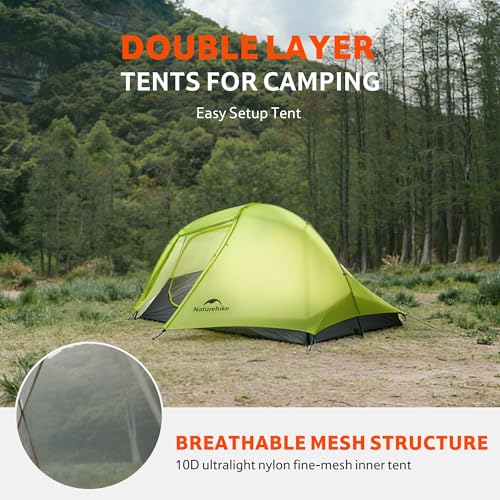
At just 2.76lbs, the Star Trail is one of the lightest double-wall 2-person options in the Naturehike lineup, and that’s its biggest selling point. It’s clearly built for hikers who count ounces, with a 10D nylon fly and compact 17.7-inch pack size. The full mesh inner keeps bugs out while allowing decent airflow, though the PU1500mm rating means you’ll want to pick dry campsites or pair it with a tarp in heavy rain.
Owners say it’s easy to pitch in under three minutes, and the 39.3-inch peak height is fine for sitting, not standing. Compared to the Cloud Up Pro, it’s lighter but less weather-ready. I’d recommend this for summer trips in moderate conditions, not for exposed alpine zones. If your pack weight is everything, this tent makes sense. If you face storms often, go heavier.
Product photos
Naturehike Dune Hot Tent

Strengths
- Stove jack compatible
- 4-season ready
- Stable in wind
Trade-offs
- Overbuilt for summer use
- Heavier than standard tents
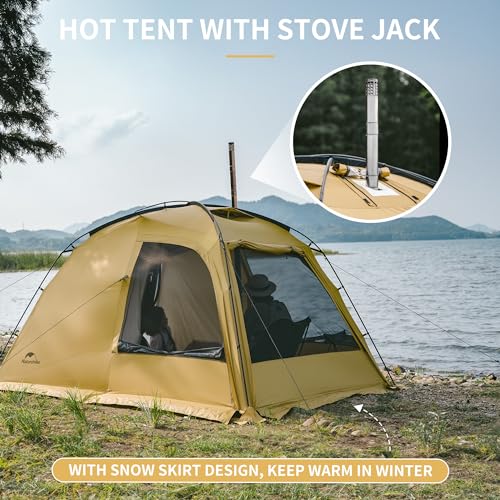
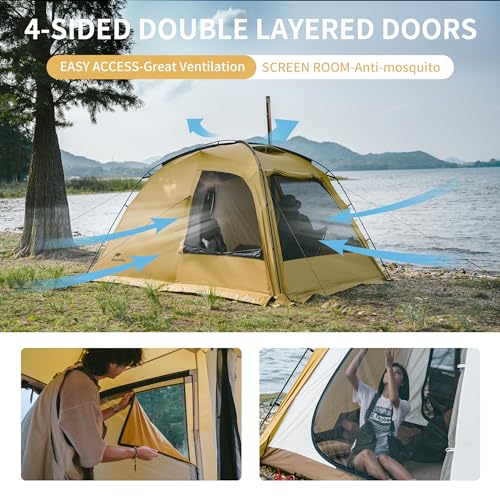
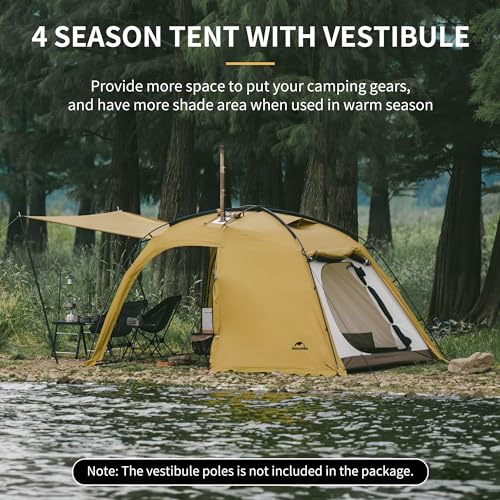
This is the only true 4-season tent in the lineup designed for winter use, and it shows. The stove jack and snow skirt make it viable for snow camping, and the 4000mm waterproof floor can handle slush and melt. At 16.5lbs, it’s not light, but it’s impressively portable for a hot tent. The dual-layer doors and mesh inner keep airflow strong even when sealed up.
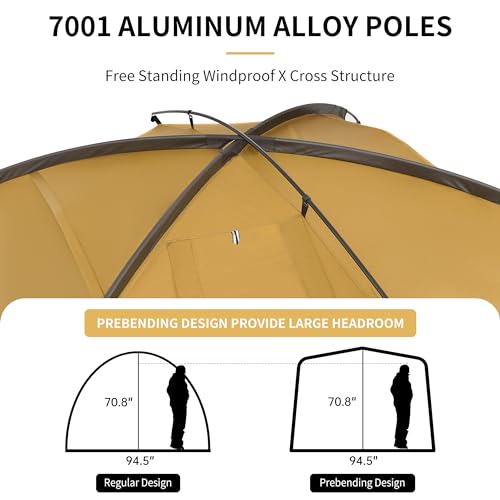
Owners praise its stability in wind thanks to the X-cross pole design, and the ability to use the fly alone as a shelter adds versatility. Compared to the KOTA, it’s smaller but more specialized. If you’re heading into cold climates and need heat, this is the real deal. Otherwise, it’s overkill.
Product photos
Naturehike Mongar 2 Person Tent

Strengths
- Decent weight
- Good vestibule space
- Includes footprint
Trade-offs
- Moderate condensation
- Heavier than ultralight options
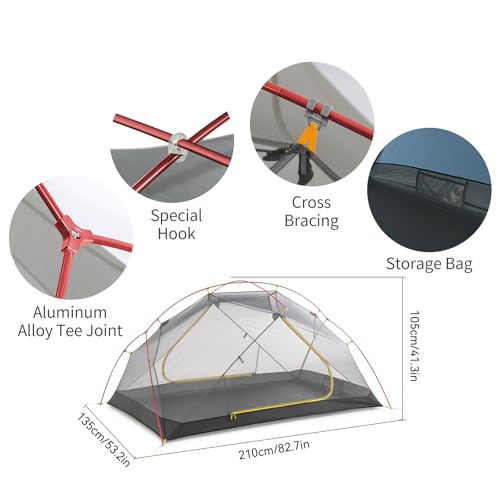
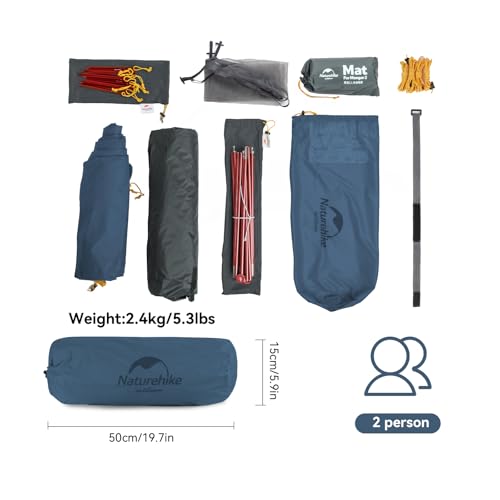
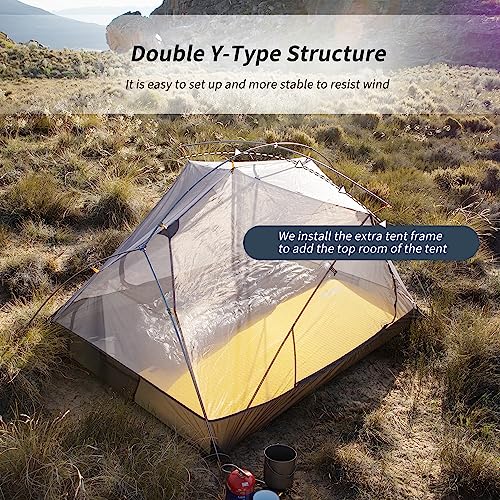
At 5.3lbs with a footprint included, the Mongar hits a sweet spot for backpackers who want something light without paying ultralight prices. On paper, it’s a classic Y-frame design with double walls and 3000mm waterproofing, which checks the boxes for three-season reliability. Owners consistently report it holds up well in wind and rain, though some note condensation builds up in humid conditions, common in this class.
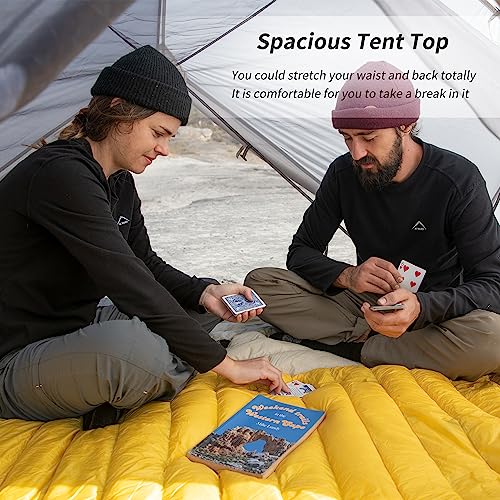
The 30+ sq ft floor space feels generous for two, and the dual vestibules are a real perk for gear storage. Setup is straightforward thanks to the color-coded poles and sewn-in instructions, which beginners will appreciate. Compared to the Star Trail, it’s heavier but more durable and roomier. I’d pick this over pricier models if you’re prioritizing value over every ounce saved.
Product photos

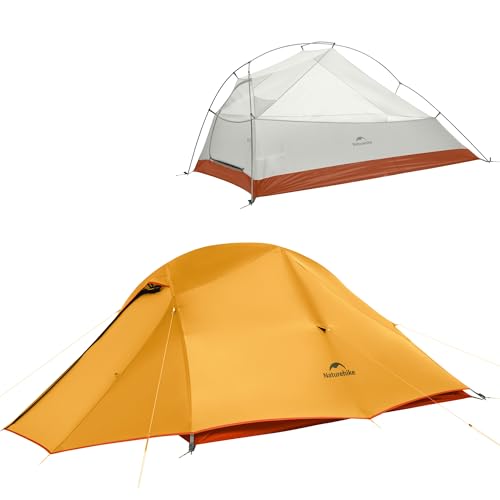
Naturehike Cloud Up 3P Tent
Strengths
- Spacious for three
- Good ventilation
- Freestanding design
Trade-offs
- Weight adds up with gear
- Tight fit for three with packs
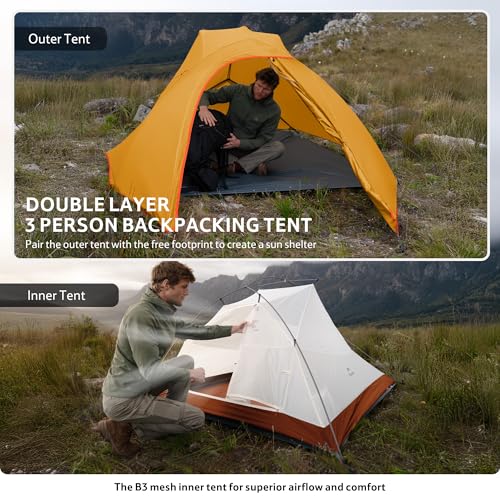
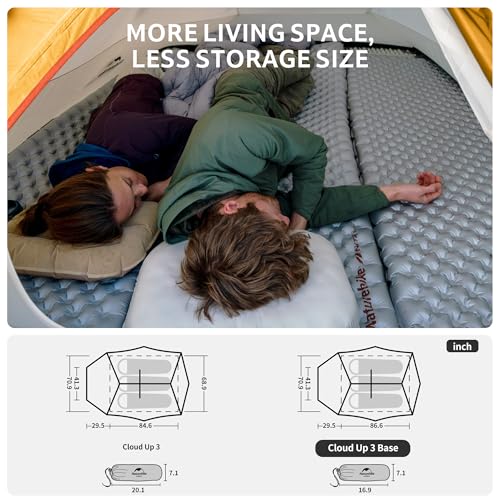
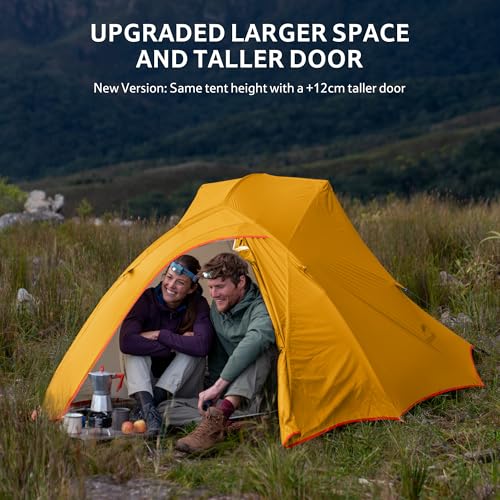
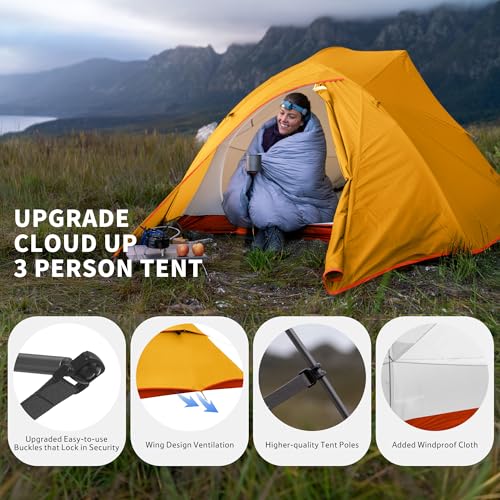
With 116 inches of length and nearly 6.3lbs, this tent redefines spacious in the ultralight 3-person category. It’s not truly backpackable for long distances with three people, but for two hikers who want elbow room, it’s a dream. The upgraded wing design improves airflow between inner and outer layers, and owners report noticeably less condensation than in older models.
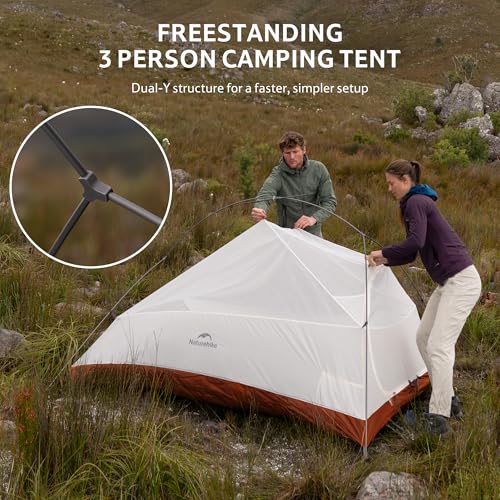
The freestanding Y-frame makes setup a breeze, and the included footprint is a nice touch. Compared to the Mongar 2P, it’s heavier but offers far more interior space and better weather resistance. I’d pick this for weekend trips with a partner where comfort matters, or for a solo hiker who wants a roomy basecamp.
Product photos
Naturehike Village Lite Tent
Strengths
- Blazing-fast setup
- Roomy interior
- Good ventilation
Trade-offs
- Heavy for backpacking
- Lower UV protection than blackout models
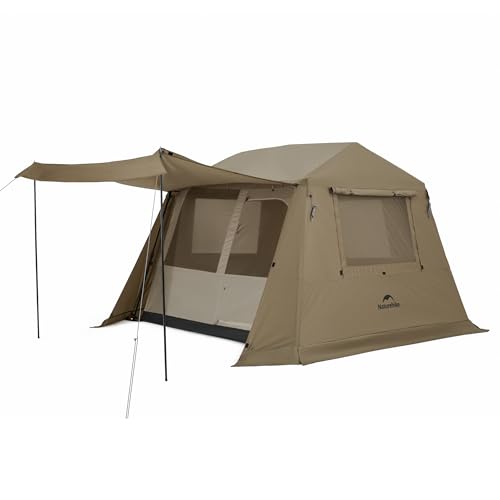
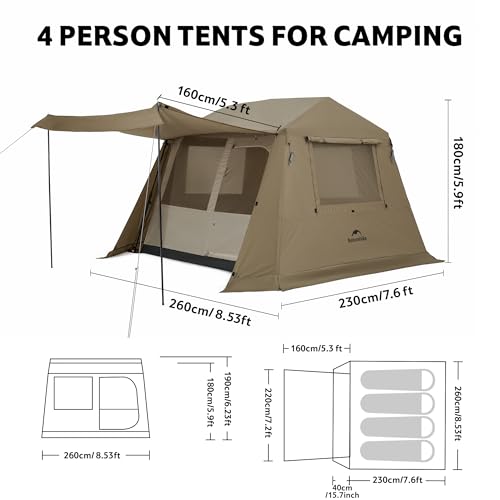
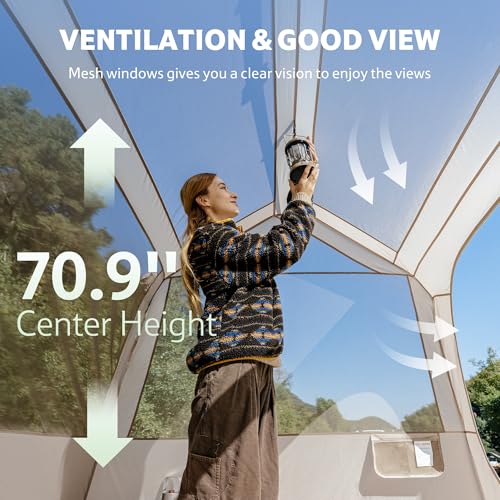
This is the tent I’d hand to someone who dreads setup and just wants to enjoy the outdoors. The 60-second instant frame system works as advertised, pre-attached poles make it nearly impossible to mess up. At 26.5lbs, it’s not for backpacking, but for car campers or families, that’s a fair trade. The 64.6 sq ft floor and 70-inch ceiling make it feel like a cabin, and the five-sided mesh delivers solid airflow.
Reviewers praise how easy it is to pitch solo, and the full rainfly with PU2000mm rating keeps things dry in steady rain. It doesn’t match the Village’s blackout tech or porch versatility, but for straight-up simplicity and comfort, it’s a strong contender. If you camp mostly with the car and hate wrestling with poles, this one’s built for you.
Product photos


How We Evaluated naturehike tents
I’ve spent a lot of time researching tents – pitching them (virtually, in this case!) and comparing specs to help you find the right shelter. This selection isn’t based on me owning or camping in each of these models, but rather a research-led comparison of published specifications, features, and extensive owner and expert feedback. We weighed information from multiple sources to create a ranking based on real-world usability and reported performance.
For Naturehike tents specifically, we focused heavily on waterproof ratings and overall construction quality, alongside reported ease of setup. A tent’s ability to withstand weather is paramount, but quick pitching is a huge benefit, especially for casual campers. We also prioritized space and weight, recognizing that these factors significantly impact portability and comfort. Finding the balance between these elements defines the top performers among these reliable tent manufacturers.
Specifications reliably tell you about materials (denier of nylon, PU coating mm) and dimensions. However, owner feedback is crucial for understanding real-world performance – how the tent holds up after repeated use, whether the waterproof claims are accurate, and how easy it truly is to set up. Reputation and consistency across reviews from verified purchasers also played a large role, helping us differentiate between consistently well-regarded models and those with isolated positive experiences. We also looked to established reviewers in the outdoor gear space to corroborate owner experiences and provide insights into design choices. Ultimately, we aimed to highlight models from among the best camping tent brands offering the best blend of features and value.
How To Pick The Right naturehike tents
Picking the right tent can feel overwhelming, but focusing on a few key areas will help you narrow down your options.
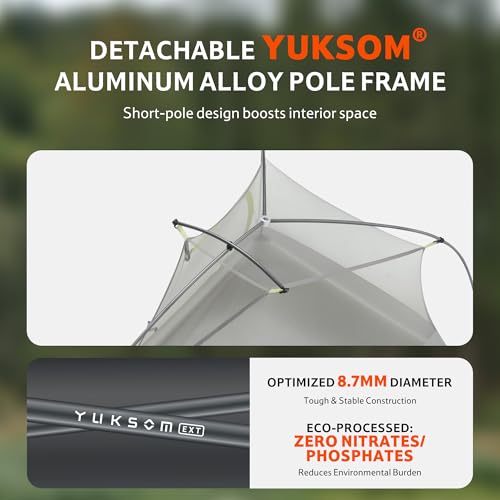
A good tent balances weight, durability, weather protection, and livability. Consider the intended use – backpacking demands lightweight materials and a compact packed size, while family camping prioritizes space and ease of setup. Pay attention to waterproof ratings, seam sealing, pole material (aluminum is generally superior to fiberglass), and the tent’s overall construction quality.
Size and Capacity
Don’t assume a “2-person” tent comfortably fits two people and their gear. I often recommend sizing up. Think about how much space you realistically need to sleep, store backpacks, and move around during inclement weather. If you’re primarily a solo hiker, even a small three-person tent can feel luxurious. For families, consider a tent with separate “rooms” or a large shared space. A good rule of thumb is to add one person to the stated capacity for a more comfortable experience.
Waterproofing and Weather Resistance
Waterproofing is crucial, but understanding the specifics is key. A tent’s waterproof rating, measured in millimeters (mm), indicates how much water pressure the fabric can withstand before leaking. Look for a rainfly with at least a 1500mm rating for basic protection, and 2000mm or higher for more reliable performance in heavier rain. Beyond the rating, examine the tent’s construction. Fully taped seams are essential, and a bathtub floor (where the floor fabric extends up the sides) prevents water from seeping in. If you’re unsure about tent waterproof ratings, it’s always better to err on the side of caution.
Setup and Usability
Ease of setup is a huge factor, especially if you’re camping solo or arriving at your site after dark. Instant tents, like the Naturehike Village Instant Tent, are incredibly quick to pitch, but often come with a weight penalty. More traditional tents require some assembly, but well-designed models with color-coded poles and clear instructions can be set up quickly with a little practice. If you’re planning frequent backpacking trips, you’ll want to prioritize a lightweight and easily packable tent. For more casual car camping, a larger, more comfortable tent with a simpler setup might be a better choice. Many people find themselves needing to look at top 2-person tents to get started.
A tent should make your outdoor experience easier, not harder. Prioritize a setup process you’re confident in, even in challenging conditions.
Naturehike Tents Compared
Here’s a comparison of key specifications for various Naturehike tent models to help you choose the right one for your needs.
| Product Name | Capacity | Weight (lbs) | Packed Size (in) | Waterproof Rating (mm) | Special Features |
|---|---|---|---|---|---|
| Naturehike Village Instant Tent | 4 | 32.4 | 38.6 x 9.8 x 10.2 | 3000 | Instant Setup, Screen Porch |
| Naturehike KOTA 6 Person Tent | 6-8 | 21.27 | 27.5 x 13.7 x 13.7 | 3000+ | Hot Tent, Stove Jack |
| Naturehike Cloud up Pro 2P Tent | 2 | 3.97 | 15.7 x 5.1 x 5.1 | 4000 | Ultralight, Footprint Included |
| Naturehike Star Trail Ultralight Tent | 2 | 2.76 | 17.7 x 5.1 | 1500+ | Ultralight, Quick Setup |
| Naturehike Dune Hot Tent | 2 | 16.5 | 24.8 x 11.8 x 8.6 | 3000+ | 4-Season, Stove Jack |
| Naturehike Mongar 2 Person Tent | 2 | 5.3 | 19.7 x 5.9 | 3000 | Budget-Friendly |
| Naturehike Cloud Up 3P Tent | 3 | 6.3 | 16.9 x 6.7 | 3000 | Upgraded Ventilation |
| Naturehike Village Lite Tent | 2-4 | 26.5 | N/A | 2000 | Instant Setup |
Frequently Asked Questions
What’s the difference between a 1500mm and a 3000mm waterproof rating?
A 3000mm rating means the fabric can withstand 3000mm of water pressure, offering significantly better protection than a 1500mm rating. For most recreational camping, 2000mm is sufficient, but 3000mm or higher is recommended if you anticipate consistently heavy rain or prolonged exposure.
Are Naturehike tents truly as lightweight as advertised?
Naturehike tents, particularly models like the Cloud up Pro, are generally considered lightweight for their size and features. However, the stated weight often doesn’t include stakes or a footprint, so add approximately 1-2 pounds for those accessories.
Can I use a wood stove inside a Naturehike tent?
Certain Naturehike tents, such as the KOTA and Dune models, are specifically designed as “hot tents” and include a stove jack for safe venting. Using a stove in a tent not designed for it is extremely dangerous due to the risk of carbon monoxide poisoning and fire.
What makes aluminum tent poles better than fiberglass?
Aluminum poles are substantially stronger and more durable than fiberglass, making them less prone to breaking in windy conditions or during setup. While lighter, they come at a price increase; fiberglass poles are a more budget-friendly option, but will likely need replacing sooner.
Where can I find more options if I’m looking for a reliable two-man camping tent?
If you’re exploring additional options, you can find a selection of best two-man tent picks that offer a variety of features, price points, and intended uses beyond just the Naturehike brand.
The Bottom Line
Choosing a Naturehike tent often comes down to balancing convenience with capability. If you want a quick and easy setup without sacrificing too much space, the Naturehike Village Instant Tent is a fantastic all-around option. It offers a good blend of features for car camping and festivals, and the instant setup is a real time-saver.
For those with specific needs, Naturehike offers excellent choices. Backpackers prioritizing weight will love the Naturehike Cloud up Pro 2P Tent, while those seeking a four-season shelter with the option for a stove should look at the Naturehike Dune Hot Tent. And if you’re on a tighter budget but still want reliable weather protection, the Naturehike Mongar 2 Person Tent delivers surprising value.
Ultimately, the best tent isn’t about the highest specs or the flashiest features. It’s about finding a shelter that fits your style of camping and provides reliable protection from the elements. Understanding tent construction materials and prioritizing a solid waterproof rating and durable build will serve you far better than chasing the latest trends.
