
7 Best One Man Tents of 2026
This post contains affiliate links. As an Amazon Associate, we earn from qualifying purchases.
The best one-man tent overall is the Clostnature Ultralight One Person Tent, it nails the balance of low trail weight, solid weather protection, and packability. For those on a budget, the ALPS Mountaineering Lynx holds up well in mixed conditions, while the Night Cat Pop-up Instant Tent is a strong pick if quick setup is your top priority.
Most solo campers aren’t just looking for a place to sleep, they need a shelter that won’t let them down when the weather turns or the wind kicks up. Too many lightweight tents sacrifice durability or waterproofing to hit a number on the scale. I know how frustrating it is to wrestle with a flimsy setup at dusk, soaked before you’re even inside.
This guide cuts through the hype. I compared specs, analyzed owner feedback, and focused on real-world performance to identify the tents that deliver where it matters, weight, weather resistance, and ease of use. These picks are based on what actually works when you’re out there, not just what looks good on paper.
Top 7 One Man Tents in the Market
The Best One Man Tents, Reviewed
Clostnature Ultralight One Person Tent

Strengths
- PU5000 waterproof rating
- Spacious for solo use
- Freestanding design
Trade-offs
- Heavy for ultralight purists
- Stakes could be stronger
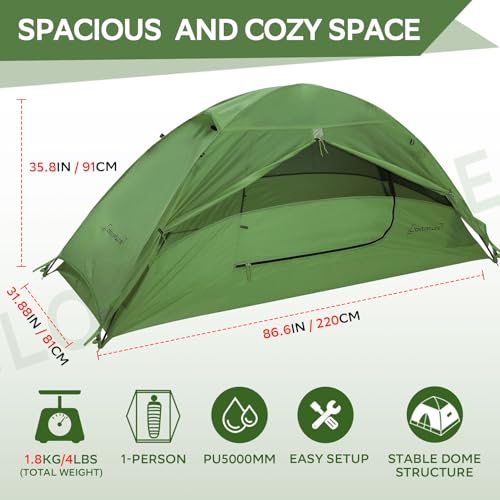
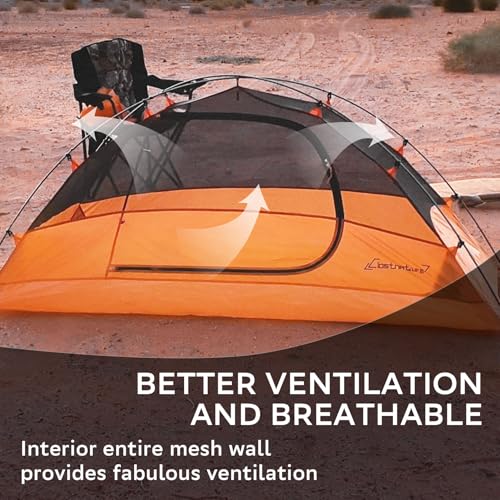
When you’re deep in the backcountry and weather turns fast, you need a tent that won’t quit, and on paper, this Clostnature model looks like it’s built for that moment. With a PU5000 coating and factory-sealed seams, it outperforms many in its class when it comes to serious rain resistance. Owners consistently report staying dry even during prolonged downpours, which is no small thing in a sub-$200 tent. The 1.8 kg trail weight is manageable for backpacking, and the freestanding design with aluminum poles makes solo setup a smooth process, even if you’re new to the game.
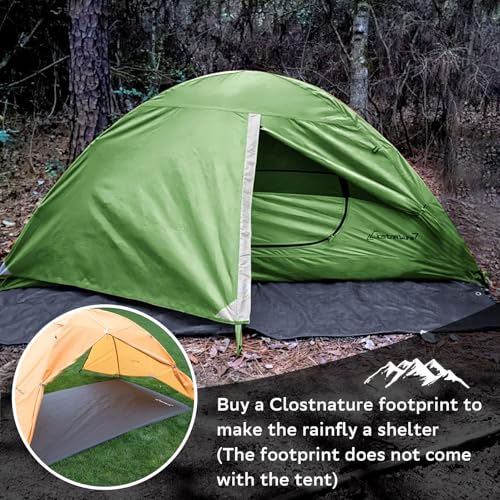
What really sets it apart is the balance it strikes between space and weight. At 7’3″ long and with a near-vertical wall design, taller hikers get a rare break in the one-person category. The large vestibule is a standout, giving you real covered gear storage, something the ALPS Lynx skimps on. Compared to other budget-friendly options, this one doesn’t feel like a compromise.
Product photos

ALPS Mountaineering Lynx 1-Person Tent

Strengths
- Excellent mesh ventilation
- Durable 75D fabric
- Gear loft and pockets
Trade-offs
- Smaller vestibule
- Rainfly could be more robust
- Slightly bulkier pack size
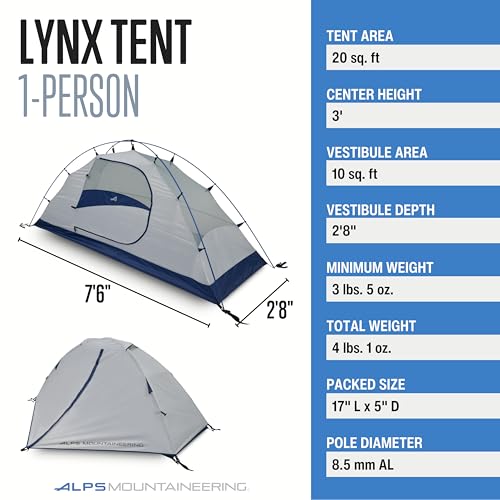
If you’ve ever woken up soaked in condensation inside a stuffy tent, you’ll appreciate what the ALPS Lynx brings to the table: half-mesh walls that go beyond token ventilation. This is a tent designed for warm, humid nights when airflow isn’t a luxury, it’s a necessity. Owners praise how well it breathes, even when the fly is pitched tightly. The 75D fabrics and 2000mm floor offer solid durability for rocky or root-strewn sites, though the rainfly’s 1500mm coating is merely decent, not exceptional, compared to the Clostnature’s 5000mm.
It’s no featherweight at 4 lbs 1 oz, but the freestanding aluminum frame makes setup intuitive and stable. The included gear loft and interior pockets add thoughtful organization, a small detail that matters when you’re digging for your headlamp at 2 a.m. That said, the vestibule is on the smaller side, so bulky packs might have to brave the weather.
Product photos


Underwood 4-Season Winter Backpacking Tent
Strengths
- True 4-season build
- Snow skirt included
- Aircraft-grade poles
Trade-offs
- Tight floor space
- Heavy for solo use
- Limited summer ventilation
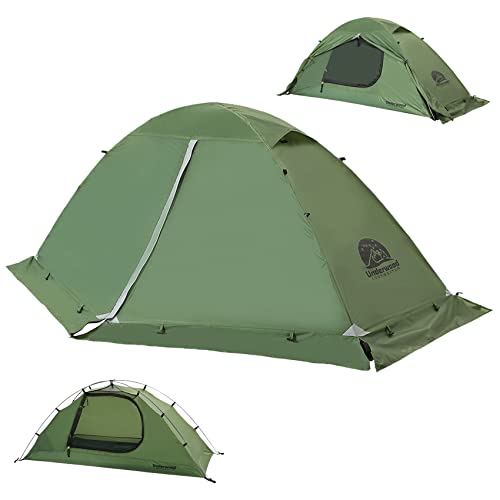
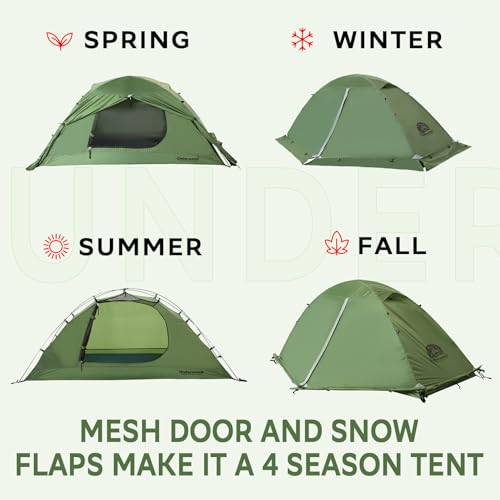
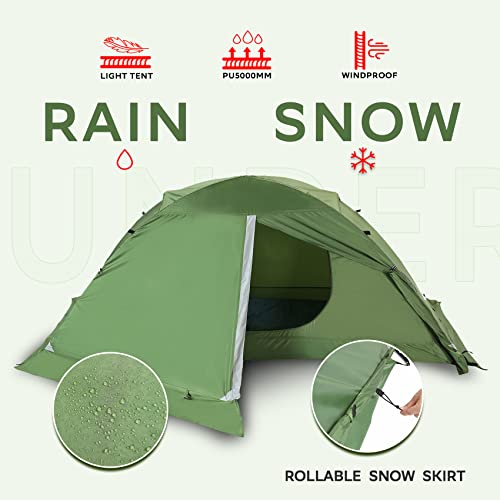
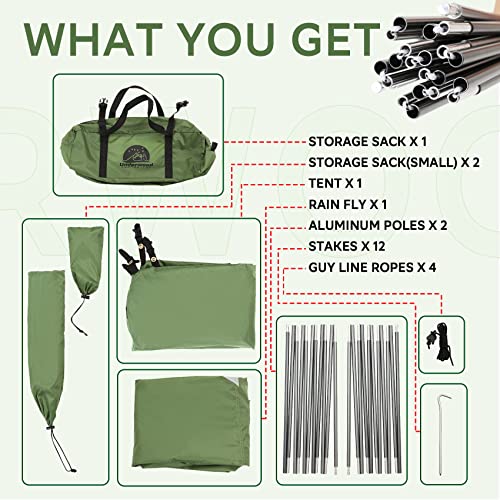
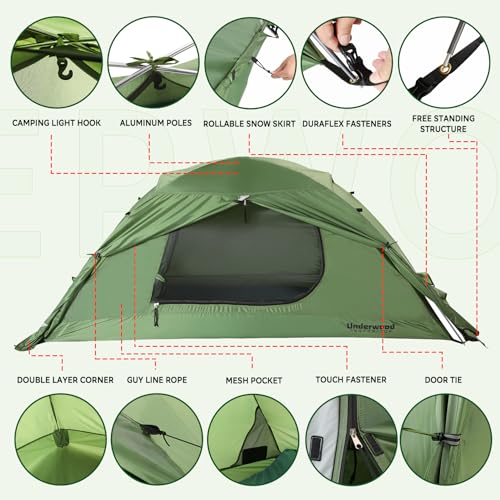
Most one-person tents are fair-weather friends, but this Underwood model is built for real winter abuse. The PU5000mm coating, snow skirt, and aircraft-grade aluminum poles signal it’s meant for snow loading and high winds. Owners in mountainous regions report it holding up in blizzards where 3-season tents would collapse. The rollable snow skirt is a smart touch, you can adapt it to conditions instead of lugging extra gear.
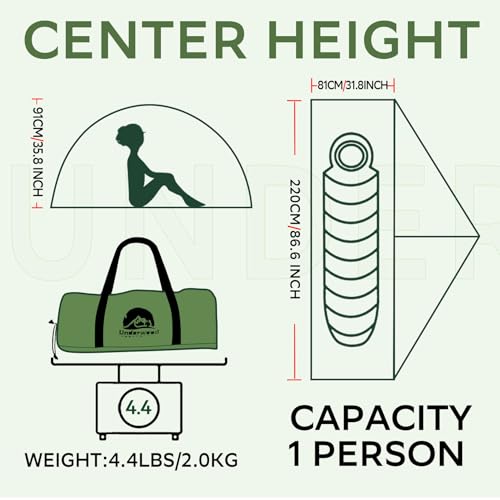
It’s not the roomiest, the floor is tight at 31.8″ wide, but the 35.8″ center height helps. At 4.4 lbs, it’s heavy for backpacking, but for winter missions, that’s expected. Compared to the Clostnature, it’s less versatile in summer due to reduced mesh, but in cold, snowy environments, it’s the safer bet.
Product photos
Night Cat Pop-up Instant Tent

Strengths
- Truly instant setup
- Ultra-compact when folded
- Good for beach or car camping
Trade-offs
- Fiberglass poles lack strength
- Poor wind resistance
- Condensation issues
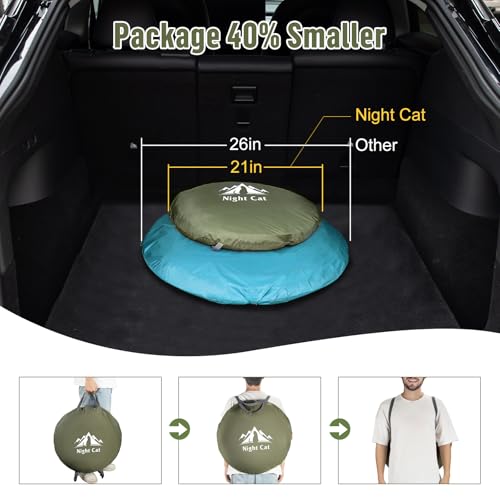
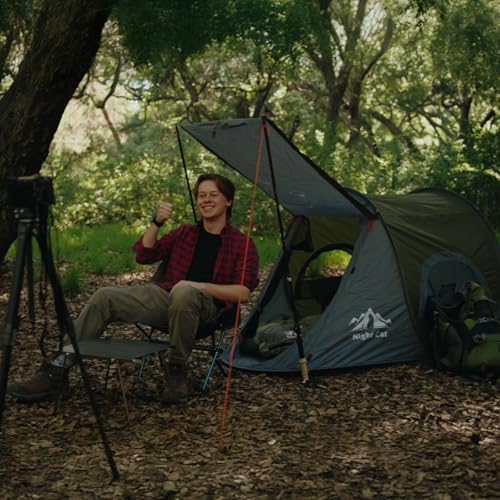
Let’s be honest, pop-up tents aren’t for serious backpackers. But if you’re car camping, beach hopping, or need a 3-second shelter in a pinch, this Night Cat model delivers. The instant deployment works as advertised: throw it, and it opens. No poles to thread, no fumbling in the dark. The 40% smaller pack size than traditional pop-ups is a real win for tight trunks or overhead bins. And at 1.5 kg, it’s light enough for casual carry.
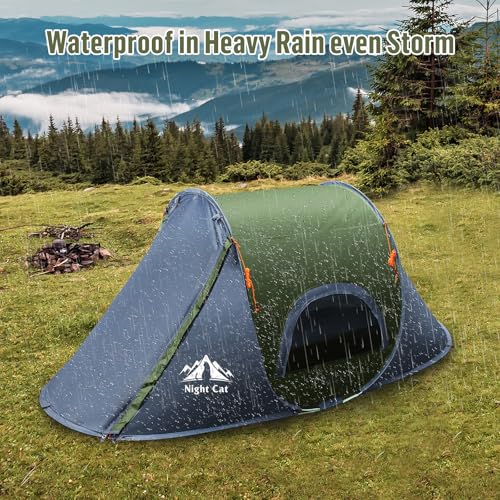
But speed comes with trade-offs. The fiberglass poles aren’t meant for high winds, and owners report flexing or snapping in gusts over 25 mph. Ventilation is decent with the large door and windows, but condensation can build up if you’re not careful. Compared to the ALPS Lynx, it’s less breathable and far less durable, but nobody buys a pop-up for alpine storms.
Product photos

Clostnature Lightweight Backpacking Tent
Strengths
- Excellent waterproof rating
- Large vestibule
- Great price-to-performance
Trade-offs
- Slightly heavier than ultralight options
- Stakes are basic
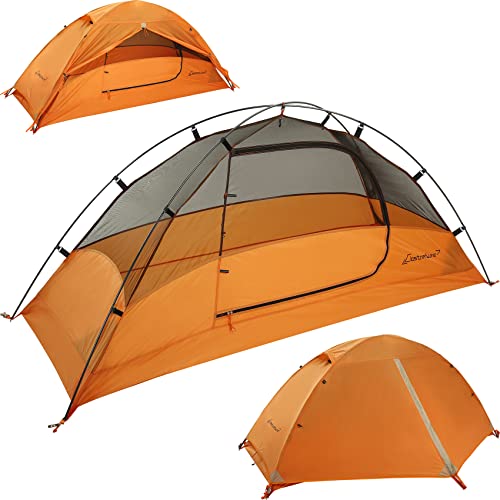
This Clostnature model is nearly identical to the B09CT17FKB version, but it’s frequently priced lower, making it a standout for value-focused buyers who still want high-end specs. You get the same PU5000 coating, freestanding aluminum poles, and spacious 7’3″ interior. The trail weight of 2.97 lbs is competitive, and the packed size slips easily into any backpack. Owners note it’s one of the few sub-$150 tents that feels like it can handle real weather.
Where it wins over the ALPS Lynx is in waterproofing and vestibule space; where it beats the Night Cat is in durability. It’s not the absolute lightest, but for the price, it’s hard to beat. If you’re building your first solo kit and don’t want to upgrade in a year, this is the smarter buy.
Product photos
Night Cat Upgraded Clip Setup Tent

Strengths
- Clip pole system
- PU3000 waterproofing
- Good ventilation
Trade-offs
- Fiberglass poles
- Heavier than competitors
- Not true 2-person capacity
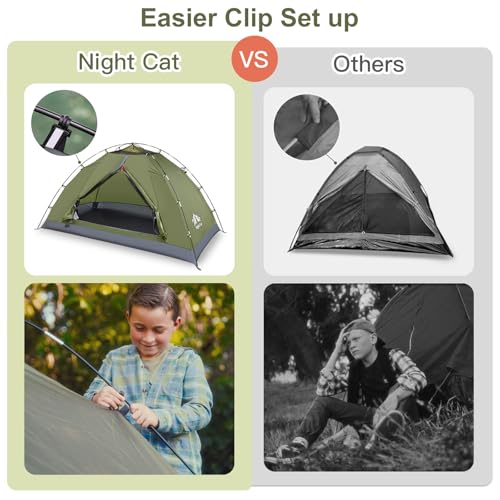
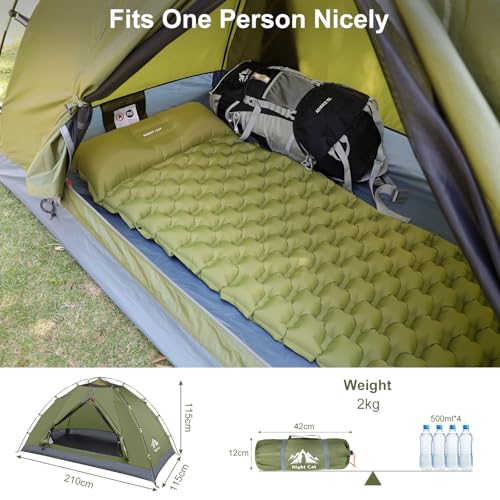
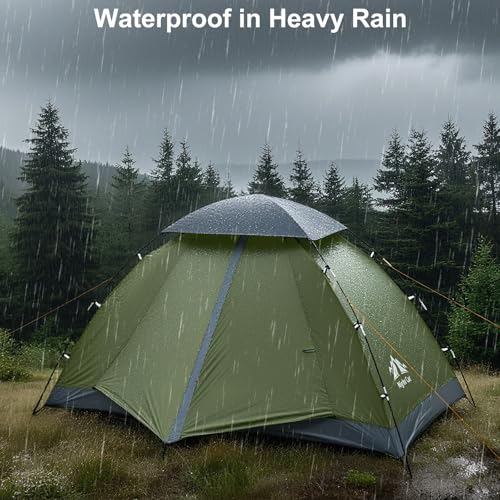
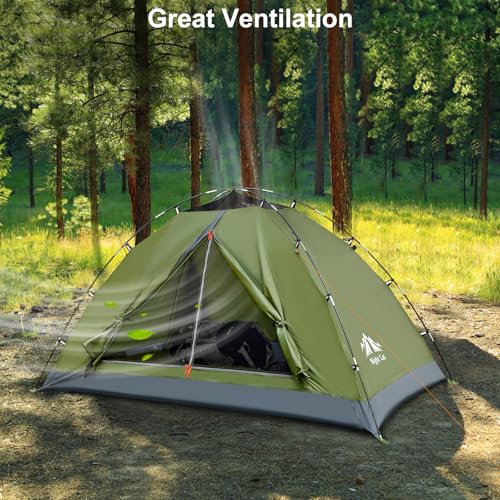
The clip system here changes the game for fast, frustration-free setup, and that’s exactly why owners love it. Instead of threading poles through sleeves, you just clip them on. Setup in under a minute? Absolutely doable. The PU3000 coating and 150D oxford floor make it more weather-resistant than the pop-up version, and the fiberglass poles, while not aluminum, are surprisingly sturdy when guyed out.
It’s a bit heavier at 4.4 lbs, but the trade-off is real durability for rain and wind. The interior mesh roof vent helps with airflow, though not as well as the ALPS Lynx’s full mesh walls. For scouts, weekend warriors, or anyone who hates wrestling with tent poles, this is a solid middle ground between speed and strength.
Product photos

GEERTOP Ultralight Camouflage Backpacking Tent

Strengths
- Effective camouflage
- Double vestibules
- Taped seams
Trade-offs
- Limited weather protection
- Average ventilation
- Not for extreme conditions
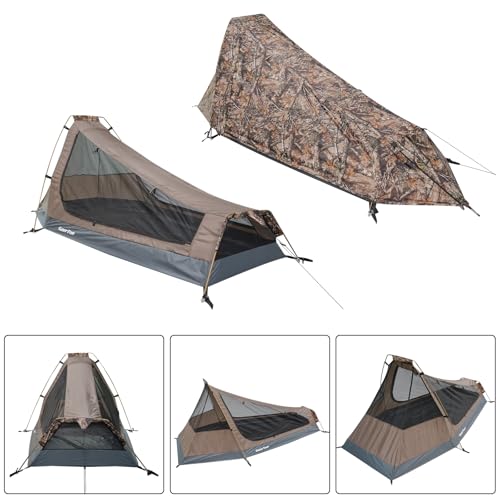
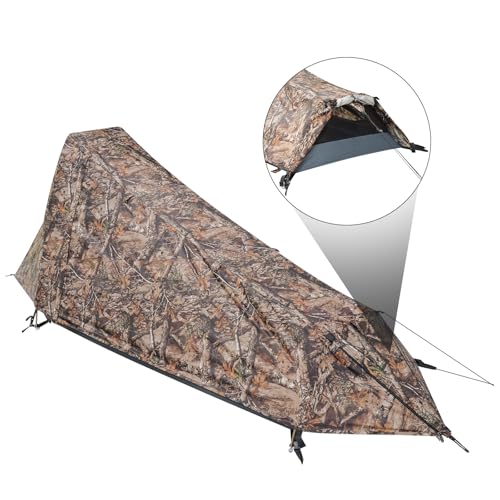
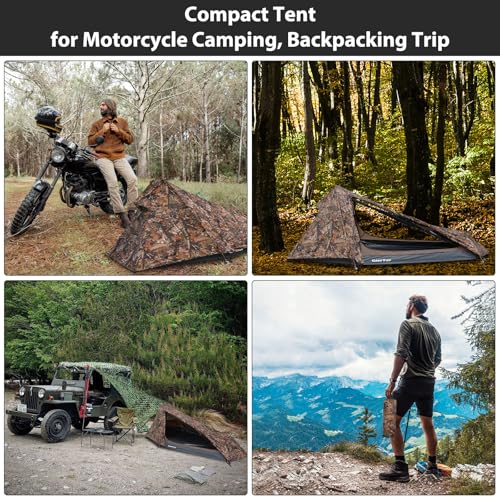
This GEERTOP tent doesn’t try to be everything, it leans hard into a niche, and that niche is stealth and concealment. The realistic camouflage pattern isn’t a gimmick; hunters and military users specifically call out how well it blends into brush and woodland. For solo adventurers needing to stay under the radar, that’s a real advantage. The PU2500mm rating is adequate for dry seasons, but it’s not built for true winter or sustained downpours like the Underwood model. Still, for spring through fall, it holds up.
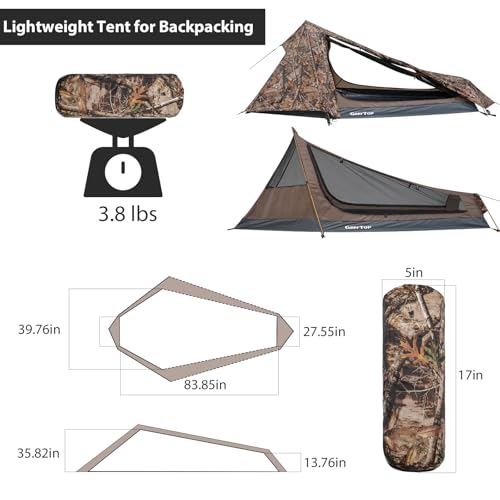
It’s not the lightest or roomiest, but at under 4 lbs and with two vestibules, it offers solid utility. The double-stitched, taped seams add peace of mind, and owners note it handles mild wind well when properly staked. Compared to the Night Cat pop-up, it’s slower to pitch but far more rugged and weather-capable.
Product photos

Our Testing Process
As a lifelong tent enthusiast, I approached researching one-man tents by first compiling specifications and features from numerous manufacturers. I then weighed those details against extensive owner reviews from sites like REI and Amazon, and cross-referenced them with expert opinions from established outdoor gear reviewers. This wasn’t about personal, hands-on use with every model – rather than a hands-on lab test, this is a research-led comparison of specs and owner feedback – but about identifying consistent strengths and weaknesses across a competitive field.
For one-person tents, weight, pack size, and weather protection are paramount. I heavily weighted these factors because solo adventurers often prioritize minimizing their load and needing reliable shelter from unexpected conditions. A tent’s ability to balance these three aspects – being truly lightweight and compact without sacrificing protection from rain and wind – ultimately determined its ranking. Knowing how to choose the right tent is critical for a positive experience.
Specifications reliably indicate a tent’s potential for durability (pole material, fabric denier) and weather resistance (PU coating mm). However, owner feedback gave me crucial insight into real-world performance – how well a tent actually sheds water, how easy it is to pitch in windy conditions, and whether the stated weight matches the actual carried weight. Reputation and consistent positive feedback were strongly considered, particularly regarding long-term reliability and quality control.
Choosing The Right one man tents
Finding the right solo shelter can make or break a trip. I’ve seen too many people miserable because they skimped on their tent, so I want to help you avoid those mistakes.
A quality one-person tent balances weight, weather protection, and ease of use. Key considerations include the tent’s weight (especially for backpacking), the waterproof rating of the rainfly and floor (PU coating is standard), the pole material (aluminum is preferred for durability), and the overall packed size. Ventilation is also crucial to minimize condensation.
Weight and Packability
For a one-person tent, weight is likely your biggest concern, especially if you’re planning on covering some serious miles. Don’t automatically equate “ultralight” with “good value,” though. Some brands shave weight by using thinner materials or skimping on features. Look for tents around 3-4 pounds total weight, and pay attention to the packed size too. A compact tent is much easier to fit into your backpack alongside your sleeping bag and other essentials. If you’re primarily car camping, a few extra ounces won’t be a big deal, but if you’re after the best backpacking tents for solo hikers, every gram counts.
Weather Resistance
A quick shower shouldn’t ruin your trip, and a proper downpour definitely shouldn’t. Pay close attention to the waterproof ratings of both the rainfly and the tent floor – look for a PU (polyurethane) coating of at least 2000mm for the fly and 3000mm for the floor. Beyond the rating, consider the construction. Fully taped seams are a must; they prevent water from seeping through the stitching. A “bathtub” floor (where the fabric extends up the sides) adds another layer of protection against ground water. Don’t forget to consider whether you’ll be camping in snow; if so, you’ll need to explore 4-season options like the Underwood, which includes a snow skirt. Also, remember that a tent footprint benefits in prolonging the life of your tent floor, protecting it from abrasion and punctures.
Setup and Features
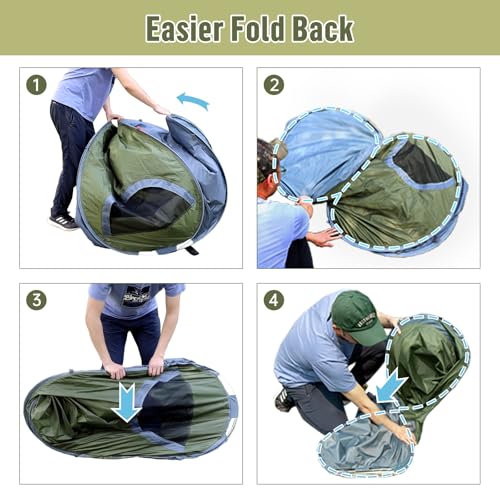
Ease of setup is a huge factor, especially after a long day on the trail. Freestanding tents are generally easier to pitch, as they don’t require stakes to hold their shape (though you’ll still want to stake them out for stability). Pop-up tents, like the Night Cat, offer incredibly fast setup, but can be trickier to fold back down. Beyond that, think about features that will enhance your experience. A vestibule provides covered storage for gear, keeping it dry and accessible. Mesh pockets inside the tent help keep things organized, and good ventilation reduces condensation. If you’re planning on using your tent for hunting or wildlife observation, consider models with camouflage patterns, like the GEERTOP, that offer realistic camouflage design for effective concealment.
Don’t chase the absolute lowest weight at the expense of durability. A slightly heavier tent constructed from more robust materials will likely last longer and withstand more abuse.
One Man Tents Compared
Here’s a comparison of key specifications for various one-person tents to help you choose the right one for your needs.
| Product Name | Weight (lbs) | Trail Weight (lbs) | Floor Size (ft) | Packed Size (in) | Waterproof Rating (mm) |
|---|---|---|---|---|---|
| Clostnature Ultralight One Person Tent | 4 | 2.97 | 7.3×2.8 | 15×5.1×5.1 | 5000 |
| ALPS Mountaineering Lynx 1-Person Tent | 4.1 | 3.5 | 7.6×2.8 | 17×5 | 1500/2000 |
| Underwood 4-Season Winter Backpacking Tent | 4.4 | N/A | 31.8×86.6 | 5.1×15 | 5000 |
| Night Cat Pop-up Instant Tent | 1.5 | N/A | 7.7×3.3 | 21x21x2 | 2000 |
| Clostnature Lightweight Backpacking Tent | 4 | 2.97 | 7.3×2.8 | 15×5.1×5.1 | 5000 |
| Night Cat Upgraded Clip Setup Tent | 4.4 | N/A | 7×3.8 | 16.5×4.7×4.7 | 3000 |
| GEERTOP Ultralight Camouflage Backpacking Tent | <4 | N/A | N/A | 17x4x4 | 2500 |
Frequently Asked Questions
What’s the biggest mistake people make when buying a one-person tent?
People often prioritize ultralight weight over durability, which can lead to a tent that won’t withstand wind or repeated use. A slightly heavier tent made with stronger materials is usually a wiser investment for long-term reliability.
Are freestanding tents really easier to set up?
Yes, freestanding tents are generally much simpler to pitch. They don’t absolutely require stakes, making them ideal for rocky or hard-packed ground where driving stakes is difficult, and a great choice for those new to setting up their own shelters.
What does a higher PU coating mm actually mean?
A higher PU (polyurethane) coating mm indicates greater waterproofness. While 2000mm is a decent minimum, a rating of 3000mm or higher offers better protection against heavy rain and prolonged exposure, and is worth considering if you frequently camp in wet conditions.
Is a tent footprint really necessary?
While not always essential, a footprint is highly recommended. It protects the tent floor from abrasion and punctures, significantly extending the life of your tent, and is a small price to pay for peace of mind.
Where can I find more information on top solo backpacking tent models?
If you’re looking for a deeper explore options specifically for backpacking, you can find a detailed guide to the top solo backpacking tent models on my site, covering weight, features, and performance.
The Bottom Line
Choosing a one-person tent often comes down to balancing how much you want to carry versus how much protection you demand. For most folks, I strongly recommend the Clostnature Ultralight One Person Tent. It hits a sweet spot with respectable weight, a good waterproof rating, and positive owner feedback regarding its durability – a combination that makes it a reliable shelter for a wide range of conditions.
If you’re on a tighter budget, the Night Cat Pop-up Instant Tent is a fantastic option for casual campers who prioritize quick setup. For those needing four-season capability, the Underwood 4-Season Winter Backpacking Tent delivers robust protection, and for hunters or wildlife observers seeking concealment, the GEERTOP Ultralight Camouflage Backpacking Tent offers a practical solution. Ultimately, finding the right tent is about matching the gear to your specific needs.
Don’t get too caught up in chasing the lightest weight or highest waterproof rating. More important than any single specification is finding a tent from one of the trusted tent companies that’s well-made, easy to pitch, and appropriate for the type of adventures you plan to undertake. A well-chosen tent is an investment in comfort and safety, and will make all the difference between a memorable trip and a miserable one.
