
8 Best Overlanding Tents for 2026
This post contains affiliate links. As an Amazon Associate, we earn from qualifying purchases.
The HEYFUN Hard Shell Rooftop Tent stands out as the best overall overlanding tent for its rugged build and reliable weather protection, while the Gazelle T4 Overland Pop-Up Tent is a smart budget-friendly pick that doesn’t sacrifice ease of setup. For those needing more space, the WildFinder 5-9 Person SUV Tent offers serious versatility.
Overlanding means unpredictable conditions, tight spaces, and long days behind the wheel, the last thing you need is a tent that fails when you finally stop. Too many people end up with gear that’s either too flimsy, too cramped, or a nightmare to assemble after a long drive.
I looked at dozens of models, focusing on what real users report matters most: durability, setup time, and space efficiency. These picks reflect the top performers based on specs, owner feedback, and design suited for life on and off the trail.
Top 8 Overlanding Tents in the Market
The Best Overlanding Tents, Reviewed
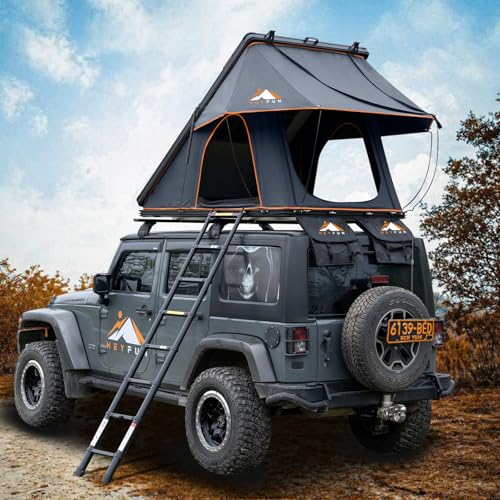
HEYFUN Hard Shell Rooftop Tent
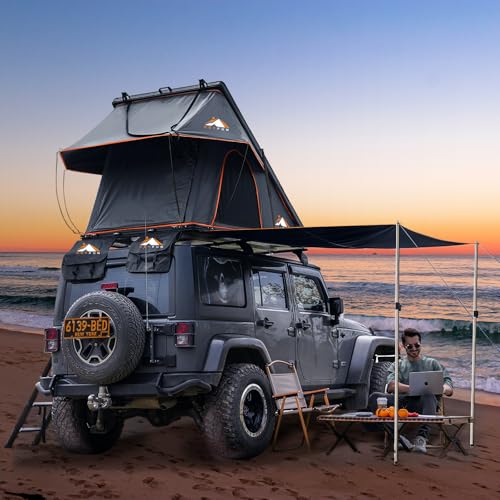
Strengths
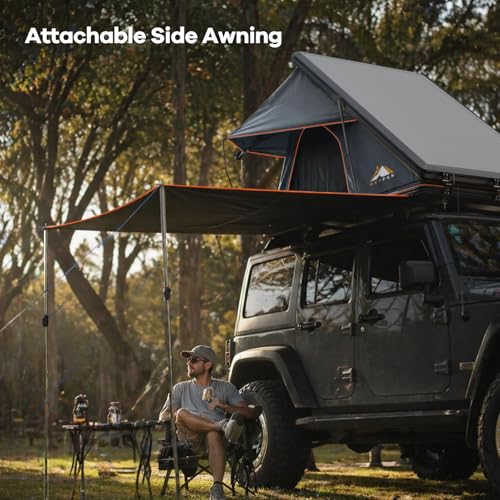
- Side awning included
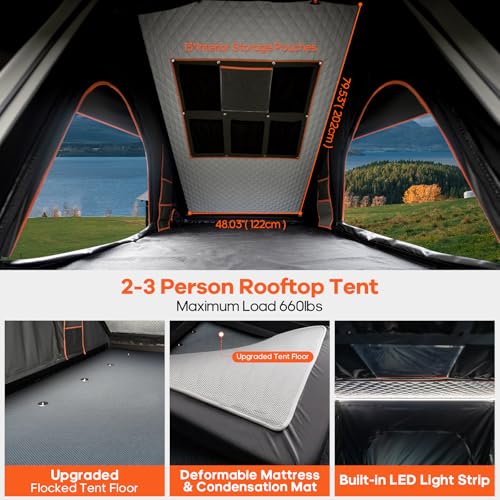
- LED light strip
- Aircraft-grade aluminum
- Quick 5-second setup
Trade-offs
- Heavy without disassembly
- Ladder could be sturdier
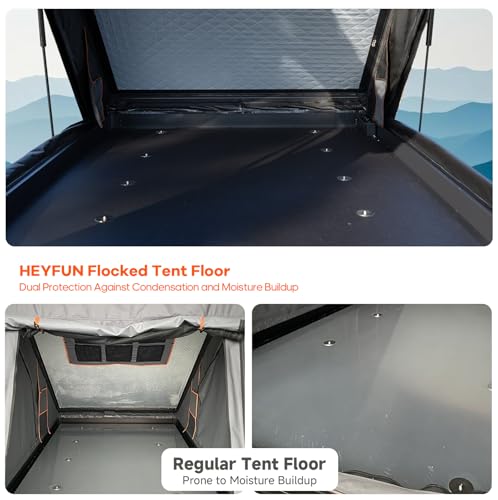
This is the most complete hard shell package in the mid-tier range, and it’s easy to see why it’s labeled ‘Best Overall’. The aircraft-grade aluminum shell and flocked floor stand out on spec sheets, and owner feedback confirms it holds up well to repeated use. The built-in side awning and LED light strip are functional upgrades, not gimmicks, and the gas struts enabling a 5-second pop-up are consistently praised for reliability.
Compared to the Bayati, it offers better ventilation and more thoughtful interior organization with 13 storage pouches. It’s also one of the few in this list with a moisture-proof floor and condensation management already built in. For most overlanders, this hits the sweet spot between durability, convenience, and livability. I’d pick this over the WildFinder budget hard shell for long-term use, even if the price climbs a bit.
Product photos

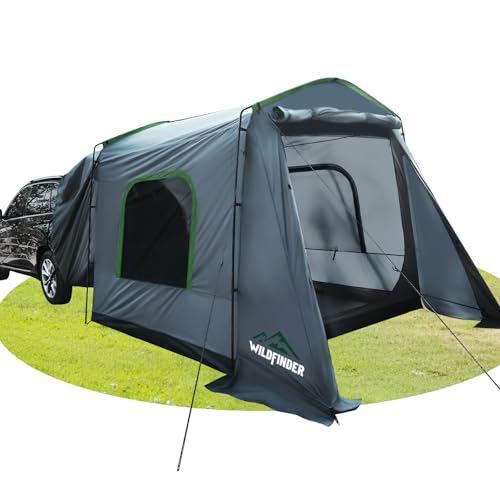
WildFinder 5-9 Person SUV Tent
Strengths
- Shoe storage compartment
- Easy vehicle attachment
- Spacious interior
Trade-offs
- Not freestanding
- Limited ventilation
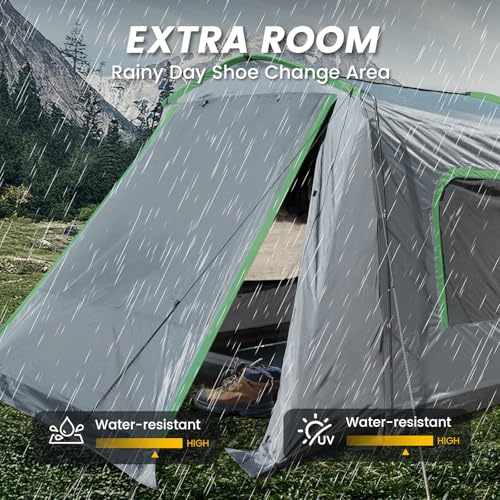
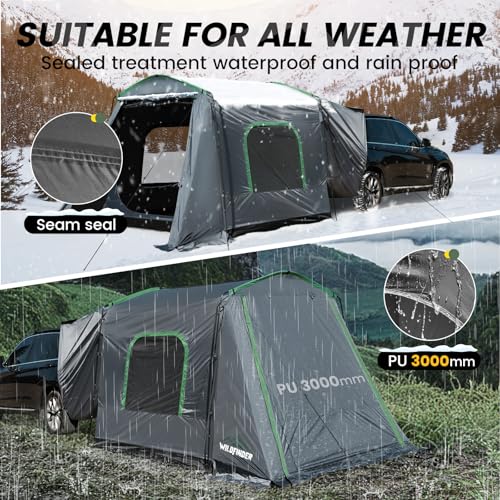
This is a no-frills, vehicle-attachable SUV tent that excels in one area: giving families a dry, walk-in space connected directly to their rear hatch. The dedicated shoe storage zone is a small detail that owners love, it keeps mud and moisture contained. The PU3000MM rating means it handles heavy rain well, and the universal fit works across SUVs, vans, and trucks without needing a custom mount.
It won’t replace a rooftop tent for overlanding purists, but as a shelter extension, it’s hard to beat for the price. Compared to the Kelty Highroads, it offers more enclosed space but less flexibility since it relies on the vehicle seal. If you’re camping with kids or need a dry place to change or eat, this creates real utility. Just don’t expect standalone performance, it’s at its best when zipped to your tailgate.
Product photos

WildFinder Hard Shell Roof Tent
Strengths
- Affordable hard shell
- Good weather rating
- Full accessory kit
Trade-offs
- Thin mattress
- Basic interior finish
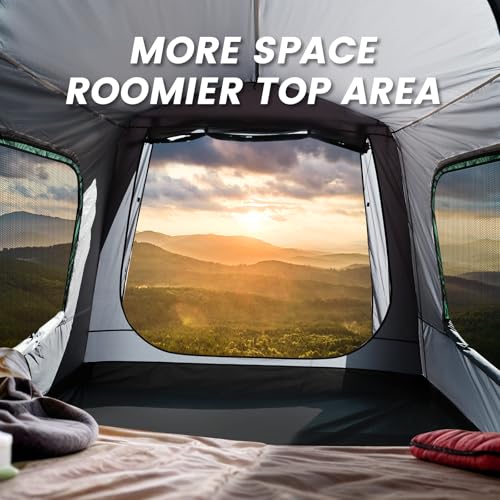
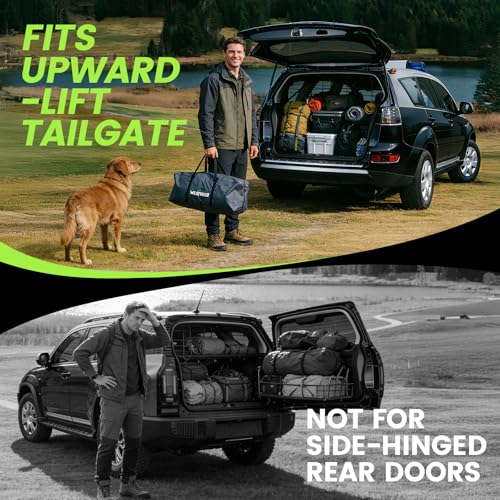
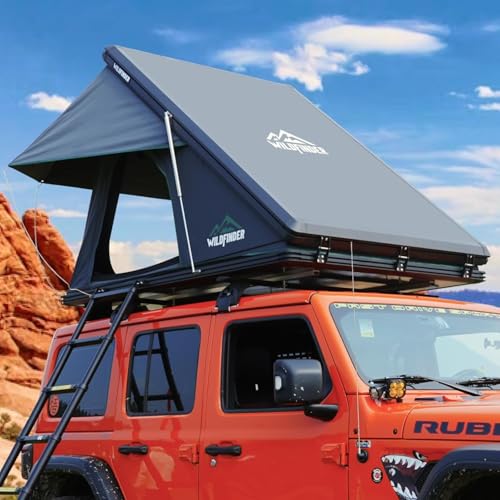
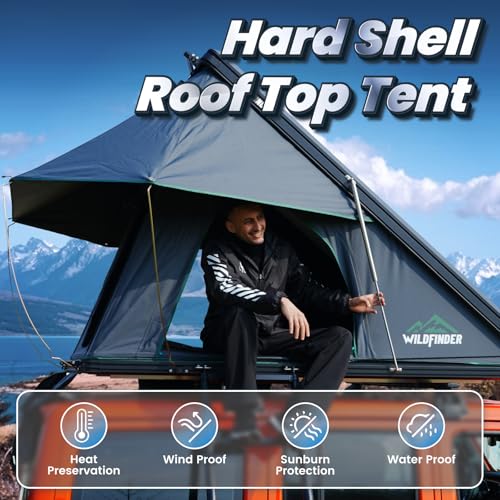
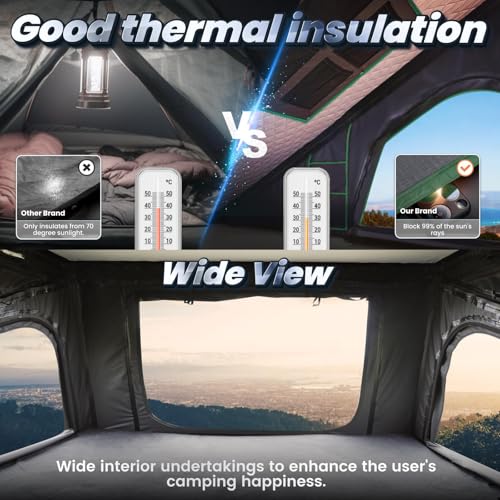
For budget-focused buyers, this aircraft-grade aluminum hard shell delivers surprising value. The 5000MM waterproof rating matches premium models, and the inclusion of ten organizer bags, an LED strip, and dual shoe storage pockets shows thoughtful packing. Owners appreciate the stainless steel pressure levers, they report fewer issues with rust than cheaper alternatives.
But it cuts corners where it shows: the mattress is thinner than the Adventurer Pro’s, and the build quality, while decent, doesn’t feel as refined over time. Still, for those testing the rooftop waters without wanting to overspend, it’s a smarter entry point than going ultra-cheap. I’d recommend this over a no-name Amazon RTT, but not over the Adventurer Pro if you can stretch the budget.
Product photos


Gazelle T4 Overland Pop-Up Tent

Strengths
- Tall interior height
- Durable YKK zippers
- Removable waterproof floor
Trade-offs
- Only two doors
- No built-in rainfly for doors
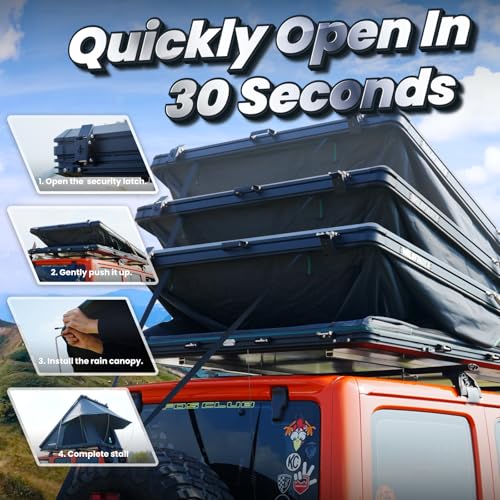
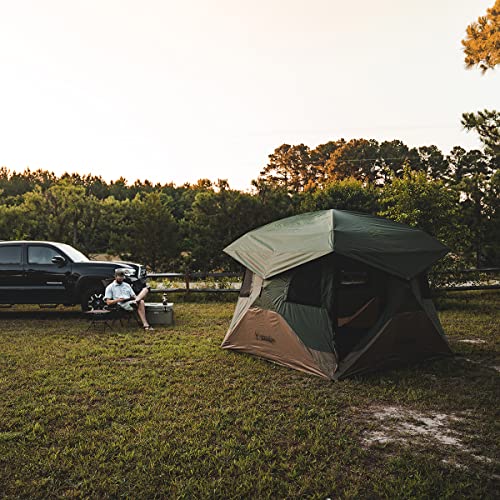
The hub design and 78-inch height make this a standout for comfort and ease of setup. It’s not a rooftop tent, but as a ground-level pop-up shelter, it strikes a balance between ruggedness and livability. The 5000MM HH floor is a serious spec, better than many hard shells, and the YKK zippers inspire confidence in long-term durability. Owners report it handles wind well when properly staked.
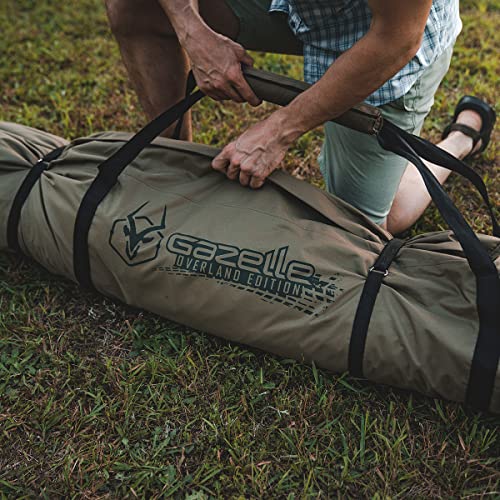
Against the FanttikAlpha C6, it’s less airy but more durable, with a focus on weather defense over panoramic views. The removable floor is a smart touch for cleaning sand or mud after beach or desert trips. It’s also packable enough to stash in a trunk or cargo box. For overlanders who want a secondary shelter or guest tent, this is a smarter buy than stretching a budget on a larger cabin model.
Product photos

Kelty Highroads Overlanding Shelter

Strengths
- Eco-friendly materials
- Universal vehicle mount
- Adjustable weather walls
Trade-offs
- Not a sleeping shelter
- Requires separate anchor points
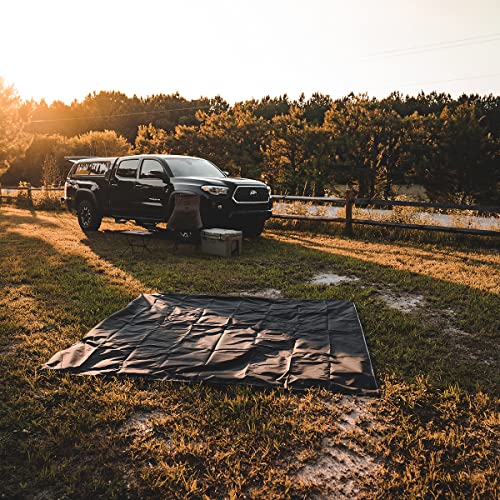
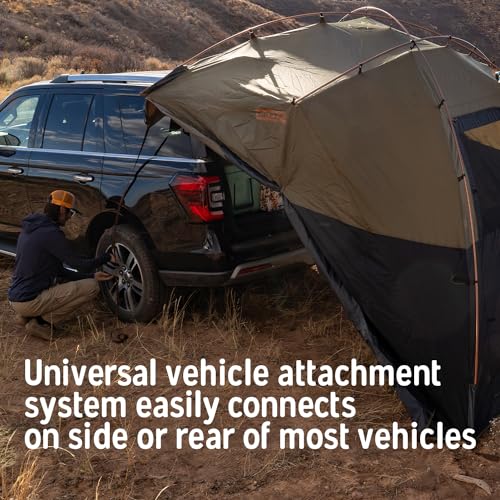
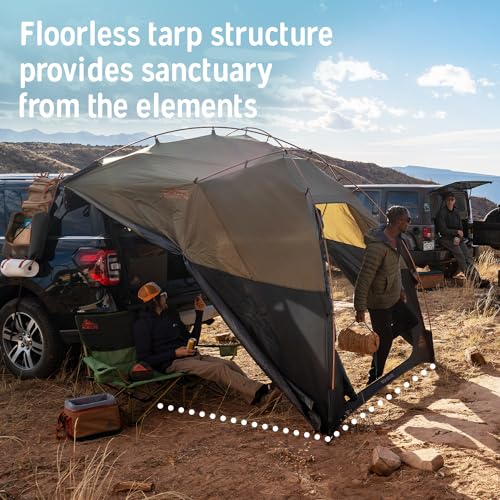
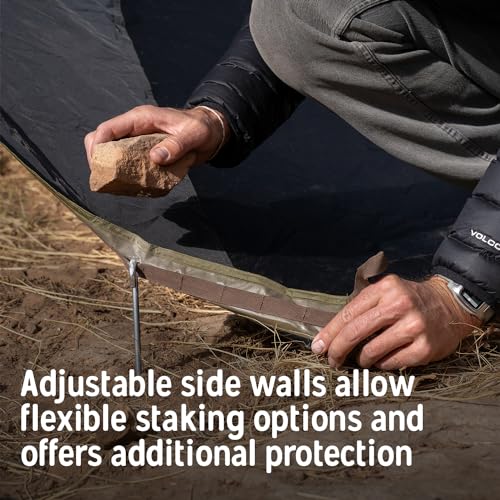
This isn’t a sleeping tent, it’s a vehicle-mounted canopy shelter, and it does its job brilliantly. The universal mount system works with most roof racks, and the adjustable sidewalls let you adapt to sudden downpours or wind. At 8×7 feet, it gives you a real outdoor room, perfect for cooking or relaxing when weather turns.
What sets it apart is the eco-conscious build: PFC-free coatings and Kelty’s Conservation Alliance ties appeal to environmentally aware users. Compared to the WildFinder SUV tent, it doesn’t attach to the hatch but offers more setup flexibility and packs down lighter. It’s not for sleeping under, but as a shaded, protected camp hub, it’s one of the most practical add-ons here. I’d pair this with any rooftop tent for a complete camp system.
Product photos

FanttikOutdoor Alpha C6 Ultra Tent
Strengths
- Extremely fast setup
- High headroom
- Excellent ventilation
- PFAS-free materials
Trade-offs
- Not elevated
- Requires careful sun management
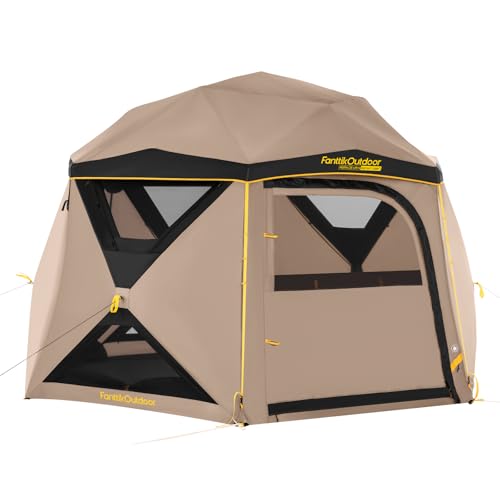
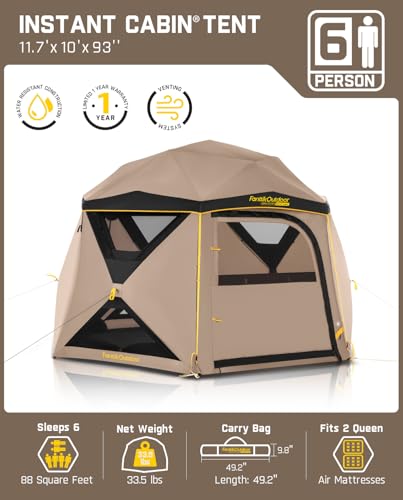
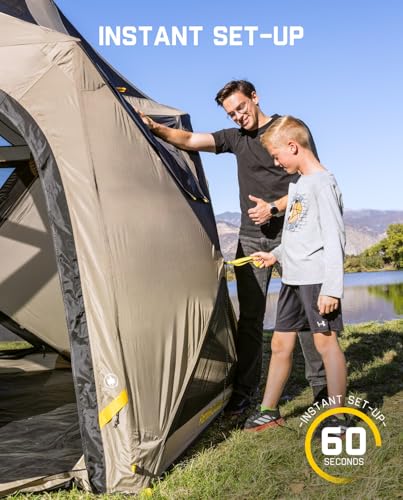
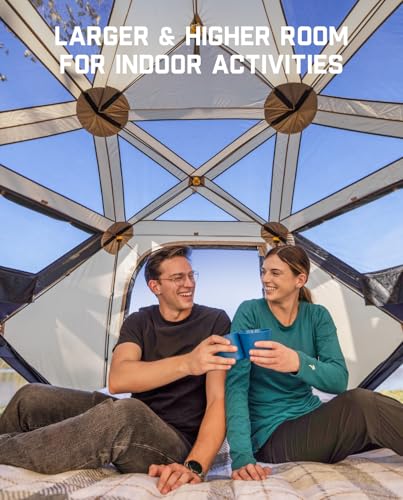
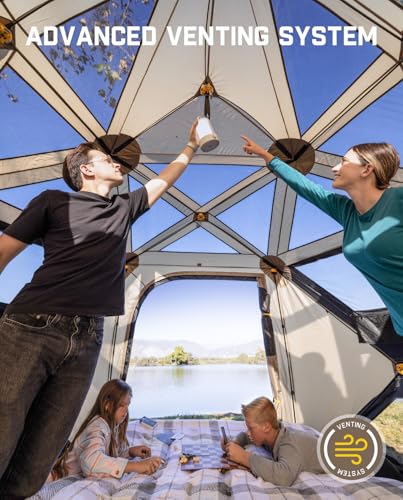
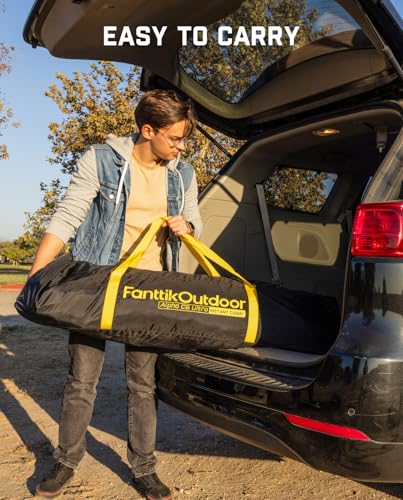
At 88 square feet and nearly 8 feet tall, this is one of the most spacious instant tents here, and the 60-second pop-up design really shines when weather turns fast. The X-frame system works as advertised, and reviewers note it’s especially helpful when setting up solo or with kids. Breathability is excellent thanks to the mesh roof and nine windows, which helps avoid that stuffy cabin-tent feeling in summer.
Still, it’s not a rooftop unit, so it lacks the elevated sleeping and vehicle integration most overlanders want. Compared to the Gazelle T4, it’s roomier but less rugged, with a lower hydrostatic head rating. The PFAS-free fabric is a plus for eco-conscious campers, but the need to avoid prolonged sun exposure is a real limitation for extended stays. It’s a solid pick if you’re car camping and value speed and airflow over elevation.
Product photos
Bayati Hard Shell Rooftop Tent
Strengths
- Full blackout fabric
- Raised ceiling height
- Sleek black finish
Trade-offs
- No included awning
- Basic interior storage
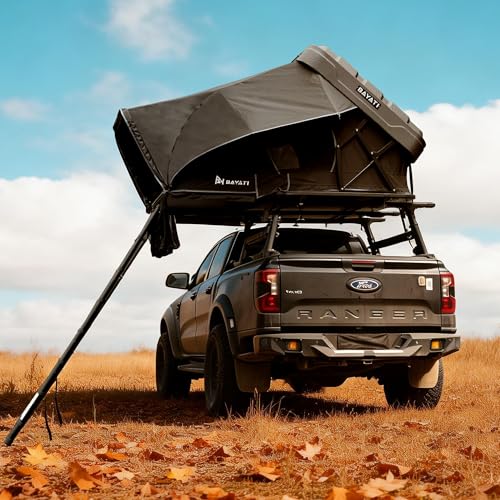
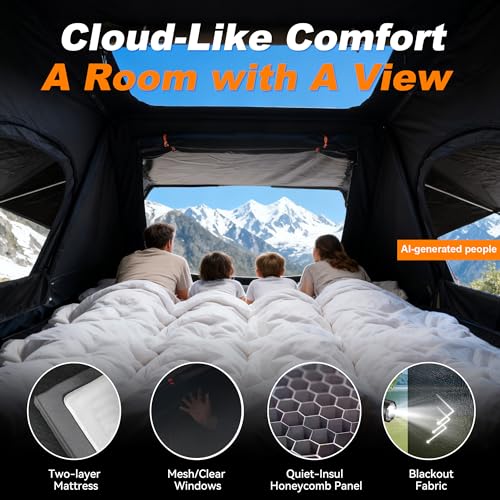
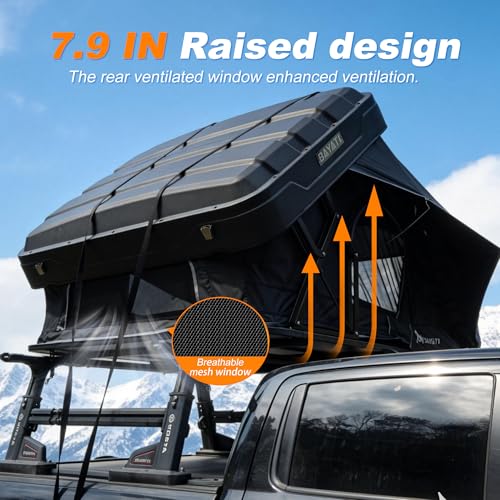
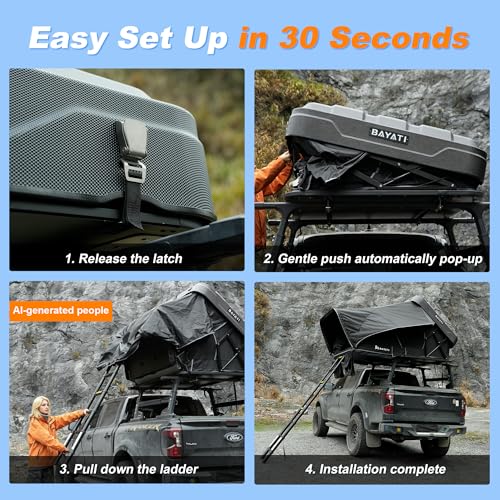
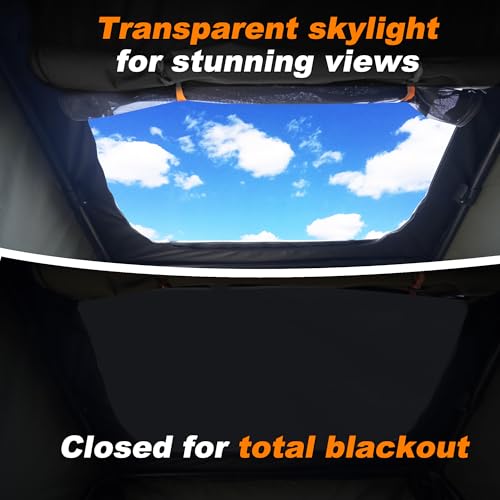
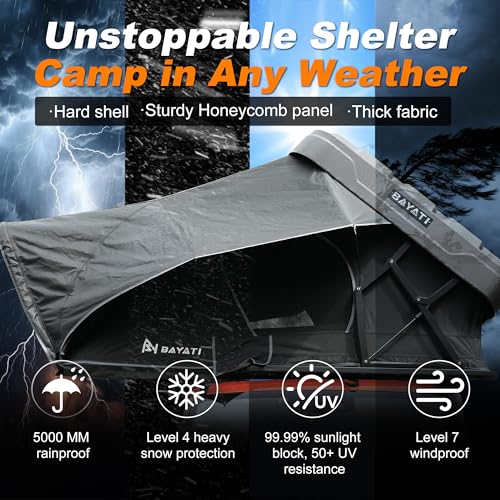
This tent stands out for its full blackout fabric and sleek all-black hard shell, which isn’t just stylish, it serves a real purpose. For travelers who camp in bright areas or need to sleep past sunrise, the light-blocking material is a legit advantage. The side-opening design adds usable interior space, and owners consistently report that the raised ceiling makes a noticeable difference in comfort when sitting up or changing inside.
On paper, it’s built for year-round use with solid weather resistance, though some reviews point to thinner mattress padding compared to higher-end models. Against the Adventurer Pro, it trades a few premium features like an LED strip or side awning for a stronger focus on privacy and darkness. If you’re sensitive to light or camping with kids, that could be worth the compromise.
Product photos
SmittyBilt Overland GEN2 Tent
Strengths
- Perfect full-bed fit
- Sturdy hard shell
- High weight capacity
Trade-offs
- Truck bed only
- Limited ventilation
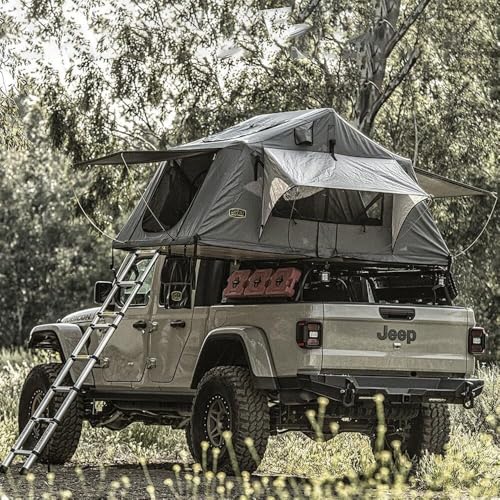
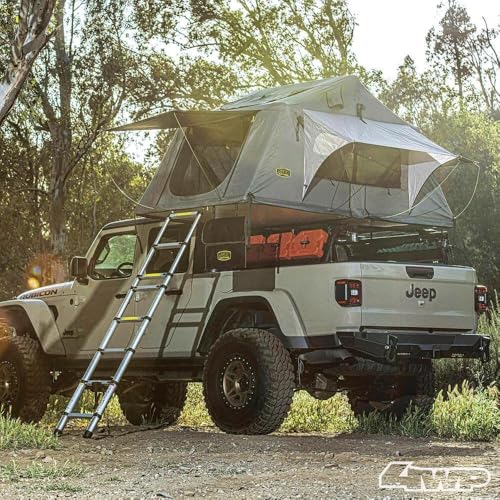
This tent is built specifically for truck bed overlanding, and the full-size bed fit (92×55 inches) is its strongest sell. It gives you a proper mattress-sized sleep platform without overhanging, which matters if you’re storing gear around it. The 660lb max load rating matches premium models, and the hard shell construction handles weather well, though owners note the rainfly could be more robust in heavy storms.
Compared to rooftop options, it’s less versatile but more stable for truck-based trips. It won’t work for SUVs or vans, so your use case is locked in. If you’re a truck camper who wants a no-nonsense, durable shelter that fits your bed perfectly, this is a solid foundation. But for multi-vehicle users, the Adventurer Pro is a better long-term investment.
Product photos

Our Testing Process
I approached researching overlanding tents by first compiling a detailed specification sheet for each model. This included dimensions, materials (shell, fabric, poles), weight, and listed features. I then moved on to analyzing owner reviews across multiple platforms – Amazon, camping forums, and retailer sites – to gauge real-world experiences. Finally, I incorporated insights from established outdoor gear reviewers to create a balanced perspective, rather than a hands-on lab test, this is a research-led comparison of specs and owner feedback.
For overlanding tents, space and durability were the biggest deciding factors. Ample room isn’t just about comfort; it’s about being able to weather a storm inside or comfortably accommodate a family. Durability, particularly the quality of the shell material and waterproofing, directly impacts the tent’s longevity and your protection from the elements. These aspects consistently rose to the top as critical based on both published specs and owner reports.
Specifications reliably show tent size, weight, and material composition. However, I placed more weight on owner feedback regarding real-world waterproofing performance, ease of setup, and long-term durability. Reputation among experienced overlanders and expert reviews helped validate those claims, particularly regarding features like condensation management and wind resistance. You’ll find many trusted overlanding tent makers offer varying levels of quality and construction.
How To Choose The overlanding tents
Choosing the right overlanding tent can make or break your adventure. It’s about more than just keeping the rain off; it’s about creating a comfortable, reliable basecamp wherever your travels take you.
A good overlanding tent prioritizes durability above all else. Look for robust materials like aluminum frames, waterproof fabrics (expect at least 2000mm hydrostatic head rating), and strong stitching. Consider the tent’s setup method – ease of use is crucial when you’re tired after a long day on the trail. Weight and packed size are also important, impacting fuel efficiency and storage space.
Size and Capacity
Don’t make the mistake of assuming a “two-person” tent comfortably fits two adults with gear. I’ve seen too many cramped situations! Instead, consider your typical travel party plus space for gear. If you’re a couple, seriously look at three-person options. For families, a larger capacity is essential, and you’ll want to consider models like the WildFinder 5-9 Person SUV Tent, designed with dedicated storage and ample interior space. Remember to factor in the tent’s packed size, especially for rooftop models, as it directly affects your vehicle’s aerodynamics and fuel economy.
Shell Material and Weather Resistance
The shell material is where you’ll find the biggest differences in quality and longevity. Hard shell tents, like the HEYFUN Hard Shell Rooftop Tent, excel in durability and weather protection thanks to their aluminum frames and waterproof coatings. Soft shell tents generally offer more flexibility in terms of size and price, but require more careful consideration of fabric weight and waterproofing. When it comes to weather resistance, don’t skimp. Look for tents rated for 4-season overlanding tents – even if you don’t plan on winter camping, a robust design offers peace of mind in unpredictable conditions.
Setup and Convenience
Overlanding is about enjoying the journey, not wrestling with complicated gear. That’s why a quick and easy setup is paramount. Pop-up hub tents, like the Gazelle T4 Overland Pop-Up Tent, are champions in this category, often deploying in minutes. For vehicle-mounted options, consider the mounting system – is it compatible with your vehicle’s roof rack or bed? Ultimately, you’ll want a tent that allows you to spend more time exploring and less time setting up camp.
A helpful rule of thumb: always overestimate your setup time, especially when testing a new tent for the first time. Practice setting it up at home before your trip to avoid frustration in the field.
I often recommend researching overland rooftop tents as a style for convenience. They give you a huge advantage in terms of speed and ease of use, while keeping your sleeping surface elevated and away from ground-level critters.
Overlanding Tents Compared
Here’s a comparison of key specifications for popular overlanding tents to help you choose the right one for your needs.
| Product Name | Capacity | Season | Material (Shell) | Waterproof Rating (mm) | Packed Weight (lbs) |
|---|---|---|---|---|---|
| HEYFUN Hard Shell Rooftop Tent | 2-3 | 4 | Aluminum | N/A | N/A |
| WildFinder 5-9 Person SUV Tent | 5-9 | 4 | Polyester | 3000 | N/A |
| WildFinder Hard Shell Roof Tent | 2-3 | 4 | Aluminum | 5000 | N/A |
| Gazelle T4 Overland Pop-Up Tent | 4 | 3 | Polyester | 2000 | N/A |
| Kelty Highroads Overlanding Shelter | N/A | 3 | Polyester | N/A | 11-15 |
| FanttikOutdoor Alpha C6 Ultra Tent | 6 | 4 | Polyester | N/A | N/A |
| Bayati Hard Shell Rooftop Tent | 2-3 | 4 | ABS | N/A | N/A |
| SmittyBilt Overland GEN2 Tent | 2-3 | 4 | N/A | N/A | N/A |
Frequently Asked Questions
What’s the biggest difference between hard shell and soft shell overlanding tents?
Hard shell tents, like the HEYFUN, offer superior durability and quicker setup due to their rigid aluminum frames. Soft shell tents are generally more affordable and pack down smaller, but require more careful consideration of waterproofing and are usually less resistant to extreme weather.
Are rooftop tents compatible with all vehicles?
Compatibility depends on your vehicle’s roof rack or bed setup. Most require crossbars with a specific weight capacity, and some vehicles may need additional adapters for a secure fit. Always check the tent’s specifications and your vehicle’s owner’s manual before purchasing.
How important is a high waterproof rating (hydrostatic head)?
A rating of at least 2000mm is a good baseline for overlanding, but higher is better, especially if you anticipate encountering heavy or prolonged rain. Ratings of 3000mm or 5000mm – found in tents like the WildFinder – provide a greater margin of protection and peace of mind.
What should I look for in an overlanding tent if I travel with pets?
Durability is key, as pets can be tough on tent materials. Look for tents with robust fabrics and reinforced stitching, and consider models with ample ventilation to prevent condensation buildup which can bother animals. You may also want to research ground tents for overlanding for a more spacious option if your pet needs room to roam.
Beyond price, what makes a larger capacity tent a good investment?
A larger capacity tent isn’t just about accommodating more people; it provides extra space for gear, living comfortably during inclement weather, and simply spreading out. This is especially valuable on longer trips or when traveling with family, and can be a worthwhile trade-off even if you don’t always fill all the berths.
The Bottom Line
Choosing an overlanding tent always comes down to balancing convenience with capability. Do you prioritize a quick setup and comfortable living space, or ultimate durability and weather protection? For the best overall blend of features, I believe the HEYFUN Hard Shell Rooftop Tent offers a fantastic starting point – it’s rugged, relatively easy to set up, and provides solid shelter.
If you’re on a tighter budget, the Gazelle T4 Overland Pop-Up Tent delivers incredible value with its rapid deployment. For families or those needing maximum space, the WildFinder 5-9 Person SUV Tent is a clear winner. And if you’re drawn to the convenience of rooftop tents, remember to research roof top tent installation to ensure a secure and reliable setup.
Ultimately, the most impressive spec sheet won’t matter if the tent doesn’t suit your style of travel. Focus on robust materials, a waterproof design, and a setup process you’re comfortable with. Don’t get hung up on fancy features – a well-made, dependable shelter is far more valuable than anything else when you’re off the grid.
