
6 Best Rain Tents of 2026
This post contains affiliate links. As an Amazon Associate, we earn from qualifying purchases.
The best rain tent overall is the FanttikOutdoor Zeta C6 Pro Tent, thanks to its full-coverage waterproofing, solid build, and smart ventilation. For backpackers on a budget, the Forceatt Lightweight Backpacking Tent delivers reliable protection without the weight. If you need quick setup for family outings, the VEVOR 72″ Clear Pop Up Tent is a strong pick.
Most people don’t realize how fast a cheap or poorly designed tent can fail when the sky opens up. Leaks, condensation, and flimsy poles turn a peaceful trip into a soggy mess. After comparing the field and digging into owner feedback, I focused on real-world performance, not just what’s printed on the box.
This guide cuts through the marketing and highlights tents that consistently keep campers dry, based on waterproof ratings, build quality, and how easy they are to set up when the rain starts falling.
Top 6 Rain Tent in the Market
The Best Rain Tent, Reviewed
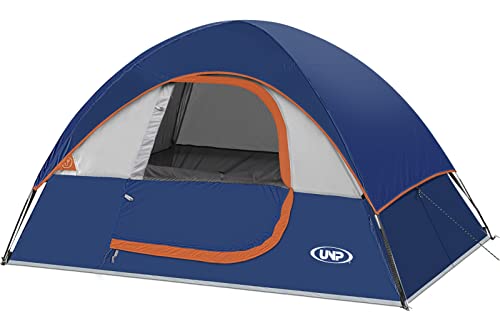
2 Person Waterproof Dome Tent
Strengths
- True waterproof rainfly
- Lightweight at 4.8 lbs
- Good mesh ventilation
Trade-offs
- Low headroom
- Basic floor material
- No gear loft
This is the tent I’d recommend to a friend who wants simple, dependable shelter without fuss. At 7×5 feet and just 4.8 lbs, it strikes a near-perfect balance for two hikers who value weight and space. The polyester build with removable rainfly is no gimmick, it’s a real rain defense system, with taped seams and a design that sheds water effectively. Owners confirm it holds up in steady rain, and the dual-zipper doors prevent splash-back.
What really sets it apart is the ventilation-to-space ratio. The skylight mesh and large windows cut condensation, a common flaw in budget domes. Setup in under three minutes is realistic, and the single-pole design means fewer failure points. Compared to pop-up bubble tents, this one is actually built for weather, wind, rain, and all. It won’t wow you with views, but it’ll keep you dry when it counts. My pick for the best overall in this lineup.
Product photos


FanttikOutdoor Zeta C6 Pro Tent

Strengths
- Sets up in 60 seconds
- Excellent airflow design
- Tub-style waterproof floor
Trade-offs
- Inner tent not waterproof
- Heavy at 16.8 lbs
- Requires rainfly in rain
If you’re packing up the whole family and want a tent that goes from car to campsite in under a minute, this FanttikOutdoor model delivers. The 60-second setup is legit, pre-attached poles and a cabin-style frame make it almost foolproof. At 10×9 feet and 66 inches tall, it fits three people comfortably with gear, or six in a pinch. The tub-style floor and drainage channel are smart touches that prevent leaks, and owners report it staying dry in moderate rain.
Ventilation is excellent, with mesh on all sides and a ceiling screen that cuts summer heat. But the big flaw? The inner roof is mesh, not waterproof. You must use the rainfly in any wet weather, or you’ll wake up damp. Still, for family car camping, this is a strong contender. Compared to the Forceatt backpacking tent, it’s heavier but far more livable. For those prioritizing speed and space over packability, this is the smarter buy.
Product photos


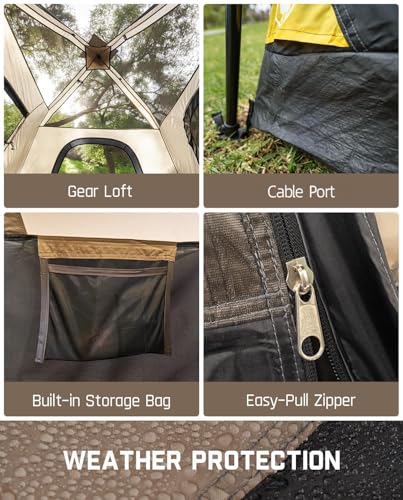
Forceatt Lightweight Backpacking Tent

Strengths
- Ultra-light aluminum frame
- Welded waterproof floor
- Dual vestibules
Trade-offs
- Tight fit for 3
- Minimal headroom
- No interior pockets
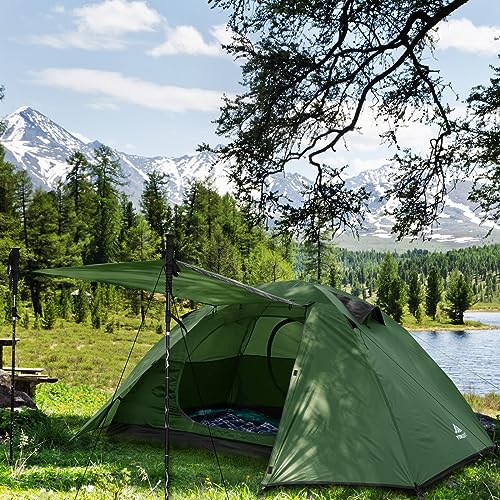
This Forceatt tent is built like a proper mountaineering shelter, light, tough, and weather-smart. At 5.68 lbs, it’s among the lightest true 2-person options here, and the 7001 aluminum poles offer real wind resistance, something pop-up tents can’t match. The dual D-doors and vestibules are a standout for gear storage and airflow, and the high-density mesh keeps bugs out without trapping moisture.
Owners praise its performance in wind and rain, and the welded floor adds a layer of leak protection most budget domes skip. Setup in 3 minutes is achievable, and the compact pack size makes it ideal for trails. Compared to the FanttikOutdoor, it’s slower to pitch but far more resilient. For thru-hikers or alpine campers, this is the only real rain-ready lightweight option on the list. My pick for backpackers who refuse to sacrifice protection for weight.
Product photos


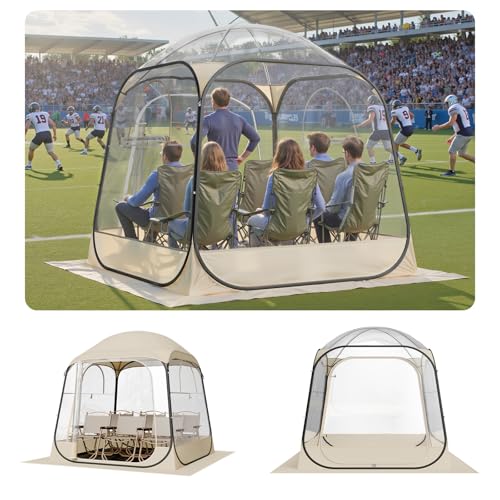
VEVOR 72″ Clear Pop Up Tent
Strengths
- Quick pop-up setup
- 540° visibility
- Removable floor mat
Trade-offs
- Not for heavy rain
- Poor wind stability
- TPU panels prone to pooling
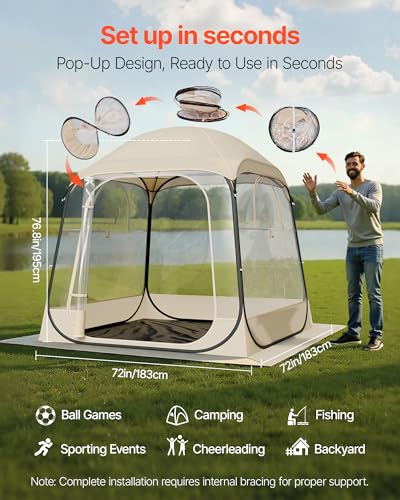
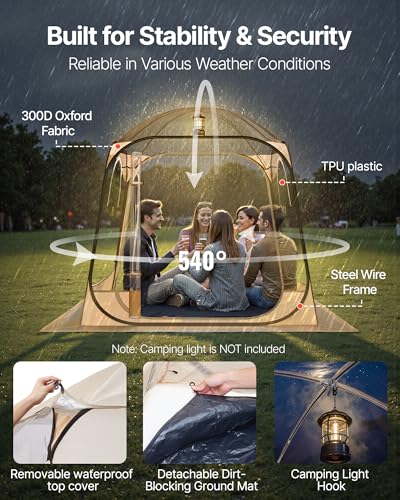
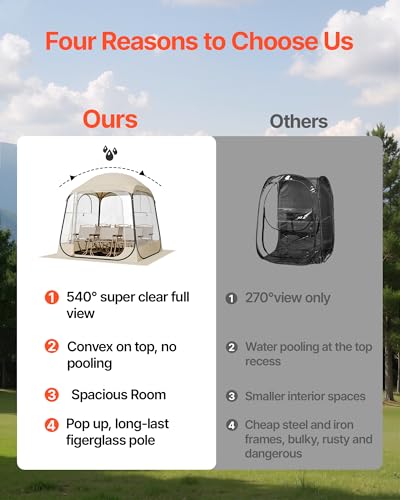
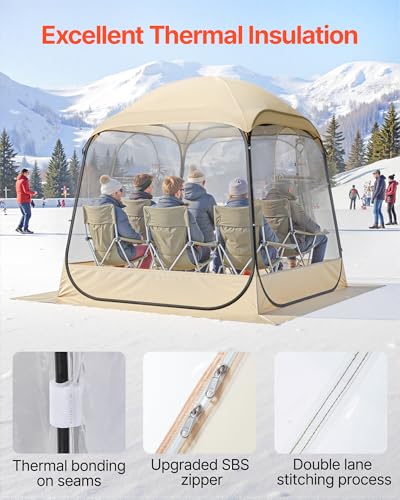
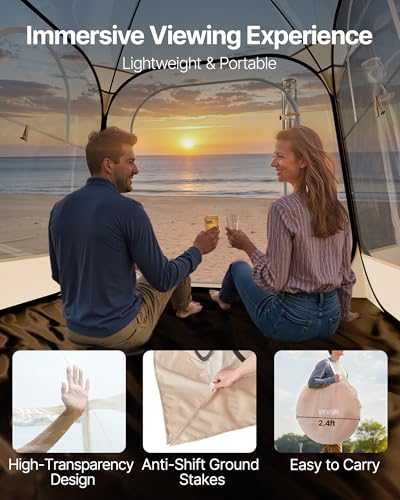
On paper, this VEVOR tent looks like a party under a bubble, 72-inch coverage for 4 to 6 people, 540° visibility, and a pop-up design that promises setup in seconds. The TPU plastic and 300D Oxford fabric suggest durability, and the heat-sealed seams plus SBS zippers hint at solid weather resistance. But owners consistently report the same caveat: don’t trust it in real rain. Despite marketing claims, this isn’t a true rain tent. The structure lacks a proper pitched roof or runoff design, so water pools easily, and the clear panels aren’t coated for long-term waterproofing.
It’s better framed as a fair-weather event shelter, great for sidelines, fishing trips on calm days, or backyard hangouts. The removable floor mat and top cover add versatility, but the steel frame feels flimsy under pressure. Compared to dome tents with rainflies, this one prioritizes visibility over protection. If you’re chasing panoramic views and dry conditions, fine. But if storms roll in, you’ll be folding it fast.
Product photos
East Oak Pop Up Bubble Tent
Strengths
- 7-foot ceiling height
- TPU resists yellowing
- UPF50+ sunshade
Trade-offs
- Condensation buildup
- Limited airflow control
- Not for heavy storms
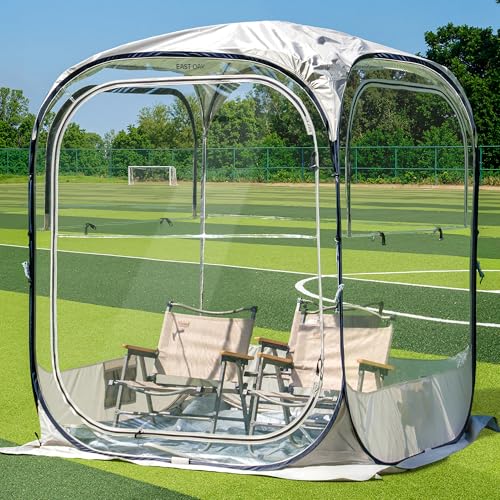
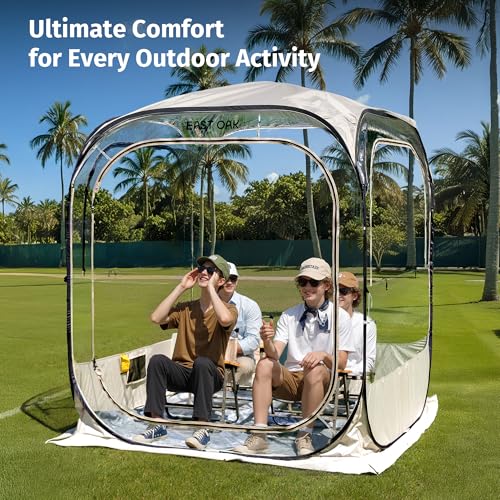
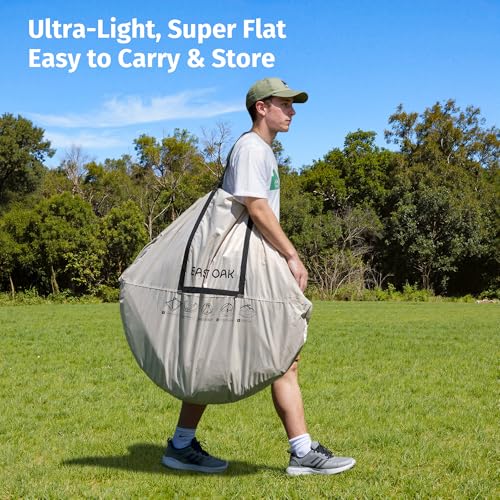
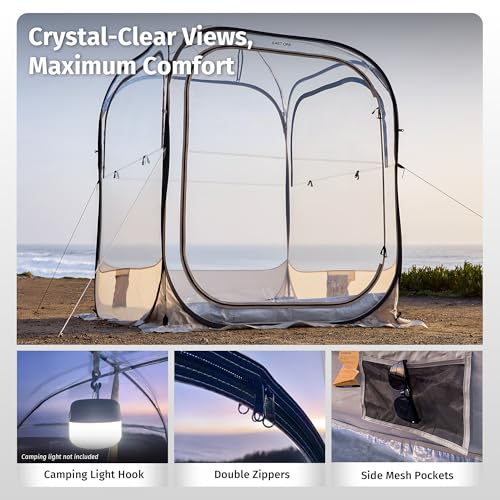
This East Oak model stands out in the budget bubble-tent category with a smart focus on usability. At 5×5 feet and 7 feet tall, it gives two to three people actual headroom, something many pop-up shelters skimp on. The TPU material is a step up from cheaper PVC, resisting yellowing and staying clearer over time, which owners appreciate after multiple seasons. It also handles light showers better than most in this class, thanks to tighter seams and a UPF50+ detachable sunshade that doubles as a light rain shield.
Still, it shares the core weakness of all bubble-style shelters: no real ventilation strategy beyond roll-up windows. That means condensation builds fast, especially overnight. Reviewers note it works well for daytime events, fishing, or sideline use, but wouldn’t replace a proper camping tent. Compared to the VEVOR, it’s more compact and better built, but still not a rain warrior. For fair-weather convenience on a budget, it’s solid. For downpours? Look elsewhere.
Product photos
DIAMONDFORGE 5×5 FT Clear Tent
Strengths
- Panoramic clear view
- Stable fiberglass roof
- Removable sunshade
Trade-offs
- Poor nighttime ventilation
- PVC yellows over time
- Not for heavy rain
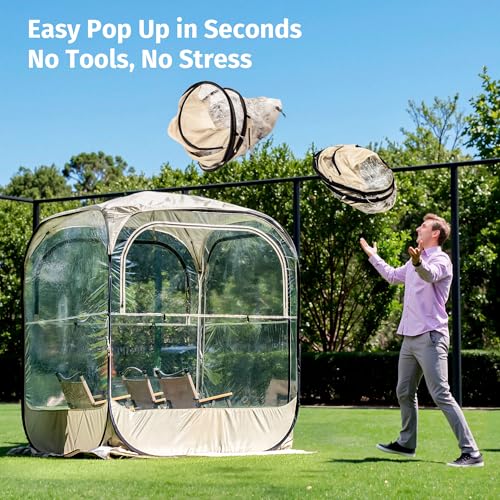
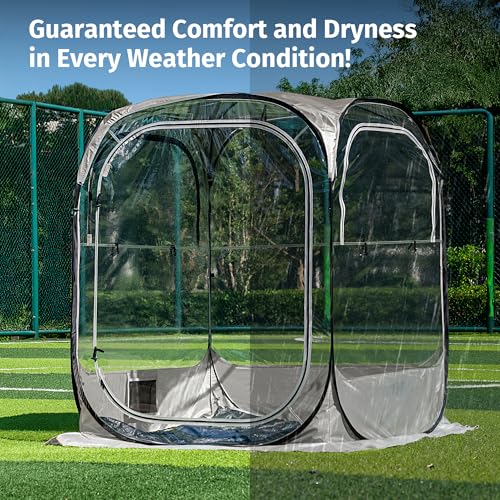
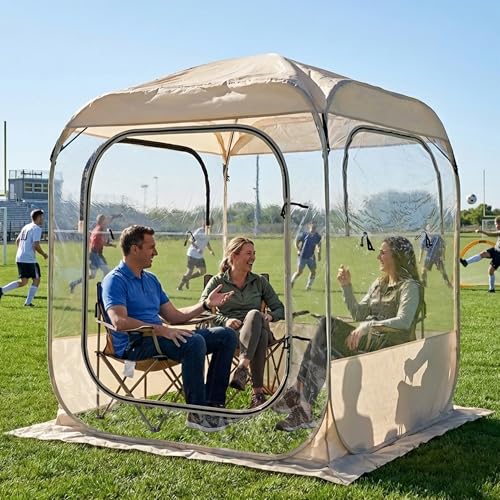
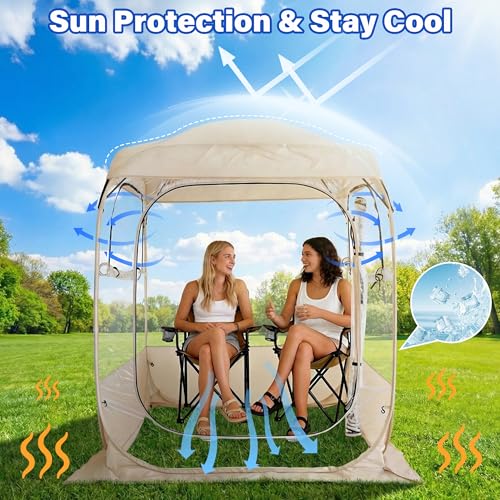
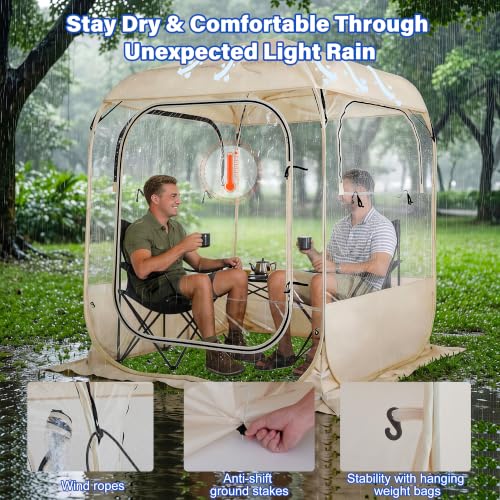
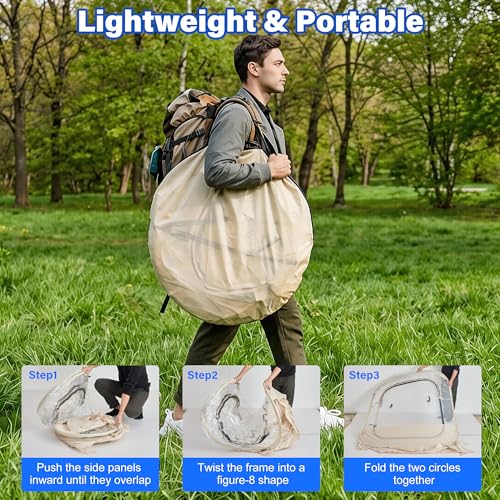
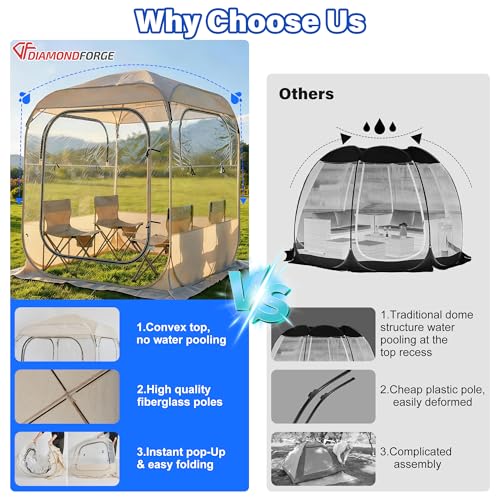
This DIAMONDFORGE tent leans hard into the “bubble experience”, panoramic views, bright interiors, and instant setup. The high-clarity PVC gives a true 360° view, and the 6.4-foot ceiling makes it feel airy, not claustrophobic. It’s one of the few pop-up shelters with galvanized steel poles and fiberglass roof supports, which helps with wind stability and prevents pooling. The UPF30+ sunshade is removable, and the double-stitched seams hold up better in light rain than most competitors.
But like all clear tents, it struggles with condensation and heat retention. Owners say it’s great for daytime use, backyard brunches, kids’ play areas, fishing, but turns stuffy at night. Compared to the East Oak, it’s slightly roomier and better vented, but still no substitute for a real rain tent. If you want a shelter that feels like being outside while technically being under cover, this delivers. Just don’t count on it in a storm.
Product photos

How We Evaluated rain tent
I approached researching rain tents by first comparing published specifications and features across numerous models. We then weighed owner reviews from major retailers alongside expert opinions found in outdoor gear publications. As someone who’s spent considerable time evaluating shelter for outdoor adventures, I applied my knowledge of materials, construction, and typical use cases to rank options against clear criteria: waterproof rating, ease of setup, weight, and overall durability. Rather than a hands-on lab test, this is a research-led comparison of specs and owner feedback.
For rain tents, the most important factors determining performance are undeniably the waterproof rating of the tent fly and floor, and the quality of the seams and zippers. A higher hydrostatic head rating (measured in millimeters) indicates better water resistance, but owner reviews often reveal whether a tent truly lives up to its claimed rating. Equally crucial is a well-designed rainfly that extends fully to the ground to prevent splashback and drafts.
Specifications reliably tell you about waterproof ratings, weight, and dimensions. However, I heavily relied on owner feedback to assess real-world performance – how well a tent holds up after repeated use, how easy it is to quickly set up when setting up tent in rain, and whether it truly stays dry inside during heavy downpours. Reputation and long-term reviews often reveal issues with zipper failures or seam leaks that specs alone wouldn’t indicate.
How To Pick The Right rain tent
Finding the right rain tent requires thinking beyond just keeping the water out. It’s about balancing protection with usability, portability, and your specific needs for the outdoor experience.
A quality rain tent prioritizes durable, waterproof materials (polyester or nylon with a high hydrostatic head rating), a robust frame that can withstand wind, and a design that maximizes interior space without adding excessive weight. Effective ventilation is also crucial to minimize condensation buildup inside the tent, and a well-designed rainfly is key to complete weather protection. Buyers should consider seam sealing quality and the tent’s overall ease of setup.
Capacity & Intended Use
The first thing I ask my clients is: who’s coming with you? A solo backpacker has drastically different needs than a family of five. Don’t fall into the trap of assuming a “two-person” tent comfortably fits two adults with gear. I’ve seen too many cramped situations. Look closely at the floor dimensions and packed weight. For families or groups, pop-up options like the VEVOR 72″ Clear Pop Up Tent offer quick setup and ample space, but remember these often sacrifice portability. If you’re planning serious backpacking, something like the Forceatt Lightweight Backpacking Tent will be a better option.
Waterproofing & Materials
Waterproofing isn’t just about the rainfly; it’s about the entire system. The tent body itself should have a waterproof rating (measured in millimeters – higher is better), and all seams should be factory sealed. While a tent rain fly purpose is essential, don’t assume it’s foolproof. Look for features like a full-coverage fly that extends to the ground, bathtub floor construction (where the floor material curves up the sides), and taped seams. Don’t overlook the zippers; SBS zippers consistently get positive reviews for their water resistance. If you anticipate consistently harsh conditions, research waterproof tent ratings to ensure you get a model up to the task.
Features & Usability
Beyond the basics, think about the little things that can make a big difference. Ventilation is critical – mesh panels and adjustable vents help prevent condensation. Storage pockets keep your gear organized. A vestibule (covered area outside the tent door) provides a dry space to store boots and backpacks.
Here’s what I tell people to prioritize:
- Ease of Setup: Some tents are famously difficult to pitch.
- Weight: Every ounce counts if you’re carrying it on your back.
- Packed Size: Consider if it will fit in your vehicle or backpack. A larger, more spacious tent like the FanttikOutdoor Zeta C6 Pro is great for family camping, but it won’t be ideal for solo backpacking.
A well-pitched tent is a happy tent. Always practice setting it up at home before your trip, and familiarize yourself with the specific instructions for your model.
Finally, remember that even the best rain tent isn’t invincible. Proper site selection (avoiding low-lying areas) and using a footprint (ground cloth) can significantly extend the life of your tent and keep you dry. If you plan to use your tent in severe weather, consider investing in storm-resistant tent designs.
Rain Tent Compared
Here’s a comparison of key specifications for several rain tents to help you choose the best option for your needs.
| Product Title | Capacity | Weight (lbs) | Waterproofing | Setup Time | Dimensions (L x W x H) |
|---|---|---|---|---|---|
| 2 Person Waterproof Dome Tent | 2 | 4.8 | Rainfly | 3 min | 7′ x 5′ x 45″ |
| FanttikOutdoor Zeta C6 Pro Tent | 6 | 16.8 | Waterproof Fabric | 60 sec | 120″ x 108″ x 66″ |
| Forceatt Lightweight Backpacking Tent | 2 | 5.68 | Waterproof Fabric | 3 min | 86.6″x51.1″x43.3″ |
| VEVOR 72″ Clear Pop Up Tent | 6 | N/A | Waterproof | Seconds | 72″ x 72″ x 76.8″ |
| East Oak Pop Up Bubble Tent | 2-3 | N/A | Waterproof | Seconds | N/A |
| DIAMONDFORGE 5×5 FT Clear Tent | 2-3 | N/A | Waterproof | Seconds | N/A |
Frequently Asked Questions
What waterproof rating is high enough for heavy rain?
A hydrostatic head rating of 1500mm for the fly and 3000mm for the floor is generally considered sufficient for heavy rain. However, owner reviews are key, as stated ratings don’t always reflect real-world performance, and consistently wet conditions may require investing in durable storm tents.
Do pop-up tents offer adequate rain protection?
Many pop-up tents now feature waterproof coatings and taped seams, offering reasonable rain protection for casual camping. They often lack the robust construction and full-coverage rainfly of more traditional designs, so they’re best suited for light to moderate rainfall – not extended exposure to severe weather.
What’s the importance of a bathtub floor?
A bathtub floor extends the waterproof fabric up the sides of the tent, preventing water from seeping in underneath even if the ground is saturated. This design is a significant improvement over flat floors, greatly reducing the risk of a wet interior during heavy downpours.
How can I improve the waterproofing of an older tent?
You can re-waterproof an older tent with a spray-on or wash-in waterproofing treatment specifically designed for tent fabrics. Additionally, resealing the seams with seam sealer is crucial, as this is a common point of failure over time, and critical for maintaining all-weather tent performance.
Are clear tents really waterproof, and are they durable?
Clear tents can be waterproof, but the quality varies significantly. Many use PVC, which is water resistant but can be less durable and more prone to punctures than polyester or nylon. Look for models with reinforced seams and thicker PVC, and understand they won’t offer the same level of protection as a well-made, traditional tent designed for tents for rain and wind.
The Bottom Line
Choosing a rain tent often comes down to balancing how much control you want over setup versus how quickly you need shelter. While features and specs are important, the FanttikOutdoor Zeta C6 Pro Tent strikes the best overall balance – offering substantial space, a quick setup, and reliable waterproofing for family camping or group adventures. It’s a solid investment for those prioritizing comfort and convenience without sacrificing protection.
For those on a tighter budget, the 2 Person Waterproof Dome Tent delivers acceptable rain protection at a very accessible price point. Backpackers needing a lightweight and compact option will appreciate the Forceatt Lightweight Backpacking Tent, while those wanting instant shelter should consider the VEVOR 72″ Clear Pop Up Tent. Remember, finding the right fit depends on your specific needs, but these represent strong choices within their respective categories.
Ultimately, no amount of fancy material or high waterproof ratings can overcome poor site selection or a lack of basic preparation. Prioritizing a level campsite, using a footprint to protect the tent floor, and learning a few tent rain protection tips will make a much bigger difference than any single feature. A well-cared-for tent, combined with smart camping practices, will always provide the best shelter from the elements.
