
7 Best Single Person Tents of 2026
This post contains affiliate links. As an Amazon Associate, we earn from qualifying purchases.
The best single person tent overall is the Clostnature 1 Person Ultralight Tent, it’s light, weatherproof, and built for real trail conditions. If you’re watching your budget, the Night Cat Pop-up Camping Tent offers instant setup and decent protection for occasional use, while the camppal 1 Person 4 Season Tent steps up with serious durability for harsh weather.
Most solo campers aren’t just looking for shelter, they need reliability without the bulk. Too many tents fail in wind or soak through after a few hours of rain, and no one wants to wrestle poles after a long hike. After comparing the field, reading owner feedback, and evaluating specs through the lens of actual trail demands, I focused on models that deliver where it matters: weight, weather resistance, and ease of use. This guide cuts through the noise to highlight the top performers for solo adventures, whether you’re backpacking hard or just want something quick and solid for weekend getaways.
Top 7 Single Person Tents in the Market
The Best Single Person Tents, Reviewed
Clostnature 1 Person Ultralight Tent

Strengths
- Strong weather resistance
- Good ventilation
- Spacious interior
Trade-offs
- Slight weight penalty
- Packed size not the smallest
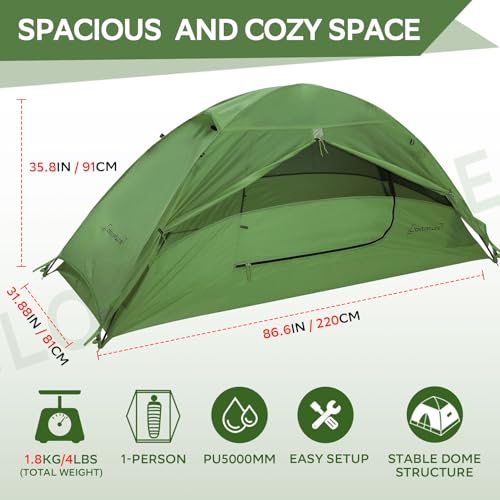
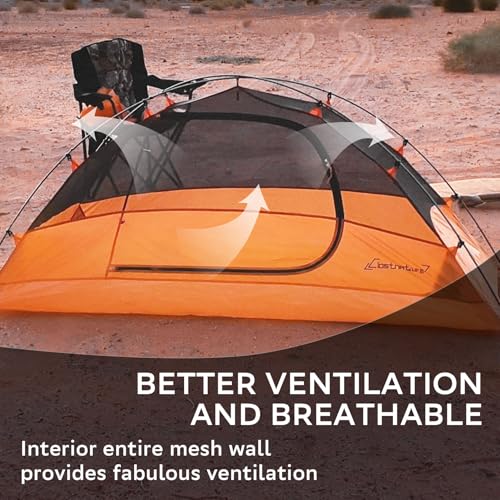
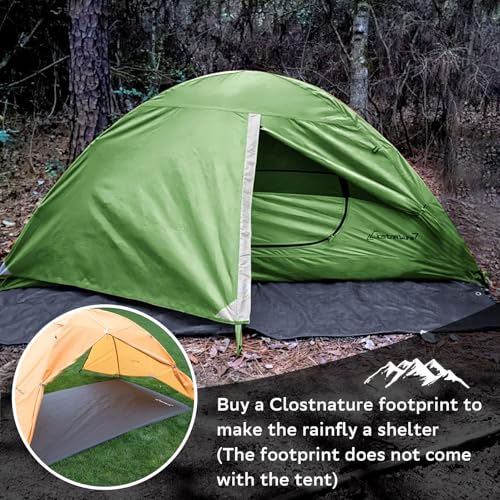
If you’re looking for a do-it-all solo tent that doesn’t sacrifice weather protection for weight, the Clostnature stands out. At 4 lbs with a trail weight of just under 3, it’s competitive with ultralight models but feels more robust thanks to the PU5000 coating and reinforced poles. Owners praise its stability in gusty conditions, and the D-shaped door with a large vestibule makes gear access easy, something the Night Cat pop-up can’t match.
It’s not the lightest, but it’s one of the most balanced. Compared to the ALPS Lynx, it offers similar ventilation with better waterproofing, and unlike the Underwood 4-season model, it’s more comfortable for extended 3-season use. For most hikers, this is the smarter buy if you want one tent to handle everything from spring rain to fall wind.
Product photos

ALPS Mountaineering Lynx 1-Person Tent

Strengths
- Lightweight for its class
- Excellent ventilation
- Freestanding design
Trade-offs
- Not true 4-season
- Slightly bulky packed size
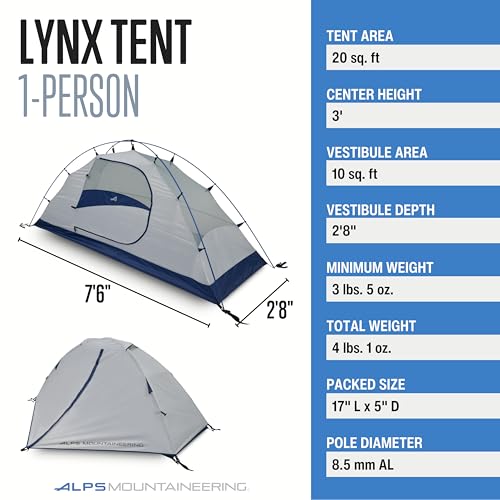
At 4 lbs 1 oz, the Lynx sits in a comfortable middle ground between ultralight and durable, making it a solid choice for hikers who value ventilation and weather protection without going full minimal. The half-mesh walls are a big win for warm nights, cutting down on condensation, a common pain point in single-wall or poorly ventilated designs. Owners consistently report that it holds up well in wind and rain, thanks to the 2000 mm floor coating and sealed rainfly, though it’s not built for serious winter storms.
Compared to the North Face Stormbreak 1, it’s heavier but offers a roomier feel and simpler freestanding setup. The aluminum poles are sturdy, and the included vestibule gives you just enough space to stash boots or a pack. For most solo backpackers tackling spring through fall trips, this tent strikes a practical balance.
Product photos


THE NORTH FACE Stormbreak 1 Tent

Strengths
- Very lightweight
- Excellent airflow
- Durable materials
Trade-offs
- Semi-freestanding setup
- Smaller floor area
- Vestibule not huge
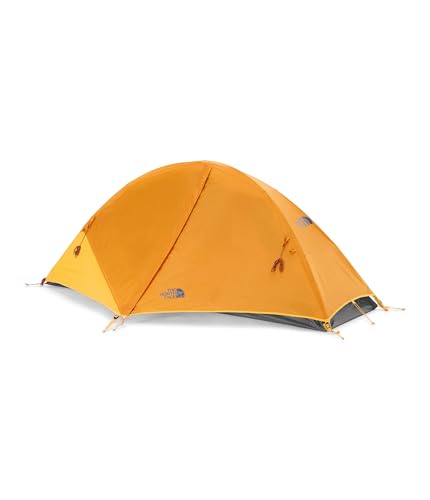
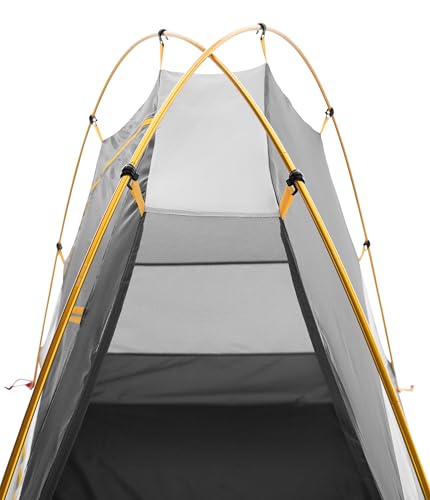
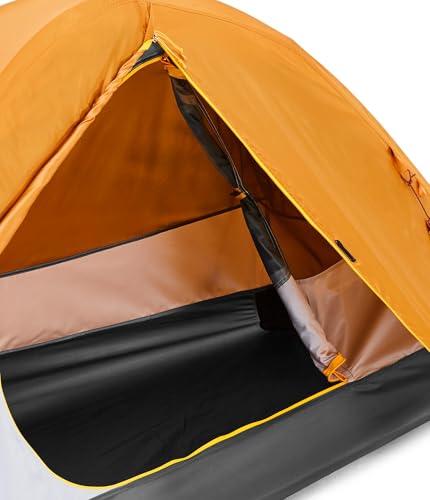
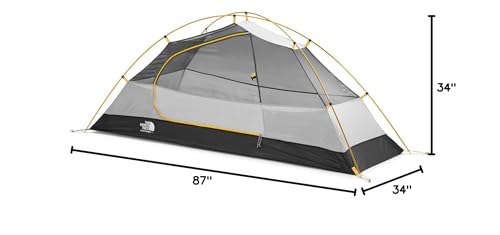
The Stormbreak 1 is a masterclass in efficient design, just 3 lbs 7 oz with a trail weight under 3. It’s one of the lightest in this lineup without cutting corners on weather protection. The high-low ventilation system works well in practice, reducing fogging and condensation, which many owners highlight in humid climates. The door mesh pocket is a small but thoughtful touch that keeps things organized.
It’s not freestanding like the ALPS Lynx, which means setup takes a bit more finesse, but the trade-off is reduced weight and a smaller pack size. Against the Clostnature, it’s lighter but less spacious. For thru-hikers aiming to shave ounces, this is the better pick. For weekenders who want elbow room, look elsewhere.
Product photos
Underwood 4-Season Backpacking Tent
Strengths
- True 4-season build
- Excellent waterproofing
- Wind-resistant frame
Trade-offs
- Low center height
- Heavier than 3-season options
- Tight floor space
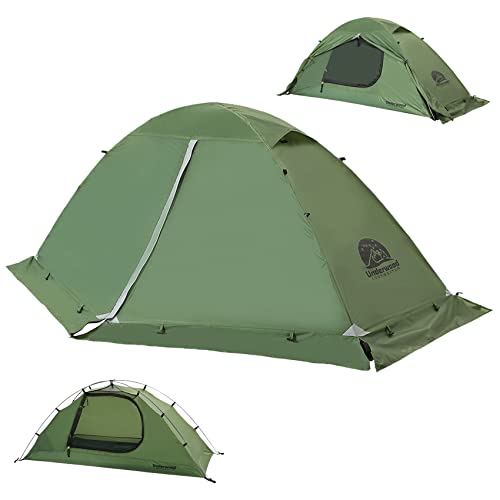
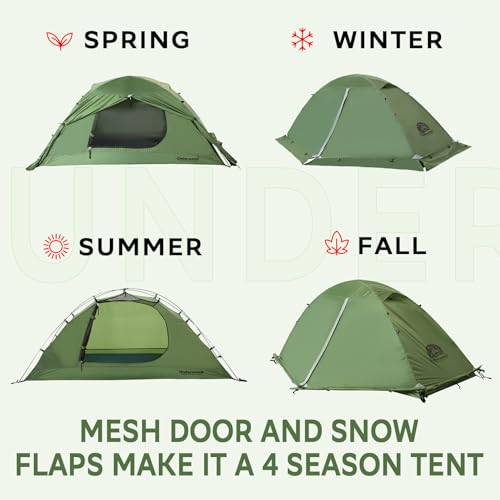
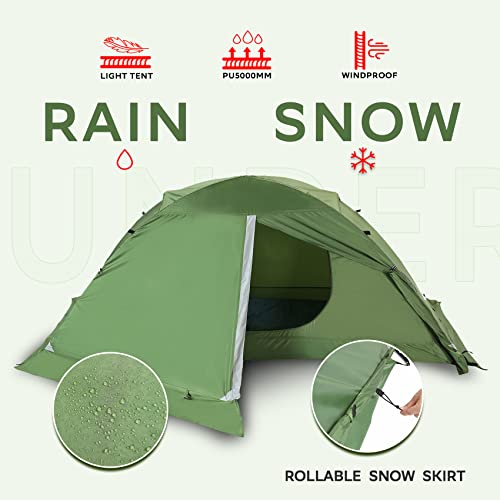
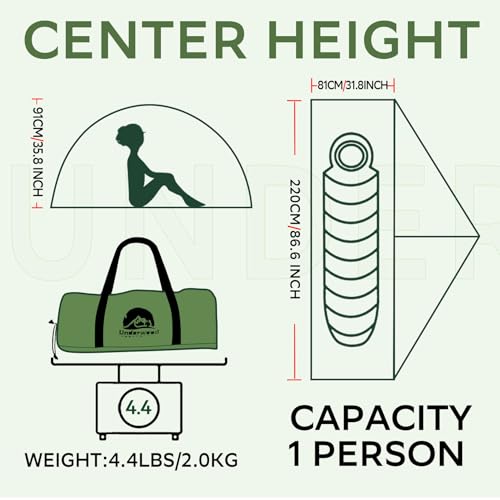
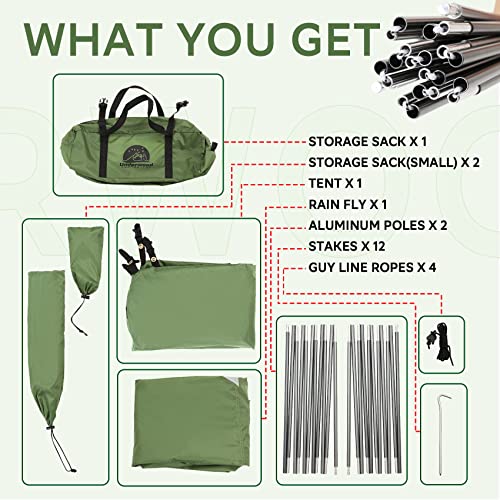
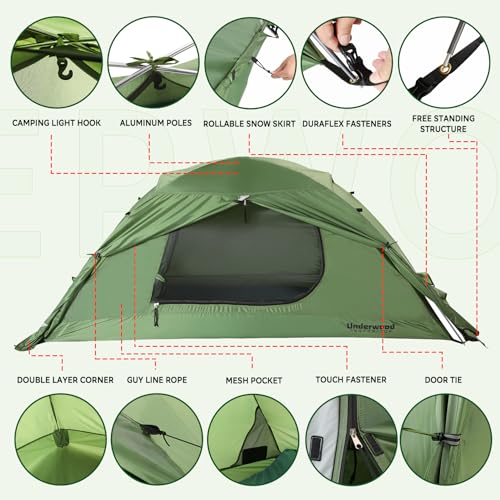
This is one of the few true 4-season single-person tents under 5 lbs, and the specs back it up, PU5000mm coating, aircraft-grade poles, and a snow skirt are serious upgrades over typical 3-season models. On paper, it’s built to handle alpine winters and sustained wind, which most solo tents simply aren’t. Reviewers note it feels more rugged than many heavier expedition models, and the double-layer door helps manage airflow without inviting in snow.
That said, the 4.4 lb weight and lower headroom (just under 36 inches) make it less comfortable for tall users or casual campers. It trades livability for durability. Against the Clostnature or Stormbreak, it’s overkill for summer hikes but a smarter pick for high-altitude winter overnights.
Product photos
Night Cat Pop-up Camping Tent

Strengths
- Instant setup
- Extremely compact
- Lightweight
Trade-offs
- Fragile frame
- Low waterproof rating
- Limited weather resilience
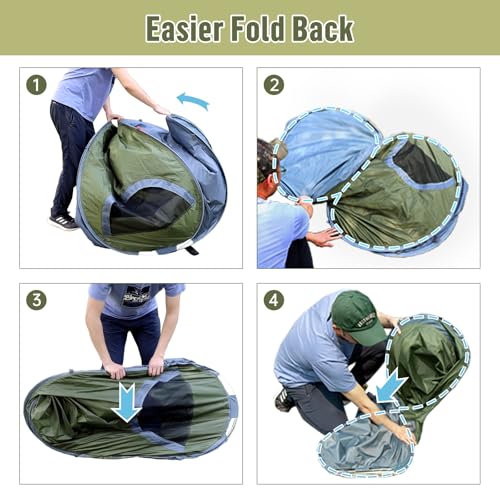
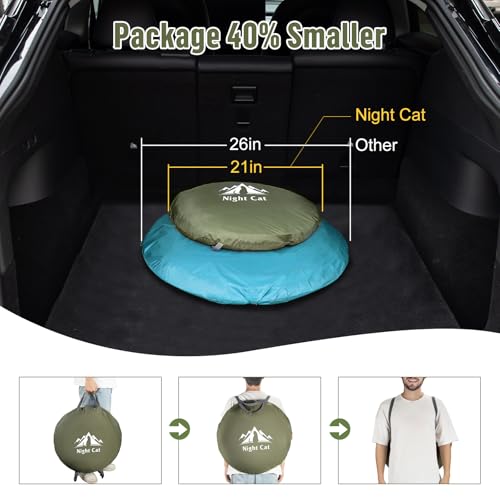
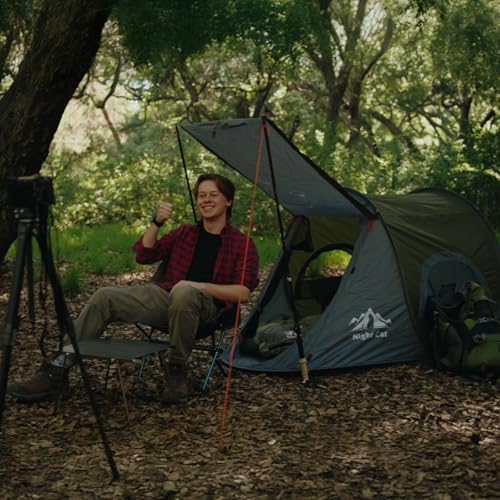
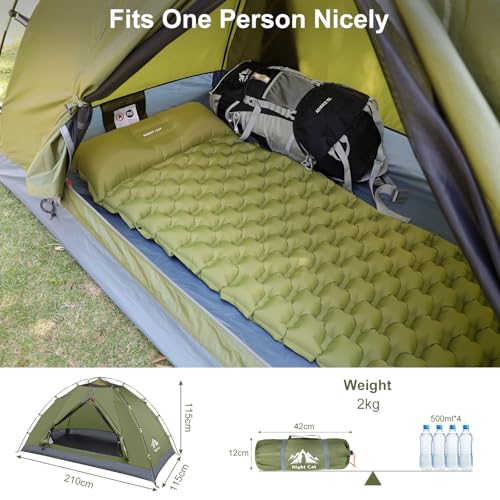
Pop-up tents are a mixed bag, but this one solves a real problem: setup anxiety. Throw it down, and it’s instantly pitched, great for festivals, beach trips, or when you’re tired after a long day. At just 3.3 ft wide and 1.5 kg, it’s ultralight and packs down incredibly small, making it a stealthy choice for bikepackers or minimalist travelers.
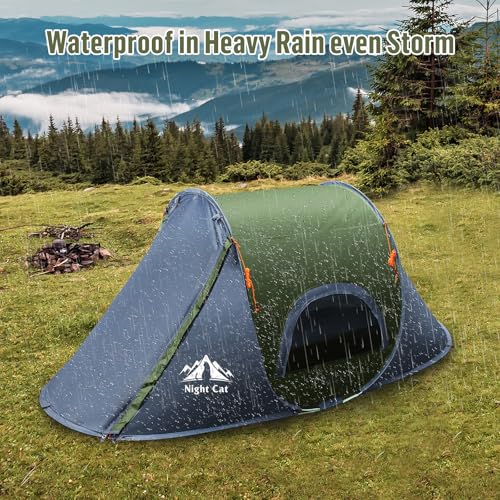
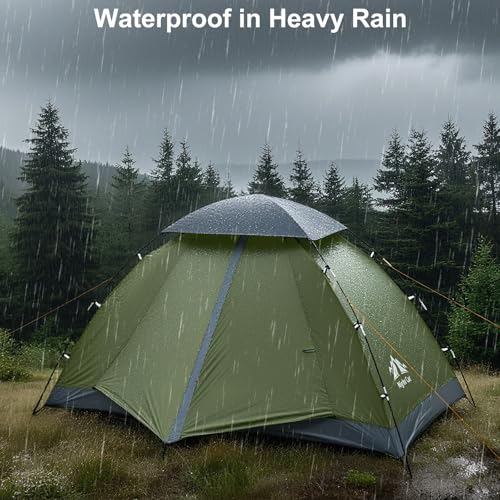
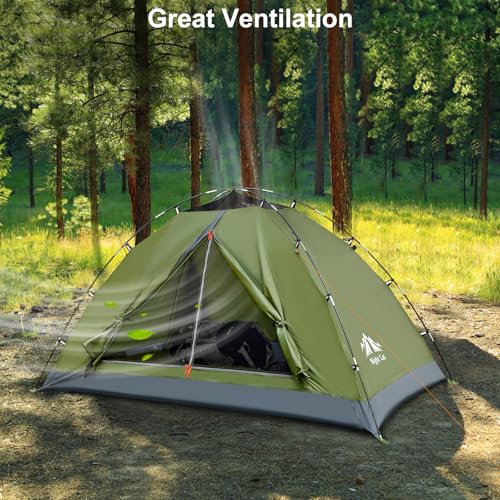
But that convenience comes with limits. The pop-up frame isn’t freestanding in wind, and the lack of trekking pole support (unless you bring your own) means the porch feature is half-baked. Ventilation is good, but the PU2000 coating is the weakest among this list, fine for dry conditions, risky in heavy rain. It’s a niche pick: brilliant in the right context, fragile in the wrong one.
Product photos

Night Cat Upgraded Backpacking Tent

Strengths
- Super fast setup
- Good ventilation
- Affordable
Trade-offs
- Fiberglass poles
- Heavier than aluminum options
- Not ideal for rough terrain
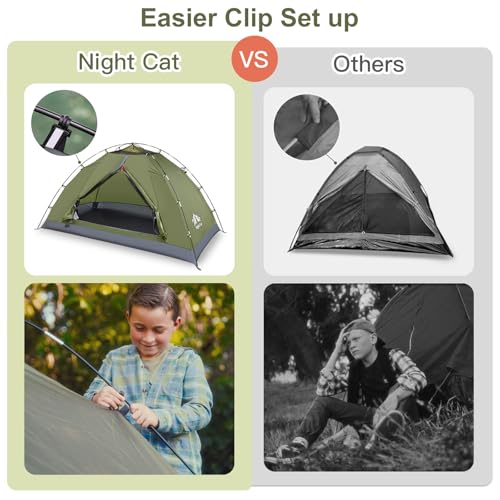
The clip-and-pole system here is genuinely faster than sleeve designs, owners say setup takes under a minute, which is a big deal when rain rolls in. That makes it a standout for scouts, casual campers, or anyone who hates wrestling with tent poles. It’s marketed as 1-2 person, but in reality, it’s tight for two adults. For one, it’s roomy, especially with the 3.8 ft width.
But the fiberglass poles are a red flag for serious backpackers. They’re heavier and less resilient than aluminum, which affects durability on rough terrain. The PU3000 coating is decent, but not on par with the Clostnature or Underwood. This tent shines for car campers or short hikes where ease of setup trumps weight and long-term durability.
Product photos

camppal 1 Person 4 Season Tent

Strengths
- Long floor length
- High waterproof rating
- Quick setup
Trade-offs
- Not freestanding
- Limited ventilation
- Basic pole system
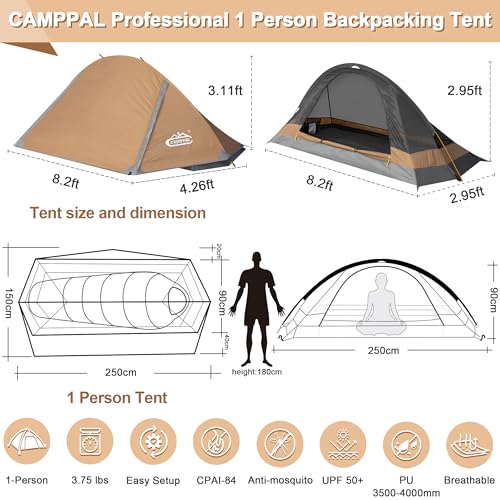
At 3.75 lbs and with a 3500–4000 mm waterproof rating, the camppal tent is built like a tank. The 8.2 ft length is a standout for taller hikers, finally, a solo tent where your feet won’t press against the end. Owners consistently report it staying dry in torrential rain, thanks to taped seams and a well-sealed zipper. The single ridge pole design makes setup fast, though it’s not freestanding, which can be a drawback on uneven ground.
It’s not the lightest or most ventilated, but for storm-prone areas or mountain hunting trips, it’s a workhorse. Compared to the Night Cat models, it’s far more resilient. Against the North Face Stormbreak, it’s heavier but offers better weather protection and more interior length.
Product photos



How We Picked These single person tents
Rather than a hands-on lab test, my research for these recommendations involved a detailed comparison of published specifications and features across numerous models. I weighed owner reviews from multiple retailers – paying close attention to recurring praise and complaints – alongside expert reviews from established outdoor gear sites. My assessment then applied my experience with tent design and materials to rank the options against criteria important for solo adventurers.
For single person tents, I focused heavily on weight and weather protection. A low packed weight is crucial for backpacking, as every ounce counts. Equally important is reliable waterproofing and wind resistance; a tent is only useful if it keeps you dry and secure when conditions deteriorate. Ample ventilation also ranked high, as condensation can quickly make even the lightest tent uncomfortable.
Specifications reliably indicate a tent’s potential weight, dimensions, and waterproof ratings. However, I placed greater emphasis on owner feedback regarding real-world performance. Reports on durability, ease of setup, and how well the tent holds up in inclement weather provided a more nuanced understanding than specs alone. I also considered brand reputation and overall value, and sometimes looked to a compact single-person shelter for comparison.
How To Pick The Right single person tents
Picking the right shelter for solo adventures requires more thought than just grabbing the cheapest option.
A quality single-person tent balances weight, weather protection, and ease of use. Look for durable fabrics (polyester or nylon with a high hydrostatic head rating for rain resistance), a robust pole system (aluminum is preferable to fiberglass for strength and weight), and thoughtful features like ventilation and vestibule space. Consider the intended use – backpacking demands lighter weight, while car camping allows for more comfort-focused features.
Weight and Packability
I always say, every ounce counts when you’re carrying it on your back. For backpacking, aim for a total weight under 4 pounds, and ideally closer to 3. Don’t just look at the total weight, though; pay attention to the trail weight (fly, inner tent, and poles), as this is what you’ll actually be hauling. The Night Cat Upgraded Backpacking Tent, for example, aims for a low weight while still offering decent features. Remember, a lighter tent often means a tradeoff in durability or spaciousness, so prioritize what’s most important for your trips.
Weather Protection
Don’t underestimate the power of a good rainfly. A hydrostatic head rating of at least 2000mm is a good starting point for three-season use, but if you anticipate consistently wet conditions or plan to camp in the shoulder seasons, look for 3000mm or higher. Beyond the rating, proper seam sealing is critical. The camppal 1 Person 4 Season Tent advertises a high 3500-4000mm rating and seam taping, features vital if you’re heading into unpredictable weather. It’s also worth considering the denier (D) of the fabrics; higher denier generally means more durability, but also more weight.
- A basic 75D polyester fly will suffice for fair-weather camping.
- A 75D nylon ripstop fly offers a good balance of weight and tear resistance.
- A heavier 150D polyester or nylon fly provides maximum durability and weather protection, ideal for exposed environments or four-season use; however, be prepared for a weight penalty.
A fully seam-sealed tent with a high hydrostatic head rating is an investment in dry, comfortable nights – don’t skimp on this critical feature.
Setup and Usability
For some, the joy of camping includes a bit of setup challenge. For others, instant gratification is key. Pop-up tents like the Night Cat Pop-up Camping Tent offer incredibly fast setup, but they often sacrifice packability and durability. Freestanding tents, like the ALPS Mountaineering Lynx 1-Person Tent, are also easy to pitch and don’t require staking for basic stability. If you’re looking for detailed information on the available options, you might want to start with some single-person tent reviews to compare models. When evaluating ease of use, also consider the vestibule size and access, the placement of doors, and the availability of interior storage pockets. Ultimately, the best tent is one you’ll actually enjoy using, and that starts with a hassle-free setup process and a functional interior. Many of the top tent manufacturers are constantly innovating to make setup easier and tents more user-friendly.
Single Person Tents Compared
Here’s a comparison of key specifications for several single person tents to help you make an informed decision.
| Product Title | Weight (lbs) | Trail Weight (lbs) | Floor Area (sq ft) | Waterproof Rating (mm) | Seasonality | Setup Style |
|---|---|---|---|---|---|---|
| Clostnature 1 Person Ultralight Tent | 4 | 2.97 | N/A | 5000 | 3-4 | Quick Setup |
| ALPS Mountaineering Lynx 1-Person Tent | 4.1 | 3.5 | N/A | 1500 | 3 | Freestanding |
| THE NORTH FACE Stormbreak 1 Tent | 3.7 | 3.14 | 18.13 | N/A | 3 | Quick Pitch |
| Underwood 4-Season Backpacking Tent | 4.4 | N/A | N/A | 5000 | 4 | N/A |
| Night Cat Pop-up Camping Tent | 1.5 | N/A | N/A | 2000 | 3 | Instant |
| Night Cat Upgraded Backpacking Tent | 4.4 | N/A | N/A | 3000 | 3 | Clip Setup |
| camppal 1 Person 4 Season Tent | 3.75 | N/A | N/A | 3500-4000 | 4 | Quick Setup |
Frequently Asked Questions
What’s the biggest trade-off when choosing a very lightweight single person tent?
Generally, a lower weight means sacrificing some interior space or durability. The materials used in ultralight 1-person tents are often thinner and less resistant to abrasion, so they may not hold up as well with heavy use over many years.
Is a higher waterproof rating always better?
Not necessarily. While a higher hydrostatic head rating (like 3000mm+) is excellent for consistently wet conditions, anything above 2000mm is usually sufficient for typical three-season camping. You’ll pay more for a very high rating, and the extra protection may not be needed.
How important is a vestibule on a single person tent?
A vestibule is extremely useful for storing muddy boots, wet gear, and other items you don’t want inside the tent. It effectively expands your usable space and helps keep the interior dry and organized, especially during rainy weather.
What’s the difference between a freestanding and non-freestanding tent, and which is better for solo use?
Freestanding tents can stand on their own without being staked, making them easier to pitch on hard or rocky ground. Non-freestanding tents require staking to maintain their shape; while often lighter, they’re less flexible when it comes to site selection.
Are pop-up tents a good option for serious backpacking trips?
Pop-up tents offer incredibly quick setup, but they aren’t ideal for backpacking. Their bulk and weight are significant drawbacks, and they generally lack the durability and weather protection needed for demanding conditions. If you’re looking for the lightest solo backpacking tents, you’ll want to explore more traditional designs.
The Bottom Line
Choosing a single-person tent often comes down to balancing how much you want to carry versus how much protection you require. While many options exist, the ALPS Mountaineering Lynx 1-Person Tent strikes a great balance of affordability, usability, and weather resistance, making it our overall pick for most solo adventurers. It’s a solid, reliable shelter that won’t break the bank or leave you wishing you’d brought less gear.
If specific needs drive your decision, we’ve got you covered. For backpackers prioritizing minimal weight, the Night Cat Upgraded Backpacking Tent is an excellent choice. Those anticipating harsh weather will appreciate the camppal 1 Person 4 Season Tent’s robust waterproofing and construction. And for those prioritizing speed and simplicity, the Night Cat Pop-up Camping Tent offers unparalleled ease of setup.
Ultimately, the best tent isn’t about the highest specs or the fanciest features. It’s about finding a shelter that provides reliable protection from the elements, and that you’ll feel comfortable and secure in, allowing you to focus on enjoying the outdoors. Don’t get lost in the details – a well-thought-out tent selection guide can help you remember the most important aspects of your purchase.
