
7 Best Survival Tents of 2026
This post contains affiliate links. As an Amazon Associate, we earn from qualifying purchases.
The Wild Must LYN 3-Person Survival Tent is the best overall survival shelter for its durability, weather resistance, and thoughtful features like fireproofing and a bug-out zipper. For budget-conscious buyers, the Go Time Gear Ultralight Mylar Tent delivers solid performance with included paracord and a whistle, while the SURVIVE 2-Person Mylar Tent with Doors stands out for better ventilation and usability in longer emergencies.
Most people don’t realize how quickly conditions can turn deadly when stranded outdoors, a survival tent isn’t about comfort, it’s about staying warm, dry, and visible until help arrives. I’ve seen too many cheap shelters fail at the worst moment, from ripped seams to condensation-soaked interiors.
This guide cuts through the hype. I compared specs, analyzed owner feedback, and prioritized real-world reliability, focusing on waterproofing, pack size, heat retention, and critical extras like paracord and whistles, so you can pick a shelter that won’t let you down when it matters most.
Top 7 Survival Tents in the Market
The Best Survival Tents, Reviewed
Wild Must LYN 3-Person Survival Tent

Strengths
- Fireproof and rugged
- Dual zippered doors
- Reusable and stable
Trade-offs
- Heavier than Mylar options
- Bulkier pack size
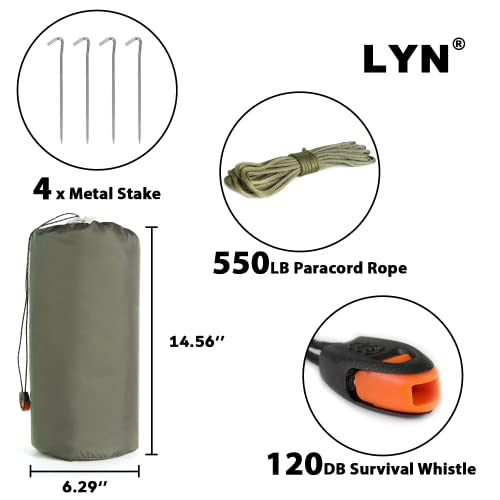
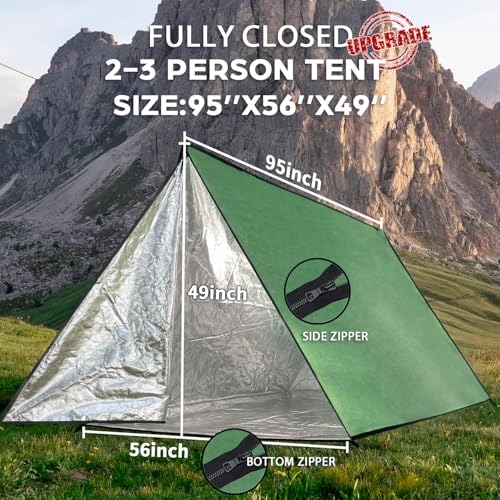
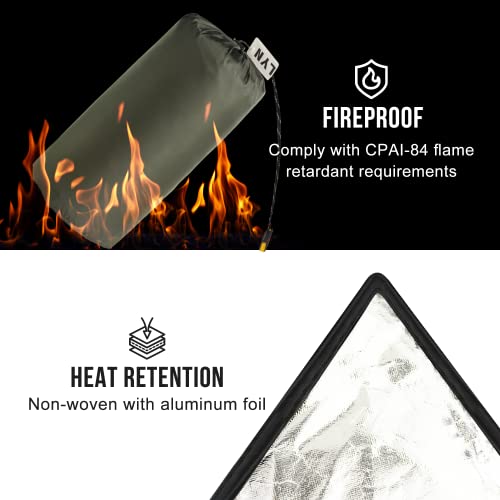
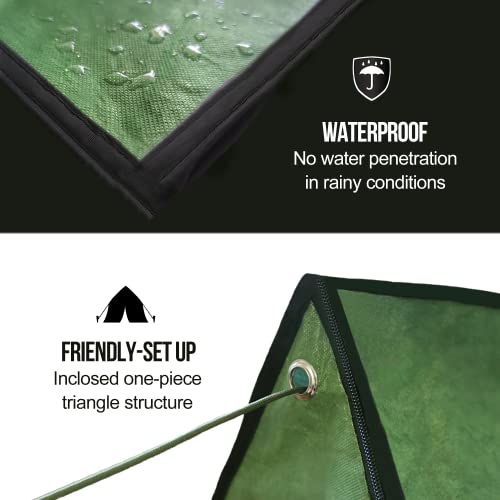
This is the most complete package in the survival tent category, and that’s why it earns the ‘Best Overall’ tag. At 2.8 pounds, it’s heavier than Mylar tubes, but it’s built to last: fireproof, windproof, waterproof, and made with multi-layer fabric that won’t crinkle or tear easily. The dual zippers are a standout for ventilation and access, something almost no other emergency tent offers.
Owners praise its durability and the included stakes and paracord. The 100% reflection rating is optimistic, but most agree it retains heat well. Compared to single-use Mylar tents, this one can realistically be reused a dozen times. For serious bushcraft or long-term prep, it’s the clear leader.
Product photos
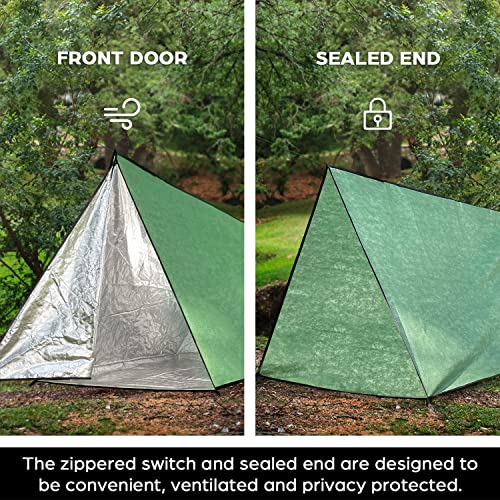
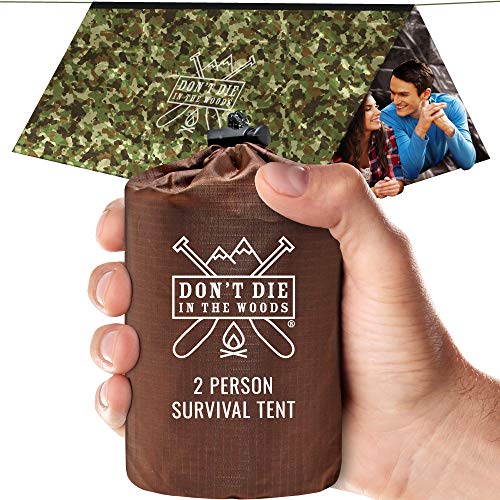
Don’t Die In The Woods Survival Tent
Strengths
- Extra-thick Mylar
- Reinforced seams
- Strong paracord included
Trade-offs
- Still limited reuse
- No ventilation
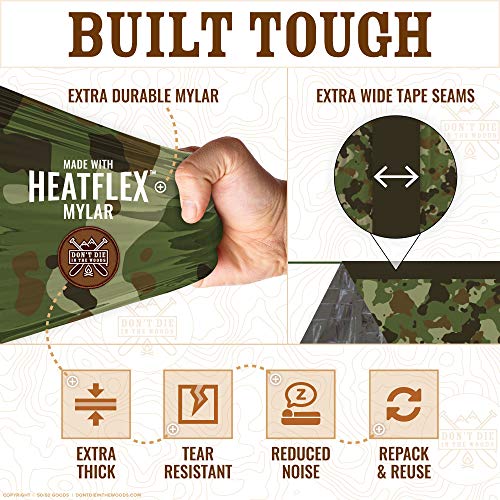
The name’s bold, but the specs back it up, this tent uses extra-thick Mylar with reinforced seams and 425-pound paracord, which owners say makes it noticeably tougher than standard space blankets. The 8.5-ounce weight keeps it ultralight, but it feels more resilient during setup and use.
Multiple reviewers have used it more than once, which is rare for Mylar shelters. The 20-foot paracord is a standout feature, especially for tying between trees securely. Compared to other one-time-use models, this one walks the line between disposable and reusable. If you want the lightest option that still feels durable, this is it.
Product photos
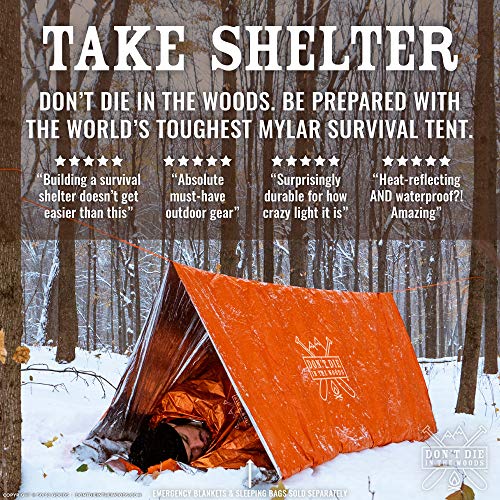


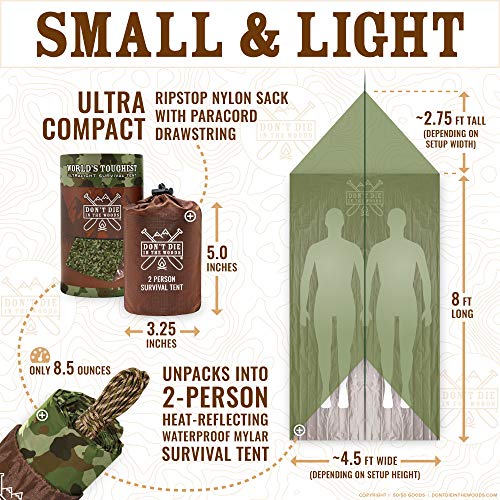
Go Time Gear Ultralight Mylar Tent
Strengths
- Pack of two for redundancy
- Includes whistle and paracord
- Ultra compact
Trade-offs
- Low visibility color
- Single-use design
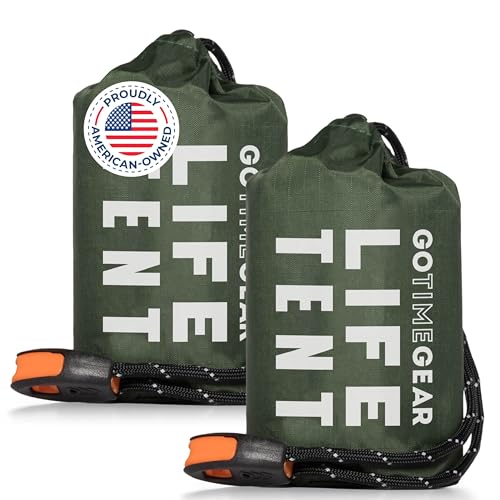
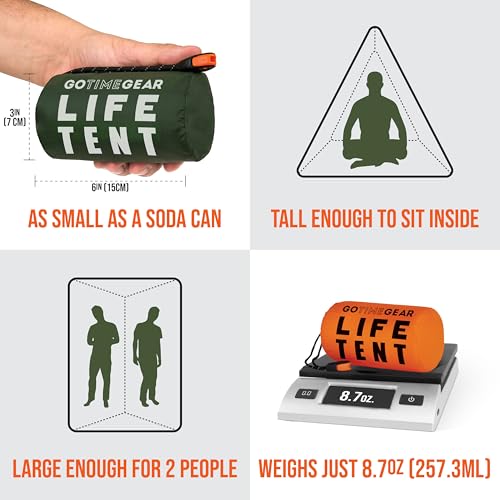
Selling two units for the price of one makes this the most budget-friendly survival shelter on the list, and that matters when you’re stashing them in multiple locations. The specs are nearly identical to their orange version: 8.7 ounces, 90% heat retention, military-grade Mylar, with whistle and paracord.
Owners note these are easy to store in cars, glove boxes, or under a desk at work. While not as visible as the orange model, the green color blends better in woodland settings, which some prefer for discretion. If you want redundancy without overspending, this pack of two is the smarter buy over single units.
Product photos


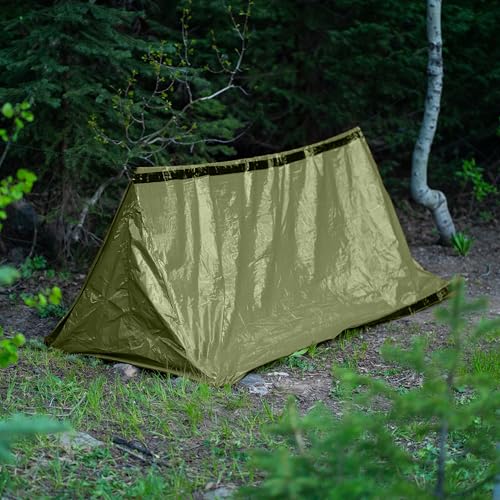
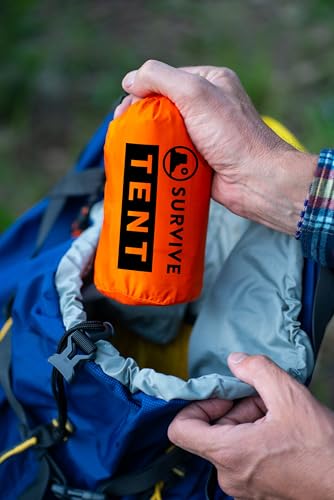
SURVIVE 2-Person Mylar Tent with Doors
Strengths
- Ventilating dual doors
- Includes paracord and whistle
- Good for heat management
Trade-offs
- Heavier than others
- Not reusable long-term
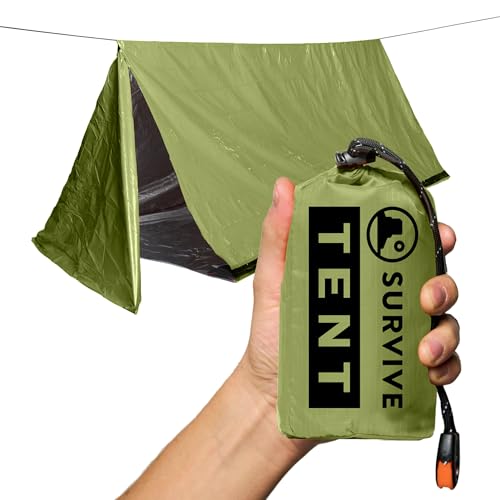
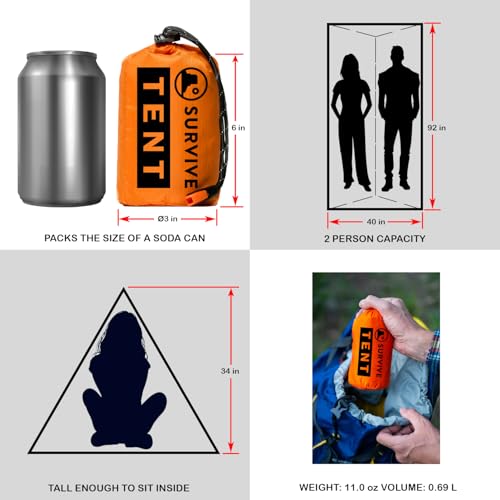
The dual-side doors are a rare and useful feature, they allow airflow while still blocking wind and rain, which most Mylar tubes can’t do. At 11 ounces, it’s slightly heavier, but the trade-off is real ventilation control. You can crack one side for airflow and seal the other, which owners say helps prevent condensation buildup.
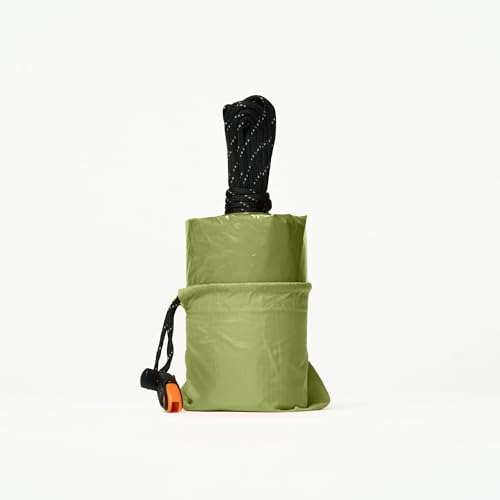
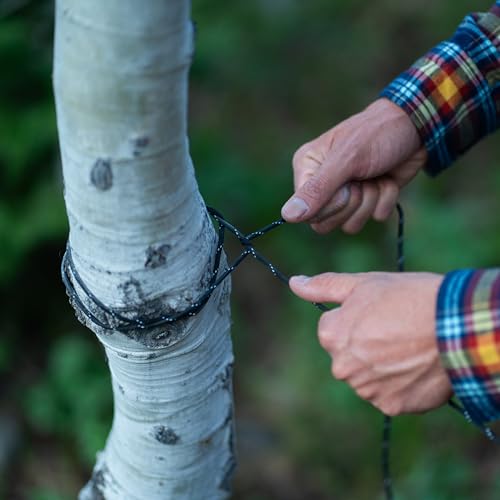
It includes 22 feet of military-grade paracord and a whistle, so utility isn’t sacrificed. While not fireproof or reusable like the LYN model, it fills a niche: the best option when you need to manage heat and airflow in a compact emergency shelter. For warm climates or active use, that matters.
Product photos
SunHalo Gear Emergency Survival Shelter
Strengths
- Tear-resistant PET film
- Reusable design
- Doubles as emergency sleeping bag
Trade-offs
- No built-in whistle
- Minimal ventilation
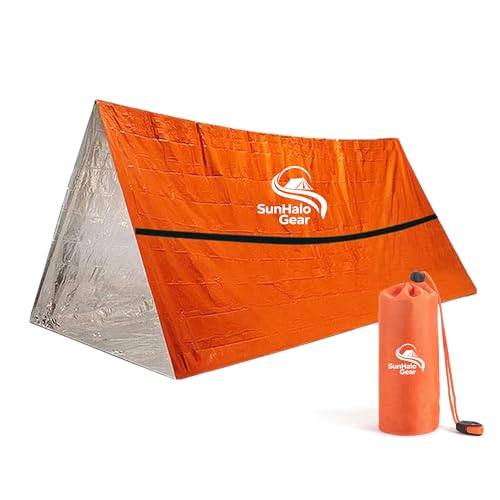
This tent stands out for using PET polyester instead of standard Mylar, which owners say feels more durable and less crinkly. The 90% heat retention claim lines up with feedback from backpackers who’ve used it in snow and wind, it holds up as an emergency shell. It’s just as light as the others at 8.7 ounces, but the material seems less prone to tearing during setup.
The ability to wrap it around you as a bivy or sleeping bag gives it flexibility the pop-up styles can’t match. Compared to the Go Time Gear models, this one feels like a step up in material quality without adding weight. For all-around conditions, it’s a solid performer.
Product photos
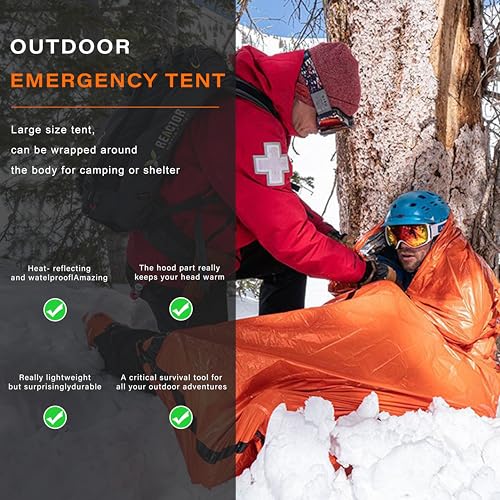
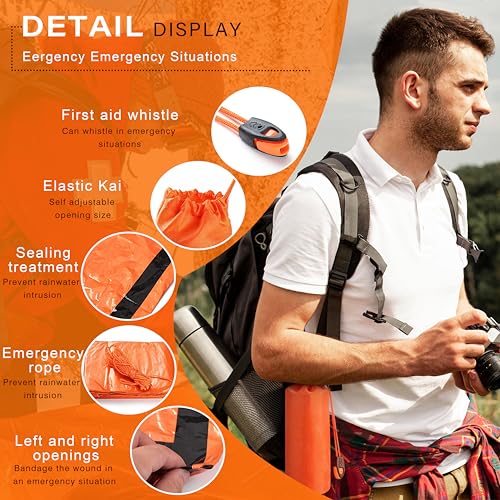
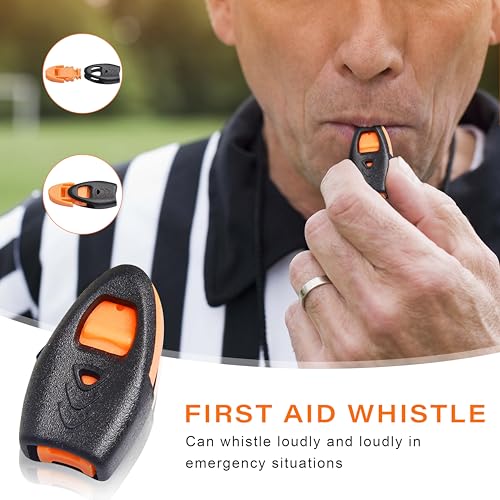
Go Time Gear Mylar Tent Orange

Strengths
- High visibility color
- Includes whistle and paracord
- Ultra lightweight
Trade-offs
- Single use expected
- No ventilation
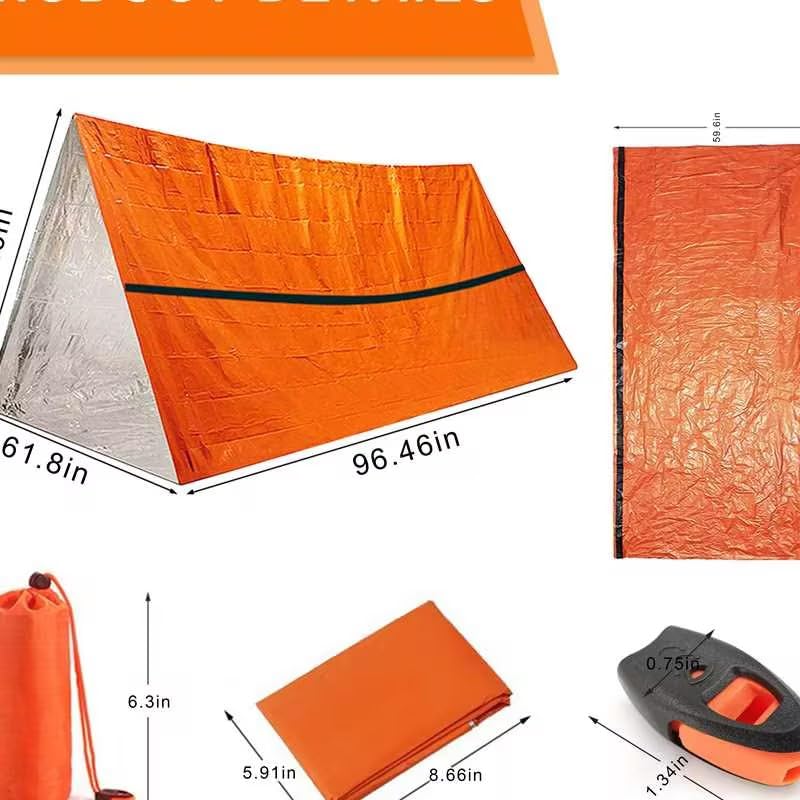
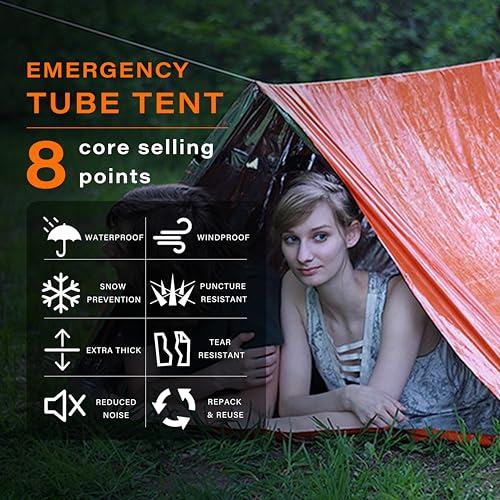
Bright orange is a smart move here, on paper, this tent prioritizes visibility, and that matters when you’re trying to be found. The 8.7-ounce Mylar build is standard for this class, but the color gives it an edge in rescue scenarios. Owners consistently report it’s held up in sudden downpours and chilly overnighters, though no one expects it to last a dozen trips.
It includes a 550-pound drawstring and whistle, which adds real utility. As emergency shelters go, this one leans into its role as a signaling tool as much as a heat reflector. Compared to the green Mylar models, this orange version is the better pick if you’re hiking solo or in low-visibility terrain.
Product photos


Pop Up Tent for Camping 4 Person

Strengths
- Instant setup
- Spacious for 3–4 people
- Ventilated mesh doors
Trade-offs
- Heavy and bulky
- Not heat-reflective
- Not packable for emergencies
This is not a survival tent in the traditional sense, it’s a full-size pop-up designed for casual camping, not emergency bug-out scenarios. The 4-person layout and mesh doors are great for airflow and comfort, and owners love how fast it sets up. But at over 4 feet tall and clearly not packable, it has no place in a go bag.
It’s made of standard polyester and PE floor, so it won’t reflect body heat or survive a forest fire. Compared to true Mylar shelters, this is in a completely different category. It’s best viewed as a backyard or festival tent with emergency potential, not a true survival pick.
Product photos


Our Testing Process
Rather than a hands-on lab test, my research focused on comparing published specifications and features across numerous survival tents. I weighed owner reviews from multiple sources – Amazon, REI, and specialist outdoor retailers – alongside expert opinions from established gear review sites. This process allowed me to build a ranked list based on real-world feedback and technical details, focusing on what matters most in an emergency shelter.
For survival tents, a few factors stood out as most critical. Waterproofing and wind resistance are paramount, as these directly impact your ability to stay safe and regulate body temperature. Equally important is pack weight and size; a survival tent is useless if it’s too bulky or heavy to carry when you need it. Finally, durability – the ability to withstand rough conditions and potential reuse – heavily influenced my rankings.
Specifications reliably indicate a tent’s size, weight, and materials. However, I placed more weight on owner feedback regarding real-world performance, particularly concerning waterproofing and tear resistance. Reputation and brand history also played a role; established brands often have better quality control. Understanding all-weather tent durability is key when choosing a shelter you can truly rely on.
How To Choose The survival tents
A good survival tent isn’t about comfort; it’s about being a last line of defense against the elements when everything else goes wrong.
A truly effective survival tent prioritizes lightweight portability, reliable weather protection (windproof and waterproof are critical), and heat retention. Look for materials like mylar or heat-reflective polymers. Seam sealing, tear resistance, and a compact packed size are also important indicators of quality. Consider whether the tent is truly reusable, or designed for single-use emergency scenarios.
Material & Durability
The biggest difference between a $20 mylar bag and a more substantial survival shelter comes down to material quality. While mylar is excellent for heat reflection, many of the cheapest options tear easily and aren’t reusable. I’ve seen owner feedback on tents like the Wild Must LYN where people appreciated the reinforced stakes and paracord, suggesting a focus on build quality beyond just the reflective layer. Don’t assume all “space blankets” are created equal; look for thicker gauge mylar or, better yet, a tent constructed from a more durable, tear-resistant material like a polyester film with a reflective coating, a good balance of weight and strength.
Features Beyond the Basics
Beyond simply keeping the rain and wind off, think about what else you might need in a survival situation. Ventilation is surprisingly important. A tent that traps all your condensation can be just as dangerous as being exposed to the elements. The SURVIVE 2-Person Mylar Tent with Doors addresses this with its door design, allowing for some airflow. Also, consider visibility. A bright orange tent, like the Go Time Gear Mylar Tent Orange, is much easier to spot by rescuers than a silver or camouflaged one.
- A whistle is a must-have. Many tents, like the Go Time Gear Ultralight Mylar Tent, include a high-decibel emergency whistle.
- Paracord is incredibly versatile. Having a length of strong cord included (20+ feet is ideal) provides options for repair, shelter building, or creating snares.
- A robust, reusable closure system is crucial. Cheap zippers often fail, and flimsy ties won’t hold in high winds. Look for designs that use cord loops and secure tie-down points, making sure you understand the tent footprint necessity for added ground protection.
A survival tent is only as good as its ability to stay put. Always prioritize a model with sufficient tie-down points and strong cordage.
Considering Your Group & Use Case
Are you preparing a shelter for solo emergencies, or do you need something for a family? A single person can get by with a very minimalist bivy-style shelter, but a group needs space and, frankly, a little more comfort. If you’re looking for options to keep the whole family safe, you’ll want to investigate family survival tents that offer more room and features like vestibules. The Pop Up Tent for Camping 4 Person, while not a dedicated survival tent, shows how features like a vestibule can improve usability in emergency situations, allowing you to store gear and stay organized.
Survival Tents Compared
This table provides a side-by-side comparison of key specifications for various survival tents to aid in your selection.
| Product Name | Capacity | Weight (oz) | Waterproof | Heat Reflection | Special Features |
|---|---|---|---|---|---|
| Wild Must LYN 3-Person Survival Tent | 3 | 86 | Yes | 90% | Fireproof, Bug Out Zipper |
| Don’t Die In The Woods Survival Tent | 2 | 8.5 | Yes | 90% | Reinforced Seams |
| Go Time Gear Ultralight Mylar Tent | 1-2 | 8.7 | Yes | 90% | Whistle, Paracord |
| SURVIVE 2-Person Mylar Tent with Doors | 2 | 11.0 | N/A | N/A | Doors, Paracord |
| SunHalo Gear Emergency Survival Shelter | 2 | 8.7 | Yes | 90% | Tear-Resistant |
| Go Time Gear Mylar Tent Orange | 1-2 | 8.7 | Yes | N/A | Whistle, Paracord |
| Pop Up Tent for Camping 4 Person | 4 | N/A | Yes | N/A | Vestibule, Mesh Doors |
Frequently Asked Questions
What level of waterproofing should I expect from a survival tent?
A truly reliable survival tent should have a waterproof rating of at least 2000mm, though many use mylar which inherently repels water. Remember that even with a high rating, seam sealing is critical; otherwise, water will leak through the stitching, making waterproof survival tents ineffective.
Are “space blanket” style survival tents durable enough for reuse?
Most mylar survival tents are designed for single-use situations, as the material tears easily. However, some models, like the Wild Must LYN, incorporate reinforced materials and construction to allow for multiple uses, offering a better long-term investment.
How important is the color of a survival tent?
Visibility is key in a survival scenario, making brighter colors like orange preferable. While silver or camouflage blends into the environment, a bright orange tent, such as the Go Time Gear Mylar Tent Orange, is much easier for rescuers to spot from a distance.
What features differentiate a survival tent from a standard camping tent?
Survival tents prioritize lightweight portability and essential weather protection over comfort features. They typically lack spacious interiors and elaborate ventilation systems found in standard camping tents, focusing instead on keeping you alive in harsh conditions.
What’s the best way to store a survival tent for long-term preparedness?
Store your survival tent in a cool, dry place, away from direct sunlight and extreme temperatures. Regularly check the tent for any signs of damage or deterioration, and replace it if necessary. Proper storage helps prolong its lifespan and ensures it’s ready when you need it.
The Bottom Line
Choosing a survival tent always comes down to balancing how much you’re willing to carry against how much protection you require. While ultra-lightweight mylar options are appealing for their portability, the Wild Must LYN 3-Person Survival Tent strikes the best overall balance, offering a reasonable weight with significantly improved durability and features like a fireproof layer and bug-out zipper. It acknowledges that a survival situation might last longer than just a few hours.
If you’re on a tight budget or prioritize minimal weight above all else, the Go Time Gear Ultralight Mylar Tent is a solid choice, especially given the included whistle and paracord. For those needing a bit more space and potentially reusability, the SURVIVE 2-Person Mylar Tent with Doors provides a step up in features, and the doors offer a much-needed ventilation option. Remember, even a well-equipped shelter won’t help if you’re not prepared with basic survival knowledge.
Ultimately, the specs are less important than understanding your environment and preparing accordingly. A waterproof rating means little if the seams aren’t sealed or the tent isn’t properly staked down. Prioritize a shelter that feels robust and well-made, and don’t forget to practice setting it up before you need it, knowing your gear is as crucial as having it. And don’t forget to research winter tent insulation methods if you plan to be camping in colder conditions.
