
12 Best Tent Camping Gears of 2026
This post contains affiliate links. As an Amazon Associate, we earn from qualifying purchases.
The FanttikOutdoor Zeta C6 Pro is the overall best tent for hassle-free pitching and solid weather protection, especially for families. For budget-conscious campers, the Coleman Sundome delivers reliable performance without the frills. If you’re after something ultralight and emergency-ready, the Life Mylar Survival Tent is a no-brainer.
Most people don’t realize how much the wrong gear can turn a dreamy weekend under the stars into a soggy, windy mess. It’s not just about the tent, the stakes, tarps, lighting, and even insect protection all play a role in whether your trip stays comfortable or falls apart at the seams.
This guide cuts through the noise by focusing on real-world usability, durability, and smart features that matter when you’re out there with dirt under your boots. I’ve compared top-rated picks based on specs, owner feedback, and years of experience with backcountry setups to highlight the gear that actually holds up when it counts.
Top 12 Tent Camping Gears in the Market
The Best Tent Camping Gears, Reviewed
FanttikOutdoor Zeta C6 Pro Instant Tent

Strengths
- Sets up in 60 seconds
- Excellent ventilation
- Spacious for 3–4 with gear
- 66-inch center height
- Power cord entry
Trade-offs
- Heavy for backpacking
- Mesh roof not waterproof
- Rainfly needs proper tension
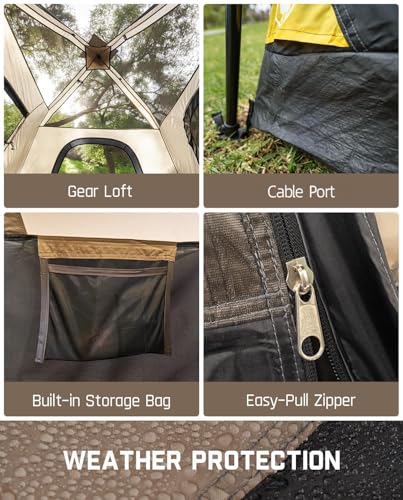
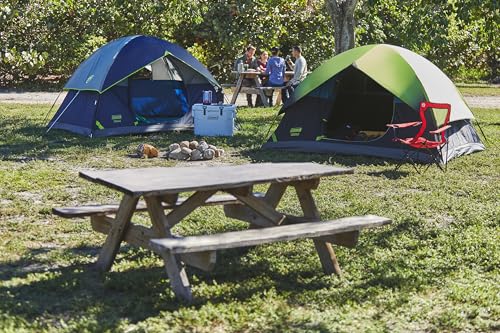
This is the tent that makes instant setup actually feel instant. The 60-second claim holds up based on owner feedback, no wrestling with poles, no frustration. The 66-inch center height is a standout compared to the Coleman Sundome, letting most adults stand comfortably. And the four-way mesh windows? That’s where it pulls ahead: serious airflow with solid bug protection.
It’s not ultralight at 16.8 lbs, but that’s fair for a family-sized cabin tent. The tub floor and drainage channel help keep water out, though some users report minor seepage if the rainfly isn’t tensioned right. Still, for a balance of speed, space, and ventilation, this is the one I’d recommend over others in its class.
Product photos


Coleman Sundome Weatherproof Camping Tent

Strengths
- Sets up in 10 minutes
- Strong frame for wind
- Good ventilation
- E-port for power
- Budget-friendly
Trade-offs
- Low ceiling height
- Condensation in humidity
- Floor wears without protection
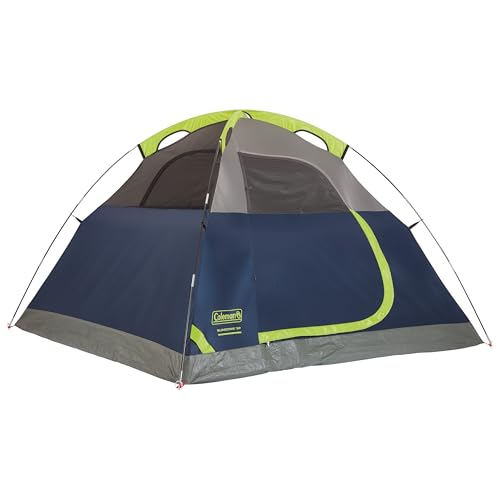
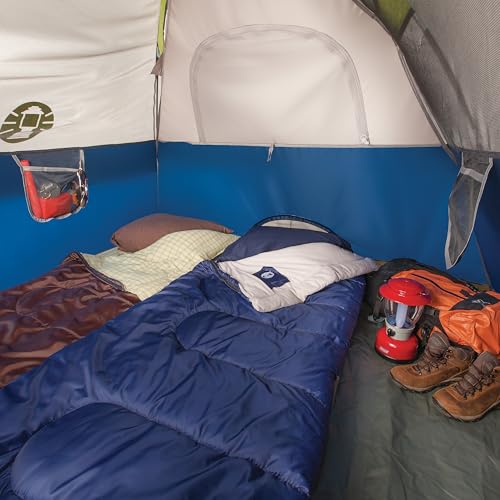
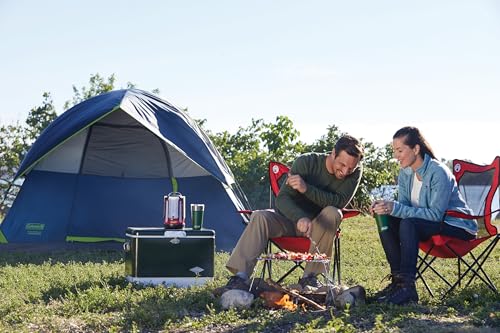
The Sundome isn’t flashy, but it does what it promises: offer a simple, weather-resistant shelter that sets up fast. Its E-port and ventilation windows are thoughtful touches for basic comfort, and the 35+ mph wind rating gives real confidence in unsettled weather. Reviewers note it holds up well during surprise summer storms, though condensation can build up in humid conditions due to limited airflow.
Compared to pricier instant tents, this one trades bells and whistles for reliability. It’s not roomy, tight for four adults with gear, but fits two comfortably. For first-time campers or families needing a backup shelter, it’s a no-brainer. I’d still recommend adding a footprint to extend floor life.
Product photos
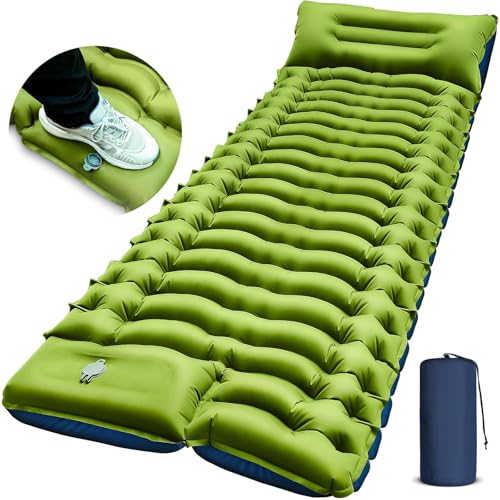
FUN PAC Ultralight Sleeping Pad
Strengths
- 3-inch thick support
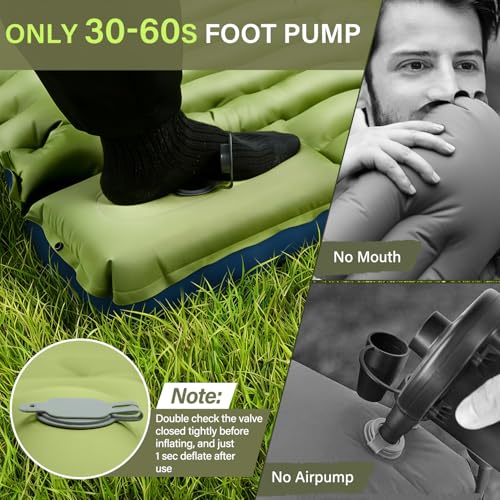
- Built-in foot pump
- Inflates in 30 seconds
- Ultralight and compact
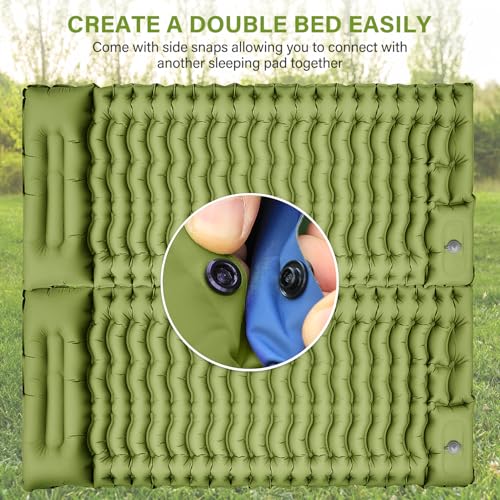
- Connects for double bed
Trade-offs
- Slight air loss overnight
- TPU can feel slippery
- Pump valve needs care
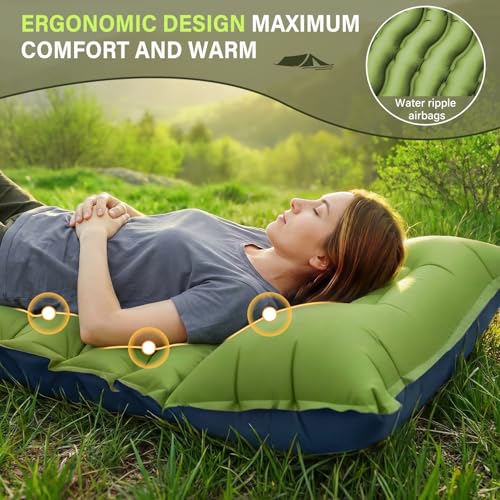
Sleep is everything on a trip, and this pad delivers. The 3-inch thickness and egg-celled design are key, owners consistently report better back support than thinner mats. The built-in foot pump is a standout: no puffing your cheeks out or lugging a separate inflator. Thirty seconds to full inflation? That’s a win after a long hike.
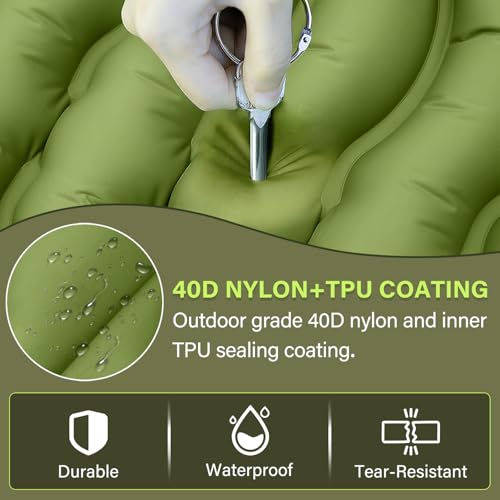
At just water-bottle weight, it’s impressively light for its size. The side connectors for linking two pads are a thoughtful touch for couples. Some users note the TPU coating can feel slick, but overall durability gets strong marks. For comfort and convenience, it beats most budget self-inflaters.
Product photos

Life Emergency Mylar Survival Tent
Strengths
- Ultra-lightweight
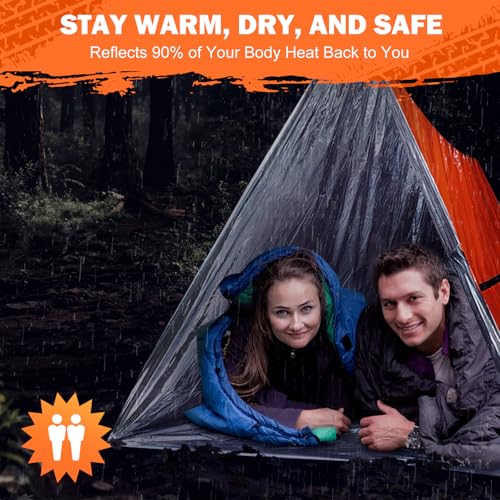
- Reflects 90% body heat
- Includes paracord and whistle
- Fits in small space
- All-weather use
Trade-offs
- Not for comfort or space
- Mylar crinkles loudly
- Single-use feel
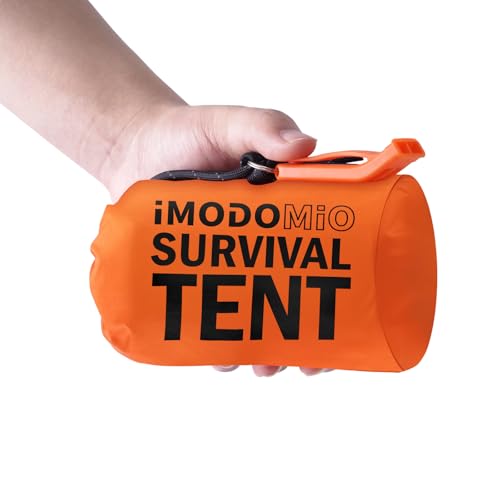
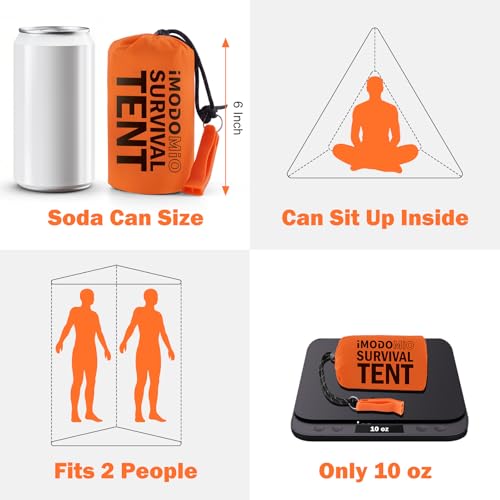
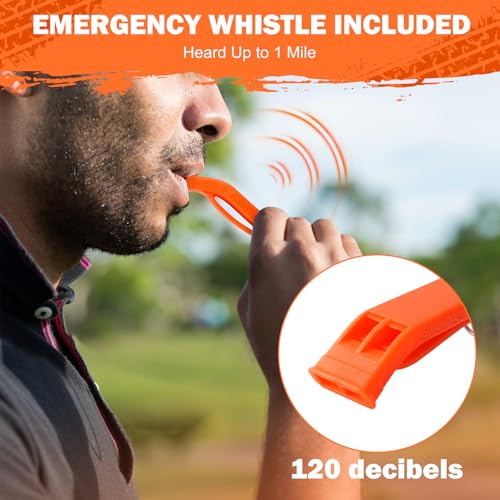
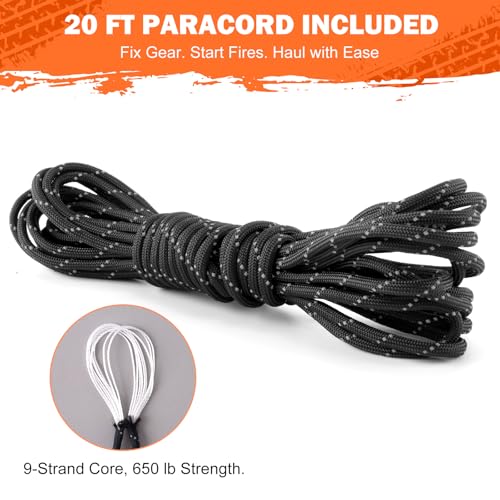
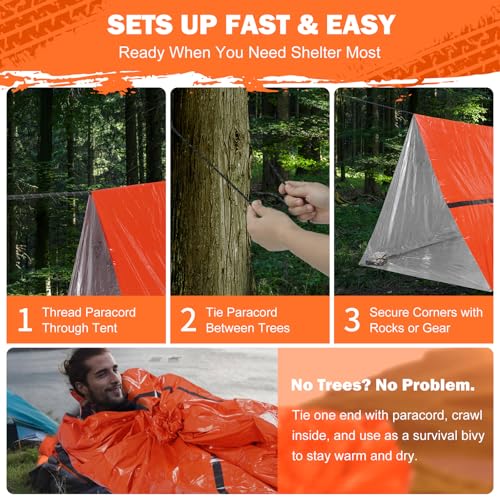
This isn’t a camping tent, it’s a last-resort shelter. The Mylar material reflects 90% of body heat, which could save a life in cold exposure. At just 10 oz and soda-can size, it’s easy to stash in a pack or car. The 20-foot paracord and whistle make it a full emergency kit in one pouch.
Owners report using it during sudden storms or as a bivy backup. It’s not comfortable or roomy, but it’s not meant to be. Compared to space blankets, it’s far more durable and usable. For anyone spending time in remote areas, this is insurance you hope you never need.
Product photos
FLY2SKY Portable LED Tent Lamp

Strengths
- Compact and light
- 3 light modes
- Water resistant
- Carabiner hook
- Easy to clip
Trade-offs
- AAA batteries not included
- Plastic feels brittle
- Limited runtime on high
These little clip-on lights are exactly what group campers need, compact, bright, and versatile. At 150 lumens, they’re not the strongest on the market, but they’re more than enough to illuminate a tent or cooking area. The three light modes, including strobe and low, add real utility, and the carabiner hook makes them easy to dangle from poles or backpacks.
Owners praise their durability and battery life, with many using them as emergency lights during outages. The AAA power source isn’t ideal for long trips, carrying spares adds weight, but it’s widely accessible. Compared to bulkier lanterns, these shine as task lights or mood setters without hogging space.
Product photos


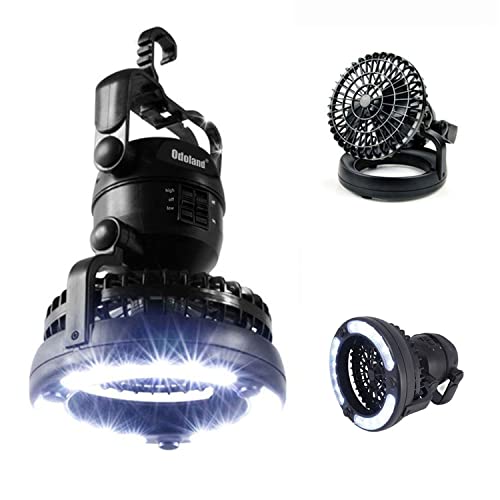
Odoland LED Lantern with Fan
Strengths
- Built-in fan
- Whisper-quiet motor
- Collapsible design
- Long battery life
- Even LED lighting
Trade-offs
- D batteries heavy to pack
- Fan not for cold weather
- Bulky when expanded
A fan in a lantern? It sounds gimmicky, but owners say it works. The brushless motor is quiet, and the two-speed fan actually moves air, enough to cut mugginess in a closed tent. The 18 LEDs provide soft, even light, and the collapsible design makes it easy to stash.
Battery life is solid: 15 hours on low fan, 20 on light only. But it runs on D cells, which are bulky to carry. Still, for summer car camping or RV use, the combo of airflow and illumination is unique. Compared to standard lanterns, this one solves two problems at once.
Product photos


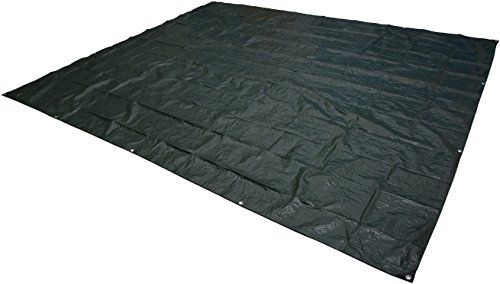
Amazon Basics Waterproof Camping Tarp
Strengths
- Heavy-duty rip-stop
- Fully waterproof
- Reinforced grommets
- Large coverage area
- Affordable price
Trade-offs
- Heavy for backpacking
- Edges can fray
- Plastic smell at first
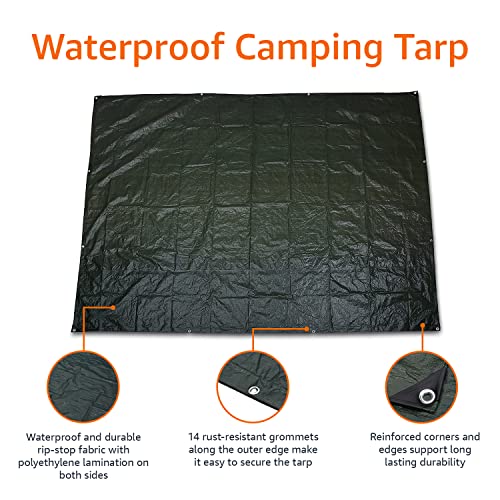
A good tarp is the unsung hero of camp. This one delivers with rip-stop polyethylene, reinforced corners, and tight grommet spacing. At 9.5 x 11.3 feet, it’s large enough to cover a tent footprint or create a shaded cook area. Owners consistently report it sheds rain and holds up to wind when properly staked.
It’s not ultralight, but for car camping, that’s fine. Compared to pricier brands, it performs nearly as well at a fraction of the cost. Some note the dark green color blends well with nature. Just don’t expect it to last a decade, this is value durability, not lifetime-grade.
Product photos


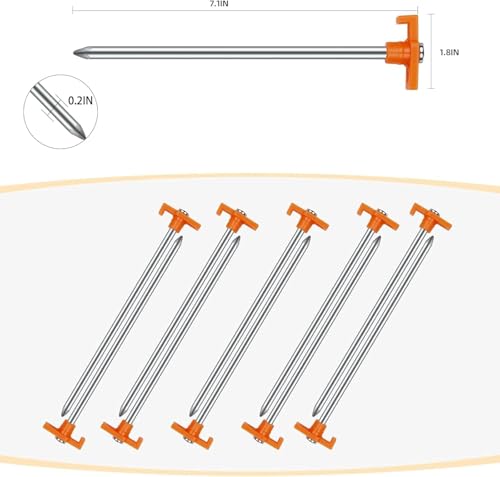
AVOFOREST 7.1″ Rust-Resistant Tent Stakes

Strengths
- Bright orange visibility
- 7.1-inch deep anchor
- Lightweight for metal
- Rust-resistant coating
- 12-pack value
Trade-offs
- Not for rocky alpine terrain
- Bend under extreme force
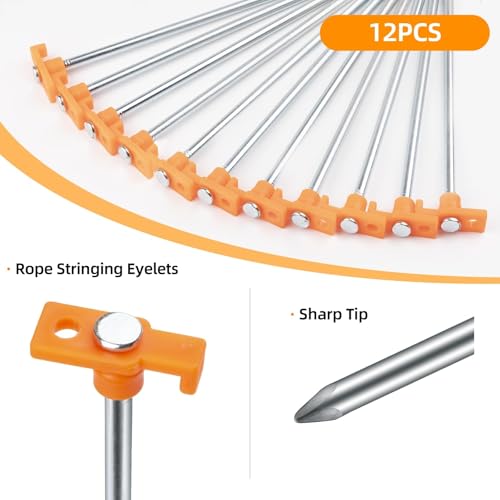
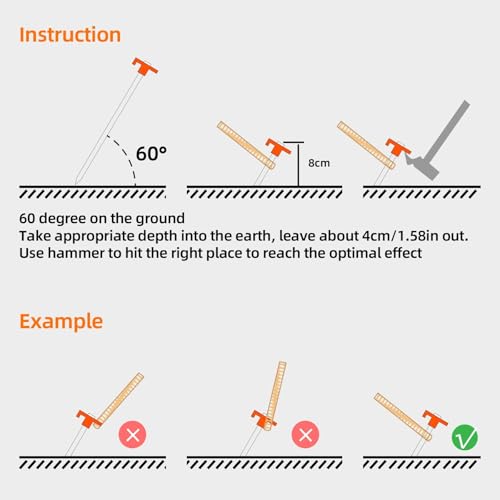
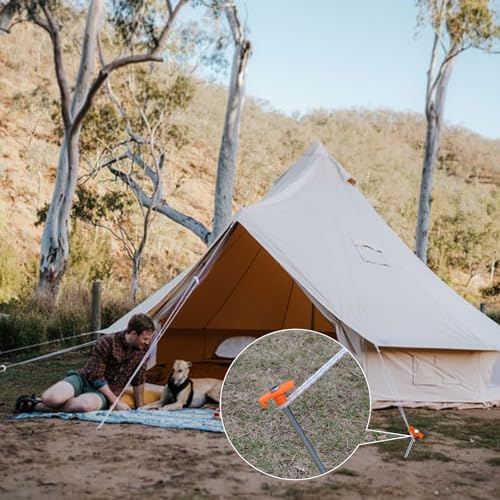
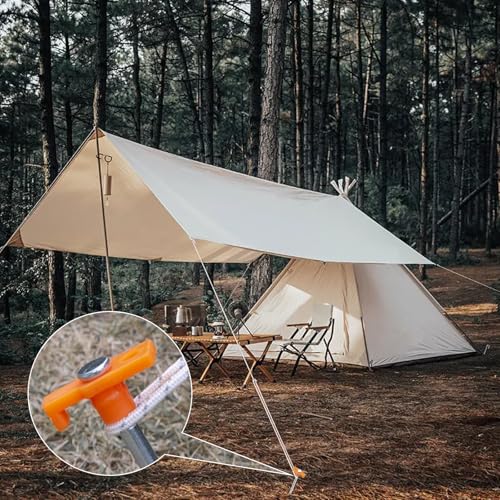
These orange metal stakes stand out, literally. The bright color is a small but meaningful detail that solves a real problem: losing or tripping over stakes in low light. On paper, the 7.1-inch length gives solid ground penetration, which matters when wind kicks up. Owners consistently report these hold well in mixed terrain, from hard-packed soil to looser sand, and the rust-resistant coating holds up over time.
The fact that they weigh less than a quarter of similar iron stakes is a win for backpackers who count every ounce. That said, ultralight users might still prefer titanium options for serious thru-hikes. But for car campers and weekenders, this 12-pack delivers reliable grip without the bulk.
Product photos
SEESE Retractable Rope Tensioner
Strengths
- No-knot tightening
- 115 lb load capacity
- Rust-resistant buckle
- Retractable design
- Multi-use versatility
Trade-offs
- Not for heavy load rigging
- Cam can jam with debris
- Slight stretch over time
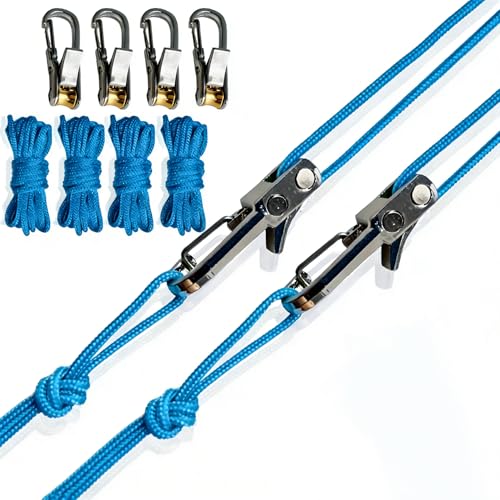
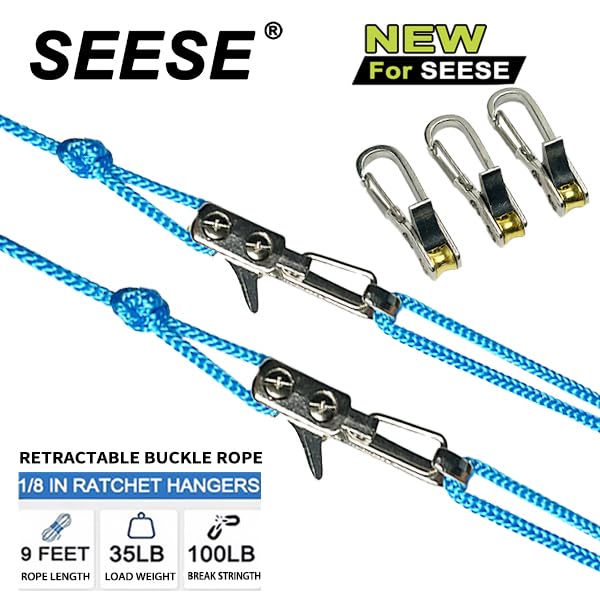
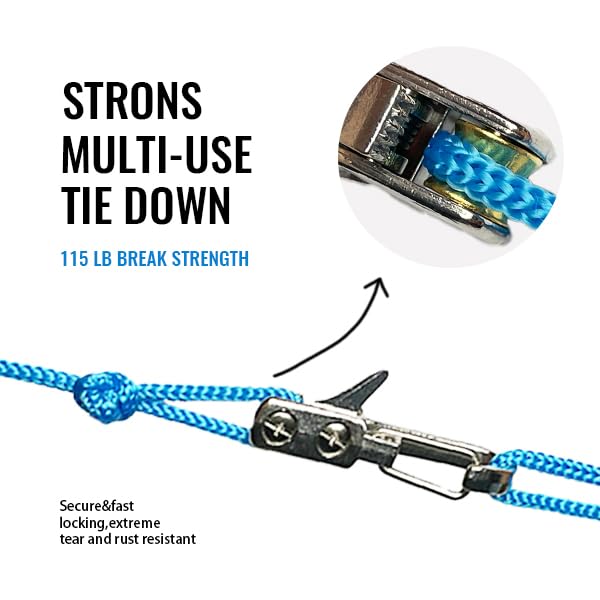
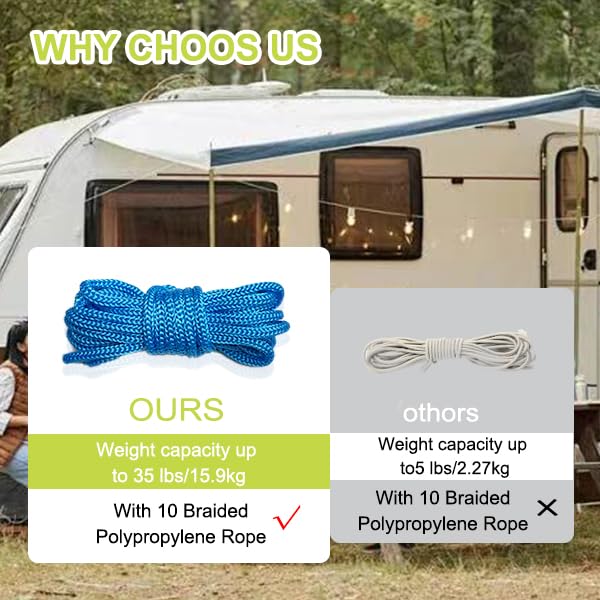
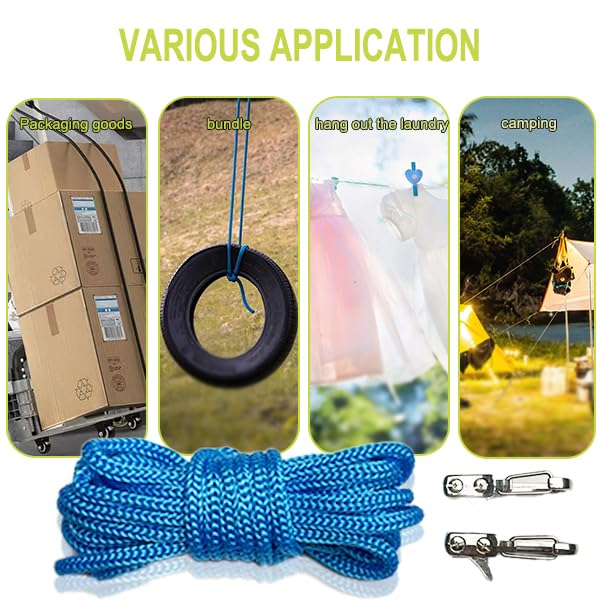
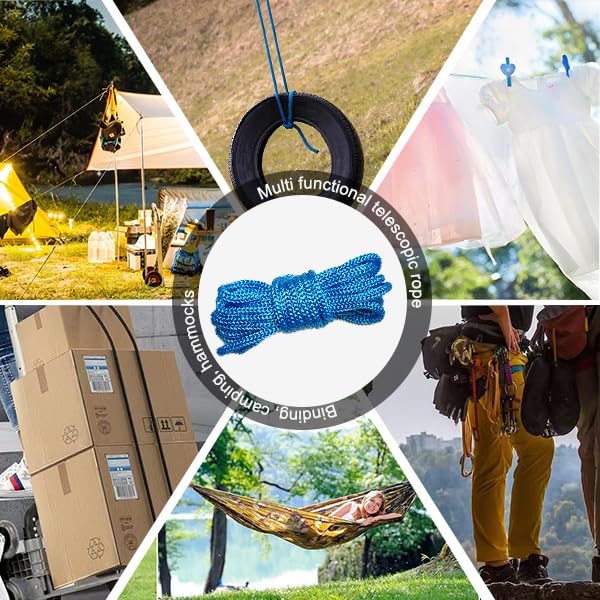
Knots are a pain, especially when you’re tired and cold. The SEESE retractable tensioner fixes that with a cam buckle system that lets you pull and lock lines in seconds. At 3m long and with a 115 lb capacity, it’s built for real outdoor use. Reviewers love how it keeps tarps taut and tents secure without constant fiddling.
It’s not just for tents. The rust-resistant aluminum and braided nylon rope make it useful for hammocks, gear lashing, even truck bed tie-downs. Compared to basic paracord, this is a massive upgrade in control and speed. I’d pack one over ten feet of loose rope any day.
Product photos
Sawyer Permethrin Insect Repellent Spray

Strengths
- Lasts 6 weeks or 6 washes
- Kills ticks on contact
- Safe for gear and fabrics
- Odorless and effective
- Treats multiple outfits
Trade-offs
- Not for skin application
- Requires drying time
- UV degrades effectiveness
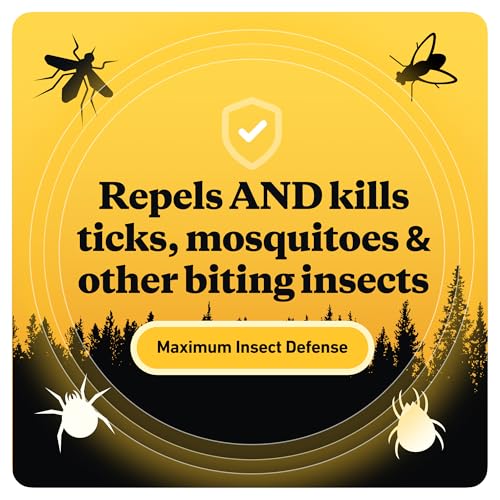
Ticks and mosquitoes are more than a nuisance, they’re a health risk. Sawyer’s Permethrin spray is one of the few EPA-approved repellents that bonds to fabric and lasts through multiple washes. Owners treat their tents, sleeping bags, and outer layers, reporting far fewer bites even in tick-heavy areas.
It’s odorless and doesn’t damage gear, which sets it apart from knockoffs. The 24-ounce size treats multiple outfits, making it cost-effective. Paired with a skin repellent, it’s the closest thing to a force field. In high-bug zones, I’d consider this non-optional.
Product photos


OGERY Rechargeable Camping String Lights
Strengths
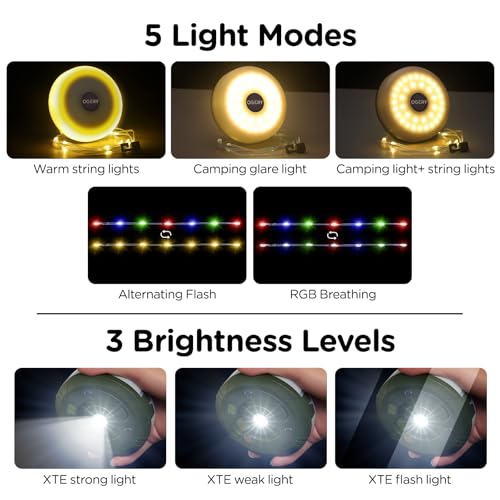
- 8 lighting modes
- Magnet and hang design
- Rechargeable USB
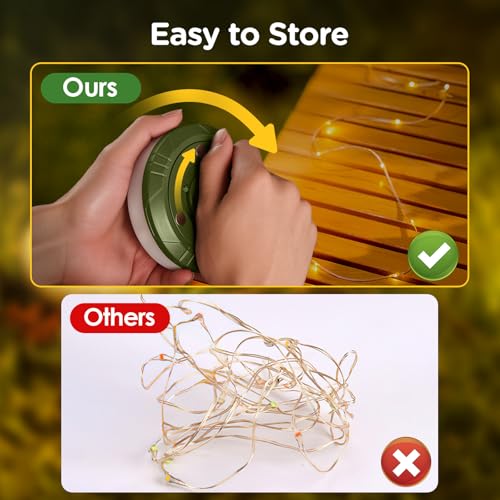
- Quick-wrap storage
- Lightweight and portable
Trade-offs
- Battery life varies by mode
- Charging cable must be original
- Not for primary illumination
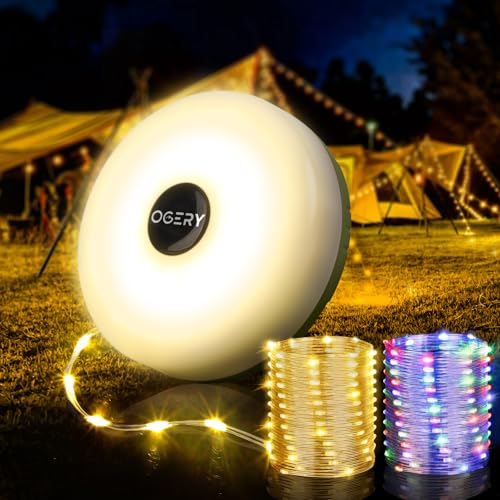
These lights are more than mood lighting, they’re a multipurpose tool. The 8 modes include work light and SOS, and the magnet base means you can stick them to a car roof or tent pole. At 32.8 feet, they cover a decent area, and the quick-wrap storage is genius for avoiding tangles.
Owners love using them around awnings or picnic tables, especially for family camping. The rechargeable battery lasts 5–12 hours depending on mode, which is fair. It’s not the brightest work light, but it’s bright enough. Compared to basic string lights, this 4-in-1 design offers real utility beyond ambiance.
Product photos



Ayaport Campsite Hanging Storage Strap
Strengths
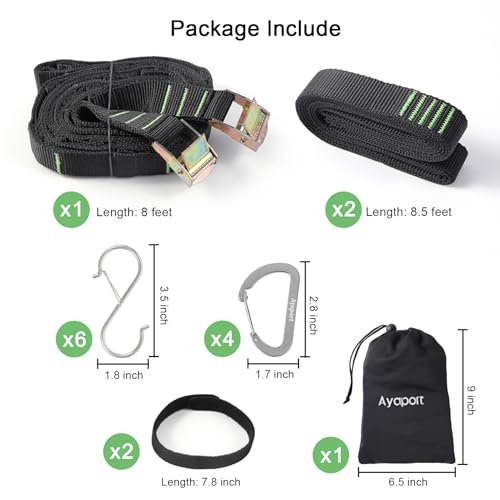
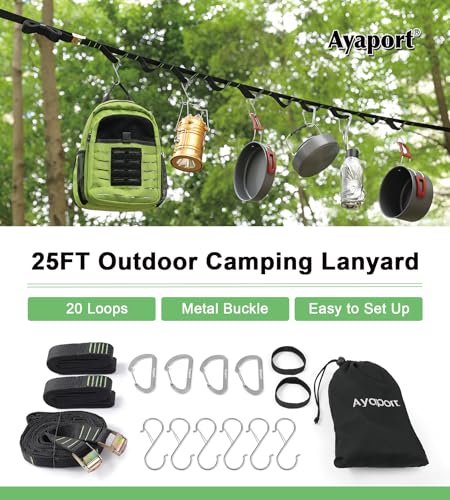
- 20 storage loops
- Double metal buckles
- Stainless steel hooks
- 25-foot total length
- Includes storage bag
Trade-offs
- Straps can twist
- Hooks not for heavy loads
- Buckle pressure on bark
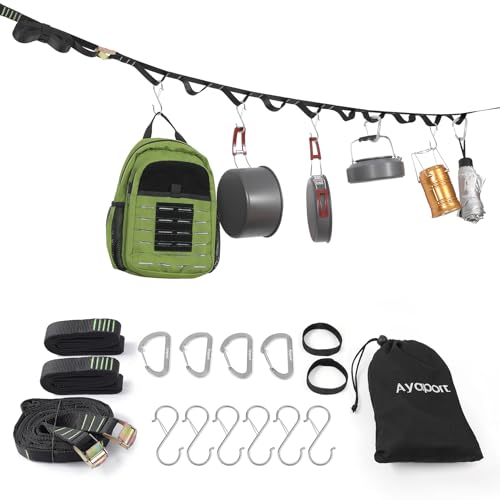
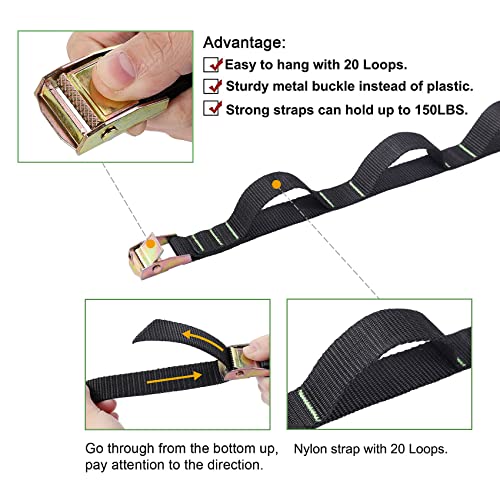
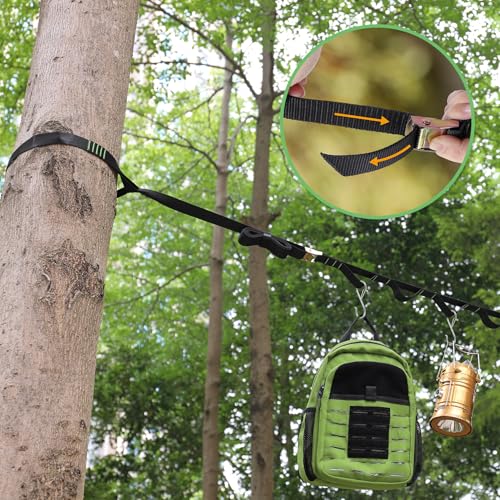
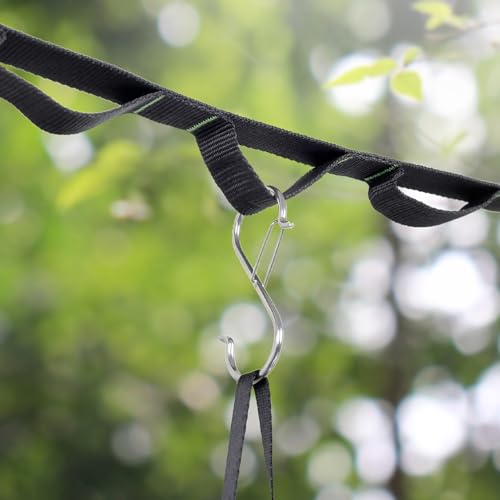
Disorganization ruins a good campsite. This hanging strap solves it with 20 loops and strong metal buckles that hold up to tree wraps and loaded gear. At 20 feet of span, it’s long enough to stretch between trees or poles, and the stainless hooks resist rust.
Owners use it for everything: hanging lanterns, drying towels, storing snacks, or keeping phones off the dirt. Setup is simple, wrap, clip, tighten. Compared to bungee cords or rope, it’s more structured and durable. The storage bag is a nice touch for keeping it tangle-free.
Product photos
Our Testing Process
I approach researching tent camping gear much like planning a big trip – thorough preparation is key. Rather than a hands-on lab test, this is a research-led comparison of published specifications and features across a range of products. We weighed owner reviews from major retailers alongside expert opinions found in outdoor publications, applying my experience with tent and camping setups to assess real-world usability. This process allowed us to rank options against a set of clearly defined criteria.
For tent camping gear, several factors stand out as most important. Durability and weather protection are paramount; a tent or tarp that fails in a storm is worthless. Equally critical is ease of setup. Spending hours wrestling with poles and lines detracts from the enjoyment of being outdoors, so we prioritized designs that offer quick and intuitive pitching. Finally, weight and packability matter, especially for backpacking or situations where space is limited.
Specifications provide a solid baseline – waterproof ratings, fabric denier, packed weight – but owner feedback often reveals how those specs translate to actual performance. I pay close attention to comments about long-term durability, wind resistance, and the accuracy of advertised features. Reputation plays a role too; established brands with a history of quality generally receive more weight in my assessment. Before you head out, be sure to review our guide to essential tent camping gear to make sure you have everything you need.
What To Look For In tent camping gears
Choosing the right tent can make or break a camping trip, and it’s not just about picking a color you like.
A quality tent balances weight, weather protection, ease of setup, and interior space. Prioritize waterproof ratings (measured in mm), fabric denier (higher is more durable), pole material (aluminum is stronger than fiberglass), and a design that suits your typical camping style – backpacking demands lightweight options, while family camping prioritizes space and ease of use. Don’t skimp on the details like taped seams and a robust rainfly.
Space and Occupancy
Don’t fall for the “sleeps X people” marketing. Tent manufacturers are optimistic. I always recommend sizing up. A “four-person” tent is comfortable for two adults and maybe a small dog, or two adults and one child with limited gear. Consider your sleep style; do you sprawl, or are you cozy sleepers? Also, think about vestibule space – that covered area outside the door is vital for storing muddy boots and backpacks, keeping the interior dry. Don’t assume a larger tent is always better; more space means more weight and a longer setup time.
Weather Resistance
Waterproofing is paramount, but it’s more complex than just a high mm rating. Look for a tent with a full rainfly that extends to the ground, taped seams (where the fabric is stitched together), and a bathtub floor (where the floor material extends up the sides a few inches) to prevent water from seeping in. The denier of the fabric and the polyurethane (PU) coating are important indicators of durability and water resistance. A hydrostatic head rating of at least 1500mm is a good starting point for three-season use, but higher is better if you anticipate heavy rain. Remember, proper seam sealing and regular re-application of a DWR (durable water repellent) treatment will extend the life of your tent’s waterproofing. Before you head out, make sure you have all the essential camping gear to ensure a dry and comfortable experience.
Ease of Setup & Anchoring
Frustration is the enemy of a good camping trip. While instant tents like the FanttikOutdoor Zeta C6 Pro are tempting, they often sacrifice durability and weather protection. A well-designed tent with color-coded poles and clear instructions should be manageable for one person. More importantly, pay attention to the staking system. The included stakes are often flimsy; upgrading to heavier-duty stakes, like the AVOFOREST 7.1” Rust-Resistant Tent Stakes, is a small investment that can make a big difference in windy conditions. * A good tent will feature a simple, intuitive pole system. * Look for reflective guy lines to prevent tripping at night. * Consider a tent with multiple attachment points for guylines, allowing you to secure it in various weather conditions – a well-pitched tent is a happy tent, and understanding tent selection factors will help you get it right.
A properly staked tent is more important than a fancy tent. Invest in quality stakes and practice setting up your tent at home before your trip.
Tent Camping Gears Compared
Here’s a comparison of key specifications for various tent camping gear options.
| Product Title | Capacity | Waterproof | Weight | Special Features | Price |
|---|---|---|---|---|---|
| FanttikOutdoor Zeta C6 Pro | 6 People | Yes | 16.8 lbs | Instant Setup, Windproof | N/A |
| Coleman Sundome | N/A | Yes | N/A | Weatherproof, Easy Setup | N/A |
| FUN PAC Ultralight Sleeping Pad | N/A | N/A | N/A | Self-Inflating, Lightweight | N/A |
| Life Emergency Mylar Survival Tent | 1 Person | Yes | 10 oz | Emergency Shelter, Lightweight | N/A |
| FLY2SKY Portable LED Tent Lamp | N/A | IPX8 | N/A | 3 Light Modes, Portable | N/A |
| Odoland LED Lantern with Fan | N/A | N/A | N/A | Light & Fan, Rechargeable | N/A |
| Amazon Basics Waterproof Tarp | N/A | Yes | N/A | Heavy-Duty, Rip-Stop | N/A |
| AVOFOREST 7.1″ Tent Stakes | N/A | N/A | N/A | Rust-Resistant, High Visibility | N/A |
| SEESE Retractable Rope Tensioner | N/A | N/A | N/A | Quick-Adjust, No Knots | N/A |
| Sawyer Permethrin Spray | N/A | N/A | N/A | Insect Repellent | N/A |
| OGERY Rechargeable String Lights | N/A | Waterproof | 7.4 oz | 8 Modes, USB Charging | N/A |
| Ayaport Campsite Hanging Storage | N/A | N/A | N/A | 20ft Span, 20 Loops | N/A |
Frequently Asked Questions
What’s the difference between a tent’s denier and its waterproof rating?
Denier refers to the fabric’s thread thickness (higher is more durable) while the waterproof rating (in mm) measures its water resistance. A 210D tent fabric is typically more abrasion-resistant than a 75D fabric, but a 3000mm waterproof rating means the fabric can withstand 3000mm of water pressure before leaking.
Are “instant” tents really as durable as traditionally-built tents?
Generally, no. Instant tents prioritize quick setup over long-term durability and robust weather protection. While convenient, they often use thinner fabrics and less substantial pole systems compared to tents requiring a more involved setup process.
How often should I re-waterproof my tent?
You should re-waterproof your tent every one to two years, depending on frequency of use and exposure to harsh conditions. Look for signs of water leaking through the fabric, even with a rainfly, or when the water no longer beads up on the surface.
What’s the best way to store my tent to prolong its life?
Always store your tent completely dry and loose, never compressed in its stuff sack for extended periods. This prevents mildew and maintains the coating on the rainfly and floor. A breathable storage bag is ideal, or simply hang it in a dry place.
Beyond the tent itself, what are some useful tent add-ons to consider?
Investing in quality accessories can significantly improve your camping experience. Look into items like heavier-duty tent stakes, a footprint to protect the tent floor, and a gear loft for organizing small items – these camping comfort accessories will make your time outdoors more enjoyable.
The Bottom Line
Choosing tent camping gear always comes down to balancing what you’re willing to carry versus how much comfort and protection you demand. For the best overall experience – a blend of durability, weather resistance, and reasonable weight – I believe the FanttikOutdoor Zeta C6 Pro strikes a fantastic balance. It’s a bit of an investment, but the instant setup and robust construction make it a standout.
If you’re building a kit from scratch on a budget, the Coleman Sundome is a solid starting point. And for those seeking specialized solutions, the FUN PAC Ultralight Sleeping Pad excels in portability, while the Life Emergency Mylar Survival Tent provides crucial peace of mind for unexpected situations. Don’t forget to review a complete gear checklist before you head out.
Ultimately, the best gear isn’t the most expensive or feature-rich, but the gear that allows you to confidently enjoy your time in nature. Focus on weather protection, a reliable shelter, and a few key comforts, and you’ll be well-equipped for a memorable camping experience.