
8 Best Tent Canopies of 2026
This post contains affiliate links. As an Amazon Associate, we earn from qualifying purchases.
The CROWN SHADES 10×10 Pop Up Canopy is the best overall tent canopy for its reliable one-button setup, solid 150D fabric, and included stakes and sandbags. If you’re watching your budget, the WEIZE 10×10 delivers the same core performance at a lower price. For more coverage, the CROWN SHADES 12×12 steps up with a larger footprint without sacrificing ease of use.
I’ve spent years evaluating shelter systems, and one thing stands out, most people don’t need a tent for every outing, but they do need dependable shade. Tent canopies fill that gap, offering quick protection from sun and light weather, whether you’re at a campsite, beach, or weekend market. The challenge? Too many look sturdy until the wind picks up or the frame starts wobbling after two uses.
This guide cuts through the noise. I compared top models based on frame strength, fabric durability, real-world setup ease, and owner feedback. These picks aren’t just specs on a page, they’re the ones that consistently deliver where it matters.
Top 8 Tent Canopies in the Market
The Best Tent Canopies, Reviewed
CROWN SHADES 10×10 Pop Up Canopy
Strengths
- One-push setup
- UPF 50+ protection
- STO-N-GO wheels
- Sturdy steel frame
- Spacious 100 sq ft
Trade-offs
- Heavier than budget models
- Two-person setup recommended
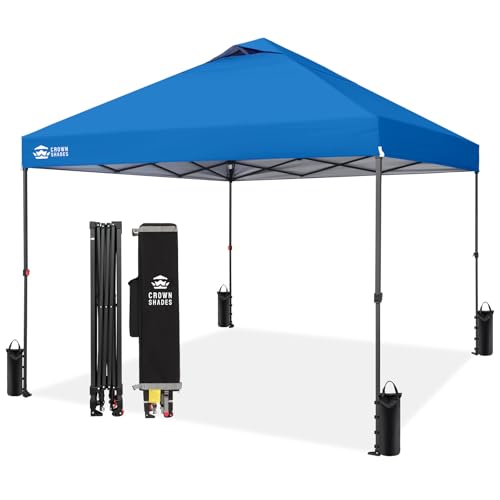
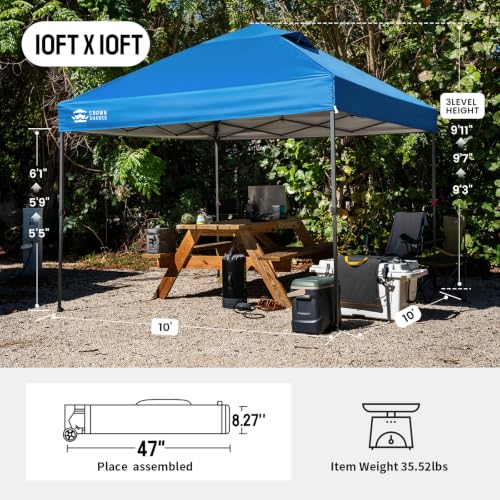
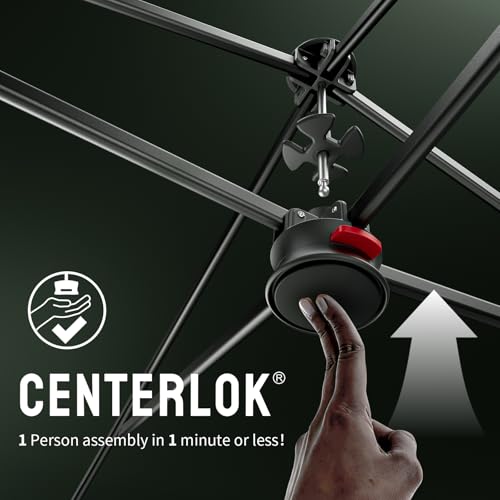
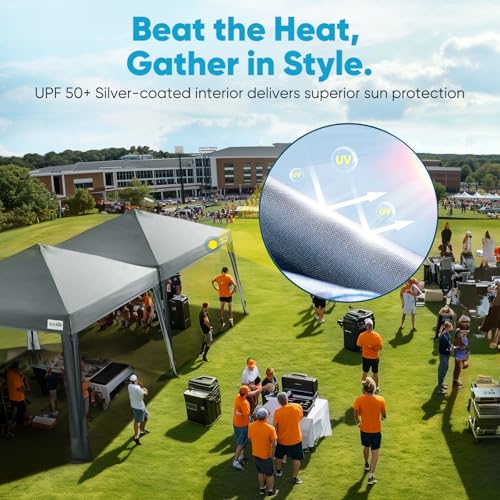
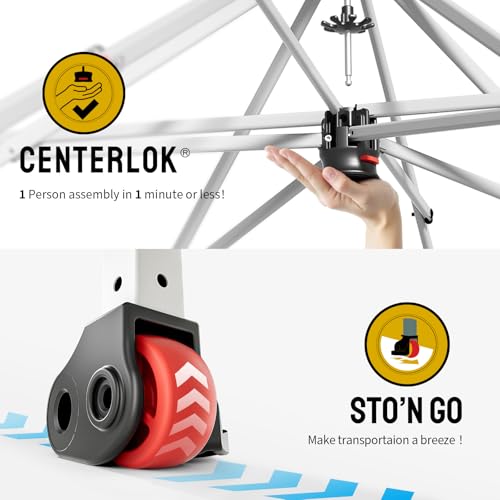
When you’re looking for a canopy that feels like it was engineered for real outdoor chaos, the CROWN SHADES 10×10 stands out. The patented CENTERLOK one-push system isn’t just marketing fluff, owners consistently report it works reliably, cutting setup time down to seconds with two people. That’s a big deal when you’re racing the sun or a sudden weather shift. The 150D fabric with silver coating delivers solid UPF 50+ protection, and the water-resistant, flame-resistant CPAI-84 rating means it’s built to handle commercial-grade use, not just backyard BBQs.
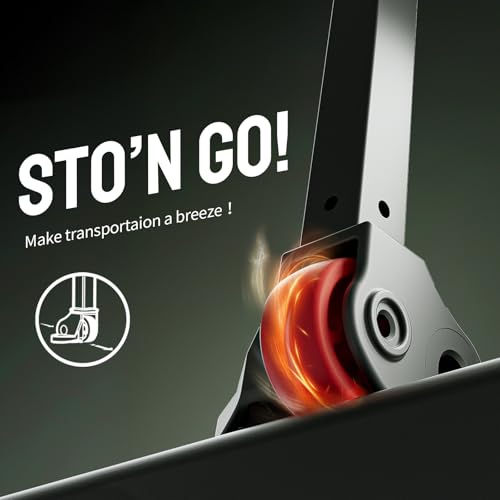
What really pushes this model ahead is the STO-N-GO transport system, a standout for anyone who’s struggled with heavy, awkward canopy bags. The built-in wheels in the feet let you tip and roll the tent even when fully assembled, which sounds minor until you’ve dragged a 30-pound frame across a parking lot. Compared to the WEIZE and Vinabilia models, this one trades a bit more weight for serious durability and smarter logistics. The 2-year parts warranty is also a confidence booster, not every brand stands behind their hardware like this.
Product photos
Quictent 10×10 Pop Up Canopy

Strengths
- Lightweight design
- One-person setup
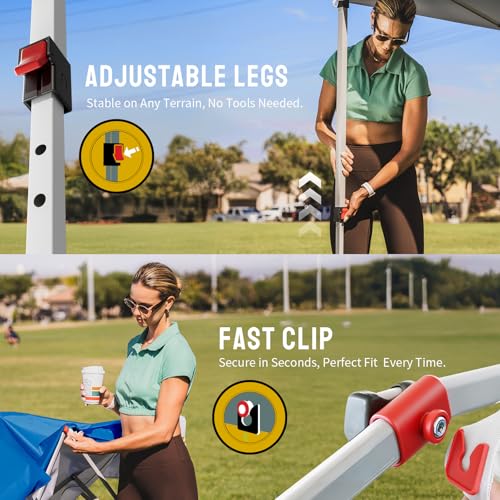
- Adjustable legs
- Sandbag-compatible feet
- Low cost
Trade-offs
- No stakes or sandbags included
- Build quality less durable
- Vague warranty terms
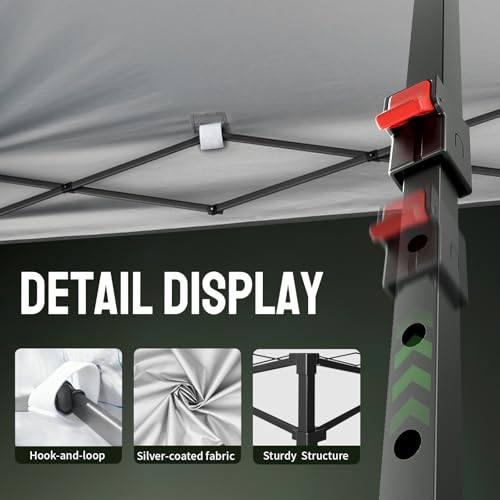
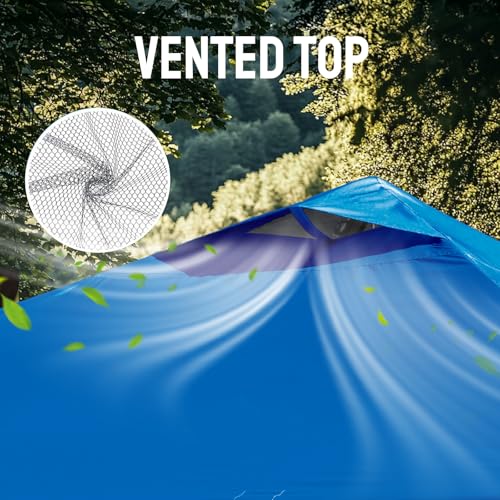
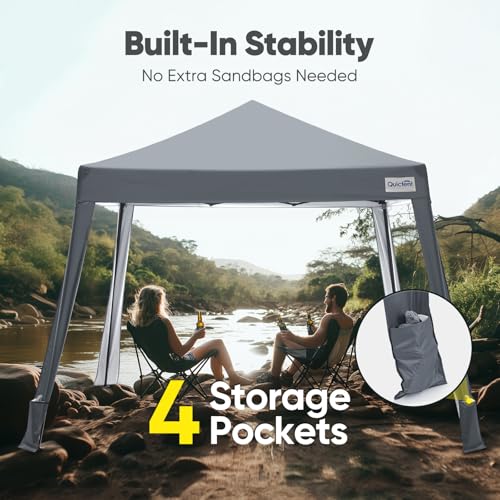
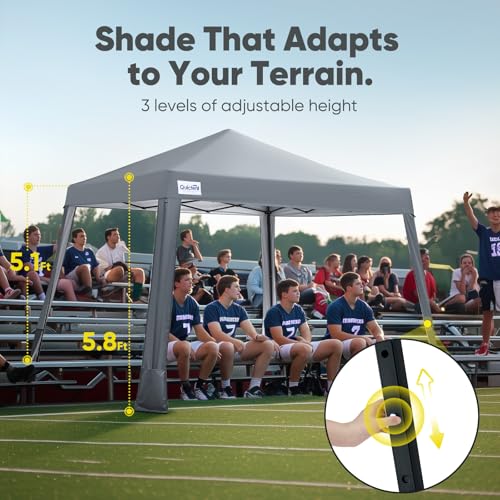
This Quictent model is clearly built for budget-first buyers who still want core functionality. The angled leg design adds stability, and the adjustable legs with sandbag-compatible weights mean you can adapt it to uneven ground or beach setups without extra gear. It’s one of the few under-$150 canopies that lets you use natural materials like sand or rocks for ballast, a smart move for beach users.
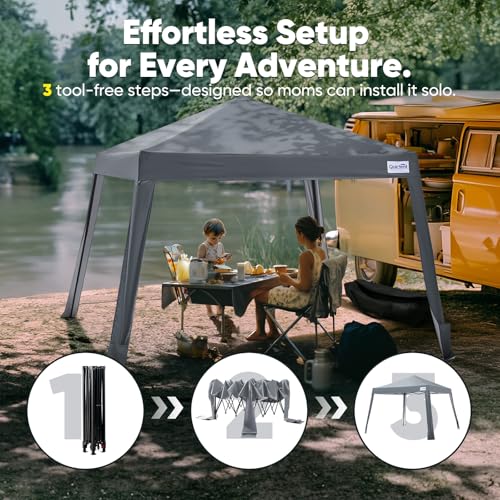
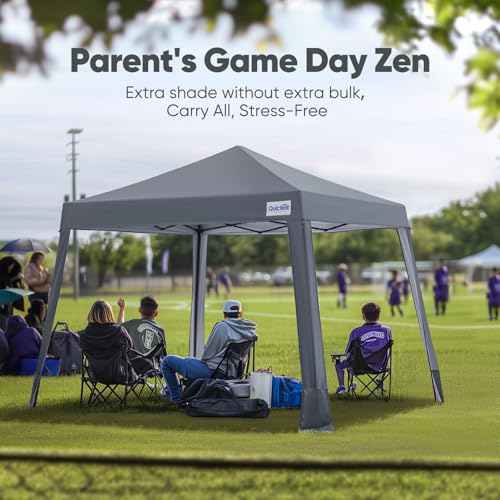
It lacks included stakes and sandbags, and the warranty info is vague, which gives me pause. But for the price, the two-step, one-person setup works as advertised. Compared to the Vinabilia, it’s lighter and more portable but feels less durable over time. If you’re a casual user or need a spare canopy for occasional use, it gets the job done.
Product photos
Driftalia 10×10 Pop Up Canopy
Strengths
- Removable sidewalls
- Sturdy steel frame
- Lightweight design
- Good airflow
- Easy breakdown
Trade-offs
- No sandbags included
- Sidewalls may flap in wind
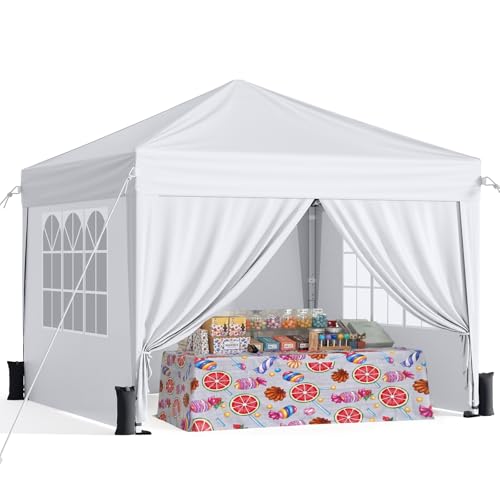
When your event calls for customizable enclosure, the Driftalia 10×10 with removable sidewalls becomes a standout. The sidewalls are easy to attach and remove, and the clear and white panels offer visibility while still cutting glare and wind. Setup takes under five minutes with two people, and the 25mm x 25mm steel frame gives it more rigidity than many competitors in this price range. Owners appreciate how well it holds up in light breezes, not something all pop-ups can claim.
It’s also impressively portable at under 31 pounds, and the carry bag is well-designed for SUVs and trucks. Compared to the Yaheetech slant-leg model, it doesn’t lean into wind resistance as aggressively, but it wins on interior flexibility. If you’re hosting a wedding, farmer’s market booth, or family reunion where privacy or light rain protection matters, this one earns its keep.
Product photos
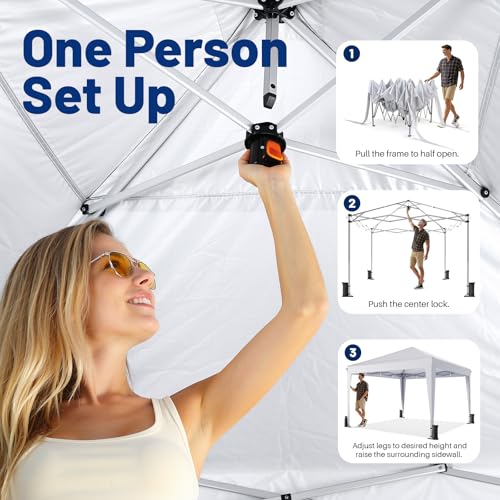
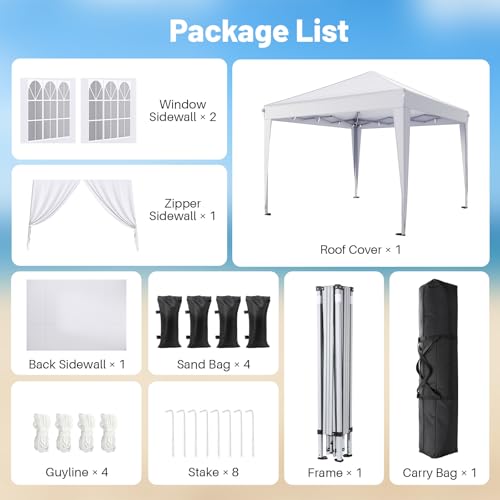
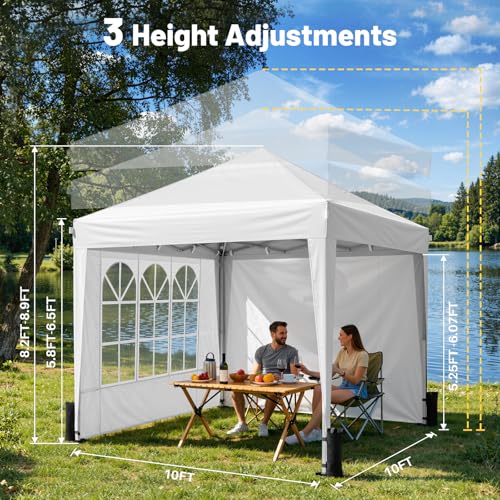
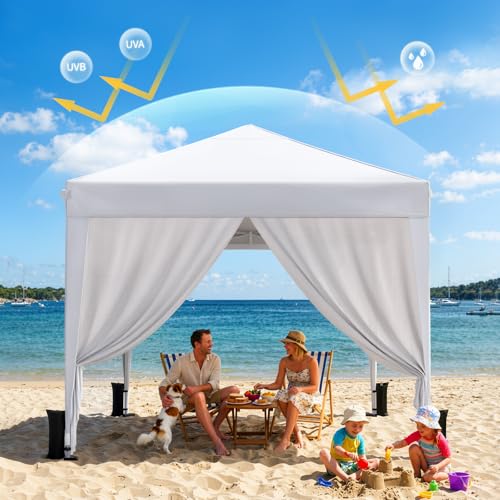
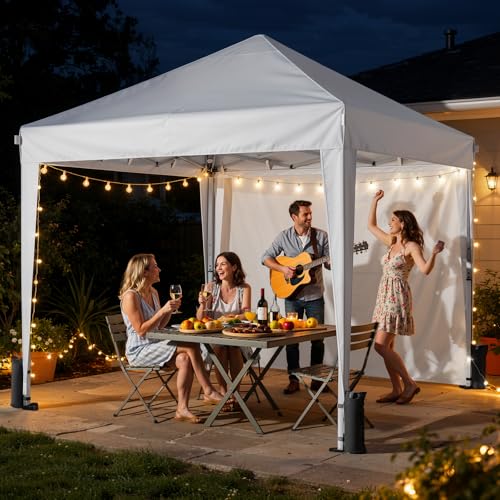
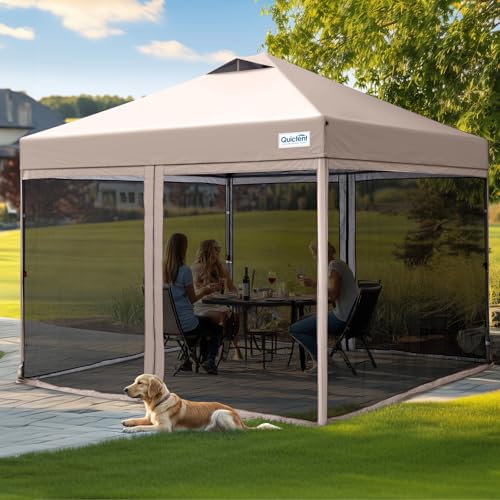
Quictent 10×10 Screened Canopy Tent
Strengths
- Full mosquito netting
- Waterproof PU coating
- Velcro seal design
- Wheeled carry bag
- Good headroom
Trade-offs
- Darker interior due to mesh
- Slower ventilation in heat
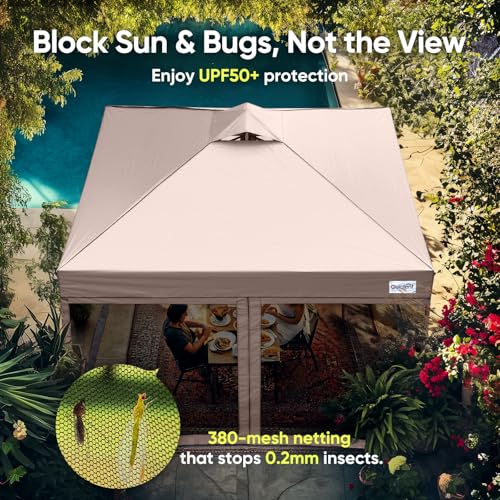
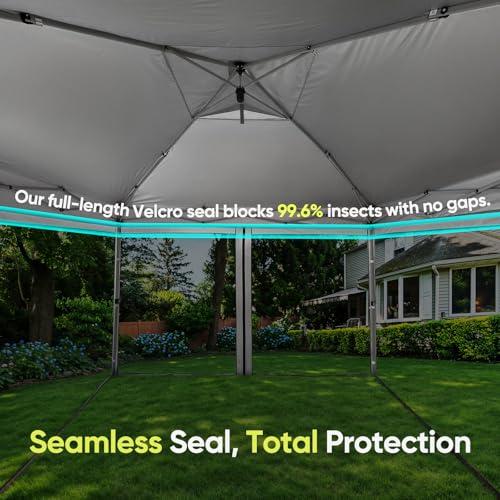
When bugs are the main threat, the Quictent screened canopy is the only real answer. The 360-degree mosquito netting with full Velcro seals keeps insects out without suffocating the space, a rare win in pop-up design. The 420D Oxford fabric with PU coating adds real waterproofing, not just water resistance, so it can handle heavier rain than most shade canopies. It’s also one of the few models where you get both full bug protection and serious weather readiness.
Setup is straightforward and can be done solo, and the wheeled carry bag makes transport manageable despite the weight. Compared to the standard Quictent pop-up, this one is pricier but delivers a completely different function, it’s more screen house than canopy. If you’re camping in mosquito-heavy zones or hosting evening events in buggy areas, this isn’t a luxury, it’s a necessity.
Product photos
WEIZE 10×10 Pop Up Canopy
Strengths
- One-button push setup
- Adjustable height
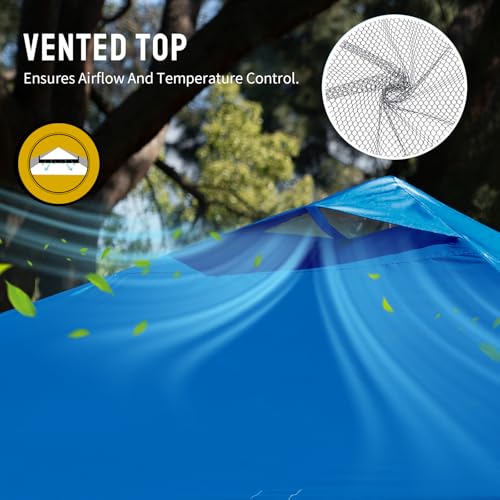
- Ventilation vents
- Lightweight roller bag
- UPF 50+ fabric
Trade-offs
- No included stakes or sandbags
- Frame less robust than premium models
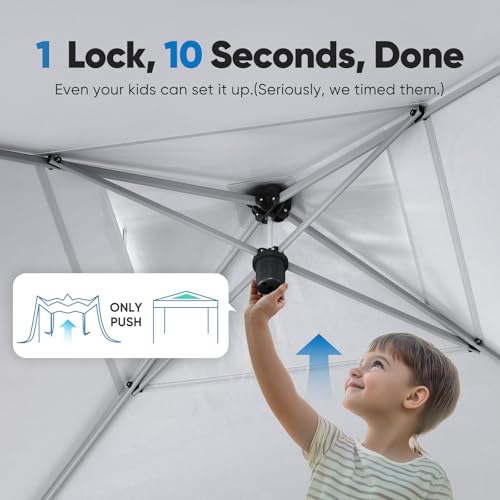
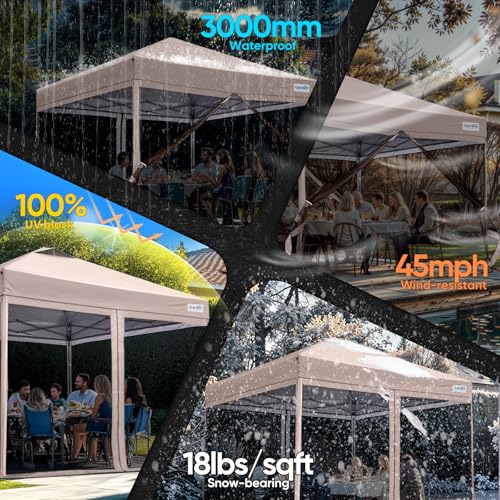
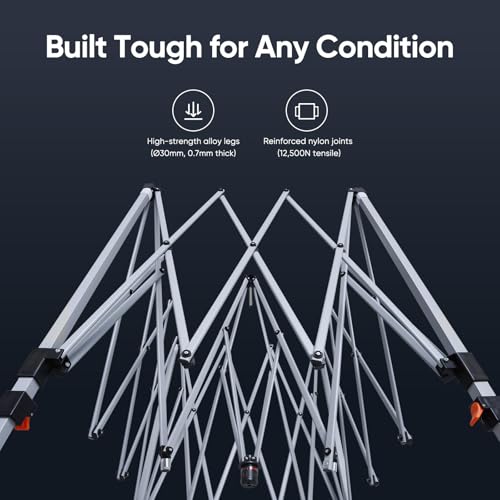
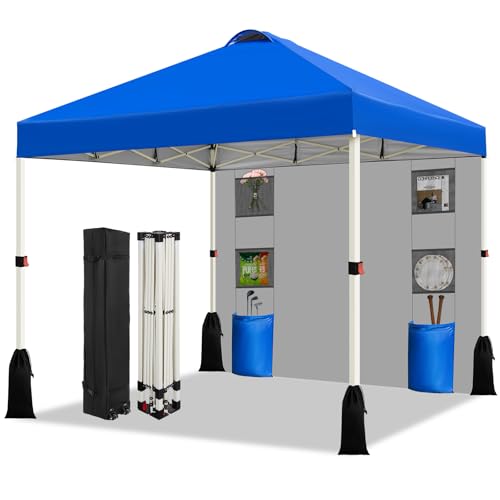
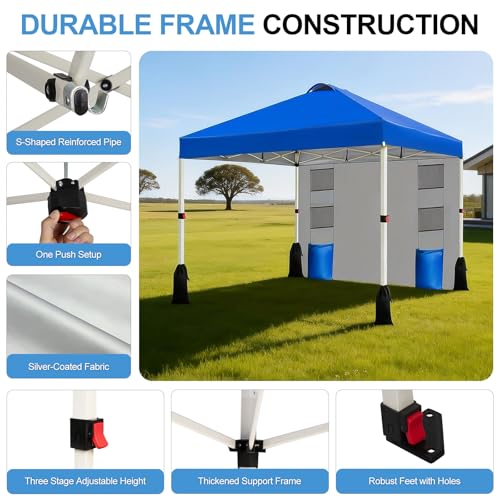
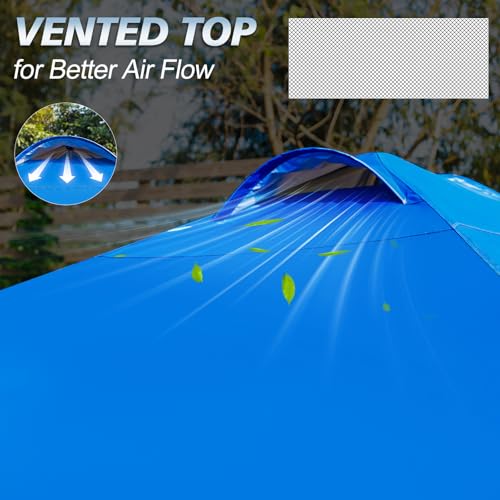
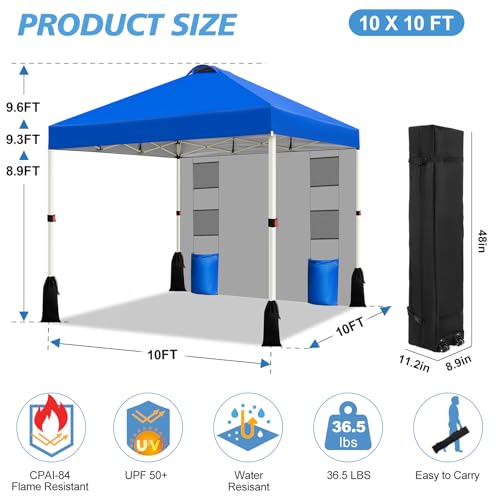
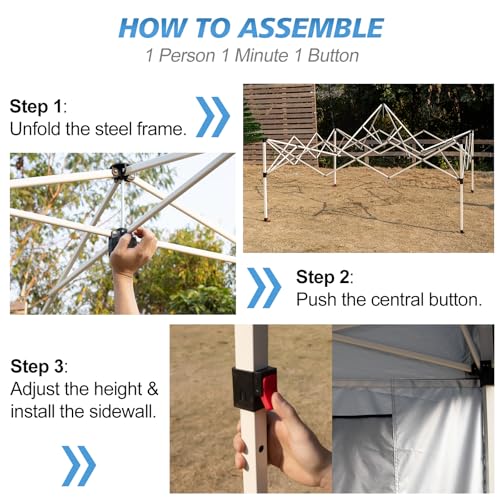
If one-button simplicity is your top priority, the WEIZE 10×10 delivers exactly that. The central locking mechanism snaps the frame into place fast, often in under a minute, and the red locking clips on the height adjusters are intuitive and secure. At nearly 9.6 feet tall at peak height, it offers generous headroom, and the 87% shade rating with UPF 50+ fabric means you’re getting solid sun protection. It’s not the heaviest-duty canopy out there, but for weekend markets, picnics, or tailgates, it hits the sweet spot between performance and ease.
It doesn’t come with sandbags or stakes in the base package, but it does include a lightweight roller bag that makes transport a breeze. Compared to the CROWN SHADES model, it’s a bit less rugged but more accessible for casual users. Some owners note the steel frame feels slightly thinner, so I wouldn’t push it in high winds. Still, for its class, it’s one of the smoothest one-touch setups available.
Product photos
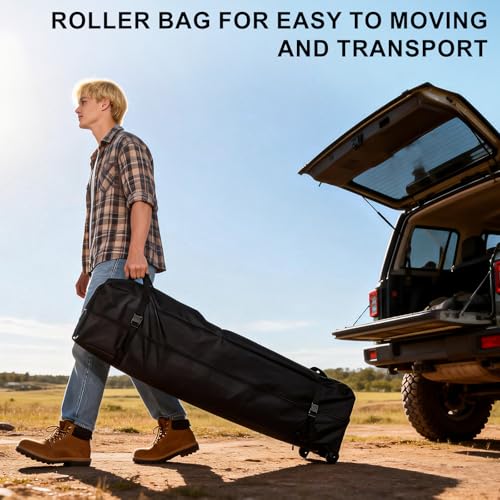
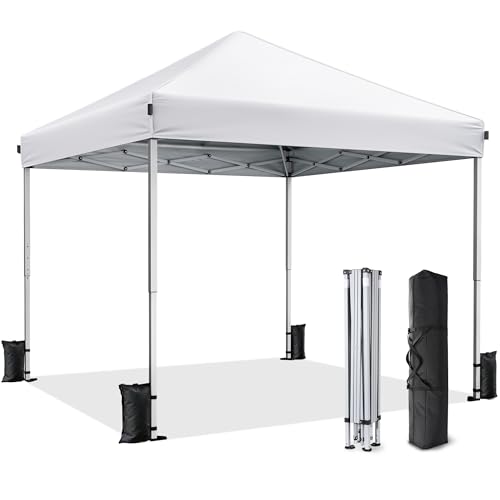
Vinabilia 10×10 Pop Up Canopy
Strengths
- Includes sandbags and stakes
- Water-resistant seams
- One-push setup
- No overhead bars
- Good value
Trade-offs
- Slightly slower setup
- Frame finish less durable long-term
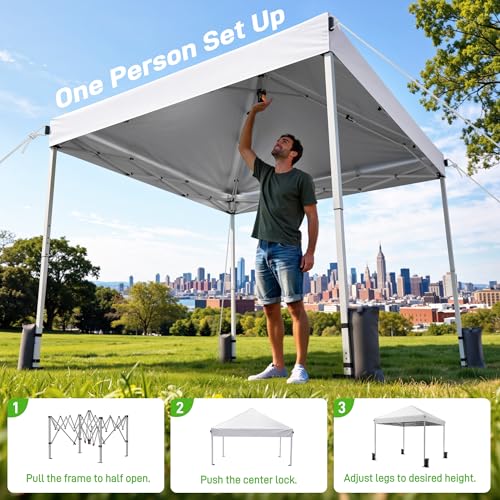
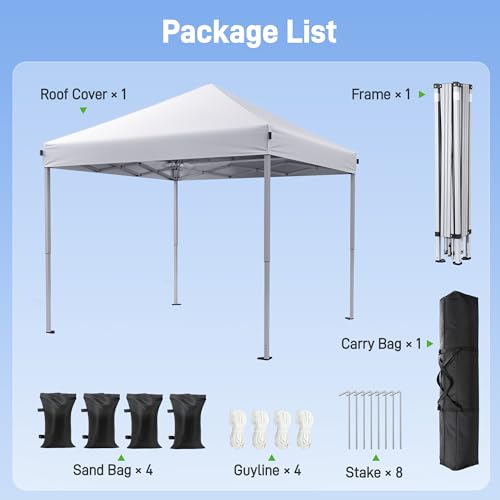
The Vinabilia 10×10 is what I’d call the smart value pick, it bundles everything you need without inflating the price. You get 4 sandbags, 8 stakes, and a durable carry bag right in the box, which many competitors charge extra for or omit. The one-push center lock works reliably, and the 8.9-foot interior height feels open, especially with no crossbars overhead. The water-resistant seams and UPF 50+ fabric are on par with pricier models, making it a solid performer for sun and light rain.
It’s not the fastest to set up solo, and the frame, while rust-resistant, doesn’t feel quite as beefy as the CROWN SHADES. But for the cost-to-features ratio, it’s hard to beat. Compared to the Quictent budget model, this one offers better stability and more complete accessories, a smarter buy if you plan to use it regularly.
Product photos
CROWN SHADES 12×12 Pop Up Canopy
Strengths
- 144 sq ft coverage
- UPF 50+ protection
- Sturdy truss frame
- Good ventilation
- 2-year warranty
Trade-offs
- Heavy and bulky
- Two-person setup required
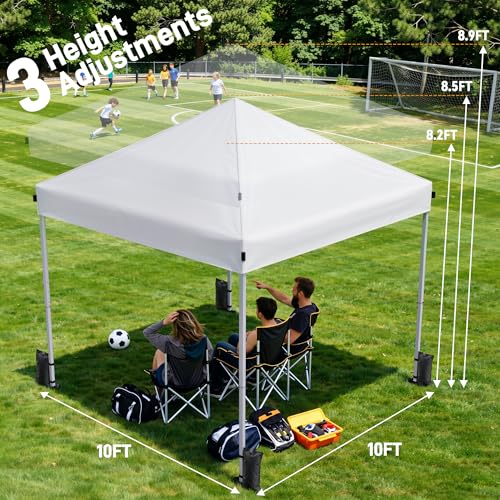
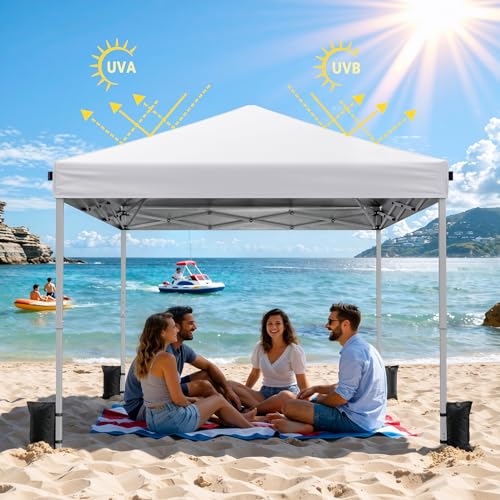
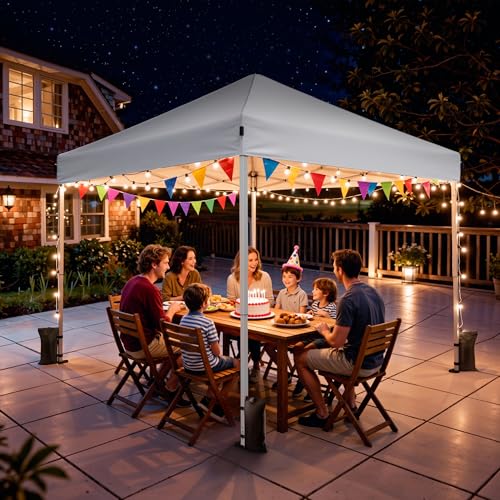
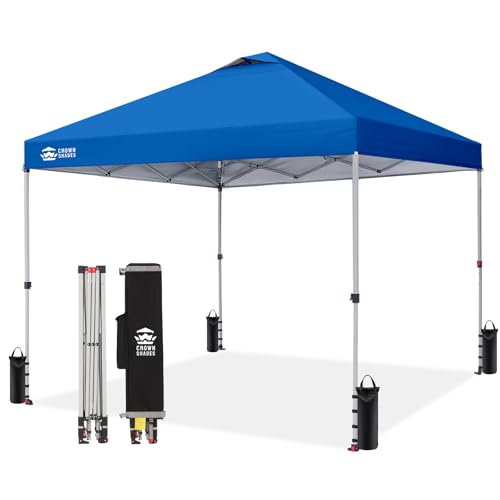
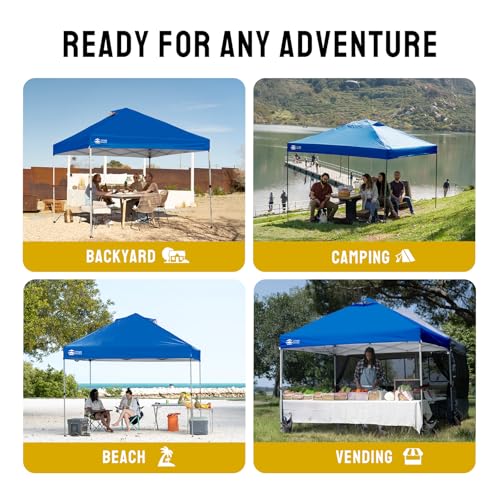
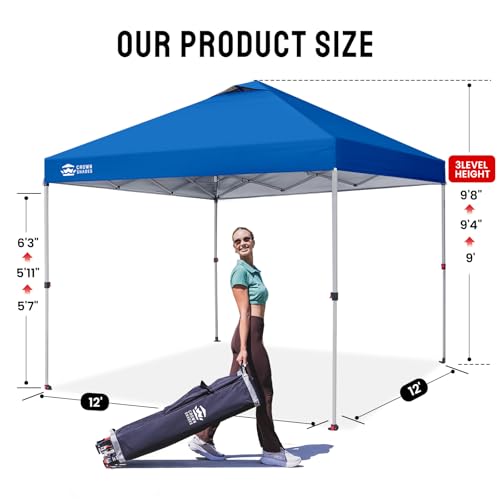
If you need serious coverage, the CROWN SHADES 12×12 is the only real contender here. At 144 square feet, it nearly doubles the shaded area of standard 10×10 models, perfect for large family gatherings, vendor booths, or group campsites. The 150D silver-coated fabric still delivers UPF 50+ and CPAI-84 ratings, so you’re not sacrificing protection for size. The high-grade steel truss frame supports up to 120 lbs, and the center-lock system scales well to this larger footprint.
It’s heavier and requires more space to store, but the newly designed storage bag keeps everything organized. Compared to the 10×10 CROWN model, it’s less nimble but unmatched for space. Owners say it takes two people and a few extra minutes, but the trade-off is a near-gazebo level of shelter. For anyone who’s ever felt cramped under a standard canopy, this one feels like freedom.
Product photos
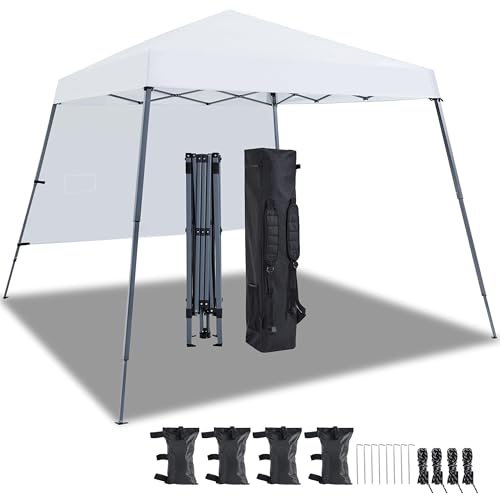
Yaheetech 10×10 Slant Leg Canopy
Strengths
- Slant-leg stability
- Includes anchors and ropes
- One-person setup
- Sidewall included
- Good wind resistance
Trade-offs
- Bulky packed size
- Lower headroom than competitors
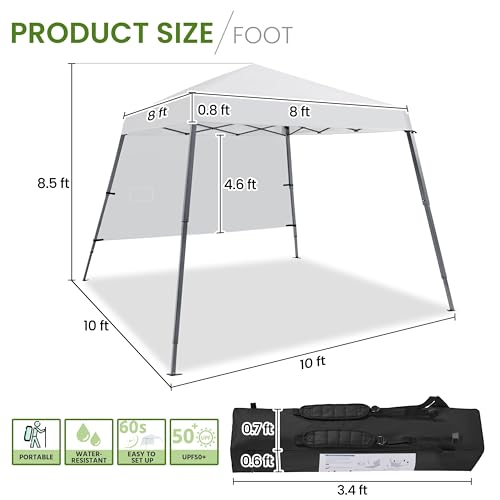
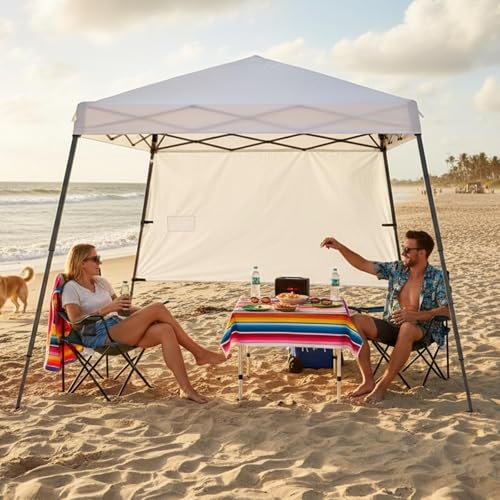
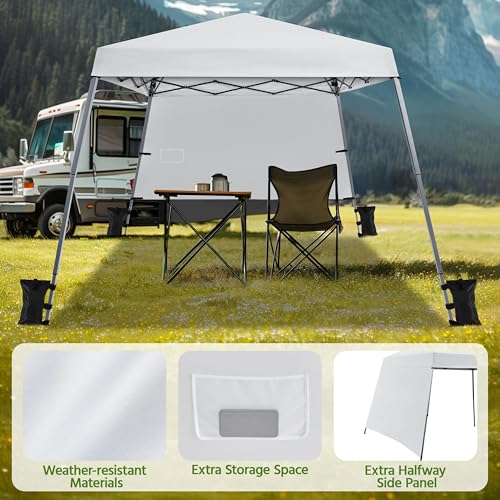
The slant-leg design is the star here, it’s not just cosmetic. That geometry lowers the center of gravity and increases footprint stability, which owners confirm makes a noticeable difference in breezy conditions. Add in the included sandbags, ground anchors, and guy ropes, and you’ve got one of the most wind-ready pop-up canopies on the list. The silver-coated 150D fabric delivers UPF 50+ protection and handles light rain well, though it’s not fully waterproof.
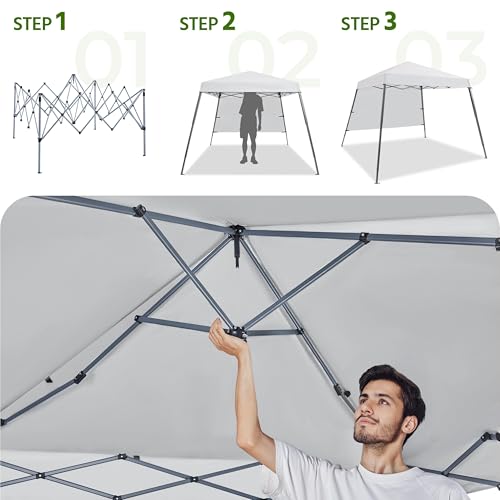
Setup is truly one-person friendly, and the included sidewall is a nice bonus for blocking sun or drizzle on one side. Compared to the WEIZE, it’s a bit slower to pop up but far more secure once planted. It’s not the most compact when packed, but if you’re setting up on a windy beach or open field, that stability trade-off is worth it.
Product photos

How We Evaluated tent canopies
I approached researching tent canopies by first compiling specs and features from numerous manufacturers. I then weighed those details against owner reviews from major retailers and expert opinions found in outdoor gear publications. My goal was to identify patterns – what features consistently delivered on promises, and where real-world use diverged from marketing claims. This research-led comparison isn’t a hands-on lab test, but a detailed assessment of available information.
For tent canopies, stability and ease of use were the biggest deciding factors. A canopy that collapses in a breeze or requires a team of engineers to erect isn’t useful to most people. Durability of the frame and fabric also ranked highly, as these determine how well the canopy will withstand repeated use and exposure to the elements. I prioritized canopies offering a balance of these features, alongside practical considerations like portability and included accessories.
While specifications reliably indicate fabric weight, frame material, and UV protection ratings, I leaned on owner feedback to assess real-world performance. Reviews offered insights into how easily a canopy withstands wind, how truly “quick” the setup is, and the long-term durability of components. Understanding these nuances – and referencing a helpful canopy tent setup guide when necessary – allowed me to rank canopies based on overall value and usability.
Choosing The Right tent canopies
Choosing the right tent canopy means balancing portability with stability and coverage. It’s not just about staying dry; it’s about creating a comfortable, functional outdoor space.
A quality tent canopy prioritizes a robust frame, steel is preferable to aluminum for longevity, and a durable, water-resistant fabric (150D polyester is a solid baseline). Look for UV protection (UPF 50+ is ideal), a straightforward setup mechanism, and included accessories like sidewalls and ground stakes. Consider the canopy’s packed size and weight if transport is a key concern.
Frame Material & Stability
The frame is the backbone of any canopy, and steel consistently outperforms aluminum in terms of durability and resistance to bending or breaking. While aluminum is lighter, it’s more susceptible to damage, especially with frequent use. Don’t overlook leg design either. Slant-leg canopies, like the Yaheetech 10×10 Slant Leg Canopy, generally offer superior wind resistance compared to straight-leg models. They distribute force more effectively, reducing the risk of tipping or collapse. Beyond the legs, look for reinforced connection points, hardened through bolts are a good sign, and a frame rated to support a reasonable amount of weight.
Fabric Quality & Protection
Fabric is where you’ll find the biggest differences in comfort and weather protection. A 150D polyester fabric with a silver coating is a good starting point. The silver coating provides excellent UV protection and helps keep the canopy cooler in direct sunlight. Beyond UV resistance, check for a waterproof rating or, at the very least, a water-resistant coating. Remember, “water-resistant” isn’t the same as waterproof. If you anticipate even light rain, look for heat-sealed seams. For those planning beach trips, consider a canopy with excellent UV-blocking beach tents to maximize protection.
Setup & Portability Considerations
Ease of setup is a huge factor, especially if you’re often setting up and taking down the canopy on your own. The “one-button” or “one-push” setup systems, like those found in the CROWN SHADES 10×10 Pop Up Canopy and the WEIZE 10×10 Pop Up Canopy, are incredibly convenient. However, even with these systems, it’s helpful to have a second person assist, particularly in windy conditions.
Here’s what to consider regarding portability:
- Packed Size: Smaller is better, especially if you have limited vehicle space.
- Weight: A lighter canopy is easier to transport and maneuver.
- Carry Bag Quality: A durable bag with wheels can make all the difference when moving the canopy across a parking lot or campground. It’s also worth familiarizing yourself with pop-up canopy terminology to confidently discuss your needs and expectations.
Don’t skimp on securing your canopy. Even on a calm day, a sudden gust of wind can send a poorly anchored canopy flying. Always use the included stakes and guy lines, and consider adding extra weight with sandbags or water jugs, especially if you’re setting up on pavement.
Tent Canopies Compared
Here’s a spec comparison of several tent canopies to help you find the right one for your needs.
| Product Name | Size (ft) | Fabric (Denier) | UV Protection | Setup Style | Accessories |
|---|---|---|---|---|---|
| CROWN SHADES 10×10 | 10×10 | 150D | UPF 50+ | One-Button | Stakes, Sandbags |
| Quictent 10×10 | 10×10 | N/A | N/A | One-Person | N/A |
| Driftalia 10×10 | 10×10 | N/A | N/A | Two-Person | Sidewalls |
| Quictent 10×10 Screened | 10×10 | 420D | N/A | One-Person | Carry Bag |
| WEIZE 10×10 | 10×10 | 150D | UPF 50+ | One-Button | N/A |
| Vinabilia 10×10 | 10×10 | N/A | UPF 50+ | One-Button | Stakes |
| CROWN SHADES 12×12 | 12×12 | 150D | UPF 50+ | One-Button | Stakes, Sandbags |
| Yaheetech 10×10 | 10×10 | 150D | UPF 50+ | One-Person | Sandbags, Anchors |
Frequently Asked Questions
What canopy size is best for a typical family gathering?
A 10×10 foot canopy is generally sufficient for a family gathering of 6-8 people, providing enough shade and space for a picnic table or several chairs. Larger groups may benefit from a 12×12 canopy for more comfortable spacing.
Are canopy sidewalls really necessary?
Yes, sidewalls add significant versatility. They provide protection from wind and sun, creating a more enclosed space and increasing privacy, and are especially valuable if you plan to use your canopy as a temporary changing room or shelter from light rain.
How much wind can most pop-up canopies withstand?
Most pop-up canopies are rated to withstand winds up to 20-25 mph when properly secured with stakes and guy lines. However, sustained winds above this level can cause damage, even with the best anchoring setup, so it’s best to take the canopy down in severe weather.
What’s the difference between a soft-top and hard-top canopy?
A soft-top canopy uses fabric for the roof, while a hard-top canopy employs a solid material like metal or plastic. Hard-top canopies are more durable and offer better protection from the elements, but they are significantly heavier and less portable than soft-top options.
Where can I find more information on different types of portable canopy shelters?
You can find detailed comparisons and reviews of different canopy types on dedicated outdoor gear websites. These resources often include user feedback, setup guides, and information on specific features to help you make an informed decision.
The Bottom Line
Choosing a tent canopy often comes down to how much fuss you’re willing to tolerate for a little extra control over price and features. For most people seeking a balance of convenience, durability, and sun protection, the CROWN SHADES 10×10 stands out as the strongest overall pick. Its one-button setup and included accessories make it remarkably user-friendly, while the 150D fabric and UPF 50+ rating offer reliable performance.
If you’re on a tighter budget, the WEIZE 10×10 provides a very similar experience at a lower price point. For those needing maximum versatility – perhaps for extended events or varied terrain – the Driftalia 10×10, with its included sidewalls, is an excellent choice. And if you’re setting up on a hard surface like concrete, remember to explore canopy weight and stability techniques to keep everything secure.
Ultimately, the best canopy isn’t about the highest denier rating or the most complex setup. It’s about finding a shelter that reliably protects you from the elements and enhances your outdoor experience. Focus on a robust frame, quality fabric, and secure anchoring – those fundamentals will deliver more value than any single flashy feature.
